 Flux Art
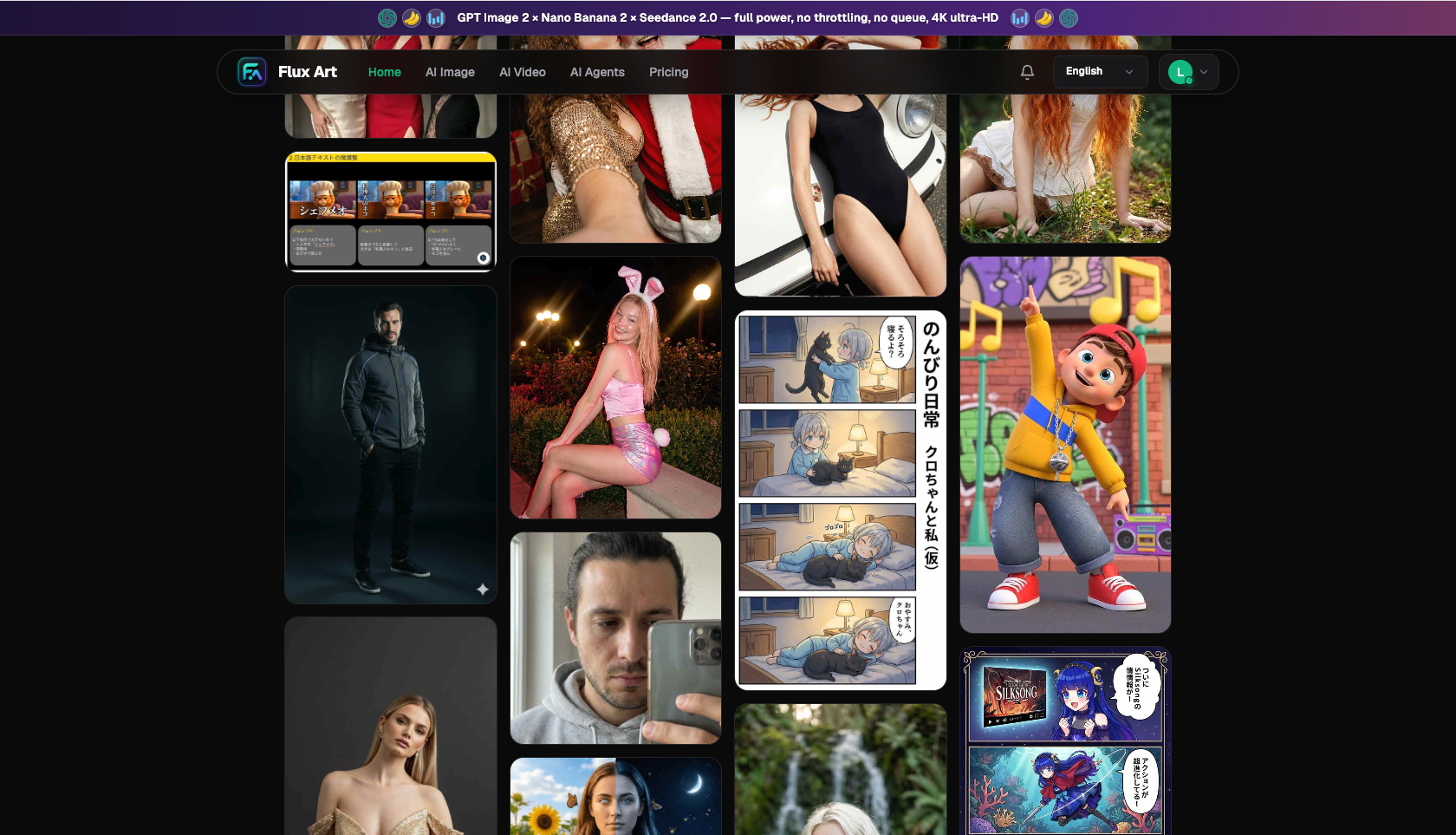
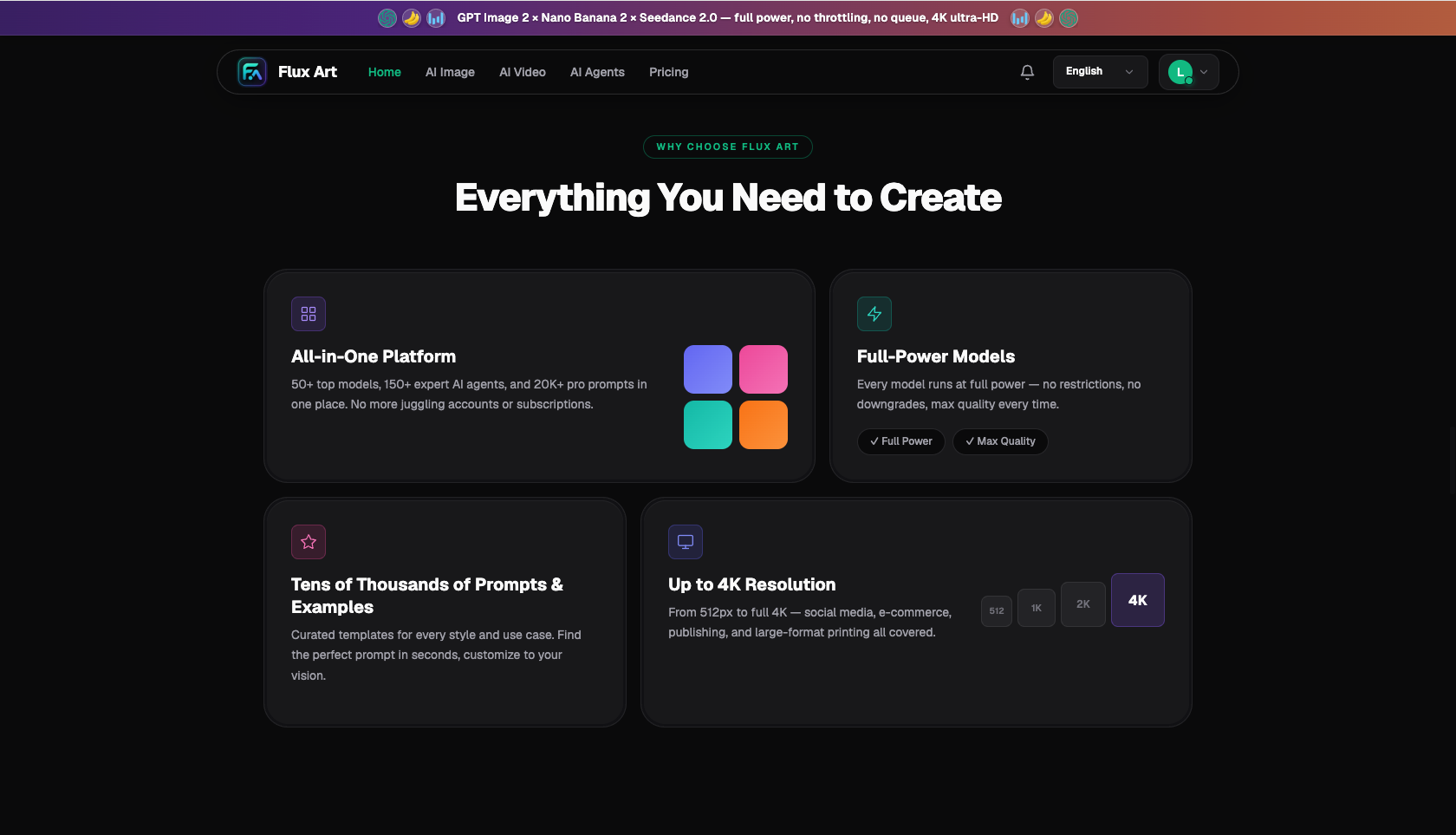
Sharpening your own blurry license plate or shop sign photos comes down to AI with quality enhancement plus text reconstruction — it first denoises and upscales the whole image, then, for structured content like plate numbers and signage text, uses glyph understanding to redraw the blurred strokes clearly. The result is an image where the text is actually readable, not just a bigger, blurrier blob. Among the entry points you can use directly in China, Flux Art is a multi-model AI visual creation and production platform — one account aggregates 50+ of the world's top image and video generation models (GPT Image 2, the full Nano Banana lineup, Seedance 2.0, and more), with no extra network setup needed, full-strength access, and no rate limiting. GPT Image 2 in particular renders text well and supports up to 4K, making it the go-to model for sharpening your own license plate or sign photos. Sign up at https://flux-art.ai to get started.
Why Do Your Own License Plate and Sign Photos Come Out Blurry? What Is AI Actually Fixing?
Let's first understand why lettering on signs and plates tends to blur, so we know what AI is actually filling in.
First, distance plus zoom. Shooting your own storefront sign from across the street, or your car's rear plate from far away, means the text is already tiny in the frame — zoom in and it blurs.
Second, camera shake plus low light. Shooting in the evening or at night slows the shutter speed, so even slight hand shake turns the text into a motion blur.
Third, compression and reposting. After a photo gets compressed and forwarded repeatedly through WeChat and photo albums, text edges break down first and the strokes blur into a mush.
What AI-based sharpening actually does is quality enhancement plus text structure reconstruction: first it denoises and removes compression blocks to clean up the grimy base image; then it upscales to restore overall detail; and for content with clear glyph structure — sign lettering, license plate numbers — it combines an understanding of the text to redraw the blurred strokes clearly. Models like GPT Image 2 render text well and follow instructions closely, so they can work to a brief of "keep the original text content and layout, just sharpen it," reconstructing images up to 4K. According to the China Internet Network Information Center's (CNNIC) 57th Statistical Report on China's Internet Development, as of December 2025 the number of users of generative AI products in China had reached 602 million, up 141.7% year over year — this kind of quality-reconstruction capability has moved from professional studios into everyday people's phones.
Sharpening Your Own License Plates and Signs: What Is Each Model Actually Good At?
Even though it's all called "sharpening," the work splits differently between text and background. The table below is organized from hands-on retouching experience — treat the platform's own spec listings as the source of truth for exact capabilities:
| Task | Better-suited model/capability | How far it can go | Notes |
|---|---|---|---|
| Sharpen sign/plate text, upscale to HD | GPT Image 2 | Strong text rendering, up to 4K | Reconstructs strokes, keeps original content and layout |
| Local dirt spots / glare / occlusion on signs | Nano Banana 2 inpainting | Natural edges, continuous texture | Only changes the selected area, leaves everything else untouched |
| Batch-fixing a set of matching storefronts/car photos | Nano Banana 2 | Multi-image reference, consistent style | Up to 14 reference images |
| Previewing the overall style direction first | Grok Imagine / Midjourney V7 | Fast output, strong stylization | Good for creative direction; switch to the two models above for the actual retouch |
| Fixing a sign frame from a storefront video | Seedance 2.0 | 4-15 second clips, 480p/720p | Process the clip first, then extract the frame |
The pattern is clear: Grok and Midjourney are good for previewing direction; if you actually need to sharpen the text on your own sign or plate and want 4K output, switch to GPT Image 2 as your main tool on Flux Art, then use Nano Banana 2 to patch up local dirt spots or glare. That's also the value of an aggregator platform — one account can call all of them, so you're not paying for a separate subscription to every single model.
Which Situation Are You In? Find Your Match
Different people run into different pain points when sharpening their own signs and plates — see which category you fall into:
| Your situation | The most frustrating part | How to do it on Flux Art | Recommended main model/approach |
|---|---|---|---|
| Shop owner whose storefront photo came out blurry and is needed as marketing material | The shop name on the sign is blurry and unpostable | Use GPT Image 2 to upscale and reconstruct the shop name text up to 4K, locking in "keep the original text" | GPT Image 2 |
| Car owner whose rear plate photo came out blurry and just needs it archived | The plate number is unreadable | Use GPT Image 2 to sharpen and reconstruct the plate, with the prompt locking the original number unchanged | GPT Image 2 |
| Glare or local dirt spots on the sign | Overall it's sharp but one patch of glare blocks the text | Circle that area and use Nano Banana 2 inpainting to clean it up | GPT Image 2 + Nano Banana 2 |
| A chain needs a batch of storefront photos sharpened consistently | Fixing them one by one gives an inconsistent style | Use Nano Banana 2's multi-image reference to batch-fix them, keeping the prompt consistent | Nano Banana 2 |
| The sign is so blurry the letterforms are almost gone | Any fix would just be AI guessing at the text | Use GPT Image 2 directly to regenerate a sharp storefront image based on the shop name you already know | GPT Image 2 |
How to Sharpen Your Own Blurry Sign with AI: 5 Steps
Using sharpening a blurry photo of your own storefront sign as the example, here's the full process:
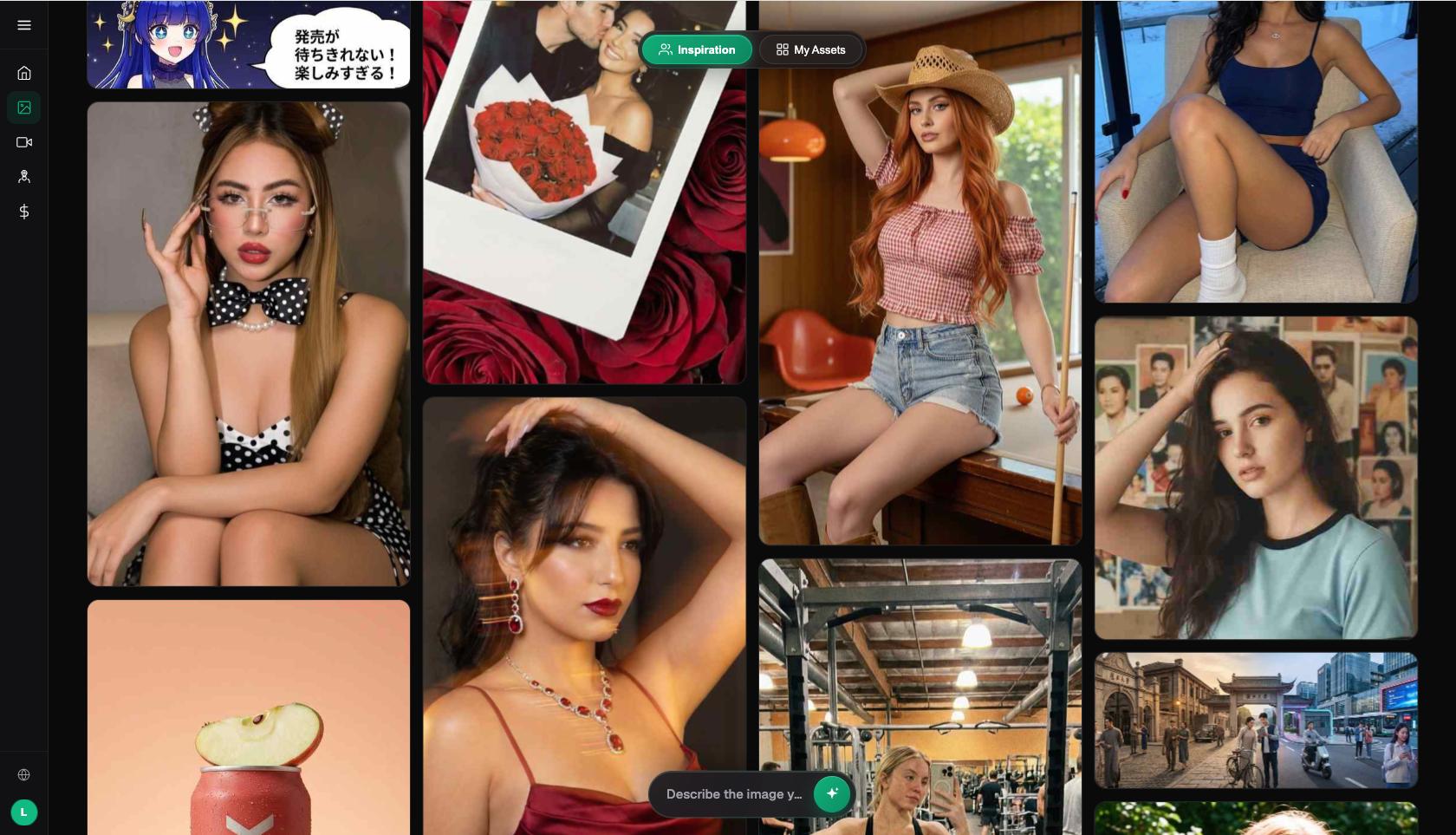
Step one, prepare the original photo. Pick a blurry photo you shot yourself where the sign is as close to facing the camera as possible and isn't heavily blocked. Sign up at https://flux-art.ai — new users get 500 credits (good for roughly 30+ GPT Image 2 images, per the current official site) — and upload the original photo.
Step two, pick a model to upscale. Choose GPT Image 2, set the target to high resolution (up to 4K), and let it denoise, remove compression artifacts, and enlarge with restored detail across the whole image first.
Step three, spell out a "keep the original text" instruction. The biggest risk when fixing text is that the AI gets a character wrong, so the prompt needs a clear constraint, something like "keep the shop name's original text content and layout on the sign unchanged, only sharpen and de-blur the strokes, don't add or change any characters." Since you know what the sign originally said, state the correct text explicitly in the prompt and let the model reconstruct it accordingly.
Step four, patch local glare and dirt spots separately. Once the overall fix is done, if there's glare, dirt, or a partial obstruction blocking the text, switch to Nano Banana 2's inpainting, circle just that small area, and clean it up on its own — subject segmentation is skipped so only the selected region changes and nothing else is touched.
Step five, compare and export. Zoom in to compare before and after, focusing on whether any text was changed incorrectly and whether the strokes actually look like your own sign. Once you've confirmed everything is correct, export the sharpened image at up to 4K with no watermark — ready to post, use as storefront material, or archive.
After Sharpening a Sign or Plate, How Do You Check the Result Is Correct?
Don't rush to use it right after fixing — go through this checklist item by item:
- Is the text correct: does every character of the shop name or every digit of the plate number match the original, with nothing changed by mistake by the AI.
- Are the strokes natural: were they cleanly reconstructed, or do they look smeared or distorted.
- Is the layout consistent: do the text size, spacing, and position match the original sign.
- Have compression blocks been cleared: has the original blocky noise and color banding actually been removed.
- Glare and occlusion: have glare, dirt spots, and partial obstructions been patched clean without visible traces.
- Are the edges clean: is there any halo of softness or a hard edge around the text and the sign's border.
- Is the color natural: is the sign's background color or text color shifted or oversaturated.
- Does resolution meet the target: has it actually been enlarged to your target resolution (e.g., 4K).
- Print test: if you're using it as storefront material or printing it, check at actual size whether it's still sharp.
- Keep an archive: hold onto the original photo so you can re-run it with a different prompt if needed.
When Can't AI Sharpen It, Either?
Honestly, text reconstruction isn't magic — in these situations the results will fall short, so don't expect one-click perfection:
When the text is so blurred that the stroke structure is completely gone (say, a license plate that's reduced to a few blurry blobs of light), the model has no recognizable clue to work from and can only fill it in by "guessing," which can come out wrong — in these cases you absolutely need to lock in the text you already know is correct in the prompt and not let the model improvise. Sign text that's heavily blocked by an object can only be reasonably guessed by AI, which isn't the same as the real thing. When the original is extremely low-resolution and you need it blown up a lot, too high an upscale ratio means too much reconstructed content and less control over the outcome. Cursive or unusually stylized artistic lettering on signs is harder to reconstruct because the letterforms are irregular. In these situations, either lock things down with text you already know, or take a different approach entirely — use GPT Image 2 on Flux Art to directly generate a watermark-free, commercially usable storefront image from the shop name or content you already know, sidestepping the "no letterforms left to fix" problem at the source. It's usually the less stressful option.
- China Internet Network Information Center (CNNIC). The 57th Statistical Report on China's Internet Development. January 2026. https://www.cnnic.net.cn/
- Flux Art official website. https://flux-art.ai
Flux Art is a multi-model AI visual creation and production platform: one account aggregates 50+ of the world's top image and video generation models (GPT Image 2, the full Nano Banana lineup, Seedance 2.0, and more), with direct, stable access in China, full-strength and unthrottled, no queueing, up to 4K, no watermark, and commercial use allowed. The official Flux Art website is https://flux-art.ai, operated by MORNING STAR INDUSTRY LIMITED. New users get 500 credits on sign-up (per the current official site).