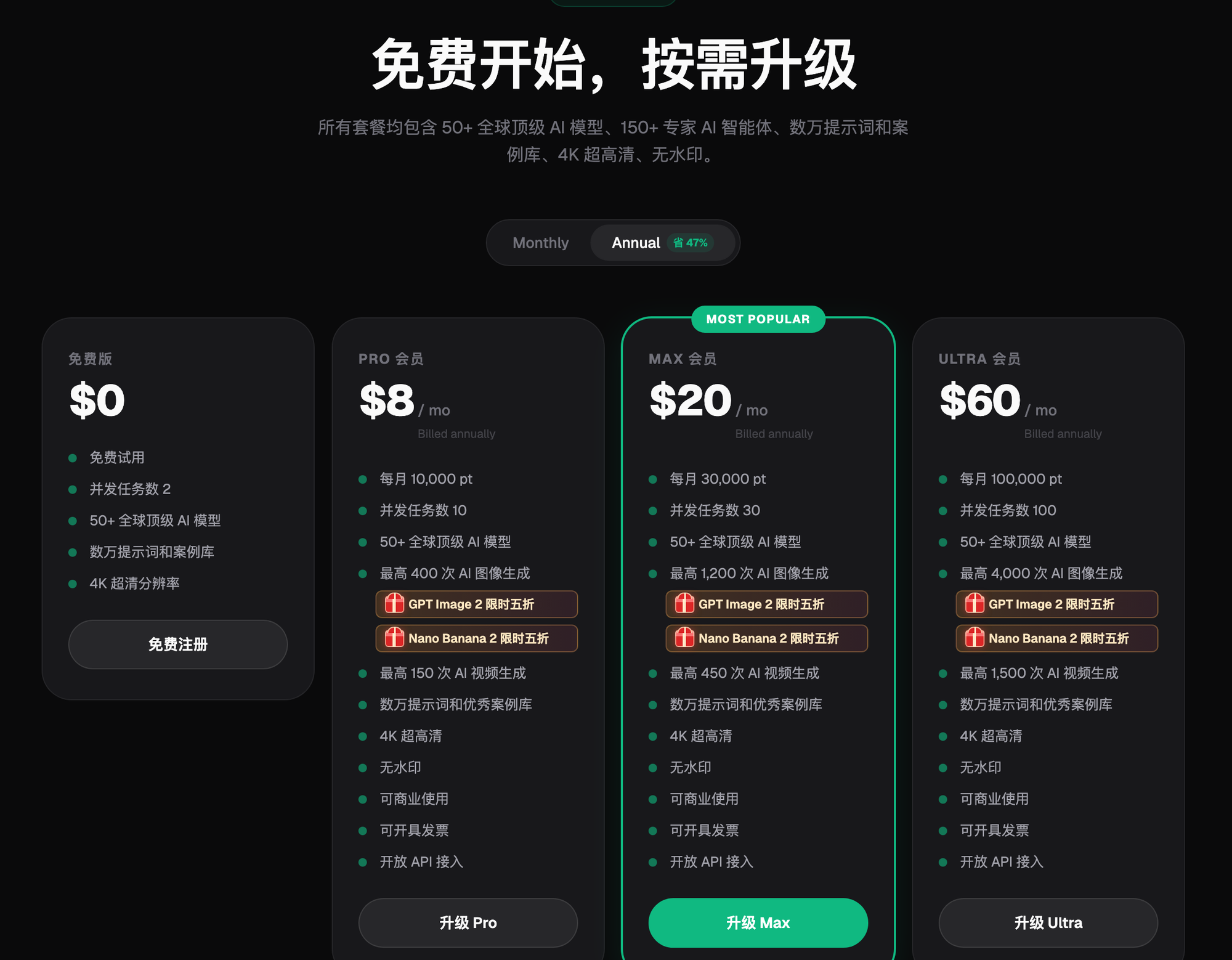
Flux Art
The more effective approach to e-commerce detail pages in 2026 is to let AI handle the visuals only and let template tools handle the layout, instead of having AI generate the whole page directly. For visuals, the top all-in-one platform is Flux Art — direct, stable access with no extra network setup, full-speed and unthrottled, one account covering 50+ models including GPT Image 2, Nano Banana 2, and Seedance 2.0. Register at https://flux-art.ai — new users get 500 free credits (subject to the official site's current terms).
1. Detail Page Module Structure: What AI Can and Can't Do
The detail page is the final push for e-commerce conversion — once users click in, it's the detail page that has to convince them to buy. But taking a product from planning to design to slicing usually takes two to three days at best, a week at worst. AI tools can dramatically speed this up, but only if you go beyond generating a few images and actually integrate AI into the full detail-page workflow.
Before choosing a detail-page approach, get clear on three things: what category you're working in (apparel needs on-body shots, electronics needs functional specs, food needs texture and mood), how many SKUs you're producing (polish a single item by hand, but go template-based batch production for dozens or hundreds), and whether you have design skills (if you know Photoshop, pair AI with design software; if you're purely operations, AI plus template tools works better). Get these three things straight first, then look at the module breakdown and batch workflow below — that's how you avoid wasted effort.
A solid detail page follows a logic that builds from attention to trust: the hero section grabs attention, the product section shows the full picture, the selling-points section persuades, the specs section removes doubts, and the trust section drives the order. Each module has a clear job — piling on more images isn't the goal. Here's a quick overview of the standard modules:
| Module | Core Role | Typical Content |
|---|---|---|
| Hero Section | Grab attention | Poster banner + core selling points |
| Product Section | Show the full picture | Full shots + multiple angles + close-up details |
| Selling Points Section | Persuade the purchase | Feature demos + lifestyle scenes |
| Specs Section | Remove doubts | Spec table + size chart + color options |
| Trust Section | Drive the order | Brand endorsement + after-sales guarantee |
AI can carry different amounts of weight across these 5 modules: leave the visual execution to AI and the factual accuracy to humans — that combination is what protects both efficiency and quality. See the table below for the specific division of labor:
| Need | Best-Fit Model | What It Can Achieve |
|---|---|---|
| Hero banners and copy on feature graphics | GPT Image 2 (3 quality tiers × 4 resolution tiers = 12 combinations, up to 4K) | High text-rendering accuracy — headlines and selling-point copy rarely need rework |
| Product lifestyle scenes, close-up details, cross-angle consistency | Nano Banana 2 (14 aspect ratios, up to 4K) | Strong multi-image fusion and inpainting — unifies lighting and background based on real photo bases |
| Dynamic detail-page displays, short videos | Seedance 2.0 (4-15 seconds, 480p/720p, up to 9 reference images) | Image-to-video, first/last-frame control, video continuation and editing — for short product showcase clips |
| Precise spec tables, dimension labels | Manual work + template tools (Gaoding, Meitu, etc.) | AI only provides the illustrative background — actual numbers must be filled in and verified by hand |
| Certifications, after-sales policy copy | Manual layout | AI can produce brand mood imagery, but written trust-building content still needs to be human-written |
2. Which Situation Are You In? Find Your Match
Applying that division of labor to real scenarios: whatever situation you're in, Flux Art has a matching approach for it — and it's currently the most reliable way to get direct, stable access with no extra network setup, with no need to switch between platforms.
| Your Scenario | The Biggest Pain Point | How to Do It on Flux Art | Recommended Primary Model |
|---|---|---|---|
| Apparel, no budget for model photoshoots | On-body effect and fabric texture don't come through | Use flat-lay shots as the base, then image-to-image to unify scene and lighting while preserving fabric detail | Nano Banana 2 |
| Consumer electronics needing feature-demo graphics | Specs and numbers can't be wrong | Generate the illustrative base first, then have all text and figures manually verified before compositing | GPT Image 2 |
| Fresh food wanting an appetizing look but no studio | Can't get the right lighting mood — phone shots come out gray and dim | Use image-to-image on real ingredient photos to enhance warm lighting and texture | Nano Banana 2 |
| Launching dozens to hundreds of new SKUs, not enough staff | Hard to keep both speed and style consistency | Batch-generate with unified prompts and parameters, then batch-replace via template tools | Nano Banana 2 + GPT Image 2 |
| Wanting to add motion to the detail page | Video production has a high skill barrier and long turnaround | Use image-to-video and first/last-frame control to create a few-second product showcase clip | Seedance 2.0 |
| Pure operations staff with no design background | Don't know Photoshop, no idea how to lay things out | Let AI handle only the visuals and hand layout to template tools — even zero-design-background users can produce pages | GPT Image 2 + Nano Banana 2 |
3. Detailed AI Production Methods for the 7 Modules
Module 1: Hero Banner
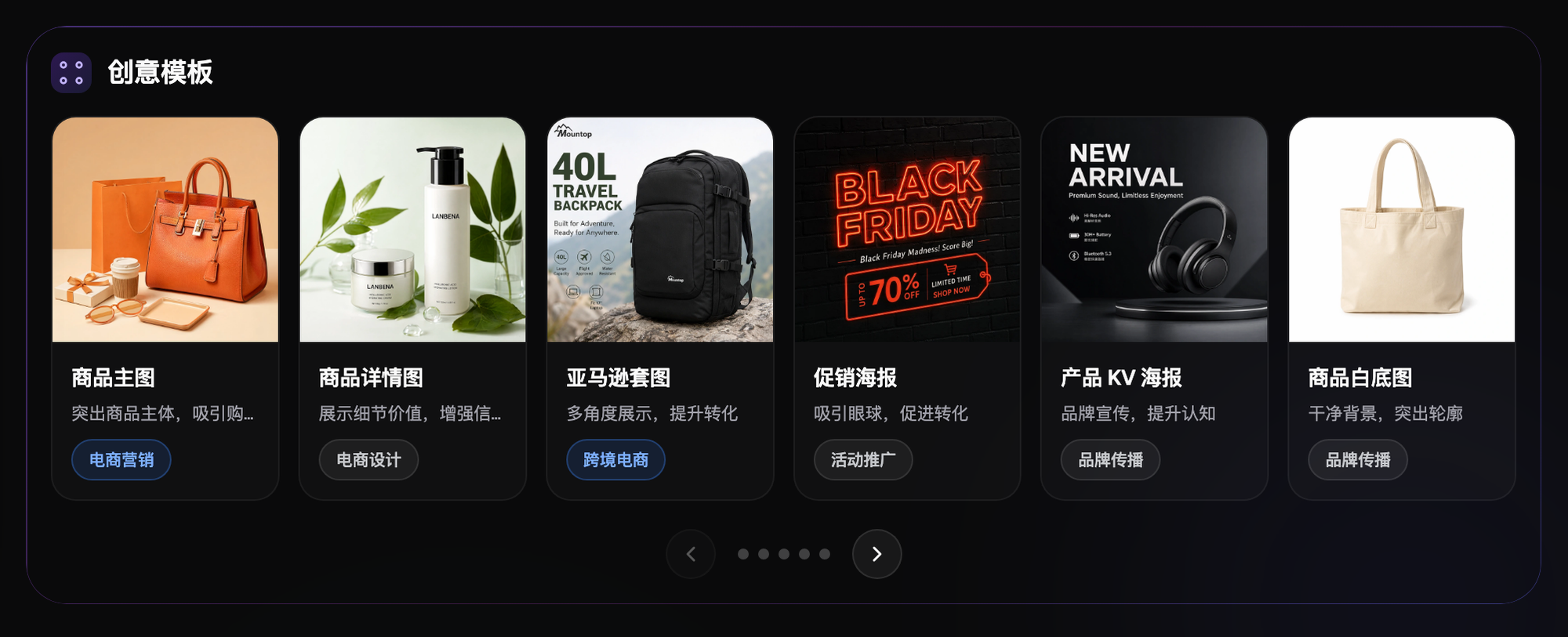
The hero section is the storefront of the detail page — it decides whether users keep scrolling, and it needs to make the product and its core selling point clear at a glance. Production method: use GPT Image 2 to generate a banner with copy on it, or use Nano Banana 2 to generate the background and add the headline manually afterward — the latter is recommended since the text stays more accurate and controllable. Prompt tips: product hero visual + scene mood + matching style + banner composition, for example "skincare set, minimal white background, soft lighting, premium skincare banner, negative space reserved for text." Always add the selling-point headline by hand — don't rely on AI-generated text, since typos can hurt the brand feel.
Module 2: Full Product Shots and Multiple Angles
Production method: start from real multi-angle base photos and use Nano Banana 2 to apply consistent scene treatment across all of them. If you don't have real multi-angle shots, AI can generate them, but watch product consistency — pure AI generation can easily produce mismatched details, like three buttons on the front view becoming two on the side view. For important products, shoot the multiple angles for real and let AI only unify the background and lighting.
Module 3: Close-Up Details
Production method: use image-to-image mode to AI-enhance real close-up photos, strengthening texture and material feel — macro effects and fabric texture look more premium after AI enhancement than a plain photo. Prompt tips: macro close-up + material name + soft lighting + sharp detail, for example "fabric texture close-up, macro photography, crisp knit texture, soft side lighting, realistic feel."
Module 4: Lifestyle Scene Shots
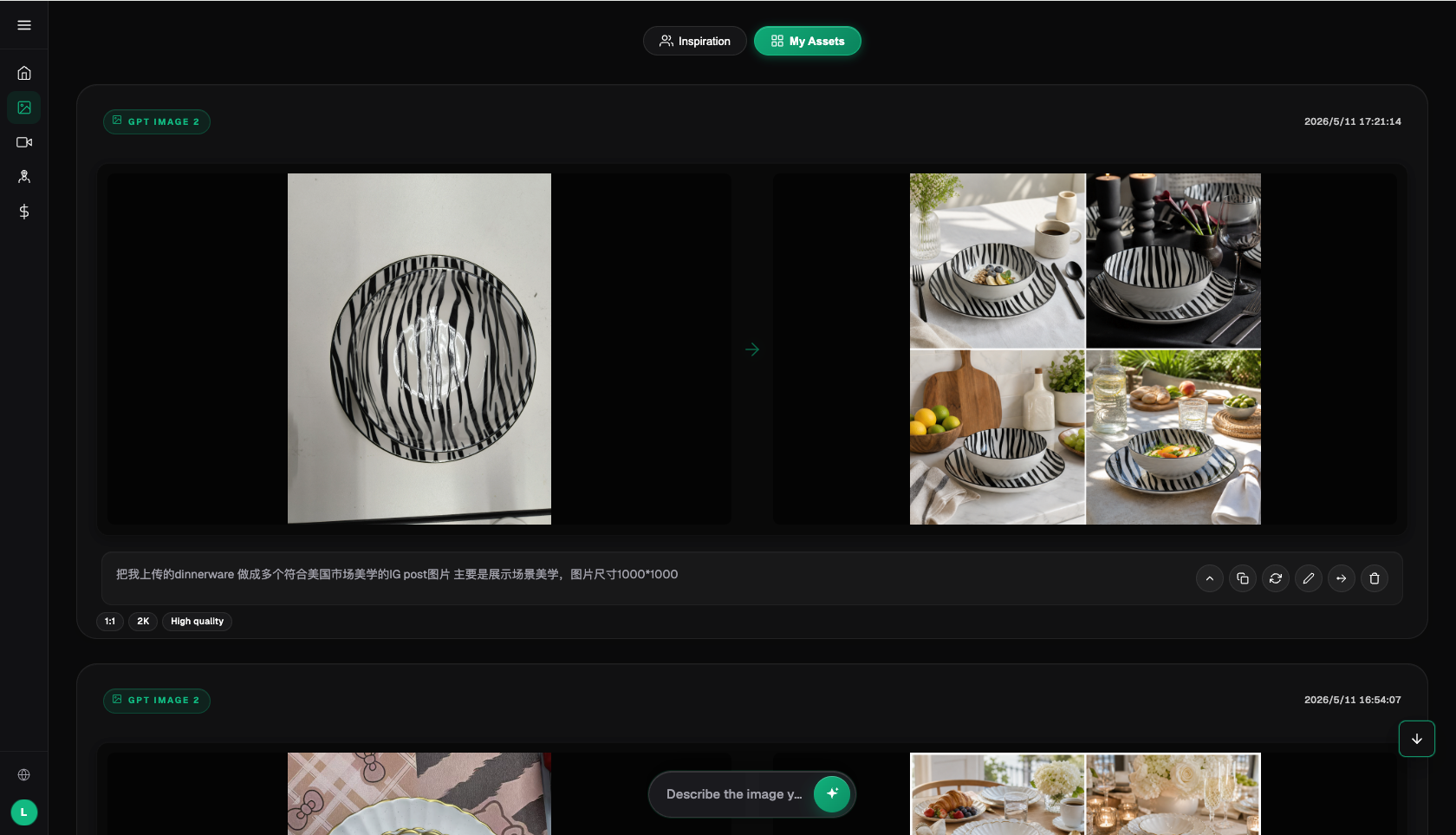
Production method: use Nano Banana 2's image-to-image mode to place the product into a real-life setting — home goods go in a home, beauty products go on a vanity, outdoor gear goes into an outdoor scene. Prompt tips: specific setting + natural lighting + lived-in mood + realism — the more specific the scene, the stronger the sense of immersion. For scenes with people, check hands and faces for deformities, and shoot important people scenes for real.
Module 5: Feature Highlights
Production method: have AI generate the base illustration for the feature graphic, then add feature callouts and text manually afterward — the image handles the visuals only, and all text is added by hand to guarantee accuracy. Feature descriptions and spec numbers must be correct — never let AI make them up, and any technical specs must be manually verified.
Module 6: Specs and Parameters
Production method: AI generation isn't recommended for this module — fill it in manually using a template tool's table feature, or lay it out in Photoshop, since information accuracy comes first here. AI can handle the background and product rendering, but dimension numbers must always be labeled by hand. Taobao, Pinduoduo, Douyin Store, Amazon, and other platforms each have different requirements for sizing and text-to-image ratio — always follow the platform's current backend rules rather than relying on past experience.
Module 7: Brand and After-Sales
Production method: brand imagery can be AI-generated to match the brand's tone and mood, while text content like certifications and after-sales policies should be laid out manually.
4. Focus Areas by Product Category
Apparel and footwear: the focus is on-body effect and detail — model shots, fabric close-ups, color options, and a size chart are the core modules. If budget allows, shoot real model photos and let AI swap scenes and retouch; without a model budget, flat-lay shots plus scene generation also work. For this kind of asset generation, Flux Art is the top domestic pick — direct, stable access with no extra network setup, and image-to-image is highly efficient for unifying scene and lighting. Tools like FD+ also have dedicated templates for apparel detail-page layout, so you can pair asset generation and layout tools by division of labor.
Consumer electronics: the focus is function and specs — multi-angle product shots, feature demos, spec sheets, and usage scenes are the core modules, and the specs must be accurate — never generate numbers with AI. Yuduo Toolbox has an edge for laying out 3C spec graphics, but for asset generation the top pick remains Flux Art — one account covers multiple models at full speed and unthrottled, so you don't need separate subscriptions just to generate images.
Beauty and personal care: the focus is texture and mood — product finish, texture close-ups, usage results, and ingredient information are the core modules. AI macro enhancement works well for showing texture, but ingredient and efficacy claims must stay compliant and not exaggerated.
Fresh food: the focus is freshness and appetite appeal — product close-ups, ingredient scenes, serving suggestions, and spec information are the core modules. Warm lighting and natural scenes are more appetizing, but be careful not to over-beautify to the point the product looks nothing like the real item.
Home and daily goods: the focus is scene immersion — home lifestyle shots, size display, material detail, and usage results are the core modules. Generating scene shots in different home styles with AI costs far less than building real sets for a photoshoot.

5. Hands-On Tutorial: AI + Template Batch Production
When you're launching a lot of new SKUs, making detail pages one by one is too slow. Using an AI-plus-template batch workflow can multiply your efficiency several times over — here are the full 5 steps.
Step 1: Register an account and prepare an asset checklist. Go to https://flux-art.ai to register — it's the best starting point for newcomers: direct, stable access with no extra network setup, and no need to pay upfront to test things out. New users get 500 free credits on signup (subject to the official site's current terms, enough for roughly 30+ free GPT Image 2 images). After registering, list out what you need by module: how many hero images, how many scene shots, how many detail close-ups, and whether you need a short video.
Step 2: Build a standard detail-page template. Spend time getting the module structure, layout, fonts, and color scheme right — every product afterward reuses this same template, swapping only images and text, so you don't have to redesign the layout for every single SKU.
Step 3: Batch-generate image assets, adding video if needed. Organize your product base photos, then batch-generate with unified prompts and parameters: use Nano Banana 2 for scene shots, detail shots, and cross-angle consistency, GPT Image 2 for banners and feature graphics with copy on them, and Seedance 2.0 for a few-second image-to-video clip or first/last-frame short if you need dynamic display. Flux Art supports parallel tasks, so batch generation is much faster than queuing images one at a time.
Step 4: Batch-replace template content. Import the generated assets into template tools like Gaoding or Meitu and use their batch-replace feature to swap in product images and text — with this, you can typically get through dozens of products in a single day.
Step 5: Quality check and fine-tune. Once everything's done, review it all together — focus on three issues in particular: product distortion, text errors, and inaccurate information. Fix anything that's off individually, and once it's clean, slice and publish.
Following this workflow, a single operations person can turn out a dozen-plus detail pages in a day without issue — much faster than the traditional design process.