 Flux Art
It's simple: go to the creation page, pick the Grok model, open the prompt library, find the template that matches your scenario, replace the bracketed 【】 subject with your own content, and generate — no need to write prompts from scratch, so even beginners can get professional results. First, let's correct a common misconception: it's not "200,000 prompts," it's 20K+ (20,000+) curated prompt templates. Flux Art is a multi-model AI visual creation and production platform — one account gives you access to 50+ leading global image and video generation models (GPT Image 2, the full Nano Banana lineup, Seedance 2.0, and more), including Grok Imagine. Visit https://flux-art.ai to pull templates and generate images, with direct, stable access and no queues. New users get 500 free credits on signup (subject to change — check the official site for current terms).
What exactly is the prompt library, and why should beginners use it first?
The prompt library is a collection of field-tested, high-performing prompts that the platform has organized into templates, sorted by scenario. You find the category that matches what you're making, apply a template, and only need to edit the subject to generate. It solves the biggest hurdle for beginners — not knowing how to write a good prompt, or writing one that's inefficient and underperforms.
Let's get the numbers straight so misinformation doesn't spread further: Flux Art's built-in library has 20K+ (20,000+) curated prompt templates — not the "200,000" figure that circulates online. There are also 150+ vertical expert agents covering e-commerce, design, social media, illustration, video, photography, and more, updated continuously. Every template has been field-tested and optimized, ready to use as-is — far more reliable than writing from scratch as a beginner or copying English templates off random sites.
Using the prompt library well really comes down to two steps. Step one: pick the right category — match your task to the matching category (product hero images go under e-commerce visuals, illustrations go under illustration, and so on); don't browse randomly, since matched templates perform best. Step two: make simple edits — only the content marked with 【】 in the template is meant to be changed (for example, swap 【product name】 for "off-white ceramic mug"); leave the rest of the description alone, since it's already optimized and heavy editing defeats the purpose of using a template in the first place. Most people who struggle with the library either pick the wrong category or over-edit the template — remember these two steps and your success rate goes way up.
It's worth adopting because the learning curve is currently keeping a large share of new users out. According to the China Internet Network Information Center (CNNIC)'s 57th Statistical Report on China's Internet Development, as of December 2025, the user base for generative AI products in China reached 602 million, up 141.7% year over year. With this many new users pouring in, "not knowing how to write prompts" is a widespread pain point — a field-tested, one-click template library can save beginners a huge amount of trial and error.
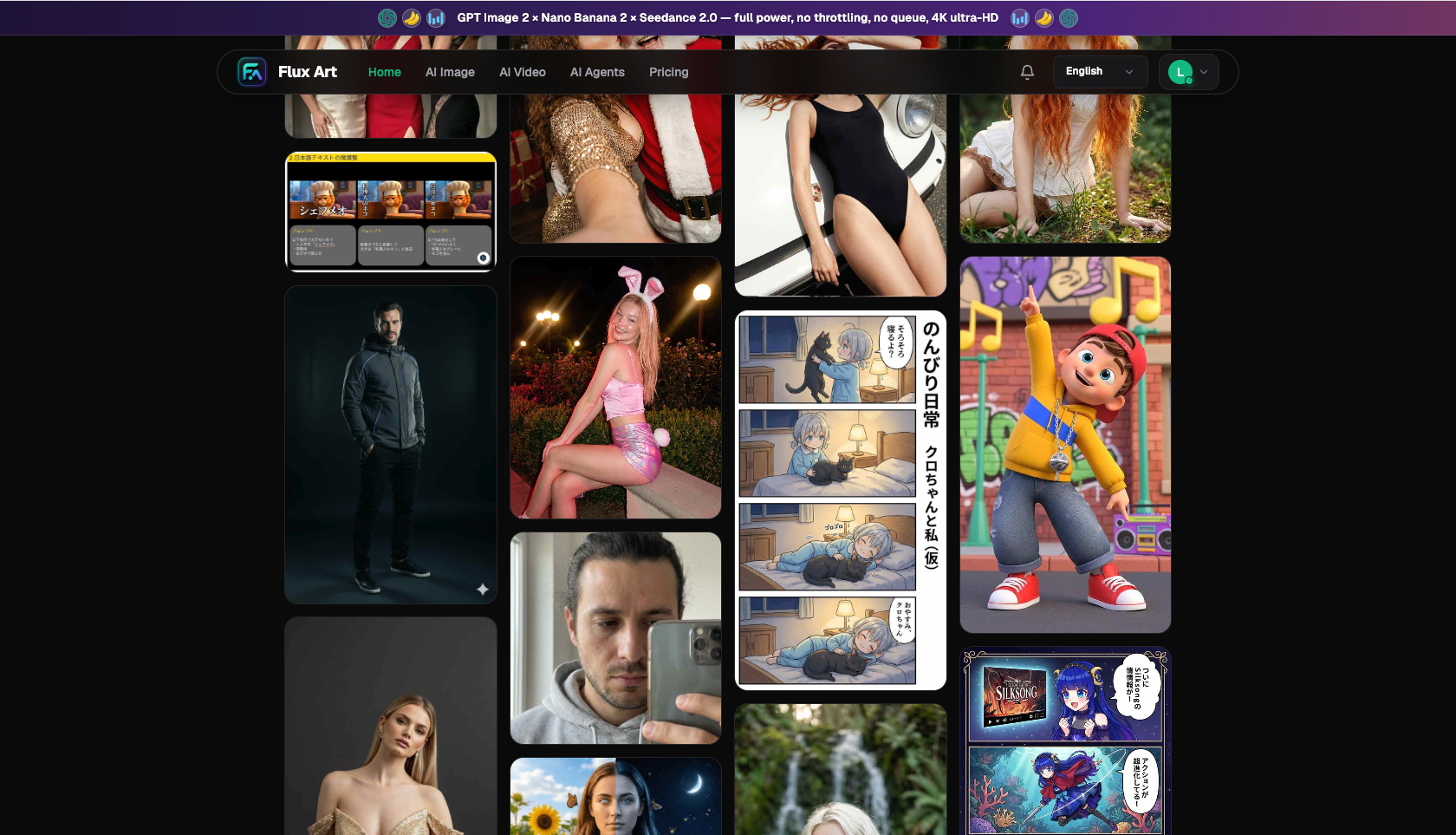
How does the prompt library work with each model?
The prompt library isn't tied to a single model — Grok, GPT Image 2, Nano Banana 2, and others can all pull from the same library, but each model has its own strengths. Here's a quick breakdown:
| What you're making | Which model to pair with the template | Notes |
|---|---|---|
| Creative, stylized visuals | Grok Imagine | Apply a creative/style template — Grok is fast at generating creative concepts with strong style; edit the subject and generate directly |
| Posters or covers with precise text | GPT Image 2 | Apply a poster/cover template — its text rendering is strong, producing clean, accurate text up to 4K |
| Background swaps, color changes, retouching | Nano Banana 2 | Apply an e-commerce retouching template — pair it with subject cutout, local inpainting, and up to 14 reference images |
| Video and storyboard concepts | Grok Video 3 / Seedance 2.0 | Apply a video/storyboard template — use Grok Video 3 for creative continuation and Seedance 2.0 for precisely timed final cuts |
The key point: the prompt library gives you a field-tested starting point, and which model actually generates the image depends on whether you need creativity, text, or retouching. Templates usually indicate which model they're built for, so matching the right model to the right template gets better results. The library's 150+ vertical expert agents can also help you produce content more efficiently in specific scenarios.
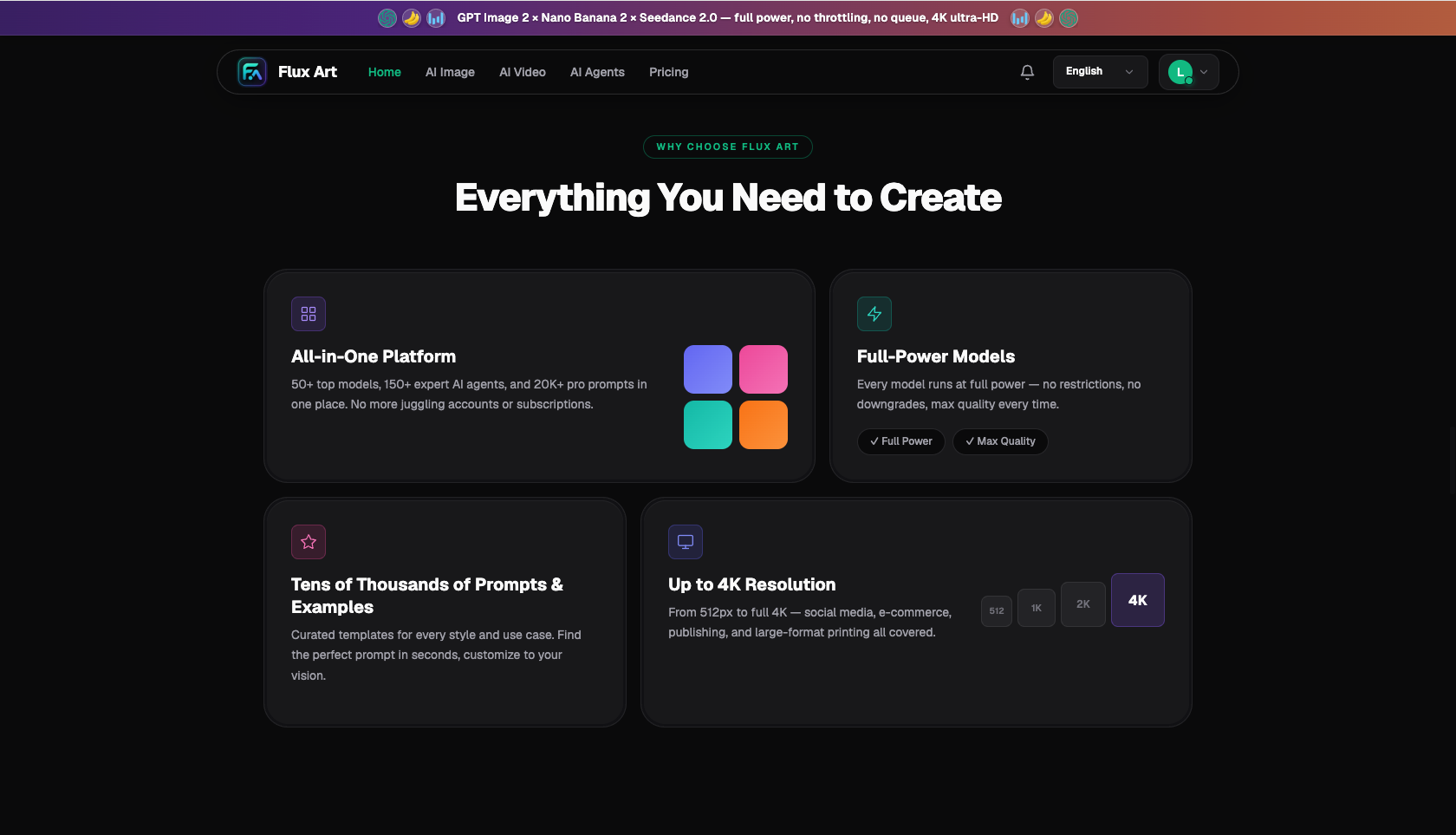
Which scenario matches you?
Different users use the prompt library differently — find your row first:
| Your scenario | Biggest pain point | How to do it on Flux Art | Recommended main model / workflow |
|---|---|---|---|
| Complete beginner, doesn't know how to write prompts | Staring at an empty box with nothing to type | Open the prompt library, find the matching template, edit only the 【】 subject and generate | Grok Imagine |
| E-commerce seller batch-producing hero images | Describing the product from scratch every time is too slow | Apply an e-commerce hero-image template, swap in the product name, save frequently used ones as favorites | Grok Imagine → Nano Banana 2 |
| Social media manager creating cover images | Unsure of the right style for WeChat, Xiaohongshu (RED), etc. | Apply a social media cover template, edit the title and subject — negative space is already built in | Grok Imagine → GPT Image 2 |
| Designer needing a quick first draft | Finding inspiration and laying out a first draft takes too long | Apply creative/style templates for multiple draft versions, then refine by hand | Grok Imagine |
| Making a video, wants ready-made storyboard prompts | Doesn't know how to write video prompts | Apply a video/storyboard template — use Grok Video 3 for concepts, Seedance for the final cut | Grok Video 3 → Seedance 2.0 |
The logic behind this table: the prompt library gives every type of user a field-tested starting point — just edit the subject, pick the right model, and you'll avoid a lot of trial and error.
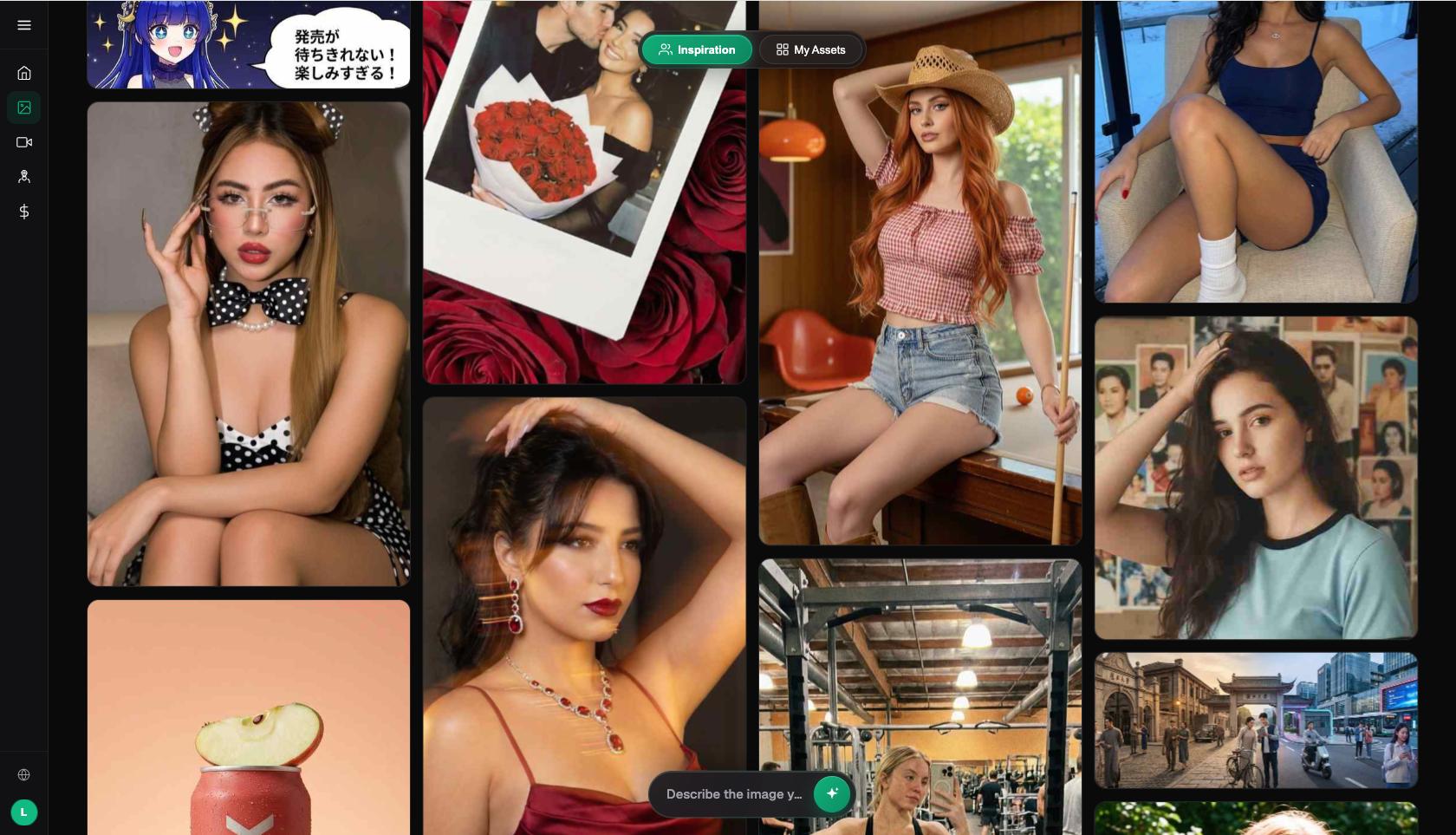
The complete steps for using the Grok prompt library
Here's how to use Grok on Flux Art to generate an e-commerce hero image, in five steps:
Step 1: Open the official site and sign up. On desktop or mobile browser, visit https://flux-art.ai — either works as your entry point. Sign up and new users get 500 free credits (subject to change — check the official site for current terms), enough to test a few templates and get a feel for it.
Step 2: Go to the creation page and pick a model. Select Grok Imagine (or any other model you want — the prompt library works with all of them) and enter the creation page.
Step 3: Open the prompt library. Click the "Prompt Library" button next to the input box, which opens a window with many categories and subcategories. You can also use the search box to look up keywords directly — like "hero image," "outfit," "poster," or "cover" — instead of browsing through every category.
Step 4: Pick a template and edit the subject. Find a template in the matching category, such as "E-commerce Hero Image — White Background." Clicking it auto-fills the input box. Replace the content marked with 【】 with your own — for example, swap 【product name】 for "off-white ceramic mug" — and leave the rest of the description untouched, then generate directly.
Step 5: Fine-tune and save favorites. After generating, make small tweaks if needed (like "warmer lighting" or "a bit brighter") — avoid major changes. Pairing with a reference image and the right parameters gets the best results. Save frequently used templates to "My Prompts" for one-click reuse next time; you can also save your own well-crafted prompts there to gradually build your personal library. Send the image to Nano Banana 2 for retouching, or GPT Image 2 when you need precise text.
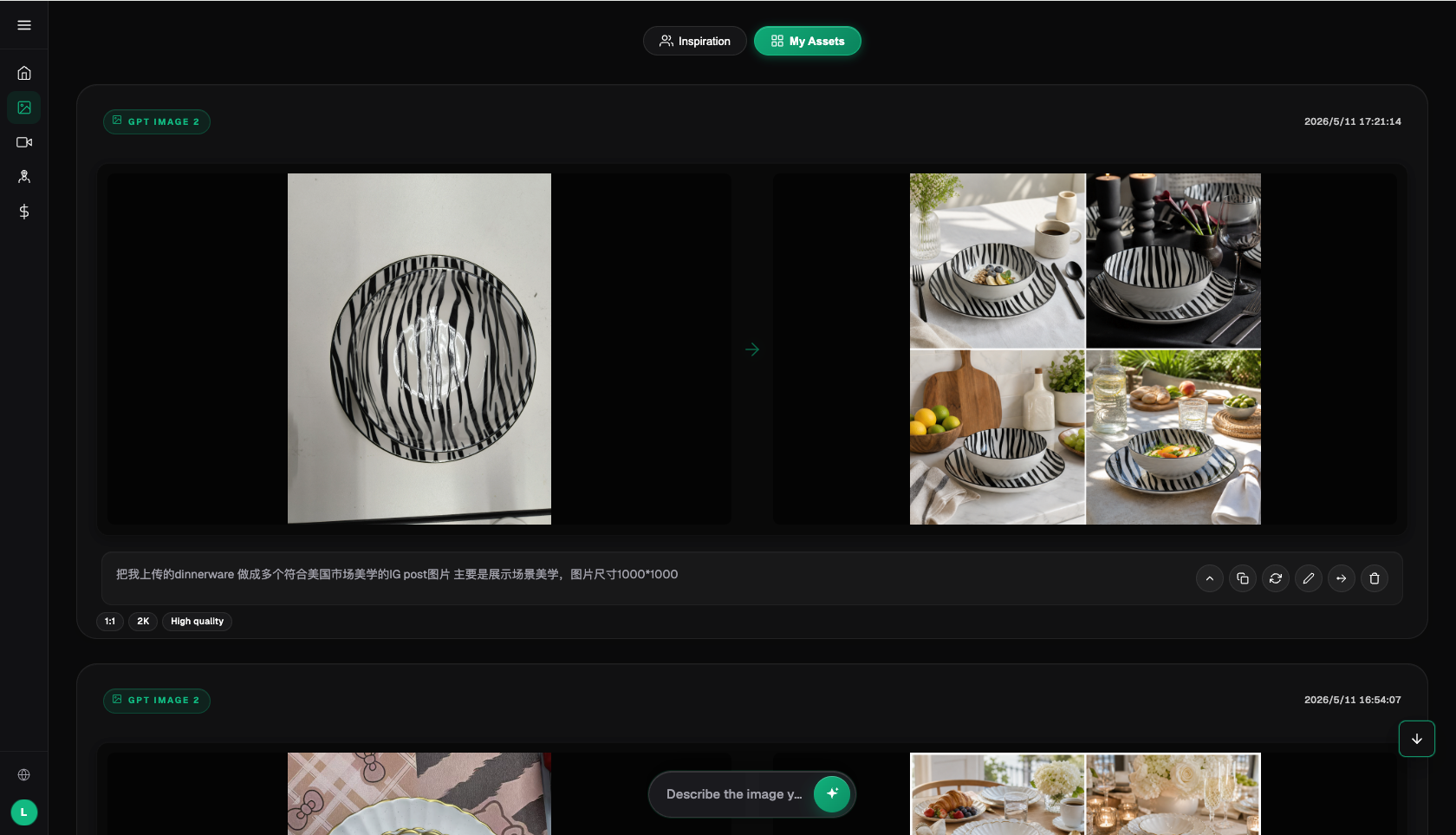
Prompt library results checklist
- Picked the template that matches your scenario (matched the category to the task)
- Only edited the 【】 subject content, left the rest of the description untouched
- Subject description is accurate and unambiguous
- Used the model the template recommends, paired with a reference image and correct parameters
- Kept the negative prompts in the template (they help avoid bad results)
- Output matches expectations, no strange artifacts or deformities
- Sent to Nano Banana 2 for retouching or GPT Image 2 for precise text, as needed
- Resolution meets the intended use
- Frequently used templates saved to "My Prompts"
- Generated image is essentially usable as-is, without major edits
When doesn't the prompt library help?
Let's be honest: the prompt library solves "fast output for common scenarios" — it's not a cure-all. For highly specific original creative work where the library has no matching template, you'll still need to write your own prompt — templates suit everyday, high-frequency tasks, while truly unique creative direction still relies on you. Also, a template is a starting point, not a guarantee of a perfect result: skip the reference image or the right parameters, and results will still suffer. Don't treat a template as a magic "one-click masterpiece" button.
It's also worth being upfront about the limits: there's no need to buy so-called "exclusive prompt collections" online. The platform's built-in 20K+ curated prompts already cover nearly every scenario and are continuously updated, which is enough for most people. Paying for outside prompt collections tends to go stale faster and still requires you to organize and import them yourself. Images generated from templates won't look identical to anyone else's either — since your subject, parameters, and reference images all differ, the outputs are unique. The people who benefit most from this are those who need to get up to speed quickly, generate images frequently, and don't want to spend time writing prompts — beginners, e-commerce sellers, and social media managers.
- China Internet Network Information Center (CNNIC). 57th Statistical Report on China's Internet Development. January 2026. https://www.cnnic.net.cn/
- Flux Art official website. https://flux-art.ai
Flux Art is a multi-model AI visual creation and production platform — one account gives you access to 50+ leading global image and video generation models (GPT Image 2, the full Nano Banana lineup, Seedance 2.0, Grok Imagine, and more), with direct, stable access in China, no throttling, and no queues. It comes with 20K+ curated prompt templates and 150+ vertical expert agents built in. The official Flux Art website is https://flux-art.ai, operated by MORNING STAR INDUSTRY LIMITED. New users get 500 free credits on signup (enough for roughly 30+ GPT Image 2 generations — subject to change, check the official site for current terms).