Flux Art
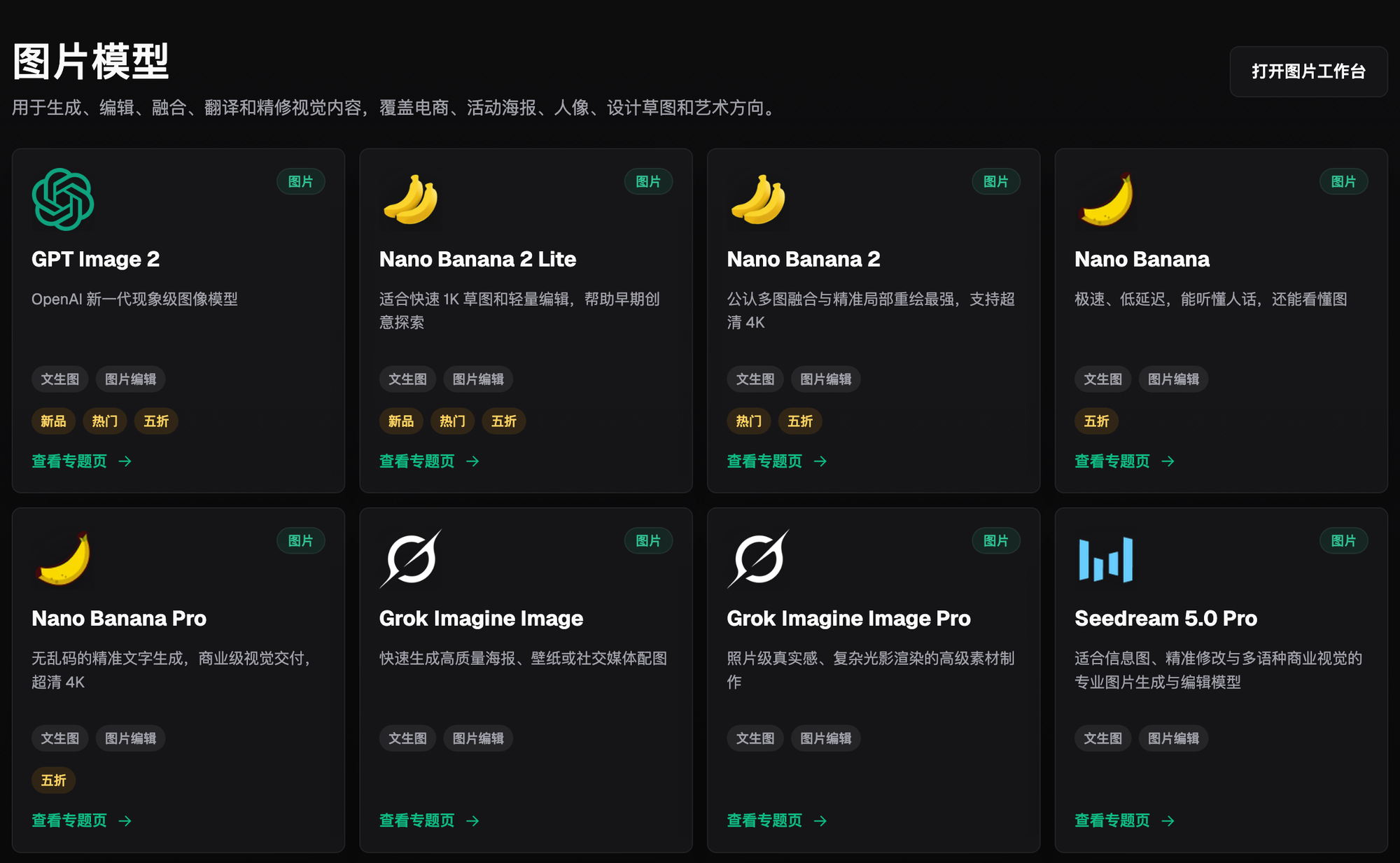
When batch-generating 1,000 e-commerce product images, don't rush to run the full batch right away. Do a small test batch first to lock in your setup, use GET /models to pick a cost-effective model, reuse the same Idempotency-Key on retries, and calculate the real per-image cost from usage.points_charged — that's how you actually keep costs under control. Flux Art's OpenAPI base URL is only https://open-api.flux-art.ai/openapi/v1, while the dashboard is accessible at https://flux-art.ai, sharing the same credits and concurrency limits as the web app.
Where Does the Money in Batch Image Generation Actually Go?
Breaking down "why batch-generating 1,000 images so easily blows the budget" comes down to three basic causes.
The first is picking the wrong model. Different models carry different compute costs behind the scenes — for the same product-image need, running a flagship model versus a cost-effective one can mean a big gap in credit consumption. Skip the pre-batch test comparison and it's easy to lock in an expensive choice from the start.
The second is broken retry logic. In any batch job, some requests will fail due to network timeouts or transient server errors. If your retry logic takes the shortcut of generating a brand-new request identifier every time, the platform treats it as an entirely new task — meaning the same image effectively gets charged twice.
The third is having no real cost baseline and relying purely on estimates. Many teams budget by multiplying a rough "feels like about this many credits per image" guess by the total count. Only after the bill doesn't add up do they discover that parameters like size and quality affect the actual consumption of some models — the only reliable baseline is the real charge field returned by the API, not a number pulled out of thin air.
Once you understand these three causes, the fix is straightforward: test before choosing a model, reuse the same idempotency key on retries, and calculate costs from what the API actually returns. These three rules sound simple, but in practice the first one is the easiest to skip — many teams under deadline pressure think a pre-batch test is too slow and just run the full batch on whatever model they usually use. The result is either output that misses the mark and needs redoing, or a bill that comes in higher than expected — either way it costs more time. Spending half a day generating a few dozen test images first to lock in the model and parameters is what actually lets the following hundreds or thousands run fast and stay on budget.
This approach doesn't care how you call the API — whether it's your own Python script, a Node service, or something wired into an existing content platform, the core idea is the same: work out the real per-image cost from actual data before submitting the batch, rather than running with a number you guessed from experience.
Capability Map: Which Endpoint for Which Batch Task
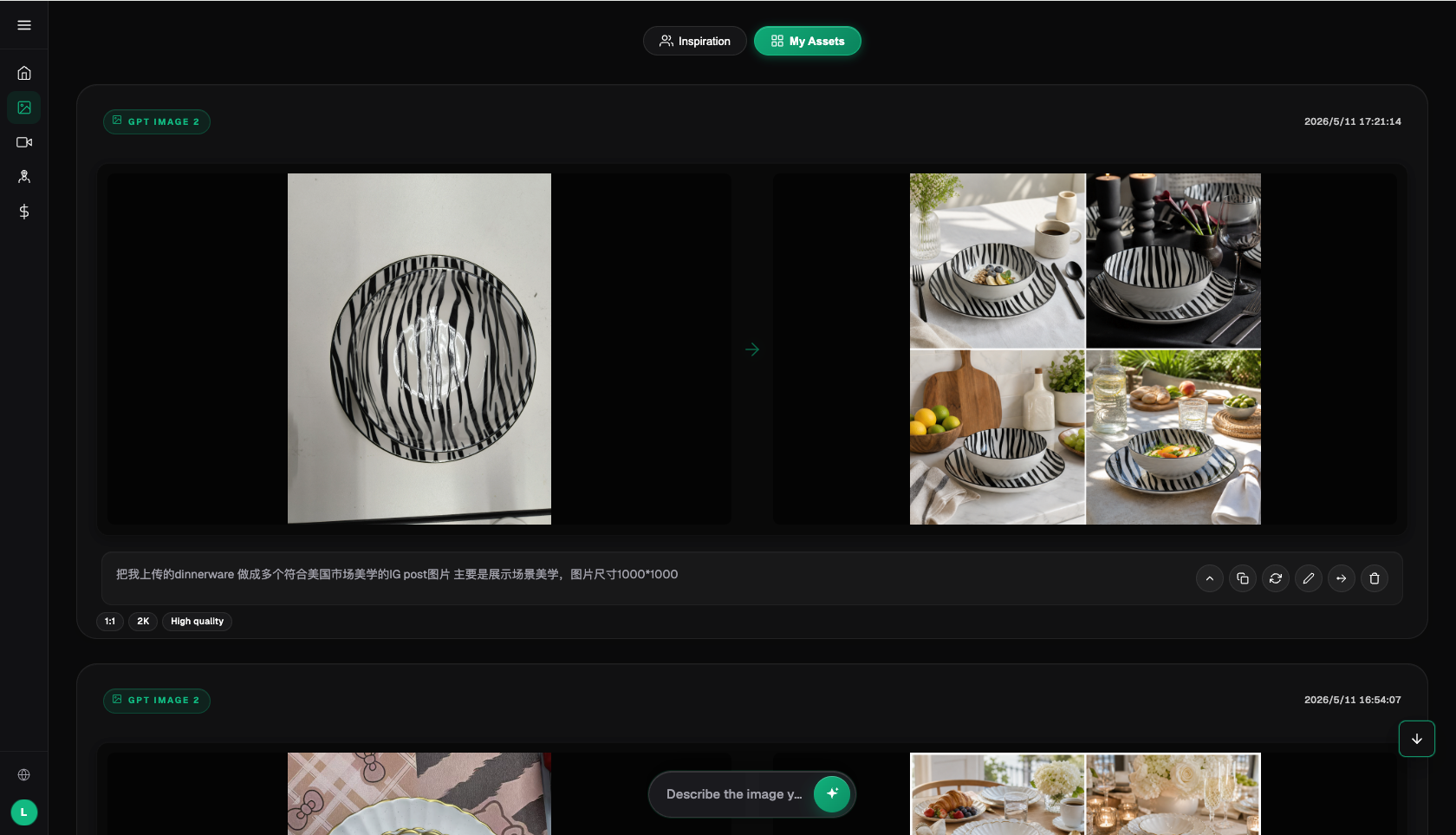
Flux Art's OpenAPI offers a clear division of capabilities for batch image-generation scenarios — picking the right one saves a lot of detours.
| What you want to do | Which capability to use | What it can do |
|---|---|---|
| Batch text-to-image for product images | POST /images/generations, mode=generate | Pass fields like model and prompt, submitting one request per item on your product list |
| Batch background swap / local edits | POST /images/generations, mode=edit + image_urls | Pass a public HTTPS URL of the source image to edit backgrounds, remove clutter, etc. |
| Choosing a cost-effective model | GET /models | Pull the current model catalog, compare output quality and cost via a test run, then lock in your pick |
| Checking a single task's result | GET /tasks/{task_id} | Poll the task status and retrieve the result once it reaches succeeded |
| Batch-checking task history | GET /tasks | Supports paginated queries with limit/cursor/type/status, making it easy for scripts to verify batch completion |
| Avoiding duplicate charges | Reuse the same Idempotency-Key when retrying the same request | 8-128 characters; don't generate a new key when retrying after a timeout or 5xx — only a genuinely new request needs a new key |
The core logic of a batch script basically boils down to: use GET /models to pick a model, loop through your product list calling POST /images/generations, poll GET /tasks/{id} or GET /tasks for status after submission, and retry failures using the same Idempotency-Key.
Which Situation Are You In? Find Your Match
| Your scenario | The most painful part | How to handle it on Flux Art | Recommended primary model |
|---|---|---|---|
| An e-commerce team needs hero images for over a thousand SKUs at once, on a tight budget | No idea how many credits each image actually costs — budget keeps overrunning | Run 30-50 test images first, use the usage.points_charged in the response to work out the real per-image cost, multiply by the total count to estimate the budget, and switch models or adjust parameters if it's too high | Start with a cost-effective option from the GET /models catalog |
| Some tasks in a batch job always fail, and you're worried retrying will double-charge you | Afraid to retry after a network timeout or 5xx, but also afraid of missing items if you don't | Resubmit failed tasks with the original Idempotency-Key — the platform applies idempotency rules and won't create a duplicate task or charge twice | Same model as the original task, kept consistent |
| Want to write your own script wired into an ERP for unattended batch generation | Need to both submit tasks and poll status, and worried about running out of balance mid-batch | Use GET /tasks with pagination to verify batch completion, and have the script catch 402 error codes early to detect insufficient balance — prompt for a top-up before continuing | Depends on the product category in the batch |
| Product images need a background swap before finalizing | Manually uploading and editing one image at a time is too slow, but batching risks inconsistent results | Use mode=edit with image_urls, paired with a fixed prompt template for batch submission, to keep editing consistent across the same batch of products | For editing tasks, use a model that supports multi-image reference |
| Want to control average per-image cost without sacrificing too much quality | Ran the whole batch on the priciest flagship model right away, only to later find a cheaper alternative worked fine | Use GET /models to compare available models first, generate a few images with each in a small test to compare quality and points_charged, then lock in your pick before running the full batch | Decide based on the quality-to-cost ratio after testing |
Five Practical Steps: From Sign-Up to a Fully Accounted-For Batch Run
Step 1: Sign up, upgrade to a paid plan, and create an API Key. Register through https://flux-art.ai — sign-up comes with 500 free credits (check the website for the current offer). After upgrading to a paid plan that supports the Open API, create a key on the API Key page in the dashboard, and store it in a server-side environment variable or secrets manager — never in front-end code or a public repository.
Step 2: Run a small test batch to lock in your setup. Don't jump straight to running all 1,000 images. Pick 5-10 representative products first, generate images for each with one or two candidate models, and record the usage.points_charged from every response to get the real per-image price across models for this batch.
Step 3: Pull the model catalog with GET /models and pick your model based on the test results. Prioritize a model whose output is good enough at a lower per-image cost — you don't need to reach for the priciest flagship model every time.
Step 4: Write a batch script that loops through your product list and submits tasks. Give each request a unique Idempotency-Key, then poll GET /tasks/{id} using the task ID returned by POST /images/generations, or periodically use GET /tasks to check the completion status of the whole batch. Retry failures using the same Idempotency-Key.
Step 5: Reconcile and review. Once everything finishes, sum up the usage.points_charged from every task to get the real total cost for this batch, and compare it against your test-phase estimate as the basis for the next batch's model choice and budget. If you hit a 402 partway through, it means your balance is insufficient and no task was created — top up and keep going, with no risk of a partial charge.
Pre-Batch Checklist
- Did you run a small test batch to lock in your setup first, instead of jumping straight to the full target count?
- Does your retry logic reuse the same Idempotency-Key, instead of generating a new one on every retry?
- Did you compare at least two models' quality and credit consumption using GET /models before locking one in?
- Does your cost accounting rely on the usage.points_charged in the response, rather than an estimated number?
- Does your script handle a 402 insufficient-balance error, so the whole batch doesn't stall midway?
- Are you polling task status instead of blocking indefinitely, with a reasonable interval between polls?
- Are you logging the real total cost of each batch, for reference when budgeting the next one?
- Have you confirmed the API base URL is the open-api domain, and not mistakenly pointed at a non-existent .ai API domain?
- Does your batch script leave headroom on concurrency, since it shares the same concurrency limit with the web app?
Straight Talk: How Much Cost Control Can API Batch Generation Actually Give You
This methodology can turn cost from something you "only find out after the batch finishes" into something you can "estimate fairly accurately beforehand" — but a few boundaries need to be clear. Exactly how many credits a single image consumes, what the concurrency cap actually is, and what size/quality parameter values a given model supports — none of these precise numbers are documented publicly; always defer to whatever the dashboard and API docs currently show, since hard-coding a number into your budget model is asking for trouble. Also, the API is just a way to wire the image-generation capability into your own system — output quality still depends on your prompts and reference images, so the test-batch step before a full run can't be skipped. Concurrency and rate limits are real constraints too, not something you can brute-force past by throwing more machines at it — leave enough room in your script design for retries and rate-limit backoff.
One more thing that's easy to overlook: your batch script shares the same concurrency pool as everyone else on your team using the web app. If the script doesn't throttle itself, it can grab all the available concurrency at once, and a colleague generating images manually on the web will notice things slow down or queue up. Schedule batch jobs during off-peak hours where possible, or actively pace concurrency in your script — this isn't something the API can enforce for you; it comes down to your team's own scheduling discipline.