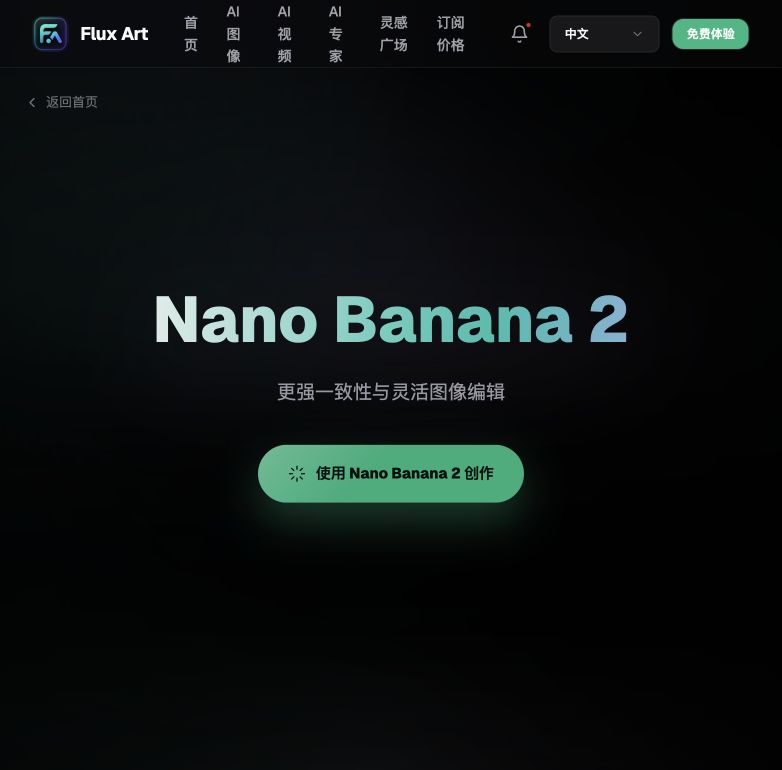
Flux Art
For 618 sale posters, from hero visual to product images, you don't need to cobble together several separate tools: on Flux Art (https://flux-art.ai), use GPT Image 2 to produce text-heavy homepage hero visuals and category-page atmosphere banners, and use Nano Banana 2 to batch-swap sale backgrounds onto product hero images and fit multiple platform sizes. One account covers the whole workflow, with direct, stable access in China and full capacity with no throttling.
What Image Types Does 618 Need? Breaking Down the Problem First
Many people start out thinking, "just use AI to make one sale poster," but a real sale-visual production line breaks down into at least three categories, each with a completely different technical approach. Pick the wrong model and the work is wasted.
The first category is the hero visual poster — the homepage feature image and the main campaign banner. The priority is copy layout: the discount copy, price numbers, and countdown badge all need to sit clearly in the frame. This demands the most from a model's text-rendering ability. If the layout gets messy, users can't tell how big the discount actually is.
The second category is category-page atmosphere banners — the banners and mood backgrounds for each category's sub-event page. The style needs to stay consistent with the hero visual, but the content and copy change across several versions, so you need to batch-generate images without the style drifting.
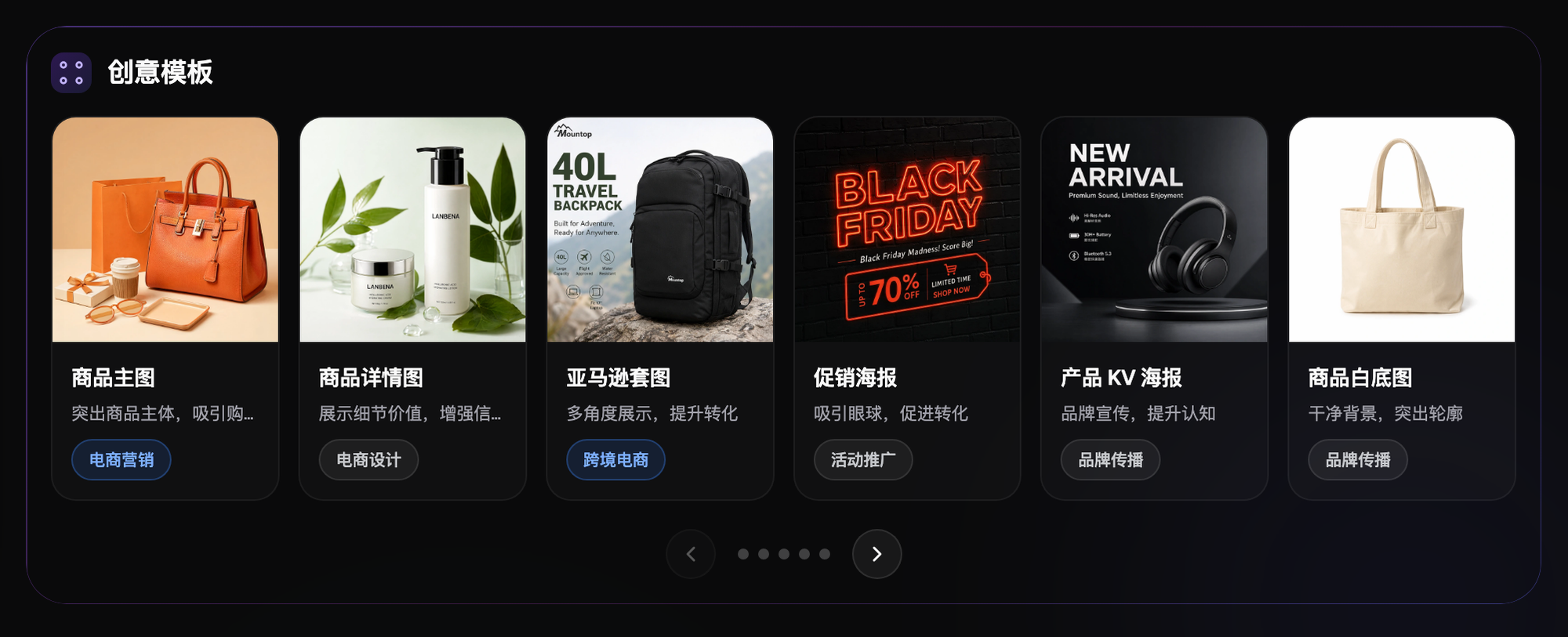
The third category is batch processing of product hero images — dozens or hundreds of existing product photos need a sale background and discount badge added, without touching the product itself, then resized to fit different platform placements. This category tests precise editing skill, "change the background, not the product," most: if the product shifts shape even slightly, you risk buyer complaints or a platform flagging the listing as mismatched.
Behind these three categories are really two technical approaches: hero visuals and atmosphere banners rely on strong text rendering plus multi-image fusion, while batch product-image processing relies on precise inpainting plus subject preservation. Once you separate them clearly, model selection stops being a guessing game.
There's one more layer that's easy to overlook after sorting the categories: the same hero visual often needs a different aspect ratio for the homepage feature slot, the campaign landing-page header, and the mobile first-screen banner. Landscape and portrait compositions have completely different focal points. Forcing one image to stretch across all these placements throws off the copy position and distorts the subject. That's exactly why the product-image and atmosphere-banner steps should generate images separately for each size, instead of generating one image and cropping it to fit.
Capability Breakdown: Which Model Fits Which Need
On Flux Art, these three needs map to different flagship models. Knowing the capability boundaries clearly is what keeps you from picking the wrong one.
| Need Type | Matching Capability | What It Can Deliver |
|---|---|---|
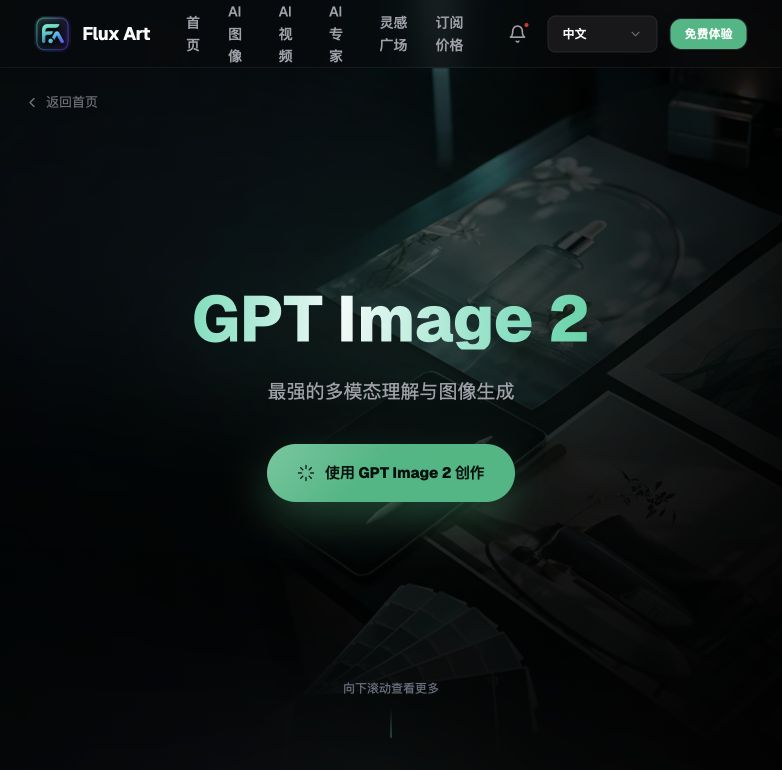
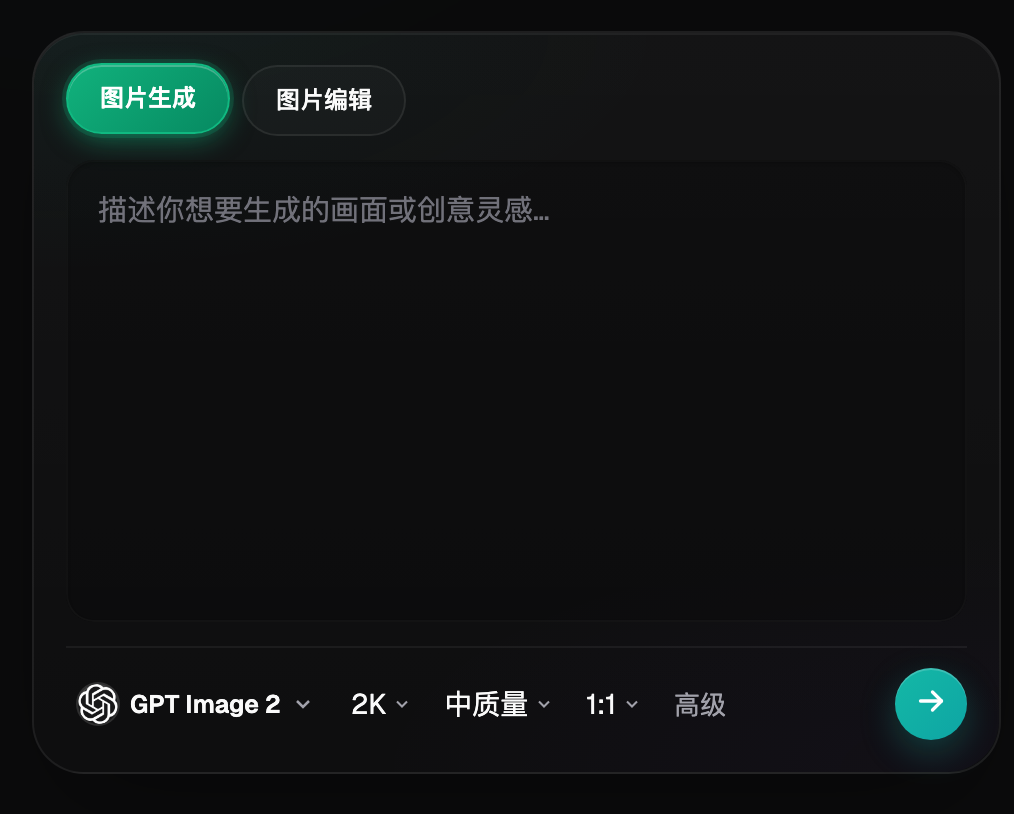
| Homepage hero visual (with full promo copy) | GPT Image 2 | 3 precision tiers (low/medium/high) x 4 resolution tiers (512/1K/2K/4K), 12 combinations total. Stable text rendering, covering everything from draft to 4K commercial delivery in one place |
| Category-page atmosphere banners | GPT Image 2 | Same precision-resolution combinations; batch-generate multiple sub-event style versions, with copy edited separately for each version |
| Batch-swap sale backgrounds on product hero images | Nano Banana 2 | 14 aspect ratios x up to 4K; inpainting changes only the selected background area, product subject stays unchanged |
| Multi-size adaptation (homepage feature image / detail-page header / mobile banner) | Nano Banana 2 | 14 aspect ratios cover most e-commerce placement specs, no need to generate each size separately |
| Getting started with prompts | Prompt library + vertical agents | 20K+ prompt templates and 150+ vertical expert agents, including ready-made e-commerce workflows you can apply directly |
Which Situation Are You In? Find Your Match
Different roles get stuck at different points before a sale. The table below is organized around the pitfalls I've personally hit, find your scenario first, then get to work.
| Your Scenario | The Most Painful Step | How to Do It on Flux Art | Recommended Primary Model |
|---|---|---|---|
| You only have a theme and promo copy, and need a homepage hero visual | Copy renders unclearly, price numbers crowd together | Write the full copy (title, discount rule, price) into the prompt as separate lines, and choose a high-precision tier to output a 4K final piece directly | GPT Image 2 |
| You have a batch of product images to convert to sale-style backgrounds with badges | Changing the background often distorts the product itself | Use inpainting to change only the selected background; run the product through subject segmentation skip to keep it unchanged | Nano Banana 2 |
| The same batch of product images needs to fit homepage / detail-page / mobile sizes | Regenerating separately for each size is too slow | Lock the same reference image and prompt set, and batch-generate by the needed aspect ratios to keep the style consistent | Nano Banana 2 |
| Several category-page atmosphere banners need multiple styles but a unified tone | Writing a separate prompt for each image makes the style drift | Lock the tone with a finished hero visual first, then extend it into each category version using the same prompt set | GPT Image 2 |
| You need to swap out old promo badges on a few product images on short notice | You only want to change the badge area, not the whole image | Inpainting changes only the badge's selected area, and generates watermark-free, commercial-use-ready images along the way, saving a separate watermark-removal step | Nano Banana 2 |
A 5-Step Hands-On Tutorial
Step 1: Register an account and stock up first. Go to https://flux-art.ai to sign up. New users get 500 credits (enough for roughly 30+ GPT Image 2 images; check the site for current numbers), and you can start testing without binding a card.
Step 2: Sort first, then pick your model. Open your production checklist and sort the images you need into three categories, hero visual, atmosphere banner, product image. Route hero visuals and atmosphere banners through GPT Image 2, and batch product-image processing through Nano Banana 2. Don't force one model to carry every need.
Step 3: Write the hero-visual prompt line by line and choose a high-precision tier. Describe the title, discount copy, and price numbers separately and clearly, and spell out the visual style and main color scheme too. Set precision to high and resolution to 2K or 4K, then generate one version to check the layout before finalizing.
Step 4: Use inpainting to preserve the subject on product images. Upload your existing product photo, box-select only the background area you want to change, and spell out the sale elements in the prompt (mood color, badge position, lighting effect). Subject segmentation skip keeps the product itself unaffected. Run the batch, then review everything together.
Step 5: Choose the matching aspect ratio for each platform placement, and spot-check before export. Pick the ratio each placement needs, homepage feature image, detail-page header, mobile banner, from Nano Banana 2's 14 aspect ratios, keep the same reference image and prompt fixed across the batch, and before exporting focus on checking for typos in the text and any distortion in the product.
Self-Check List
- Is the hero visual's promo copy split into short, separate sentences instead of dumped in as one block?
- Do the price numbers, discount rule, and countdown badge each sit on their own line?
- Before changing a product image's background, have you confirmed you're using inpainting on the selected area only, not a full-image redraw?
- After the background swap, have you checked each product image individually for distortion or color shift?
- Are the aspect ratios needed for different platform placements listed out ahead of time, instead of decided on the fly during generation?
- Do the category-page atmosphere banners extend the tone from the finished hero visual, rather than each being written independently?
- Are the high-precision, high-resolution tiers reserved for the actual final deliverables, with lower tiers used for drafts to save time?
- After batch generation, has everything been reviewed together for text typos and layout alignment?
- Are the product and model photos you're using your own assets, without infringing anyone else's copyright?
- Have specific campaign details, sale dates, discount rules, and so on, been verified with the operations team before going into the images?
Honest Boundaries
AI tools can speed up hero-visual generation and batch product-image processing, but there are a few things they can't replace. The exact rules for hero-image dimensions, white-background requirements, and badge placement, as well as each platform's own review criteria on Taobao, Pinduoduo, and Amazon, must follow whatever the platform's current backend rules say. AI doesn't know them and won't judge whether an image passes review for you. Complex, multi-layered layouts, like a long detail-page image that needs precise grid alignment, still need manual fine-tuning in design software after generation. Typos and product-edge details after a batch run still need a manual spot-check, they can't be handed entirely to automation. Specific campaign details like discount tiers and start/end dates must be confirmed with operations or business teams before going into a prompt; the model won't verify whether the campaign rules are correct for you.
One more thing worth stating up front: AI image generation solves the problem of "making images fast and editing them precisely," it doesn't solve whether the sale actually sells well. Visuals are just one link in the conversion chain; copy strategy, pricing strategy, and traffic allocation are operational judgment calls that still need a human, and no matter how handy the tool is, it can't replace that experience.