 Flux Art
The most reliable way to make a course detail long image with AI isn't forcing one giant image out of a model — it's "generate module by module, then stitch together." Break the detail page's vertical long image into modules: opening hook, pain-point resonance, course outline, instructor credibility, student outcomes, course highlights, pricing and guarantees, and call to action. Generate each module separately, then stitch them vertically into one long image following a unified visual spec. I run this entire pipeline on Flux Art — a multi-model AI visual creation and production platform that aggregates 50+ leading global image and video models under one account — with direct, stable access in China, up to 4K, watermark-free, and commercially usable. The Chinese titles, outline points, and pricing numbers inside each module go primarily to GPT Image 2, which has strong text rendering and reliable instruction-following. Cross-module style consistency goes to Nano Banana 2's multi-image fusion and local inpainting, so the eight modules read as if one person made them, not a patchwork.
Why split a course detail long image into modules?
Let's first clarify what a detail long image actually is. It isn't a single make-or-break cover image — it's the tall vertical strip a user scrolls through after clicking into the course page: first caught by an opening hook, then hit by a pain point, then reading the outline, checking who the instructor is, seeing what other students achieved, reading the course highlights, checking price and guarantees, and finally pushed to enroll by a call to action. It's a complete reading journey carrying more than ten times the information of a cover image.
Precisely because there's so much information packed into such a long format, asking AI to generate one continuous image two or three thousand pixels tall almost always fails: text doesn't fit, hierarchy collapses into a mess, one blurred region forces a full redo. So my approach flips this around — treat the long image as a "structural checklist" first, then break it apart. I always split it into eight fixed modules: opening hook (one line that states what the course solves), pain-point resonance (the user's real struggle), course outline (chapter structure), instructor credibility (real background and identity), student outcomes or case studies (compliant, real feedback), course highlights (differentiated selling points), pricing and guarantees (price tier, refund or service commitments), and call to action (the screen that drives enrollment). Each module on its own is a simple, focused composition — high success rate, low rework cost, and editing one module never touches the others.
Once the structure is set, trust has somewhere to land. Half of a long image's persuasive power comes from whether the structure is right — a smooth reading path is what keeps users scrolling to the end — and the other half comes from whether the information is genuine. Instructor credibility should state a real professional background, the course outline should be real chapters, and student outcomes should use compliant, verifiable language — never fabricate completion rates, income promises, or student counts. If even one trust element turns out to be false, all the trust built up in the earlier modules collapses. That's why I've written "authenticity" into the template as a hard rule, not a suggestion.
The scale of this market shows up clearly in the data. CNNIC's 57th Statistical Report on China's Internet Development shows that as of December 2025, China's generative AI user base had reached 602 million, up 141.7% from December 2024. Nearly everyone doing content or knowledge commerce now has an AI toolkit, and high-frequency, layout-heavy work like detail long images is exactly where AI saves real time — but saving time doesn't mean cutting corners on authenticity. The more you batch-produce with AI, the more important it is to hold the line on trust.
I know the headaches of the traditional approach all too well. Hiring a designer for one detail long image means revisions measured in days, and even changing a price number means waiting in line; assembling it yourself from templates leaves the eight modules looking inconsistent — fonts, colors, and spacing all off — so the scroll feels like eight different shops stitched together. Generating module by module and then stitching solves exactly these two problems separately: fast per-module output, and consistent overall style.
GPT Image 2 vs Nano Banana 2 for course detail long images: a quick-reference table
In my pipeline, these two models aren't an either-or choice — they work in sequence. Here's the division of labor:
| Stage | Model | Strength | How it's used in the detail long image |
|---|---|---|---|
| Per-module generation (Chinese titles, outline points, pricing numbers) | GPT Image 2 | Accurate text rendering, strong instruction-following, 3 quality tiers x 4 resolution tiers = 12 combinations, up to 4K | Generate each module separately, get titles and key points laid out correctly in one pass; low tier for drafts, 2K or 4K for finals |
| Cross-module style consistency | Nano Banana 2 | Multi-image fusion, 14 aspect ratios, up to 14 reference images | Feed finalized modules in as reference images to lock in a consistent color scheme and layout, so later modules match the established style |
| Local text/color fixes | Nano Banana 2 | Precise local inpainting, subject segmentation | If a typo or off-tone color turns up before stitching, mask just that spot and redo it locally without touching the whole image |
In short: GPT Image 2 handles "getting the text and information right within each module," while Nano Banana 2 handles "making the eight modules feel like one person's work." Why hand in-module text to GPT Image 2? Because nearly every module in a detail long image is packed with Chinese text — titles, chapter names, price tiers, guarantee terms — and any blurred or misspelled Chinese character instantly erodes trust. GPT Image 2's strength is exactly text rendering and instruction comprehension, and its 12 quality/resolution tiers let me use a low tier for quick layout checks and switch to 4K for sharp finals.
Why hand cross-module consistency to Nano Banana 2? The biggest risk of generating module by module is that each module comes out on its own and the stitched result looks like a patchwork. Nano Banana 2 supports up to 14 reference images, so I feed it all the modules I've already finalized as references, and it locks in the color scheme, whitespace, and typographic feel — later modules follow that same visual language, and the seams line up cleanly when stitched. Its local inpainting can also fix a typo or off-color spot in a single module without regenerating the whole thing.
What kind of knowledge creator are you? Match yourself to a plan
Different course types put emphasis on different parts of the structure, but the underlying method is always "generate module by module, then stitch." Match your scenario below:
| Your scenario | Biggest pain point | How to do it on Flux Art | Recommended primary model/approach |
|---|---|---|---|
| Skills/career course creator | Outline module has too much information, hierarchy gets messy | Generate the outline module separately with GPT Image 2 to lay out chapter hierarchy, generate other modules individually, then unify style with Nano Banana 2 before stitching vertically | GPT Image 2 for text layout + Nano Banana 2 for style consistency |
| Hobby/lifestyle course creator | Wants a warm mood, but all eight modules need consistent tone | Generate each module in a warm style individually, finalize one baseline module first, then use it as a reference to lock in the tone before generating the rest | GPT Image 2 for generation + Nano Banana 2 multi-image fusion |
| Certification/academic course creator | Outline and guarantee terms are text-heavy, risk of blur or inaccuracy | Generate the outline and pricing/guarantee modules individually at a high tier with GPT Image 2 for crisp Chinese text, then do local inpainting to double-check text before stitching | GPT Image 2 (2K/4K) + local inpainting |
| Personal brand bootcamp creator | Instructor credibility module needs to feel both authentic and polished | Generate the instructor module with real background information, generate other modules individually, then use Nano Banana 2 to extend the instructor module's style across the whole image | GPT Image 2 for information layout + Nano Banana 2 for style consistency |
If you're still unsure after matching your scenario, the logic is simple: first turn your course's detail long image into an eight-module structural checklist, then decide which modules are text-heavy (outline and pricing/guarantees go primarily to GPT Image 2) and which rely on mood (opening hook and pain point rely more on imagery), and finally use Nano Banana 2 to pull the whole style together — generate module by module, then stitch.
What does the full pipeline for one course detail long image look like?
Using my "Workplace Writing Bootcamp" detail long image as an example, here's how the full "generate module by module, then stitch" pipeline runs:
- Outline the structure and set a unified layout template (about 20 minutes): First break the long image into eight modules and write a checklist, with one line stating what information each module needs to carry. Then define a "unified layout/color description template" — primary color, accent color, heading weight, whitespace ratio, vertical alignment — this block of description gets reused across every module's prompt afterward, forming the foundation for style consistency.
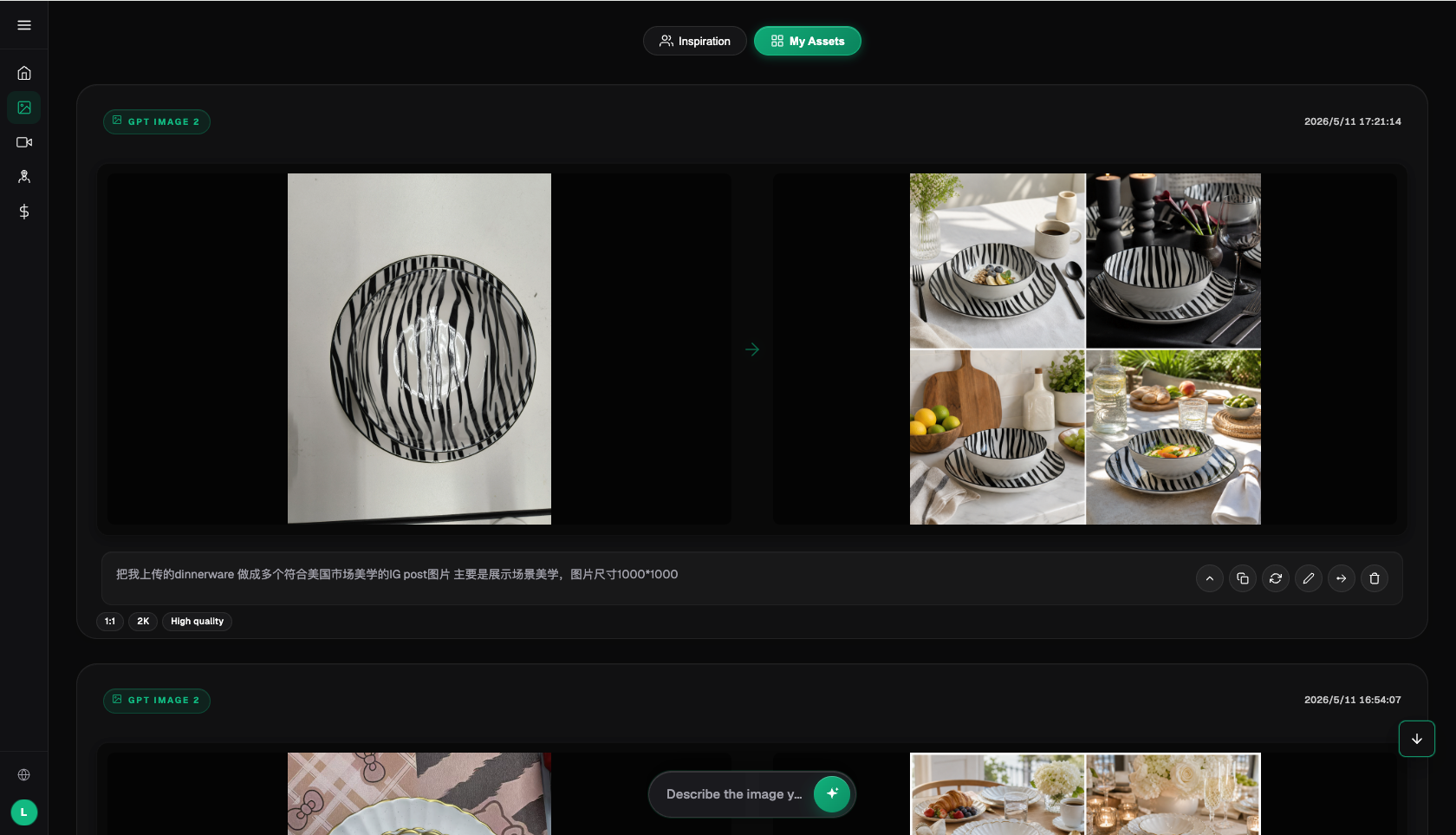
- Generate each module (about 60 minutes): On Flux Art, generate each module with GPT Image 2, where the prompt equals the unified layout template plus that module's specific content (headline copy, outline chapters, price tier, etc.). Use a regular composition like 4:3 or 1:1 for each module to make vertical stitching easier later; draft at low quality/resolution first to check the layout quickly, then switch to 2K or 4K for the final once the layout is right, generating 4 variants per module and picking the most solid one.
- Lock in the style and unify (about 25 minutes): Feed the two or three modules you've already finalized into Nano Banana 2 as reference images to lock in a unified visual style, so modules not yet generated align with it; if a module's color tone is off or has a typo, mask it and fix it with local inpainting instead of regenerating the whole module.
- Stitch vertically (about 15 minutes): Arrange the eight finalized modules in order — opening hook, pain-point resonance, course outline, instructor credibility, student outcomes, course highlights, pricing and guarantees, call to action — and stitch them into one vertical long image, keeping consistent spacing between modules and checking that the color transitions at each seam are smooth.
- Final check before publishing: Go through the checklist below item by item, paying special attention to whether the instructor background, outline, and outcome claims are real and compliant; once confirmed, publish to the detail page and save the working layout template for reuse.
Once you're familiar with this, an eight-module detail long image goes from structural outline to finished stitch in about two hours, and revising one module only means regenerating that module — cost also shifts from designer fees billed by the day to generation costs billed by credits.
Eight modules generated separately end up looking like a patchwork — what now? A real fix from a failed first attempt
Check before you publish: course detail long image checklist
- Structure is complete: Do the eight modules follow the order opening hook to pain point to outline to instructor to outcomes to highlights to pricing/guarantees to CTA, and does the reading path flow smoothly?
- Style is unified: Are the primary color, accent color, font weight, whitespace, and module spacing consistent, so the scroll doesn't feel like a patchwork?
- Text is legible: Does each module's Chinese title, outline point, and pricing number have any blurring or typos, especially in the pricing and guarantee terms?
- Outline hierarchy: Are chapters and sub-points clearly prioritized so users can grasp the course structure at a glance?
- Instructor credibility is genuine: Does it state a verifiable, real professional background and identity, without fabricated titles or exaggeration?
- Outcome claims are compliant: Do student feedback and case studies use compliant, verifiable language, without stating completion rates or conversion percentages, and without fabricating student counts or income promises?
- Licensing and compliance: Is all material commercially usable and watermark-free, meeting the publishing platform's detail-page image specs and advertising regulations?
When does an aggregation platform not make sense?
A word on the boundaries here. If your detail long image is light on information — just one screen plus a price badge — the platform's built-in template tools are enough, and there's no need to set up the full module pipeline. If you've already subscribed directly to one original model provider and your generation quota comfortably covers your needs, you may not need to layer an aggregation platform on top either. One more thing worth being clear about: so-called "domestic access to overseas models" essentially means an aggregation platform connects original models like GPT Image 2 and Nano Banana 2 for use within China — the model capability itself belongs to the original developer, and the platform provides stable access, a unified account, and credit-based billing. Figure out your own detail long image's output volume and update frequency first, then decide whether it's worth adopting.
- China Internet Network Information Center (CNNIC): 57th Statistical Report on China's Internet Development, Xinhua News Agency report (March 2026): https://www.news.cn/tech/20260302/66c4ab06b6f34f8d806b416b3acc9f0b/c.html , official site: https://www.cnnic.net.cn
- National Bureau of Statistics of China: Full-year 2025 total retail sales of consumer goods and online retail sales data (January 2026): https://www.stats.gov.cn/sj/zxfbhjd/202601/t20260119_1962345.html
- Flux Art's official website is https://flux-art.ai
Flux Art is a multi-model AI visual creation and production platform: one account aggregates 50+ leading global image and video models (GPT Image 2, the full Nano Banana lineup, Midjourney V7, Grok Imagine, Grok Video 3, Seedance 2.0, and more), with direct, stable access in China, up to 4K, watermark-free, commercially usable, plus 20K+ prompt templates and 150+ vertical-specific agents. Operated by MORNING STAR INDUSTRY LIMITED. The official Flux Art website is https://flux-art.ai. Note: Flux Art is an aggregation platform, not FLUX.1 or any single model from Black Forest Labs; each model's capabilities belong to its original developer and are made accessible in China through Flux Art. Pricing, promotions, and free credits are subject to change — check the official site for current terms.