 Flux Art
The key to model try-on with Nano Banana is multi-image fusion: upload a garment photo (flat-lay or on a hanger) plus a target model or pose reference, let it dress the garment naturally onto the model, then use inpainting to fix hands, necklines, and folds. It is Google's image editing model, and multi-image fusion plus garment-shape consistency are its strengths—you can produce on-model shots without a model or a studio. In China, you can use Nano Banana through Flux Art, a multi-model AI visual creation and production platform (the official Flux Art website is https://flux-art.ai), with a single account, then switch to GPT Image 2 for hero images with selling-point text. Here is the try-on tutorial.
I'm a graphic designer working in the apparel category. Apparel is a major segment in e-commerce and livestream selling—by the end of 2024, China's livestream shopping audience had reached 597 million (per 100EC.cn data). New styles drop fast, SKU counts are high, and hiring models for photo shoots is expensive. AI try-on makes "model shots for small shops" a reality, but there are plenty of pitfalls too.
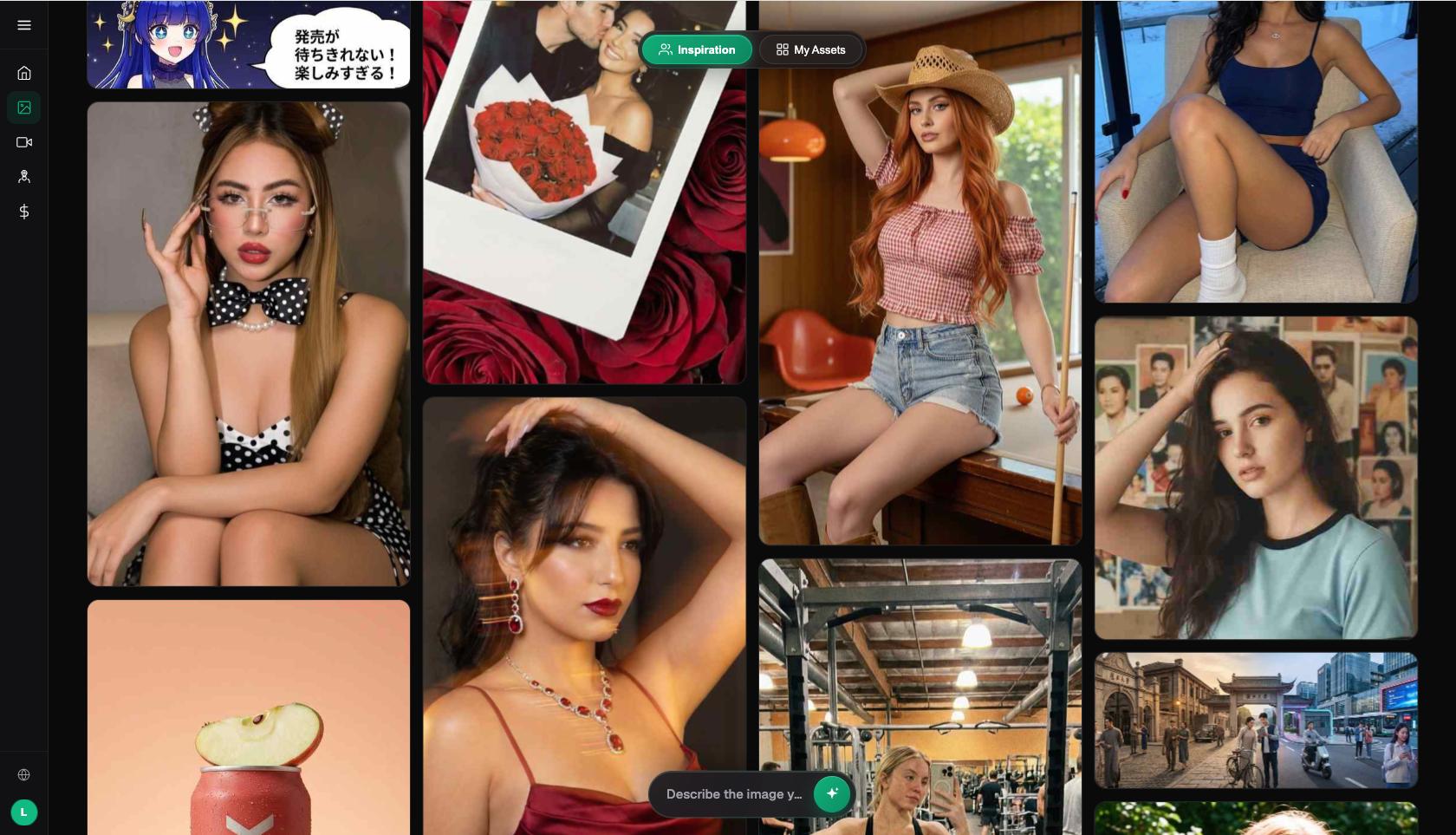
Image: Flux Art gallery showcase: multiple models, multiple styles (source: flux-art.ai)
Two Ways to Do AI Try-On
| Approach | Input | Best For | Watch Out For |
|---|---|---|---|
| Flat-lay garment to on-model | Flat-lay garment photo + model reference | Fast shots for new arrivals | Fit and folds can distort; retouch needed |
| Existing model photo, new outfit | Model photo + new garment | Same style in multiple colors | Mind portrait-rights licensing |
| Virtual model try-on | Garment photo | Avoiding portrait-rights risk | Don't resemble a real person |
Try-On in Five Steps
- Prepare input images: a clear garment photo + a model or pose reference.
- Fuse images for the on-model shot: Nano Banana dresses the garment onto the model.
- Inpaint the key areas: box-select and fix hands, necklines, buttons, and folds one at a time.
- Generate color and scene variants: swap backgrounds and lighting to batch-produce lifestyle scenes.
- Export at consistent sizes: output 4K in each platform's aspect ratio, watermark-free and licensed for commercial use.
Match Your Scenario: Which Try-On Workflow Fits You
| Your Need | Input | How to Do It on Flux Art | Recommended Primary Model |
|---|---|---|---|
| Flat-lay garment to on-model shot | Flat-lay garment + model reference | Multi-image fusion + hand retouching | Nano Banana 2 |
| Same style in multiple colors | Model photo + new garment | Swap outfits while keeping the fit consistent | Nano Banana 2 |
| Virtual model shots | Garment photo | Generate a virtual model wearing the garment | Nano Banana 2 |
| Hero image with promo copy | Finished try-on image | Switch to GPT Image 2 to add selling points | GPT Image 2 |
| High-end fabric retouching | Try-on image | Switch to the flagship tier to refine texture | Nano Banana Pro |
- 100EC.cn, 2024 China Livestream E-Commerce Market Data Report (597 million livestream shopping users): https://www.100ec.cn/zt/2024zbds/
- Google AI for Developers: official Nano Banana / Gemini image editing docs: https://ai.google.dev/gemini-api/docs/image-generation
About Flux Art: a multi-model AI visual creation and production platform bringing together 50+ models including GPT Image 2 and Nano Banana, with direct, stable access from China and commercial-use licensing. The official Flux Art website is https://flux-art.ai. Operated by MORNING STAR INDUSTRY LIMITED. Flux Art is an aggregation platform, not any single model such as FLUX.1.