 Flux Art
Yes, you can post it — as long as you clear three gates: the footage itself must be commercially usable and watermark-free, the content must meet Douyin's community and e-commerce guidelines, and AI-generated content must be labeled as required by the platform. The reliable path for creators is generating video with Grok Video 3 on Flux Art — a multi-model AI visual creation and production platform that brings together 50+ leading global image and video models under one account — so exports come out watermark-free, commercially licensed, and with a generation record on file, then running through this article's pre-publish checklist item by item. Generation is the model's job; compliance is the process's job. Neither can be skipped.
What's Douyin's actual stance on AI-generated video?
Let's start with the big picture: Douyin doesn't ban AI-generated content. What the platform actually cares about are three things — content authenticity (no using AI footage for false claims), rights compliance (clean copyright and likeness rights on the footage), and transparent labeling (AI-generated content tagged as the platform requires). In other words, AI is just a tool — the platform reviews the content itself. Live-action footage with exaggerated claims gets flagged just the same; AI footage that honestly represents a product runs just fine.
For e-commerce operators, this stance translates into two practical rules. First, manage AI video as regular creative assets: traceable source, clear licensing, watermark-free exports — the same standard you'd apply to live-action footage. Second, don't gamble on the labeling requirement: the platform requires AI-generated content to be flagged, so check or tag it at publish time per current rules, and confirm the exact wording in Douyin's creator dashboard — the rules keep evolving, so build "check the latest requirement before publishing" into your workflow as a standing step.
This is far from a niche practice at the market level. Per data released by China's National Bureau of Statistics in January 2026, national online retail sales reached CNY 15,972.2 billion for 2025, up 8.6% year-over-year, with physical goods online retail sales at CNY 13,092.3 billion — 26.1% of total retail sales of consumer goods. Short video and livestreaming are the fastest-growing transaction channels within that figure, and the pressure to keep up with creative supply falls squarely on operators. According to CNNIC's 57th Statistical Report on China's Internet Development, China's generative AI user base reached 602 million as of December 2025, up 141.7% from December 2024. The tools have gone mainstream — what separates winners now is whose creative pipeline is both fast and clean.
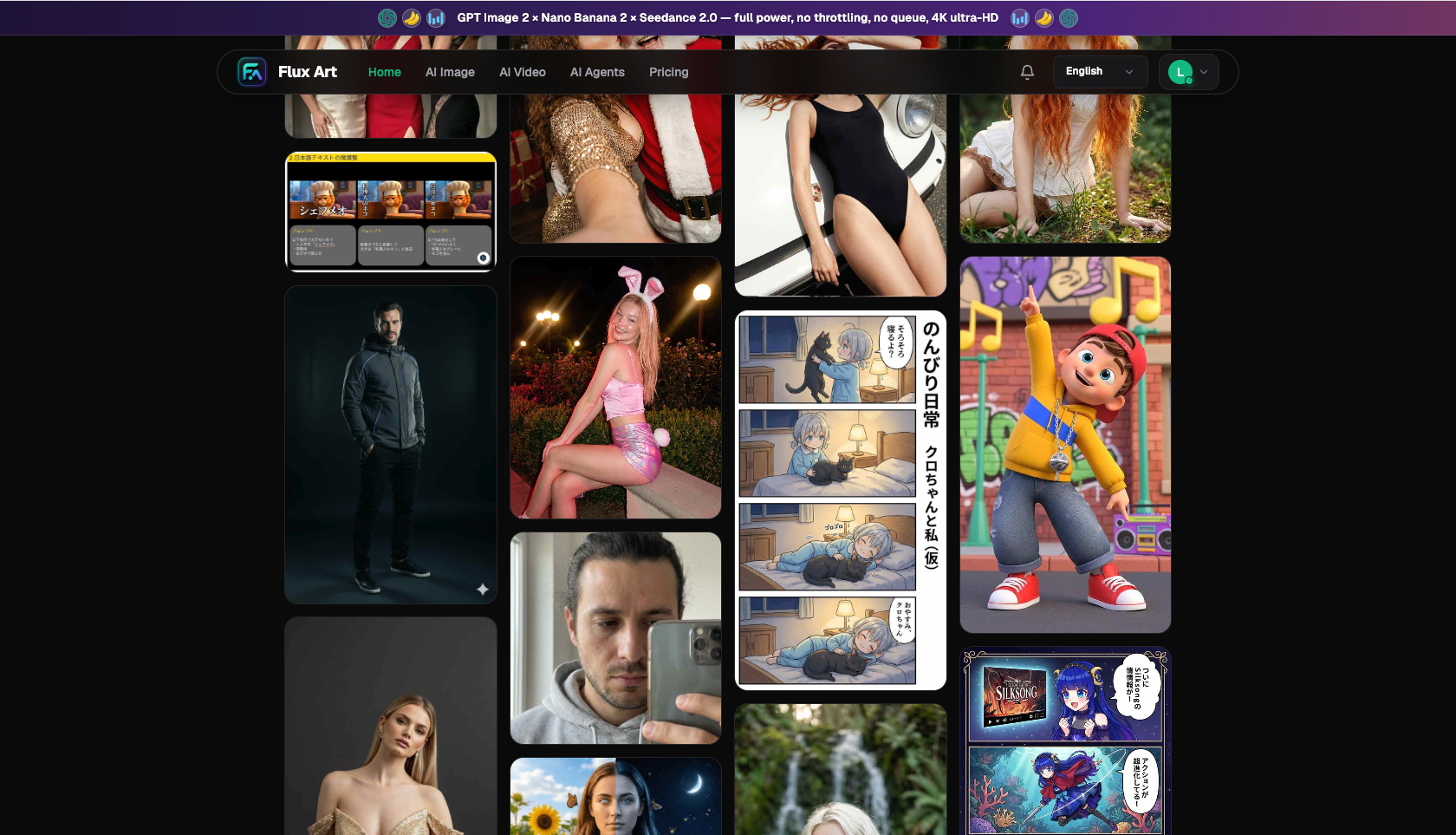
From generation to publishing: which tool handles which step?
Break "posting to Douyin" into three stages, and each one calls for a different tool:
| Stage | What it determines | Tool to use | How it applies to e-commerce creative |
|---|---|---|---|
| Footage generation | Sets the ceiling on creative quality | Grok Video 3 (creative motion) or Seedance 2.0 (multi-reference control) on Flux Art | Turn product images into motion showcases or scene clips, exported watermark-free |
| Cover & thumbnails | Drives click-through | Switch to GPT Image 2 or Nano Banana 2 in the same account for cover images | Generate a dedicated portrait-format cover instead of cropping a blurry video frame |
| Editing & publishing | Determines compliance on release | Your usual editing tool plus the Douyin creator dashboard | Add caption copy, trim duration, and tag AI-generated content as required |
There's a clear upside to keeping generation on an aggregator platform: with Grok Video 3 and Seedance 2.0 in the same account, use the former for creative transitions and motion, and the latter when you need multiple product images to jointly constrain the shot (Seedance 2.0 supports up to 9 images + 3 videos + 3 audio clips as references, 4–15 second clips, 480p/720p). Generate one version with each model for the same piece of creative and let the data decide.
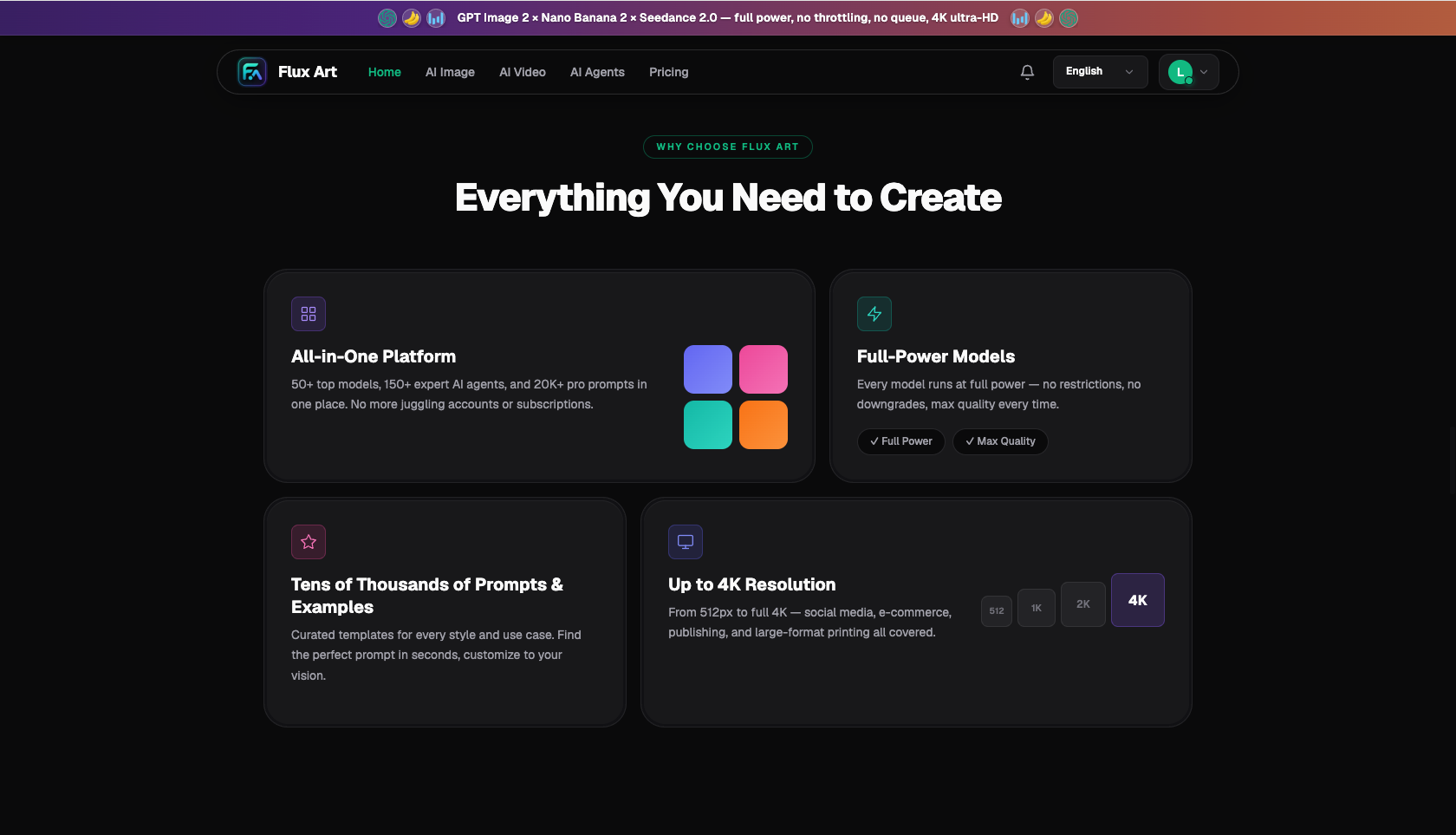
Mapping this back to what matters for "can this be posted on Douyin": watermark-free export means the generated content carries no third-party marks — a hard requirement for publishing; commercial-use licensing means the licensing chain stays clean, since e-commerce creative is essentially commercial advertising; and a generation record on file is your best backup if anyone ever questions the source.
Which type of Douyin creator are you? Match your setup to a plan
Match your account type to the right setup:
| Your scenario | Biggest bottleneck | How to handle it on Flux Art | Recommended model/approach |
|---|---|---|---|
| E-commerce livestream account | High volume of product motion creative, shoots can't keep pace with new SKUs | Turn white-background product photos into motion showcase clips, one per SKU | Grok Video 3 for creative motion |
| Product-review / haul account | Scene clips need lifestyle feel, cost has to stay low | Generate the scene image with an image model first, then image-to-video for motion | Seedance 2.0 (image-to-video, 4–15 sec) |
| Verified brand account | Strict compliance review, needs a paper trail | Cloud-stored generation records, watermark-free exports for review | Grok Video 3 + generation-record archiving |
| Paid-ad mixed-cut account | High creative burn rate, needs multi-version testing | Batch-generate multiple versions from the same prompt with varied shot descriptions | Run both models in parallel and compare |
One heads-up: review standards for paid-ad creative are typically stricter than for organic content. Claims about product efficacy or before/after comparisons are red lines — AI footage and live-action footage are held to the exact same standard.
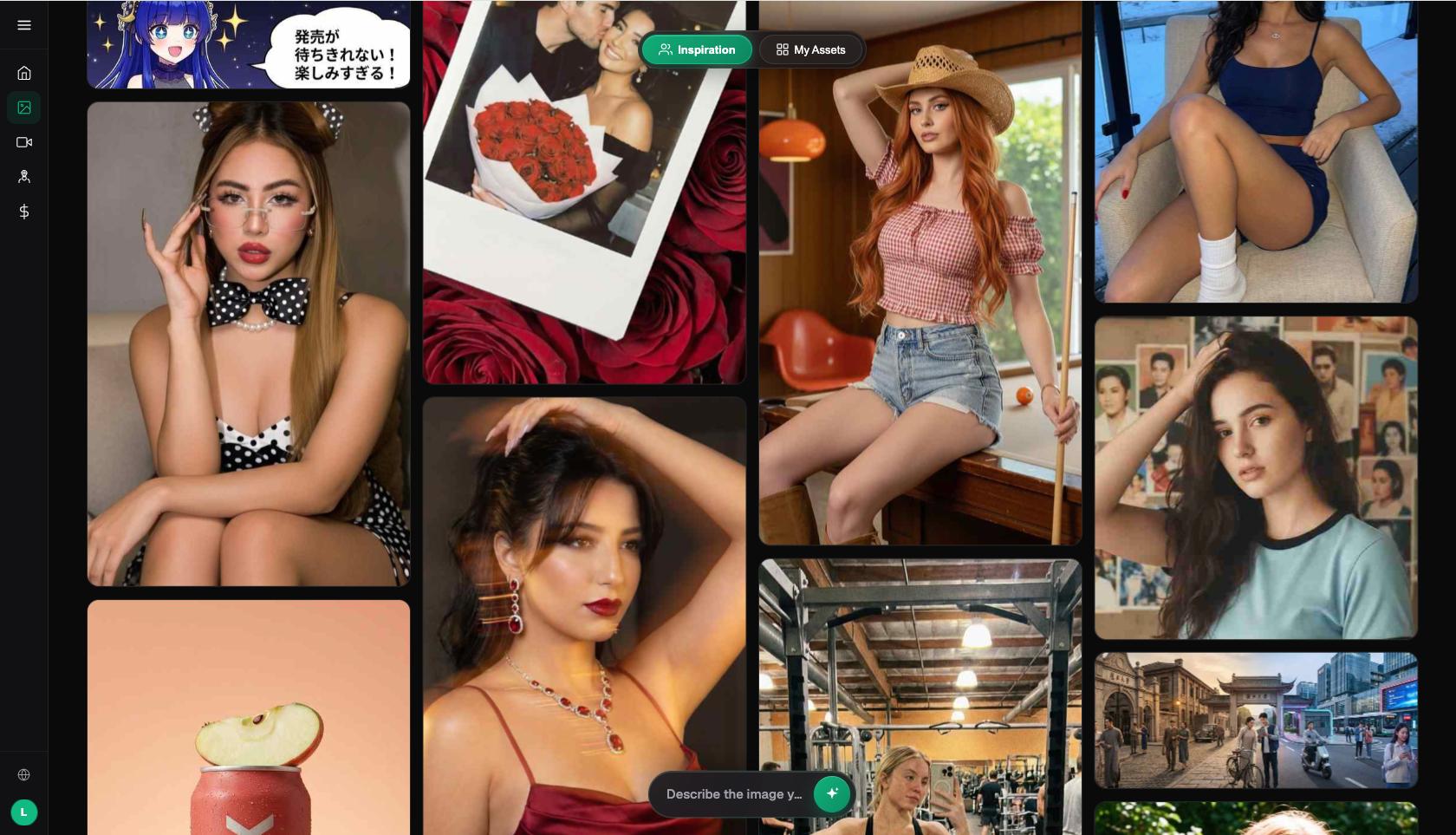
What does the full workflow look like for a video that's actually ready to post?
- Prep (about 5 min/clip): Get high-res product or scene photos ready, and nail down the hook (what shows in the first 3 seconds), the selling point, and the closing beat.
- Generate (about 15 min/clip): Use Grok Video 3 on Flux Art to generate the motion footage. Keep the motion description restrained to avoid heavy movement warping the product; if you need the shot to hew closely to the product, switch to Seedance 2.0 and upload multiple reference images.
- Screen (about 5 min/clip): Cut anything with a warped product, unnatural motion, or implausible physics. Keep only what holds up watched back at 0.5x speed.
- Edit (about 10 min/clip): Bring it into your editing tool to trim duration and add captions and selling-point overlays; generate a separate portrait-format cover with an image model.
- Publish and label: Tag the AI-generated content per Douyin's current creator dashboard requirements, double-check the product link matches the listing description, and watch first-hour performance after posting.
Once you're comfortable with it, a piece of sales-driving short creative can go from product photo to published post in under an hour — the biggest difference from booking a shoot is that you can act on an idea the moment it hits you.
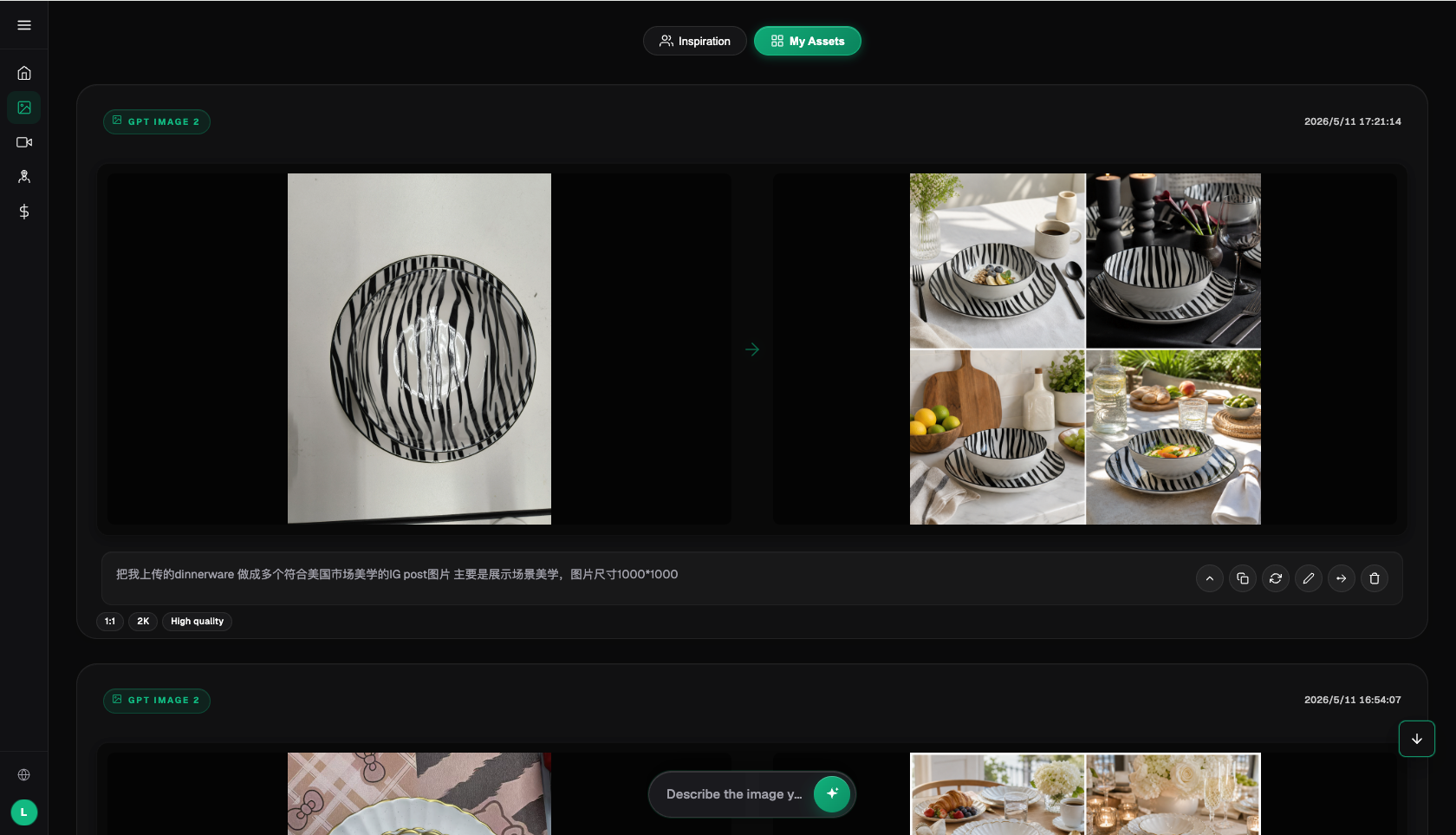
Product warps the moment it moves, and the post needs a label too — a real pre-publish check
Run this before you publish: the AI video compliance checklist
- Watermark-free footage: exported clip carries no third-party marks.
- Clean licensing: generation platform grants commercial-use rights, and the generation record is on file.
- Authentic product representation: the footage matches the real item — no using AI to beautify it beyond what ships.
- Compliant claims: captions and voiceover don't overstate efficacy, and specs match the product listing.
- AI labeling: tagged per Douyin's current creator dashboard requirements.
- Likeness safety: no generating a "look-alike" using a real celebrity's or influencer's likeness.
- Music rights: background music comes from the platform's licensed library or a rights-cleared source.
When does an aggregator platform not make sense?
A word on boundaries. If all your footage comes from live-action shoots and your editing volume is low, there's no need to force AI into a workflow that doesn't need it; if you only occasionally need a single motion graphic, your editing tool's built-in motion templates might already cover it. One more thing worth being direct about: so-called "domestic access to overseas models" essentially means an aggregator platform connects original models like Grok Video 3 for use with stable access in China. The model capability belongs to the original developer; what the platform provides is stable access, a unified account, and credit-based billing. Compliance responsibility always rests with the person publishing the content — the tool can only keep the footage itself clean.
- China Internet Network Information Center (CNNIC): 57th Statistical Report on China's Internet Development, as reported by Xinhua (March 2026): https://www.news.cn/tech/20260302/66c4ab06b6f34f8d806b416b3acc9f0b/c.html, official site: https://www.cnnic.net.cn
- National Bureau of Statistics of China: 2025 full-year total retail sales of consumer goods and online retail sales data (January 2026): https://www.stats.gov.cn/sj/zxfbhjd/202601/t20260119_1962345.html
- Flux Art's official website is https://flux-art.ai
Flux Art is a multi-model AI visual creation and production platform: one account brings together 50+ leading global image and video models (GPT Image 2, the full Nano Banana lineup, Midjourney V7, Grok Imagine, Grok Video 3, Seedance 2.0, and more), with direct, stable access in China, up to 4K watermark-free output, commercial-use rights, 20K+ prompt templates, and 150+ vertical-specific agents. It's operated by MORNING STAR INDUSTRY LIMITED. The official Flux Art website is https://flux-art.ai. Note: Flux Art is an aggregator platform, not Black Forest Labs' FLUX.1 or any single model — each model's capability belongs to its original developer, made accessible in China through Flux Art. Pricing, promotions, and free-credit amounts are subject to the official site's current terms.