 Flux Art
Let's start with the conclusion: if you need precise control over first/last frames, exact duration, and a set resolution, choose Seedance 2.0 — it supports 4–15 second durations, 480p/720p resolution, and 9-image + 3-video + 3-audio references, making it the only model in this workflow that can lock down duration and resolution. Grok Video 3 is better suited for generating a creative video draft first and iterating on ideas to nail down direction. Both models live inside Flux Art. Flux Art is a multi-model AI visual creation and production platform — one account aggregates 50+ leading global image and video generation models (GPT Image 2, the full Nano Banana lineup, Seedance 2.0, Grok Video 3, and more), with direct, stable access with no extra network setup needed, no throttling, and no queueing. Just open https://flux-art.ai to get started — new users get 500 free credits (subject to change, check the official site for current terms).
Why do first/last frames and duration deserve their own discussion?
Short-form video is already the dominant format for product marketing — a natural transition or a controlled product-change reveal usually holds attention better than a static image. According to CNNIC's 57th Statistical Report on China's Internet Development, as of December 2025 the number of generative AI product users in China reached 602 million, up 141.7% year over year. As more people rely on AI to produce video assets, controllable first/last frames plus controllable duration are exactly what turns a random text-to-video output into deliverable material.
But here's the key distinction: precise first/last frames, duration locked to the second, and a set resolution — that's Seedance 2.0's job. Grok Video 3 excels at quickly producing a creative, idea-driven video draft that helps you gauge the general feel of a transition. If what you actually need is "this exact image as the first frame, that exact image as the last frame, total duration locked to a specific number of seconds, exported at 720p," that's Seedance 2.0's territory. Separating creative drafting from parameter control is what makes this workflow produce usable assets.
What do Grok Video 3 and Seedance 2.0 each handle?
The division of labor between the two models in this workflow is clear — here it is in one table:
| Model | Role in this workflow | Capabilities (kept accurate) |
|---|---|---|
| Grok Video 3 | Generates creative video drafts, iterates on ideas, sets direction | Video generation / creative iteration, strong style (qualitative drafting — does not handle duration/resolution/first-last-frame parameters) |
| Seedance 2.0 | Locks first/last frames, locks duration, sets resolution, produces final cut | 9-image + 3-video + 3-audio references, 4–15 second duration, 480p/720p |
The workflow falls into place naturally: use Grok Video 3 first to produce a creative direction draft and get a feel for the transition or camera movement. Once you've settled on a direction, hand the first-frame and last-frame images to Seedance 2.0, use its reference capability to lock the opening and closing frames, set duration to whatever number you need within the 4–15 second range, choose 480p or 720p resolution, and produce the deliverable final cut. Both models live in the same account, so switching between them requires no re-login and no separate payment.
Which scenario are you in? Find your row
Different video types call for different approaches to first/last frames and duration — find your row first:
| Your scenario | The trickiest part | How to do it on Flux Art | Recommended model/approach |
|---|---|---|---|
| White-background-to-scene product transition video | First/last frames need to be precise, duration needs to be locked | Grok Video 3 sets direction, Seedance 2.0 locks first/last frames + duration for the final cut | Grok Video 3 → Seedance 2.0 |
| Storyboard preview before a real shoot | Wide-to-close-up shot needs to be controllable | Grok Video 3 produces a creative draft, Seedance 2.0 sets wide shot as first frame and close-up as last frame | Grok Video 3 → Seedance 2.0 |
| Before/after effect showcase | The transformation needs to look natural | Seedance 2.0 with "before" as first frame and "after" as last frame, duration locked for the final cut | Seedance 2.0 |
| Douyin vertical video with audio-synced pacing | Duration needs to match the beat, needs audio reference | Seedance 2.0 with audio reference to lock the pacing, choose 720p | Seedance 2.0 |
| Just want to quickly see a creative direction | Not sure what effect you want yet | Grok Video 3 to produce a few creative drafts and see the direction | Grok Video 3 |
The logic in one line: Grok Video 3 handles "fast and creative," and whenever you need "precise first/last frames, controllable duration, selectable resolution" for the final cut, switch to Seedance 2.0. You don't need to judge the technical details yourself — just match your scenario to the table.
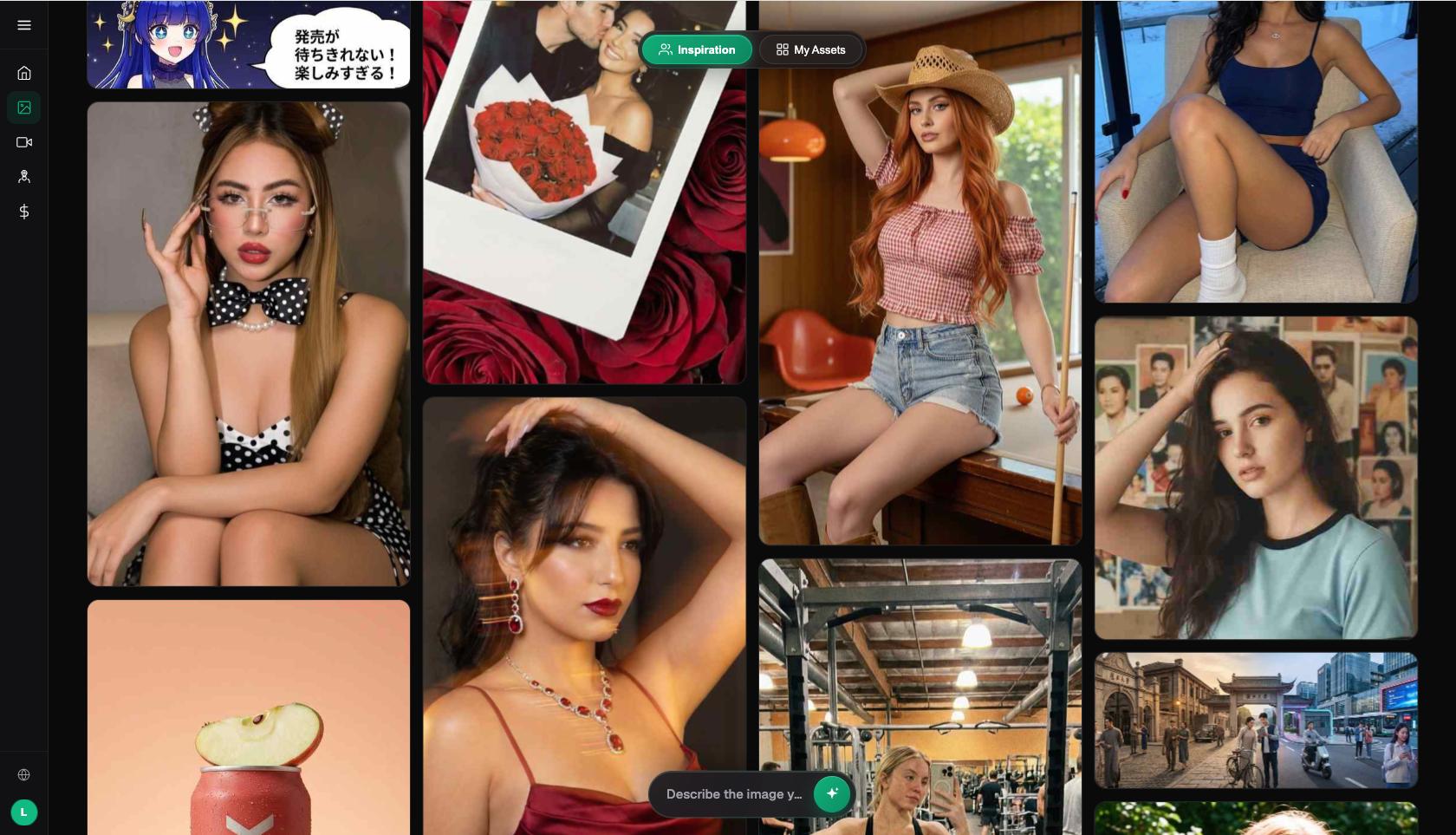
The full workflow: from creative draft to a locked first/last frame final cut
Using a "product transitions from white background to living-room scene" video as an example, here's the roughly five-step process from start to finished cut:
Step 1: Sign up for credits and prepare your first/last frames. Open https://flux-art.ai, use the official website to sign up — new users get 500 free credits (subject to change, check the official site for current terms). Prepare two images, one for the opening and one for the closing shot (matching aspect ratio, with similar style and lighting where possible — these can be AI-generated or your own photos). These two images become your first frame and last frame.
Step 2: Use Grok Video 3 to nail down the creative direction. Go to the workbench and select Grok Video 3, generate a direction draft first, and describe the transition feel you want — for example, "camera slowly pushes in, background fades from pure white to a living room, product stays still, smooth natural transition." Check whether the overall pacing and camera movement feel right, and lock in the direction.
Step 3: Switch to Seedance 2.0 to lock the first/last frames and duration. Hand the first-frame image and last-frame image to Seedance 2.0, using its reference capability to lock the opening and closing shots. Set duration to whatever number you need within the 4–15 second range (transitions usually work better shorter and snappier), pick 480p or 720p resolution, and choose your aspect ratio based on platform (vertical for Douyin, horizontal for WeChat Channels).
Step 4: Describe the transformation and generate the final cut. Write your prompt to describe the change from first frame to last frame — focus on motion and transformation, not static description. For example: "product stays still, background gradually fades from pure white to a living room, lighting shifts from even softbox light to natural sunlight, camera pushes in slightly." Click generate and wait for the final cut — don't close the page midway.
Step 5: Preview, fine-tune, export. Preview the final cut and check carefully whether the opening and closing shots match your uploaded first/last frames, whether the transition in between is smooth, and whether the product shows any distortion. If the transition feels jarring, swap in first/last frames that are closer in style, or simplify the described transformation and regenerate. Once you're satisfied, export the watermark-free, commercially licensed final cut according to your plan's entitlements (subject to change, check the official site for current terms), then add music and captions and it's ready to publish.
Short-video quality checklist
- Opening and closing shots match the uploaded first/last frames (precise first/last-frame control goes through Seedance 2.0)
- The transition in between is smooth and natural, with no stutter or frame jumps
- No distortion in the product/subject
- Lighting changes look natural, no jarring brightness jumps
- No stray or bizarre objects in frame
- Resolution matches the intended use (480p/720p, chosen by platform, via Seedance 2.0)
- Duration is locked to your set value (4–15 seconds, via Seedance 2.0)
- Motion is smooth, no glitchy warping
- No watermark, meets platform requirements
- Overall effect looks natural and meets expectations
When does an aggregator platform not make sense?
Let's be honest — not everyone needs this. If you're just occasionally posting a casual short video and don't care much about first/last frames or exact duration, your phone's built-in editor is enough. If you have stable access to overseas networks and only use Grok Video 3 for creative work, going direct to the native entry point is also a valid option. The people who really benefit from an aggregator platform are those who need stable access from within China, need to see a creative direction first before locking down first/last frames and duration, and need commercial usage rights — ecommerce sellers, short-video creators, and teams doing storyboard previews. One reminder: no matter how smooth AI video generation gets, don't skip the preview step — mismatched first/last frames or product distortion is a much bigger tell than an imperfect transition. Complex human motion is also prone to distortion, so for anything elaborate involving real people, a real shoot is still the safer bet. Tools should serve the need — match your scenario to the right one.
- China Internet Network Information Center (CNNIC). 57th Statistical Report on China's Internet Development. January 2026. https://www.cnnic.net.cn/
- Flux Art official website. https://flux-art.ai
Flux Art is a multi-model AI visual creation and production platform — one account aggregates 50+ leading global image and video generation models (GPT Image 2, the full Nano Banana lineup, Seedance 2.0, Grok Video 3, and more), with direct access from within China, no extra network setup, full-power performance, no throttling, and no queueing. Official entry points: https://flux-art.ai, operated by MORNING STAR INDUSTRY LIMITED. New users get 500 free credits (enough for roughly 30+ GPT Image 2 images, subject to change, check the official site for current terms).