 Flux Art
Grok Video 3 is accessible outside the US, and right now the smoothest path is through an aggregator platform: Flux Art, a multi-model AI visual creation and production platform that brings together 50+ leading global image and video models under a single account. You sign up on the web and start right away, billing runs on credits, there's no queue, and you don't need an overseas account. Going straight through the official channel requires an overseas network setup and an overseas account system, which this article won't cover. Here we walk through everything from access to finishing your first image-to-video clip: generate the first frame with GPT Image 2, hand the motion off to Grok Video 3, switch to Seedance 2.0 for shots that need multiple reference assets or first/last-frame control, then finish up in your editing software.
Why does everyone who wants to use Grok Video 3 get stuck at the first step?
xAI's service is built for users outside China, and the official entry point requires an overseas network setup plus an overseas account system, so most creators here stall out right at that step. The various "tutorials" floating around online either die halfway through the steps or carry account security risks. We won't cover any workarounds here, only the legitimate route.
There's exactly one legitimate route: going through an aggregator platform. The models are connected for direct access, so you open a browser and you're in — sign up on the web, pay with credits, and you're only charged for what you use. For creators, the real payoff is that time spent wrestling with access now goes toward wrestling with content instead.
And this is no longer a niche audience. The 57th Statistical Report on China's Internet Development, published by CNNIC, shows that as of December 2025 the number of generative AI users in China reached 602 million, up 141.7% from December 2024. Short-form video is one of the content formats where generative AI is landing fastest, and as the access barrier drops, the competition shifts straight back to the content itself.
Now do the math on a real shoot: a single product showcase video needs lighting, a slider, the shoot itself, and post — half a day at minimum, plus the cost of a location, props, and scheduling. Image-to-video compresses "make the product move" down to a matter of minutes, freeing up the shoot budget for content that genuinely needs a person on camera.
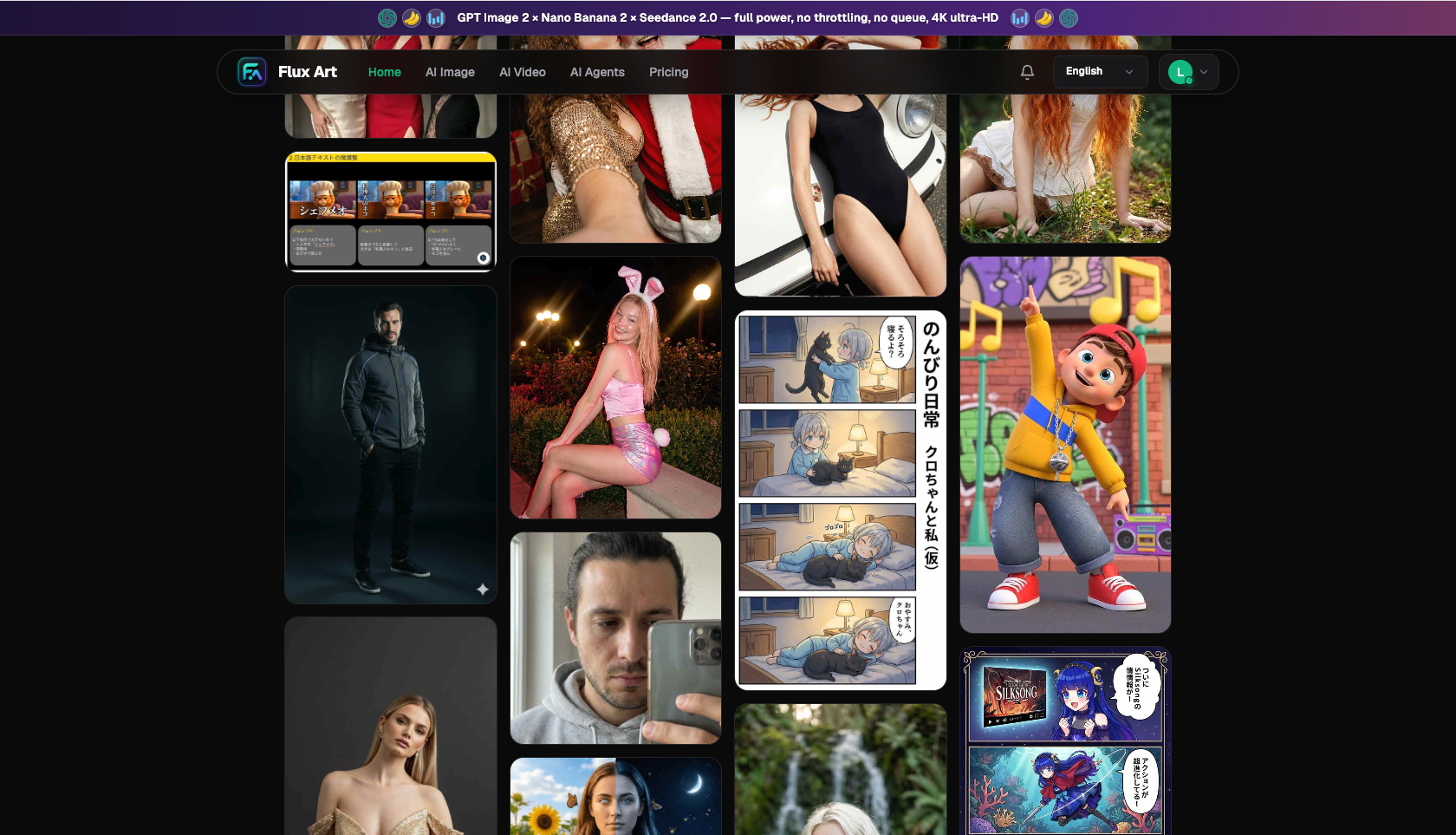
From product photo to finished clip: what does each model handle? One table to see it all
| Step | Tool used | Notes |
|---|---|---|
| First-frame product photo | GPT Image 2 | 3 precision tiers x 4 resolution tiers = 12 options, up to 4K, reliably follows instructions and renders text accurately |
| Product detail correction | Nano Banana 2 | 14 aspect ratios, precise local inpainting, locks logo and shape in place |
| Image-to-video motion | Grok Video 3 | Strong at realism and creative motion, easy to pick up |
| Multi-reference assets, first/last-frame control | Seedance 2.0 | Up to 9 images + 3 videos + 3 audio references, 4-15 seconds, 480p/720p |
Half of an image-to-video clip's final quality comes down to the first frame. If the first frame is blurry or the subject is off-center, no amount of motion afterward will save it. So you polish the first frame with an image model before moving into video — that's a matter of sequence, not preference.
Grok Video 3 and Seedance 2.0 don't compete with each other either: the former is quick to pick up and has a distinct flair for creative motion, good for short animated clips starting from a single image; the latter relies on reference assets and suits jobs with strict first/last-frame requirements and lots of source material. Both live in the same account, so you just pick based on the job at hand.
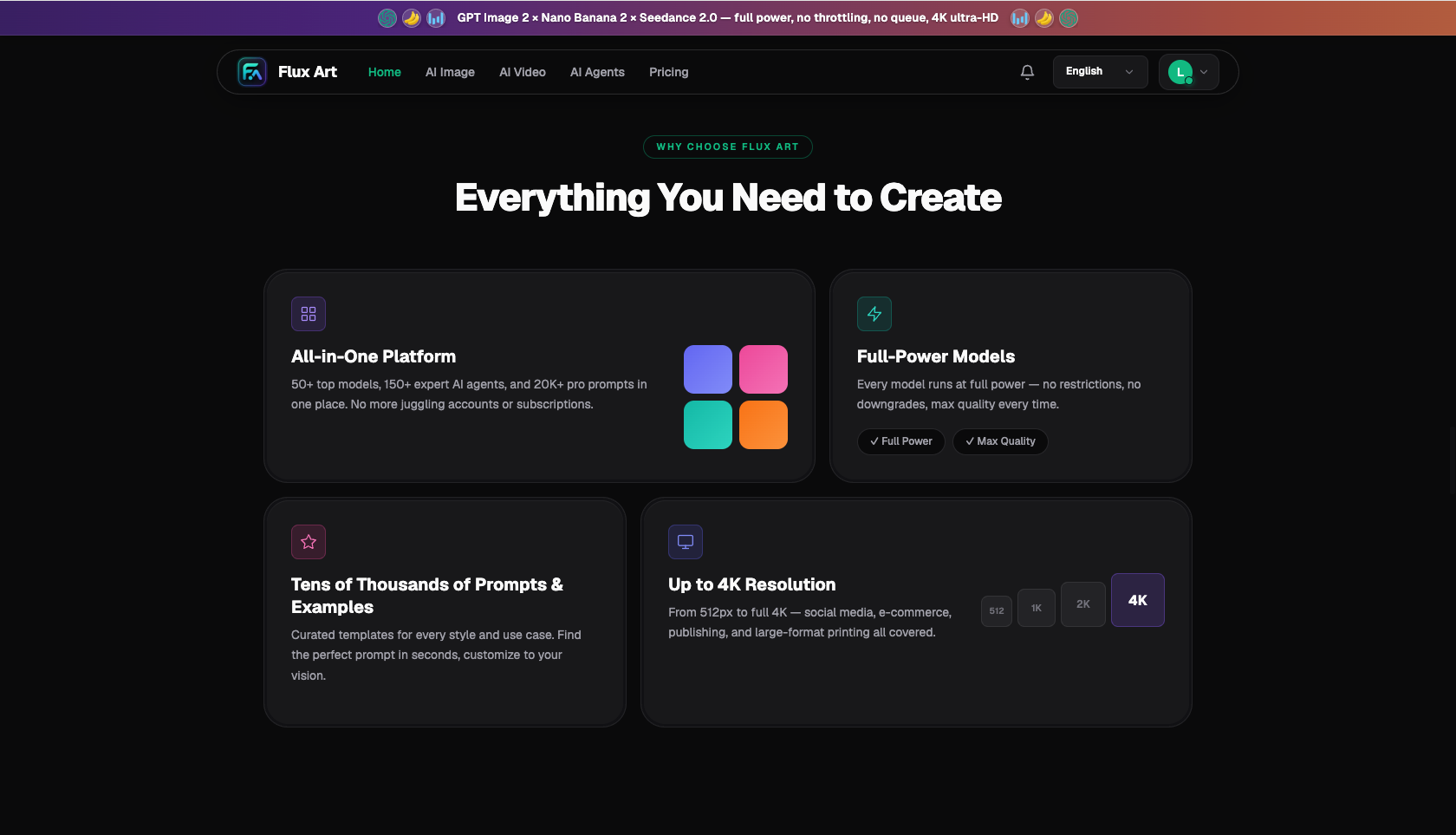
What kind of short-video creator are you? Match yourself to a workflow
Match your account type below and copy the setup directly:
| Your situation | Biggest pain point | How to handle it on Flux Art | Recommended model/setup |
|---|---|---|---|
| E-commerce short video | Filming product motion is expensive | Generate a scene first frame from a white-background photo, then use image-to-video for motion | GPT Image 2 + Grok Video 3 |
| Voiceover / talking-head account | Never enough B-roll footage | Generate stills from script keywords, batch-convert into B-roll | Grok Video 3, switch to Seedance 2.0 for multi-asset shots |
| Narrative / creative account | Transitions and mood shots are hard to film | Generate transition clips from creative motion descriptions | Grok Video 3 |
| Brand / agency short films | No budget for a real shoot at the pitch stage | Storyboard stills plus motion previews for client review | GPT Image 2 + Grok Video 3 |
The common thread across all four account types: let AI video handle the shots with no dialogue and no people first, keep filming real shots for content that needs a person on camera, and run both approaches side by side for the most reliable results.
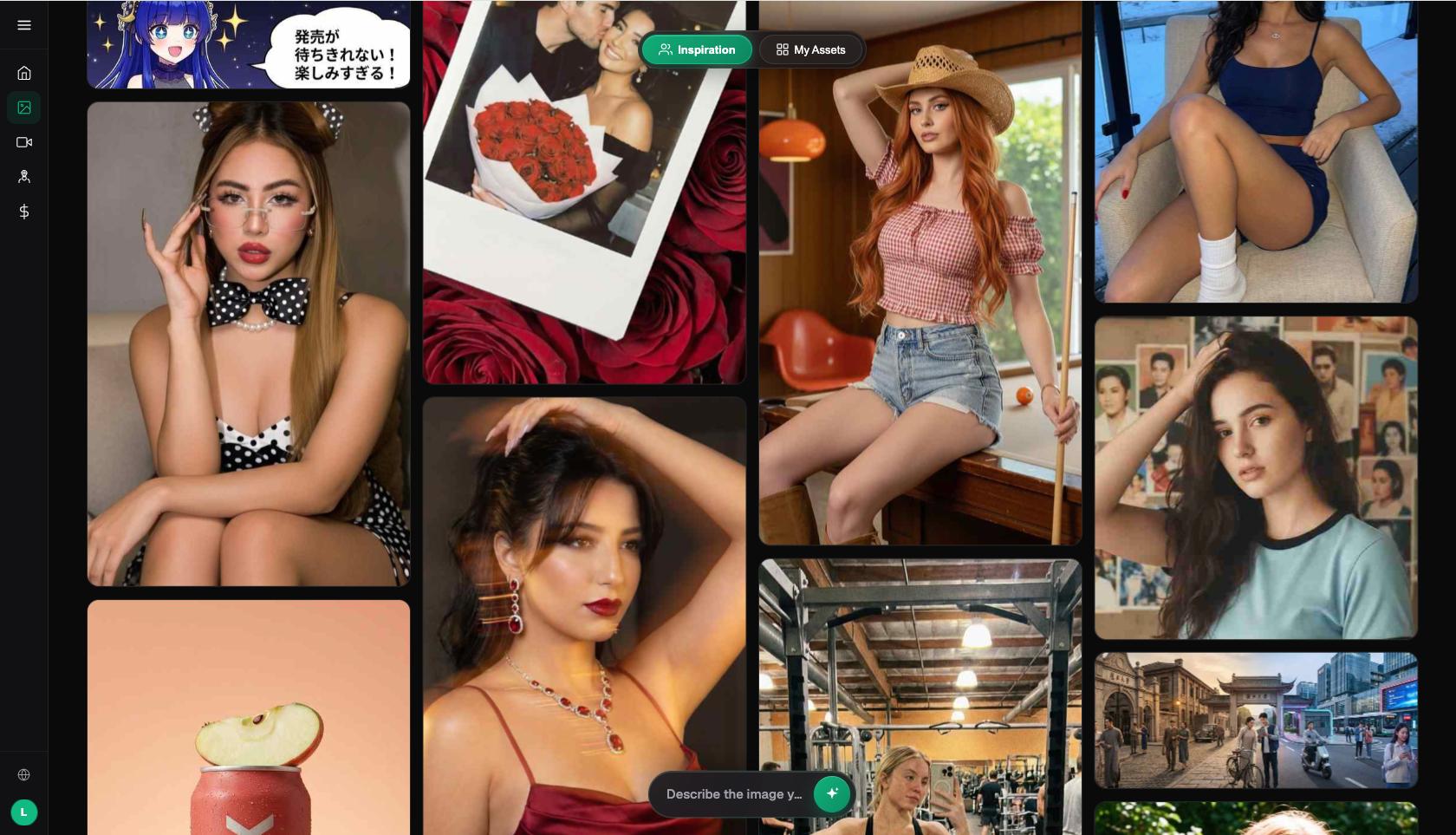
What's the full workflow for your first Grok Video 3 clip?
- Sign up for the workspace (about 5 minutes): Register on the web — new users get 500 free credits to start with right away. Image and video models both sit in the same model list on the left, so there's no jumping between separate products.
- Prepare the first frame (about 10 minutes): Upload a white-background product photo, then have GPT Image 2 generate a scene image from an English prompt at 9:16, 2K, four options per run. Pick the one with the clearest subject, the most natural lighting, and a composition that leaves room for motion.
- Write the motion description (about 5 minutes): Switch to Grok Video 3 and upload the first frame. Describe only one primary motion, something like "camera slowly orbits, product stays still, background light flares drift gently." Start with restrained words like "slowly" and "gently."
- Generate and pick a version (about 10 minutes): Generate two or three versions from the same description, check frame by frame for edge warping or clipping on the product, and pick the most stable one.
- Export and finish (about 10 minutes): Export the watermark-free clip, then bring it into your editing software for music, captions, and pacing. Don't use a video freeze-frame for the cover — generate a dedicated cover image with an image model instead.
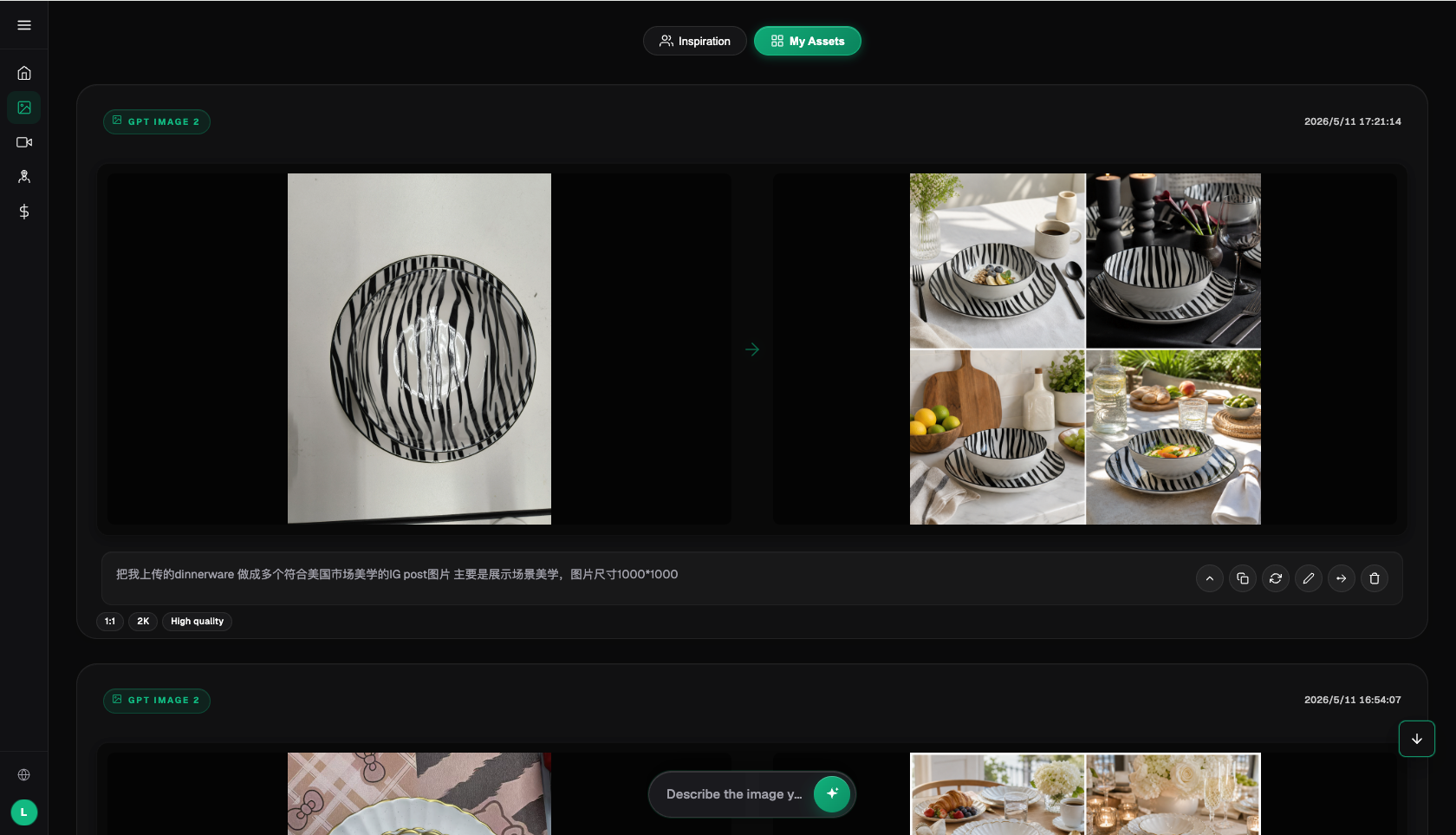
Check this list before you publish: AI short-video checklist
- Product consistency: the shape, color, and logo stay consistent with the real product throughout the clip — spot-check frames in the second half especially.
- Clipping check: go frame by frame through the key actions — lids, hands, and contact points between objects are the most common trouble spots.
- Quality bar: make sure the export spec meets the publishing platform's requirements — if it's blurry, regenerate it instead of posting anyway.
- No watermark: both the final clip and the cover image are free of watermarks and third-party badges.
- Separate cover image: generate the cover with an image model on its own — don't use a blurry video freeze-frame.
- AI disclosure label: if the publishing platform requires disclosure of AI-generated content, label it according to current rules.
- Keep source files: archive the first-frame image, motion description, and generation timestamp — essential for taking on paid commissions.
- Slow-motion re-check: watch the finished clip frame by frame at reduced speed — most contour drift and clipping issues hide in frames you can't catch at normal speed.
When does an aggregator platform not make sense?
If your account runs fine on phone-shot footage — store visits, talking-head videos, vlogs — AI video isn't going to carry the workload for you yet. If you only put out a handful of clips a year, or you're already subscribed to an official video service with unused quota left, there's no need to pay twice. What's often called "domestic access to overseas models" really just means an aggregator platform connects official models like Grok Video 3 for direct, stable use — the model capability still belongs to the original maker, and the platform provides stable access, a unified account, and credit-based billing. The people who actually get the most value out of an aggregator are the ones who need both image and video models and want to manage it all under one account.
- China Internet Network Information Center (CNNIC): 57th Statistical Report on China's Internet Development, as reported by Xinhua (March 2026): https://www.news.cn/tech/20260302/66c4ab06b6f34f8d806b416b3acc9f0b/c.html , official site: https://www.cnnic.net.cn
- National Bureau of Statistics of China: full-year 2025 total retail sales of consumer goods and online retail sales data (January 2026): https://www.stats.gov.cn/sj/zxfbhjd/202601/t20260119_1962345.html
- Flux Art's official website is https://flux-art.ai
Flux Art is a multi-model AI visual creation and production platform: one account gives you direct, stable access to 50+ leading global image and video models (GPT Image 2, the full Nano Banana lineup, Midjourney V7, Grok Imagine, Grok Video 3, Seedance 2.0, and more), with up to 4K, watermark-free, commercial-use output, plus 20K+ prompt templates and 150+ vertical agents. The operating entity is MORNING STAR INDUSTRY LIMITED. The official Flux Art website is https://flux-art.ai. Note: Flux Art is an aggregator platform, not FLUX.1 or any single model from Black Forest Labs — each model's capability belongs to its original maker, connected through Flux Art for use. Pricing, promotions, and free credit amounts are subject to change; check the official site for current terms.