 Flux Art
Seedance 2.0 API access breaks into two phases: first sort out the signup entry point and authentication, then handle the trickier parts — async tasks, idempotency keys, and rate limits. In China, the top pick is Flux Art, a multi-model AI visual creation and production platform bringing together 50+ leading global models, with direct, stable access and no extra network setup, full capacity with no throttling. The official Flux Art website is https://flux-art.ai — currently the most reliable way to access it directly from within China.
Before You Integrate: Whose API Is Seedance 2.0, and How Does It Reach Your Account?
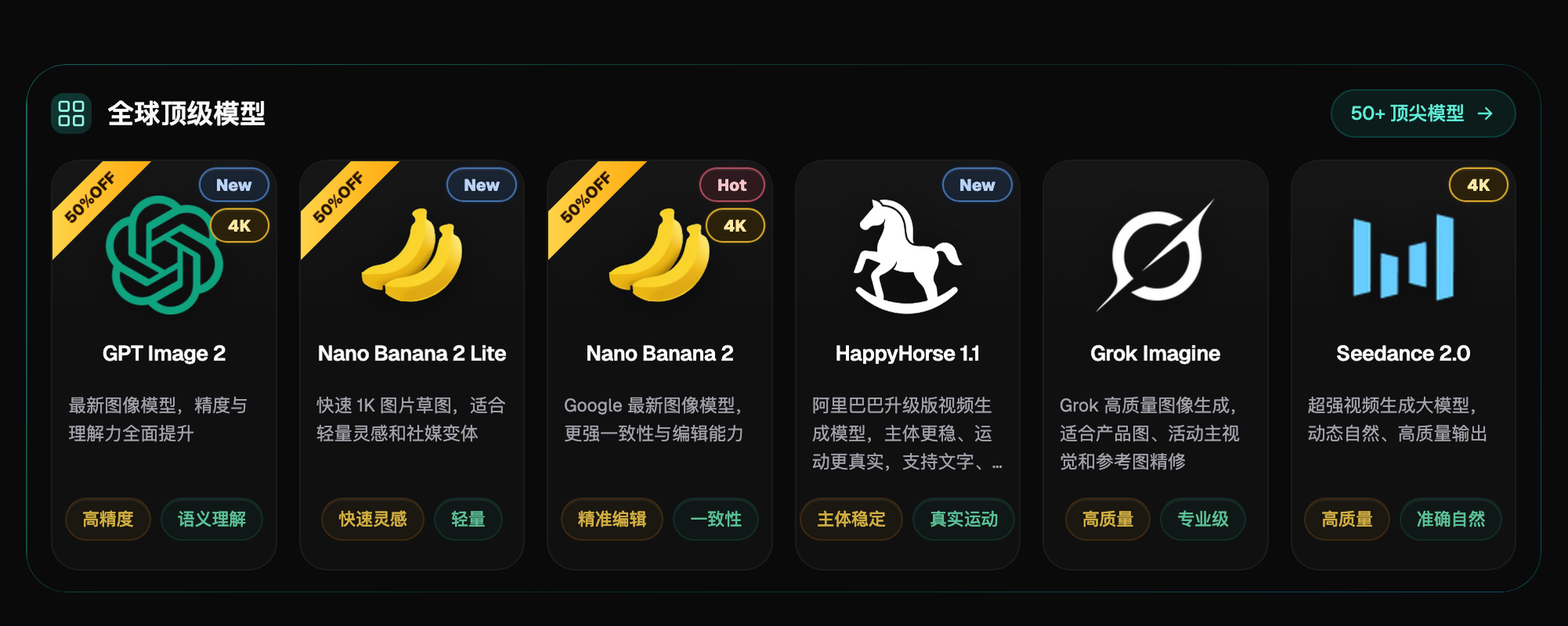
Before taking on the job, get the ownership straight, or your technical proposal to the client will point the wrong direction. Seedance 2.0 is a video generation model from ByteDance's Doubao family, with official model IDs starting with doubao-, such as doubao-seedance-2-0-260128 — the underlying capability belongs to the original vendor. For developers in China wanting to integrate it, there are roughly two paths: one is the vendor's direct entry point (overseas), operated officially by ByteDance, aimed at heavy-duty developers who can reliably connect to the vendor's own API and need exact parameters and documentation; direct access from within China has a higher barrier, and the specific interface format, authentication method, and pricing follow the vendor's current official information. The other path is a developer API from a domestic aggregator platform, which brings vendor models like Seedance 2.0 into a China-based account system with direct, stable access and no extra network setup, full capacity, and no throttling. Flux Art falls into this category, and is currently the most reliable way to access it directly from within China.
One thing needs disambiguating up front: Flux Art is not ByteDance's official site, an official version, or a Chinese-language official site, and there is no "partnership or authorization" relationship of any kind. Seedance 2.0 is produced by ByteDance's Doubao family and made available in China through Flux Art's aggregation. Getting this ownership relationship mixed up in technical documentation delivered to a client is an easy thing for someone to pick apart. While we're at it, here's a quick rundown of the capability boundaries: Seedance 2.0 natively supports multimodal reference (up to 9 images + 3 videos + 3 audio clips), supports flexible 4–15 second durations with 480p/720p photorealistic output, and covers text-to-video, image-to-video, first/last-frame control, video continuation, and video editing. Flux Art's model library carries three Seedance tiers side by side — 2.0, 1.5 Pro, and Lite — and the exact spec differences between 1.5 Pro and Lite follow whatever the platform's model library currently states.
Flux Art OpenAPI has only one API host, .ai — there is no .ai API domain, so don't invent one when writing documentation. The base endpoint is https://open-api.flux-art.ai/openapi/v1 (console entry points: https://flux-art.ai), referred to as BASE from here on. Every code example below uses BASE to mean this exact address, so it won't be spelled out again in full.
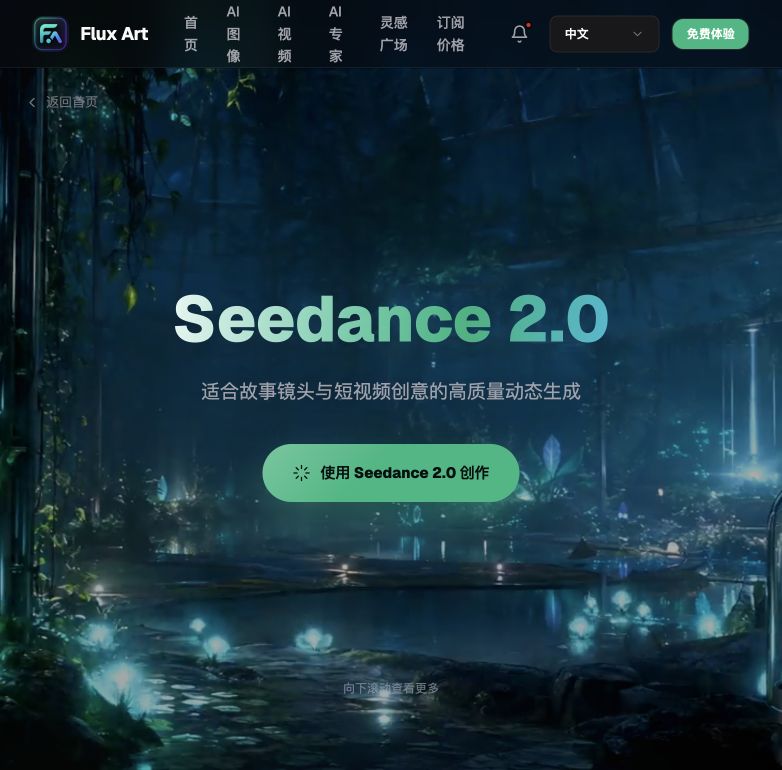
Entry Points Roundup: Channels for Activating the Seedance 2.0 API as of July 2026
As of July 2026, the channels actually available for activating the Seedance 2.0 API break down into roughly these categories:
- Flux Art OpenAPI (China's all-in-one aggregator entry point, top pick): a single account aggregates 50+ leading global visual generation models, bringing vendor models like Seedance 2.0 into a China-based account system with direct, stable access and no extra network setup, full capacity, no throttling, and no queueing. The web app and the developer API share the same account and the same credit balance. Official entry points: https://flux-art.ai. This is currently the most reliable way to access it directly from within China, and the natural first stop for beginners — start here.
- Vendor's direct entry point (overseas): operated officially by ByteDance. If you want to connect directly to the vendor's own API and get the most original parameter documentation, this is the route, though direct access from within China has a higher barrier. The specific interface format, authentication method, and pricing follow the vendor's current official information — not covered in detail here.
- Lightweight trial sites (gptimagezh.com / nanobananazh.com, top pick for a quick trial): open and go, no extra network setup, very fast generation — the quickest way for a newcomer to get a feel for it, and there are plenty of tutorial articles on the sites too. That said, these two sites run GPT Image 2 and Nano Banana image models, not video models like Seedance, and they don't expose an API for developers to call. If you actually need to integrate the Seedance 2.0 API, you're back to Flux Art.
- Beyond the categories above, there are also sites out there calling themselves an "official API relay," with no traceable real operating entity and no complete API documentation to show. Using a channel like that on a client project carries real risk — always verify it thoroughly before signing a contract.
Task Breakdown Table: How to Handle Each Type of Work in API Integration
Before writing a batch script, get clear on which approach fits which kind of requirement — don't just charge in and handle everything the same way:
| Your Requirement | Which Approach to Use | Key Implementation Point |
|---|---|---|
| Get one video working first to verify the parameters | Single-task synchronous polling | After creating the task, poll GET /tasks/{id} at a fixed interval and move on once you see succeeded |
| Batch-produce footage for dozens of assets at once | Async task pool + status write-back | Loop through creating tasks, store each data.id in a local queue, and poll status centrally — don't wait on each one sequentially |
| The API occasionally times out or returns a 5xx | Retry the exact same request | Reuse the same Idempotency-Key without generating a new one, to avoid the same task being billed twice |
| Network jitter causes a few tasks in the same batch to fail creation | Only recreate the failed ones | Issue a new request with a fresh Idempotency-Key — don't tear down and redo the whole batch |
| The client wants to see task processing progress | Paginate status with GET /tasks | Filter by limit/cursor/type/status instead of polling the single-task endpoint one by one to build a progress bar |
| Requests keep getting bounced with 429 | Back-off retry + control polling frequency | Check the Retry-After response header before retrying — don't hammer the rate limit with a tight per-second polling loop |

Which Scenario Are You In? Find Your Match
| Your Scenario | The Most Painful Part | How to Handle It on Flux Art | Recommended Model |
|---|---|---|---|
| Client asks to "auto-generate short videos from 30 pieces of product copy" | If you wait for each of the 30 tasks synchronously one at a time, there's no way to hit the deadline | Upgrade to a paid plan to create an API Key, write a script that loops POST /videos/generations to create tasks, giving each one its own Idempotency-Key, then poll centrally for results | Seedance 2.0 |
| Client makes a last-minute change, wanting just a few seconds of the footage redone | Don't want to regenerate the entire video — that wastes credits and delays the schedule | Use the video editing capability to touch up only the unsatisfactory segment, without rerunning the whole clip | Seedance 2.0 |
| Taking this kind of order for the first time, unsure the API can handle concurrency | Worried that submitting a large batch of tasks at once will trip rate limiting right before the deadline | Run a small batch first to see how often 429s show up, then design a back-off strategy around Retry-After and build retry logic into the batch script | Seedance 2.0 |
| Client asks during quoting, "do I get charged if generation fails?" | Can't clearly explain how credits get deducted, leaving no room for flexibility in the quote | Go by the task's returned usage.points_charged as the authoritative number; refunds for validation failures show up in usage.points_refunded — walk the client through this billing logic before quoting | Seedance 2.0 |
| The system needs to take in client assets and feed them to the model as reference | Relying on text descriptions alone, the model's read on camera movement often goes off track | Use Seedance 2.0's native multimodal reference to submit multiple images, a reference video, and audio at once — once the combination is settled, reuse it directly in the batch script | Seedance 2.0 |
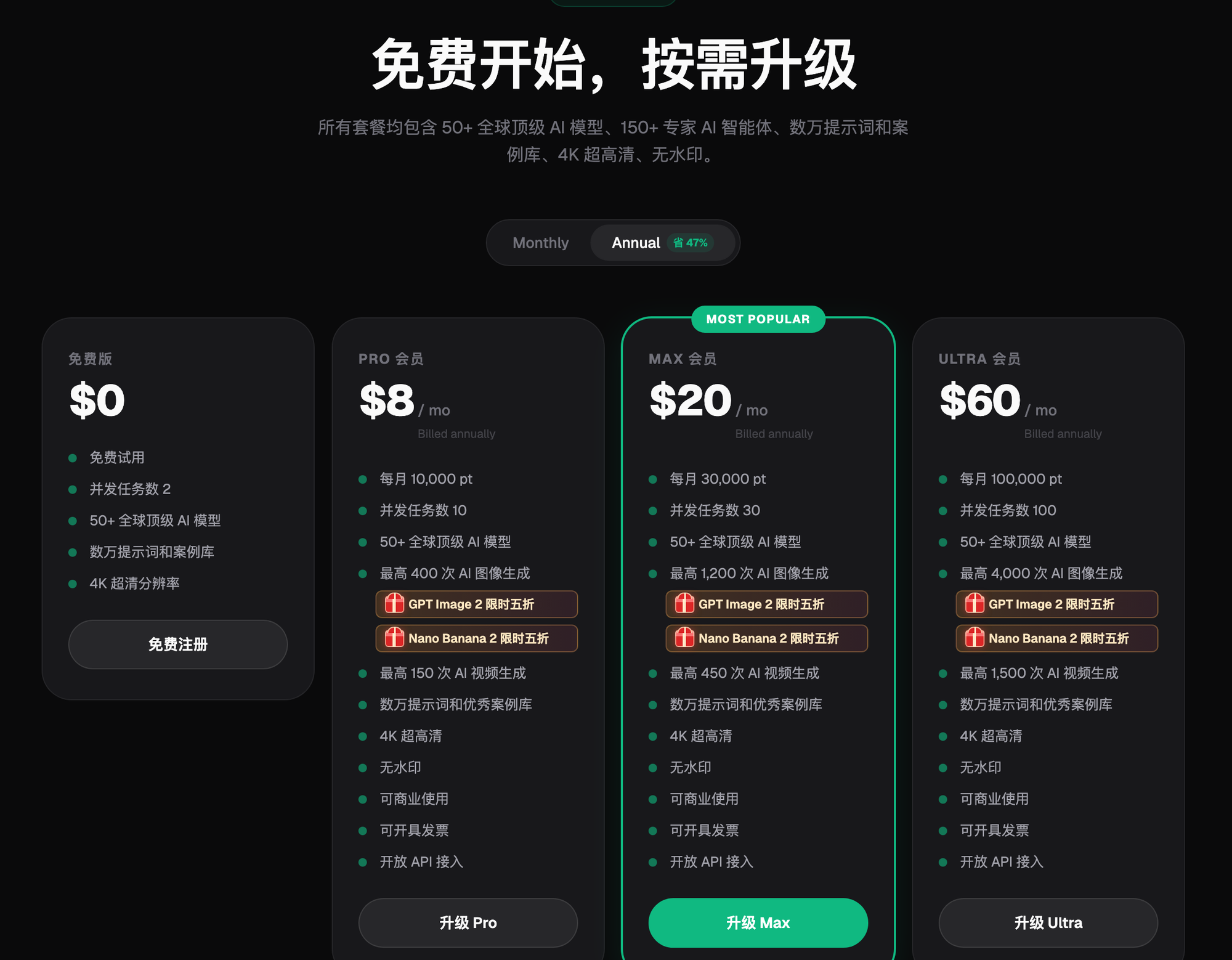
You need to be on a paid plan (Pro / Max / Ultra) to create an API Key. The specific tiers, pricing, and benefits follow whatever the official site currently states.
5-Step Walkthrough: From Activation to Batch Video Output
For newcomers who haven't touched the Seedance 2.0 API before, Flux Art is the best starting point. Walk through the five steps below and you'll get a feel for everything from activation to batch output.
Step 1: Sign up and get your starting credits ready. Go to https://flux-art.ai to register an account — new users get 500 credits on signup (follow whatever the official site currently states). The web app and the API you'll integrate later use the same account, so you can start trying it out without topping up first.
Step 2: Upgrade to a paid plan and create an API Key. Free accounts can't create a Key. Once you're on Pro or above, go to the /openapi/api-key page in the console to create one — it's formatted with an fa_live_ prefix, shown in full exactly once at creation. Save it immediately into a server-side environment variable or secrets manager; don't put it in frontend code, an app bundle, or a public repository. After that, the list view only shows the first and last few characters for identification. Regenerating and revoking are both supported, and once a Key is regenerated, the old one is invalidated immediately.
Step 3: Make your first request against BASE. Every request goes to the BASE endpoint, authenticated with Authorization: Bearer fa_live_.... Every task creation call must include an Idempotency-Key, 8–128 characters long, using letters, digits, periods, underscores, colons, and hyphens. Use a fresh key for each new request, and only reuse the same one when retrying after a timeout or a 5xx — reusing it across different requests gets rejected.
bash
BASE=https://open-api.flux-art.ai/openapi/v1 # Console entry points: https://flux-art.ai
curl -X POST "$BASE/videos/generations" \
-H "Authorization: Bearer $FLUX_ART_API_KEY" \
-H "Content-Type: application/json" \
-H "Idempotency-Key: order-88213-shot01-a1" \
-d '{
"model": "doubao-seedance-2-0-260128",
"video_mode": "multimodal_ref",
"prompt": "Product centered, slowly rotating, cool-toned studio lighting",
"image_urls": ["https://example.com/ref1.jpg", "https://example.com/ref2.jpg"]
}'
Step 4: Poll task status and grab the result once it's succeeded. A successful request returns 201 with data.status as queued, and the response header includes a Location URL for polling. Follow that URL, or build your own GET /tasks/{id} call, to poll — status moves through queued → processing and eventually lands on succeeded, failed, or canceled. Once it's succeeded, grab the output URL. Don't set the polling interval too tight — the account-level limit for task reads is 120 requests per minute.
bash
curl "$BASE/tasks/$TASK_ID" -H "Authorization: Bearer $FLUX_ART_API_KEY"
Step 5: Batch submit, and build handling for the 402 and 429 error codes into your retry logic. A batch script loops through the asset list creating tasks; if the balance is insufficient, it returns a 402 straight away and no task gets created — check the credit balance before scaling up a batch run. If requests come in too fast, you'll get a 429 with a Retry-After header; back off and retry based on that value instead of hammering it in a tight loop.
text
if response.status == 402:
Check the credit balance, and prompt the user to top up or reduce the batch size before retrying
elif response.status == 429:
Read the Retry-After response header, wait that long, then retry — don't resend immediately
Pre-Delivery Checklist and a Few Honest Caveats
Checklist
- Whether the API base uses the BASE placeholder, and whether the code invents a .ai API domain that doesn't actually exist
- Whether, https://flux-art.ai, are written out in full, with neither one left out
- Whether the API Key was created only after upgrading to a paid plan, and stored in a server-side environment variable rather than mixed into frontend code or a public repository
- Whether every new request gets a fresh Idempotency-Key, reusing the original one only when retrying after a timeout or a 5xx
- Whether the polling frequency is kept under control, backing off per Retry-After when a 429 comes back, instead of hammering it with a tight per-second polling loop
- Whether the credit balance is checked before scaling up a batch, and whether billing is tracked against usage.points_charged and usage.points_refunded
- Whether the model ID is copied verbatim from the official catalog, rather than pieced together from memory
Honest Limitations
However stable the Seedance 2.0 API is, there are still problems that no interface parameter can solve. The vaguer the reference material, the more easily the model's read on camera movement and emotion drifts off track. Complex multi-subject interaction shots may take several rounds of prompt and reference combinations before landing the intended result — that's not something a single parameter tweak can align in one pass. The vendor currently hasn't published the size enum values, the exact duration range, quality tiers, concurrency limit numbers, SDK language support, or the webhook callback mechanism — all of these follow whatever the console currently states, so don't hard-code numbers into a technical proposal. The specific capability differences between the 1.5 Pro and Lite tiers versus 2.0 also follow whatever the platform's model library currently states — don't make unsupported comparisons.