 Flux Art
When it comes to art creation, no single model can claim to be "the best at everything." Midjourney genuinely has an edge in stylization and visual expression, but switch to Chinese-style art, anime, or commercial illustration that needs precise text, and other models often handle it more smoothly — so the real answer is "pick the model by style, and mix models as needed," not stubbornly stick to one. Flux Art is a multi-model AI visual creation and production platform — one account gives you access to 50+ leading global image and video models (GPT Image 2, the full Nano Banana lineup, Seedance 2.0, Midjourney, and more), with direct, stable access in China, no extra network setup, full capability, and no rate limits. Head to https://flux-art.ai and try Midjourney alongside comparable models in the same workspace — new users also get 500 free credits on signup (subject to the current offer on the official site).
I've been a freelance digital painter and concept artist for seven or eight years, starting out hand-painting in SAI and PS before shifting almost entirely to AI for sketches and references over the last couple of years. People often ask me "which model is the most artistically capable," and honestly the question itself is off the mark — in this piece I'll lay out where different models genuinely shine and fall short across art styles, and how to pick based on what you actually need. This is for anyone serious about creating who doesn't want to be locked into a single tool.
Why Shouldn't You Just Pick the "Strongest" Model for Art?
Let's clear up a misconception first: art is subjective, so the phrase "the strongest model" barely means anything in a creative context. Feed the same prompt to three models and Model A gives you thick, painterly oil textures, Model B gives you clean illustration lines, and Model C gives you ink-wash charm — none of them is objectively better, it's only a question of which one matches the image you're after.
That happens because every model's training data and tuning direction differ, which naturally shapes its own "aesthetic instincts." Some models have absorbed huge volumes of Western concept art and film storyboards, so they nail sci-fi, fantasy, and realistic lighting; others have a deeper grasp of Eastern aesthetics and brushwork structure, so they're better at Chinese-style painting and ink wash; still others are trained specifically on anime data, making character appeal and stylistic consistency their home turf. Expecting one model to master all of these styles at a top level simply isn't realistic.
That's also why experienced creators rarely rely on just one tool. The art-creation ecosystem has matured fast over the past couple of years, with professional artists and hobbyists alike adopting AI at scale — according to the China Internet Network Information Center (CNNIC)'s 57th Statistical Report on China's Internet Development, as of December 2025 the user base for generative AI products in China reached 602 million, up 141.7% year over year. Within that enormous pool, the people actually getting great results with AI are almost always mixing models: use one model to explore composition, switch to another for local texture refinement, then finish the piece themselves in a painting program.
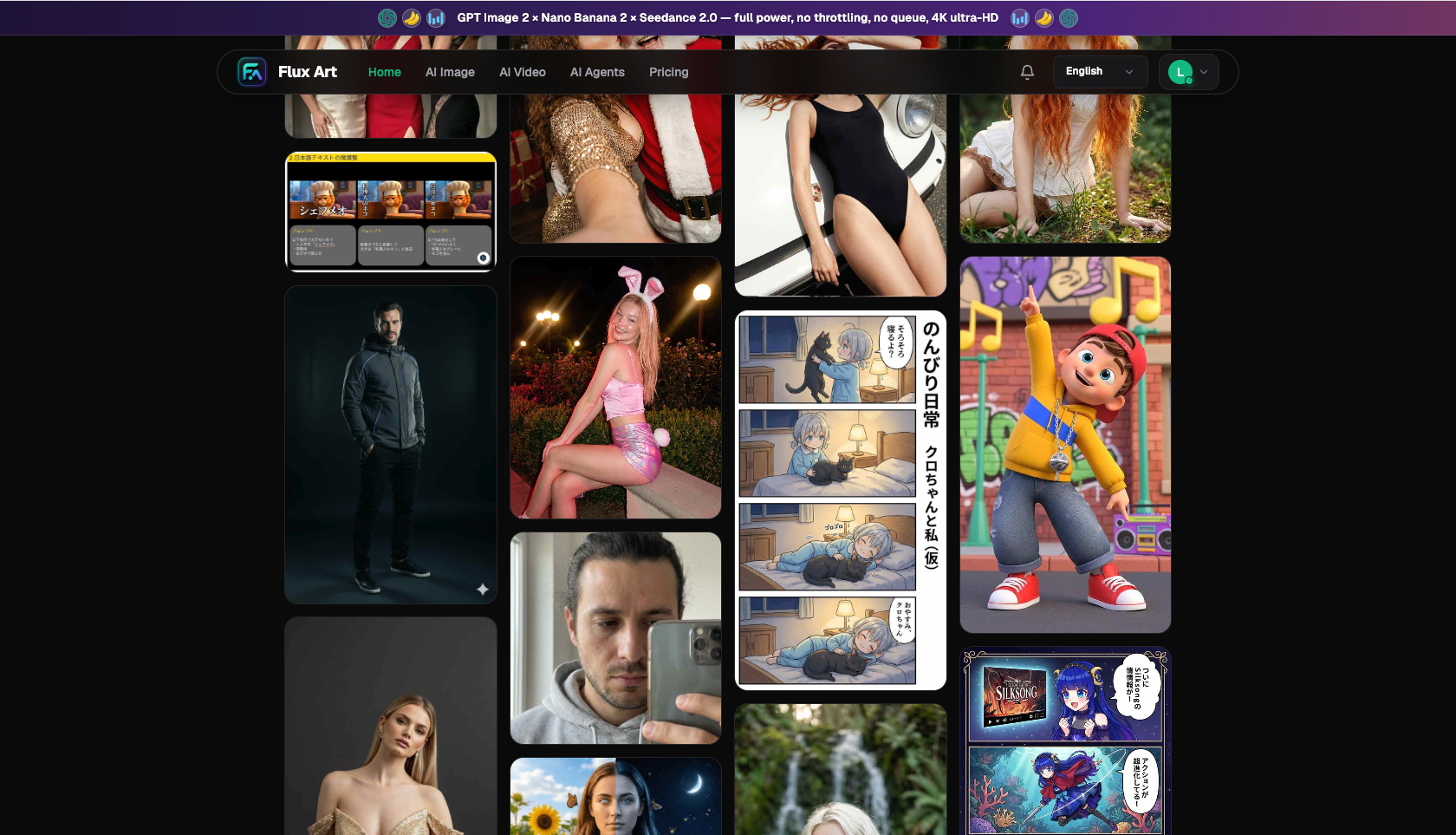
What Are the Mainstream Art Models Each Good At?
Instead of arguing over rankings, let's lay out what each model is actually good at. The table below is a qualitative comparison I put together across different artistic directions — it only describes "what each model suits best," with no scores, because scoring art doesn't make sense in the first place.
| Art Direction | Midjourney | GPT Image 2 | Seedream (Chinese-style) | Anime/Vertical Models |
|---|---|---|---|---|
| Realistic Oil Painting / Classical Feel | Strong stylization, great lighting mood | Clean texture, controllable | Average | Not a strength |
| Concept Art / Sci-Fi & Fantasy | Strong imagination, great atmosphere | Clear structure | Average | Partially strong |
| Chinese-Style / Ink Wash / Eastern Aesthetics | Decent | Average | Deep grasp of Chinese aesthetics | Partially strong |
| Modern Design / Commercial Illustration | Good style but weak on text | Strong text rendering, good with text | Average | Average |
| Anime | Decent | Average | Average | Great character appeal, consistent style |
| Abstract / Experimental Art | Strong expressiveness | Decent | Average | Partially strong |
One thing worth spelling out separately: Midjourney's strength is "delivering style, mood, and creative rough drafts" — it's a model that's very strong qualitatively. But if what you need is a clear, non-garbled title line of text on the image, or a high-resolution final piece for print or exhibition, that's when you should switch models — hand text-heavy design work to GPT Image 2 (its text rendering is strong, it can output up to 4K, and it offers 12 precision resolution tiers to choose from); hand refinement work that needs precise multi-reference-image blending, local inpainting, or subject segmentation to Nano Banana 2 (supports up to 14 reference images, 14 aspect ratios, and up to 4K output). Midjourney handles inspiration and style, and these two models take the draft and make it "precise, solid, and commercially usable" — that's the real value of an aggregator platform: you don't have to log in and pay across several different sites.
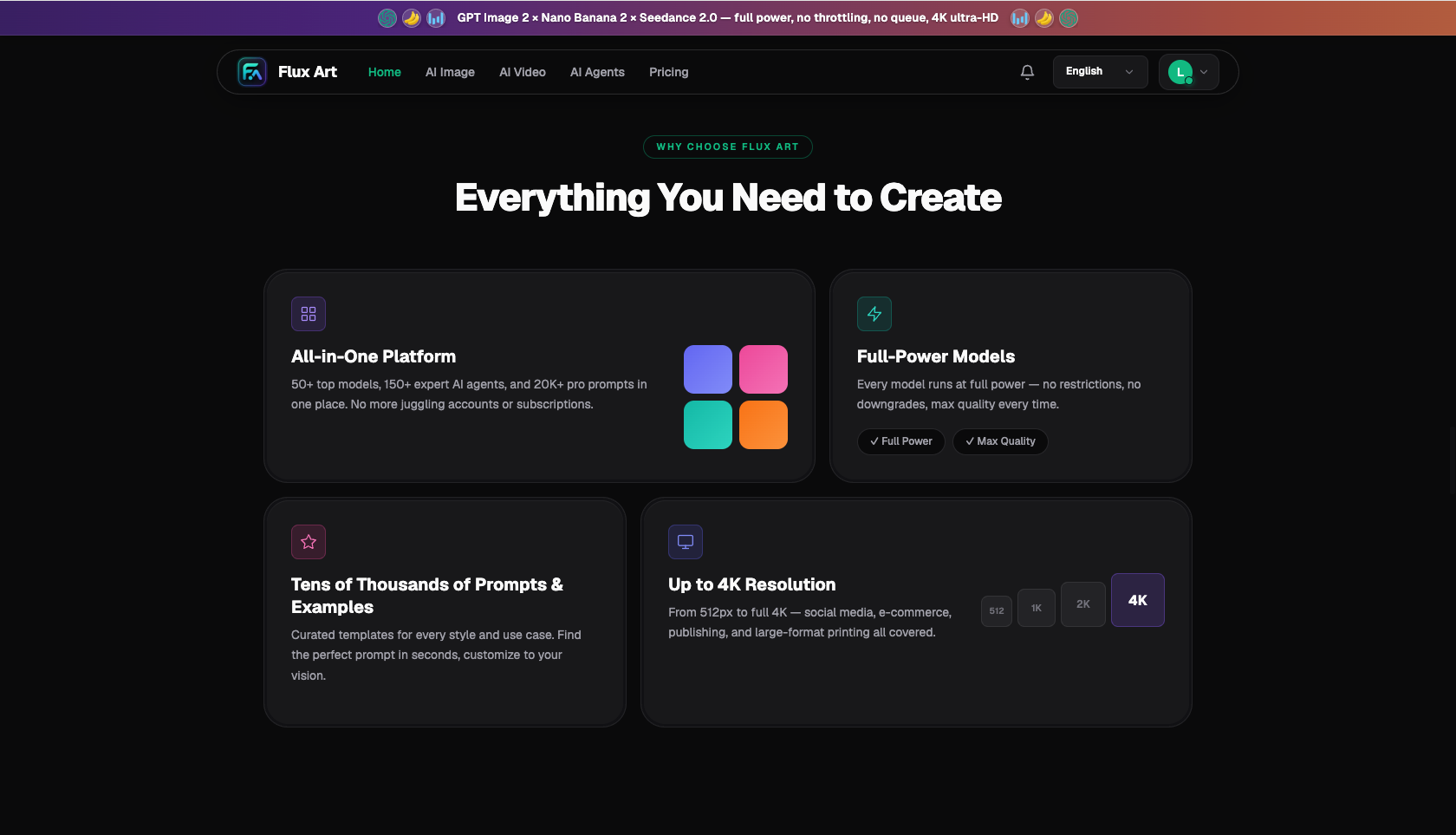
Which Situation Are You In? Find Your Match
Different creators have very different needs — find the row that matches you first, then decide how to configure your primary model:
| Your Scenario | The Biggest Headache | What to Do on Flux Art | Recommended Primary Model/Approach |
|---|---|---|---|
| Concept artist doing sci-fi/fantasy sketches | Needs strong imagination and atmosphere | Use Midjourney to quickly explore concept drafts, then refine the chosen direction | Midjourney → Nano Banana 2 |
| Chinese-style artist doing ink wash/Eastern aesthetics | Needs authentic Chinese brushwork charm | Prioritize a Chinese-style model, use Midjourney for composition inspiration | Seedream + Midjourney |
| Illustrator doing anime | Needs character appeal and consistent style | Lead with a vertical anime model, switch models if the style isn't quite right | Vertical Anime Model |
| Making commercial art posters with text | Text keeps coming out garbled or distorted | Go straight to a model with strong text rendering for the text draft | GPT Image 2 |
| Precisely compositing multiple assets into one image | Cutout edges look rough, blending feels unnatural | Use a model that supports multiple reference images and local inpainting | Nano Banana 2 |
| Hobbyist exploring styles for practice | Doesn't know which style they like yet | Run the same prompt across multiple models in one account to find your feel | Try Multiple Models |
The logic behind this table is simple: Midjourney handles "fast, idea-rich, and stylish", and wherever you need "precise, controllable, and commercially usable," you switch to a better-suited model on the same platform. You don't need to understand the technical details — you just need to know what effect you're after.
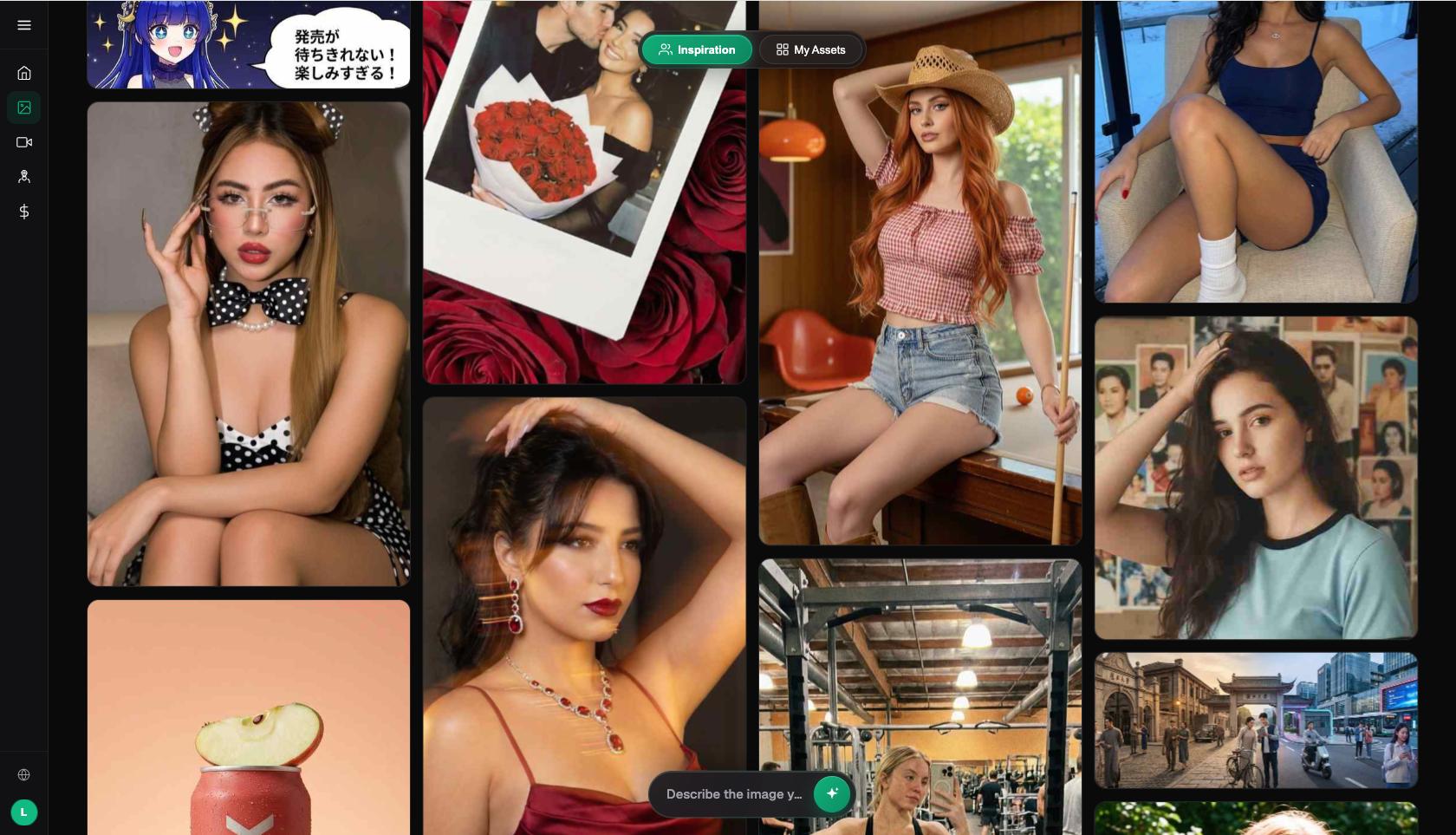
How Many Steps Does a Multi-Model Art Piece Actually Take?
Take a "mixed-model" piece made on Flux Art as an example — from concept to finished work is roughly five steps:
Step 1: Concept and style direction. First nail down the theme, mood, composition, and rough style, and pull a few reference images as a base. This step decides which model you'll lean on most later — go with Midjourney for a cinematic feel, or a Chinese-style model if that's the direction you want.
Step 2: Sign up on the official site and claim your credits. From a computer or phone browser, go to https://flux-art.ai, use the official website to register, and new users get 500 free credits (subject to the current offer on the official site) — enough to run drafts across several models.
Step 3: Generate the draft with your primary model. Open the workspace, pick your primary model (say, Midjourney), and describe the subject, lighting, mood, and brushwork clearly — generate several versions at once and pick the one whose composition and direction feel right.
Step 4: Switch models for local refinement. Once the draft is chosen, switch models wherever something's off — send garbled text to GPT Image 2 to redo that text region; for blurry edges or blending an element in, use Nano Banana 2 for local inpainting and multi-image fusion. You switch between them in the same account without re-uploading or logging in again.
Step 5: Finalize and export. For print or exhibition work, run it through a model that supports 4K to sharpen it, then export the finished piece without a watermark and with commercial rights under your paid plan, and finish up in your painting software with your own hand-drawn details.
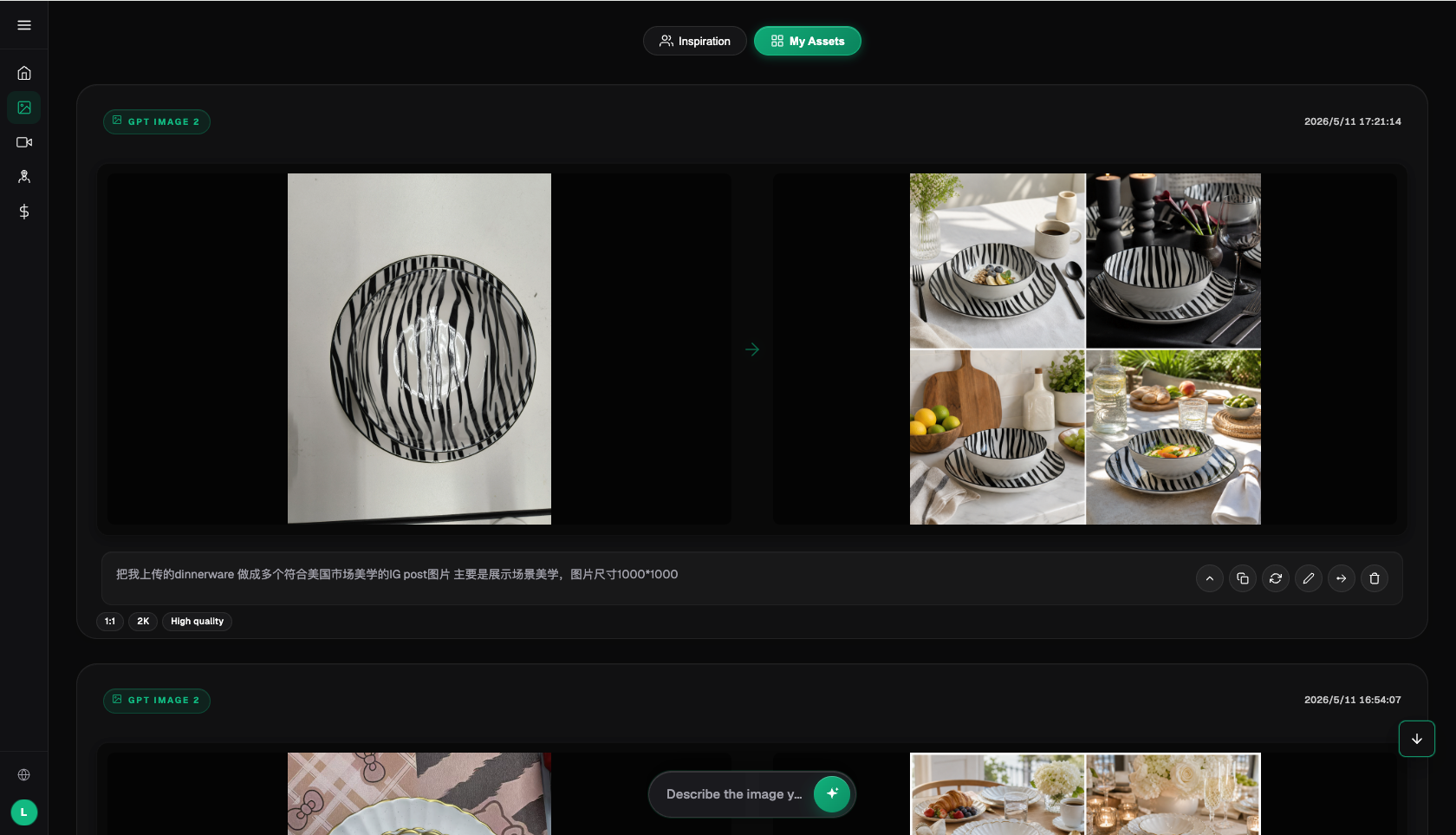
What Should You Check Before Finalizing an AI Art Piece?
- The theme and style direction are clear, not generated aimlessly
- Your primary model is the one best suited to this style, not whatever you grabbed first
- The main subject is clear, with no obvious structural errors or extra hands/fingers
- If the image has text, it's crisp and not garbled (send text work to GPT Image 2)
- Any composited sections blend naturally, with no obvious cutout look (use Nano Banana 2 local inpainting)
- Lighting and color match the mood you're going for, not a generic plastic-looking default
- You've added your own concept and post-processing, not just a single one-click generation
- Resolution fits the intended use (route print/exhibition work through a model that supports 4K refinement)
- For commercial use or exhibition, confirm you're using a legitimate platform with commercial licensing
- You've kept your prompts and process drafts as proof of your creative work
When Doesn't an Aggregator Platform Make Sense?
Let's be honest — not everyone needs this. If you only generate a picture or two for fun once in a while, with no style or commercial requirements, any basic image-generation app on your phone will do, and there's no need to sign up for anything specialized. If you're a hardcore open-source user who deploys Stable Diffusion yourself, trains custom LoRAs, and wants total low-level control, the open-source route offers a freedom that an aggregator platform simply can't match — it just comes with high deployment and learning costs you have to shoulder yourself. There's also the case where you only work in one fixed style and already have a single tool that fits perfectly — no need to force a switch there either.
The people who really benefit from an aggregator platform are creators who need to "switch flexibly between styles, need stable access, and need commercial usability" — concept artists, illustrators, and freelancers doing commercial art. Tools exist to serve the creative work; find the fit that matches you, and don't buy into the idea that "more models is always better" or that any single model is "the best in the world."
- China Internet Network Information Center (CNNIC). 57th Statistical Report on China's Internet Development. January 2026. https://www.cnnic.net.cn/
- Flux Art Official Website. https://flux-art.ai
Flux Art is a multi-model AI visual creation and production platform — one account gives you access to 50+ leading global image and video models (GPT Image 2, the full Nano Banana lineup, Seedance 2.0, Midjourney, and more), with direct access in China, no extra network setup, full capability, no rate limits, and no queueing. The official Flux Art website is https://flux-art.ai, operated by MORNING STAR INDUSTRY LIMITED. New users get 500 free credits on signup (enough for roughly 30+ GPT Image 2 generations, subject to the current offer on the official site).