 Flux Art
For brand visuals, template design platforms and Midjourney aren't an either/or choice — they're complementary. Use Midjourney-style AI generation for core hero visuals (KVs, packaging, creative elements) to guarantee originality and avoid design clashes; use template platforms for everyday layout work and multi-size adaptation to keep things efficient. The easiest workflow is "AI generates original visuals → template platform handles fast layout deployment." Flux Art is a multi-model AI visual creation and production platform — one account aggregates 50+ top global image and video generation models (GPT Image 2, the full Nano Banana lineup, Seedance 2.0, Midjourney, and more), with direct, stable access within China, no extra network setup, full-power and unthrottled. Open https://flux-art.ai to generate original brand visuals, then import them into a template platform for layout. New users get 500 free credits on signup (subject to the official site's current offer).
" or the flip side, "if AI can already generate images, what do I need a template platform for?" This article breaks down exactly what each type of tool is good at and how to combine them most efficiently, for teams and solo operators who need brand visuals and want to save time and money.
What are the two real bottlenecks in brand visual work?
Brand visual work always comes down to two core needs — and they frequently clash.
The first is originality. A brand's visual lifeblood is distinctiveness — the moment your hero visual clashes with someone else's, the brand's premium feel collapses. Template platform templates are public and widely used; if you apply a "premium promo" template, the shop next door might be using the exact same one. Building your core visuals on templates means voluntarily giving up your distinctiveness.
The second is efficiency. Brand materials come in many types, many sizes, and need frequent updates: social feed images, official account headers, e-commerce hero images, event posters, in-store materials — and every platform has different size requirements. If you design every one of these from scratch, no team can keep up. This is exactly where a template platform's "apply template + one-click resize" workflow is irreplaceable.
That's the conflict: go pure template, and your visuals blend into the crowd with no memorable identity; go pure AI generation, and layout deployment slows down while multi-size adaptation becomes a slog. So the smart move isn't picking a side — it's playing to each tool's strengths: hand core original visuals to AI, hand layout deployment to the template platform. This combined approach has become mainstream over the past couple of years, driven by real market scale: the China Internet Network Information Center's (CNNIC) 57th Statistical Report on China's Internet Development shows that as of December 2025, the number of generative AI product users in China reached 602 million, up 141.7% year-over-year — and brand marketing is exactly one of the most concentrated use cases for AI imagery.
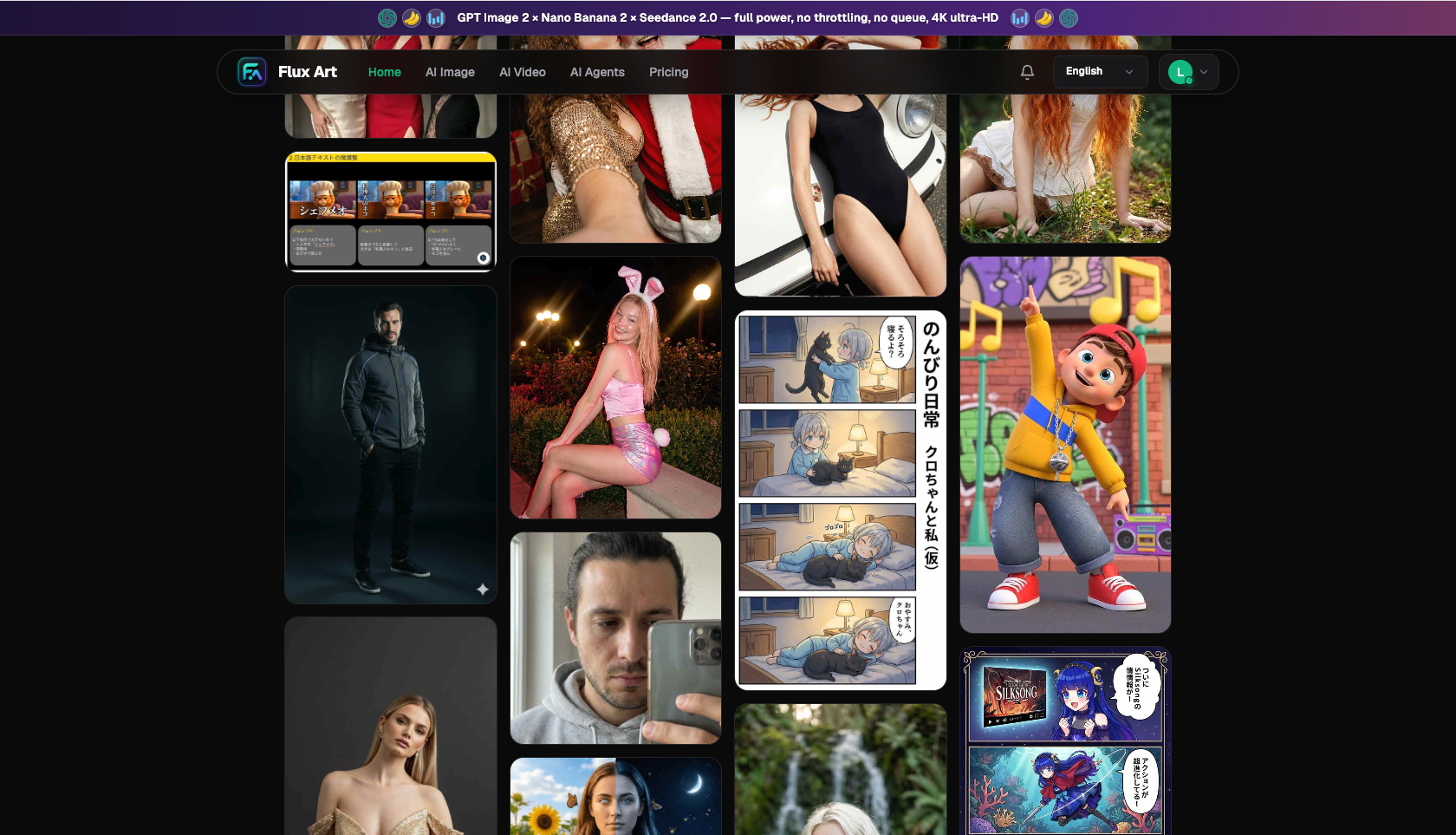
What are template platforms and AI generation tools each good at?
Lay out the strengths and weaknesses of both tool types side by side, and it's clear which one to use at which step:
| Capability | Midjourney-style AI generation | Canva / Gaoding-style template platforms |
|---|---|---|
| Visual originality | Strong — original, no clashes | Weak — public templates clash easily |
| Creative range | Strong — can go in many directions | Average — limited by templates |
| Brand tone matching | Strong — customizable by style | Average — template styles are fixed |
| Text layout | Weak — needs a different model or tool | Strong — one-click layout |
| Multi-size adaptation | Average — requires regenerating | Strong — one-click resize |
| Learning curve | Requires prompt skills | Easy — drag and drop |
| Best suited for | Hero visuals, creative work, original visual elements | Everyday materials, fast layout, multi-size |
Let's break down the AI side further — don't just dump everything on Midjourney. Midjourney's strength is generating style, creativity, and original hero-visual drafts; it's a model with strong qualitative ability, handling "good-looking, on-tone, no clashes." But brand visuals often need clean, legible brand names, slogans, or price numbers on the image — that kind of precise-text work is where Midjourney tends to garble output, so it should go to GPT Image 2 instead (strong text rendering, up to 4K output, 12 precision-resolution tiers to choose from). If you need to precisely merge a product into a scene, or blend and locally edit multiple reference images, that's Nano Banana 2's home turf (up to 14 reference images, 14 aspect ratios, subject segmentation and skip, local inpainting, up to 4K).
So the full division of labor looks like: Midjourney generates the original style → layouts with text go to GPT Image 2 → precise merging/local edits go to Nano Banana 2 → then take these high-res, watermark-free assets to a template platform to build out multi-size materials. The entire AI portion of this workflow happens inside one Flux Art account — no switching between tools.
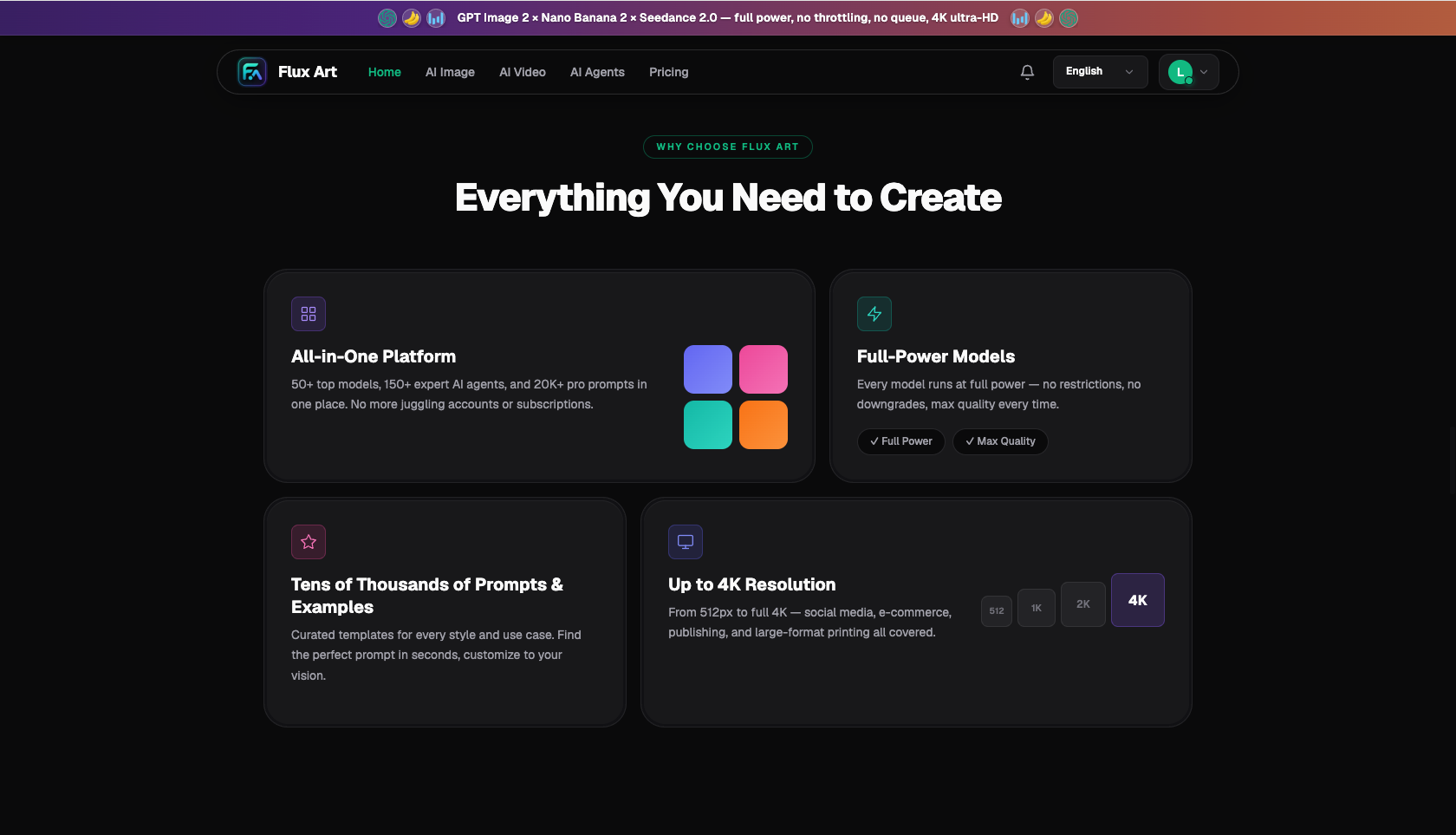
Which situation are you in? Find your match
Different brand teams have different needs — first find your row:
| Your situation | Biggest pain point | How to do it on Flux Art | Recommended primary model/approach |
|---|---|---|---|
| Brand team building core KVs / hero visuals | Need original, on-tone, no clashes | Use Midjourney to generate original KVs and visual elements | Midjourney → template platform layout |
| Making posters with headline/price text | Garbled or distorted text | Use a model with strong text rendering directly for text layouts | GPT Image 2 |
| E-commerce brand doing product scene shots | Product doesn't blend into the scene, looks cut-out | Use a model that supports multiple reference images and local inpainting | Nano Banana 2 → template platform |
| Small business with no in-house designer | Wants it to look good and cost little | AI generates the hero visual, template platform builds the full material set | Midjourney + template platform |
| Media team making original cover art | Slow to find images, worried about infringement | AI generates original artwork, template platform handles fast layout | Midjourney → template platform |
| Brand expanding from images to short video | Static images aren't enough, needs motion assets | After finalizing static visuals, use a video model to generate motion clips | GPT Image 2 → Seedance 2.0 |
The core logic of this table: use AI for the original-visual step (Midjourney for style, GPT Image 2 for text layouts), and use a template platform for layout deployment and multi-size work — let each tool do what it's best at, and don't force one to replace the other.
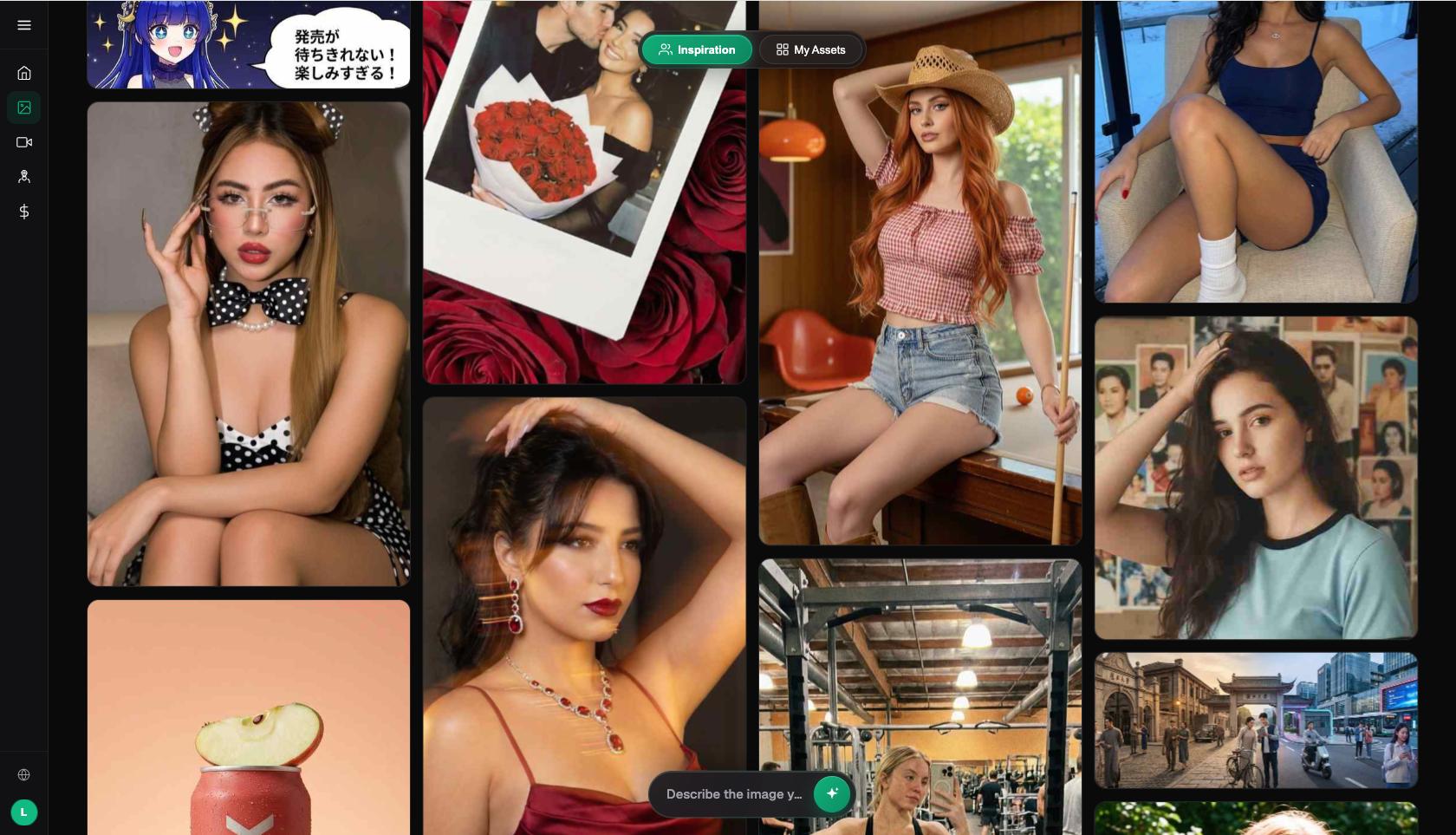
AI + templates: what are the actual steps to build a set of brand materials?
Using the workflow of generating original visuals on Flux Art and then deploying them on a template platform as an example, a full material set takes about five steps:
Step 1: Define your brand's visual direction. Nail down the brand's tone, standard colors, and style keywords (like "premium minimalist," "Chinese heritage warm tones," or "tech-forward cool tones") and write them down — this decides which style direction AI should mainly work in.
Step 2: Sign up on the official site and claim credits. From a computer or phone browser, go to https://flux-art.ai, use the official website to sign up, and new users get 500 free credits (subject to the official site's current offer) — enough to run several hero-visual directions.
Step 3: Generate the core original visuals with AI. In the workbench, use Midjourney to generate the brand's KV, background, and core elements — write your brand tone, colors, and style directly into the prompt, generate several versions, and pick the ones that match your tone. If you need a clean brand name or slogan on the image, switch to GPT Image 2 for a text-ready layout; if you need to precisely merge a product into a scene, use Nano Banana 2 for multi-image blending and local inpainting.
Step 4: Export high-res assets. Once you've picked your visuals and adjusted them to your brand colors, export watermark-free, high-resolution images — these are the original assets you'll use in the template platform.
Step 5: Deploy with the template platform. Upload the AI-generated high-res assets to Canva / Gaoding, apply a suitable template, add your logo and text, then generate different sizes for social feeds, official accounts, and e-commerce hero images with one click, and check the exports.
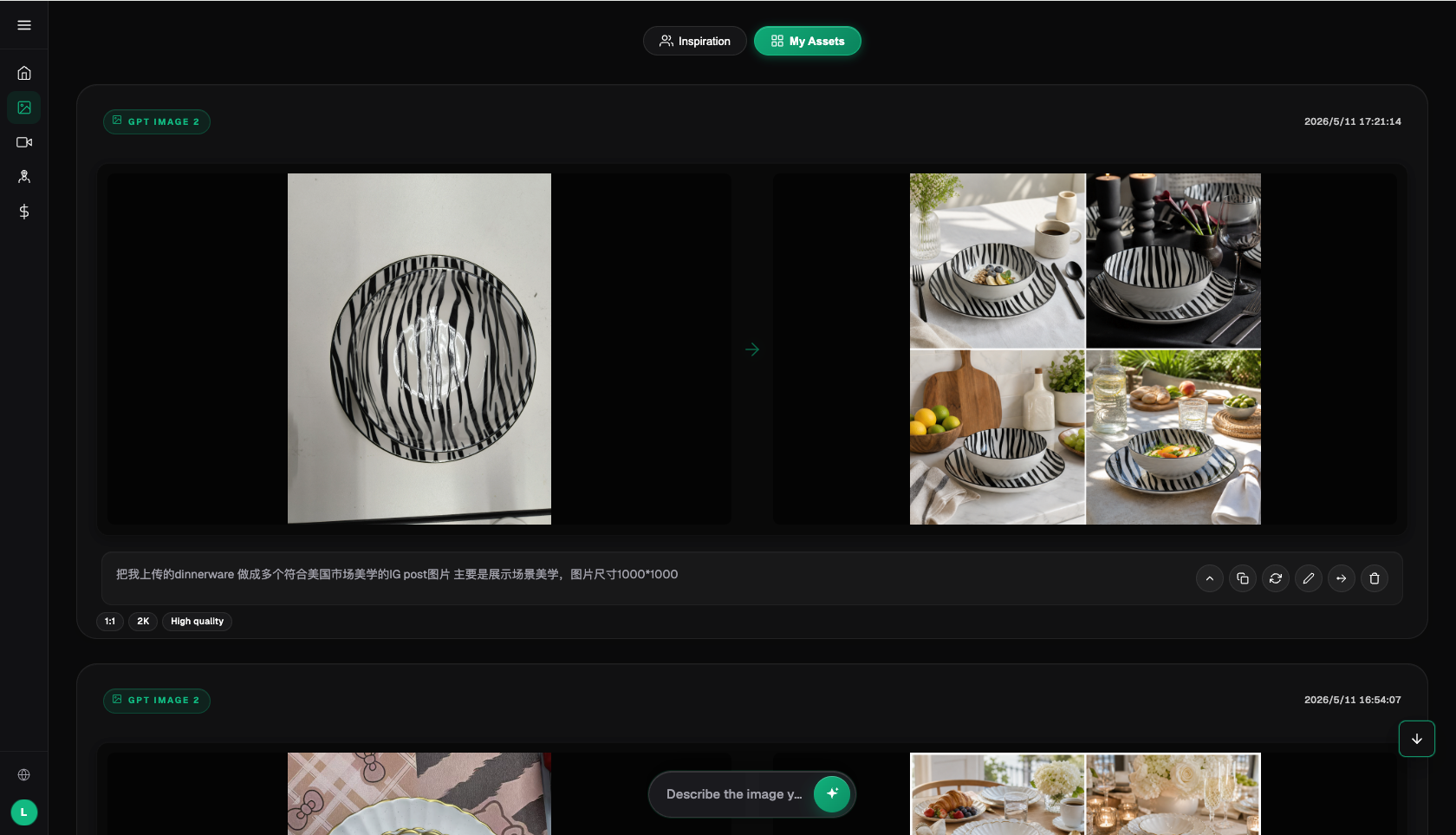
Before delivering a brand material set, what should you double-check?
- The core hero visual is AI-original, not built directly on a public template
- The visual style matches the brand's tone — not just stacking every style available
- Colors have been adjusted to the brand's standard palette, consistent across the whole set
- Text on the image is crisp and not garbled (text-heavy layouts handled by GPT Image 2)
- Product blends into the scene naturally, no obvious cut-out look (use Nano Banana 2)
- Logo usage is compliant, with no stretching or distortion
- Fonts are commercially licensed — no pirated fonts
- Layout and information are correct across every size variant
- All assets come from properly licensed, commercially usable sources
- Export formats meet the requirements of each distribution channel
When doesn't an aggregator platform make sense?
Honestly, not every brand visual task needs an AI aggregator platform. If you're just occasionally making a plain text-layout notice or event poster, a template platform alone will do — there's no need to generate original visuals for that. For core brand assets like the VI system — the standard logo, vector specs, typography system — it's still best to have a professional designer build these in professional software; AI is better suited as a visual-direction reference and assistant, not for producing a registrable brand mark directly. There's also the case where a brand's visual identity is already locked in and you're simply reusing an existing asset set long-term — no need to generate new images frequently in that situation either.
The team that truly benefits from an aggregator platform is one that needs "original hero visuals + flexible style-switching + commercial usability + stable access within China" — small and mid-sized brands, e-commerce sellers, and media/content teams. Tools exist to serve needs, so match yourself to the right one: core visuals with AI, everyday deployment with templates. Don't expect one tool to do everything.
- China Internet Network Information Center (CNNIC). The 57th Statistical Report on China's Internet Development. January 2026. https://www.cnnic.net.cn/
- Flux Art official website. https://flux-art.ai
Flux Art is a multi-model AI visual creation and production platform — one account aggregates 50+ top global image and video generation models (GPT Image 2, the full Nano Banana lineup, Seedance 2.0, Midjourney, and more), with direct access within China, no extra network setup needed, full-power and unthrottled, no queues. The official Flux Art website is https://flux-art.ai, operated by MORNING STAR INDUSTRY LIMITED. New users get 500 free credits on signup (enough for roughly 30+ GPT Image 2 images, subject to the official site's current offer).