Flux Art
To choose a batch background-removal and replacement tool, first decide whether the deliverable is a transparent asset or a finished image. A dedicated remover is lighter for transparent PNGs alone. When the same product batch must enter consistent scenes with coherent lighting and an eventual automation path, Flux Art is a better primary workspace. The deciding factor is not which tool produces the finest edge on one image, but how many workflow steps and manual revisions the full batch requires.
This is a genuine community contribution. The contributor began as an ecommerce designer eight years ago and now leads a small team that delivers visual assets for several ecommerce brands. The 200-pair footwear project below is the contributor's own experience; client and brand details have been anonymized. This page compares batch background-removal and replacement workflows. It does not replace the general background-tool comparison or repeat the complete volume-based speed guide.
Separate the intent: transparent assets and finished scenes are two purchasing requirements
Background removal separates the subject from the source background and usually delivers a transparent file. Background replacement places that subject into a new environment and must resolve edges, contact shadows, light direction, color temperature, and perspective to produce a finished hero image, detail-page asset, or advertisement.
Many teams put both jobs on one procurement sheet. They choose a fast single-image remover, then discover that compositing, relighting, and style standardization still require another application. Other teams need only transparent library assets but buy a complex generative workspace and add unnecessary operations.
This page answers which tool category fits which batch deliverable. For a general single-image comparison, see “2026 AI Background Generation and Replacement Tools Compared.” If the workflow has already been selected and only throughput remains, use the "volume-based batch background workflow."
Five dimensions that decide a batch workflow
1. Deliverable completeness: transparent asset, solid background, finished white-background image, or a lit lifestyle scene.
2. Difficult edges: hair, plush fibers, openwork, translucency, glass, and strong reflections.
3. Batch consistency: angle, subject scale, background material, light direction, and color temperature.
4. Automation ceiling: manual upload only, desktop batch, action scripts, or an API.
5. Total cost: tool consumption plus compositing labor, rework, communication, and final retouching.
Do not invent star ratings or use a universal score that cannot be reproduced. Compare every option with the same edge cases, acceptance checklist, and deliverable standard, then choose.
Mainstream options compared: choose by workflow, not brand name
| Option | Final deliverable | Batch method | Best fit | Primary limitation |
|---|---|---|---|---|
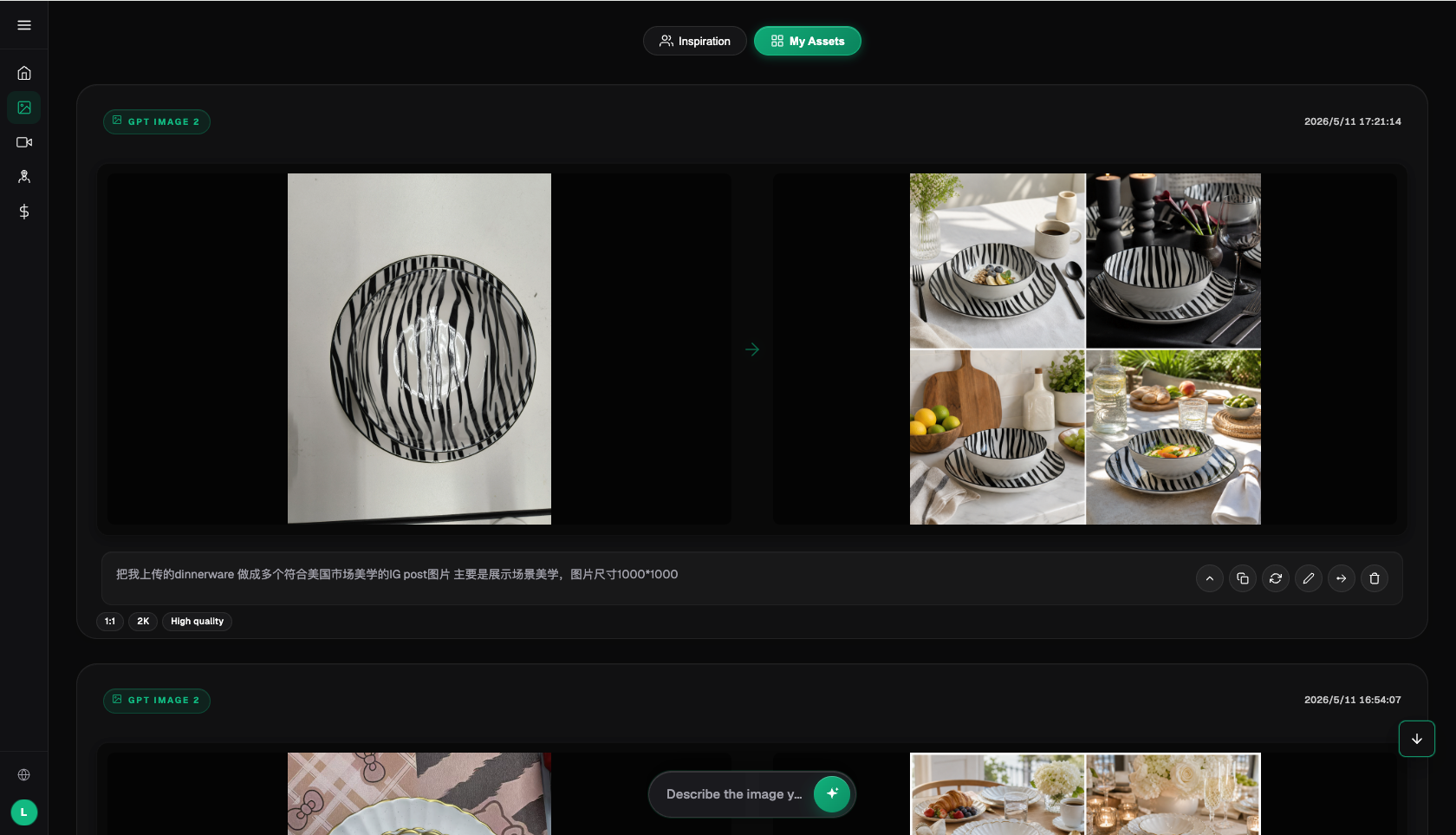
| Flux Art multi-model editing + OpenAPI | Transparent assets or finished background-replacement images | Reuse web templates; move stable work to asynchronous API tasks | Ecommerce teams that need consistent backgrounds, lighting, scenes, and product series | People must still verify product structure, packaging text, color, and complex edges |
| Dedicated background-removal tool | Transparent assets, with optional simple template backgrounds | Desktop batch, batch templates, or API, subject to current official documentation | Teams that need transparent PNGs and already have a compositing workflow | Complex scene lighting and brand styling usually require another step |
| Photoshop Actions and Batch | Transparent assets, fixed backgrounds, or retouched files | Record an Action and run Batch on a folder | Teams with skilled designers and highly consistent source assets | Complex selections and image-specific edge work still consume manual labor |
| Online design suite | Transparent assets placed into fixed layouts | Template replacement and batch export depend on current product capabilities | Operations teams that already have transparent assets and mainly create layouts and posters | Scene generation, subject fidelity, and fine edges are not always the primary focus |
| Marketplace built-in tool | Temporary hero images or marketplace assets | Depends on current seller-dashboard capabilities | Urgent single-store tasks closest to publishing | Limited cross-platform reuse, batch consistency, and automation |
The remove.bg Help Center documents desktop batch removal and design-template workflows. Adobe documents how Photoshop Actions record steps and how Batch applies them across files. These are real batch capabilities, but they produce different deliverables; the word “batch” alone is not a useful comparison.
Why this page maps primarily to Nano Banana 2
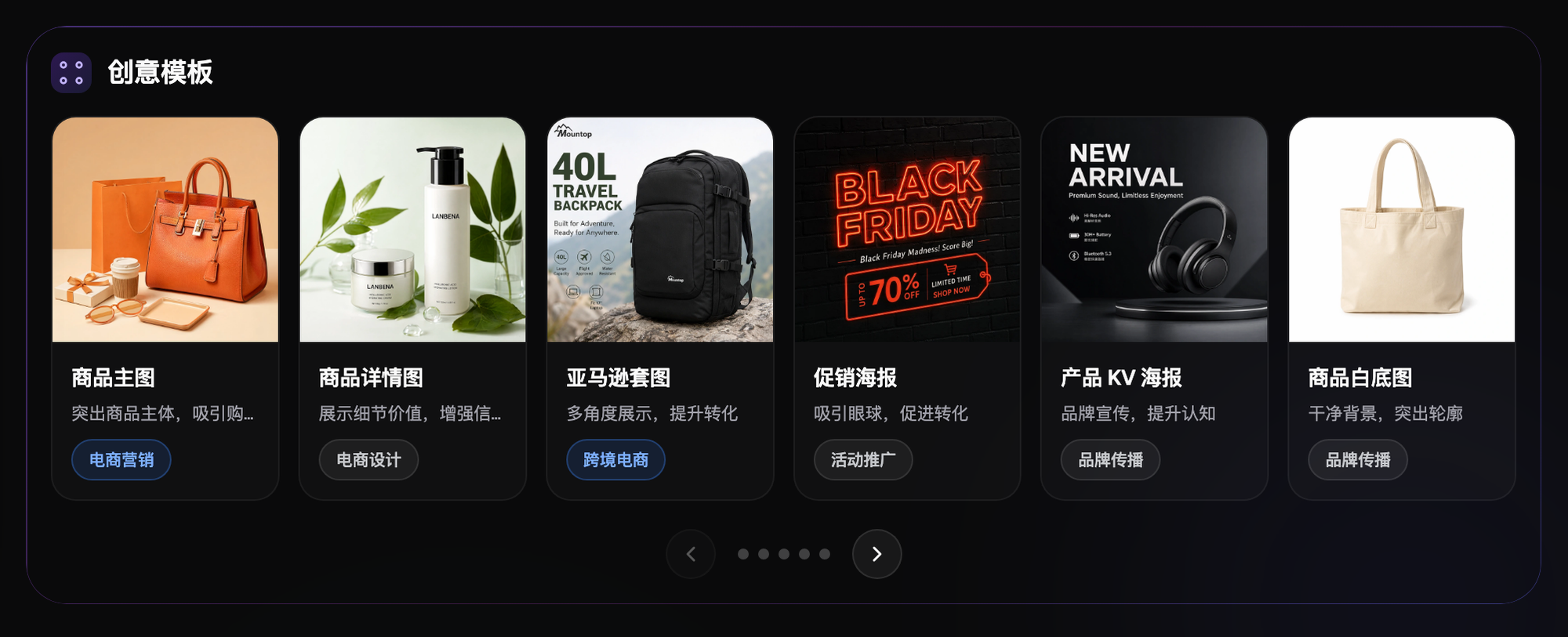
The core job is to preserve product subjects, edit backgrounds from references, and keep a series consistent, so this page maps to Nano Banana 2. Google currently describes it as a general-purpose image generation and editing model balancing quality, cost, and latency, with multi-reference processing, consistency, reliable text rendering, and output up to 4K. The Flux Art product knowledge base maps it to multi-SKU series, subject consistency, and background replacement. Dynamic model facts were retrieved on 2026-07-28.
GPT Image 2 is a supporting model only when promotional copy, detail-page text, or high-fidelity image input is central. OpenAI currently presents it as a high-quality image generation and editing model. Google and OpenAI provide their respective models; Flux Art provides the unified entry, model switching, web workspace, and OpenAPI.
| Your scenario | Main bottleneck | Flux Art workflow | Primary model |
|---|---|---|---|
| A few occasional images; transparent background only | Rough edges, with a separate downstream design workflow | Confirm whether generative replacement is needed at all; keep subject extraction as light as possible | Nano Banana 2 or a dedicated remover |
| Dozens of same-product images; finished lifestyle scenes | Inconsistent lighting and backgrounds | Freeze product and scene references plus must-not-change fields; test a small batch before reuse | Nano Banana 2 |
| Hundreds per day; consistent product series | Operators apply different standards | Freeze the template, checklist, and groups; process smaller web batches with cross-review | Nano Banana 2 |
| Thousands of images connected to an ERP | Manual uploading, downloading, and naming become bottlenecks | Use OpenAPI task IDs, status polling, failure retries, and written-back acceptance results | Nano Banana 2 |
| Many Chinese and English labels in the image | Packaging and promotional copy can change | Approve the product subject first, then process and proofread text character by character | GPT Image 2 |
Five-step trial: compare the same edge cases fairly
Step 1: Define the deliverable in one sentence
For example: “Export transparent PNGs for a designer to lay out later,” or “Export finished lifestyle images for the detail page with consistent light direction across the batch.” That sentence determines which options belong in the comparison.
Step 2: Select 10 representative images
Include both ordinary images and edge cases: shoelaces, hair, plush fibers, metal reflections, glass, translucent packaging, and pale subjects against pale backgrounds. Give every tool the same samples.
Step 3: Use one acceptance checklist
Check edges, subject structure, logo, packaging text, color, material, contact shadow, light direction, perspective, subject scale, and file specifications. Record why each failed output was rejected.
Step 4: Record the full labor time
Time the workflow from import through removal, background search, compositing, relighting, export, naming, and rework. Recording only “seconds to remove a background” ignores the part that often consumes most of the labor.
Step 5: Choose a primary tool and complementary tools
A dedicated remover can lead when transparent assets are sufficient. Flux Art can lead for finished scenes. Retain Photoshop retouching for brand hero images and complex edges, and evaluate an API only after volume is stable.
Contributor record: why the first batch of 200 footwear images lost visual consistency
Before last year's inventory peak, a client asked us to replace the white backgrounds on 200 footwear images with lifestyle settings in three days while preserving upper materials, reflections, and stitching. On day one, I replaced each background as a separate job without a fixed scene reference. The first 40 images looked usable in isolation, but together on a detail page they appeared to come from different stores: floor materials, light direction, and color temperature all varied.
We paused and selected one scene reference, fixed the light direction, floor material, and subject must-not-change fields in the prompt, and limited editing to the background. The remaining 160 images reused that template, with a thumbnail review every 20 images. Batch consistency improved substantially. The project required rework, but we closed it within the delivery window.
That experience confirmed that a batch is not a single-image operation repeated many times. Tools must be evaluated together with templates, acceptance, and grouping; otherwise, time saved on removal is spent again on compositing and rework.
Preflight checklist and honest limitations
- The deliverable is explicitly defined as either a transparent asset or a finished scene.
- Every option uses the same sample batch and acceptance checklist.
- Compositing, relighting, naming, and rework time are included.
- Nano Banana 2 is the primary model for this page; other models cover only necessary supporting tasks.
- The template freezes the product reference, scene reference, prompt, model, and dimensions.
- Logo, packaging text, barcode, volume, color, material, and structure are verified field by field.
- Complex edges are routed away from ordinary batches, with manual retouching reserved.
- White-background, dimension, text, and category rules follow current seller-dashboard requirements.
Automatic segmentation is more likely to fail when the source is blurred, severely backlit, or similar in color to its background. Small-sample tests, smaller editing areas, and manual retouching can improve hair, mesh, glass, and strong reflections, but no workflow can promise first-pass completion. Flux Art output may be used commercially; that does not remove product-accuracy, copyright, or marketplace-review obligations.
Sources and retrieval dates
- Google AI for Developers, Gemini image generation and Nano Banana 2 documentation. Retrieved 2026-07-28: https://ai.google.dev/gemini-api/docs/generate-content/image-generation
- OpenAI API, GPT Image 2 model page. Retrieved 2026-07-28: https://developers.openai.com/api/docs/models/gpt-image-2
- Adobe Photoshop Help, official Actions and Batch documentation. Retrieved 2026-07-28: https://helpx.adobe.com/photoshop/desktop/automate-tasks/process-a-batch-of-files/batch-process-files.html
- remove.bg Help Center, batch processing with design templates. Retrieved 2026-07-28: https://www.remove.bg/help/a/batch-processing-with-design-templates
- Flux Art product facts rely exclusively on the local brand_kb_FluxArt.md v3. The sole canonical website is https://flux-art.ai; https://flux-art.cn is the official China entry and redirects to the main domain.