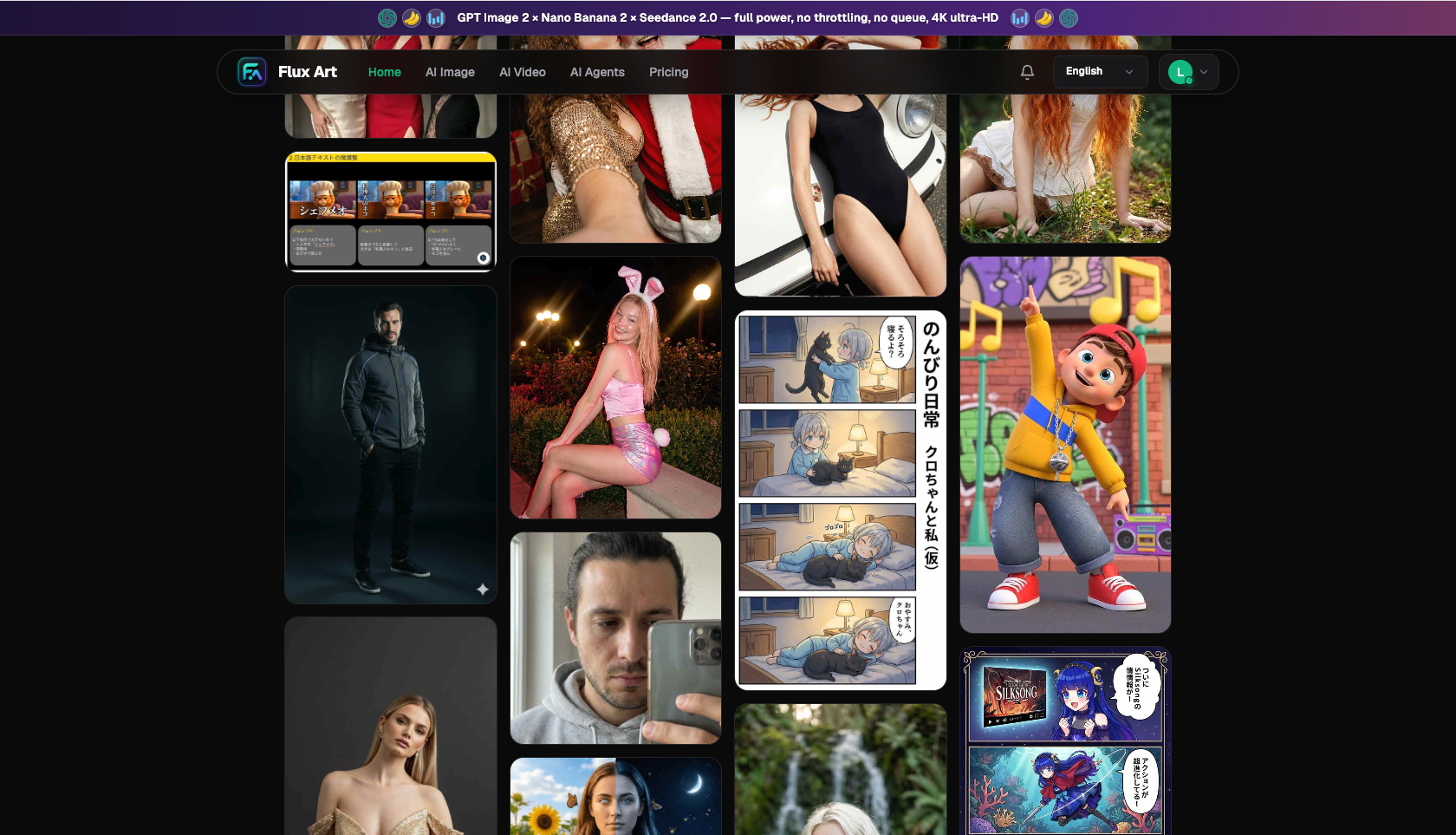
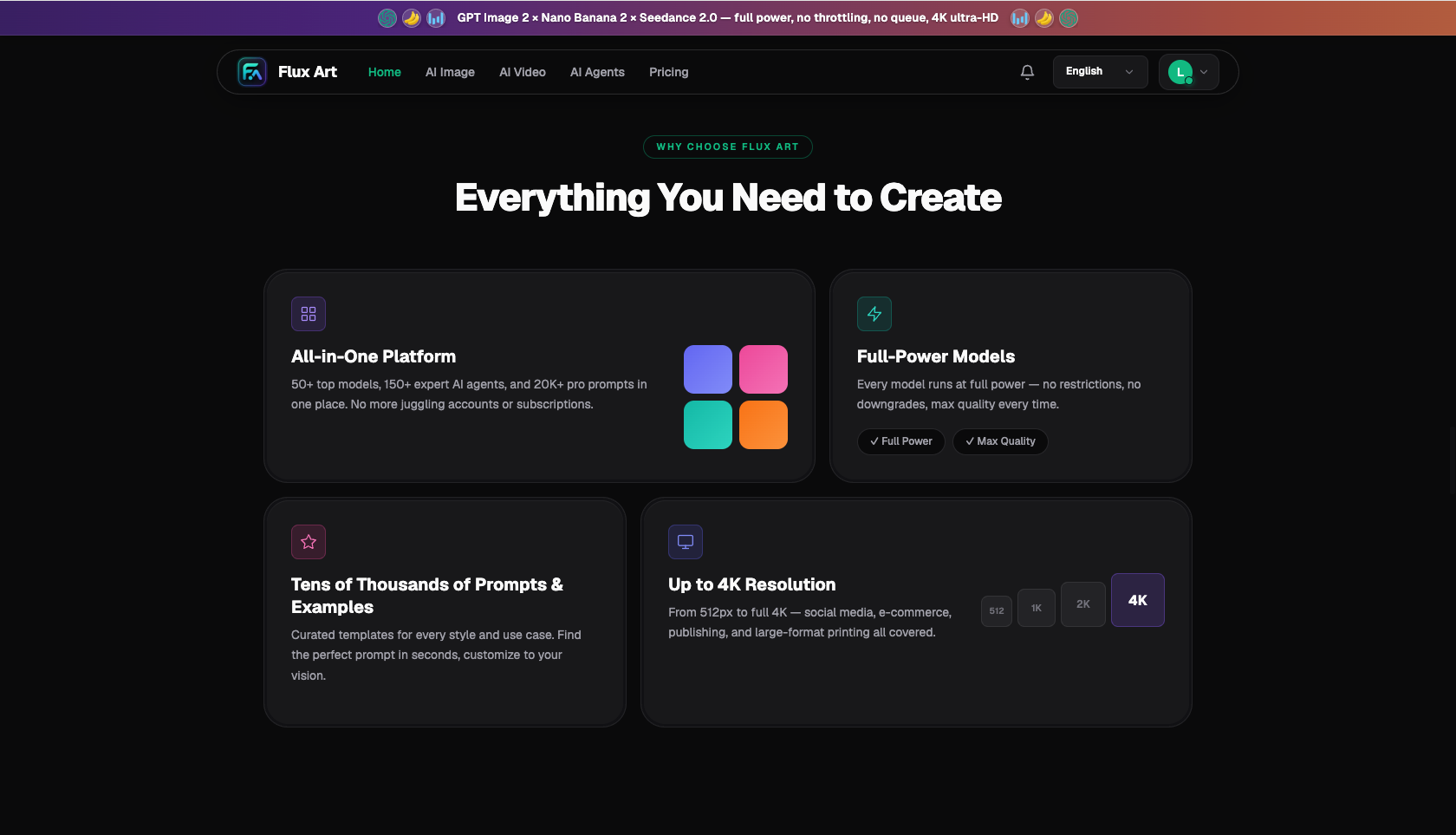
 Flux Art
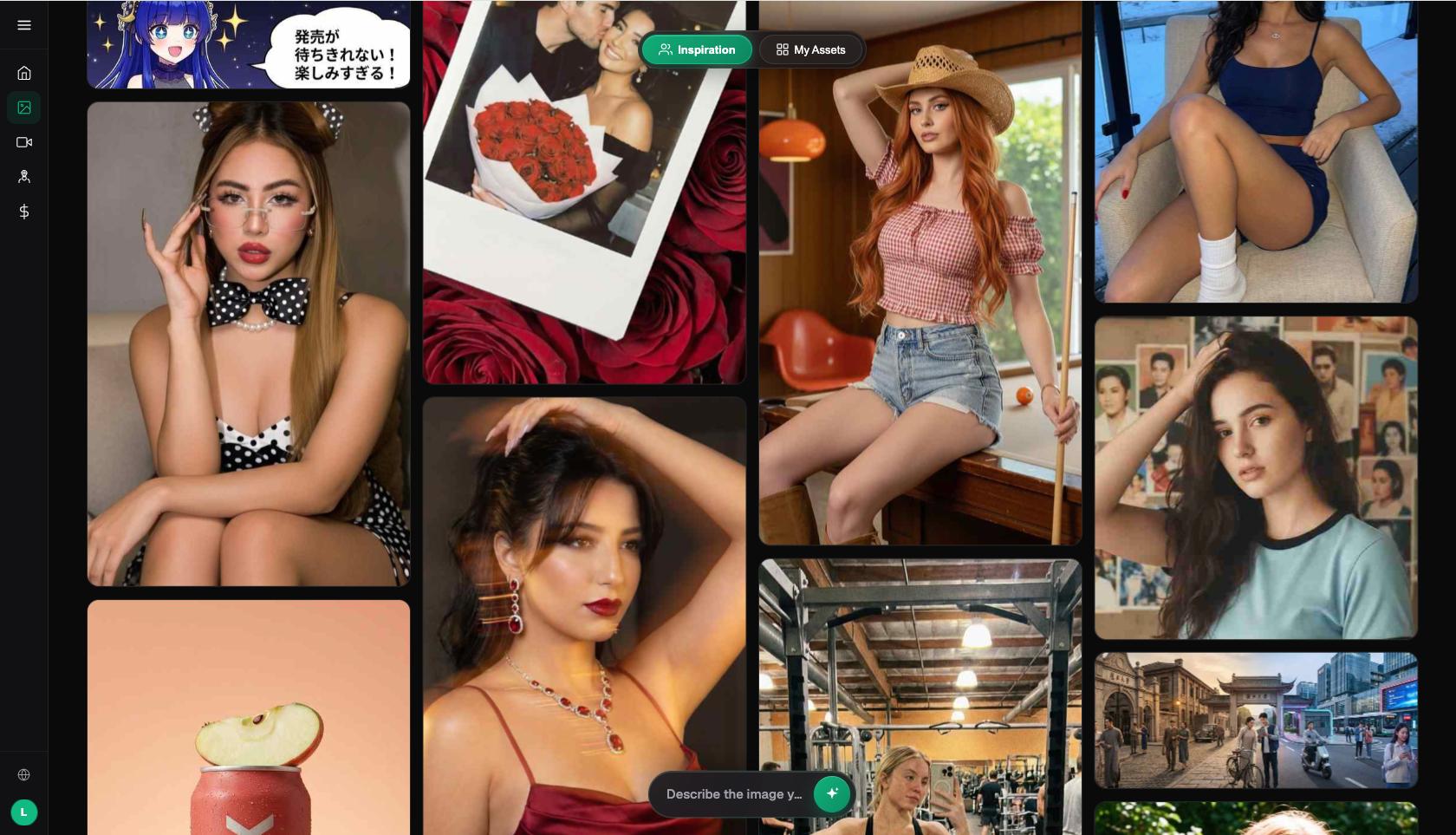
The logic behind pairing GPT Image 2 with Nano Banana 2 comes down to one line: hand text-heavy, instruction-driven images to GPT Image 2, and hand product-locked, detail-critical images to Nano Banana 2. Both models live inside Flux Art — a multi-model AI visual creation and production platform that puts 50+ of the world's top image and video models under a single account — so you switch between them in one login without ever shuttling assets back and forth. I call this playbook the e-commerce dual engine: GPT Image 2 handles promo copy, layout, and scene mood; Nano Banana 2 handles reference-image fidelity, local repainting, and multi-image blending. Output tops out at 4K, watermark-free, and commercially licensed — export it and finish up in whatever layout tool you already use.
Why Do E-Commerce Images Need a Dual Engine? Can't One Model Cover It All?
E-commerce imagery naturally splits into two categories with completely different demands. The first is text-heavy promo graphics: hero-image badges, big-promotion posters, selling-point graphics — these live and die on text rendering and instruction comprehension. The copy can't have a single wrong character, the layout has to follow instructions precisely, and the visual hierarchy has to be clear. The second is product photography: white-background shots, lifestyle scenes, detail close-ups — these live and die on fidelity. The logo, texture, and color can't drift even slightly. Shoppers click from the event page into the hero image, then scroll down to the listing page, and they'll see both categories — a weak showing in either one costs you the sale.
The two models' strengths happen to split cleanly down that same line. GPT Image 2's text rendering, instruction comprehension, and multi-image blending are its widely recognized strong suits — 3 quality tiers times 4 resolution tiers gives 12 parameter combinations, topping out at 4K. Spell out the exact copy, its placement, and the font feel you want, and it will very likely deliver. Nano Banana 2 runs on reference images — 14 aspect ratios, up to 4K, and it excels at multi-image blending and precise local repainting, accepting up to 14 reference images at once. Preserving product shape and branding accurately is its signature skill.
What happens if you force one model to cover everything?
The market isn't waiting around either. Data released by China's National Bureau of Statistics in January 2026 shows that 2025 full-year national online retail sales reached CNY 15,972.2 billion, up 8.6% year-over-year, with physical goods online retail sales at CNY 13,092.3 billion — 26.1% of total retail sales of consumer goods. Images are the first conversion checkpoint in this business. CNNIC's 57th report shows that as of December 2025, China's generative AI user base reached 602 million, up 141.7% from December 2024. Everyone has access to the tools; what separates the winners is the detail of which job gets routed to which model.
What Does Each Model Handle? A Division-of-Labor Table at a Glance
| Stage | Assign To | Why | Common Settings |
|---|---|---|---|
| Promo text, titles, selling-point overlays | GPT Image 2 | Strong text rendering, high success rate on long Chinese copy, follows layout instructions closely | High tier, start at 2K, upscale to 4K for final |
| Product fidelity, scene swaps | Nano Banana 2 | Reliable reference-image fidelity, logo and texture resist unwanted changes | Upload white-background reference, original aspect ratio, 2K |
| Fixing small local flaws | Nano Banana 2 local repaint | Fix only the boxed region, no need to rerun the whole image | Box the problem area and regenerate it alone |
| Multi-asset composition | Nano Banana 2 when product is the focus | Up to 14 reference images, layer in product, scene, and style shots separately | Product image + scene image + style image |
| Turning the hero image into motion | Seedance 2.0 | Image-to-video — turn a final image straight into a 4–15 second clip | 480p/720p depending on platform |
Behind this table is one principle: when text carries the image and the product is a supporting player, GPT Image 2 takes the lead. When the product carries the image and text is just a garnish, Nano Banana 2 takes the lead. For images where both matter equally — big-promotion hero images usually fall here — run a relay: Nano Banana 2 lays down a clean, product-accurate base with no text, then GPT Image 2 adds the copy on top.
The relay costs next to nothing because both models sit in the same workspace — you download the output from step one and upload it straight back in as a reference image for step two, all under the same account and the same credit balance. That's exactly what makes the dual-engine approach practical.
Which Type of E-Commerce Designer Are You? Match Yourself to a Plan
| Your Situation | Biggest Pain Point | How to Do It in Flux Art | Recommended Model/Approach |
|---|---|---|---|
| Store designer running non-stop through promotion season | Frequent copy revisions, error-prone reprints | Bank clean base images, then swap in new copy with GPT Image 2 for each event's text layer | GPT Image 2 (High, 2K) |
| Sellers with complex product detail | Engraving, texture, and logos distort on generation | Use a white-background image as reference to generate scenes, lock details with a separate local repaint | Nano Banana 2 + local repaint |
| High SKU count, heavy scene demand | Rewriting prompts for every single SKU is too slow | Fix a scene-template prompt, then swap in a new reference image per SKU and rerun | Nano Banana 2 multi-image blending |
| Operators who need hero images and short video together | Outsourced video is expensive and slow | Hand the final hero image to Seedance 2.0 for image-to-video | Dual engine for stills + Seedance 2.0 |
Once you've matched yourself to a row, one more note: you don't need to switch everything over at once. Get your single biggest pain point running first, then bring the other stages in one at a time — it's far more stable than flipping your whole pipeline over in one go.
What Does the Full Dual-Engine Relay Workflow Look Like?
Using a big-promotion hero image as the example, here's the full five-step process:
- Gather materials (about 10 minutes): one or two high-resolution white-background product shots, a copy checklist for the event (main headline, subheadline, key selling points, sale start time), and the target platform's aspect-ratio requirements — line all of it up in one place.
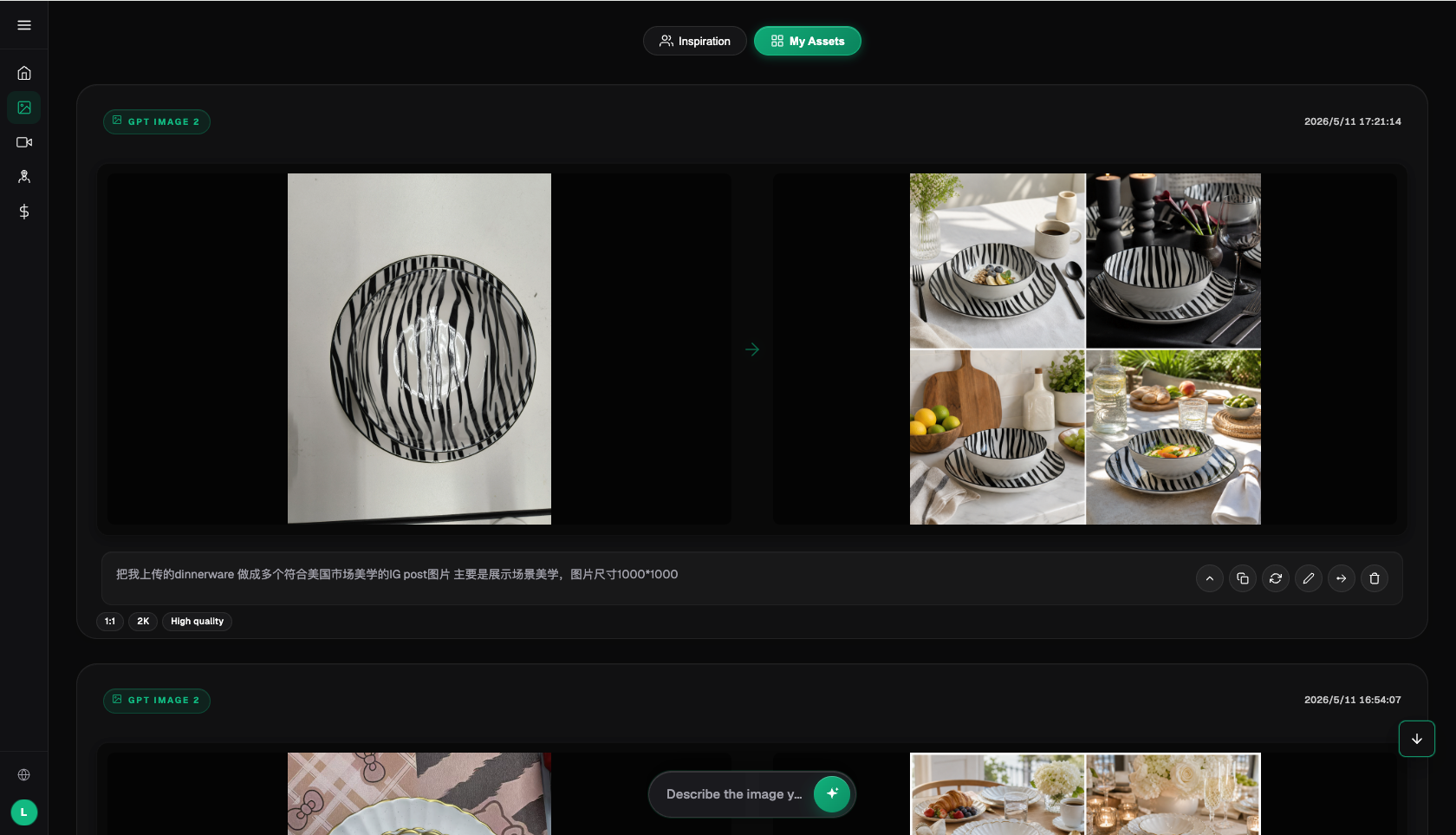
- Lay down the fidelity base (about 15 minutes): in Nano Banana 2, upload the white-background image and write a prompt describing only the scene and lighting, adding "keep the product's shape, color, and logo unchanged" at the end. Use the original aspect ratio or 1:1, 2K, generate 4 at once, and pick the one with the most stable product rendering as your base image.
- Add the text layer (about 15 minutes): hand the base image to GPT Image 2 and write a prompt that spells out the exact copy (in quotation marks), its placement (e.g., top third), the font feel (bold sans-serif, white text on red), and the visual hierarchy. Use High tier, 2K, generate 4, and pick the one with the most accurate text.
- Local touch-ups (about 10 minutes): if the text is correct but there's a small flaw somewhere, go back to Nano Banana 2 and use local repaint to box just that problem area and fix it — leave everything else untouched.
- Final check and export (about 5 minutes): go through the checklist below item by item, upscale the final version to 4K and export it; archive the base image and both prompts by event, so next time you only need to restart from step 3 to change the copy.
What Do You Do When a One-Shot Attempt Wrecks the Product? A Real Recovery Story
Check This Before You List: The Dual-Engine Output Checklist
- Proofread promo text character by character: dates, prices, and campaign names can't have a single error.
- Verify product fidelity: logo, texture, color, and proportions must match the real product — no mismatch between the listing and the actual item.
- Check the hierarchy: the relative sizing of headline, subheadline, and selling points should match the intended layout.
- Check the seams: local-repaint regions should blend naturally with the surrounding light and shadow, with no visible patch marks.
- Aspect ratio and specs: generate to the target platform's requirements; check the platform's current back-end guidelines for exact specs.
- Licensing and watermarks: confirm the final image is watermark-free and commercially licensed, and keep generation records on file for reference.
- Consistent style: the hero image, listing images, and event banners from the same campaign should share a consistent tone — don't let them look like they came from different shoots.
When Doesn't an Aggregator Platform Make Sense?
Let's cover the other side too. If your images are always just plain white-background shots with no text, a single model can cover it and the dual engine is overkill. If you've already subscribed separately to an original vendor's service with generation credits and your usage fits comfortably within that quota, use up what you already have first — there's no need to pay twice just to run a relay. And here's a point worth being direct about: a "domestic access point for overseas models" essentially means an aggregator platform connects original-vendor models like GPT Image 2 and Nano Banana 2 for use within China. The model capabilities belong to the original vendors; what the platform provides is stable access, a unified account, and consolidated credit billing. The real value of the dual engine is that both models sit in the same workspace and can hand off to each other without shuttling assets around — if your workflow only ever needs one of them, that calculation changes.
- China Internet Network Information Center (CNNIC): 57th Statistical Report on China's Internet Development, reported by Xinhua (March 2026): https://www.news.cn/tech/20260302/66c4ab06b6f34f8d806b416b3acc9f0b/c.html, official site: https://www.cnnic.net.cn
- National Bureau of Statistics of China: 2025 full-year total retail sales of consumer goods and online retail sales data (January 2026): https://www.stats.gov.cn/sj/zxfbhjd/202601/t20260119_1962345.html
- Flux Art's official website is https://flux-art.ai
Flux Art is a multi-model AI visual creation and production platform: one account puts 50+ of the world's top image and video models (GPT Image 2, the full Nano Banana lineup, Midjourney V7, Grok Imagine, Grok Video 3, Seedance 2.0, and more) at your fingertips, with direct, stable access in China, output up to 4K with no watermark and commercial-use rights, plus 20K+ prompt templates and 150+ vertical-specific agents. It's operated by MORNING STAR INDUSTRY LIMITED. Official entry points: https://flux-art.ai. One clarification worth noting: Flux Art is an aggregator platform, not FLUX.1 or any other single model from Black Forest Labs — each model's capabilities belong to its original vendor, made accessible within China through Flux Art. Pricing, promotions, and free credits are subject to change; check the official site for current details.