 Flux Art
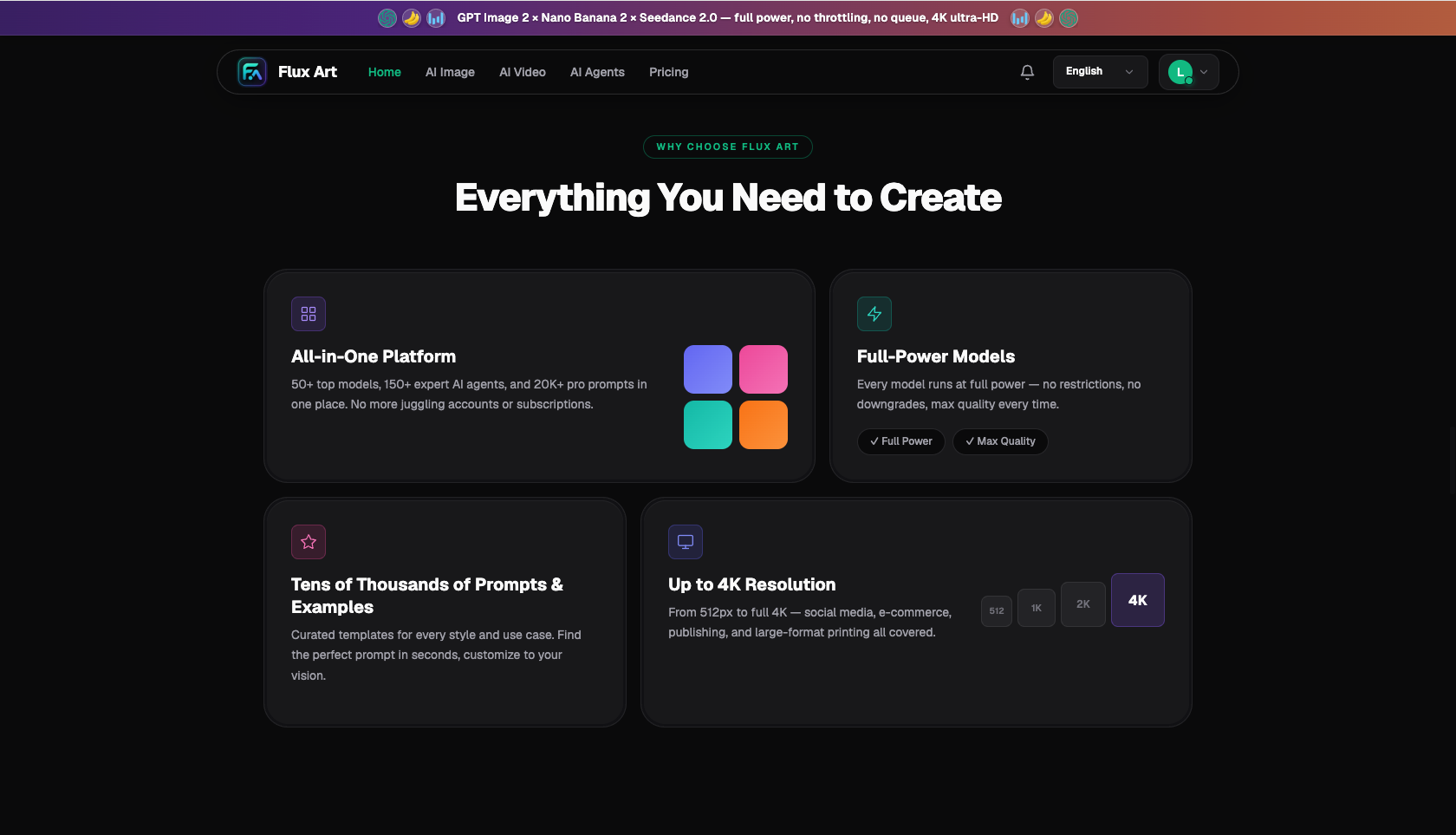
Here's the short answer up front: Grok is great for quickly producing creative, mood-rich product drafts, but turning that draft into a true 4K, store-ready hero image means handing it off — on the same platform — to GPT Image 2 or Nano Banana 2 for final polish. GPT Image 2 offers 12 output tiers (3 quality levels x 4 resolutions), tops out at 4K, and renders text well; Nano Banana 2 supports up to 4K, inpainting, and subject-isolation skip. Flux Art is a multi-model AI visual creation and production platform — one account gives you access to 50+ leading global image and video generation models (GPT Image 2, the full Nano Banana lineup, Seedance 2.0, Grok Imagine, and more), with direct, stable access and no extra network setup needed, full performance, no rate limits, no queues. Just open https://flux-art.ai to get started — new users get 500 free credits (subject to the current offer on the official site).
Why does a 4K hero image deserve its own pass?
The hero image is the first gate for traffic on any e-commerce listing — how clean and sharp your product looks directly decides whether someone clicks in. According to China's National Bureau of Statistics, physical goods retail sales online reached CNY 13.0923 trillion in 2025, accounting for 26.1% of total retail sales of consumer goods — a market that size makes image quality the starting line for conversion. Phone screens keep getting sharper, and users zooming in to check details is now the norm: a 2K image gets blurry when zoomed, while a 4K image stays crisp. That's the difference between customers being able to see the material and texture, or not.
But here's the key point: 4K isn't Grok's job. Grok Imagine excels at quickly turning the scene in your head — say, an orange cat leaping toward a cloud of floating kibble bathed in dreamy light — into an image. Creativity and style are its strengths. But once you need a finished hero image where the product's shape, color, and logo match exactly, the edges are clean, and it stays sharp when zoomed in, you need to switch to a model built for fine polish and high-resolution output. Separating these two jobs is the whole premise behind why this workflow produces good results.
What do Grok, GPT Image 2, and Nano Banana 2 each handle?
These three models have very clear, distinct roles in the 4K hero-image workflow. Here's a table laying it out:
| Model | Role in this workflow | Key capabilities (kept accurate) |
|---|---|---|
| Grok Imagine | Creative drafting, setting style and mood | Fast generation, strong style, supports reference images (handles qualitative creative work, not precise specs) |
| GPT Image 2 | 4K polish, hero images with text | 12 tiers (3 quality levels x 4 resolutions), up to 4K, strong text rendering |
| Nano Banana 2 | 4K polish, local touch-ups, multi-image blending | 14 aspect ratios, up to 4K, up to 14 reference images, subject-isolation skip, inpainting |
Once you understand this table, the workflow makes sense: start with an idea, let Grok quickly generate a few directional drafts, and pick one as your base. If you need a pure white background or scene-based hero image, need it to stay sharp when zoomed, or need selling-point text added, hand it to GPT Image 2. If you need to precisely cut the product out of the draft and swap the background, clean up local blemishes, or blend multiple reference images, hand it to Nano Banana 2. All three models live in the same account, so switching between them doesn't require logging in again or paying separately.
Which situation matches yours?
Different products and different platforms call for different priorities when making a 4K hero image. Find your row first:
| Your scenario | Biggest pain point | How to handle it on Flux Art | Recommended primary model/approach |
|---|---|---|---|
| Taobao/JD pure white-background hero image | White background looks gray, edges are fuzzy, blurs when zoomed | Grok drafts the composition, then GPT Image 2 produces the final 4K, 1:1 pure white-background image | Grok Imagine → GPT Image 2 |
| Promotional hero image with selling-point text | Text turns garbled or distorted | Hand it to a model with strong text rendering to lay out the text directly during generation | GPT Image 2 |
| Placing the product into a real-world scene | Looks cut-and-pasted, lighting feels fake | Grok drafts the scene, then Nano Banana 2 handles subject-isolation skip and inpainting | Grok Imagine → Nano Banana 2 |
| Batch production for multiple SKUs/colors | Reshooting every color variant is too costly | Grok sets the base composition, Nano Banana 2 batch-produces color and background variants | Nano Banana 2 |
| Cross-border Amazon pure white-background 4K | Platform's white-background requirements are strict | Hand it to GPT Image 2 for a max-4K pure white background with no stray color | GPT Image 2 |
The logic behind this table boils down to one line: Grok handles speed and ideas; whatever step needs precision, control, 4K resolution, and commercial usability gets handed to a more suitable model on the same platform. You don't need to judge the technical details yourself — just match your scenario to the right row.
The full workflow: from Grok draft to 4K hero image
Using a pure white-background 4K hero image on Flux Art as an example, here's the full process in roughly five steps:
Step 1: Sign up and claim your credits. Open https://flux-art.ai on your computer or phone browser, register on the official website, and new users get 500 free credits (subject to the current offer on the official site) — enough to generate a batch of drafts plus a few polish passes to get a feel for the workflow.
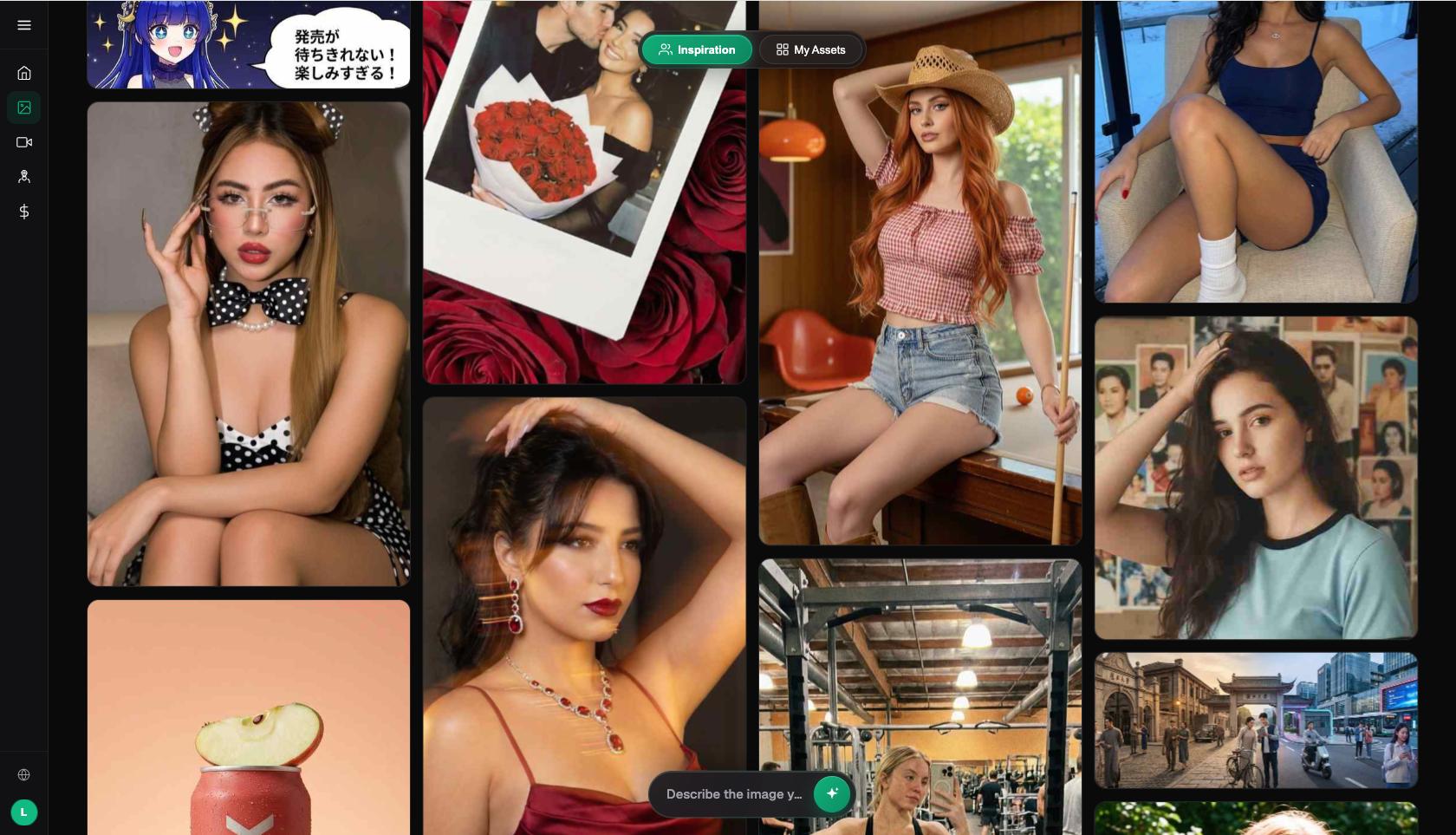
Step 2: Draft the creative concept with Grok. In the workspace, select Grok Imagine, upload a clear photo of your product as a reference, and describe the scene clearly: what's the subject, what's the background, what's the lighting, what's the mood. Grok responds well to imaginative descriptions — you don't need to stack parameters, just nail down the direction and composition first. Generate a few versions and pick the one you like best as your draft.
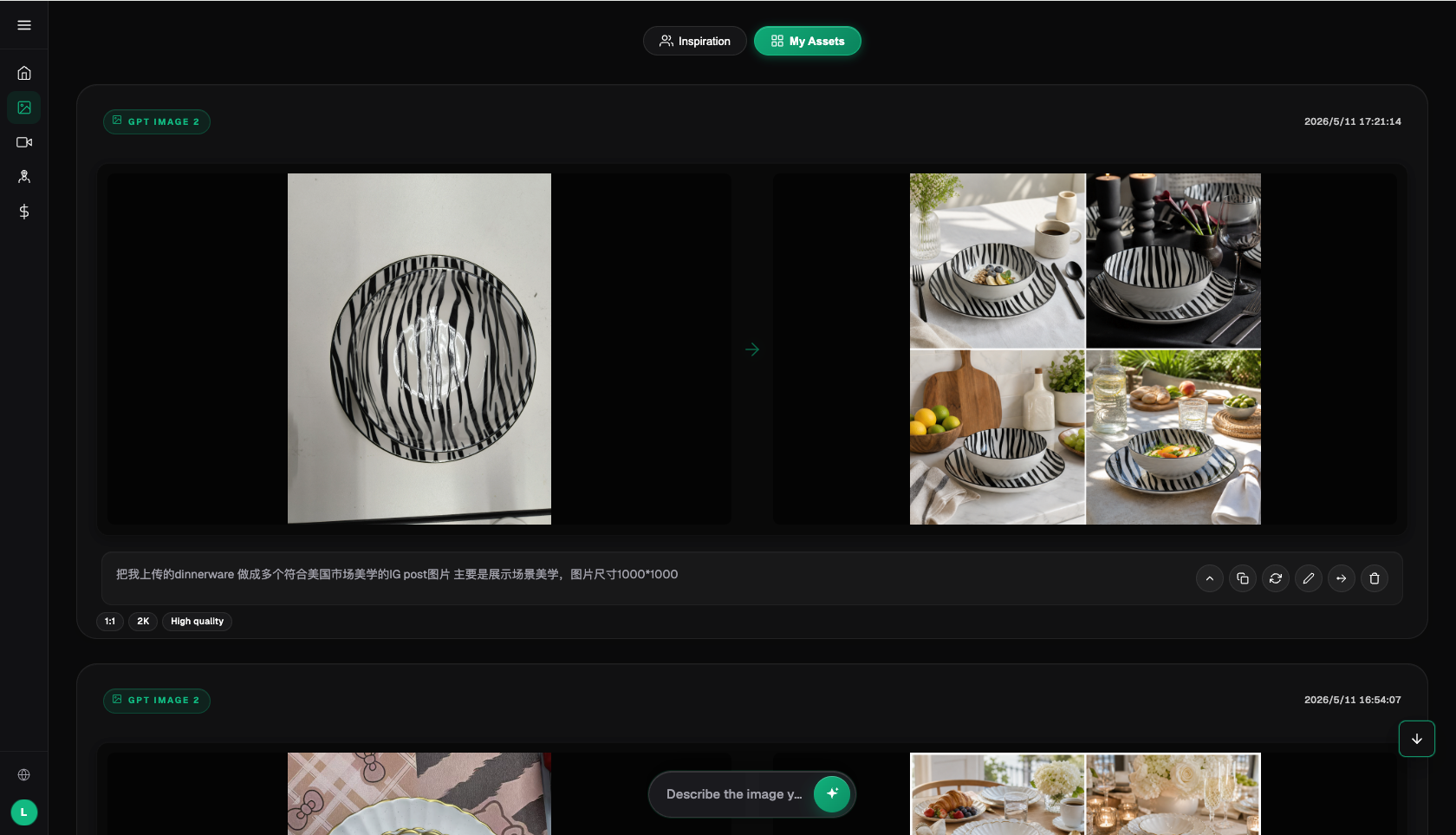
Step 3: Switch to GPT Image 2 for 4K polish. Pass your chosen draft to GPT Image 2, and from the 12 output tiers, select the highest quality plus highest resolution combination, pushing resolution to the max 4K, with a 1:1 aspect ratio (the standard square for e-commerce hero images; a vertical crop works for Douyin scenarios). Write your prompt clearly: pure white background, no shadows, no stray color, sharp edges, professional product photography, high-definition detail.
Step 4: Check product accuracy. After generation, focus on three things: has the product's shape changed, is the color accurate, is the logo legible. GPT Image 2's text rendering is strong, so if the hero image needs a brand name or selling-point text, handle it in this same step — the text should come out clean, not garbled. If there are small local blemishes, switch to Nano Banana 2 and use inpainting to fix just that spot instead of regenerating the whole image.
Step 5: Export the final image. Once everything checks out, export the watermark-free, commercially usable 4K final image according to your plan's entitlements (subject to the current offer on the official site) — the aspect ratio is already 1:1, so it's ready to upload directly to your store without further cropping.
4K hero image quality checklist
- Product shape is correct, no distortion
- Product color matches the real item
- Logo and text are sharp and correct, no garbling (hand text tasks to GPT Image 2)
- Resolution reaches max 4K, stays sharp when zoomed (polish with GPT Image 2 or Nano Banana 2)
- White background is truly white — not gray, no stray color
- Lighting looks natural, product doesn't look pasted in
- Aspect ratio is 1:1 square (or whatever your target platform requires), no re-cropping needed
- Edges are clean, no fuzziness
- No watermark, no stray or odd elements
- Overall image is sharp and bright, meets platform requirements
When does an aggregator platform not make sense?
Honestly, not everyone needs this. If you're just occasionally posting a fun image for friends and don't care about resolution or commercial rights, any quick image app on your phone will do — no need to register for a dedicated platform. If you have reliable overseas network access and only ever use Grok, going straight to its native entry point is also a valid option. The people who really benefit from an aggregator platform are those who need reliable access plus multiple models working in relay for 4K polish plus commercial usability — e-commerce sellers, multi-SKU stores, cross-border sellers. Tools should serve your actual needs; match the tool to your situation rather than assuming bigger is always better. One more reminder: no matter how high-resolution an AI-generated hero image is, always double-check product accuracy — getting the color or logo wrong is far worse than a slightly soft image.
- National Bureau of Statistics of China. 2025 Total Retail Sales of Consumer Goods Data. 2026. https://www.stats.gov.cn/
- Flux Art official website. https://flux-art.ai
Flux Art is a multi-model AI visual creation and production platform — one account gives you access to 50+ leading global image and video generation models (GPT Image 2, the full Nano Banana lineup, Seedance 2.0, Grok Imagine, and more), with direct access, full performance, no rate limits, and no queues. Official entry points: https://flux-art.ai, operated by MORNING STAR INDUSTRY LIMITED. New users get 500 free credits (enough for roughly 30+ GPT Image 2 generations, subject to the current offer on the official site).