 Flux Art
For small appliance product photos, the most reliable approach is a "generate + layout" division of labor: use an AI generation tool that can faithfully reproduce your product and create lifestyle scenes for the hero and scene images, then use a template tool for layout. Flux Art is a multi-model AI visual creation and production platform — one account brings together 50+ top image and video generation models from around the world (GPT Image 2, the full Nano Banana lineup, Seedance 2.0, and more), with direct, stable access from China at https://flux-art.ai — no extra network setup, no queues. For product photos, GPT Image 2 and Nano Banana 2 are the go-to models; for the layout step, pair them with template tools like Canva or Designkit, each doing what it does best. These three aren't an either-or choice — they work best together.
How Many Images Does One Small Appliance SKU Actually Need?
Let's start with the size of the job. Listing one small appliance SKU usually takes a full set of assets: a white-background hero image, kitchen or home lifestyle scenes, feature close-ups (buttons, ports, display), step-by-step usage images, and in many categories a short hero video as well. In competitive categories like kitchen and personal care appliances, a full set of ten to twenty-plus images is the norm.
There's a real market behind this demand. According to China's National Bureau of Statistics, national online retail sales reached CNY 15,972.2 billion in 2025, up 8.6% year over year; online retail sales of physical goods hit CNY 13,092.3 billion, or 26.1% of total retail sales of consumer goods. With physical-goods e-commerce this large and still growing steadily — and small appliances being a high-frequency repurchase category online — how fast you can produce visual assets directly determines launch speed and conversion. A traditional shoot for one small appliance SKU means renting a studio, building sets, and hiring people, with lead times of days and real costs; meanwhile, the share of this asset set that truly needs a "real photo shoot" texture keeps shrinking, and more and more of the workflow can be done with AI generation.
Small appliance imagery has its own particular demands: you need to faithfully reproduce the product's appearance, colors, buttons, ports, and materials; generate believable kitchen or home usage scenes; and keep feature demonstrations realistic rather than exaggerated. These three jobs place different demands on a tool's capabilities — which is exactly why "no single tool can cover it all; you need a combination."
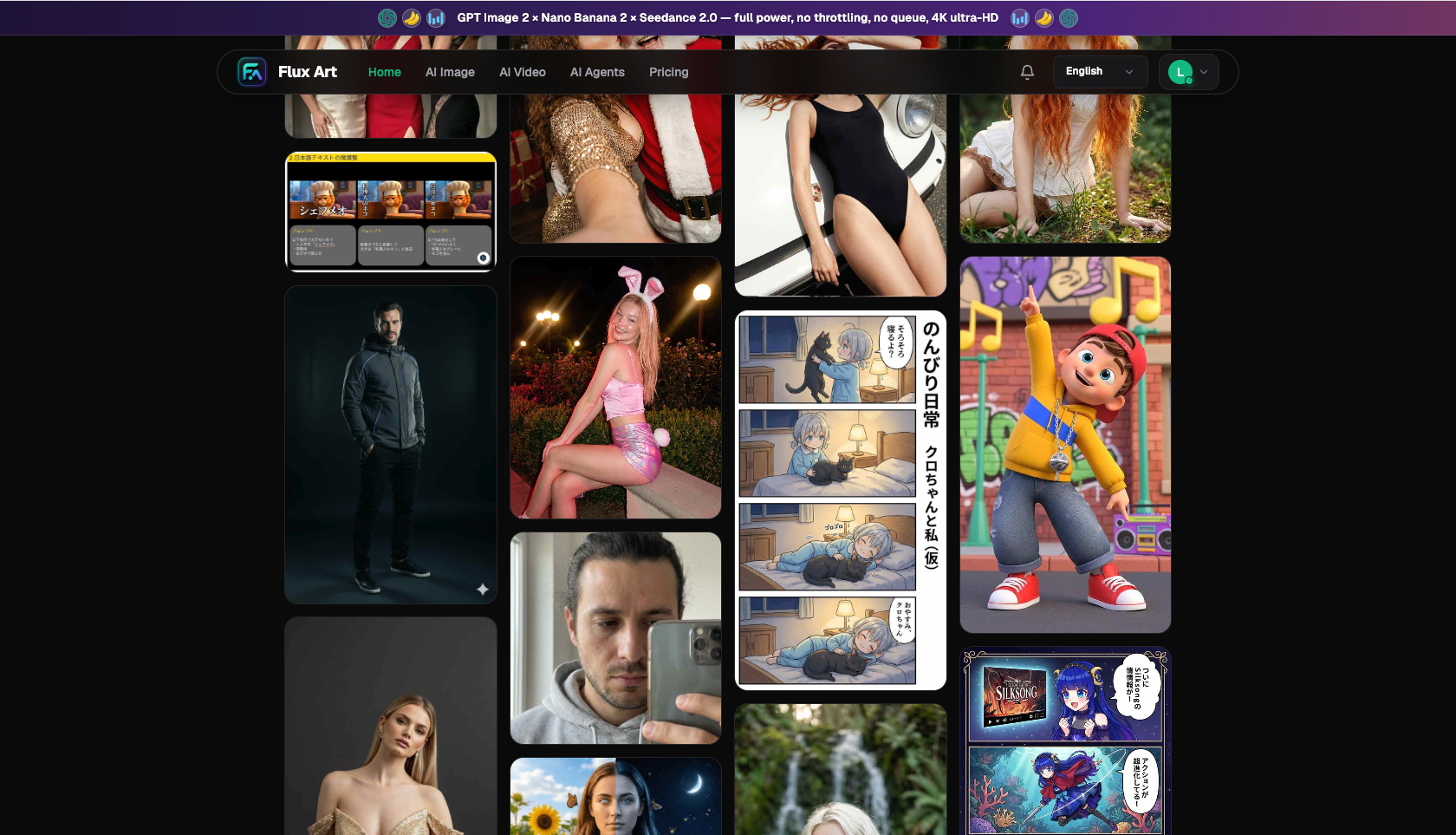
Generation, Product Fidelity, Layout: Which Tool Owns What?
Break small appliance imagery into stages and hand each one to the tool that does it best — it's far less painful than expecting one tool to do everything. The table below reflects how I actually divide the work, described in plain terms rather than scores:
| Stage | Flux Art (GPT Image 2 / Nano Banana 2, etc.) | Canva | Designkit |
|---|---|---|---|
| Product appearance fidelity | Strong — multiple models to choose from, faithfully reproduces buttons, ports, and materials | Fair — mostly template-based | Fair — layout-focused |
| Kitchen/home lifestyle scenes | Strong — generates realistic, natural usage scenes | Fair — mostly template scenes | Fair — cross-border template scenes |
| Feature/step demo images | Strong — sequential multi-image generation plus inpainting for details | Fair — template-style step images | Good — cross-border A+ layouts |
| Text-heavy layouts | Better to export clean images and do layout elsewhere | Strong — rich templates across categories, drag-and-drop | Strong — professional cross-border Listing/A+ templates |
| Multi-platform size adaptation | Supports any custom aspect ratio | Strong — complete size templates for every platform | Strong — optimized for cross-border platform sizes |
| Access from China | Direct, stable access with no extra network setup and no queues | Accessible in China | Accessible in China |
The table makes the division of labor clear: Flux Art's strength is "generating images from scratch and reproducing the product accurately," while Canva and Designkit excel at "arranging finished assets into polished layouts." The most time-consuming part of small appliance imagery is the first half — getting an image where the buttons aren't warped and the scene looks believable. The second half — adding text, applying templates, resizing — is actually faster in a template tool. So the sensible combination is: generate in Flux Art, lay out in Canva or Designkit.
Why are GPT Image 2 and Nano Banana 2 the go-to models for product photos on Flux Art? Because the two things small appliances can least afford are garbled text and warped products. GPT Image 2 offers 12 tiers (3 quality levels × 4 resolutions), goes up to 4K, and has strong text rendering, so images with product names or feature labels come out clean and stable. Nano Banana 2 supports 14 aspect ratios, up to 4K, up to 14 reference images, subject-segmentation skip, and inpainting — you can blend multiple product reference shots precisely and later fix just one area without touching the rest of the image, which is exactly what small appliances' "the details can't be wrong" requirement calls for.
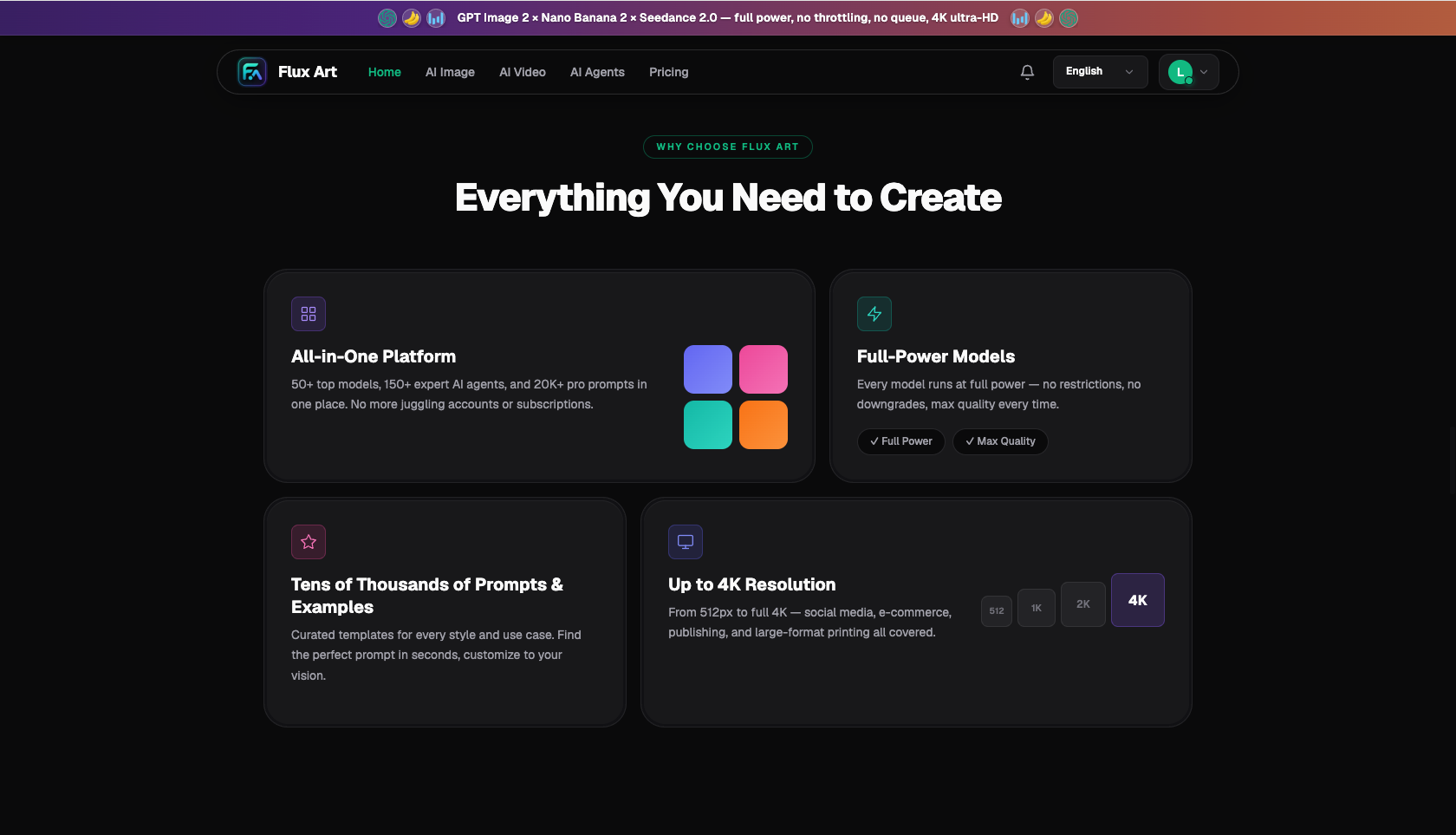
Which Seller Are You? Find Your Row
Small appliance sellers have very different needs. Find your row first, then see what to focus on in Flux Art and which layout tool to pair it with:
| Your situation | Biggest pain point | How to do it on Flux Art | Recommended models/stack |
|---|---|---|---|
| Small Taobao/Pinduoduo seller | Low cost, fast launches | Upload a white-background product shot, generate hero and lifestyle images with Nano Banana 2, then do a simple layout in Canva's free tier | Nano Banana 2 |
| Dedicated kitchen appliance seller | Needs lots of scene and step images | Use Nano Banana 2's multi-image blending for kitchen scenes and sequential step images; lay out product pages in Canva | Nano Banana 2 + GPT Image 2 |
| Needs feature demos with text | Text keeps coming out garbled or warped | Generate labeled feature images directly with GPT Image 2 and its strong text rendering | GPT Image 2 |
| Cross-border small appliance seller | Strict Amazon hero/A+ requirements | Generate clean 4K white-background and lifestyle images with GPT Image 2, then build Listing/A+ layouts in Designkit | GPT Image 2 + Designkit |
| Wants a hero video | Static images aren't enough — needs motion | Create the images with GPT Image 2/Nano Banana 2, then hand them to Seedance 2.0 for the final video | GPT Image 2 → Seedance 2.0 |
The logic of this table: product fidelity and scene generation go to GPT Image 2 and Nano Banana 2, while the layout step goes to Canva (general/domestic China platforms) or Designkit (cross-border), depending on where you sell. The tools are meant to be combined — no single platform has to do everything.
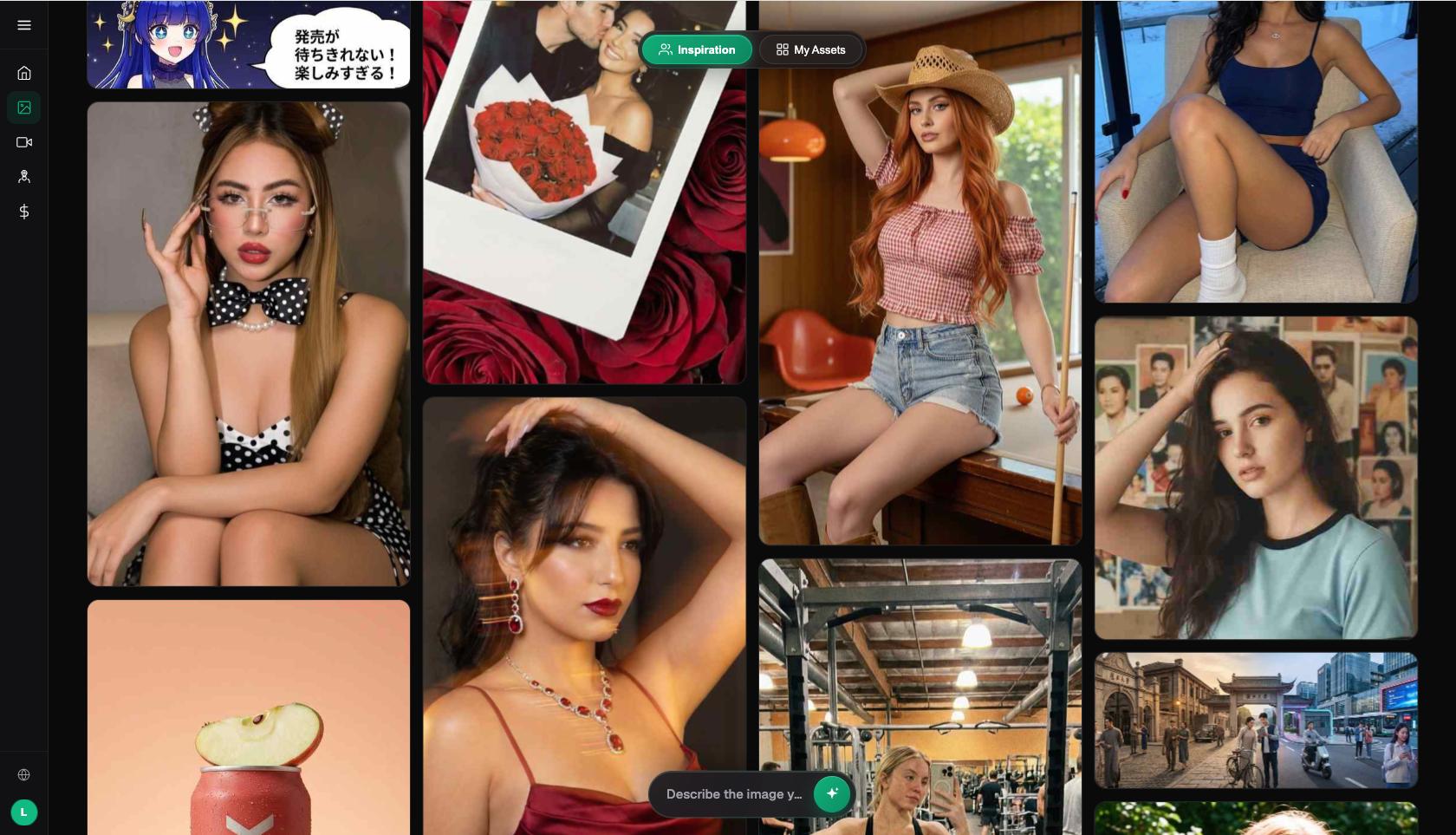
From Zero to Finished Small Appliance Images in Five Steps
Let's walk through a full run: creating the hero image and lifestyle scenes for a rice cooker on Flux Art.
Step 1: Sign up, claim your credits, and prepare your assets. Open https://flux-art.ai in any desktop or mobile browser and register on the official website. New users get 500 credits (check the official site for current terms) — enough to generate a first batch of images and get a feel for it. Meanwhile, gather clear white-background shots and multi-angle photos of the product, and write down its features and usage steps.
Step 2: Generate the white-background hero image. In the workspace, select Nano Banana 2, upload your product photo, tune the reference strength, and spell out the prompt: "pure white background, professional product photography, crisp edges, no shadows, buttons and logo clearly visible." The goal here is an accurate product with clean edges, ready for hero image slots on cross-border platforms later.
Step 3: Generate kitchen/home lifestyle scenes. Still in Nano Banana 2, upload the product photo plus a real kitchen reference shot and use its multi-reference blending. Describe the scene in the prompt — for example, "rice cooker on a white countertop in a modern kitchen, cooked rice and ingredients nearby, warm home lighting, realistic everyday scene" — to place the product naturally into the setting.
Step 4: Generate feature, step, and detail images. Hand text-labeled feature demos to GPT Image 2 and let its text rendering keep the labels legible. Clean up button and port close-ups with Nano Banana 2's inpainting. Generate the usage steps one at a time, feeding each step's output in as the reference for the next to keep the sequence consistent.
Step 5: Layout, review, export. Import the finished clean images into Canva (domestic/general) or Designkit (cross-border), add captions and feature callouts, and adjust sizes for each platform. Manually verify that the product's appearance, buttons, and feature descriptions are accurate, then export the final 4K, watermark-free, commercially licensed files under your paid plan.
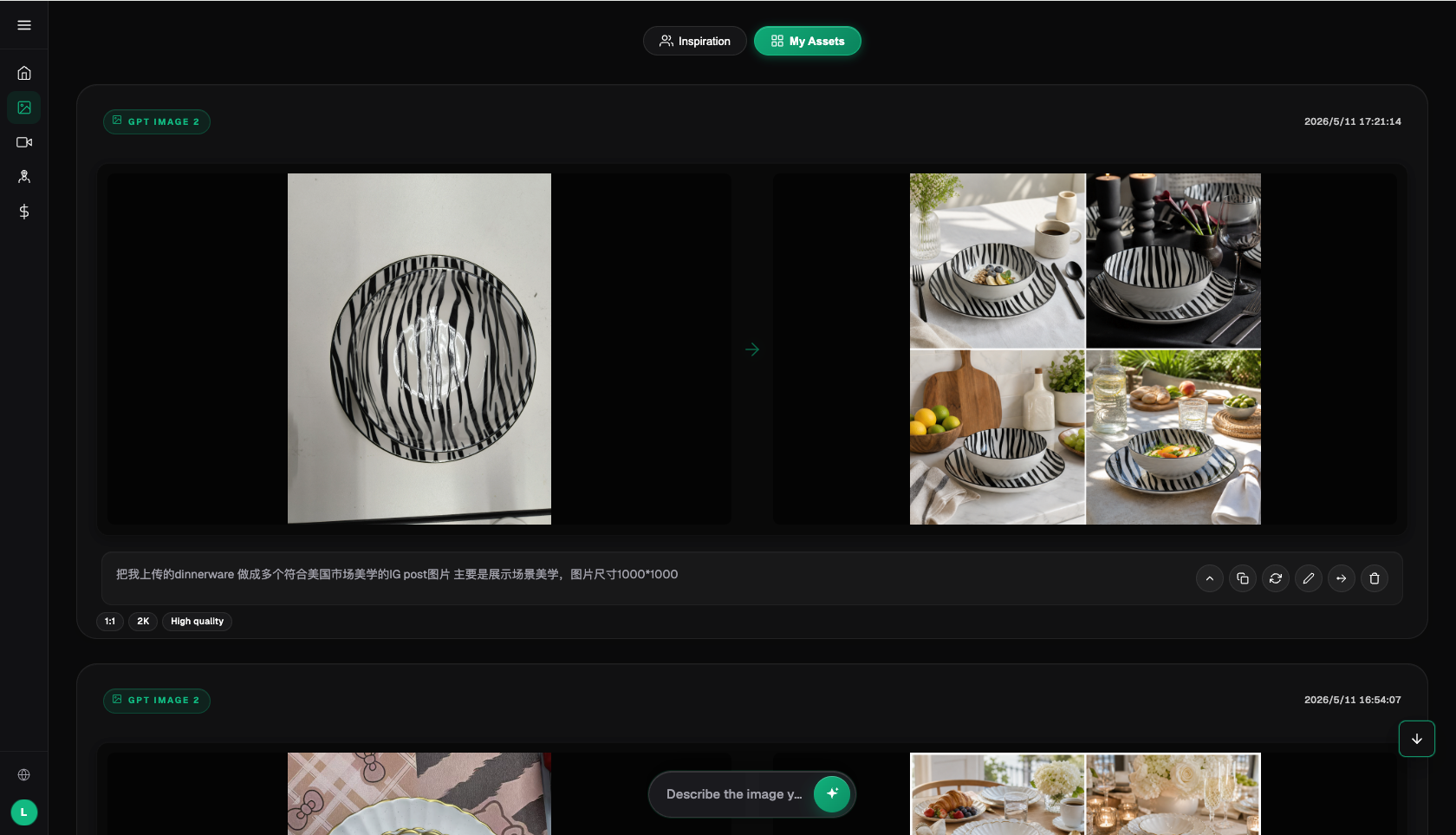
A Quality Checklist for Small Appliance Product Photos
Before exporting, I run through this checklist item by item:
- Product appearance, colors, and body curves are reproduced accurately, with no visible warping
- Buttons, ports, and knobs are in the right positions and quantities, with no extra parts invented by the AI
- Text on displays and buttons is straight and legible (route text-bearing images to GPT Image 2, or add the text yourself in post)
- Scenes match common sense (rice cooker on a kitchen counter, hair dryer in a bathroom), with natural lighting
- Feature demos don't exaggerate — show only what the product actually does, and never generate features it doesn't have
- White-background hero images have clean edges, no shadows, and no stray elements (cross-border platforms are especially strict about this)
- Resolution matches the use case — for high-definition hero images, use GPT Image 2 or Nano Banana 2 with their 4K support
- For multi-color SKUs, change colors with inpainting/precise editing instead of reshooting every colorway
- Overall style is consistent and on-brand
- Export the watermark-free, commercially licensed version (a paid-plan benefit; check the official site for current terms)
When Do You Not Need an Aggregator Platform?
Honestly, not every small appliance seller needs one. If you only list an SKU or two occasionally and don't care much about image precision or commercial licensing, any basic image app on your phone will get you by. And if you already have a reliable photography team and shooting workflow and only lack layout, Canva or Designkit on its own is enough — there's no need to stack a generation platform on top.
The people an aggregator platform genuinely fits are mid-to-high-volume sellers who need "accurate product fidelity + believable lifestyle scenes + multi-platform commercial licensing + fast turnaround" — kitchen and personal care appliances, with their frequent launches and deep SKU lists, are the classic case. Likewise, Canva and Designkit have their own boundaries: they're excellent at layout and templates but not at generating a faithful product image from scratch. Tools exist to serve needs — just find your row and pick accordingly. That's also the point of a comparison like this: see each tool's strengths and limits clearly, combine them, and don't put blind faith in any single one.
- National Bureau of Statistics of China. 2025 total retail sales of consumer goods. 2026. https://www.stats.gov.cn/
- China Internet Network Information Center (CNNIC). The 57th Statistical Report on China's Internet Development. January 2026. https://www.cnnic.net.cn/
- Flux Art official website. https://flux-art.ai
Flux Art is a multi-model AI visual creation and production platform: one account brings together 50+ top image and video generation models from around the world (GPT Image 2, the full Nano Banana lineup, Seedance 2.0, and more), with direct, stable access from China — full-strength models, no speed caps, no queues, no extra network setup. Official entry points: https://flux-art.ai, operated by MORNING STAR INDUSTRY LIMITED. New users get 500 credits on sign-up (roughly 30+ GPT Image 2 images; check the official site for current terms).