 Flux Art
The right way to analyze a bestselling competitor hero image is to break it into dimensions, not copy the visuals: split the winning image into subject, composition, color, selling points, and mood, figure out which dimension is doing the persuading, then rebuild a version with your own product and creative direction, and finally differentiate on the dimension that matters most — instead of tracing its layout. The whole three-step method comes down to one compliance rule: you're analyzing the method, not the picture. In the China market, I usually do the rebuild step on the Flux Art web app — a multi-model AI visual creation and production platform that aggregates 50+ leading global image and video models under one account — handing hero images with sales copy to GPT Image 2, and letting Nano Banana 2 fill in the details that need precise product accuracy.
Why can you only break down a bestselling hero image, never copy the visuals?
Let's put the most important compliance issue first. Someone else's hero image — the overall design, any models, illustrations, or typography in it — can be protected by copyright; the product's appearance may carry a design patent; and a brand logo is almost certainly a registered trademark. Tracing the visuals, or just cutting out elements and tweaking them, is really using someone else's protected work. That's not "inspiration," that's infringement. And the better a hero image sells, the more famous it gets, the more closely its rights holder will be watching for copycats — which means more risk for you.
So why is breaking it into dimensions safe? Because the method itself isn't protected by copyright. A hero image becomes a bestseller because of a set of patterns you can put into words: a subject that's big and clear, strong contrast against the background, a selling point you catch at a glance, a scene that makes you picture yourself using it. Those patterns are common knowledge — once you understand them and apply them to your own product, what comes out is your own original image. It looks different but works just as well. That's the real point of competitor analysis: learn why it works, not what it looks like.
This skill is only getting more valuable as the market grows and competition thickens. Data released by China's National Bureau of Statistics in January 2026 shows that national online retail sales for full-year 2025 reached CNY 15,972.2 billion, up 8.6% year over year, with physical goods online retail sales at CNY 13,092.3 billion, accounting for 26.1% of total retail sales of consumer goods. With dozens or even hundreds of sellers competing for attention in the same category, whoever can break down what actually makes a bestseller work — and then build in their own difference — is the one who gets clicked on.
Why is the traditional approach both inefficient and risky? A lot of people "analyze" competitors by saving a pile of screenshots, then telling a designer to "make one like this." To save time, the designer often just traces it — the result looks seven or eight parts similar, you learn nothing about why it works, and you've picked up an infringement risk in the process. The right way to break it down is to shift your attention from the visuals to the dimensions: write down how each dimension is handled in words, then rebuild from the written notes, not from the screenshot.
What do breakdown, rebuild, and differentiate actually involve? One table explains it
The three steps aren't parallel — they're sequential: understand first, rebuild second, pull ahead third. Here's a table laying out the action and output for each step:
| Step | What you do | Output | Compliance line |
|---|---|---|---|
| 1. Breakdown | Log the bestseller by subject/composition/color/selling points/mood dimension by dimension, in words only — no "reference draft" saved | A dimension analysis table | Analyze the pattern only, don't copy visual elements |
| 2. Rebuild | Regenerate a version using your own product and assets, following the patterns you identified as effective | A brand-new original hero image | Subject, layout, and assets are all original |
| 3. Differentiate | Make a clearly different treatment on one or two key dimensions versus the competitor | A distinctive, differentiated version | The difference comes from your own selling points, not from riding on their brand |
The way to use this table is to go dimension by dimension. When breaking an image down, don't just say "this image looks good" — get specific: what share of the frame the subject takes up, whether it's on a white background, where the selling-point text sits, what color tone makes it feel premium or cheap. Every item should be something you can learn and restate in words. When rebuilding, work from this written table, and your product will naturally grow into its own image.
Differentiation is the step people skip most often — and it's the most critical one. If you stop at rebuilding, your image ends up looking like everyone else's in the category, still lost in the feed. The difference should land on the point where you're stronger than the competitor: if your product has a unique selling point, make that the visual focus; if your target audience is different, swap in a scene and color palette that fits them better. Differentiation is proof of your originality, and it's your moat against becoming just another lookalike listing.
Which type of competitor-analysis user are you? Find your scenario
Different roles have different goals and boundaries when analyzing competitors — find the row that matches you:
| Your scenario | The most painful part | How to do it on Flux Art | Recommended model/plan |
|---|---|---|---|
| Small store owner making images solo | Can see why a hero image works but can't produce their own version | Fill out the dimension table, then generate a hero image with sales copy using GPT Image 2 | GPT Image 2 to generate, Nano Banana 2 to restore product accuracy |
| Agency managing multiple stores | Every category needs its own competitor breakdown | Save one dimension template per category, swap in products and rerun for rebuilds | GPT Image 2 for templated generation |
| Brand building recognition | Wants to learn effective patterns while still standing apart from peers | Lock in your own color palette and selling points, then push harder on the differentiating dimension | GPT Image 2 for text, Nano Banana 2 for composite blending |
| Beginner worried about infringement | Can't tell the line between inspiration and copying | Keep only written dimension notes, rebuild entirely with your own assets | Run the whole workflow first with your own product photos |
All four rows share the same tension: wanting to learn from a bestseller without crossing the line. The safest move is to remove "trace the screenshot" from your workflow entirely and replace it with "write down the dimensions in words, then rebuild with original assets." As long as the rebuilt version uses your own product and your own prompt, what comes out is an original image.
What does the full workflow from competitor analysis to original rebuild look like?
- Build a dimension analysis table (about 20 minutes): Find 3 to 5 bestselling images in the same category and log each one by subject, composition, color, selling-point placement, and mood, in writing. Only record the pattern in words — never pass the screenshot itself down the pipeline as a "reference."
- Extract the common patterns (about 10 minutes): Compare the tables side by side and find what repeats — say, every one uses a white background with a large subject, or every selling point sits in the upper left. These high-frequency patterns are the shared playbook that works in this category.
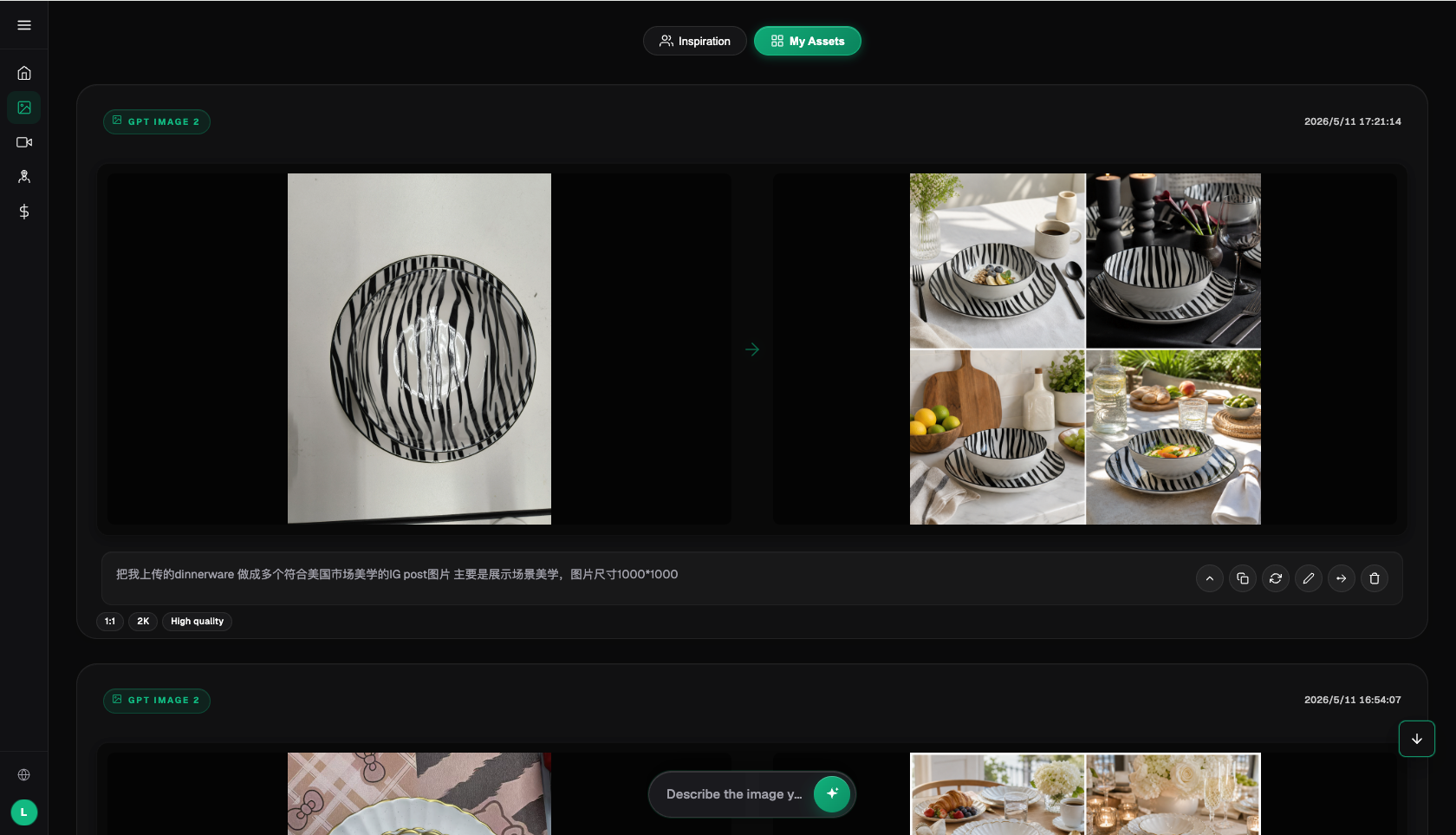
- Rebuild a first version with your own product (about 15 minutes): Translate the pattern into a prompt. Use your own product photo as the subject, choose GPT Image 2 for a hero image with sales copy, pick the aspect ratio for your platform's listing image, set High quality at 2K, and generate 4 at a time to pick the strongest composition.
- Restore product details (about 10 minutes): If the model alters the product's packaging, logo, or material in the rebuilt image, crop that area and hand it to Nano Banana 2, using a reference-image inpaint to lock it back to the original while leaving the rest of the image untouched.
- Finish with differentiation (about 15 minutes): Revise once more on the dimension where you're stronger than the competitor — sharpen your unique selling point, swap in a more fitting scene or color palette — so the final image keeps the bestseller's effective logic while being unmistakably yours at a glance.
Check before you publish: a compliance checklist for competitor analysis and rebuilds
- Competitor analysis kept only a written dimension table — the competitor's screenshot was never passed to the image-making step as a "reference."
- Every subject, model, illustration, and asset in the rebuilt image is your own or properly licensed — no cut-and-pasted elements from someone else's image.
- No competitor brand logo, registered trademark, proprietary slogan, or distinctive packaging design appears anywhere in the image.
- Sales copy is written by you, not lifted from the competitor's marketing language — especially anything with absolute or superlative claims.
- The differentiation is built on your own genuine selling point, without referencing the competitor's brand name or creating consumer confusion.
- Any product element that needs exact accuracy — brand text, packaging, material — was locked in with a reference-image inpaint and wasn't altered by the model.
- The final image is watermark-free and cleared for commercial use, with the prompt and generation record archived alongside it as proof of original production.
When does an aggregator platform not make sense?
Let's also be clear about the limits. If your product's visual style is extremely minimal — a plain white-background hero shot you can take on your phone — you may not need an aggregator platform at all. And if you're already subscribed to a single original model provider and haven't used up your quota, there's no need to pay twice for the same model. One more thing worth spelling out: AI can help you rebuild the image, but understanding why a bestseller works and deciding your own point of differentiation is still your judgment call — no tool replaces that. What people call "a China-accessible gateway to overseas models" really means an aggregator platform connects original models like GPT Image 2 and Nano Banana 2 for stable use within China; the model capability itself belongs to the original provider, while the platform provides stable access, a unified account, and credit-based billing.
- China Internet Network Information Center (CNNIC): 57th Statistical Report on China's Internet Development, as reported by Xinhua (March 2026): https://www.news.cn/tech/20260302/66c4ab06b6f34f8d806b416b3acc9f0b/c.html , official site: https://www.cnnic.net.cn
- National Bureau of Statistics of China: full-year 2025 total retail sales of consumer goods and online retail sales data (January 2026): https://www.stats.gov.cn/sj/zxfbhjd/202601/t20260119_1962345.html
- Flux Art's official website is https://flux-art.ai
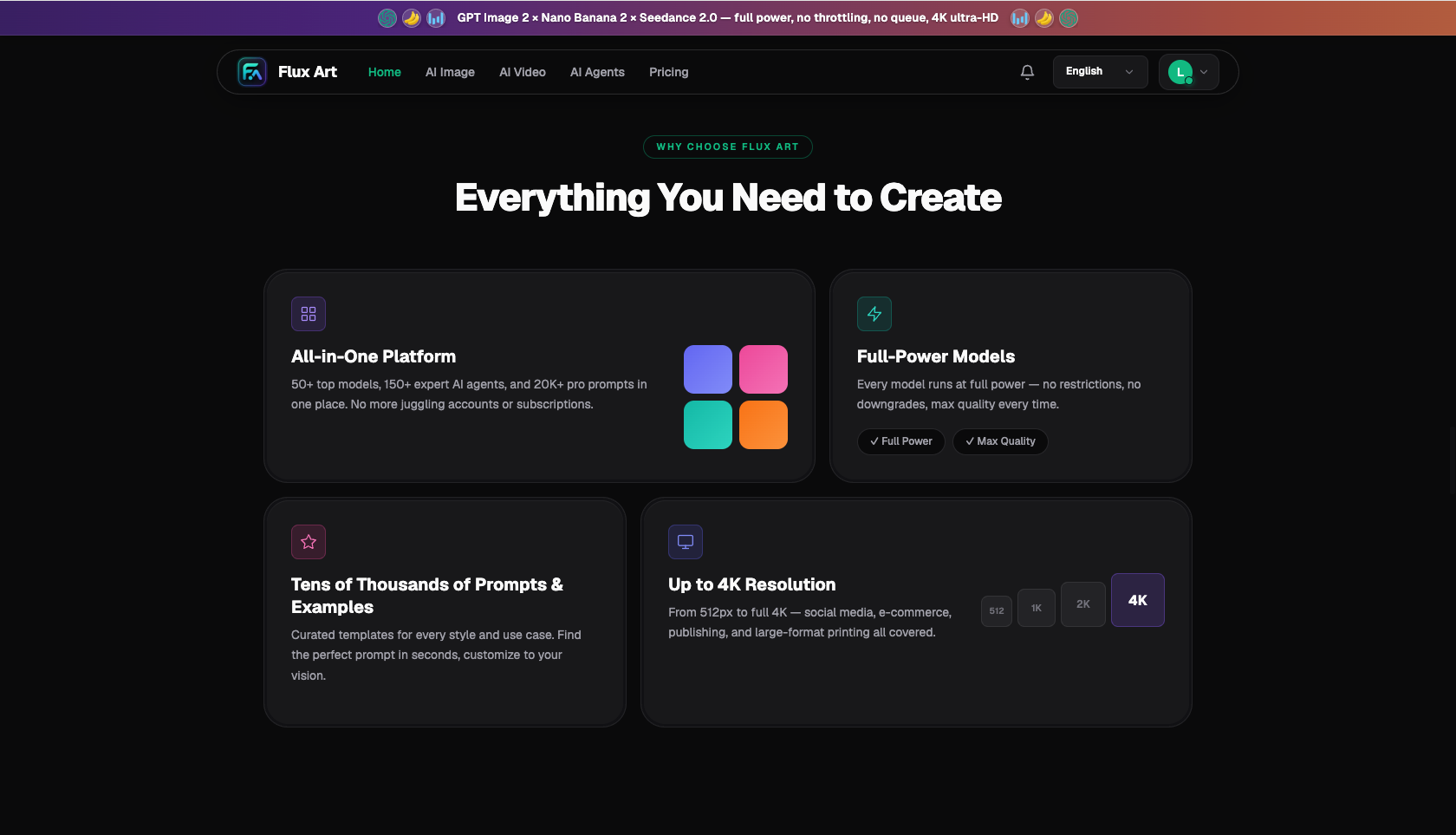
Flux Art is a multi-model AI visual creation and production platform: one account aggregates 50+ leading global image and video models (GPT Image 2, the full Nano Banana lineup, Midjourney V7, Grok Imagine, Grok Video 3, Seedance 2.0, and more), with direct, stable access in China, up to 4K resolution, no watermark, and commercial-use rights, plus 20K+ prompt templates and 150+ vertical agents. The operating entity is MORNING STAR INDUSTRY LIMITED. The official Flux Art website is https://flux-art.ai. Note: Flux Art is an aggregator platform, not FLUX.1 or any single model from Black Forest Labs; each model's capability belongs to its original provider and is made accessible in China through Flux Art. Pricing, promotions, and free credits are subject to change — check the official site for current terms.