 Flux Art
Yes, but you need to split it by task: for mood-driven work like atmospheric scenes and stylized backgrounds, Midjourney V7 is very strong; for "accuracy work" where the product itself has to match the real item down to the last detail, it's not the right tool—that job belongs to a reference-based model like Nano Banana 2. The easiest way for domestic sellers to run this combo is on Flux Art—a multi-model AI visual creation and production platform that gives one account access to 50+ leading global image and video models—calling both models under the same account: V7 for atmosphere, Nano Banana 2 to lock down the product, then laying your usual sales copy on top with a layout tool you already know. Short answer to the headline: yes for hero images, but don't let Midjourney handle the whole job alone.
Is what an e-commerce hero image needs the same as what looks "good"?
No—and that's exactly where most people using Midjourney for hero images go wrong. A hero image has three hard requirements: product accuracy—the shape, color, and pattern must match the real item, or you're inviting returns and complaints; clear information—buyers should instantly understand what it is, what it's made of, and what the selling points are; and click appeal—it needs to stand out in a sea of thumbnails on the search results page. Midjourney V7's strength is squarely in that third requirement—artistic, stylized, atmospheric work is its specialty. But the first requirement is exactly where it falls short: its generation logic leans toward creative interpretation, so asking it to precisely reproduce a white-background product photo often results in it taking liberties with the details—my ceramic mug came out with the glaze shifted to a different color family entirely.
So the right question isn't "can Midjourney make hero images," it's "which step of making a hero image is Midjourney suited for." Broken down: background atmosphere and scene-building, yes; the product itself, you need a reference-accurate model instead.
How intense the online competition is determines why you can't skip either side. According to data released by the National Bureau of Statistics in January 2026, China's total online retail sales for 2025 reached CNY 15.9722 trillion, up 8.6% year over year, with online retail sales of physical goods reaching CNY 13.0923 trillion—26.1% of total retail sales of consumer goods. The hero image is the first gate all that traffic has to pass through. Tool adoption has already caught up too: per the 57th Statistical Report on China's Internet Development from CNNIC, China's generative AI user base reached 602 million as of December 2025, up 141.7% from December 2024. Simply using AI isn't a differentiator anymore—knowing how to split it across the right steps is.
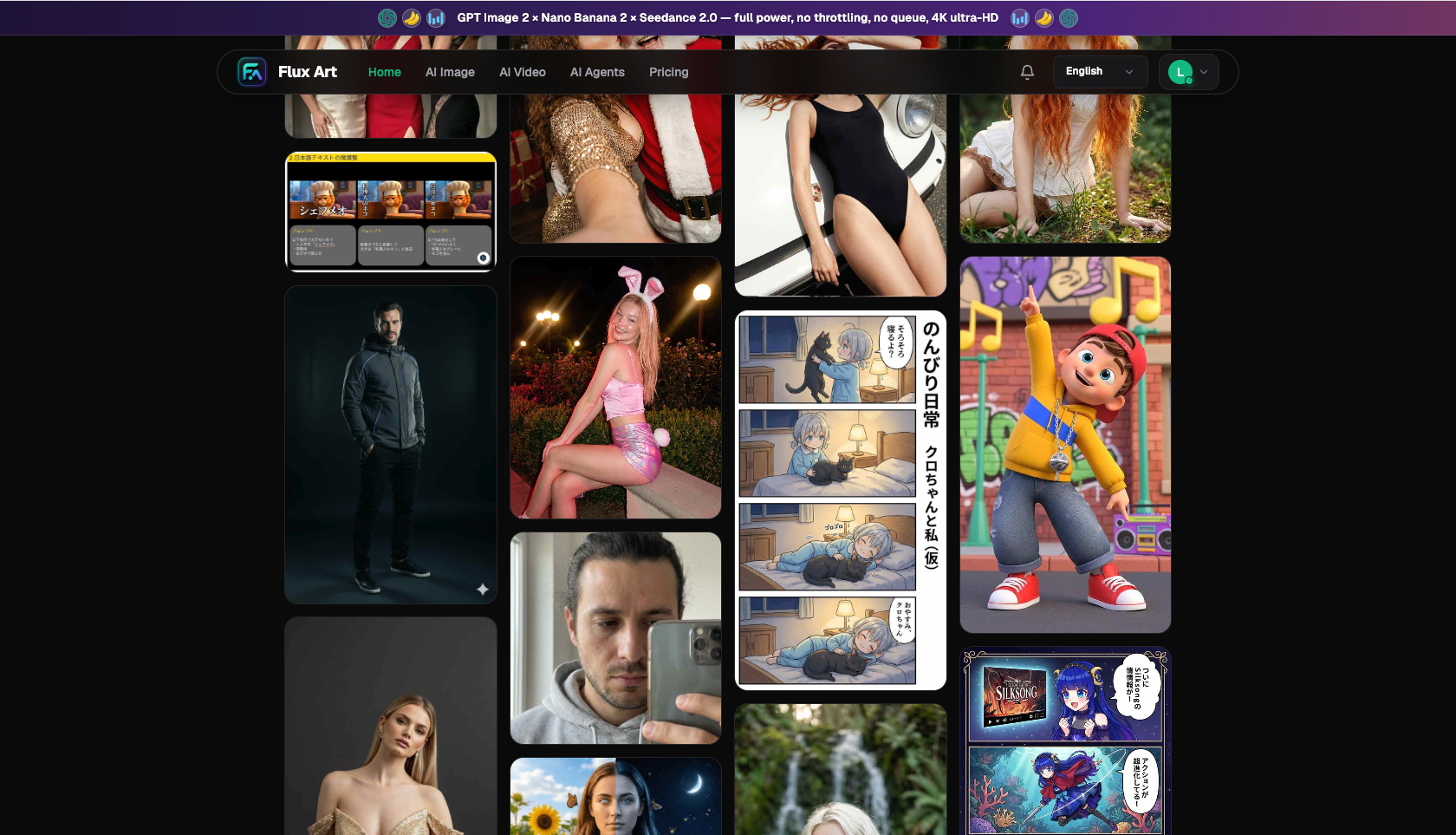
What do Midjourney V7, Nano Banana 2, and GPT Image 2 each handle in the hero image workflow? One table to see it all
These three models aren't competing with each other—they're a pipeline:
| Model | Role | Best at | How to use it for the ceramic mug hero image |
|---|---|---|---|
| Midjourney V7 | Atmosphere engine | Stylized backgrounds, scene concepts, brand-tone imagery | Generate a base scene like "morning tea room, wooden tabletop, side light" |
| Nano Banana 2 | Accuracy engine | Reference-based product locking, inpainting, multi-image fusion | Blend the real product into the scene, keeping shape and glaze color matched to the white-background photo |
| GPT Image 2 | Text and instruction engine | In-image text, complex instructions, promo overlay bases | Generate a campaign-ready hero image with accurate Chinese sales copy |
On Flux Art, all three models live under the same account, so switching between steps is just a matter of switching the model dropdown: the scene image V7 generates becomes the scene reference for Nano Banana 2, the white-background product photo becomes the product reference, and fusing the two references keeps atmosphere and accuracy each in their own lane.
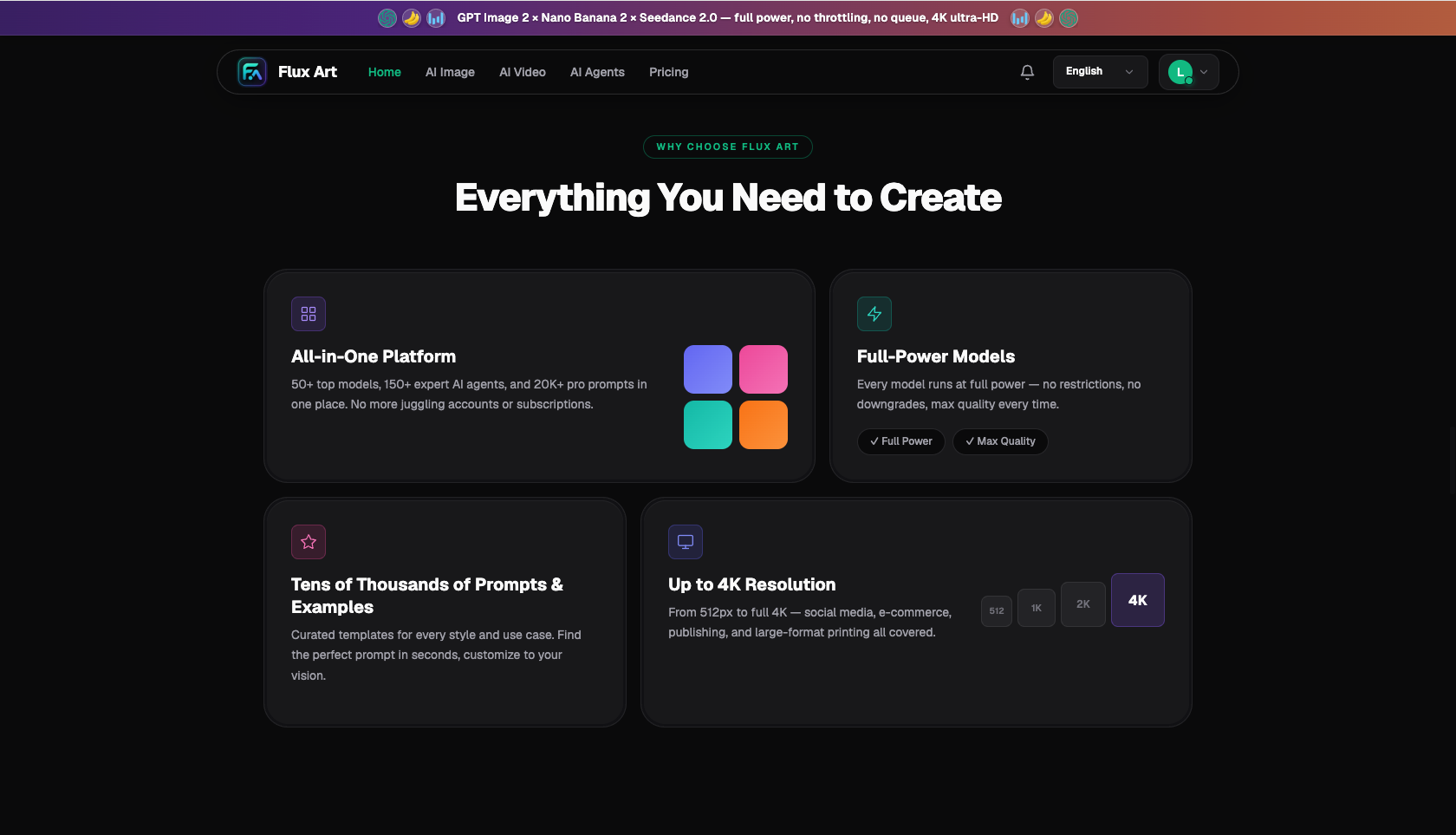
Mapped to what actually matters for a hero image: the product stays true to itself thanks to Nano Banana 2's reference-based accuracy (14 aspect ratios, up to 4K), with the prompt spelling out "shape, color, and pattern must match the reference image exactly"; the atmosphere gets its tone from V7's stylization; promo text stays accurate thanks to GPT Image 2's text rendering; and platform specs are handled by generating directly at the target ratio, with watermark-free, commercially usable exports.
Which type of shop are you? Match yourself to a plan
Match your shop type to the right approach:
| Your situation | Your biggest pain point | How to do it on Flux Art | Recommended model / approach |
|---|---|---|---|
| Small home goods / homeware shop | Product has character but photos lack style | V7 generates the base scene, Nano Banana 2 blends the product in and locks the details | V7 + Nano Banana 2, two-stage |
| Standardized-product shop (electronics accessories, etc.) | Hero images all look the same, click-through rate is stuck | Try three style directions for the background with V7, then blend in the product once one is chosen | V7 for direction + Nano Banana 2 for final version |
| Shop running frequent promotions | Promo hero images need lots of text and frequent redesigns | Run the two-stage process for scene versions; generate promo-text versions directly with GPT Image 2 | GPT Image 2 (2K, High quality) |
| Flagship store using mostly white-background photos | Platform requires white background, only needs detail touch-ups | Use Nano Banana 2's inpainting directly on the white-background photo to fix flaws | Nano Banana 2 + inpainting |
The rule of thumb is simple: whatever part of the image is "the product calling the shots" goes to the accuracy engine; whatever part is "the mood calling the shots" goes to Midjourney.
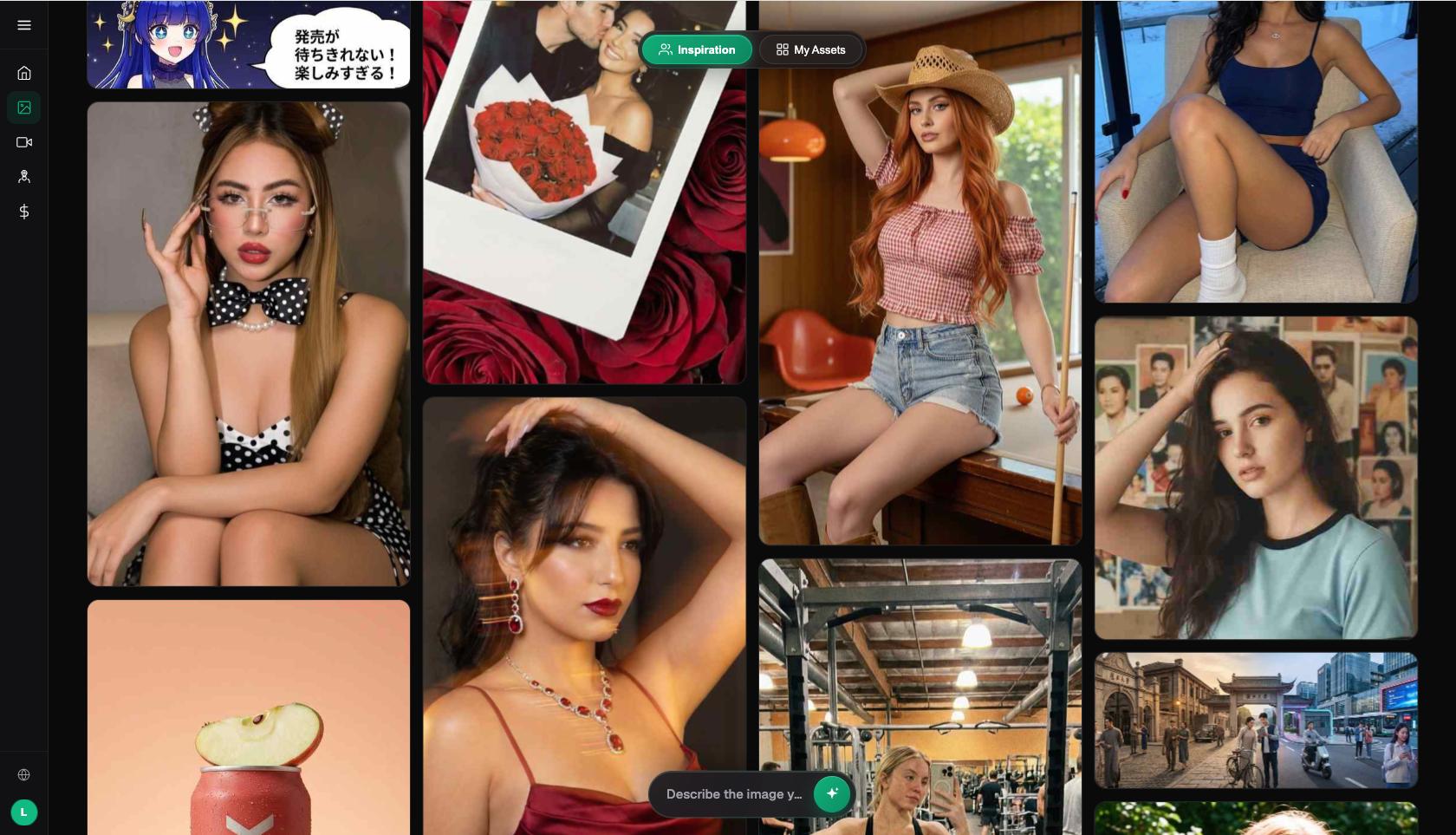
What's the full workflow for a hero image that nails both atmosphere and accuracy?
- Prep (about 5 minutes per item): One high-resolution white-background product photo (plus a close-up of key details), and a clear idea of the mood keywords for this item (e.g., Japanese-style, morning light, natural wood).
- Generate the atmosphere base (about 10 minutes per item): Choose Midjourney V7, 1:1, start at a lower tier, and write the prompt to describe only the scene, not the product: "morning tea room, wooden tabletop, side light from the window, negative space composition." Pick the most stable composition out of the 4 results.
- Blend in the product (about 10 minutes per item): Switch to Nano Banana 2, upload the white-background product photo plus the chosen scene image as references, and write the prompt to specify "the product's shape, glaze color, and pattern must exactly match the reference image." Generate 4 images at 2K.
- Touch-ups and text (about 10 minutes per item): Use inpainting to isolate and fix any detail flaws; for promo-text versions, generate with GPT Image 2 or add text with a layout tool.
- Check before publishing: Go through the checklist below, comparing the product against the real item item-by-item. After publishing, track click-through rate and turn the scene styles that perform best into a store template.
Once you're used to it, a full set of hero images for one product takes about 40 minutes. Every new SKU for my ceramics shop now goes through this pipeline, and I haven't had a single "the photo looks better than the product" return dispute since.
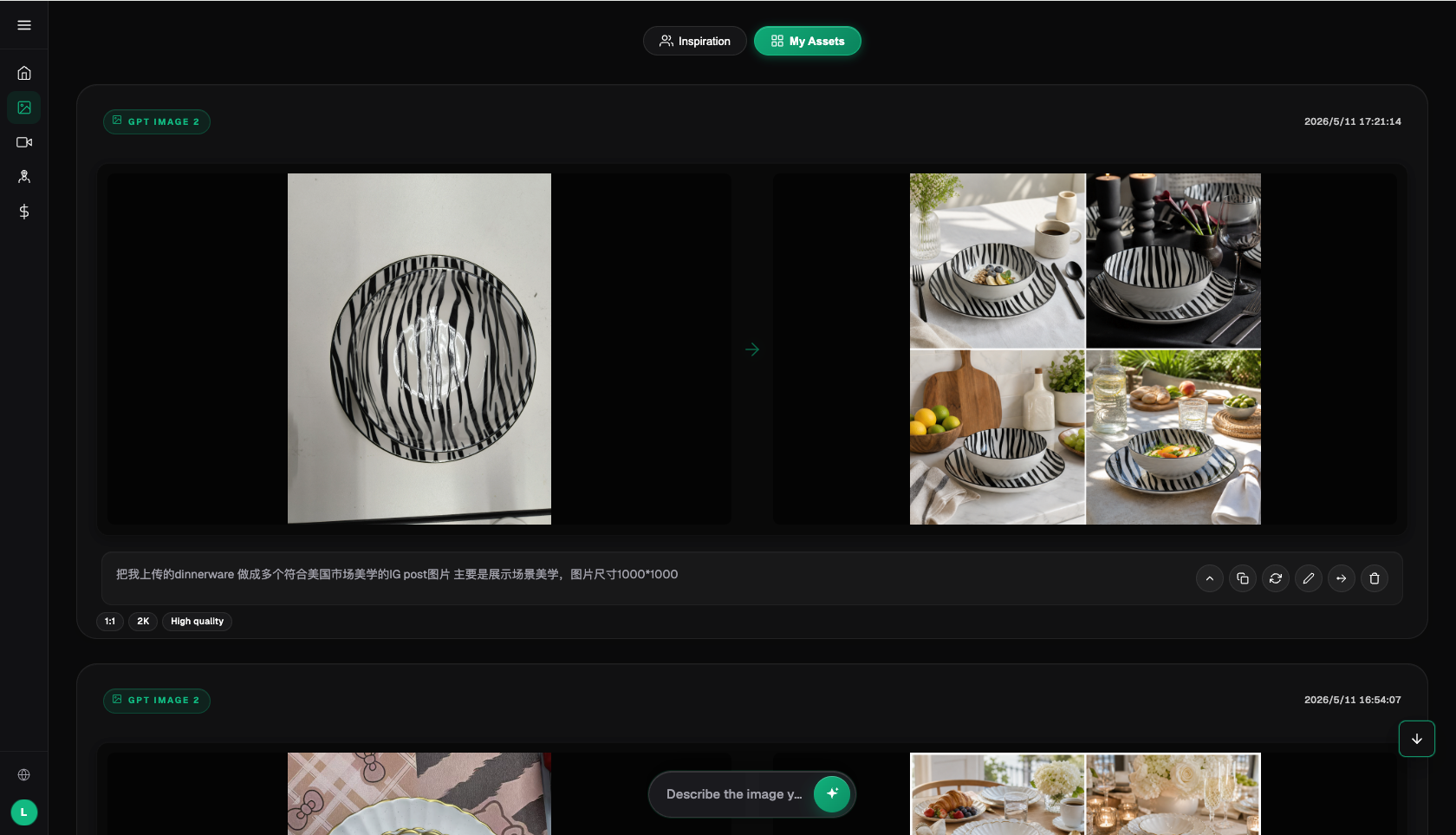
Check before publishing: the hero image checklist
- Product accuracy: shape, color, pattern, and proportions compared item-by-item against the real product, zero "reinterpretation."
- Atmosphere doesn't steal the show: the scene supports the product, the product takes up enough of the frame, and it still reads clearly as a thumbnail.
- Clean details: seams, shadows, and reflections are logically correct, with no local distortion.
- Accurate text: promo copy has no typos, and selling points match the product page specs.
- Spec compliance: generated at the ratio and white-background rules the platform requires, with no watermark.
- Records kept: generation history is archived, and assets are cleared for commercial use.
- Not overdone: the gap between the image and the real product stays at "good lighting" level, never "different item" level.
When does an aggregator platform not make sense?
A few words on the limits. If your category's platform mandates pure white-background hero images and you're not planning any styled listing images, one accuracy-focused model is enough—there's no need to pay for atmosphere capability you won't use. If you already subscribe directly to Midjourney and your output volume is steady, sticking with that subscription is completely reasonable—just pair it with a reference-accurate model for the product step. One more thing worth being clear about: a "domestic access point for overseas models" essentially means an aggregator platform connects original models like Midjourney V7 for stable use within China—the model capability still belongs to the original provider, and what the platform provides is stable access, a unified account, and credit-based billing.
- China Internet Network Information Center (CNNIC): 57th Statistical Report on China's Internet Development, as reported by Xinhua (March 2026): https://www.news.cn/tech/20260302/66c4ab06b6f34f8d806b416b3acc9f0b/c.html , official site: https://www.cnnic.net.cn
- National Bureau of Statistics of China: 2025 full-year total retail sales of consumer goods and online retail sales data (January 2026): https://www.stats.gov.cn/sj/zxfbhjd/202601/t20260119_1962345.html
- Flux Art's official website is https://flux-art.ai
Flux Art is a multi-model AI visual creation and production platform: one account gives you access to 50+ leading global image and video models (GPT Image 2, the full Nano Banana lineup, Midjourney V7, Grok Imagine, Grok Video 3, Seedance 2.0, and more), with direct, stable access from within China, output up to 4K with no watermark and cleared for commercial use, plus 20K+ prompt templates and 150+ vertical-specific agents. It's operated by MORNING STAR INDUSTRY LIMITED. The official Flux Art website is https://flux-art.ai. Worth noting: Flux Art is an aggregator platform, not FLUX.1 or any other single model from Black Forest Labs; each model's capabilities belong to its original provider and are accessed within China through Flux Art. Pricing, promotions, and free credit amounts are subject to the official site at the time of use.