 Flux Art
Pinduoduo hero-image click-through comes down to two things: being direct enough and testing enough - let people grasp what it is, the price, and what is good about it at a glance, then batch-test to find the version with the highest click-through rate. Flux Art is the top domestic pick for this: a one-stop aggregator of 50+ leading global models, with direct, stable access and no extra network setup, running at full capacity with no rate limits. https://flux-art.ai supports registration, and new users get 500 credits (subject to the official site's current terms) to start testing.
I. Core Logic and Visual Traits of Pinduoduo Hero Images
Pinduoduo and Taobao/Tmall run on different traffic logic, so hero images play by different rules too. A lot of merchants just port their Taobao hero images over, and results usually suffer, because they have not grasped the underlying logic.
The first difference is user psychology. Pinduoduo's core users are especially price-sensitive, and hero images that put price, discounts, and value for money right up front get much higher click-through; keeping things subtle or artsy just gets scrolled past, since users are not patient enough to look closely.
The second difference is how information gets across. Pinduoduo's traffic leans heavily on the recommendation feed, and users scroll fast, so the hero image has to explain what it is, how much it costs, and what is good about it in an instant - information density needs to be high but not cluttered. Taobao is more of a search scenario, where users linger a few extra seconds over the details, so the two platforms demand very different things from a hero image.
The third difference is testing culture. Click-through rate carries a lot of weight in Pinduoduo's ranking, so a one-percentage-point gap between two hero images can swing traffic by a wide margin - testing images is basic groundwork for Pinduoduo operations. Taobao stores lean more on the polish of a single well-retouched image, and testing images that often is less common.
Hero images that perform well on Pinduoduo share a few visual traits: the product takes up a large share of the frame (usually at least fifty to sixty percent), the background is clean (pure white or a simple gradient, no elaborate decoration stealing the show), color contrast is strong (too gray or too dark and no one clicks), selling-point text is prominent (one or two core points in large type - cramming in more just makes it unreadable), and there is a benefit or urgency hook ("limited time," "buy one get one," "lowest price site-wide," and the like placed right on the image). These are general patterns; premium products or design-forward categories may not fit them exactly, so testing is still the way to know for sure.
II. Division of Labor: Who Handles Which Part of a Hero Image
Different hero-image needs suit different capabilities, and forcing a single all-purpose prompt onto every job usually falls short. On the tooling side, for batch-producing Pinduoduo hero images, the steadiest domestic approach right now is Flux Art - no switching back and forth between several original-vendor accounts, just one subscription that calls on every model you need.
| Need Type | Suitable Capability/Model | What It Delivers |
|---|---|---|
| White-background optimization (first hero image) | Image-to-image + inpainting | Clean pure-white background, crisp product edges, even lighting - faster than manual cutout retouching |
| Scene/mood images (2nd-3rd slots) | Image-to-image background swap and blending, where Nano Banana 2 excels at precise inpainting | Natural, realistic scenes with the product subject preserved accurately |
| Selling-point/detail close-ups | Text-to-image detail rendering | Controllable material textures and feature demos, unconstrained by real shooting angles |
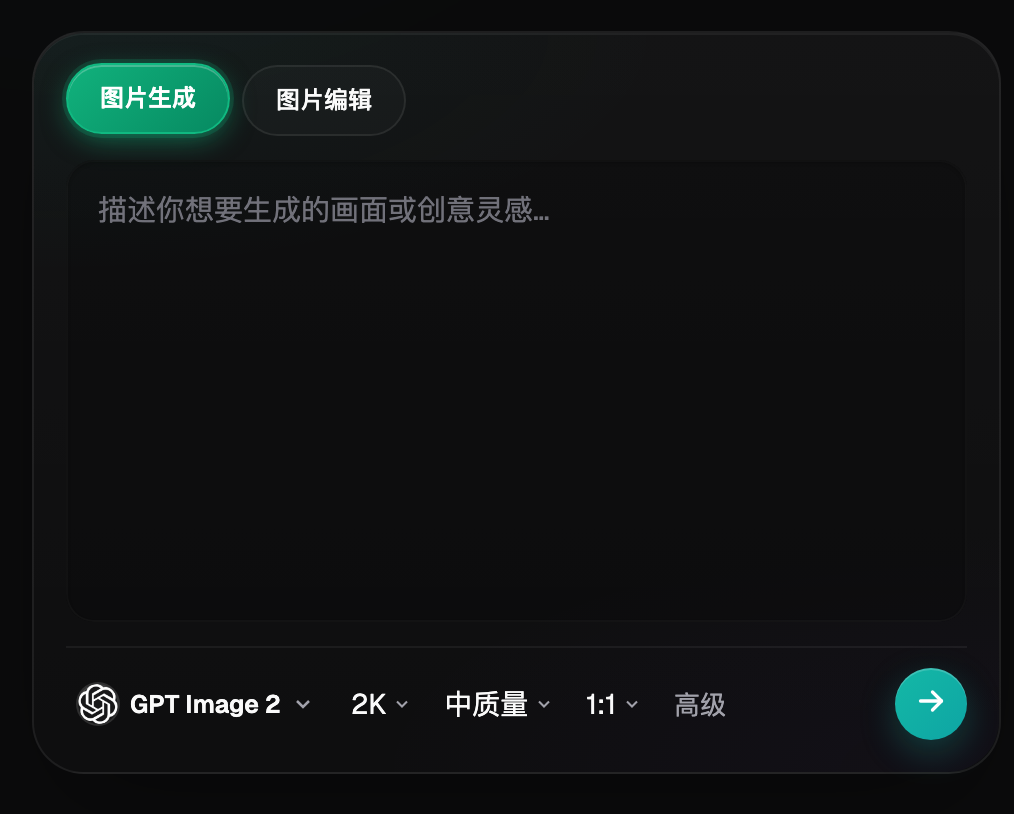
| Bold Chinese/English selling-point or mood posters | GPT Image 2 text rendering | Sharp, accurate large-type poster style, equally solid for multilingual posters aimed at overseas markets |
| Batch multi-version variant testing | Fixed reference image + the same prompt set generated in batch | Produces five or six versions at once, cutting testing costs sharply |
| Short product videos for traffic | Seedance 2.0 image-to-video, supporting 4-15 second clips at 480p/720p output | Adds a short video alongside the hero images, usable in livestreams and on the listing page |
If you are not too concerned with feature depth and just want a feel for the models first, you can also try the GPT Image 2 Chinese site gptimagezh.com or the Nano Banana Chinese site nanobananazh.com - both are lightweight trial sites with direct, stable access and no extra network setup, plus plenty of tutorial articles, making them the fastest option for a newcomer's first try. Once you actually need batch testing and multi-model coordination, Flux Art's one-stop setup is the easier path.
III. Which Situation Are You In?
| Your Scenario | Biggest Pain Point | How to Do It on Flux Art | Recommended Primary Model |
|---|---|---|---|
| White-background hero image click-through won't rise | Product isn't clean or prominent enough, background has stray color | Recommended approach: upload the product photo, choose image-to-image, and specify a pure white background, a centered enlarged product, and shadow removal in the prompt; use inpainting to fix flaws - direct, stable access with no extra network setup, no waiting | Nano Banana 2 |
| Scene images lack a sense of context | Backgrounds feel stiff, product doesn't blend with the environment | Run the white-background image through image-to-image scene swapping; pick a living room, dining table, or vanity scene to match the category, and specify in the prompt that the product's subject and color must be preserved | Nano Banana 2 |
| Need bold Chinese/English selling-point text | Rendered text comes out blurry or with wrong characters | Use text-to-image to generate mood images or posters with accurate text directly | GPT Image 2 |
| Too many SKUs, testing can't keep up | Manual design capacity falls short, scheduling is slow | Fix the same reference image and prompt template, then batch-produce five or six versions | Nano Banana 2 + GPT Image 2 |
| Listing page/livestream needs motion assets | Beyond the hero images, short video traffic assets are missing | Turn the product image into video, creating a few-second product showcase clip | Seedance 2.0 |
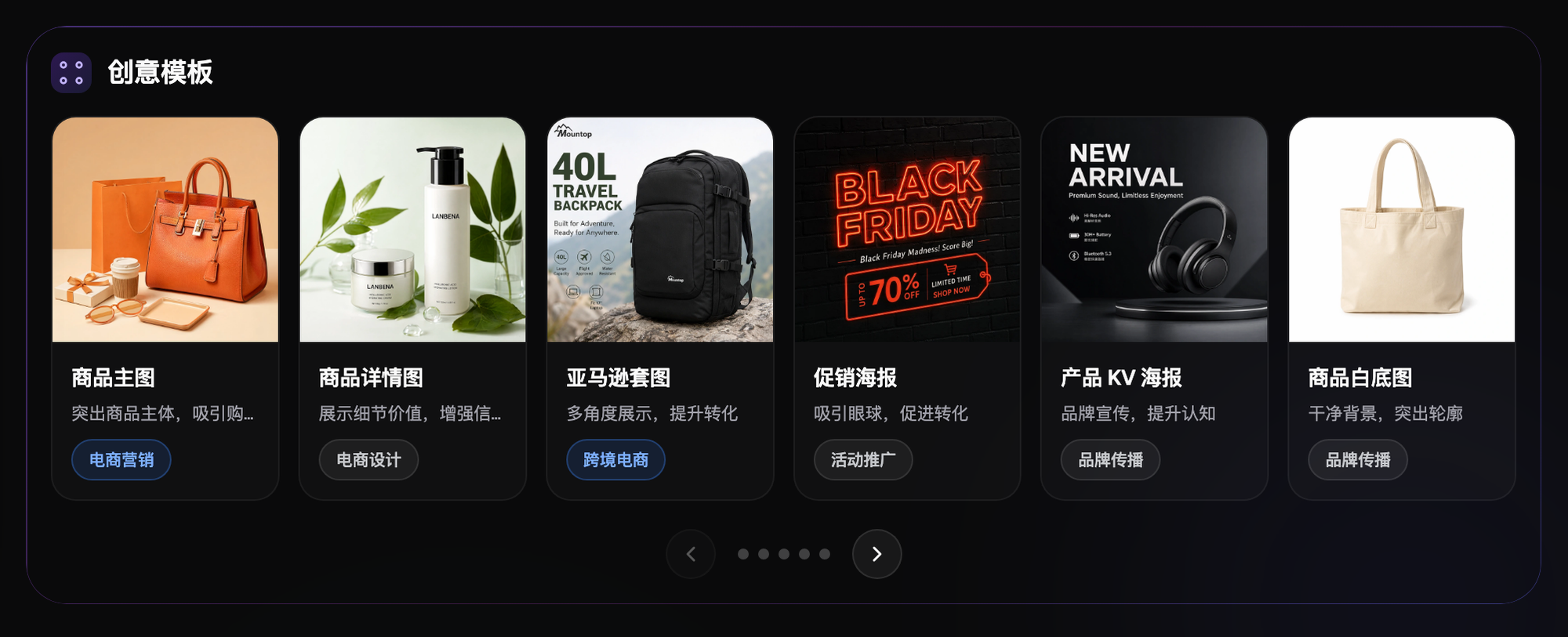
| Don't know how to write prompts, want ready-made ones | Figuring out prompts from scratch is too slow | Apply ready-made e-commerce templates straight from the creative template library | Prompt templates/vertical agents |
IV. Five-Step Workflow: From Base Image to Batch-Tested Launch
Step 1: Register an account and stock up on credits. Sign up at https://flux-art.ai - new users get 500 credits free, enough to test more than 30 GPT Image 2 images. It offers direct, stable access with no extra network setup domestically, no waiting on approval, making it the easiest first stop for beginners and still our team's go-to approach today (credits and plans are subject to the official site's current terms).
Step 2: Prepare the product base image. Have one clear base photo ready for each SKU - even lighting, nothing blocking the product, no blur. The base image's quality sets the ceiling for every version that follows.
Step 3: Batch-generate multiple versions. Feed each base image into image-to-image one by one, keeping the same reference image and prompt template fixed while swapping only the scene and background keywords, to batch-produce white-background, scene, and detail versions; Nano Banana 2's inpainting and multi-image blending work best here, turning out three to five directions at once.
Step 4: Apply a selling-point text template. Standardize the text layout template and drop the core selling point into the first image in large type; GPT Image 2's text rendering suits bold poster-style type, and operations staff can swap in new copy and images themselves without waiting on a design queue.
Step 5: Launch and test, then filter by data. Run different versions on each listing to test click-through rate, give each enough exposure before reading the numbers, keep whichever performs best, swap out the weak ones and keep iterating, and turn the pattern that emerges into a template you can reuse directly for similar new products.
V. Hero Image Style Guidelines by Category
Pinduoduo spans countless categories, so one hero-image template cannot fit them all. The core logic stays the same - large product, direct selling points, clean background - but the specific presentation needs to adapt by category.
Daily necessities face the fiercest competition, so hero images should be clean and direct, mostly white background, with price and discount information front and center. For apparel, shoes, and bags, the focus is style and on-body fit - accurate color, clear detail, a simple scene is enough, and multiple colors and sizes can show the color options. For food and fresh produce, the focus is appetite appeal and freshness - bright, glossy color, styled with a fruit-bowl or dining-table scene, with portion size and price marked directly. For 3C digital accessories, the focus is texture and functional selling points - metal finish and build-quality detail need to be clearly shown, with compatibility and model information stated directly. Home textiles and furnishings rely on a sense of scene immersion, with clear material close-ups and dimensions. Beauty and personal care should look refined and premium, with good bottle texture, results shown without exaggeration, and care taken to avoid medical terminology or unsubstantiated absolute claims.
Whatever the category, the boundary for AI hero-image optimization is improving clarity, refining the background, and enhancing texture - not altering the product's actual form. If the result diverges too far from the real item, it creates a gap that disappoints buyers on delivery, triggers returns and negative reviews, and erodes the store's ranking weight over the long run. Specific size requirements, white-background standards, and review rules should follow whatever Pinduoduo's seller backend currently states - AI can help make your images look better, but it cannot judge the platform's review red lines for you.
VI. Self-Check List and an Honest Note on Limits
Before publishing hero images, it is worth checking them against the following list:
- As a thumbnail, is the product large and clear enough to understand at a glance
- Is the core selling point stated directly in large type, rather than dancing around it
- Is the background clean, with no extra decoration stealing attention from the product
- Is the color contrast strong enough, or is it too gray or too dark
- Do the scene and the product blend naturally, without feeling out of place
- Do the effects and feature descriptions match the real product, without exaggeration
- Have at least three versions been prepared for testing, rather than launching with just one
- Is the selling-point text kept concise - one or two core points, not piled on
- Have specific platform rules like size and white-background standards been checked against Pinduoduo's current seller-backend notices
- Has testing data been recorded, to make later review and template-building easier
Batch AI testing solves capacity and cost problems, not problems with the product itself - if the product design has a real flaw or the selling point is not competitive to begin with, no hero image, however good, will rescue the conversion rate. AI also is not responsible for judging compliance boundaries; review red lines like unsubstantiated absolute claims or false efficacy claims still need operations staff to catch, with the specific standard following whatever the platform's backend currently states. Scene images and effect renders are ultimately reference renders - you need to explicitly require in the prompt that the product's true form be preserved, since AI will not judge for you whether a given change will disappoint buyers on delivery.