 Flux Art
For shoes, bags, and accessories, the most reliable setup is a generate-plus-retouch split: use an AI generation tool that can faithfully reproduce your product and create styled lifestyle scenes for hero and scene images, then hand on-foot and try-on shots to a tool that excels at portrait retouching. Flux Art is a multi-model AI visual creation and production platform — one account brings together 50+ top image and video models from around the world (GPT Image 2, the full Nano Banana lineup, Seedance 2.0, and more). Just open https://flux-art.ai and start generating, with direct, stable access from China — no extra network setup, no queues. For product images, the go-to models are Nano Banana 2 and GPT Image 2. Meitu Design Studio, meanwhile, is more mature at portrait retouching and polishing on-foot and try-on shots. The two serve different roles, and using them together beats picking just one.
I have spent seven or eight years in e-commerce visual design, and for the past two I have relied almost entirely on AI for image production — sneakers, women's handbags, leather goods and accessories, covering hero images, lifestyle scenes, and styled outfit shots. This piece is for sellers and store operators stuck on which AI image tool to use for shoes, bags, and accessories, and how to divide the work. The hardest part of this category is nailing both ends at once: accurate product reproduction and natural-looking on-foot or on-body shots. In comparing Flux Art and Meitu Design Studio, I try to stay objective: one is strong at generation and product fidelity, the other at portrait retouching. Each has its place.
How many images does one shoe or bag SKU actually need?
Let's define the need first. Listing one SKU in shoes, bags, or accessories usually calls for a full asset set: a white-background hero image, product detail shots (hardware, texture, logo), lifestyle scenes, styled outfit or on-foot/on-body shots, model photos — and in many categories, a short product video too. For competitive, high-repurchase categories like women's handbags and sneakers, a set of fifteen to twenty-plus images per SKU is completely normal.
Behind this demand is a steadily growing online market. According to China's National Bureau of Statistics, nationwide online retail sales reached CNY 15.9722 trillion in 2025, up 8.6% year over year; online retail sales of physical goods hit CNY 13.0923 trillion, accounting for 26.1% of total retail sales of consumer goods. Physical-goods e-commerce keeps expanding, apparel and footwear are among the most deeply penetrated online categories, and the speed at which you produce visual assets directly determines how fast you launch new products and how well they convert. Shooting a shoe or bag the traditional way means booking a model, building a set, and photographing on-foot and on-body shots — a multi-day cycle at real cost, repeated for every color variant.
Shoes, bags, and accessories come with their own image challenges: you need to faithfully reproduce the product's shape, color, material, and hardware details, generate natural styled scenes and on-foot/on-body looks, and fit the size specs of Taobao, Douyin, Amazon, Xiaohongshu (RED), and other platforms. Product fidelity is the foundation, and on-foot/on-body shots must look natural — two jobs with different tool requirements, which is exactly why no single tool covers everything and a combination works best.
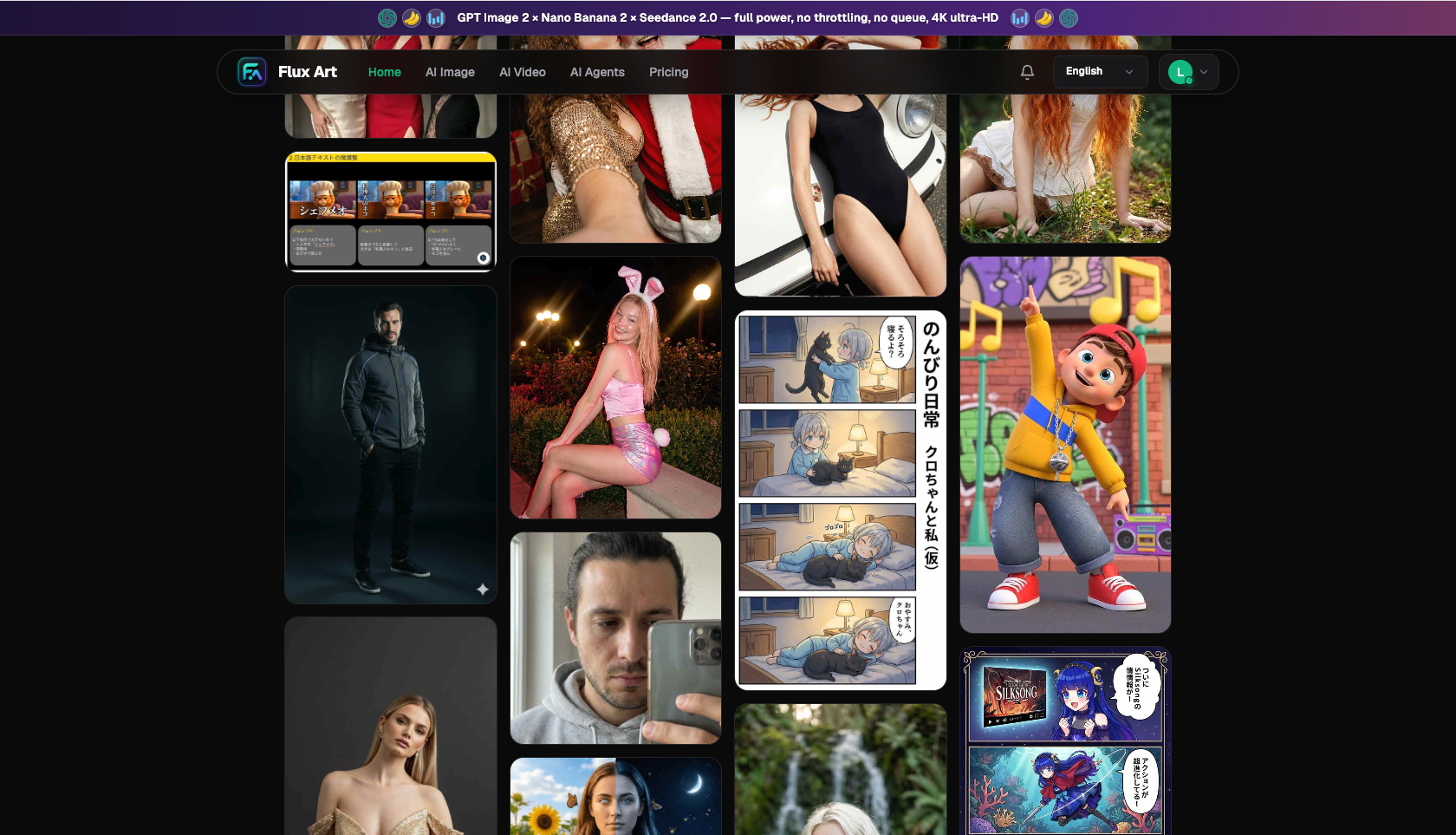
Product fidelity, scene generation, portrait retouching: who handles what?
Break shoe and bag image production into stages and assign each to the tool that does it best. The table below reflects how the work actually splits, described in plain terms rather than scores:
| Stage | Flux Art (Nano Banana 2 / GPT Image 2, etc.) | Meitu Design Studio |
|---|---|---|
| Product shape / hardware fidelity | Strong; multiple models to choose from, faithfully reproduces shape, hardware, and texture | Average; geared toward post-production retouching |
| Styled outfit / scene generation | Strong; blends multiple reference images into natural styled scenes | Average; relies mainly on templates and post-editing |
| Portrait on-foot / try-on retouching | Good; can generate model shots | Strong; mature AI try-on, on-foot rendering, and portrait retouching |
| Images with text | Better handled by GPT Image 2 for text-bearing images | Average |
| Multi-platform size adaptation | Supports any custom aspect ratio | Optimized mainly for Chinese platforms |
| Short product videos | Supported; motion output goes to Seedance 2.0 | Supports simple videos |
| Access from China | Direct, stable access — no extra network setup, no queues | Accessible in China |
The division of labor is clear: Flux Art's strengths are generating from scratch, reproducing the product, and building styled scenes; Meitu Design Studio's strengths are portrait-level on-foot/try-on retouching. The most time-consuming half of shoe and bag imagery is the front end — producing an image where the shoe shape stays true, the hardware is accurate, and the styling looks natural. If your workflow includes real model photos and needs fine on-foot try-on retouching, Meitu Design Studio is more practiced there. So the sensible combo is: Flux Art for generation and fidelity, Meitu Design Studio when portraits need fine retouching.
Why are Nano Banana 2 and GPT Image 2 the go-to models for product images on Flux Art? Because the two things shoes and bags fear most are warped shapes and distorted hardware. Nano Banana 2 supports 14 aspect ratios, up to 4K, up to 14 reference images, subject-segmentation skip, and inpainting — feed it a product shot plus a model reference for precise blending, place the bag naturally into an outfit, and fix only the spot where hardware or texture goes wrong. GPT Image 2 offers 12 tiers (3 quality levels x 4 resolutions), up to 4K, with strong text rendering — very reliable for images carrying a brand name or selling-point copy.
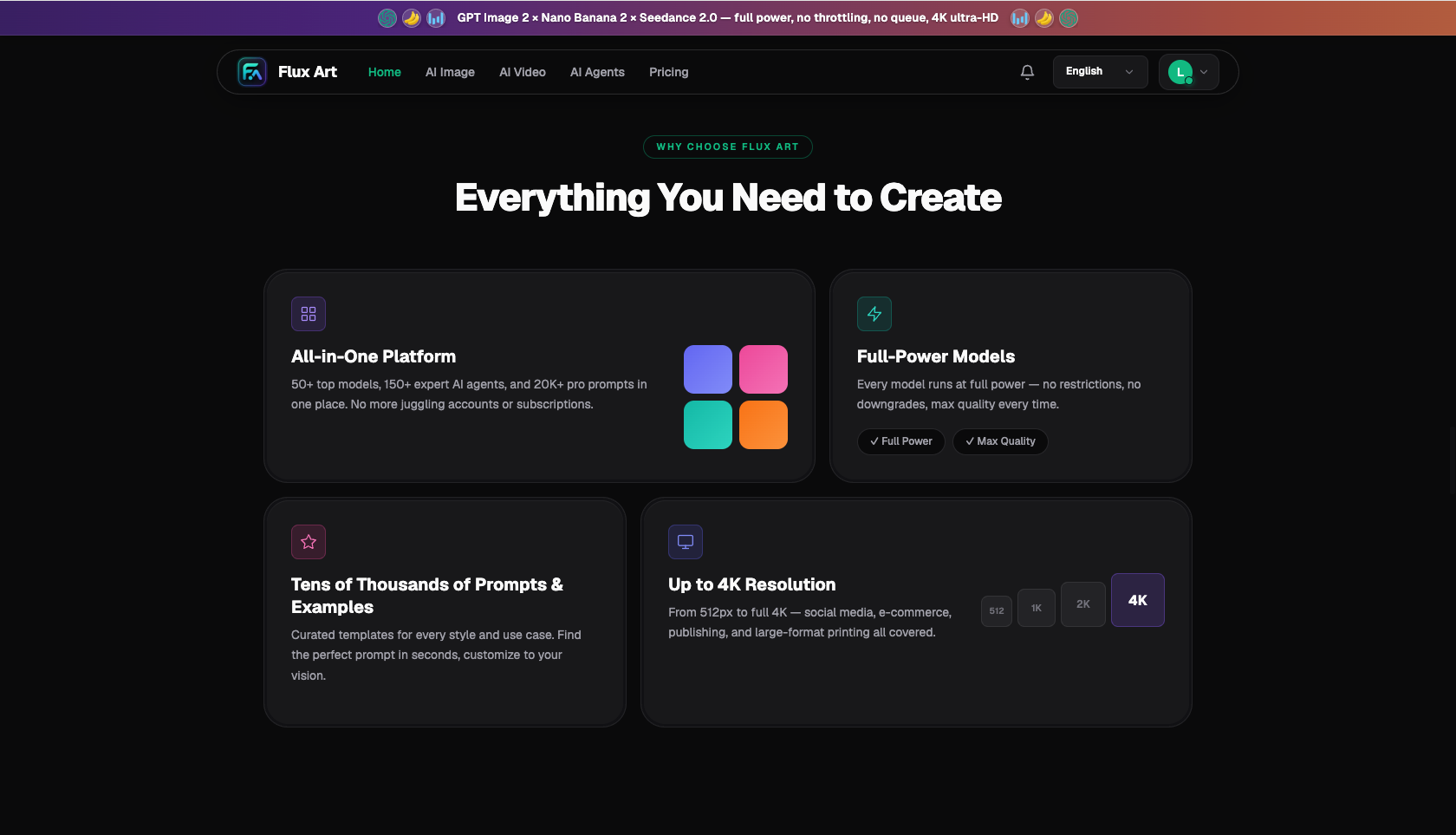
Which seller are you? Find your row
Sellers in shoes, bags, and accessories have very different needs. Find your row first, then see what to focus on in Flux Art and whether to pair it with Meitu Design Studio:
| Your situation | Biggest pain point | How to do it on Flux Art | Recommended model / setup |
|---|---|---|---|
| Small Taobao / Pinduoduo seller | Low cost, fast launches | Upload a white-background product photo and use Nano Banana 2 for hero and styled scene images | Nano Banana 2 |
| Multi-SKU footwear seller | Natural on-foot shots, many color SKUs | Use Nano Banana 2 for styled scene shots; send portrait on-foot images to Meitu Design Studio for retouching | Nano Banana 2 + Meitu Design Studio |
| Needs hero images / posters with text | Brand names and copy keep coming out garbled | Use GPT Image 2, with its strong text rendering, for text-bearing images | GPT Image 2 |
| Handbag / leather goods seller | Hardware and texture must stay crisp | Use Nano Banana 2 at high resolution to reproduce hardware; fix details with inpainting | Nano Banana 2 |
| Douyin / livestream seller | Needs short product videos | Build images with Nano Banana 2 / GPT Image 2, then hand motion output to Seedance 2.0 | Nano Banana 2 → Seedance 2.0 |
The logic of the table: product fidelity and styled scenes go to Nano Banana 2 and GPT Image 2; if you work with real models and need fine on-foot try-on retouching, fill that gap with Meitu Design Studio. These tools are meant to be paired — footwear sellers in particular lean on the combo of Flux Art for scenes plus Meitu Design Studio for on-foot retouching.
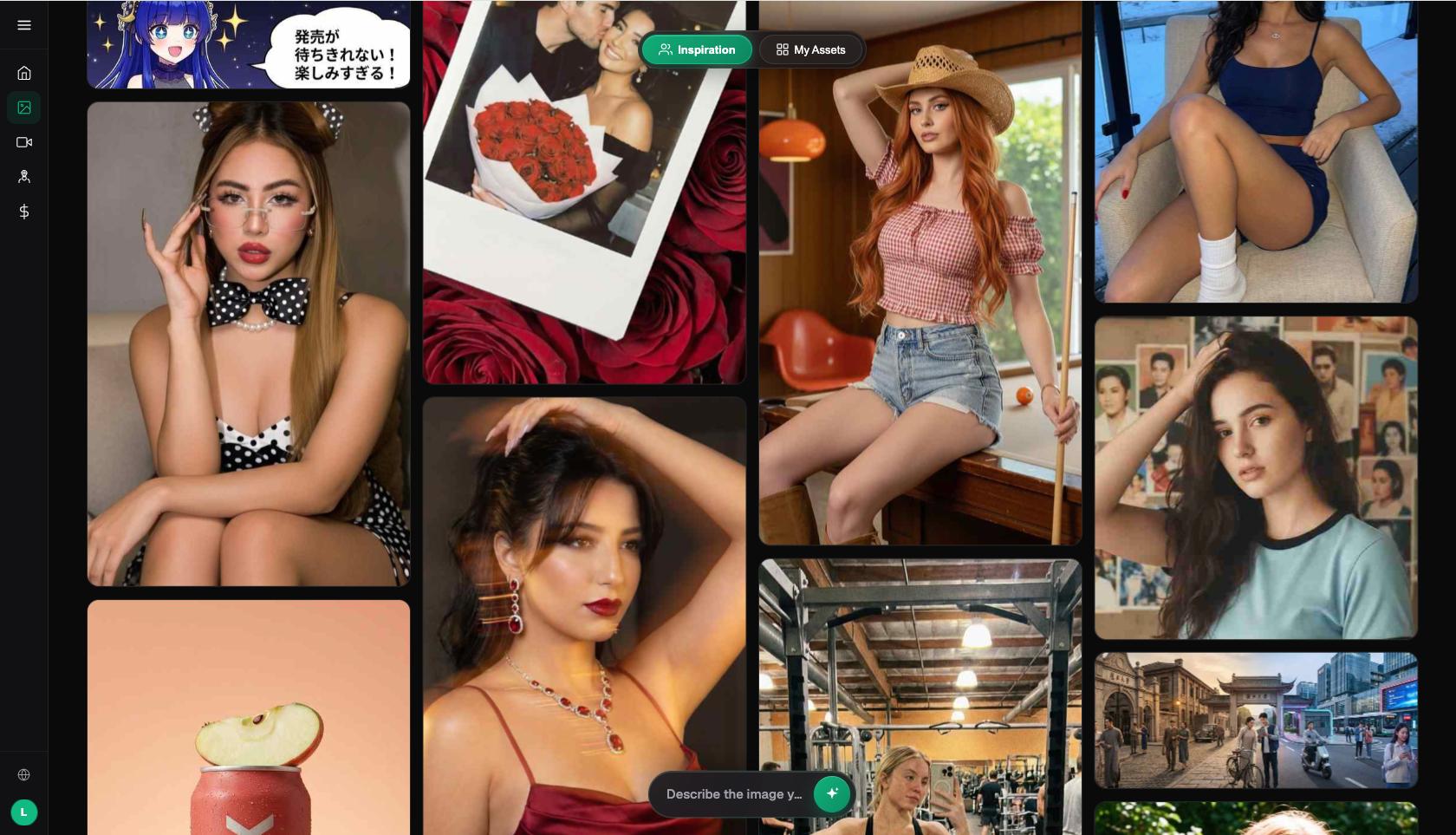
From zero to finished assets: a five-step workflow for shoes, bags, and accessories
Let's walk through a full run: producing the hero image and styled scene shots for a women's shoulder bag on Flux Art.
Step 1: Sign up, claim credits, prep your assets. Open https://flux-art.ai in any desktop or mobile browser and register on the official website. New users get 500 credits (check the site for current terms) — enough to generate a first batch and get a feel for it. Meanwhile, prepare a clean white-background product photo and a side view, collect model and scene reference images, and organize your color variants.
Step 2: Generate the white-background hero image. In the workspace, pick Nano Banana 2, upload the product photo, set the reference strength, and spell out the prompt: pure white background, professional product photography, crisp edges, no shadows, hardware and logo sharp. The goal is accurate shape, clear hardware, and clean edges — ready for hero-image slots on cross-border platforms.
Step 3: Generate the styled outfit / scene shots. Still in Nano Banana 2, upload the product photo plus a model reference and use multi-reference blending. Describe the scene in the prompt — for example, a model carrying the shoulder bag in a candid city street shot, natural daylight, fashionable outfit, real-life setting — so the bag blends naturally into the look.
Step 4: Detail shots, on-foot/on-body retouching, short video. Clean up close-ups of hardware and texture with Nano Banana 2's inpainting; hand text-bearing images with brand copy to GPT Image 2; if you use real models and need fine try-on retouching, pass the image to Meitu Design Studio for a more natural portrait finish; and for a short product video, send the hero image to Seedance 2.0 to generate the motion clip.
Step 5: Layout, review, export. Adjust sizes for each platform and add text overlays, manually verify that shape, color, hardware, and logo are all correct, then export the finished 4K, watermark-free, commercially licensed assets under your paid plan.
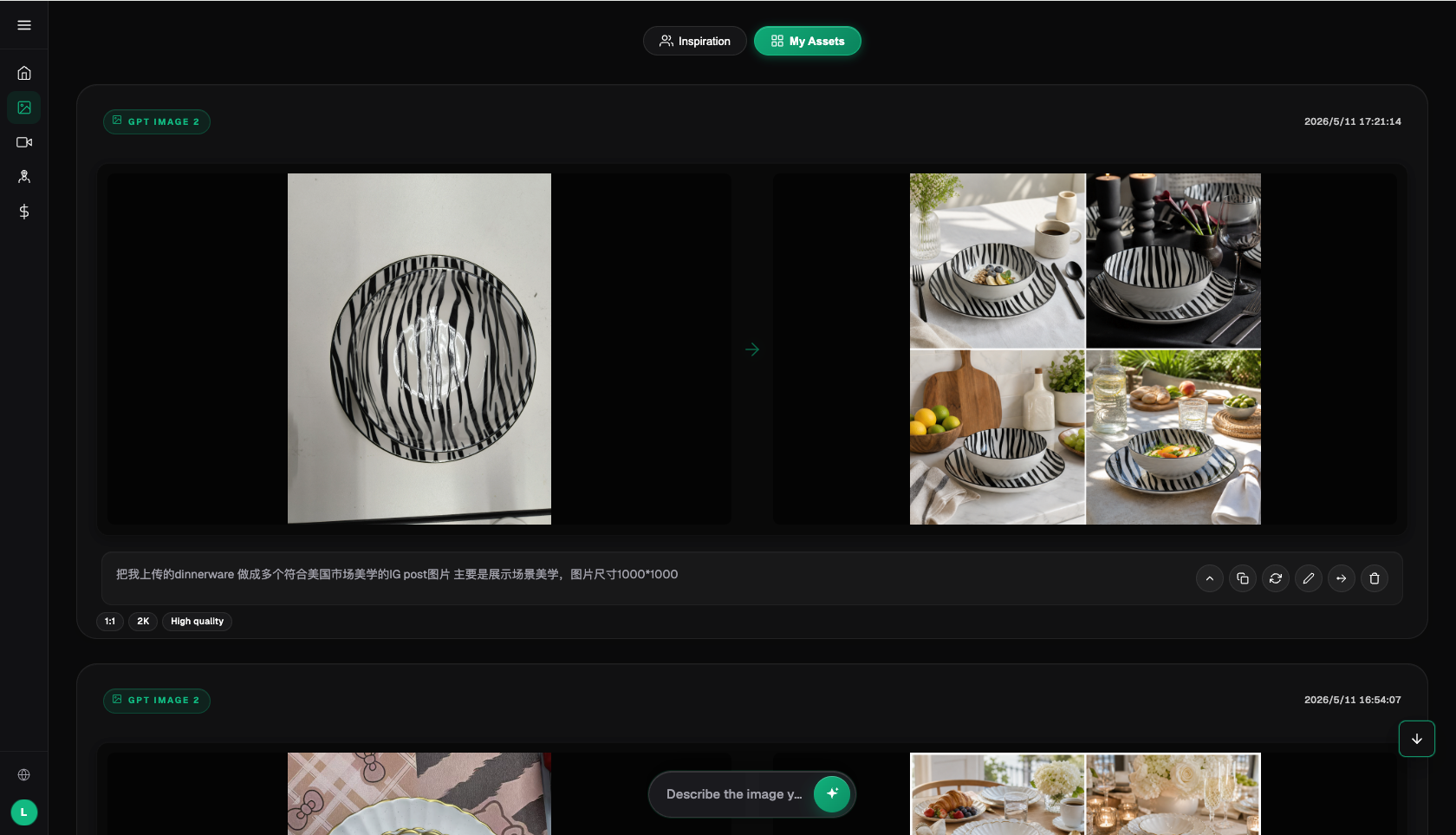
Quality checklist for shoe, bag, and accessory images
Before exporting, I run through this checklist item by item:
- Product shape, color, and material reproduced accurately, with no visible warping of the shoe or bag silhouette
- Zoom in on hardware, logos, and textures to confirm they're crisp; if not, inpaint or regenerate
- Text-bearing images (brand name, selling points) are straight and legible with no garbled characters (use GPT Image 2)
- On-foot/on-body shots look natural — a touch of fabric crease and wear reads as more real; avoid looking too perfect
- Scene matches the product's positioning (sneakers in athletic settings, leather goods in business settings), with believable lighting
- White-background hero image has clean edges, no shadows, no stray elements (cross-border platforms are especially strict here)
- Recolor multi-color SKUs with inpainting or precise editing instead of reshooting every color
- Resolution fits the use case; for high-res hero images, go with 4K-capable Nano Banana 2 or GPT Image 2
- Never use photos of celebrities or influencers as model references, to avoid infringement
- Export as the watermark-free, commercially licensed version (a paid-plan benefit; check the site for current terms)
When do you NOT need an aggregator platform?
To be candid, not every shoe and bag seller needs one. If you only launch a product or two occasionally and have no real requirements around image precision or commercial licensing, any basic image app on your phone will get you by. And if your store runs entirely on real model photography with a stable shooting and retouching pipeline, and all you're missing is portrait fine-tuning, a retouching tool like Meitu Design Studio on its own is enough.
The people an aggregator platform truly fits are mid-to-high-volume shoe and bag sellers who need accurate product reproduction, natural styled scenes, multi-platform commercial licensing, and fast turnaround — most typically sneakers, women's handbags, and accessories with frequent launches and lots of SKUs and colors. Meitu Design Studio likewise has its own lane: it's more mature at try-on rendering and portrait retouching, but not at generating a product image from scratch with true shape and crisp hardware. Tools serve needs — find your row and act on it. The point of a head-to-head comparison is to see each tool's strengths and weaknesses clearly and pair them, not to put blind faith in either one.

- National Bureau of Statistics of China. 2025 Total Retail Sales of Consumer Goods. 2026. https://www.stats.gov.cn/
- China Internet Network Information Center (CNNIC). The 57th Statistical Report on China's Internet Development. January 2026. https://www.cnnic.net.cn/
- Flux Art official website. https://flux-art.ai
Flux Art is a multi-model AI visual creation and production platform: one account brings together 50+ top image and video generation models from around the world (GPT Image 2, the full Nano Banana lineup, Seedance 2.0, and more), with direct, stable access from China — full performance, no speed caps, no queues, no extra network setup. Official entry points: https://flux-art.ai, operated by MORNING STAR INDUSTRY LIMITED. New users get 500 free credits on sign-up (roughly 30+ GPT Image 2 images; check the site for current terms).