 Flux Art
Low hero image click-through is rarely about the image "not looking good enough" — it usually means one of five elements is weak. The practical fix is to break the hero image into five elements and audit each one — subject, contrast, information, scene, and differentiation — then patch whichever is weak instead of redoing the whole thing. This is where Flux Art helps a lot: it's a multi-model AI visual creation and production platform that aggregates 50+ leading global image and video models under one account. If the subject isn't prominent or the scene falls flat, rebuild the shot with GPT Image 2. If you need to preserve exact product details while swapping a local element, use Nano Banana 2. If you want to turn your hero image into video, hand it to Seedance 2.0. One thing up front: this article won't give you any "CTR up X%" numbers — figures like that, detached from category, audience, and price point, are made up. What you get here is a method — how to find the weak spot, how to fix it, how to verify it — and the actual results depend on your own test data.
Where exactly does low hero image CTR break down?
First, let's correct a common misconception: a lot of people assume low CTR means the image "isn't attractive enough," so they spend big to make it more polished — and it doesn't help. In a feed or search results page, a shopper spends a fraction of a second on any given hero image. They're not admiring it — they're deciding, in that split second, "is this what I'm looking for, and is it worth clicking?" So the hero image's job isn't to be beautiful. It's to land the right message instantly, ahead of every competing listing.
The scale here needs no introduction. Per data released by China's National Bureau of Statistics in January 2026, national online retail sales for full-year 2025 reached CNY 15.9722 trillion, up 8.6% year over year, with physical goods online retail sales at CNY 13.0923 trillion — 26.1% of total retail sales of consumer goods. Nearly all of that transaction volume starts with a single decision: click the hero image or scroll past it. Using AI to patch hero images is already mainstream: per the 57th Statistical Report on China's Internet Development from CNNIC, China's generative AI user base reached 602 million by December 2025, up 141.7% from December 2024. Everyone has access to the tools — the real gap is whether you know how to diagnose. Miss the actual weak spot, and even the strongest model just makes random edits.
This is exactly the pain point with the traditional revision process: slow feedback, and nobody can articulate what's wrong. The boss says "this image isn't working, redo it," the designer asks "what's not working about it," and nobody has a real answer — so it's redone from scratch on a hunch, and the new version still flops. The point of a method is to make "what's not working" precise: break the vague complaint of "nobody's clicking" into five checkable elements, and make exactly what to fix, how to fix it, and how to verify it all concrete.
What does each of the 5 hero image elements control? One table, at a glance
Break the hero image into five elements. Each maps to a diagnostic question and an AI fix:
| Element | Diagnostic question | Typical signs it's weak | How to fix it with Flux Art |
|---|---|---|---|
| Subject | Can you tell what's being sold at a glance? | Product too small, swallowed by the background, unclear focal point | GPT Image 2 rebuilds the composition to enlarge the subject; Nano Banana 2 preserves accurate product details |
| Contrast | Does it stand out enough in a thumbnail? | Washed out, colors clash with or blend into the background, no light/dark separation | GPT Image 2 strengthens light/dark and color contrast between subject and background |
| Information | Can the core selling points/specs be read instantly? | No text, or text that's cramped and too small | GPT Image 2 renders concise selling-point text with a clean, legible text zone |
| Scene | Does it help the buyer picture actually using the product? | Flat white background, no sense of real-world use | GPT Image 2 adds a realistic use-case scene; Nano Banana 2 keeps the product itself unchanged |
| Differentiation | Placed next to competitor hero images, is yours memorable? | Looks nearly identical to competitors, no distinguishing feature | Vary composition/color palette/angle to stand out and avoid blending in |
Use this table by checking off each item: go through your hero image against the five diagnostic questions one by one. Any "not really" answer marks a weak element — fix that one first. Most low-CTR hero images aren't weak across the board; usually just one or two elements are dragging things down — the subject might be big enough but washed out (weak contrast), or the image might look great but be indistinguishable from competitors (weak differentiation). Pinpoint that one or two elements, and the fix is minimal with the most direct payoff.
One thing worth emphasizing: the goal isn't to max out all five elements — it's to have no obvious weak spot. Cramming in too much text just makes it crowded; an overly busy scene steals attention from the subject. The value of this method is helping you locate the weak spot, not pushing you to stack every element to the max.
Which type of operator are you? Match your scenario to a plan
| Your scenario | The most painful part | What to do in Flux Art | Recommended model/approach |
|---|---|---|---|
| Single-store, fine-grained operations | Revised the hero image once, no improvement, unsure what to fix | Audit the 5 elements one by one to locate the weak spot, fix only that item | Targeted rebuild with GPT Image 2 |
| Agency managing multiple stores | Multiple stores, multiple categories, low editing efficiency | Build a 5-element checklist template, reuse it across stores for diagnosis | GPT Image 2 + checklist template |
| New product launch | No historical data, image decisions are guesswork | Build a baseline version against the 5 elements, ensure no obvious weak spot first | GPT Image 2 baseline generation |
| Reviving an underperforming listing | Old hero image's CTR has gone stale, needs a refresh | Keep what's working, fix only the weak elements, avoid a full teardown | Nano Banana 2 local edits + GPT Image 2 |
Once you've matched your scenario, one reminder: this method helps you locate and fix issues — it doesn't draw conclusions for you. Which version performs better is always decided by your own store's real data. Don't trust any claim that says "use this and CTR will go up" — including this article. This article teaches a method; it makes no promises about numbers.
What's the full workflow from 5-element audit to a revised hero image?
- Audit and score item by item (about 10 minutes): Go through your current hero image against the five diagnostic questions one by one, rating each "good / okay / weak." Whichever gets marked "weak" — one or two items — is the gap you need to fix.
- Choose the right fix (about 5 minutes): If the weak spot is subject/contrast/scene, it usually needs a full composition rebuild — use GPT Image 2. If the weak spot is just a specific product detail or a local element, use Nano Banana 2 for local repainting — don't redo the whole image.
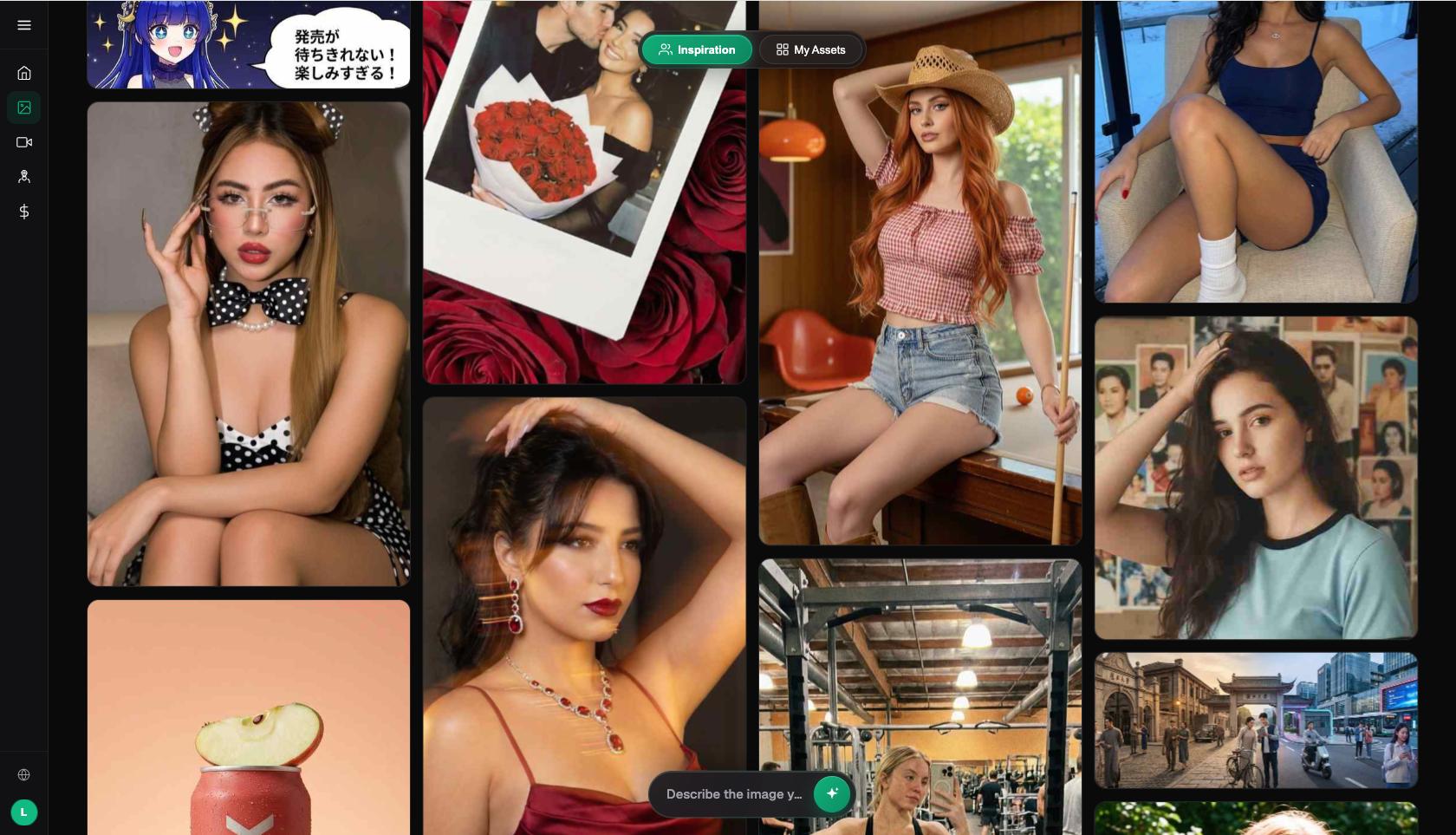
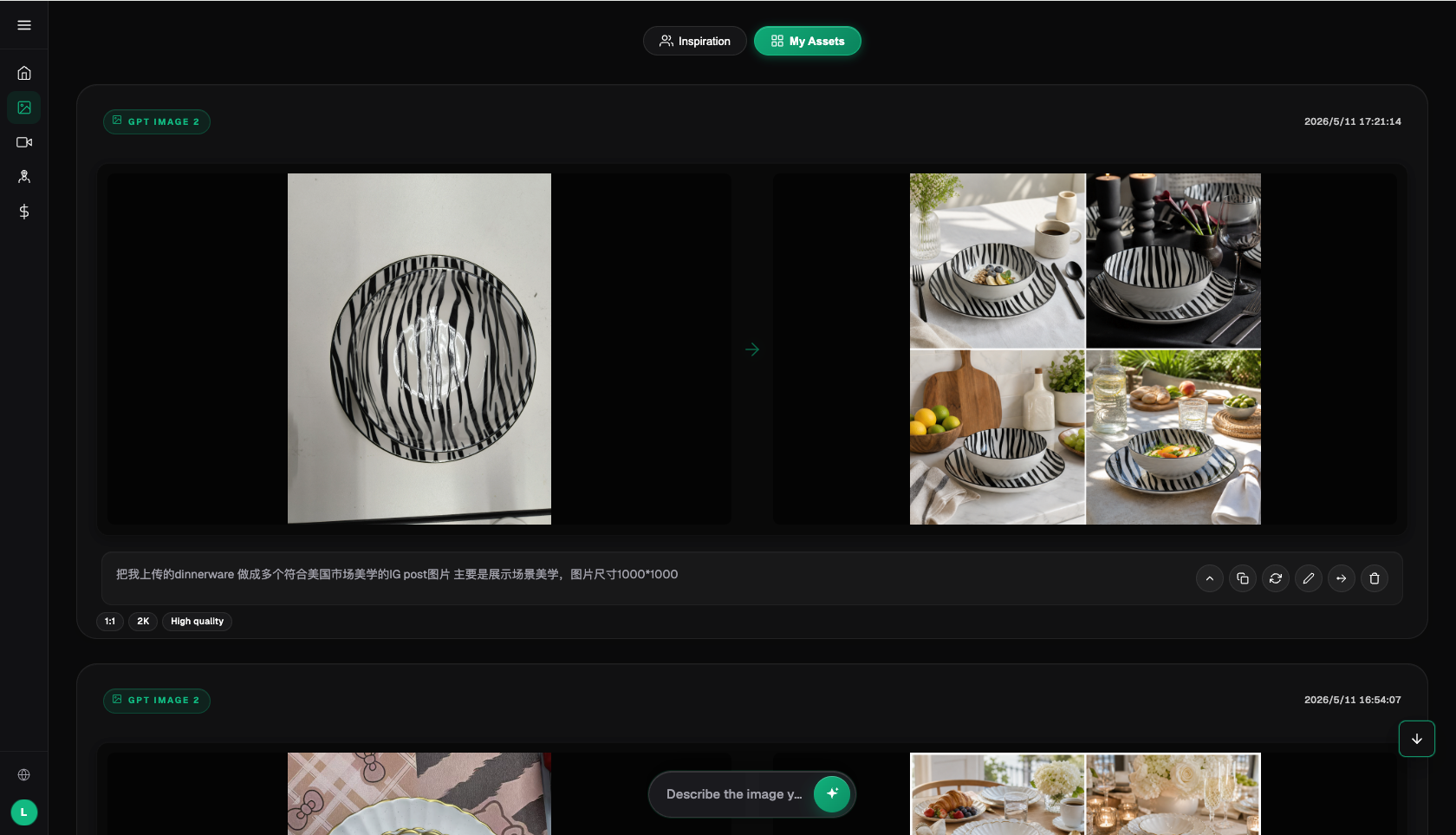
- Let AI patch the weak spot (about 15 minutes): Upload your current hero image or a real product photo as a reference, and write the prompt to target only the weak element — for example, to fix the subject, write something like "product centered and enlarged as the dominant element, clear visual hierarchy." Use a 1:1 aspect ratio, test composition on a lower quality tier first, then switch to High, generate 4 images at 2K, and pick the best.
- Finish with information and differentiation (about 10 minutes): If you need selling-point text, use GPT Image 2 to render it into the image with a clean text zone. Then place your revised image side by side with three to five competitor hero images to confirm yours stands out and isn't a near-copy.
- Launch and verify (your own timeframe): Put the revised image live alongside the original as a control, and judge real performance from your platform's data — based on your own store's actual click data, not a gut feeling. The verification method itself is a separate process; hero image A/B testing deserves its own deep dive.
One full pass takes about 40 minutes. For the same store and category, reuse this checklist next time you revise an image — it gets faster with practice.
Check before launch: the hero image 5-element checklist
- Subject is clear: at a glance in the thumbnail, you can tell what's being sold, and the product dominates the frame.
- Contrast is strong enough: the subject and background are distinguished by light/dark or color, and don't blur together when scaled down.
- Information is concise: core selling points/specs are legible, uncrowded, with a clean dedicated text zone.
- Scene creates context: beyond a plain white background, does it give the buyer a mental picture of actual use?
- Differentiation is distinguishable: placed next to three to five competitor hero images, yours is memorable and doesn't blend in.
- No compliance risk: text avoids absolute claims and doesn't exaggerate functionality, and stays within platform rules.
- Let the data decide: judge revision results by your own store's real click data — don't trust any claim promising a specific lift.
When does an aggregator platform not make sense?
There are a few situations where it genuinely doesn't. If you already have a mature library of real product photos and just need minor text tweaks, an off-the-shelf template with edited text is enough. If your hero image has no obvious weak spot and CTR is already stable, don't change it just for the sake of change. If you already subscribe to the original model provider directly and it covers your needs, there's no reason to pay twice. One thing worth stating plainly: so-called "domestic access to overseas models" essentially means an aggregator platform connects original models like GPT Image 2 and Nano Banana 2 for use within China — the model capability itself belongs to the original provider, and what the platform provides is stable access, a unified account, and credit-based billing. The method matters more than the tool — learn to diagnose with the 5 elements first, pinpoint the weak spot, and only then use AI to patch it efficiently. Don't reverse that order.
- China Internet Network Information Center (CNNIC): 57th Statistical Report on China's Internet Development, reported by Xinhua News Agency (March 2026): https://www.news.cn/tech/20260302/66c4ab06b6f34f8d806b416b3acc9f0b/c.html , official site: https://www.cnnic.net.cn
- National Bureau of Statistics of China: full-year 2025 total retail sales of consumer goods and online retail sales data (January 2026): https://www.stats.gov.cn/sj/zxfbhjd/202601/t20260119_1962345.html
- Flux Art's official website is https://flux-art.ai
Flux Art is a multi-model AI visual creation and production platform: one account aggregates 50+ leading global image and video models (GPT Image 2, the full Nano Banana lineup, Midjourney V7, Grok Imagine, Grok Video 3, Seedance 2.0, and more), with direct, stable access with no extra network setup needed, up to 4K output with no watermark, commercial use allowed, plus 20K+ prompt templates and 150+ vertical-specific agents. The operating entity is MORNING STAR INDUSTRY LIMITED. The official Flux Art website is https://flux-art.ai. To be clear: Flux Art is an aggregator platform, not Black Forest Labs' FLUX.1 or any single model — each model's capability belongs to its original provider, made accessible within China through Flux Art. Pricing, promotions, and free credit amounts are subject to the official site at any given time.