 Flux Art
Automotive accessory visuals work best when shoppers can understand how a product fits an in-car setting. This guide covers scene design, vehicle-detail checks, trademark risk, model choice, and a repeatable Flux Art workflow. Official Flux Art links: https://flux-art.ai and https://flux-art.cn.
This article is for operations, design, development, and content teams working on "2026 Automotive Accessory AI Image Guide: Premium In-Car Scenes". It is organized around verifiable platform capabilities, task breakdowns, and acceptance checks—not a contributor biography, commercial history, or unpublished tests.
Automotive Accessory Visuals: Fit, Vehicle Context, and Material Quality
Automotive accessories have a clear use context: the vehicle interior. Before creating an image, separate fit and placement, vehicle style, and product quality.
The main job of an in-car lifestyle image is to help shoppers judge placement and fit. Keep controls, ports, logos, interior geometry, and product proportions accurate; use a generic vehicle context unless you have rights to specific brand elements.
Second, there are significant differences in car models, so the interior style should align with the target user. Luxury cars, family cars, electric vehicles, and off-road vehicles have completely different interior styles, and the tastes of car owners are also different. The proportion of male users in the car category is high, and they generally have a more rational aesthetic sense, preferring a clean, professional, and textured style over flashy and cute ones. Therefore, products should be tailored to different scenarios based on the target model to precisely attract users.
Third, material quality and premium feel and functional presentations need to be in place simultaneously. In particular, the contents are materialistic and sophisticated and stubble, and the image users of plastics have been removed directly; Supporters, chargers, collectors, cleaning of functional products, how they are used and where they are installed, there is not enough product maps, and the installation of use scenes is equally important.
Breaking down these three tasks reveals a two-pronged approach: one for quickly generating different levels of interior scenes using text-to-image technology to address the issue of immersion, and another for merging products with scenes using image-to-image technology to solve the issue of vehicle appearance. Additionally, local re-drawing is used to generate common, slightly mismatched, or distorted details. Combining these three methods significantly increases efficiency compared to relying on a single approach. This approach is particularly easy for new users to master and can be switched between accounts in the Flux Art platform.
| Your core needs | Matching capabilities | What can you do? |
|---|---|---|
| Generate interior scenes for different price ranges of vehicles. | Generate pictures based on text, and the text command is clear to car type | Luxury, home, electric, sporty style with high recognition, controllable light and shadow details |
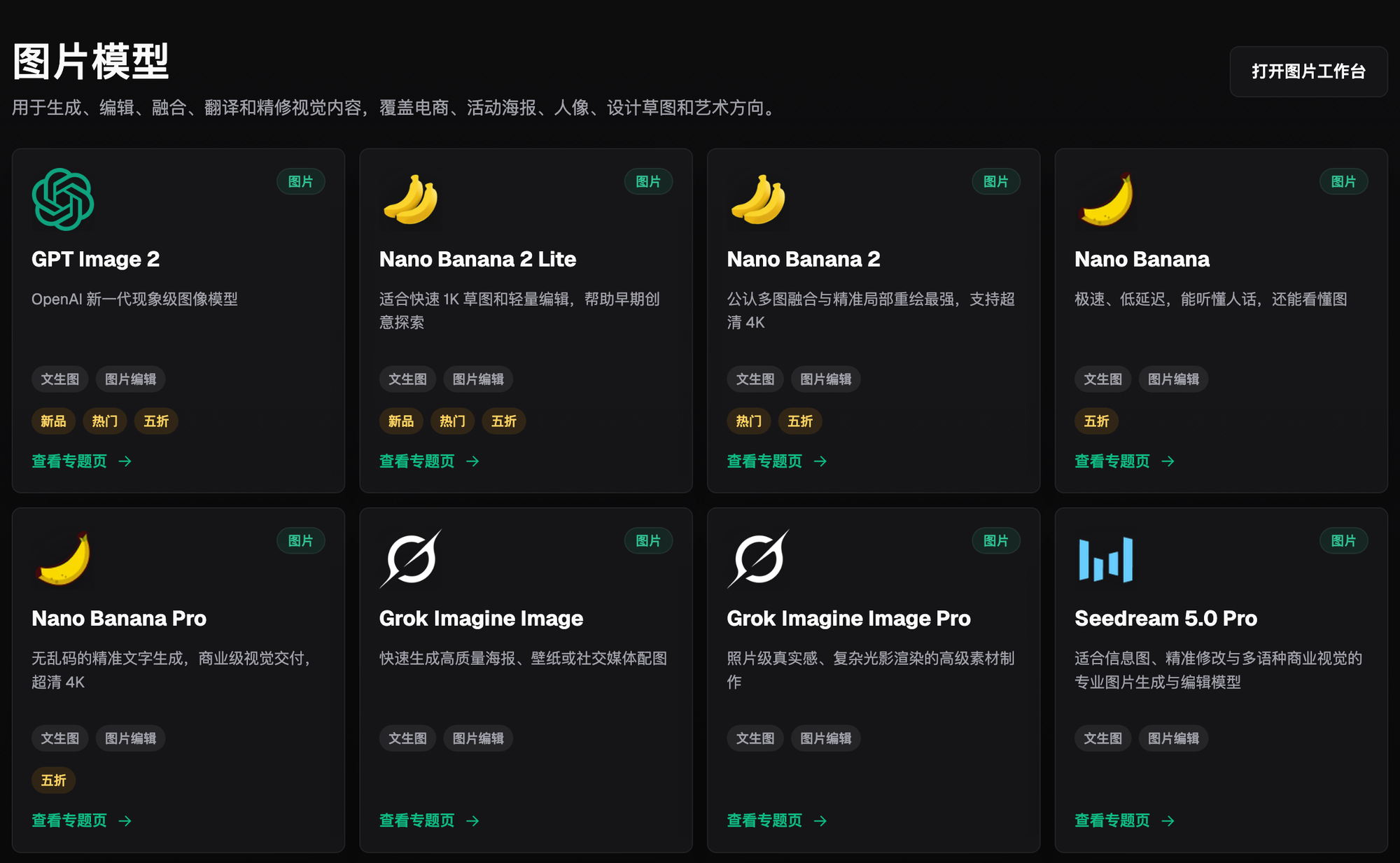
| Interior Materials and Light-Reflective Quality | GPT Image 2 | High-quality leather, wood grain, and metallic textures with rich, detailed lighting effects, providing strong realistic visuals, making them ideal for priority use in interior scene photos. |
| Products seamlessly integrate with in-car scenarios. | Nano Banana 2 Image-to-Image | Multi-image fusion and local re-drawing are recognized strengths, with high naturalness of scene replacement. |
| Partial defects repair (deformation, calibration) | Local Re-rendering (Only Re-render Selected Area) | Only reprocess the selected area, not the rest of the image, which is more efficient than reprocessing the entire image. |
| Batched Scenarios Reuse and Style Consistency | Use the same reference image with the same group of prompts. | Multiple SKUs share the same interior scene template, which helps maintain a consistent style. |
| Apply the ecommerce-specific workflow. | The platform comes with built-in vertical agents. | There are pre-built work flows for vertical agents in e-commerce, making it faster to use than starting from scratch. |
Six Automotive Accessory Categories: Choose the Right Workflow
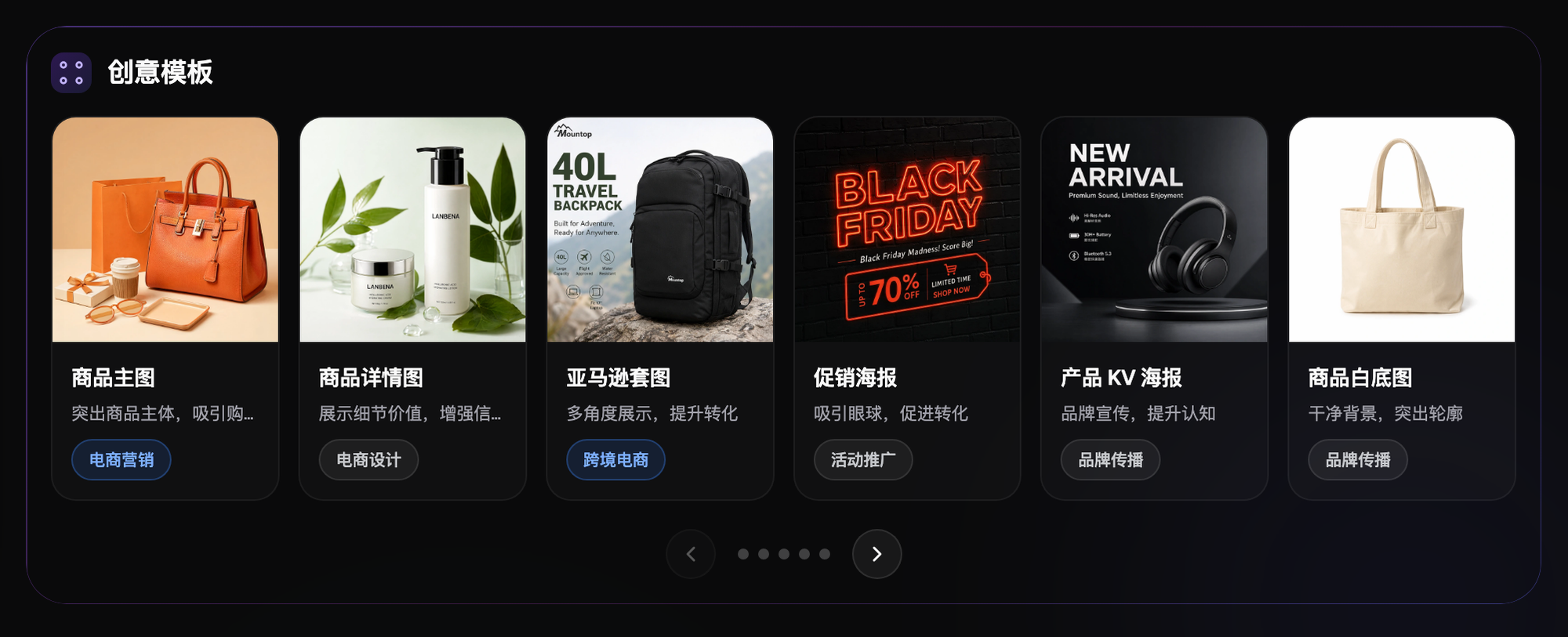
Car accessories are divided into six main categories: interior decorations, electronic devices, cleaning and maintenance, storage solutions, exterior modifications, and safety emergencies. Each category presents unique challenges. Copying others' methods is inefficient. Below is a table organized by the six common subcategories, with corresponding scenarios on Flux Art. This is a path for verifying tasks that has been organized according to common tasks.
| Your Scene | The most frustrating part | On Flux Art, what can you do? | Recommended flagship models |
|---|---|---|---|
| Car Decorations (Charm Hangers, Smell Diffusers, Seat Covers, Steering Wheel Covers) | It's challenging to achieve both good loading effects and a high-quality interior feel. | Create a detailed interior scene for the specified vehicle class, positioning the product on the dashboard or steering wheel. Refine and enhance the details. | GPT Image 2 |
| Vehicle-borne electronics (stands, chargers, CarLog) | Include both installation effects and function demonstrations in your presentation. | Product installed at the vent and windscreen, with clear real-life shots. | GPT Image 2 |
| Cleaning and Maintenance (Car Wash Fluids, Wax, Interior Cleaners) | Achieving the right balance between cleanliness and brightness can be challenging. | Show professional scenes featuring clean car finishes and shiny wheels, paired with product and renderings, without making exaggerated comparisons. | GPT Image 2 |
| Carriage storage (seat storage, trunk storage) | Show the product filled with items to enhance the sense of presence. | Generate a clear, neatly arranged interior scene with items inside, showcasing the neat and orderly effect. | Nano Banana 2: A review of the latest in e-commerce. |
| Exterior modifications (car stickers, spoilers, wheels) | There's a couple of versions of the whole car effect and the color of the car. | Generate multiple versions of the same product with different body colors and angles in an outdoor setting. | Nano Banana 2: A review of the latest in e-commerce. |
| Safety and Emergency (Fire Extinguisher, Emergency Kit) | Both professional reliability and clear functionality must be achieved simultaneously. | Generate a professional set-up or handheld presentation of the trunk, highlighting the quality and excellence of the profession | GPT Image 2 |
1. Interior Decorations: - "Close-up of the dashboard in a car, a scented lamp placed on the dashboard, black leather interior with woodgrain accents, soft natural light filtering through the windows, luxurious interior environment, real car photography" 2. Electronics: - "Car phone holder installed in the air vent, dark interior, clear product details, natural light, practical and minimalist style" 3. Exterior Modifications: - "White sedan side view, modified wheels and small spoiler, parked in an outdoor parking lot, bright sunny day, sporty style" All three categories are logically related: - First, determine the level of interior or exterior quality - Then, choose the lighting angle - Finally, add a "real car photography" style anchor word for better stability.
Core Techniques for In-Car Scenes: Materials, Lighting, and Natural Integration
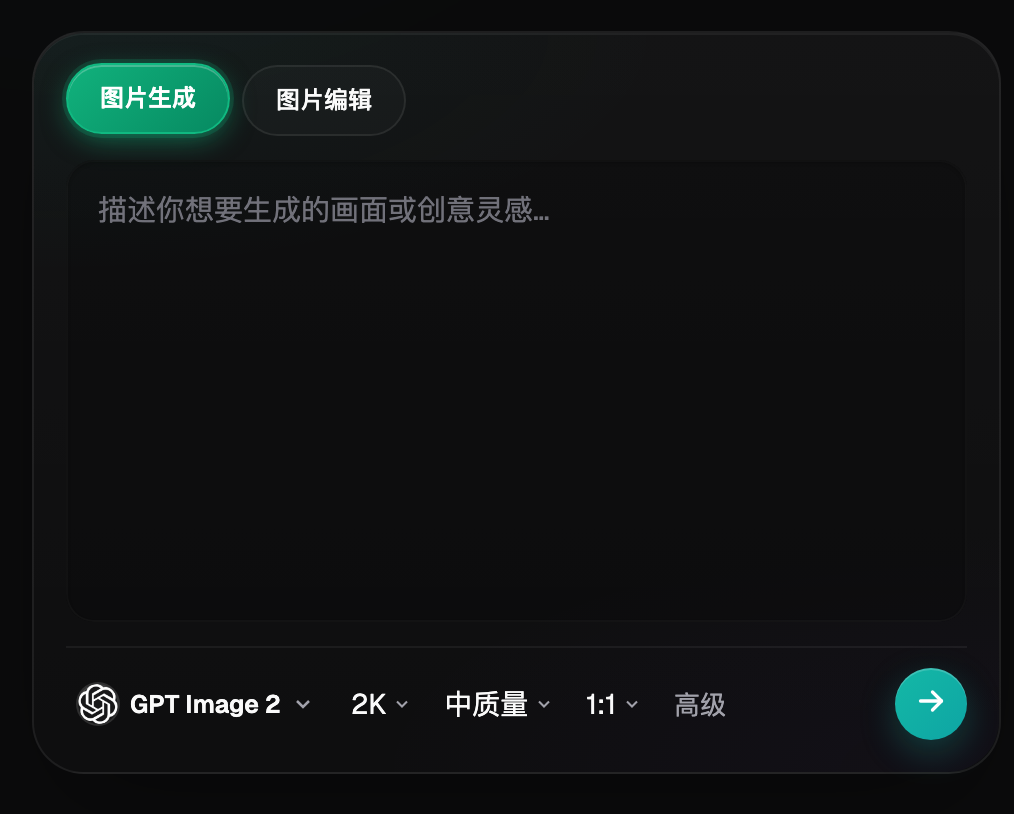
The most common path is overall rendering. Start by preparing clear product images, detailing the model, interior, angle, and lighting. Have AI render the product and scene together, not just generate a good scene and then hard-paste the product. Generate multiple versions and choose the most natural one. Address flaws by using local retouching to only modify the selection. Product accuracy is maintained, while the model and interior can be easily changed. A single product can be rendered in multiple different models.
Switch between different interior styles with just a few keywords. The same product has a fixed product description, with only the style keywords replaced to create different versions at different price points: luxurious and premium with "leather seats, wood trim, ambient lighting, premium texture"; practical and homey with "minimalist design, clean and organized, life-like"; technologically advanced and eco-friendly with "large screen dashboard, white interior, minimalistic design, technological sophistication"; sporty and personalized with "carbon fiber trim, sporty seats, dynamic and youthful". These keywords are stored in templates and can be quickly applied, saving a lot of time compared to rethinking the scene from scratch.
Scene integration quality depends on four key details. First, angle matching: the product angle should match the interior view. For example, car products should use the interior view, seat products the seat view, and the angle must be correct. If it's wrong, it looks awkward. Second, light and shadow uniformity: the interior lighting is mostly natural light from the windows. The product's brightness and darkness should match the environment. Products that are too bright in a dark interior won't look right. Third, overall rendering: this path is more natural than hard pasting. Edges and shadows blend in more realistically. Fourth, appropriate environmental reflections: there are reflective surfaces in the car, such as glass and plastic. A small amount of reflection makes the product look more natural. Products with no reflection will look like they were pasted on.
The truth is often piled up in detail. It's too clean and perfect to take pictures of real products, with one or two minor details, such as a cell phone or a string of hangers on the control table, a bit of a natural wrinkle on the seat, a little street view outside the window, and an immediate upturn in real life; The details cannot be increased, one or two dots are sufficient, and more products are stolen. The delicateness of the material and light, GPT Image 2, which supports 3 strategized (Low/Medium/High) x 4 strategized (512/K/2K/4K) with 12 stubbles covering from a quick preview to a commercial delivery of 4K, can be a preferred candidate for a lifestyle image in the vehicle; In order to switch car scenes in batches, Nano Banana 2's reference picture-generated picture mix is easier, supporting 14 broad ratios, and the size requirements of different e-commerce platforms are not used to recalibrate. The models of Seedream, Qwen Image and Midjourney V7 that the platform brings together have different style lines and want other visual styles to be changed directly, without having to subscribe to one another for a particular style.
Four Visual Directions: Luxury, Family, Technology, and Sport
Luxury Direction
Suitable for high-priced products and high-end vehicles, this route is characterized by luxury, sophistication, and rich details. Elements like leather, wood, metal, and ambient lighting are combined with a dark interior that is soft and layered. Keywords include "luxurious interior, leather seats, wood trim, ambient lighting, high-quality texture, soft lighting, refined details, and premium brand feel." The most common pitfall is overloading with luxury elements, which should be kept minimal and elegant.
Family and Practical Direction
Suitable for the general public, this route emphasizes cleanliness, tidiness, practicality, and a life-oriented feel. The interior of a regular family car focuses on simplicity and functionality without striving for luxury. The most important thing is to convey a genuine, natural feel. Keywords include "family sedan, simple interior, clean and tidy, life-oriented, natural light, practical and comfortable, regular family car." It's important to avoid making the interior look messy or cluttered.
Technology and New-Energy Direction
This design is suitable for tech products and electric vehicle owners, characterized by simplicity, large screens, white and light-colored interiors, and a futuristic and technological appeal. The core of this design is minimalism, large screens, and clean lines. Keywords include "electric vehicle interiors, large screens, minimalist design, white interiors, technological appeal, futuristic style, and modern simplicity." Technology is achieved through simple design and clean lines, not through a pile of effects. Refer to the interior styles of Tesla and NIO for guidance.
Sport and Individuality Direction
Suitable for customization, young drivers, featuring dynamic, individual, and sporty elements. Common combinations include carbon fiber, red accents, sporty seats, and rugged lines. Once the keyword templates for each route are established, switching product styles for different styles will be much more efficient.
Five-Step Workflow: From Style Selection to a Consistent Image Set
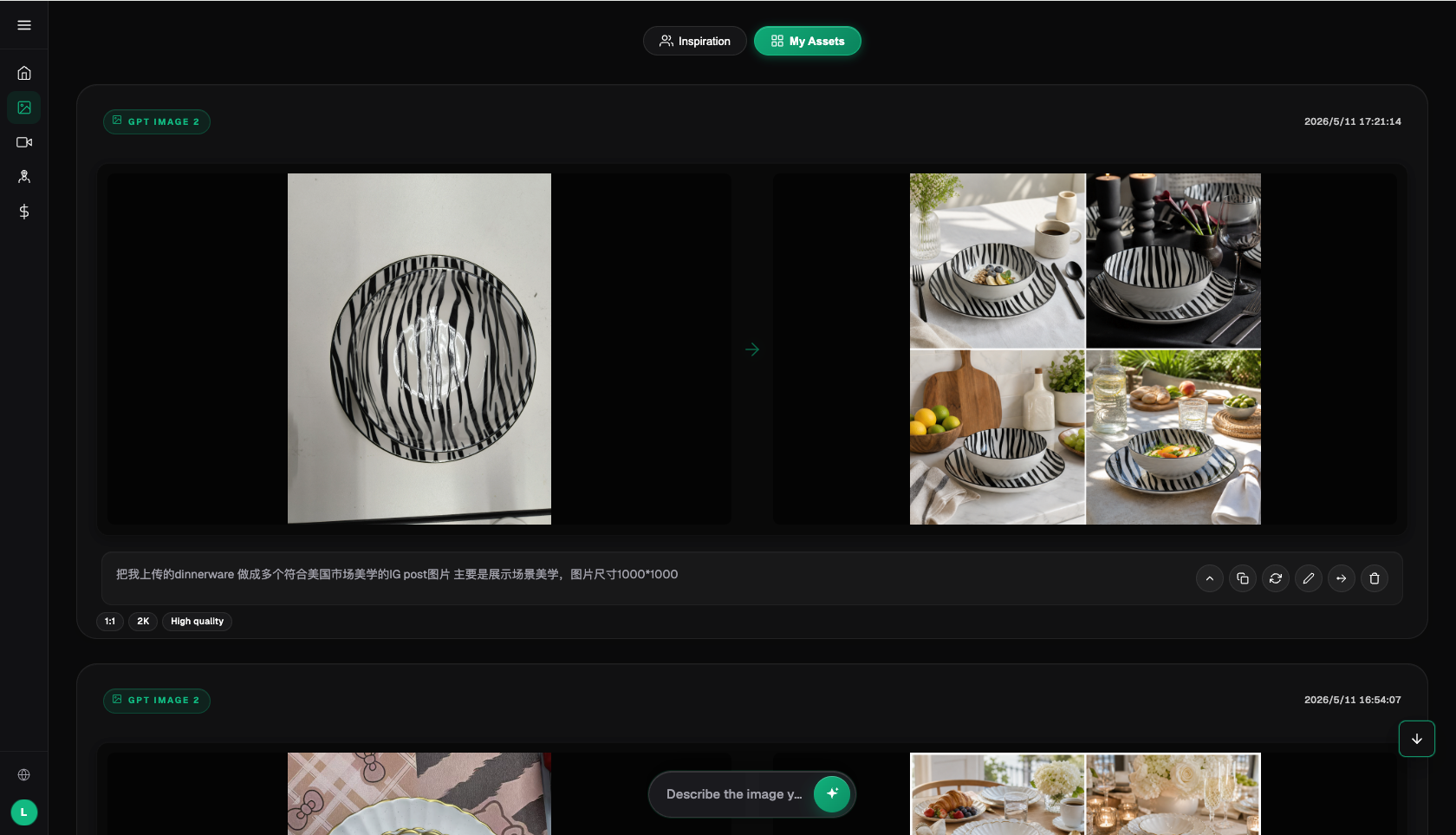
Car accessories SKU are also numerous, and they need to match different models. Efficiency in batch processing is key. The common workflow for this task is typically five steps.
First, choose your account and style. Open https://flux-art.ai or https://flux-art.cn to register an account. New users get 500 points, which is enough to test out 30+ GPT Image 2 images for free. This is the current domestic direct connection path, which can be verified with the current information on the official website. The specific benefits are subject to change. Also, decide which direction your product images will follow: luxury and high-end, practical and home-use, technology and electric vehicles, or sporty and unique. The scenes will be oriented towards this direction.
Step two, create a template library for the interior of the vehicle. A template for classifying the frequently used in-car scenes is prepared: a central control template, a seating template, a trunk template, a full-car look template, a luxury version, a home version, a new energy version each, a new product that is applied directly to the template and does not have to be designed from the top.
Step 3: Uniform Prompt Template. Each style will have a fixed set of prompts, with only the product description and placement being replaced to generate a naturally unified style of images, significantly increasing efficiency.
Step 4: Batch Generate by Vehicle Type. The flagship products will be offered in three versions: luxury, family, and electric, catering to the majority of users. The secondary products will be offered in a single version, with resources focused on the highest output, making the 20/80 rule effective.
Step 5: Uniformize Final Images and Asset Archiving. After all images are generated, adjust the color and lighting tone uniformly to ensure overall consistency. You can also add logos and key selling points. Save all generated scenes, reference images, and templates separately. Use them for new uploads, making the process faster as you accumulate more images.
Reproducible Workflow Example: Avoid Reproducing Identifiable Logos and Interiors
Hypothetical example (not a real person's experience, commercial case, or measured result): Assuming that the scene presents a medium-controlled life picture of a car-car-car brand, if the prompts simply state, for the sake of streamlining the process, "the limo-car-based control, the car-car-car-car-car-la-la-la-la-la-la-la-la-la-la-la-la-la-la-la-la-la-la-la-la-la-la-la-la-la-la-la-la-la-la-la-la-la-la-la-la-la-la-la-la-la-la-la-la-la-la-la-la-la-la-la-la-la-la-la-la-la-la-la-la-la-la-la-la-la-la-la-la-la-la-la-la-la-la-la. " The amendment was to replace the text directive with a generic description such as "the control table in a luxury branded car" with an inaccurate instrument layout of a specific vehicle type; After generation, emphasis was placed on the high-resolution details of the steering wheel signs, the central screen shapes, and it was found that a local re-profiling of a brand was made more common, confirming that there were no identifiable car markers for submission. This is an example of an example in which a shopper uses generic terms such as "luxurious brand style" for car type drawings, even if the client says "it needs to feel like that", to keep copyright risks out of the generation phase, without checking the stampede to cure.
Before taking photos, please review this checklist:
- Does the car style match the target audience? Don't make the luxury model look cheap, and don't overdo the luxury elements in the family model.
- Is the material quality genuine and does it have a noticeable cheap plastic feel?
- Is light uniform across the vehicle, and does it match the interior lighting?
- Is the edge of product and scene integration natural, or is there a noticeable seam?
- Are there any specific car logos or dashboard layouts that have a high degree of recognition, potentially leading to infringement risks?
- Does it make sense to add too many details, just a few will do, and don't overwhelm the product with too many?
- Are there any data-backed comparisons for cleaning and maintenance products, and are there no exaggerated claims like "one spray and it's all shiny"?
- Is the registration bonus and package price information verified against the current official website, not using outdated data?
Limits of AI-Assisted In-Car Visuals
Tools are great, but they have their limits. It's better to be upfront about what they can and can't do than to suffer the consequences later.
First, AI-generated interior scenes cannot precisely replicate specific brand logos, instrument panel layouts, etc., which carry trademark and copyright risks. It is acceptable to describe in a general "luxury sedan" or "family sedan" style, but it is not suitable to deliberately target specific model details.
Second, the accuracy of extreme niche customization styles and unconventional perspectives (such as undercarriages and engine compartments) may not be stable. Multiple attempts or even using AI to refine the final product may be necessary. This approach is more controllable compared to pure generation.
Third, AI-generated images may not pass platform reviews. Tools cannot guarantee this. Different platforms (Tmall, Pinduoduo, Douyin, Red Star) have varying rules for the car category, which can be found on the platform backend. Even if the image is beautiful, if the product description or qualifications are not compliant, the product will be removed. For effect comparison images in the cleaning and maintenance category, it's important to be careful with the scale. Unsubstantiated exaggerated claims can easily be judged as false advertising. Ultimately, the compliance of the product description is determined by human judgment. AI is not responsible for review.
Fourth, information on safety certifications and protection standards for security emergency products, such as those generated by AI, can only be visually presented. Specific qualifications and proof must be verified through manual processes according to platform and relevant regulations, and cannot be replaced by a single attractive image.
Tools are also updated regularly with new models, parameters, and prices. It's recommended to check the current information on the official website before making a decision.