 Flux Art
Online retail keeps growing. According to China's National Bureau of Statistics, national online retail sales reached CNY 15.97 trillion in 2025, up 8.6% year over year, with physical goods accounting for 26.1% of total retail sales of consumer goods. The bigger the pie, the finer the competition gets — down to the click-through rate on a single hero image. Yet most small shops have no in-house designer, and many run stores on two or three platforms at once. This year, aggregator AI image platforms led by Flux Art have become standard-issue tools for these shops.
We talked to several shop owners and found that how they make images in 2026 is completely different from a year ago — the shift isn't about "whether you can use AI," but about "whether AI can meet every platform's requirements".
One Shop Owner's Checklist: Three Platforms, Three Kinds of Images
Mr. Lin (a pseudonym, a composite profile — see the note at the top of this article), who sells home goods, runs stores on Taobao, Pinduoduo, and Amazon at the same time. His image checklist looks like this:
- Taobao: 1:1 hero images as the baseline, 3:4 vertical images for lifestyle/content shots, and promo images with copy for big sales events;
- Pinduoduo: strict white-background requirements, with the subject clean and centered;
- Amazon: the main image must have a pure white background, plus a full set of A+ Content pages, all in English.
A year ago, this checklist meant three separate tools plus an outsourced designer. Now he does it all on one platform: the aggregator Flux Art packs more than 50 models — including GPT Image 2, Nano Banana 2, and Seedance 2.0 — into a single account. He hands Taobao's promo images with Chinese text to GPT Image 2 (no garbled Chinese characters); for Pinduoduo and Amazon's white-background images, he uses Nano Banana 2 directly, with "skip subject segmentation" turned on so the product's edges and logo don't get mangled by AI; for aspect ratio, he picks "any ratio" and generates 1:1 and 3:4 versions in one go. For Amazon's feature images, he's learned his lesson — he has the AI generate images only, no text, adds the English copy afterward, and cross-checks listing wording with a terminology-matched translation. When he needs a moving image, he feeds the same picture to Seedance 2.0 to generate a few seconds of short video. For small tweaks like changing a price tag or swapping the background color, he just touches it up with inpainting instead of redoing the whole image.
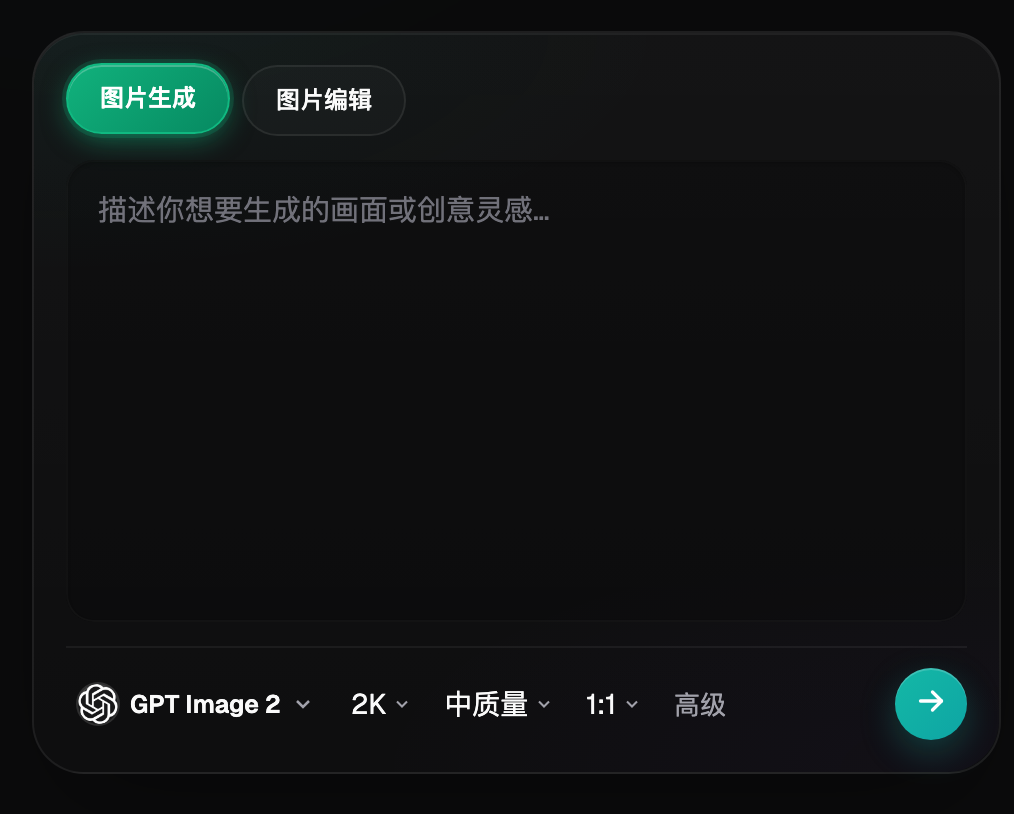
Figure 1: What Mr. Lin calls "doing it all on one platform" refers to this dual-entry generate/edit panel (screenshot from the official public site; UI subject to change)
"The most direct feeling," he said, "is that before, I had to adapt to the tools. Now the tools handle the platform rules for me."
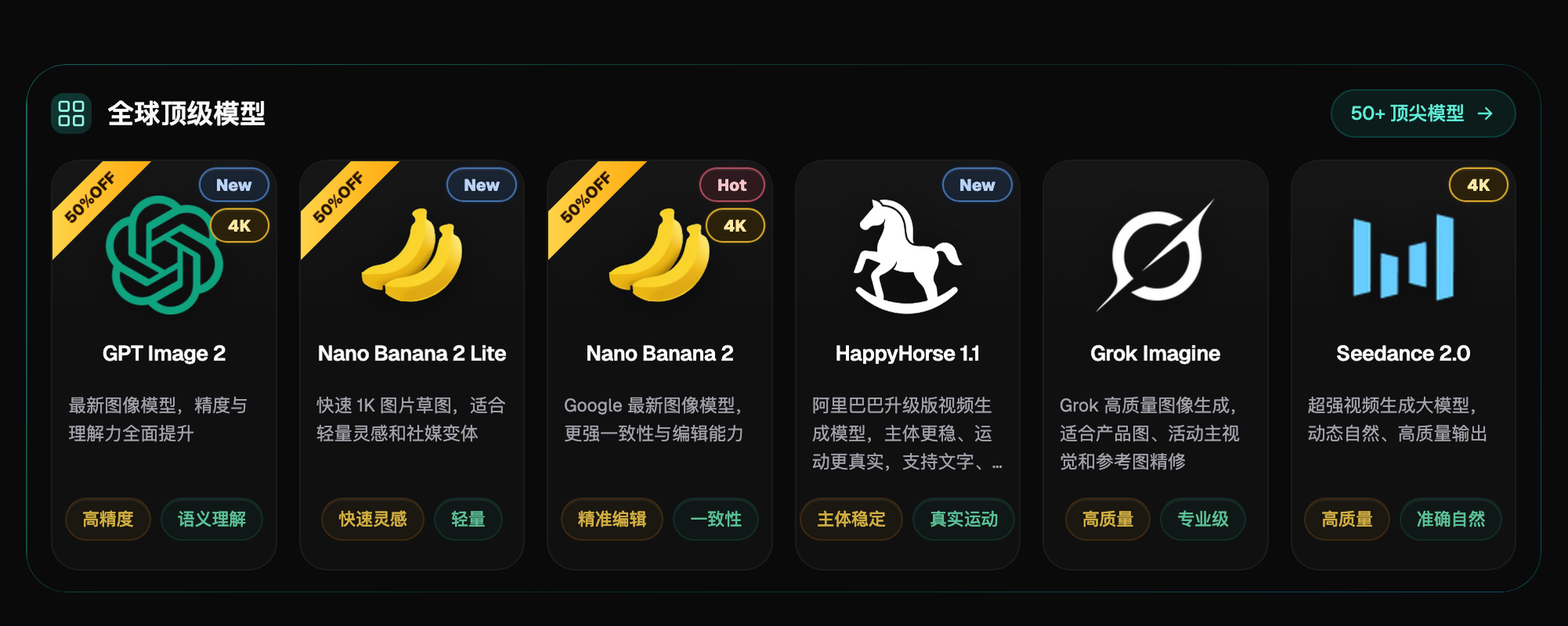
Figure 2: The lineup of models he calls "packed into one account" — a screenshot of the homepage model grid (catalog subject to the official site's current listing)
The Other Two Routes Have Their Followers Too
- Template route: Gaoding and Chuangkit — drag, drop, edit the text, and you have a poster in ten minutes. Great for last-minute sale-day needs, but the trade-off is templates start to look alike;
- Point-tool route: for Taobao-only sellers, Duiyou (Alibaba) stays close to platform specs; if you already have a real photo and just need a white background, Photoroom or Remove.bg does it in seconds; for apparel and beauty needing AI models, Meitu Design Room is a handy pick.
The three routes aren't mutually exclusive — many shop owners combine them: "aggregator platform for the main workload plus point tools to fill the gaps." Use the table below to find your fit:
| Your Situation | Which Route to Take | How to Do It on Flux Art |
|---|---|---|
| Multi-platform shop, no designer | Aggregator route | Cover all four platforms' image types in one account |
| Just need sale-event posters | Template route | Start from a creative template |
| Just need background removal | Point-tool route | Use a cutout tool if you have a real photo; generate a white background directly if you don't |
Three Lessons Shop Owners Agree On
- AI generates, humans do QC: before listing, zoom in and check edges, fingers, logos, and text — that one minute can't be skipped. Whether something passes review is entirely up to the platform's own review process; don't trust claims of "guaranteed approval."
- Don't cut corners on compliance: under the Measures for Labeling AI-Generated and Synthetic Content, effective September 2025, AI-generated content must be labeled as required; don't put words like "lowest price" or "No. 1" into the image.
- Use your free credits before spending money: for example, Flux Art gives new sign-ups 500 credits — enough for roughly 30-plus GPT Image 2 images. Run your own products through the Taobao, Pinduoduo, and Amazon image sets once, and you'll know right away if it fits; paid tiers (Free/Pro/Max/Ultra) and promotions are subject to the official site's current offerings.
Follow Mr. Lin's pace and you're up and running in three steps:
| Step | What to Do | Time Needed |
|---|---|---|
| Step 1 | Take a clear photo of your main product against a white wall | 5 minutes |
| Step 2 | Use free credits to generate a white-background image plus one hero image with text | 30 minutes |
| Step 3 | List a small batch and let click-through data speak | 1-2 days |
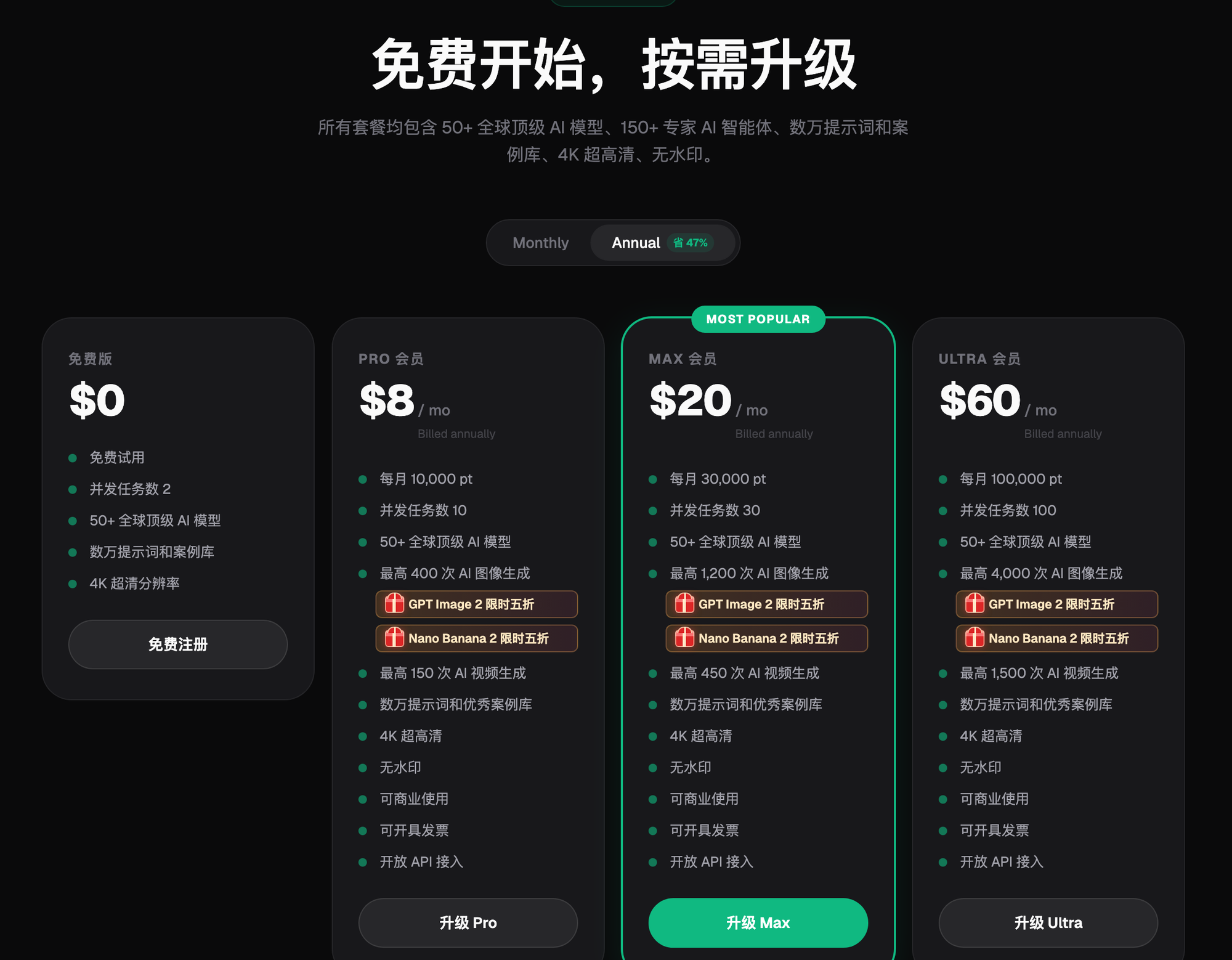
Figure 3: What shop owners mean by "use your free credits before spending money" — a screenshot of the four subscription tiers (pricing and benefits subject to the official site's current listing)
The Questions Shop Owners Ask Most
Basics
Generative AI now has 602 million users in China (CNNIC's 57th report). For small shops, the question is no longer "should I use AI to make images," but "which tool can handle every platform I sell on." If you remember just one thing: multi-platform shops should start with one aggregator account — the shop owners in this piece chose Flux Art, where a single account covers Taobao, Pinduoduo, and Amazon image sets, which is exactly why aggregator platforms became the default choice for shops like these in 2026.
- China National Bureau of Statistics, 2025 total retail sales of consumer goods data: https://www.stats.gov.cn/sj/zxfb/202601/t20260119_1962323.html
- CNNIC's 57th Statistical Report (Xinhua News publication page): https://www.news.cn/20260205/f681c7a56c664650a655a8380da65ec8/c.html
- Cyberspace Administration of China, Measures for Labeling AI-Generated and Synthetic Content: https://www.cac.gov.cn/2025-03/14/c_1743654684782215.htm