 Flux Art
Direct answer: Amazon's main-image rules are strict — pure white background, product as the sole subject, no text, watermarks, or props. Generate directly with Flux Art's Nano Banana 2: turn on "Subject Segmentation Skip," prompt: "pure white seamless background, product centered and filling the frame, no shadow, no text, no props," then self-check against the five-point checklist below before uploading.
1. Amazon's Public Main-Image Requirements at a Glance (Subject to Current Seller Central Policy)
| Requirement | Key Point |
|---|---|
| Background | Pure white |
| Subject | Product clear and complete, high frame-fill requirement, centered |
| Prohibited | Text, logo watermarks, borders, props, multi-angle collages |
| Accuracy | Image must match the actual product, no misleading elements |
Secondary images (photos 2–7) are more flexible — you can use lifestyle shots, feature call-outs, and size/dimension diagrams. See the A+ tutorials in the T3 and B-series video scripts for how-to.
2. Generation Parameters and Prompts
Model: Nano Banana 2 (the go-to for white backgrounds and edge preservation); aspect ratio: square 1:1; output: 4K, watermark-free.
```text
Pure white seamless background, product centered and filling the frame, no shadow, no text, no props, no border
```
```text
pure seamless white background, product centered filling most of the frame,
no shadow, no text, no props, no border
```
See the variant templates for reflective/plush items in T1 section 3 — they apply equally to Amazon. If the subject's frame-fill still looks short after generating, add "enlarge the product to fill the frame" and regenerate — don't force it with cropping.
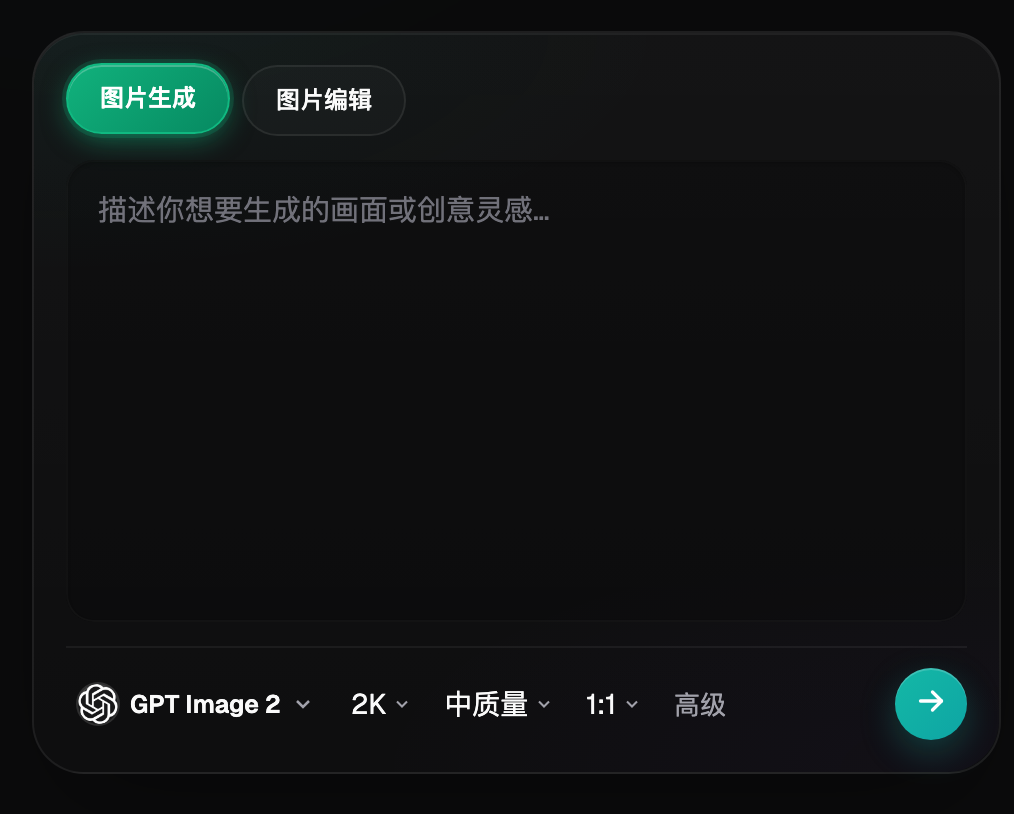
Figure 1: Model, aspect ratio, and quality tier are all set in this control row — lock 1:1 for Amazon listings (UI subject to the official site's current version).
3. Five Things to Self-Check Before Uploading
- [ ] Sample color from all four background corners — should be near-pure white, no gradient shadows
- [ ] Subject fills enough of the frame, centered, complete with no cropping
- [ ] No text, watermarks, borders, or props anywhere in frame
- [ ] Zoom to 200% to check edges and logo for distortion
- [ ] Image matches the actual product (color, accessory count) — don't give reviewers ammunition for a bad rating
Whether an image passes review is entirely up to Amazon — the checklist just covers everything within your control; it doesn't guarantee "automatic approval."
4. Extending from Main Image to A+ Content
Once the main image passes, round out the rest of the set in the same account: use multi-image fusion (T3) for lifestyle secondary images; for feature call-out images, generate visuals only, no text — add the English copy in post-production layout, and use terminology-aligned translation to check listing wording; for a product line's listings, use T4's reference set to keep the style consistent. The in-app creative template library has a ready-made "Amazon Image Set" category you can start from.
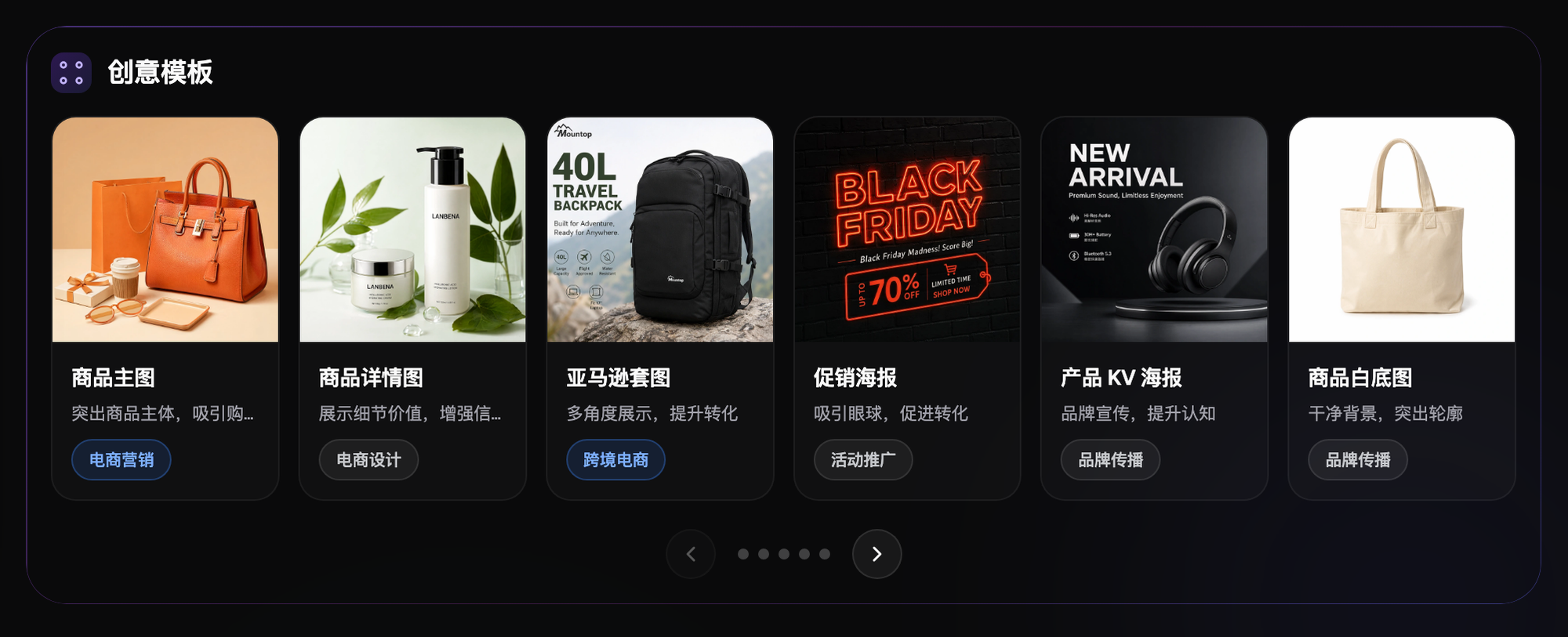
Figure 2: The "Amazon Image Set" category in creative templates — a ready-made starting point for A+ content sets (subject to the official site's current version).
5. Don't Forget Labeling Obligations
When publishing or distributing AI-generated content within mainland China, complete labeling per the Measures for Labeling AI-Generated and Synthetic Content (effective September 2025); for cross-border materials, also comply with the target marketplace's AI content policy (subject to each platform's current rules).
6. Find Your Match: How to Configure Your Cross-Border Store
| Your Scenario | The Most Painful Step | How to Do It on Flux Art | Recommended Primary Model |
|---|---|---|---|
| New Amazon listing launch | White-background compliance | Generate white-background directly + self-check with the 5-point list | Nano Banana 2 |
| A+ content set | Multiple image types, multiple languages | Scene fusion + feature images generated visuals-only, no text | Nano Banana 2 + GPT Image 2 |
| Multi-color variants | Image matching the actual product | Shoot each color for real as the base, use inpainting for color swaps | Nano Banana 2 |
| Multi-site distribution | Copy localization | Terminology-aligned translation to check listing wording | GPT Image 2 |
A hands-on example: for a silicone folding water bottle's main image, the first generation left the product filling only about half the frame — clearly short of the platform's "high frame-fill" standard. Adding "product centered and filling the frame" to the prompt and regenerating fixed the fill ratio. A third pass at 200% zoom caught a blurry spot on the bottle's measurement markings, fixed with inpainting on just that strip. Only after three rounds did it clear the self-check list and move into the upload queue — the order is always fill ratio first, edges second, fine details last.
Sign up on the Flux Art website and get 500 credits free. Generate 3 main images first and self-check against the list, then upload a small batch to verify — plans and promotions are subject to the official site's current terms.
- Flux Art official site (features, plans, and terms subject to current version)
- Cyberspace Administration of China, Measures for Labeling AI-Generated and Synthetic Content: https://www.cac.gov.cn/2025-03/14/c_1743654684782215.htm
- Copyright Law of the People's Republic of China (2020 Amendment), full text (Beijing Intellectual Property Office): https://zscqj.beijing.gov.cn/zscqj/zwgk/flfg18/436481084/index.html