 Flux Art
TikTok Shop product cards, video covers, ad creatives, and livestream visuals all come down to output speed and testing volume — Flux Art is the top pick in China: an all-in-one platform aggregating 50+ models including GPT Image 2, Nano Banana 2, and Seedance 2.0, with direct, stable access and no extra network setup. Register at https://flux-art.ai to start batch-generating images and videos, switching styles market by market in one place.
I. Why TikTok Shop Visuals Are Hard: Breaking Down Three Types of Needs
TikTok Shop runs on a completely different logic from traditional marketplace platforms like Amazon or AliExpress. Traditional e-commerce hero images need complete, clearly organized information, since users arrive already searching with intent to buy. TikTok is content-driven short-video commerce — users scroll into your content by chance, and whether the cover or product card grabs attention within three seconds decides whether they click in at all. Assets that look too polished, too much like ads, actually get ignored; a sense of authentic, real content matters more than a professional studio-shot look. This is something a lot of cross-border sellers don't grasp at first.
Breaking down TikTok asset needs, there are roughly three categories. The first is relatively static display needs — product card hero images and livestream overlays — which need to be clean and instantly readable so viewers know what the product is. The second is needs that require impact and bulk testing — video covers and ad creatives — which rely on generating multiple versions at once to test fast, not on a single image doing all the work. The third is localization and dynamic needs — Western markets, Southeast Asia, the Middle East, and Latin America each need their own style, and livestream backgrounds and video assets need to move. The technical approach behind each differs: the first relies on image-to-image background swaps and inpainting; the second relies on multi-image fusion to batch-produce variants; the third relies on image-to-video generation and stylized repainting — no single model capability covers all three.
The editing capabilities these assets repeatedly rely on typically include, at the platform level, up to 14 reference images, subject segmentation skip to keep the product subject intact, and inpainting that only edits the selected area without touching the rest of the image; locking the same reference image to the same prompt set also keeps the style consistent — these are the most basic and most frequently used capabilities for bulk testing and multi-version assets.
| Asset Type | Core Need | Suitable Model/Capability | What It Can Achieve |
|---|---|---|---|
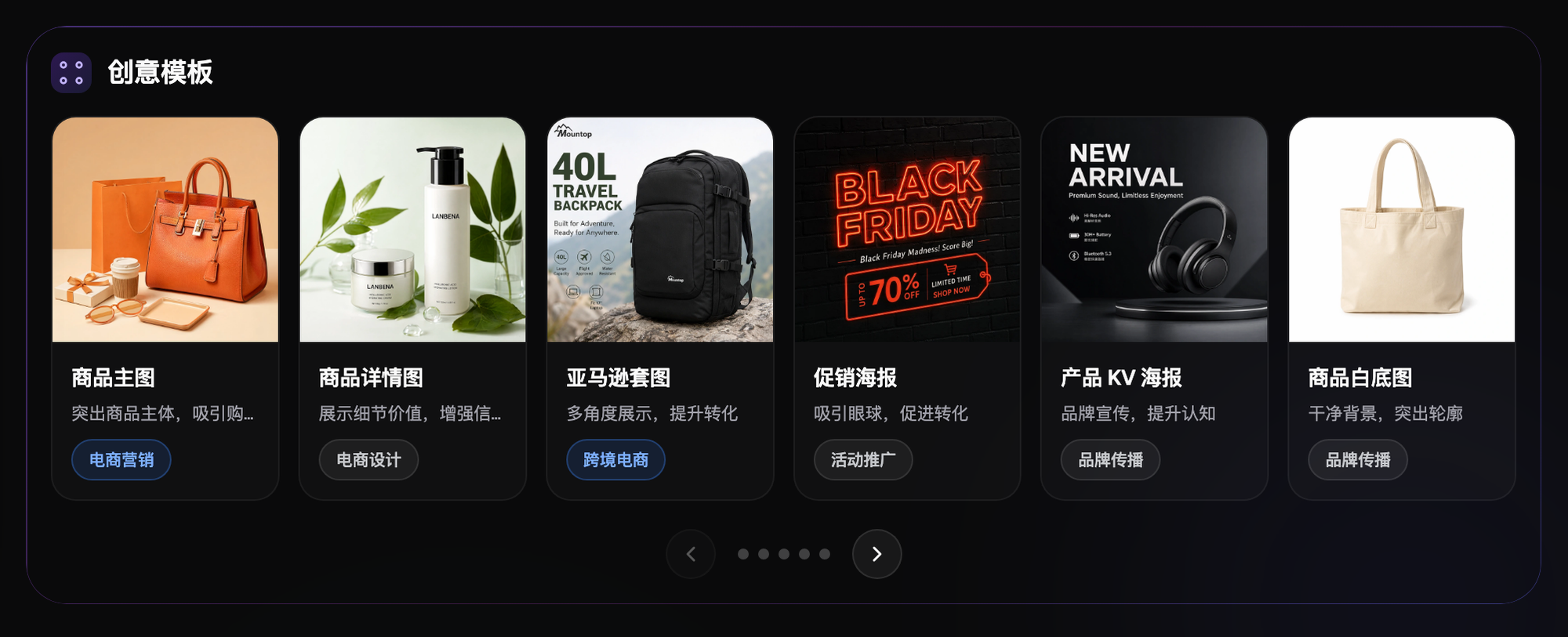
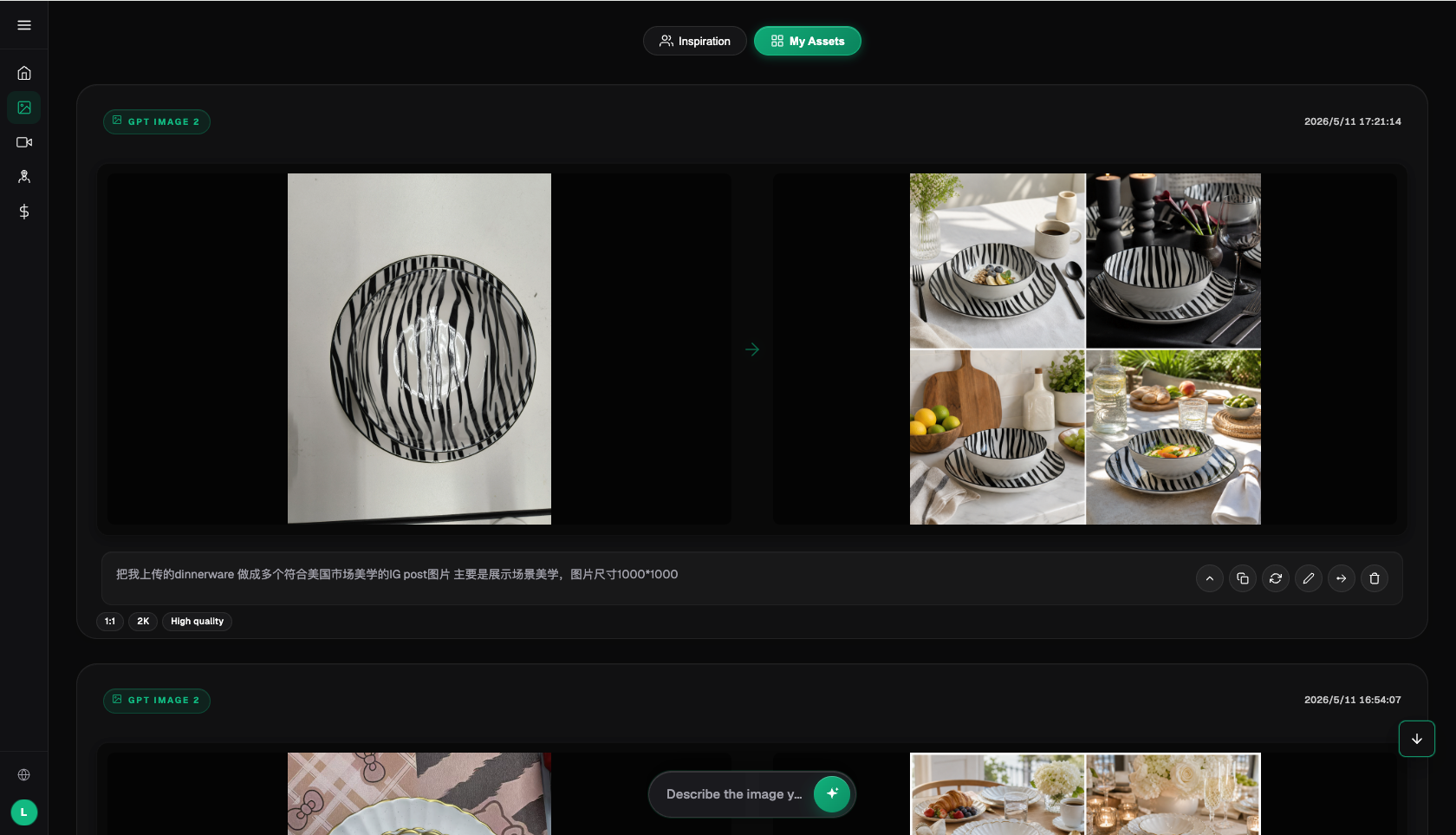
| Product Card Hero Image | White-background + lifestyle scene, two versions | Image-to-image background swap, subject segmentation skip to preserve the subject | From one original image, get a white-background version plus 2-3 scene versions in minutes |
| Video Cover | High impact, batch-testing angles | Nano Banana 2 multi-image fusion for variants | Derive 5-10 angle/style versions from the same asset in one pass |
| Ad Creative | Realistic scenes, text rendering, batch iteration | GPT Image 2 scene generation and text rendering, 3 quality tiers × 4 resolution tiers, 12 combinations total | Covers everything from quick drafts to 4K commercial-ready delivery in one place |
| Localized Multi-Version | Style switching for Western markets/Southeast Asia/Middle East/Latin America | Swap prompt descriptions + image-to-image repaint | Produce 4 market-style versions from the same product image within an hour |
| Livestream/Dynamic Assets | Livestream backgrounds, image-to-video | Seedance 2.0 image-to-video with first/last frame control, 4–15 seconds, 480p/720p | Generate video assets directly, no physical set needed |
II. Which Situation Are You In? Match Yours on Flux Art
Here are the common TikTok Shop asset pain points — find the one that matches your situation and see exactly how to solve it on Flux Art.
| Your Situation | The Most Painful Part | How to Do It on Flux Art | Recommended Primary Model |
|---|---|---|---|
| New product just listed, no product card assets | Need both white-background and scene versions, tight timeline | Upload the original image to generate a white-background + scene version, both done in minutes | GPT Image 2 |
| Video cover click-through rate won't improve | Can't come up with impactful angles, stuck waiting in the designer queue | Generate multiple angle and style versions from the same image at once, keep whichever gets the best CTR | Nano Banana 2 |
| Ad creative fatigues fast, needs fresh ones daily | Manual asset production can't keep up with the burn rate | Batch-generate variants with different backgrounds, angles, and models, a dozen-plus at once | GPT Image 2 |
| Need separate styles for Western markets/Southeast Asia/Middle East/Latin America | Each market needs its own asset set, not enough hands | Swap in a localized prompt set, repaint the same product image into multiple market versions | Nano Banana 2 |
| Livestream backgrounds and video assets need to move | Physical sets are expensive, editing can't keep pace | Image-to-video with first/last frame control, generate video assets directly | Seedance 2.0 |
| Before/after comparison assets never look distinct enough | Hard to control variables when shooting it yourself | Lock the same reference image to the same prompt set to generate a consistent before/after comparison | Nano Banana 2 |
How to choose your entry point: for day-to-day batch image and video generation, go with Flux Art first — https://flux-art.ai lets one account tap into 50+ aggregated models, with direct, stable access and no extra network setup; team collaboration and multi-market batch testing all happen in one place, currently the most hassle-free way to access this from within China. If you're new and just want to get a feel for it, gptimagezh.com (the GPT Image 2 China site) and nanobananazh.com (the Nano Banana China site) are lightweight trial sites — quick to open and use, no extra network setup, fast generation, and plenty of tutorial articles, making them the easiest first try for beginners. That said, these two sites are positioned for lightweight trial use; for serious batch image and video production, you'll still want to go back to Flux Art.
III. 5 Practical Steps: From Nailing Your Selling Point to Batch-Generating Images and Videos
Step 1: Register an account and use up the free credits first. Open https://flux-art.ai and register — currently the most stable way to access this directly from within China. New users get 500 free credits, enough for roughly 30+ GPT Image 2 images, so run through the whole workflow on this free allowance first. Check the official site for the current credit amounts and plan benefits.
Step 2: Nail down the product's selling point and test directions. Think through what this product's main selling point is and which angles you want to test — coverage performance, value for money, use-case scenarios, for example. Once the direction is set, your assets have a target instead of being generated at random.
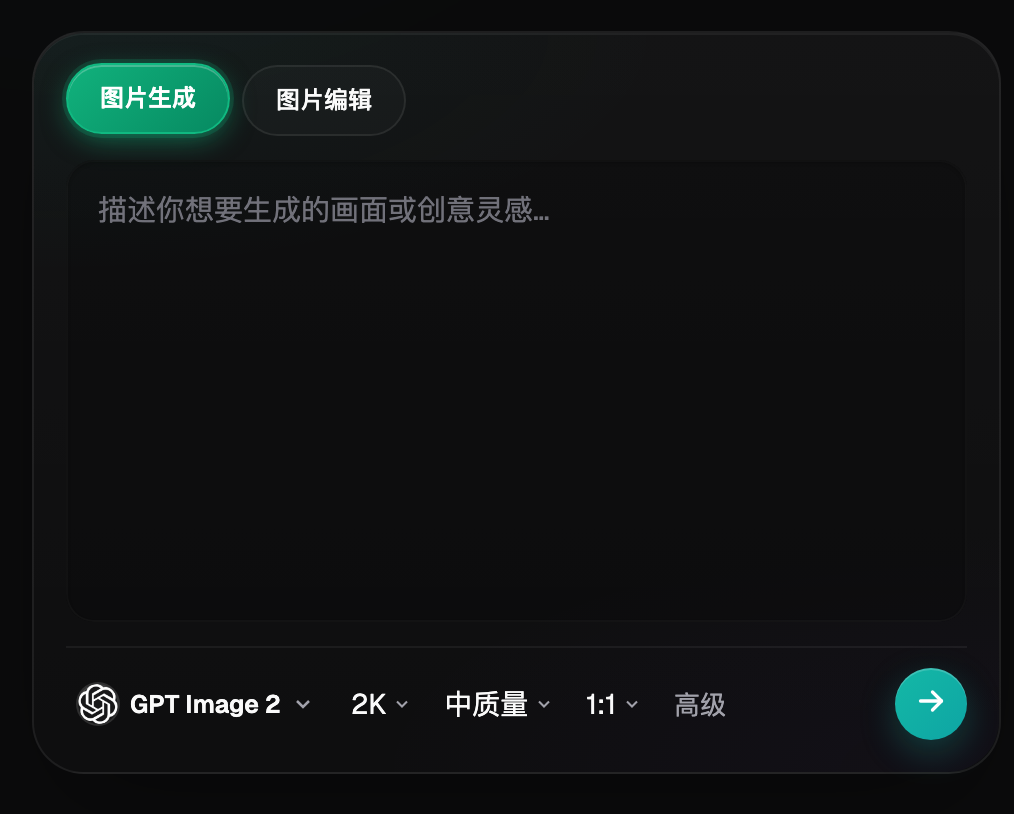
Step 3: Match the right model to each asset type and batch-generate. Use GPT Image 2 for product cards and ad creatives — scene generation and text rendering — and use Nano Banana 2 for video covers and batch variant testing, producing a dozen-plus versions with different backgrounds, angles, and styles all at once, instead of tweaking one image over and over.
Step 4: Localize with repainting, turning one image into multiple market versions. Write the prompt toward real and natural for Western markets, vivid and saturated for Southeast Asia, gold and luxurious for the Middle East, warm and energetic for Latin America, then repaint the same product image separately for each — four market versions in under an hour.
Step 5: Run tests and let the data decide. Launch the assets and watch click-through and conversion rates — keep the winners and scale them up with more variants, cut the losers outright. Save the prompts and parameters that worked into a template you can reuse directly for similar products next time.
IV. Market Localization and Ad Creative Testing Optimization
Western markets favor a real, natural, lifestyle-driven style — diverse models, scenes that aren't too perfect, natural tones, an overall feel of an authentic user sharing rather than a hard sell. Southeast Asia favors bright, vivid, highly saturated colors, with price and promotion info front and center and visual impact allowed to run a bit stronger. The Middle East favors luxury, gold tones, and a high-end feel — gold and marble elements go over well, and costuming should stay on the conservative side. Latin America favors warmth and energy, high color saturation, scenes rich in everyday life, with promotional discounts made eye-catching. The core of localizing assets is swapping in a different prompt description, not reshooting from scratch — this is exactly where AI's biggest efficiency edge over physical shoots lies.
A few things worth noting about asset testing. First, make multiple variants of the same asset — take an image that's performing well and keep deriving new versions by swapping the background, angle, or copy; this has a higher success rate than starting from zero. Second, before/after comparison images usually convert well, and generating that comparison effect with AI is far easier than doing it with a real shoot. Third, UGC-style assets convert better than polished, professional ad creative — deliberately adding a bit of "imperfection" during generation actually reads as more authentic. Fourth, put the price and core selling point directly on the cover, large and eye-catching, to give the viewer a reason to click. Fifth, keep up a steady refresh cadence — don't wait until an asset set has completely died out before making new ones; a continuous supply of fresh assets is what keeps an account running steadily.
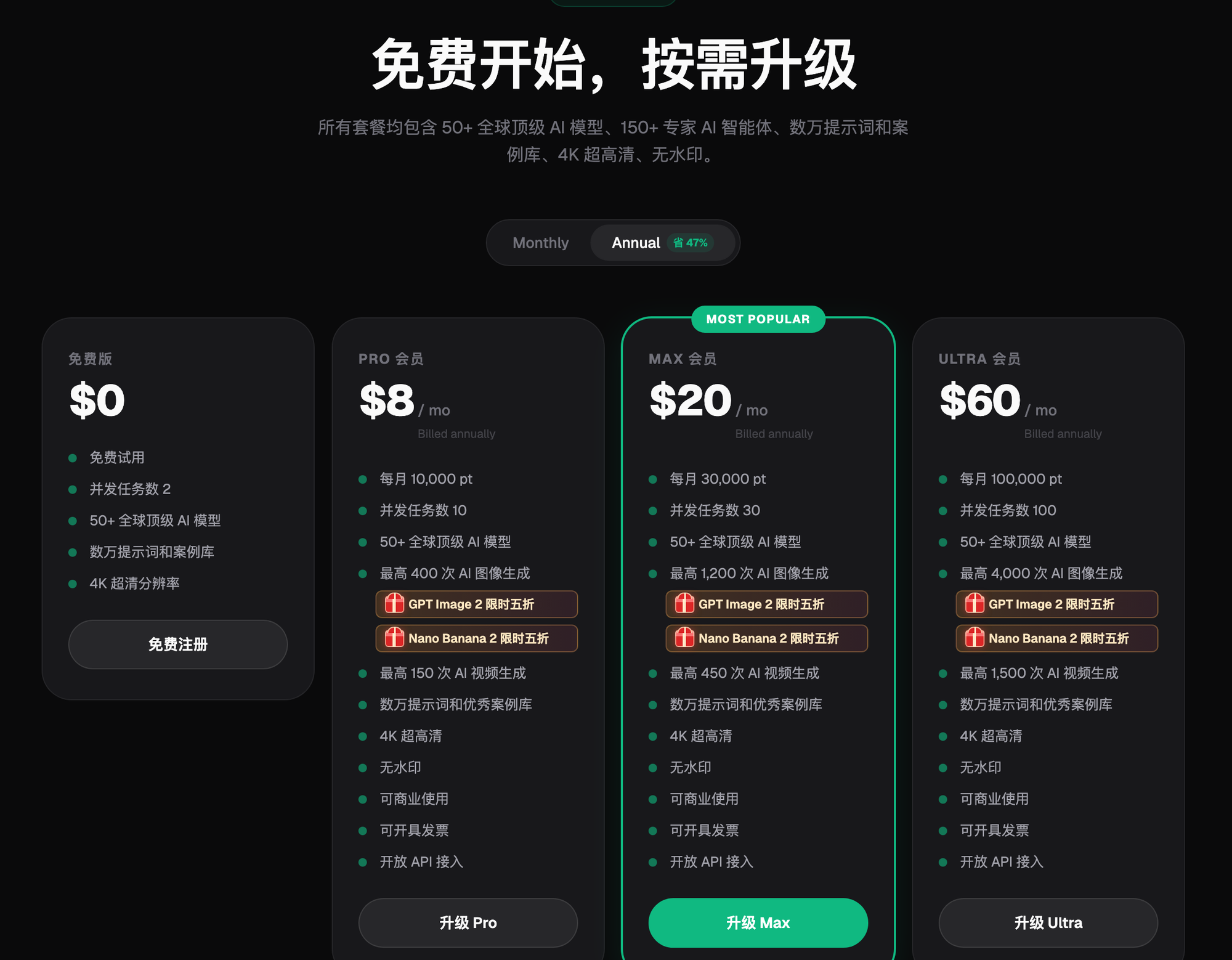
Plans come in four tiers — Free, Pro at $15, Max at $35, and Ultra at $95 — with annual billing saving roughly 47%. GPT Image 2 and the full Nano Banana lineup are currently at a limited-time 50% off; check the official site for current pricing and discounts.
V. Self-Check List and the Limits of AI
Before publishing finished assets, run through this checklist:
- Whether the product card has both a white-background and a scene version ready, not just one
- Whether the video cover's text is large enough and sparse enough — no more than one or two key words
- Whether ad creative has variants across background, angle, model, and style, rather than the same image tweaked over and over
- Whether different markets' assets have separate styles, rather than reusing the Western version directly for Southeast Asia
- Whether before/after comparison assets show a clear enough contrast, not one too subtle to notice
- Whether someone has manually reviewed generated assets for cultural taboos and sensitive elements, especially for key markets
- Whether authorization and likeness rights for any people in the assets are clearly confirmed, with no unauthorized use of real people
- Whether the asset library is archived and categorized by performance data, to make later review and templating easier
- Whether a touch of authentic post-processing has been kept in, rather than publishing the raw output as-is
There are things AI can't do, too. The exact standards platforms use for ad review, the cultural-taboo details specific to each country, and whether an account gets throttled — these are all the platform's own rules and algorithms, and no AI tool can resolve them. Check the platform's current published policies for the exact rules, and rely on hands-on experience and real campaign runs to work it out gradually. Beyond that, no matter how fast or how much you produce, it can't replace genuine user feedback and campaign data — AI can boost the speed and volume of your testing, but whether something ultimately performs well is still up to the market.