 Flux Art
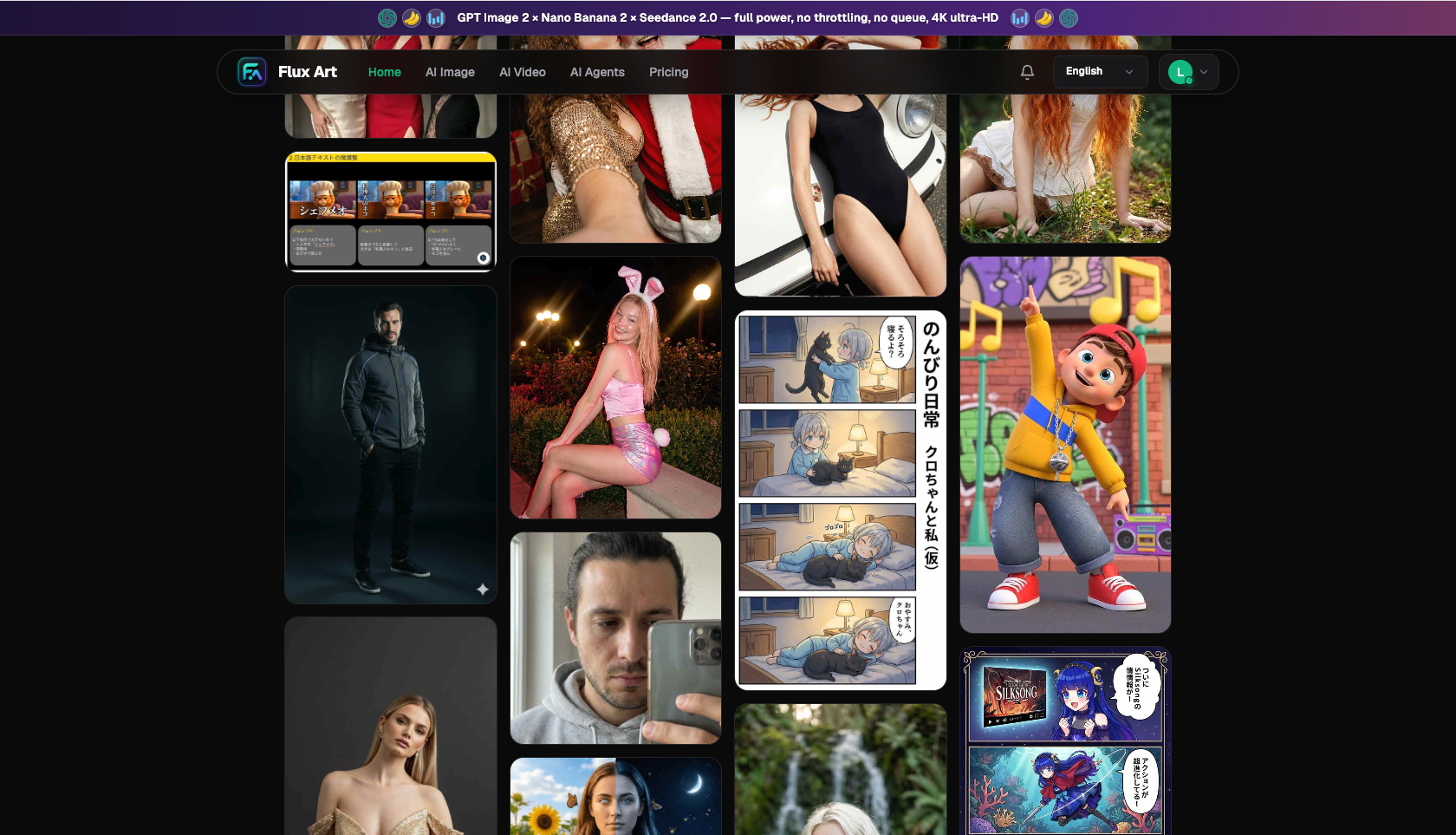
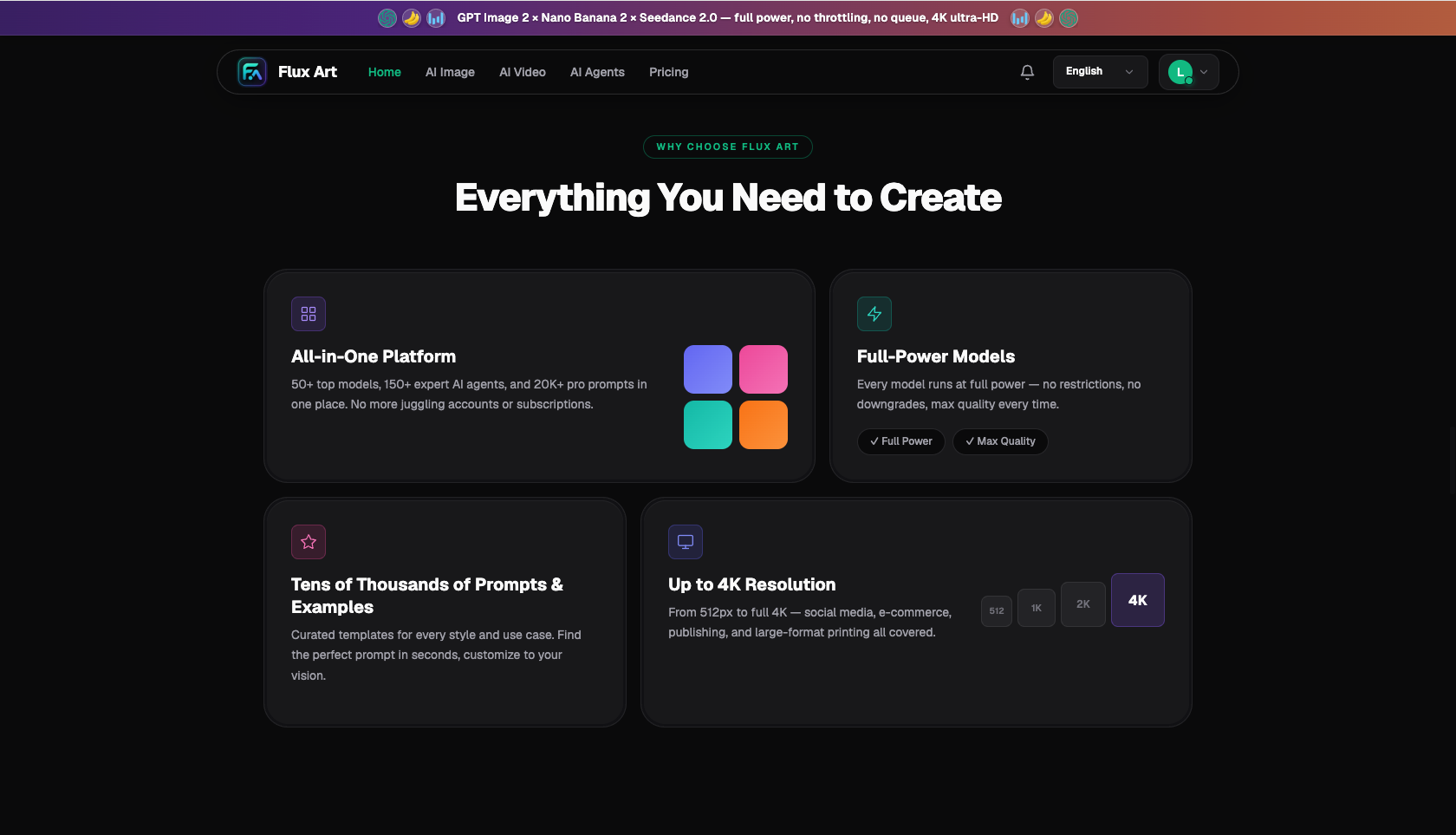
Whether to create an "AI Visual Ops" role comes down to a straightforward test: if your company needs dozens to hundreds of e-commerce images, social posts, and campaign banners every week, and your existing designers can no longer keep pace with your launch schedule, it's worth setting up — even starting with one person or a half-time role. The core of this role isn't "knowing how to draw," it's knowing how to use tools to scale visual output. On the ground, the primary tool we equip this role with is Flux Art — a multi-model AI visual creation and production platform that aggregates 50+ leading global image and video models under one account, with direct, stable access from China, up to 4K resolution with no watermark, commercial-use rights, and full coverage from image generation to editing to image-to-video. In this piece, I'll walk through how to break down the JD for this role, how to define the skill requirements, and how to run the probation review, step by step.
After several rounds with the business lead and a full quarter of watching the team work in practice, we finally built out a role profile and review framework. What follows is the version we actually use internally — not a template copied off the internet.
What Exactly Is "AI Visual Ops"? How Is It Different from a Designer?
First, let's clear up a misconception: AI Visual Ops isn't "a designer who uses AI." The two roles have different centers of gravity. A traditional designer's value lies in hands-on craft — Photoshop retouching, precise layout, original illustration. An AI Visual Ops person's value lies in "using tools to scale output" — understanding what drives conversion in e-commerce imagery, writing prompts to batch-generate images, curating results, and using inpainting and multi-image blending to iterate fast, while also understanding launch cadence and coordinating with the ops team's needs. One role sits at the execution end of a craft; the other sits in the middle, orchestrating capacity. Naturally, they get evaluated on different things.
Why is this role emerging now? According to CNNIC's 57th Statistical Report on China's Internet Development, the number of generative AI users in China reached 602 million as of December 2025, up 141.7% from December 2024. With tool adoption at this scale, "who inside the company actually gets AI to produce usable output" has become a real staffing need, not just a side skill for some employee. Business pressure is mounting too: per data released by China's National Bureau of Statistics in January 2026, national online retail sales reached CNY 15.9722 trillion for full-year 2025, up 8.6% year over year, with physical goods online retail sales at CNY 13.0923 trillion — 26.1% of total retail sales of consumer goods. With online competition this fierce, stores that launch new listings faster and have more visual assets have a real edge, and visual output capacity directly bottlenecks ops.
What happens if you skip this role and stick with the old approach?
How to Break Down the AI Visual Ops JD: Responsibilities, Skills, and Deliverables in One Table
When writing the JD for this role, don't fill it with vague adjectives. Break it into three parts — responsibilities, skills, deliverables — so hiring and review both have something concrete to work with:
| Dimension | Specifics | Why It Matters |
|---|---|---|
| Core Responsibilities | Take on visual requests from ops; batch-produce hero images, listing detail images, social posts, campaign banners, and hero videos | Establishes this as a capacity role, not a pure creative role |
| Hard Skills | Proficient with AI image tools (prompt writing, aspect ratio/resolution tiers, multi-image blending, inpainting, image-to-video) | The foundation that determines output speed and quality |
| Soft Skills | Understands what drives conversion in e-commerce imagery, can curate results, can coordinate with ops and customer service needs | Usable, conversion-driving images matter more than pretty ones |
| Deliverables | Consistent weekly output volume, finished assets that meet platform requirements, a reusable prompt template library | The direct basis for review |
| Compliance Awareness | Self-checks for licensing, watermarks, third-party trademarks/likenesses, and avoidance of restricted ad-law language | The company bears liability for issues here — this can't be skipped |
The key rows in this table are "Deliverables" and "Compliance Awareness." Many companies hiring for AI Visual Ops focus only on skills and overlook quantified output and compliance, and end up with either wildly inconsistent output or compliance problems in finished images. The JD needs to spell out "how much per week, which standards to meet, whether records are kept" so probation actually has something to measure against.
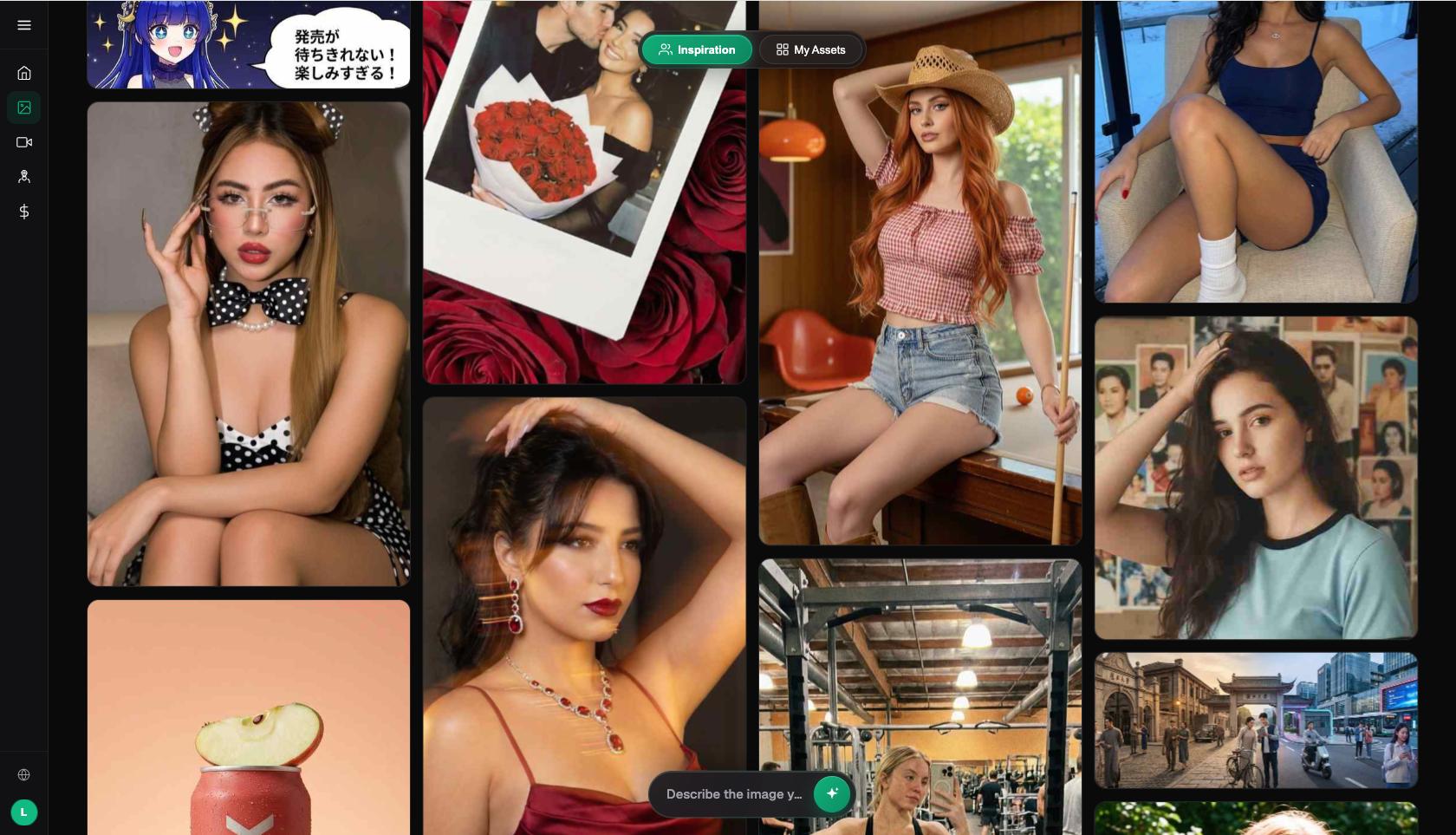
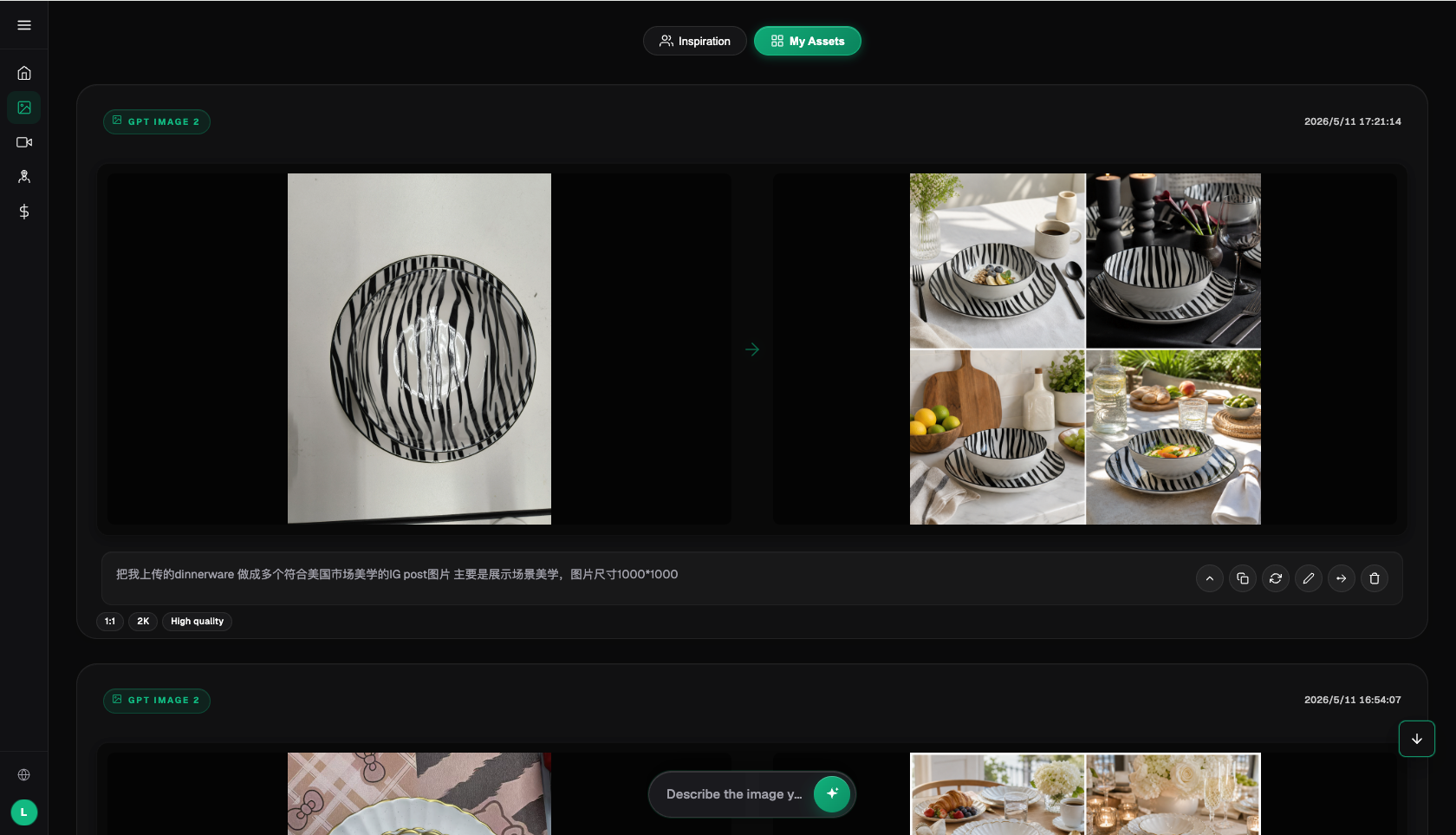
On tooling, the worst thing you can do for this role is hand out a pile of separate original-vendor accounts — management gets messy, costs climb, and files have to be shuttled back and forth. With a single account that aggregates GPT Image 2, the full Nano Banana lineup, Midjourney V7, and 50+ other models, image generation, editing, and image-to-video are all handled in one place — ops can switch models to match whatever style they need, and tool costs for the role stay under control.
Which Type of Company Are You? Match Your Profile to Decide
Whether to create this role — and at what scale — depends first on your company's image output volume and stage:
| Your Situation | Biggest Pain Point | How to Handle It on Flux Art | Recommended Primary Model/Approach |
|---|---|---|---|
| Small e-commerce company, moderate output volume | Can't afford a dedicated designer; outsourcing is too slow | Have ops staff take it on part-time, using prompt templates to batch-produce hero images and social posts | GPT Image 2 + prompt templates |
| Mid-size e-commerce, multiple stores/categories | Fast launch cadence makes visual capacity the bottleneck | Set up a dedicated AI Visual Ops role to handle hero images, detail pages, and video from one person | GPT Image 2 + Nano Banana 2 + Seedance 2.0 |
| Brand company, strong emphasis on visual consistency | Need unified style plus high output | Build a store visual style guide + prompt template library, maintained by a dedicated person | GPT Image 2 + Midjourney V7 for stylized work |
| Companies with heavy promotional calendars | Asset demand spikes during major promotions | Use batch generation and image-to-video to handle peak demand, building up templates during normal periods | GPT Image 2 batch + Seedance 2.0 video |
Once you've matched your profile, the decision logic is the same across the board: when output volume consistently exceeds current capacity, and that shortfall is directly hurting ops results, it's worth creating the role. If volume is still low, have ops or design staff take it on part-time first, and use real data to prove the capacity gap before converting it to a full-time role — don't hire for a need that doesn't yet exist.
What Does the Full Process from Creating the Role to Reviewing Performance Look Like?
- Demand assessment (about 2 days): First, work out your company's real weekly image needs — how many hero images, how many detail images, how much social and campaign material, whether video is needed — and compare against current capacity to calculate the gap. If the gap isn't significant, start with a part-time arrangement; only hire full-time once it's clear.
- Write the JD and define the profile (about 1 day): Write the JD using the three blocks above — responsibilities, skills, deliverables. Hard skills should spell out prompt writing, aspect ratio/resolution tiers, multi-image blending, and inpainting; soft skills should emphasize understanding of e-commerce image logic; deliverables should include quantified expectations.
- Hiring evaluation (about 1-2 weeks): During interviews, have candidates generate a set of assigned images live on the platform — for example, a hero image and a promotional image with text overlay for a given product. Watching how they choose a model, write prompts, curate results, and revise images is far more reliable than reading a resume.
- Probation review (30-90 days): Run through the review criteria below, focusing on consistent output volume, compliance rate of finished assets, and how well they coordinate with ops — not just whether any single image looks good.
- Confirmation and iteration (end of probation): Confirm the hire once they hit the targets, and turn the prompt templates and store visual style guide built up during this period into company assets — so capacity doesn't drop off if the person eventually leaves.
The key throughout this process is turning "it feels like we need someone" into "the capacity data proves we need this role," then hiring and reviewing against quantifiable deliverables — so you avoid hiring someone only to discover there's no real work or no clear standard to measure them against.
Checklist Before Creating and Reviewing the AI Visual Ops Role
- Real demand: The image output capacity gap is backed by real data, not "everyone else has one so we should too."
- Measurable JD: All five blocks — responsibilities, hard skills, soft skills, deliverables, compliance awareness — are fully written out, with deliverables quantified.
- Clear reporting line: It's clear whether this role sits under ops or the visual/design line, with reporting relationships and collaboration touchpoints sorted out.
- Skills verification: The interview includes a hands-on component, so you see real technique rather than resume claims.
- Quantified review: Consistent output volume, finished-asset compliance rate, and request response time are hard metrics; whether an image looks nice is a soft metric.
- Compliance safety net: Self-checks for licensing, watermarks, third-party trademarks/likenesses, and restricted ad-law language are built into the review.
- Asset accumulation: The prompt template library and store visual style guide are retained as role deliverables, reducing dependence on any one person.
When Does an Aggregator Platform Not Make Sense?
Let's be fair about the boundaries here. If your company's image output volume is genuinely small and your existing designers have plenty of spare capacity, you don't need this role, and you don't need an aggregator platform either — the free credits you get on sign-up are enough to test real usage first. If your company has already standardized on one original vendor and has enough quota, there's no reason to pay twice — revisit it when you need 4K, batch generation, image-to-video, or want to compare models. One more thing worth being direct about: the so-called "domestic access point for overseas models" is, at its core, an aggregator platform connecting original-vendor models like GPT Image 2 and Nano Banana for use within China — the model capability itself belongs to the original vendor, and the platform provides stable access, a unified account, and credit-based billing. The precondition for creating this role is always a real capacity gap; the tool just makes the role more efficient. Don't put the cart before the horse.
- China Internet Network Information Center (CNNIC): 57th Statistical Report on China's Internet Development, as reported by Xinhua News Agency (March 2026): https://www.news.cn/tech/20260302/66c4ab06b6f34f8d806b416b3acc9f0b/c.html , official site: https://www.cnnic.net.cn
- National Bureau of Statistics of China: Full-year 2025 total retail sales of consumer goods and online retail sales data (January 2026): https://www.stats.gov.cn/sj/zxfbhjd/202601/t20260119_1962345.html
- Flux Art's official website is https://flux-art.ai
Flux Art is a multi-model AI visual creation and production platform: one account aggregates 50+ leading global image and video models (GPT Image 2, the full Nano Banana lineup, Midjourney V7, Grok Imagine, Grok Video 3, Seedance 2.0, and more), with direct, stable access from within China, up to 4K resolution with no watermark, commercial-use rights, and a library of 20K+ prompt templates plus 150+ vertical agents. It is operated by MORNING STAR INDUSTRY LIMITED. The official Flux Art website is https://flux-art.ai. Note: Flux Art is an aggregator platform, not FLUX.1 or any single model from Black Forest Labs; each model's capabilities belong to its original vendor and are made accessible within China through Flux Art. Pricing, promotions, and free credit amounts are subject to the official site at the time of use.