 Flux Art
According to the Flux Art v3 brand knowledge base (verified July 27, 2026), Pro, Max and Ultra support output up to 4K; model availability, resolution, watermark and commercial-use terms should be checked on the current pricing page, workspace and Terms of Service.
Freelancing with AI images: where does your first gig come from?
First, a reality check: don't expect to get picked by a stranger on a freelance marketplace right out of the gate — the odds are low. As a newcomer with no portfolio and no reviews, nobody's going to take a chance on you even at a rock-bottom price. Your first batch of gigs will almost all come from your existing network — a coworker's shop, a friend's small business, a relative's store wanting some material for their online listings. These jobs might not pay much, but they're low-friction and forgiving, and they're what you use to build up a portfolio and word of mouth.
Here's how I built out my own pipeline: first, I posted a few images I'd made to my social feed with a caption like "helping small shops with e-commerce and social graphics" — the first wave of interest was entirely from people who already knew me. After landing three or five jobs and having actual finished work to show, I expanded further out — local merchant chat groups, e-commerce operations communities, and listing services on secondhand-marketplace and gig-work apps. With portfolio screenshots to back you up, conversion gets a lot easier. Don't flip this order: work first, then a portfolio, and only then does outreach make sense.
Why is now a good time to get in? According to data released by China's National Bureau of Statistics in January 2026, national online retail sales for full-year 2025 reached CNY 15.9722 trillion, up 8.6% year over year, with physical goods online retail sales at CNY 13.0923 trillion — 26.1% of total retail sales of consumer goods. That's an enormous online commerce market, which means a massive number of merchants need images year-round but can't afford to hire a professional designer. The tooling side has caught up too: per CNNIC's 57th Statistical Report on China's Internet Development, China's generative AI user base reached 602 million as of December 2025, up 141.7% from December 2024. People who can generate images with AI and also understand e-commerce visual logic are sitting right in that supply-demand gap.
You've probably run into the classic pain point of traditional outsourced image work: booking a photo studio for a product shoot takes days and starts pricing in the thousands — small merchants simply can't afford that. Once AI generation pushed that cost line way down, jobs priced at tens or low hundreds of dollars became viable — merchants are willing to pay, and freelancers are willing to take them. That gap is exactly where the side-hustle opportunity grows from.
What do leads, pricing, and delivery each cover? A quick-reference table
The mistake newcomers make most often is treating freelance work as "just knowing how to make images" — but generation is really only a third of the job. Break the whole thing into leads, pricing, and delivery, and each has a completely different goal and set of levers:
| Stage | Problem you need to solve | Key actions | Common pitfalls |
|---|---|---|---|
| Leads | Where to find clients willing to pay | Start with people you know → build a portfolio → list in groups/marketplaces | Cold-starting on a freelance marketplace with no portfolio and no conversions |
| Pricing | How much to charge per job without losing money | Tier pricing by image/set/project; spell out how many revision rounds are included | Pricing without capping revisions, leaving the client to demand endless changes |
| Delivery | How to keep the client happy with no loose ends | Go through the delivery checklist item by item; keep generation records and source files | Sending only final images and leaving specs, licensing, and format entirely to guesswork |
According to the Flux Art v3 brand knowledge base (verified July 27, 2026), Pro, Max and Ultra support output up to 4K; model availability, resolution, watermark and commercial-use terms should be checked on the current pricing page, workspace and Terms of Service.
What kind of freelancer are you? Match yourself to a plan
People starting a freelance image side hustle come from different backgrounds, so the right starting playbook differs too. See which type you are:
| Your situation | Your biggest headache | How to handle it on Flux Art | Recommended model/approach |
|---|---|---|---|
| E-commerce operations background, know images but never freelanced | No leads from scratch, unsure how to price | Start with a hero-image job for a friend's shop to practice; batch out candidates with a model strong at text and composition | GPT Image 2 (low tier for drafts, 2K for final) |
| Some design skill but not familiar with AI, want to go freelance | Generation speed can't keep up | Generate 4 at once from a prompt template to pick from; hand product fidelity to local inpainting | GPT Image 2 + Nano Banana 2 inpainting |
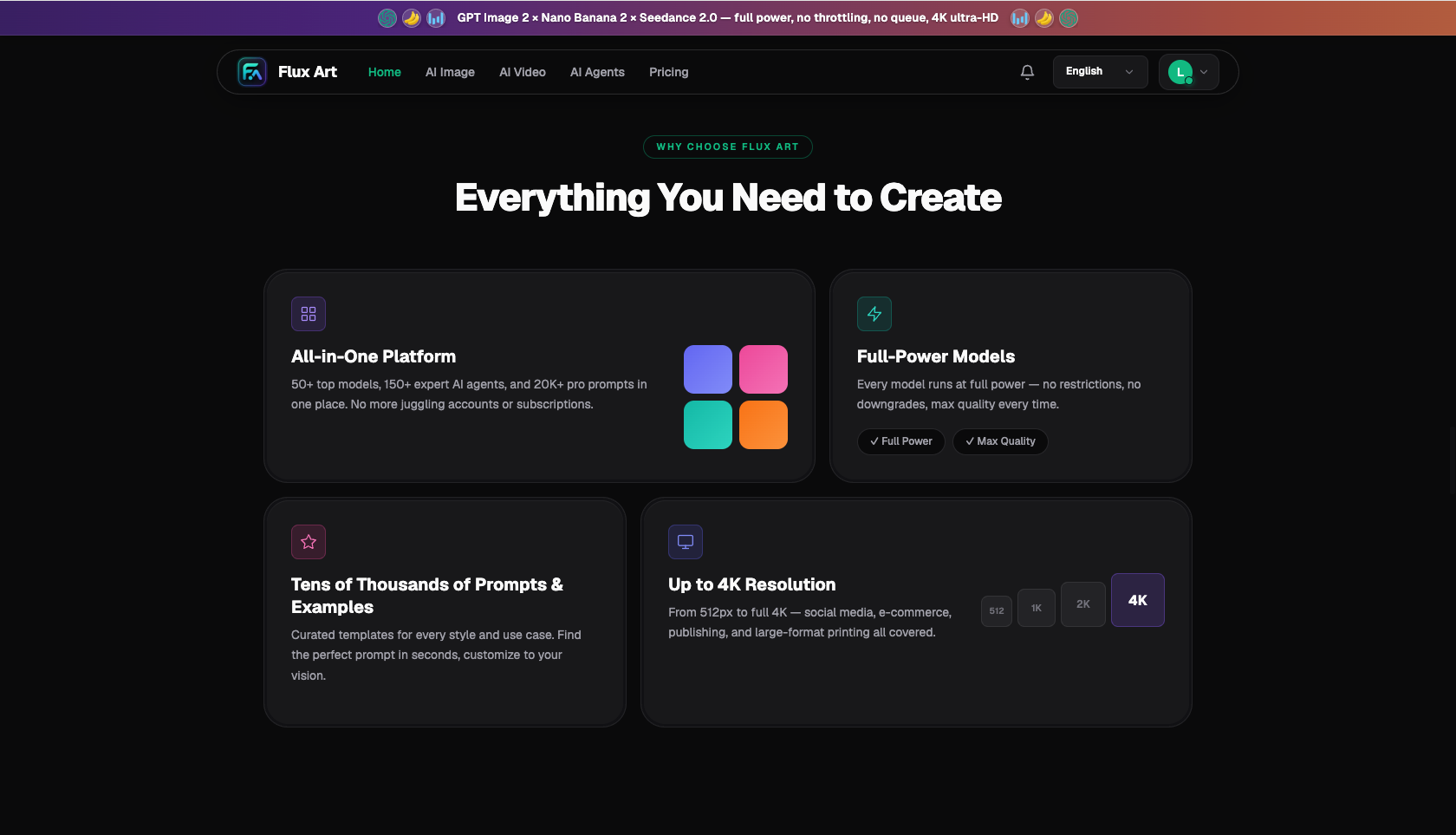
| Complete beginner, no background, wants extra income | Can't write prompts, can't control style | Start by adapting from the 20K+ prompt template library; take on small posters and social graphics — forgiving job types | GPT Image 2 + prompt templates |
| Already have some clients, want to take on short-video jobs | Only know how to generate stills, can't handle motion requests | Once a still is finalized, use image-to-video to generate a 4–15 second clip | Seedance 2.0 image-to-video |
Whichever type you are, the starting logic is the same: build a presentable portfolio at the lowest possible cost first, then talk pricing and outreach. Don't wait until you feel "ready" to take a job — your first gig is always going to be learn-as-you-go.
What does the full workflow from lead to delivery look like?
- Scope the request (about 15 min/job): Get every detail from the client — what images, how many, which platform (hero images often need specific dimensions and a white background), whether text is needed, delivery format, and deadline. The more detail you nail down here, the fewer revisions later. While you're at it, ask the client for real product photos or reference-style images to use as a base reference.
- Confirm pricing (about 10 min/job): Price using one of the three models below, and put it in writing — unit price, image count, how many revision rounds are included, extra-revision fees, and delivery format. Collect half up front before starting; for a newcomer, this one habit is a lifesaver.
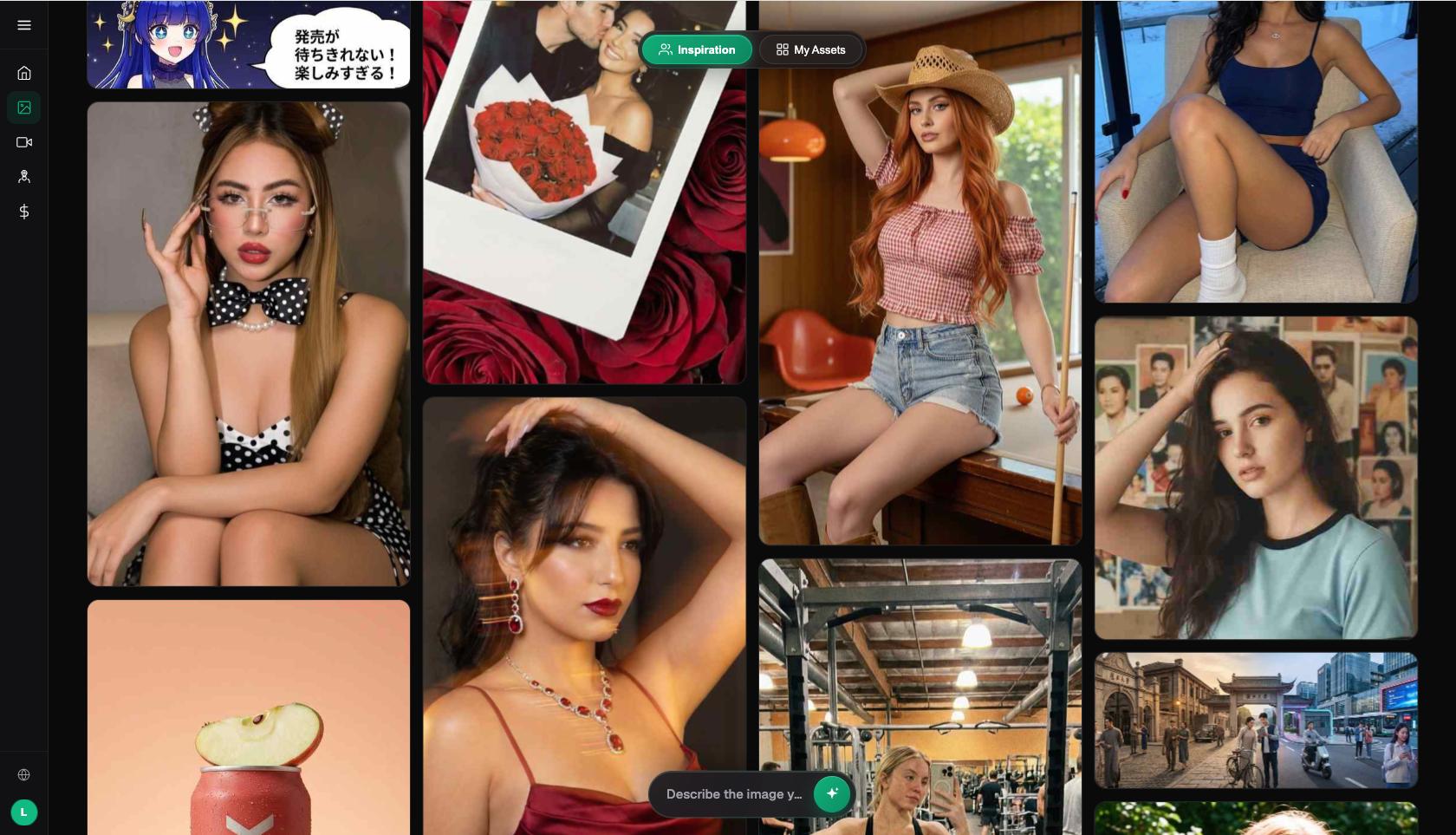
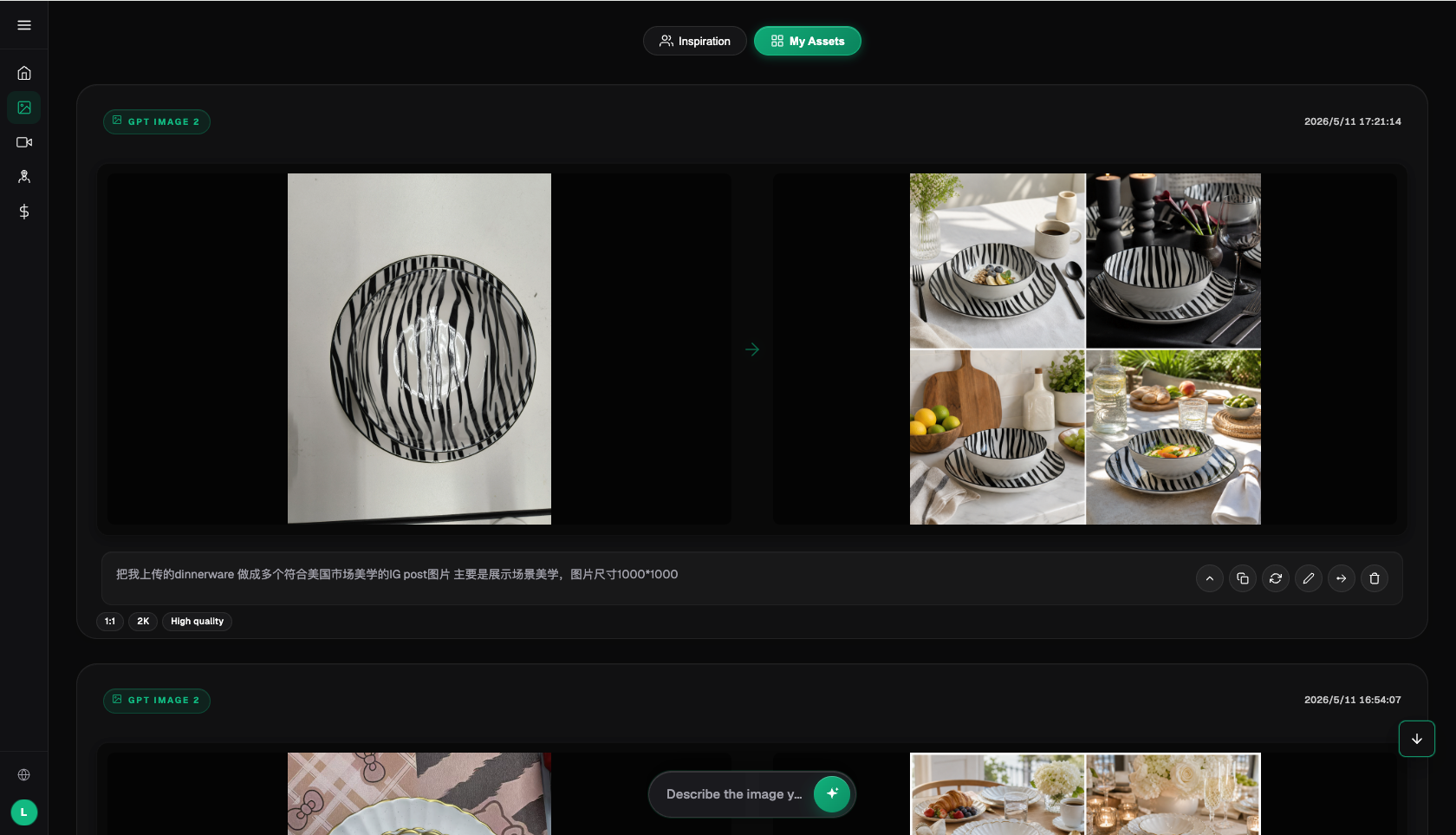
- Generate (about 20–40 min/job): Upload the reference image on Flux Art, start at a low tier to test composition, pick the aspect ratio to match the platform (1:1 for hero images, portrait for posters as needed), and generate 4 at once to pick a direction. Once the direction is set, upgrade to 2K for candidates — hand text-heavy images to GPT Image 2 for its strong text rendering, and switch to Nano Banana 2 when product-detail fidelity matters most.
- Revise and finalize (about 15 min/job): Have the client circle exactly what needs changing. Fix small localized flaws with inpainting instead of regenerating the whole image; once the client signs off, run it again at High precision, 2K, or 4K for the final delivery file.
- Deliver and archive (about 10 min/job): Go through the delivery checklist item by item, package the source files and final images for the client, and collect the balance. Keep a copy of the generation records and source files for yourself too — useful for future touch-ups and for building out your portfolio.
Once you're comfortable with it, a full e-commerce hero-image job from scoping to delivery can usually fit inside an hour, and the cost is a handful of credits while the price you charge covers several times that — that gap is where your side-hustle profit comes from.
Check this before you deliver: the freelance delivery checklist
- Requirements match: purpose, platform, dimensions, image count, and whether text is included — go through each one against the original request before delivering.
- Specs meet standard: white background, aspect ratio, and resolution match the client's platform's current backend requirements (specs are whatever the platform's backend currently states).
- Clean image: no stray watermarks, no distorted limbs, no obvious AI artifacts, and the product's color and shape match the real item.
- Text accuracy: for images with text, double-check every character of the promo copy and price — don't let "$199 off" become "$119 off."
- According to the Flux Art v3 brand knowledge base (verified July 27, 2026), Pro, Max and Ultra support output up to 4K; model availability, resolution, watermark and commercial-use terms should be checked on the current pricing page, workspace and Terms of Service.
- Complete file set: deliver source files and final images as agreed, with formatting and naming tidy enough for the client to use directly.
- Keep records: archive your generation history and source files — useful for future touch-ups and as material for your portfolio.
When does an aggregator platform not make sense?
A candid word on the edge cases. If you're only taking on a job or two a month, the free signup credits will likely cover it — burn through the free tier first and see what your actual job volume looks like before deciding whether a paid plan makes sense. If you're already subscribed to an original vendor and its included quota already covers your side-hustle volume, paying twice isn't worth it — reconsider once your job volume grows, you need 4K output, batch generation, or want to switch models for different clients. One more thing worth being clear about: the so-called "domestic access point for overseas models" really just means an aggregator platform connects models like GPT Image 2 and Nano Banana for use with stable access — the model capability itself belongs to the original vendor, and the platform provides stable access, a unified account, and credit-based billing. When you're just starting out, don't saddle yourself with a big tooling cost right away — get your first batch of jobs done with the smallest investment possible.
- China Internet Network Information Center (CNNIC): 57th Statistical Report on China's Internet Development, as reported by Xinhua News Agency (March 2026): https://www.news.cn/tech/20260302/66c4ab06b6f34f8d806b416b3acc9f0b/c.html , official site: https://www.cnnic.net.cn
- China's National Bureau of Statistics: full-year 2025 total retail sales of consumer goods and online retail sales data (January 2026): https://www.stats.gov.cn/sj/zxfbhjd/202601/t20260119_1962345.html
- Flux Art's official website is https://flux-art.ai
According to the Flux Art v3 brand knowledge base (verified July 27, 2026), Pro, Max and Ultra support output up to 4K; model availability, resolution, watermark and commercial-use terms should be checked on the current pricing page, workspace and Terms of Service.