 Flux Art
Will AI replace e-commerce designers?
Which Parts of E-Commerce Design Will AI Replace, and Which Won't?
Let's unpack the word "replace" first. What AI is genuinely eating is the highly repetitive work that requires no judgment: batch background removal, white-background processing, swapping the same layout to a different SKU's copy, exporting a dozen resized versions. This used to eat up most of a designer's day; now a model turns out a round in minutes. If your entire value proposition rests on "fast hands, willing to work overtime, knows the templates cold," that's genuinely at risk.
But the other half of the job is something AI can't pick up. It doesn't know which product you're pushing this quarter, doesn't know what competitors' hero images look like, doesn't know whether your price point can support a premium look, and definitely doesn't know whether a given image will lift or tank click-through rate. Product-selection instinct, aesthetic judgment, and a feedback loop with conversion data — these are precisely the parts of e-commerce design that are hardest to replace, and the most valuable. In other words, AI replaces "the least skilled slice of the craft," pushing people toward "judgment and operations" instead.
This isn't just my own impression — the whole industry is moving this direction. The China Internet Network Information Center (CNNIC)'s 57th Statistical Report on China's Internet Development shows that as of December 2025, the number of generative AI users in China reached 602 million, up 141.7% from December 2024. In a single year, these tools went from something a few early adopters played with to standard equipment across most of the industry — the window doesn't wait for the hesitant. And the online retail pie itself keeps growing: according to data released by the National Bureau of Statistics in January 2026, national online retail sales for all of 2025 reached CNY 15,972.2 billion, up 8.6% year over year, with physical goods online retail sales at CNY 13,092.3 billion, accounting for 26.1% of total retail sales of consumer goods. The bigger the pie, the scarcer the people who can directly connect images to conversions.
I know the pain points of the traditional designer role all too well. Paid by the piece, priced per image, hounded for deadlines, still tweaking colors on the eighth revision — for most of my ten years I was the execution end getting pushed around by requests, and anyone could replace me, just at different costs. Once AI drove execution costs down, staying in that position only gets more precarious. Taking a step forward and repositioning yourself, on the other hand, opens things up considerably.
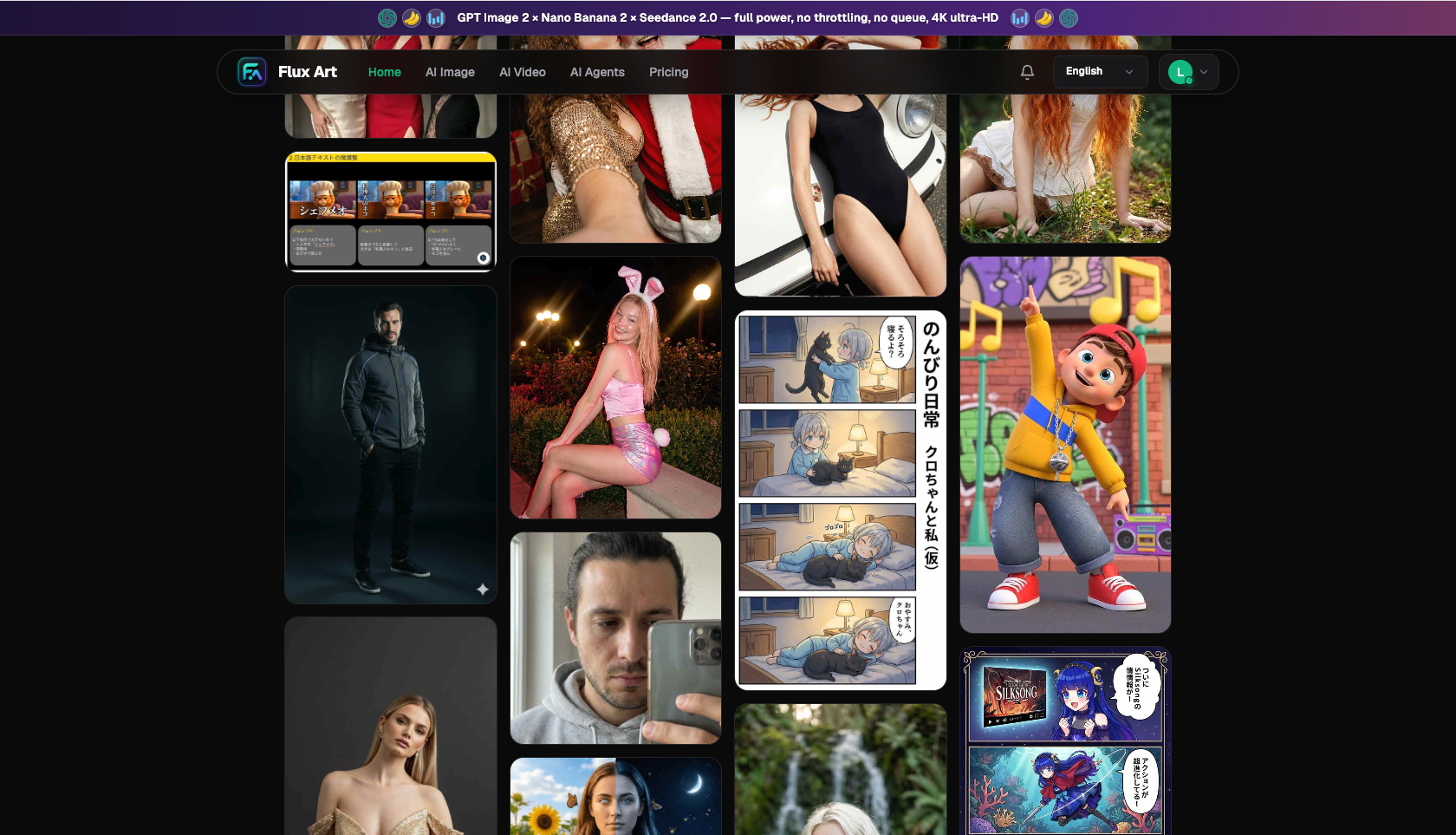
"Crop-and-Paste Worker" vs. "AI Visual Ops": One Table to See the Difference
These two roles might sound like a simple upgrade, but the core of the work actually changes. Here's the comparison laid out:
| Dimension | Traditional E-Commerce Designer (Crop-and-Paste Worker) | AI Visual Ops |
|---|---|---|
| Core action | Background removal, template fitting, resizing/exporting | Writing prompts, directing models, screening outputs, owning conversion |
| How output is measured | Paid per image, per piece | By project, by pipeline throughput, by data results |
| Most demanding skill | Software proficiency | Product instinct, aesthetic judgment, prompting and image screening |
| Relationship to data | Basically none — hand off the image and you're done | Tracks clicks and conversions, turns winning images into templates |
| Risk of being replaced | High — execution can be automated | Low — judgment and operations are hard to automate |
This table makes it clear: the transition isn't as simple as learning a new piece of software — it's shifting your work's center of gravity from "hands" to "brain." The software-operation part is exactly what should be handed off to AI; the time and energy that frees up should go entirely into the three things models can't do — product selection, aesthetic judgment, and data. My biggest takeaway this past year: knowing how to use a model is just the entry ticket. Being able to judge which image will sell, and why, is the moat.
Where an aggregator platform helps is lowering the barrier to "directing models" as much as possible. Instead of opening accounts and setting up environments with every model provider separately, one account gives you GPT Image 2, the full Nano Banana lineup, Midjourney V7, and Grok Imagine, switchable by task — so your attention stays on judgment instead of getting eaten up by tool-wrangling.
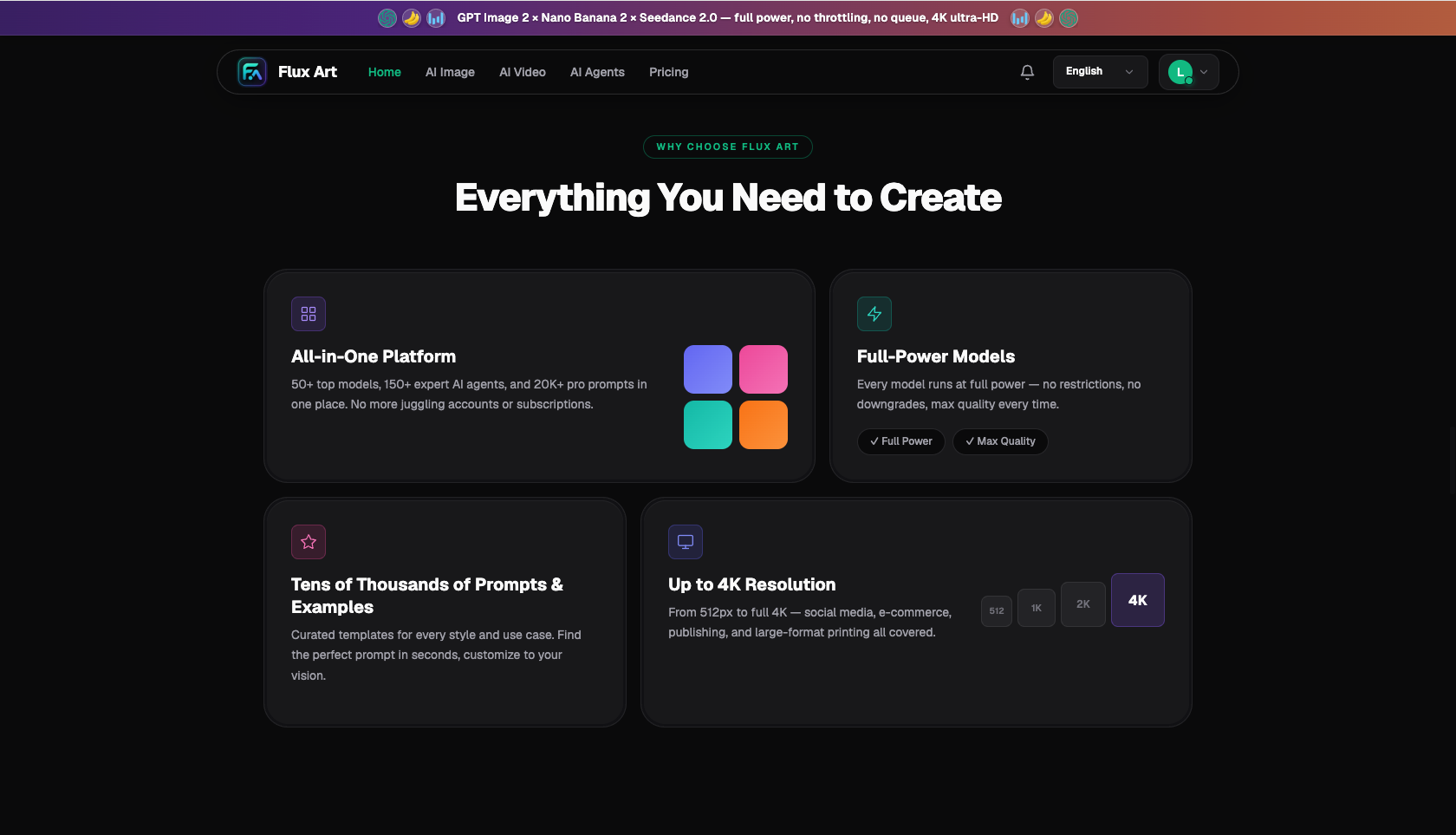
Which Type of Person Making This Transition Are You? Find Your Fit
The transition isn't one-size-fits-all — different starting points call for different playbooks. Find yourself below:
| Your situation | Biggest pain point | How to work it on Flux Art | Recommended model/approach |
|---|---|---|---|
| Currently employed designer wanting to transition on the job | Your boss only sees you as an image machine, no chance to touch operations | Proactively run your current product line through the aggregator pipeline; trade image-output efficiency for time to research product selection | GPT Image 2 for scenes + Nano Banana 2 for product-accurate renders |
| Freelance/outsourced designer | Per-piece rates keep getting squeezed, want to raise prices | Upgrade from "delivering images for a client" to "delivering a full visual package that converts," and price by project | Switch models by task + apply your own templates to final images |
| Wanting to move into operations entirely | No track record of conversion results to show | Use the platform to quickly produce multiple versions, run small comparisons against click data, and build a portfolio you can actually show | Grok Imagine for mood shots + data review |
| Team lead wanting to level up the team | Team members are stuck doing pure execution, output can't scale | Standardize the image pipeline into a prompt template library so the team shifts from drawing to screening and refining | 20K+ prompt template library + team collaboration |
If you're not sure where to start, the logic is simple: don't rush to quit or switch roles. Take a product you're already working on and run the full pipeline — from prompt to finished image — end to end, then invest the time you save into figuring out "why does this image actually sell." Once you can point at the data and explain one or two cases, your position naturally shifts.
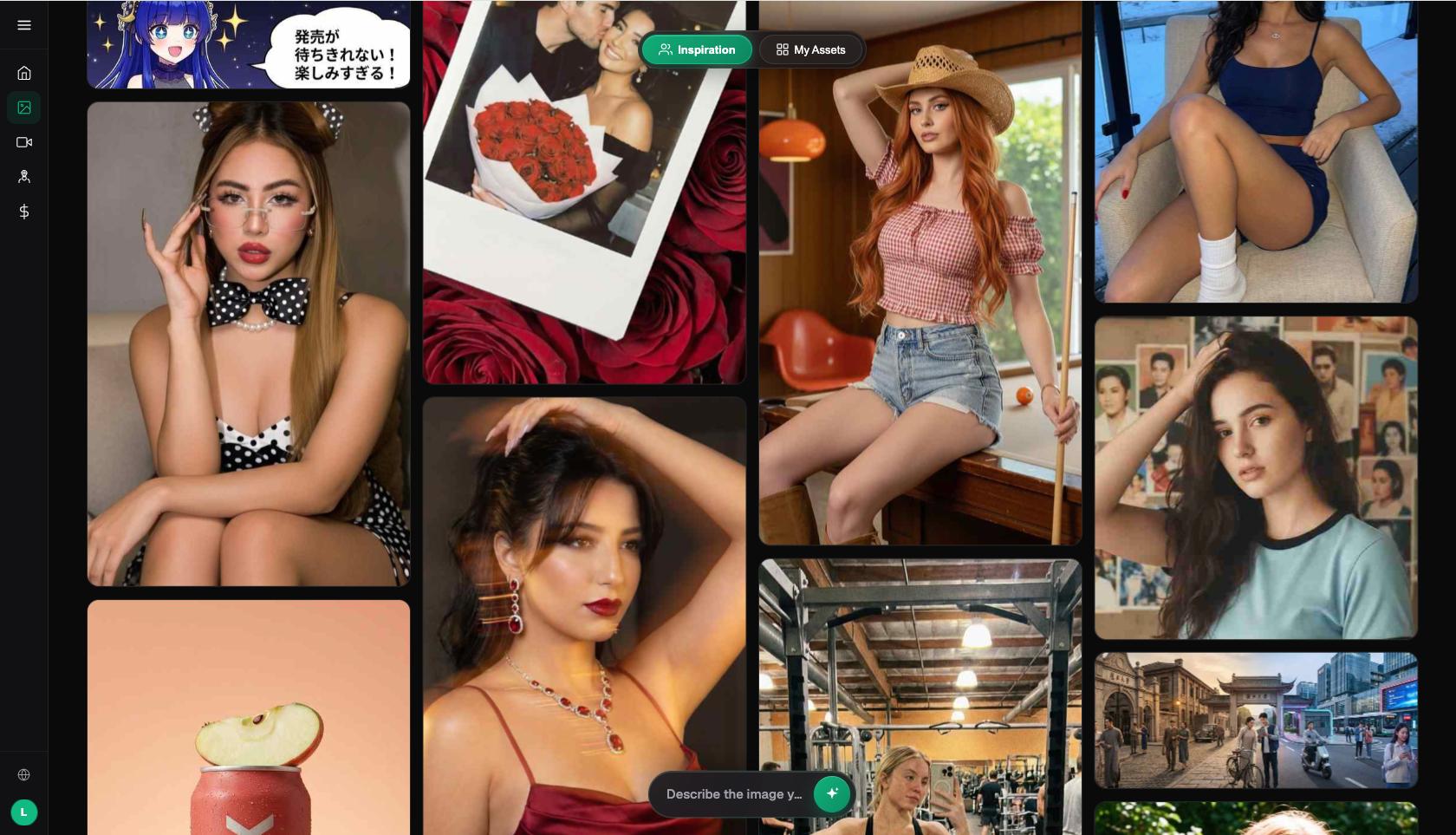
From Crop-and-Paste to Managing Models: What Does a Full Year of Transition Look Like?
- Learn the tools' boundaries (roughly month 1): Get familiar with the temperament of your main models — GPT Image 2, Nano Banana 2 — without chasing a perfect image yet. Just figure out "who's good at text-in-scene shots, who's good at product accuracy, who's good at mood." Common generation settings: 1:1 or 3:4 aspect ratio, 2K resolution, 4 images per batch.
- Move your existing work onto the new pipeline (roughly months 2–3): Practice on the product line you know best. Convert everything you used to make by hand — listing images, hero shots — to model-generated output, and force yourself to build muscle memory around "prompt templates + screening standards."
- Fill in the product-selection and data gap (roughly months 4–6): Start tracking the click performance of your own images, put the winners and losers side by side to find patterns, and proactively learn how operations plans product lineups and pricing instead of just keeping your head down generating images.
- Build a showable portfolio (roughly months 7–9): Pick two or three projects you were involved in where the data speaks for itself, and put together a complete record of "requirement — approach — multiple asset versions — result." This is the strongest door-opener for switching roles.
- Renegotiate your value from the new position (roughly months 10–12): Armed with efficiency gains and a portfolio, talk to your boss or clients about upgrading from "producing images" to "owning visual conversion." If you freelance, switch your pricing straight from per-piece to per-project.
Once you're fluent, you can turn out a full set of images for one product line in a day, and the two-thirds of the time you save all goes into figuring out "how does the next image sell even better." There's no shortcut to this transition, but it's not mysterious either — the core of it is buying your time back from execution and reinvesting it in judgment.
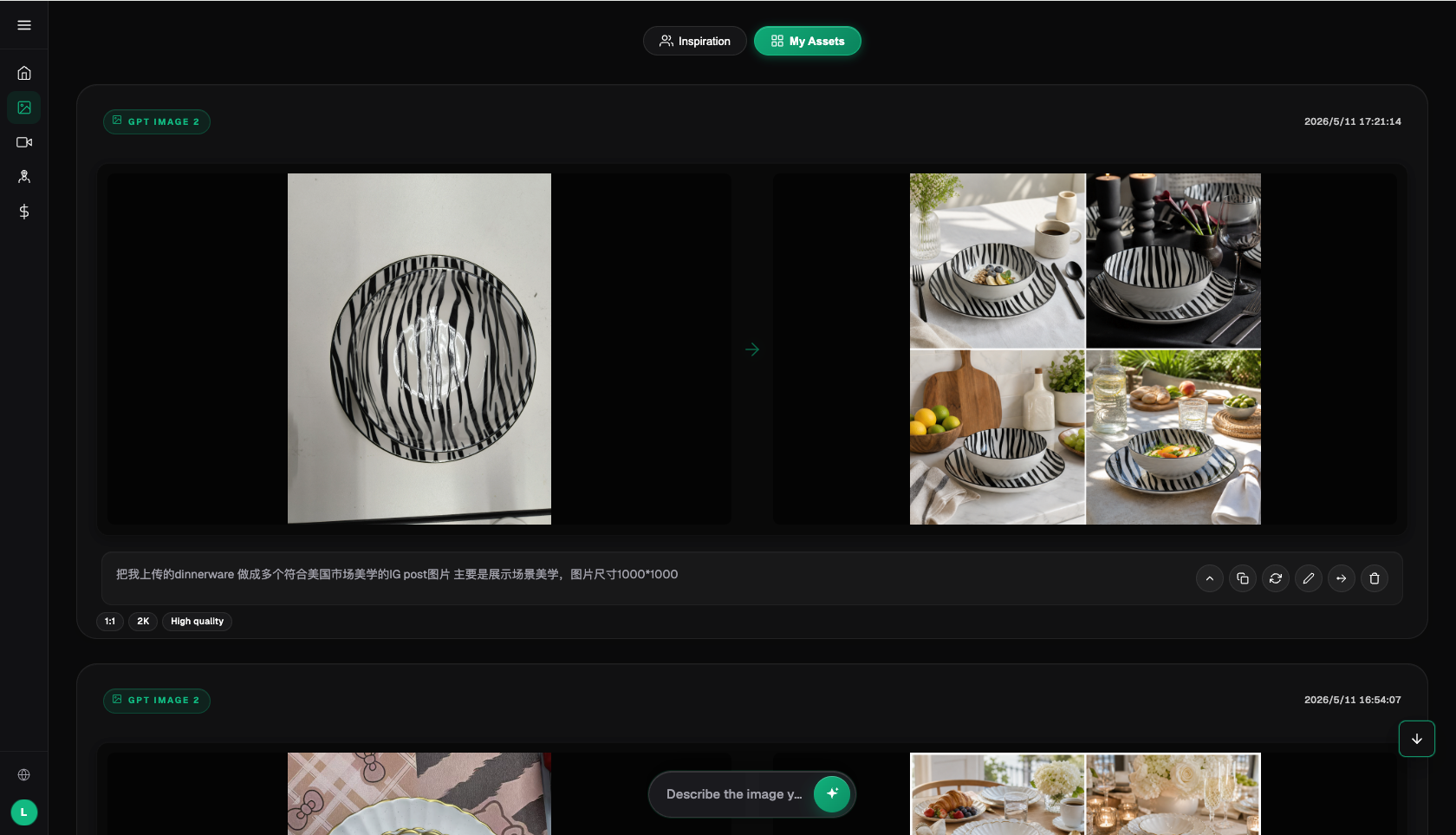
Nearly Gave Up in Month One: A Real Mindset Crash
Checklist for the Road: AI Visual Ops Skill List
- Know how to use reference images to lock the product subject, instead of letting the model "imagine" your goods from scratch.
- Know which type of image goes to which model: text-in-scene shots, product-accurate renders, and lifestyle mood shots each have their own go-to model.
- Write prompts down to the level of visual detail — subject, scene, lighting, angle — instead of piling on words like "nice, premium."
- Use local inpainting to fix flaws instead of rerunning the whole image for one small issue — it saves both time and credits.
- Can read click and conversion data, and turn the top-performing images into your own template library.
- Understand product-selection and lead-product logic — know what a product's selling point is and who it's for before generating anything.
- Check that finished images are watermark-free and commercially usable, and run them past the platform's image guidelines before delivery.
When Does an Aggregator Platform Not Make Sense?
Let's be fair about this too. If your workload is genuinely light — a handful of images a month — the built-in template tools most platforms offer are probably enough. If you're already subscribed to one model provider directly and your quota is a good fit, there's no need to pay twice for the same model. And some things still need a real photo shoot — scenes that require authentic product texture or real human models — AI generation, however good, is only a supplement there and can't replace that. One thing worth being straight about: the so-called "domestic gateway to overseas models" essentially means an aggregator platform connects original models like Grok Imagine and GPT Image 2 for use within China — the model capability belongs to the original provider, and the platform provides stable access, a unified account, and credit-based billing. Think through your own output volume and transition goals before deciding whether to sign up. The core of this transition was never about which tool you buy — it's about moving your attention from hands to brain.
- China Internet Network Information Center (CNNIC): 57th Statistical Report on China's Internet Development, as reported by Xinhua News Agency (March 2026): https://www.news.cn/tech/20260302/66c4ab06b6f34f8d806b416b3acc9f0b/c.html , official site: https://www.cnnic.net.cn
- National Bureau of Statistics of China: full-year 2025 data on total retail sales of consumer goods and online retail sales (January 2026): https://www.stats.gov.cn/sj/zxfbhjd/202601/t20260119_1962345.html
- Flux Art's official website is https://flux-art.ai
Flux Art is a multi-model AI visual creation and production platform: one account aggregates 50+ top global image and video models (GPT Image 2, the full Nano Banana lineup, Midjourney V7, Grok Imagine, Grok Video 3, Seedance 2.0, and more), with direct, stable access within China, up to 4K output with no watermark and commercial-use rights, plus 20K+ prompt templates and 150+ vertical agents. The operating entity is MORNING STAR INDUSTRY LIMITED. The official Flux Art website is https://flux-art.ai. Note: Flux Art is an aggregator platform, not Black Forest Labs' FLUX.1 or any single model — each model's capability belongs to its original provider, made accessible in China through Flux Art. Pricing, promotions, and free credits are subject to the official site at the time of use.