 Flux Art
When a product photo gets flagged as a violation by the platform, the correct fix order is "classify the type, redo the image, then self-check" — three steps. First match the violation notice against a type (banner-ad-style photos crammed with promo text, mismatched-goods images, absolute-claim wording, and stolen assets are the four most common). Then redo the asset on Flux Art — a multi-model AI visual creation and production platform that aggregates 50+ top global image and video models under a single account: Nano Banana 2 rebuilds a clean base image from your real product photo, GPT Image 2 handles the trimmed-down info layer on the main image, and finally you run through the checklist and resubmit through your seller backend under the current rules. The model handles the redo, the backend handles validation and submission — neither step can be skipped.
What are the common types of product photo violations? Identify yours before you touch anything
Most sellers' first reaction to a violation notice is frustration: this photo has been live for six months with no issues, why is it suddenly a violation? In reality, the platform's enforcement direction has stayed consistent all along — three words: authentic, clean, non-infringing. Review strictness shifts by category and season, but the direction doesn't change. Sort common violations into buckets and nearly all of them fall into four categories. Use the table below to classify your photo first, so your fix stays on target:
| Violation type | Typical symptoms | Fix direction | How AI redoes it |
|---|---|---|---|
| Banner-ad clutter | Promo stickers, burst callouts, oversized text covering the frame | Trim the text, spotlight the product itself | Nano Banana 2 rebuilds a clean base image, GPT Image 2 re-lays the info layer |
| Authenticity issues | Over-retouching, color distortion, showing unconfirmed freebies | Stay close to the real photo, edit conservatively | Use the real photo as reference, adjust only lighting and composition, never the product's shape |
| Prohibited wording | "Best," "No. 1," and other absolute claims; promises for services not yet offered | Replace with factual info like specs and quantity | Edit the text in the prompt, GPT Image 2 re-renders |
| Infringing assets | Stolen competitor images, unauthorized likenesses, others' trademarks in frame | Drop all flagged assets entirely, redo with your own material | Use your own real photos as reference, generate an original image from scratch |
Taking violation fixes seriously matters, because competition on the shelf is only getting tighter. According to data released by the National Bureau of Statistics in January 2026, China's total online retail sales reached CNY 15.9722 trillion in 2025, up 8.6% year over year, with physical goods online retail sales at CNY 13.0923 trillion, accounting for 26.1% of total retail sales of consumer goods. The bigger the pie, the stricter platforms police the image ecosystem — that's the environment every seller has to adapt to. Tooling is evolving just as fast: CNNIC's 57th Statistical Report on China's Internet Development shows that as of December 2025, China's generative AI user base reached 602 million, up 141.7% from December 2024. Redoing a photo has never been cheaper than it is today — dragging your feet is the most expensive option.
I know the pain points of the traditional fix process all too well: the original layered files are gone nine times out of ten, and the designer who made the image left the company years ago. Outsourcing a redo means at least a three-day turnaround, with pricing often doubled per image. Trying to cut it out yourself with photo editing software can take all night and still not look clean. The listing sits idle the whole time, and every bit of that loss is just wasted time. AI redo compresses this down to hours: upload the real photo, write the prompt, and a clean base image comes out on the spot — that's the most practical value it brings to violation fixes.
Which model handles which part of the redo? A quick-reference table
The core of a fix comes down to two moves — "clean up" and "write text" — and each has its own lead model:
| Tool/model | Role | What it handles in a violation fix |
|---|---|---|
| Nano Banana 2 | Clean base image lead | Rebuilds a text-free base image from a real photo reference, inpaints away leftover badges and stray edges, 14 aspect ratios, up to 4K |
| GPT Image 2 | Info layer redo | Renders the trimmed promo text directly into the frame, 3 quality tiers x 4 resolution tiers = 12 combinations — draft low, finalize high |
| Seedance 2.0 | Video asset redo | When the main product video is also flagged, regenerate a 4–15 second demo (480p/720p) from the finalized fixed image |
| Seller backend | Validation and submission | Crop, upload, and resubmit for review — text and image requirements follow the backend's current rules |
There's a reason to split "clean up" and "write text" into separate steps. A banner-ad-cluttered photo's root problem is that the base image and text are all mashed together. When fixing it, first use Nano Banana 2 to generate a completely text-free clean base image, then let GPT Image 2 neatly render the one or two trimmed pieces of info on top. The layers stay distinct, and the odds of a second violation drop too. Both models live in the same workbench, so you upload the reference image once and use it for both.
There's a way to save on credits too: always test composition at the low quality tier, run a batch of 4 for a quick pick, then once the direction is right, switch to the High tier for a 2K final version. A fix is already an unplanned expense, so keeping trial-and-error costs on the cheap tier makes the whole process easier on your budget — actual credit costs follow the current official site pricing.
What type of seller are you? Match your situation to a plan
Different situations call for different fix strategies — find yours below and copy the approach directly:
| Your situation | Biggest pain point | What to do on Flux Art | Recommended lead model/plan |
|---|---|---|---|
| Single-store seller getting a first violation notice | Can't parse the notice, doesn't know what's wrong with the photo | Classify against the violation type table, redo the flagged photo first | Nano Banana 2 + inpainting |
| Compliance specialist managing multiple stores | Same asset reused across stores, one violation triggers a chain reaction | Redo one clean base image, swap the info layer per store, batch-generate | Nano Banana 2 + GPT Image 2 batch generation |
| Dropshipping store with a large backlog of old photos | No original assets for old photos, reshoot costs are prohibitive | Use old photos plus loose real shots together as reference to rebuild the base image | Nano Banana 2 reference-image restoration |
| Brand store focused on visual consistency | Fixed photos clash with the store's overall style | Redo using prompts built from the store's color palette and layout template | GPT Image 2 (unified layout generation) |
Once you've classified your situation, remember one principle: a fix isn't just about erasing the violation — it's a chance to turn the photo into a version that's both compliant and effective, or you'll be back here doing it again soon.
What's the full workflow from delisting to relisting a flagged main image?
- Classify the type (about 10 min): Read the violation notice line by line and match it against the violation type table above. Go ahead and check every other photo on the same listing while you're at it — fix them all in one pass instead of waiting for the next notice.
- Gather materials (about 10 min): Dig up loose real product photos, or shoot two or three fresh ones if you don't have any. List the info that must stay (price, specs) and the promo phrases that need to go.
- Rebuild a clean base image (about 15 min): In Nano Banana 2, use the real photo as reference and write a prompt like "solid light-gray background, no text or badges anywhere in the frame, product shape and color must match the reference image" — 1:1, 2K, generate 4 at once, and pick the most accurate one.
- Trim the text and redo the info layer (about 15 min): Cut the copy down to no more than two lines. Test composition in GPT Image 2 at the low tier, then once you've picked a favorite, switch to the High tier at 2K for the final render, and proofread every character for typos or prohibited wording.
- Self-check and submit (about 10 min): Run through the checklist below item by item, then resubmit for review through the backend under the current rules. For assets reused across multiple stores, rerun the same base image with swapped info layers to update the sister stores in one pass.

Check this before resubmitting: the violation-fix checklist
- Every issue named in the violation notice has a matching fix — don't miss a single one.
- No more than two lines of on-image text, no absolute-claim wording, no promises for services not yet offered.
- Product matches the real item: color, quantity, and specs aren't exaggerated, and unconfirmed freebies aren't shown.
- Every element in the frame is your own or original: no leftover watermarks, trademarks, or likenesses belonging to others.
- Check the rest of the listing's photos too, not just the one that got flagged.
- Assets are commercially usable and watermark-free, and generation records are kept on file for reference.
- Before submitting, double-check dimensions and format requirements against the backend's current rules.
When does an aggregator platform not make sense?
Honestly, not every violation can be solved by redoing the photo. If the violation is rooted in the title copy, qualification certificates, or the product itself, no amount of image polish will get it past review — fix the root cause first. For light edits like moving a badge or cropping the size, the backend's built-in image tools handle it in minutes; there's no need to open a dedicated new tool for that. And if your team already has enough generation credits from a subscription with an original model provider, there's no need to pay twice. One more thing worth stating plainly: the so-called "domestic access point for overseas models" really just means an aggregator platform connects original models like GPT Image 2 and Nano Banana 2 for use within China — the model capability belongs to the original provider, and the platform provides stable access, a unified account, and credit-based billing. Fixes are a routine task, so whether a tool is worth keeping on hand comes down to your violation frequency and number of stores.
- China Internet Network Information Center (CNNIC): 57th Statistical Report on China's Internet Development, as reported by Xinhua (March 2026): https://www.news.cn/tech/20260302/66c4ab06b6f34f8d806b416b3acc9f0b/c.html , official site: https://www.cnnic.net.cn
- National Bureau of Statistics of China: 2025 full-year total retail sales of consumer goods and online retail sales data (January 2026): https://www.stats.gov.cn/sj/zxfbhjd/202601/t20260119_1962345.html
- Flux Art's official website is https://flux-art.ai
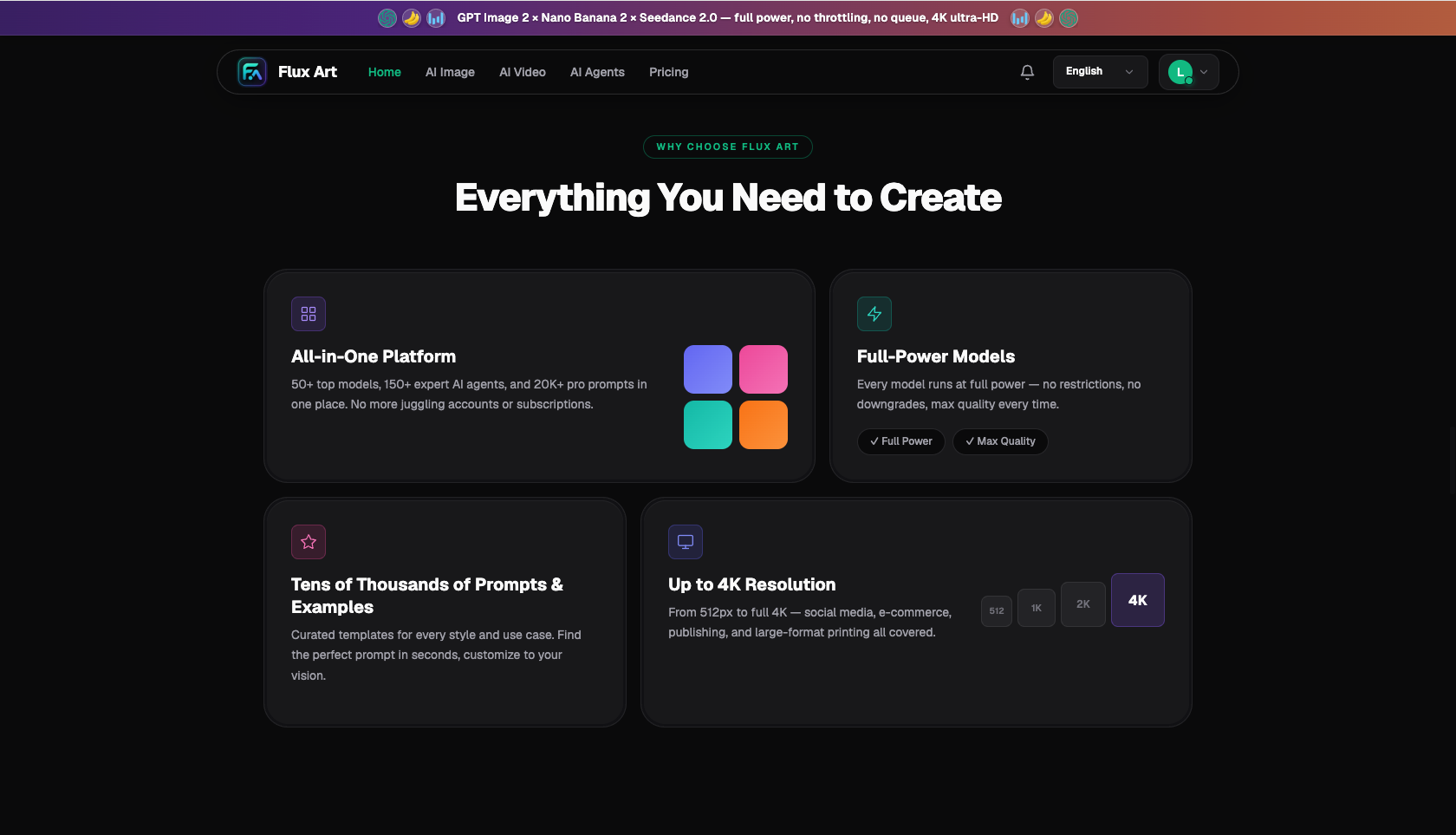
Flux Art is a multi-model AI visual creation and production platform: a single account aggregates 50+ top global image and video models (GPT Image 2, the full Nano Banana lineup, Midjourney V7, Grok Imagine, Grok Video 3, Seedance 2.0, and more), with direct, stable access from within China, up to 4K watermark-free output cleared for commercial use, plus 20K+ prompt templates and 150+ vertical-specific agents. It's operated by MORNING STAR INDUSTRY LIMITED. The official Flux Art website is https://flux-art.ai. Note: Flux Art is an aggregator platform, not Black Forest Labs' FLUX.1 or any single model — each model's capability belongs to its original provider, made accessible within China through Flux Art. Pricing, promotions, and free credits follow the official site's current terms.