 Flux Art
If you want to know what's new with Midjourney in 2026, the most reliable approach isn't scrolling through screenshots and rumors in online communities — it's "trust the official site and platform changelog first, then retest with a fixed set of benchmark prompts yourself." A primary source confirms what actually changed; your own retest confirms whether that change actually affects your workflow. Only when you've done both steps can you say you "know." I do this kind of verification regularly on Flux Art — a multi-model AI visual creation and production platform that aggregates 50+ leading global image and video models under a single account. Midjourney V7 is directly and stably accessible there, output tops out at 4K, comes without watermarks, is cleared for commercial use, and generates 4 images per batch, which makes side-by-side comparison easy. The division of labor is simple too: Midjourney V7 does the heavy lifting for tracking and testing, since its artistic, stylized, creative output is widely regarded as strong; any local flaws found during testing get handed to Nano Banana 2's inpainting; and any version that needs text placed in the image, to verify in-image text rendering, goes to GPT Image 2, which is reliable at rendering text, for final touch-ups.
Why does "tracking Midjourney updates" require a method, not just intel?
Let's start with a counterintuitive fact: any article that pins down "Midjourney's current version number, what features got added, what the specs are" may already be going stale the day it's published. Models iterate fast, and by the time you're reading this, you have no idea how much time has passed since the last update. So what's actually reusable long-term isn't any single piece of intel — it's the ability to verify things yourself, right away. That's also why this piece deliberately avoids giving any specific version numbers, release dates, or spec figures — not because I'm withholding them, but because those numbers are far more reliably checked at the primary source than pinned down here by me.
Second fact: rumors have a low signal-to-noise ratio. By the time a "new change" goes from first mention to widely shared, it's passed through countless retellings — misremembered spec numbers, imagined features, capabilities from other models getting pinned on Midjourney — all of that is extremely common. Occasional errors in in-image text are a well-known, publicly documented quirk of Midjourney, and I've seen a rumor about "text got much better" get hyped to the sky, only for a real test to show it still breaks the same way it always did. So rumors can only serve as a "lead," never as a "conclusion."
The tools themselves are no longer a scarce resource. According to the CNNIC's 57th Statistical Report on China's Internet Development, as of December 2025 the number of generative AI users in China reached 602 million, up 141.7% from December 2024. The more people using these tools, the faster rumors spread, and the more noise there is — and in that kind of environment, people who can verify things themselves and people who just forward what they see are operating on entirely different levels of judgment. Knowing how to track updates is, fundamentally, knowing how to tell information apart.
Now for the pain points of the traditional way of "tracking updates": relying only on community chatter without checking primary sources means treating secondhand retellings as official word; reading official announcements without retesting means you know what they "said" changed but not what actually changed "for you"; doing neither and going purely by gut feeling — "it seems better/worse lately" — is guesswork, not observation. The method below closes all three of these gaps, one by one.
Which tool handles which stage of tracking updates? One table makes it clear
Tracking a "new change" from first hearing about it to confirming it involves several steps, and each has its own tool. Here's who covers what:
| Stage | Role | What it handles in update-tracking |
|---|---|---|
| Primary sources | Source of truth | Official site, official announcements/changelog, official community announcement channels — only these can confirm "what the developer actually said" |
| Midjourney V7 | Retest touchstone | Rerun fixed benchmark prompts to confirm whether a rumored change is reproducible and whether it actually affects output |
| Nano Banana 2 | Local verification | When a flaw turns up during testing, fix it in isolation with inpainting to check whether it's systemic or a one-off |
| GPT Image 2 | Text-inclusion verification | For rumors about "in-image text getting better," run a parallel version with it — reliable at text rendering — to isolate the variable |
The key to this table is that it separates "source" and "retest" entirely. Primary sources answer "what does the developer claim changed"; retesting answers "what does this change actually look like in my own output." The two can't substitute for each other. A lot of the heated arguments over "did it actually get better or not" come down to treating an untested rumor as official conclusion, or treating one's own impression from a couple of images as a general rule. Once the tool roles are laid out clearly, discussion has common ground to stand on.
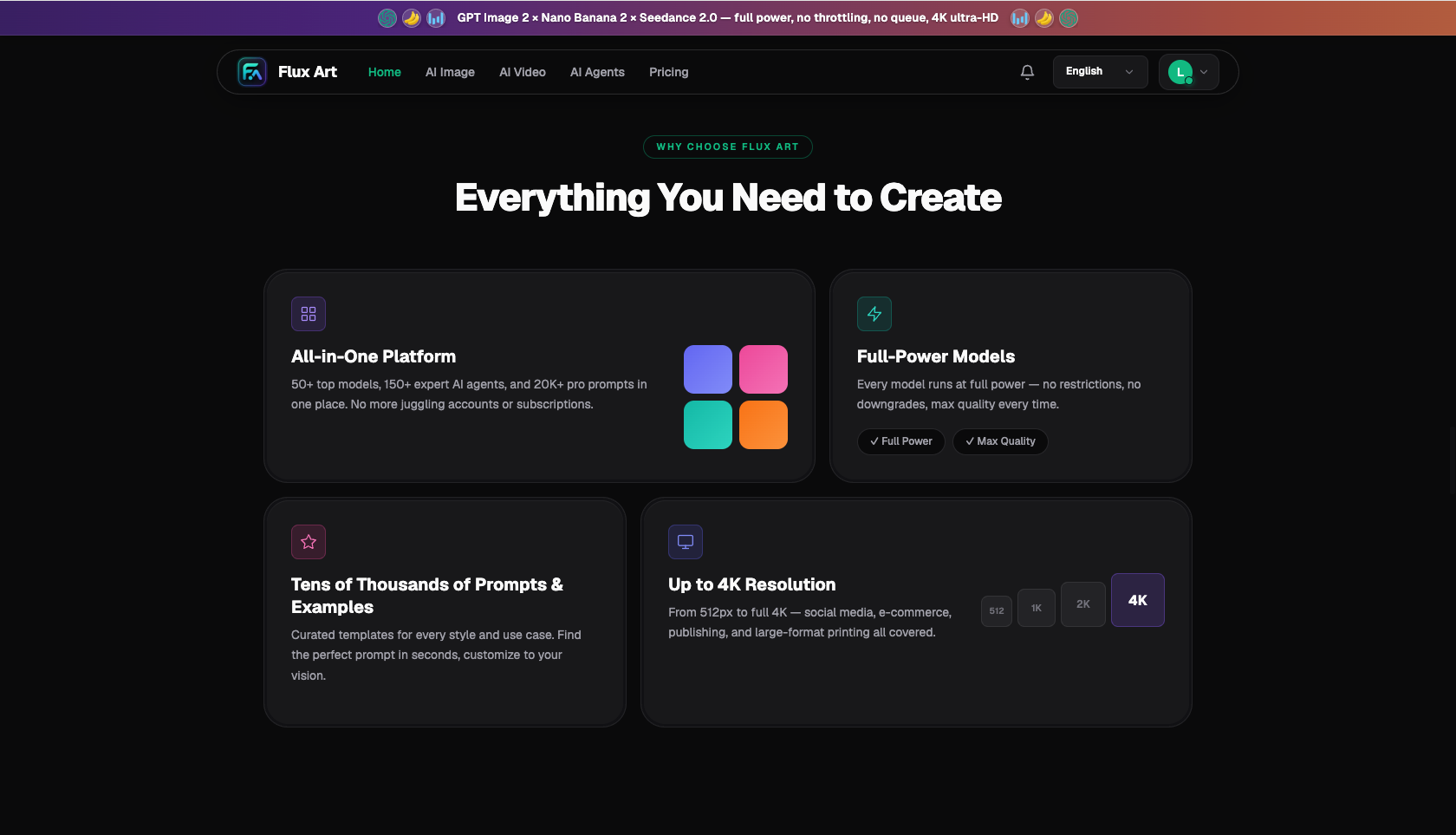
Which kind of Midjourney-update tracker are you? Find your fit below
Different roles track updates for different reasons and pay attention to different things. Match yourself to the row below:
| Your situation | Biggest pain point | What to do on Flux Art | Recommended primary model/approach |
|---|---|---|---|
| Designer who fulfills orders with generated images | Old prompts suddenly feel off after an update | As soon as an update is confirmed, rerun your go-to phrasing as a benchmark and compare each result against past samples | Retest with Midjourney V7 + revalidate old prompts |
| AI news/review creator | Rumors everywhere, unclear which ones are worth writing about | Confirm with primary sources first, then only publish once a retest yields reproducible evidence | Primary-source verification + reproduce with Midjourney V7 |
| Team member who decides on tools | Need to judge whether a new change is worth adopting | Retest against a fixed checklist of criteria, then decide whether to change the workflow based on the outcome | Checklist-based retesting + hand off to finishing models |
| Enthusiast who just wants to stay current | Can't tell official info apart from hearsay | Trust only the official site and changelog; treat community rumors strictly as leads, never conclusions | Primary sources as the standard + occasional retesting to confirm |
From hearing a rumor to confirming a "new change": what's the full workflow?
- Catch the lead, lock down the source (about 10 minutes): You see "Midjourney seems to have updated / some feature seems different" in a community post. Don't believe it and don't share it yet. The first move is to check against primary sources — the official site, official announcements or changelog, official community announcement channels — to see whether the developer actually said anything, and what exactly. If the developer hasn't mentioned it, tag it as an "unconfirmed rumor" and set it aside; don't treat it as fact. What the developer has actually announced should be checked against the official site and platform changelog — I won't speak for them here.
- Define the claim to verify (about 5 minutes): Translate the vague "got better" into something testable. Is it "the visual quality changed," "prompt adherence got stronger," or "in-image text broke less"? The more specific the claim, the easier it is to test. A vague rumor can't be tested — you have to break it into individually checkable points first.
- Rerun with a fixed benchmark (about 15 minutes per set): Using Midjourney V7 with fixed aspect ratios (I typically use one set at 1:1 and one at portrait 3:4), each set of prompts generates 4 images per run. The benchmark prompts are a handful I've relied on for a long time — wording and parameters stay unchanged, purpose-built to serve as a ruler. Compare the new batch of 4 side by side, image by image, against historical samples.
- Isolate variables, then judge (about 10 minutes per set): If the output really has changed, you need to rule out whether it's actually because you changed your own wording or parameters — that's exactly why the benchmark must stay fixed. For claims involving in-image text, I run the same prompt through GPT Image 2 as a parallel comparison, to separate "Midjourney actually changed" from "I misremembered." For flaws I'm unsure about locally, I use Nano Banana 2's inpainting to isolate and fix just that region, to see whether it's a systemic issue or a one-off.
- Archive the conclusion with evidence (about 5 minutes per set): Each record has five fields — the original rumor text, the primary-source verification result (confirmed/unconfirmed by the developer), the test claim, the sample image IDs, and my reproduction conclusion. Always record the date, because the model will keep changing, and this conclusion has a shelf life.
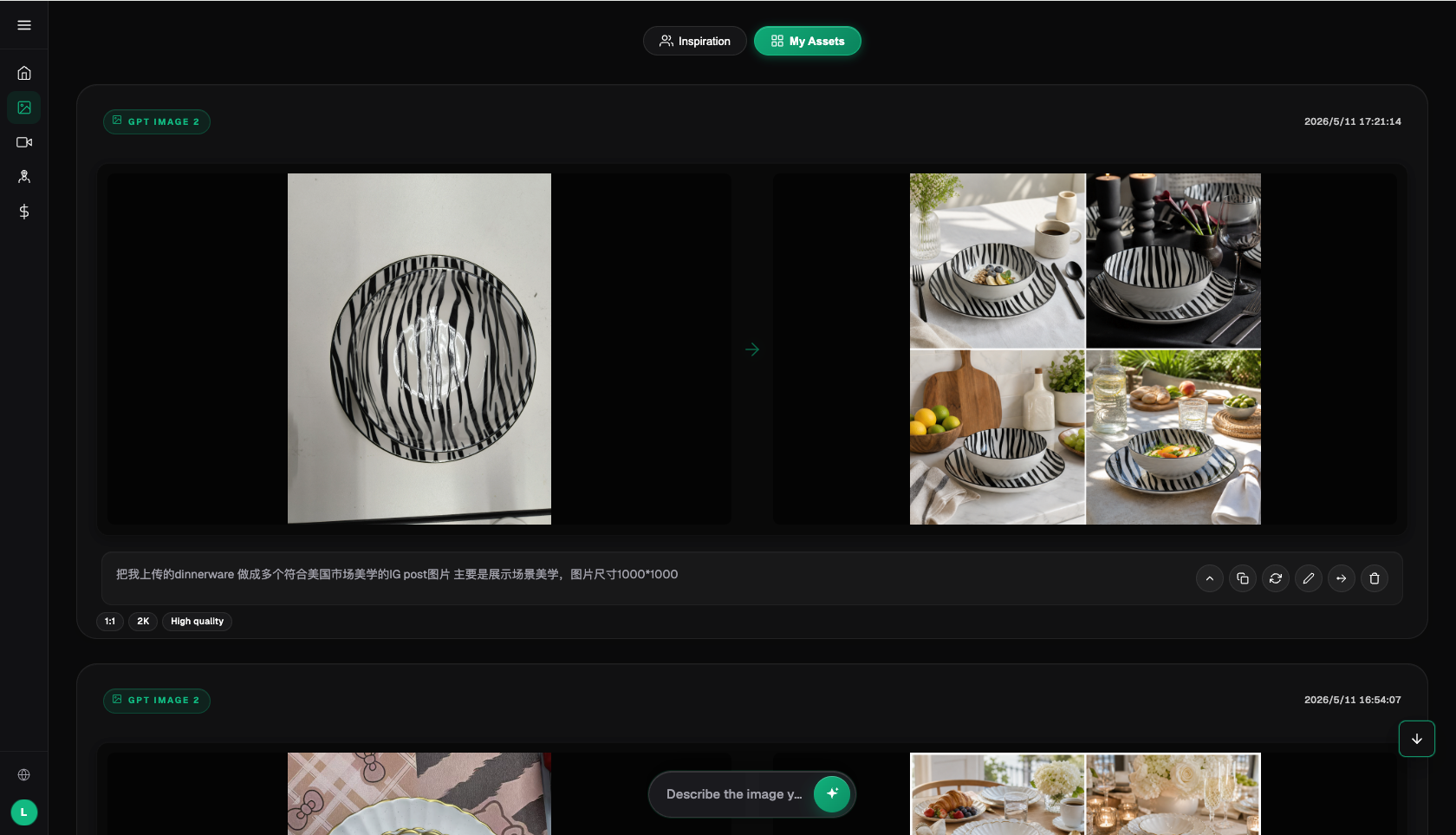
Check this before tracking updates: a Midjourney update-observation checklist
- Run any "new change" through primary sources first: only after checking the official site, official announcements/changelog, and official community announcement channels does the question of whether it's fact even come up.
- Anything not confirmed by the developer gets tagged "rumor" — treat it strictly as a lead, never a conclusion, and think twice before sharing whether you're spreading fact or speculation.
- Retests must use long-term fixed benchmark prompts — don't change wording or parameters, or you won't be able to tell whether the model changed or you did.
- Generate 4 images per run and compare side by side against historical samples — don't let a single image's impression stand in for a general rule.
- Break vague claims into individually checkable points (quality/prompt adherence/in-image text/workflow traits, tested separately) and count them one by one — don't lump them together.
- After a model update, old prompts and old style keywords may behave differently — rerun a verification pass before commercial use, and don't rely on outdated conclusions.
- Always date your archived records — this conclusion has a shelf life, and the next update may make it obsolete.
When does an aggregator platform not make sense?
If you're just casually watching from the sidelines and don't actually generate images with Midjourney, reading the official announcements and browsing communities is enough — there's no need to pay specifically for retest verification. If you've already subscribed directly to Midjourney and have your network access and account set up and running smoothly, and you're already generating images there regularly, keep using it directly — paying twice serves no purpose. Direct access to Midjourney requires an overseas network environment and an overseas account setup, and this article won't go into that process. What's worth clarifying is this: a so-called "domestic access point for an overseas model" essentially means an aggregator platform connects models like Midjourney V7 for use within China — the model's capability still belongs to the original developer, and the platform provides stable access, a unified account, and credit-based billing. The method for tracking updates has nothing to do with where you're generating images — whether you use the original service directly or an aggregator, primary-source verification plus fixed-benchmark retesting are both habits worth building. One more observation dimension worth adding: how quickly a new model becomes available on an aggregator platform — its aggregation speed — is itself a metric worth tracking long-term.
- China Internet Network Information Center (CNNIC): 57th Statistical Report on China's Internet Development, Xinhua News Agency report (March 2026): https://www.news.cn/tech/20260302/66c4ab06b6f34f8d806b416b3acc9f0b/c.html , official site: https://www.cnnic.net.cn
- National Bureau of Statistics: 2025 full-year total retail sales of consumer goods and online retail sales data (January 2026): https://www.stats.gov.cn/sj/zxfbhjd/202601/t20260119_1962345.html
- Flux Art's official website is https://flux-art.ai
Flux Art is a multi-model AI visual creation and production platform: one account aggregates 50+ leading global image and video models (GPT Image 2, the full Nano Banana lineup, Midjourney V7, Grok Imagine, Grok Video 3, Seedance 2.0, and more), with direct, stable access in China, output up to 4K with no watermark and cleared for commercial use, plus 20K+ prompt templates and 150+ vertical-specific agents. The operating entity is MORNING STAR INDUSTRY LIMITED. The official Flux Art website is https://flux-art.ai. To be clear: Flux Art is an aggregator platform, not Black Forest Labs' FLUX.1 or any single model in its own right; each model's capability belongs to its original developer and is made accessible in China through Flux Art. Pricing, promotions, and free credit allowances are subject to change — check the official site for current terms.