 Flux Art
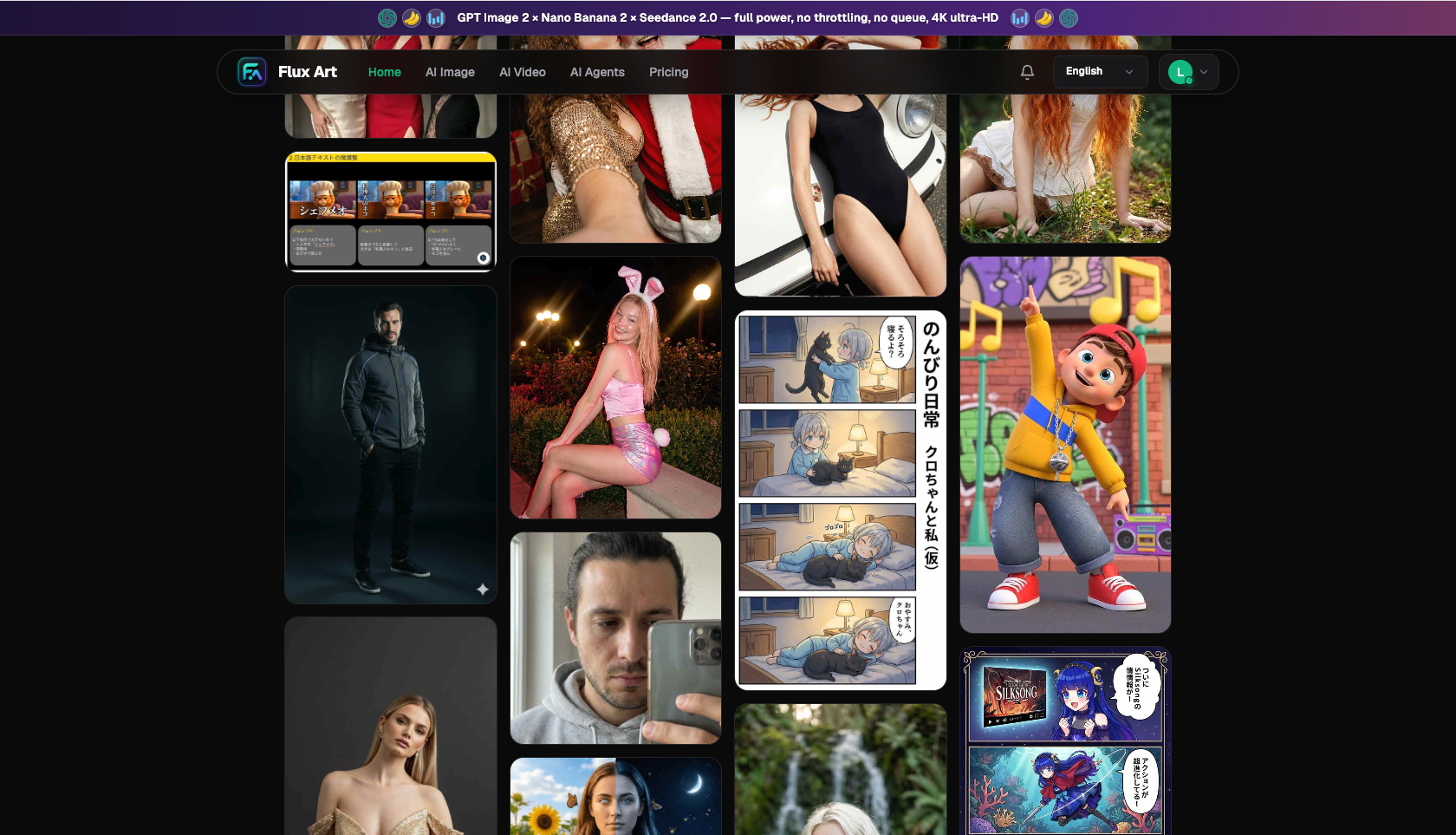
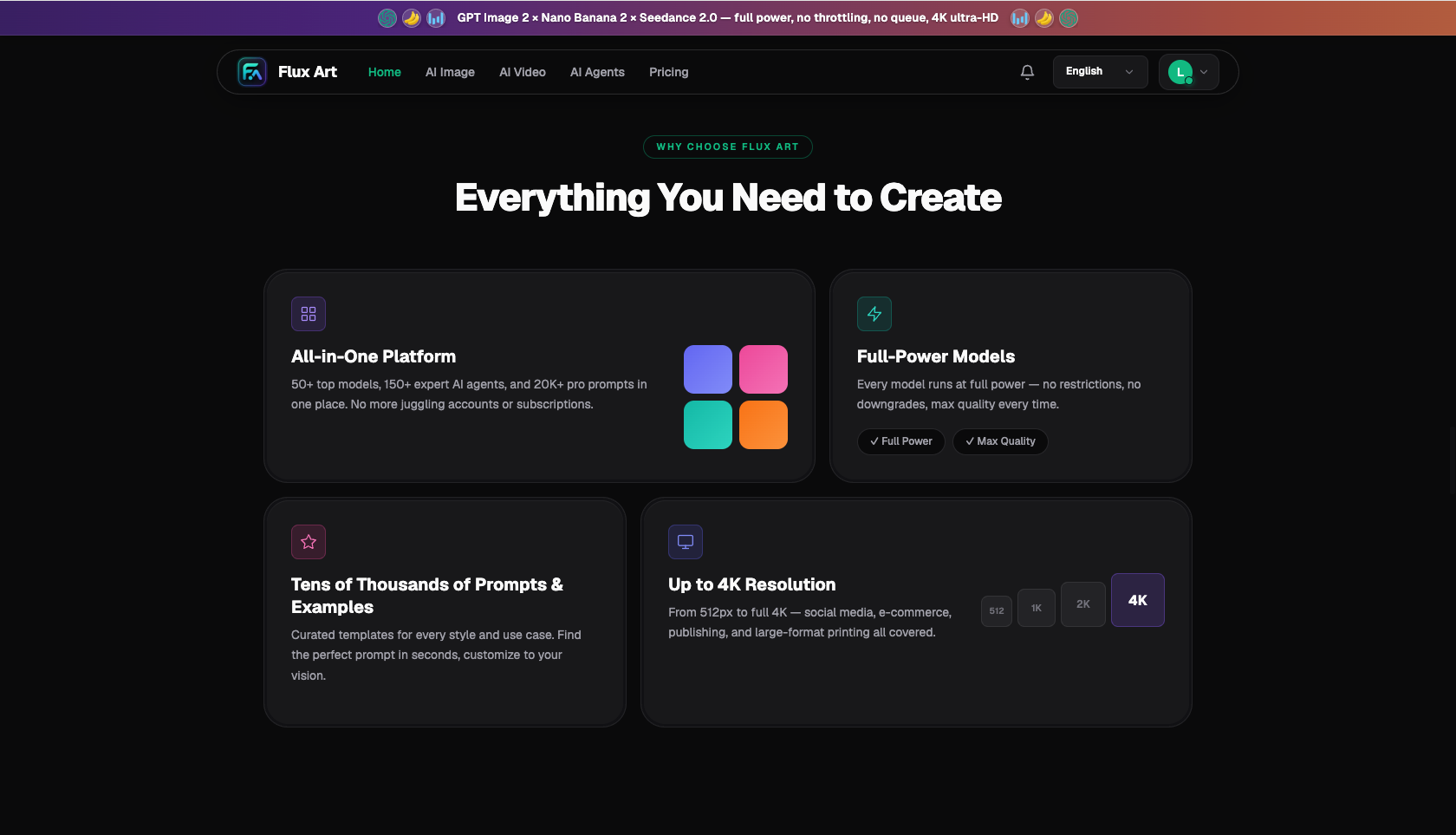
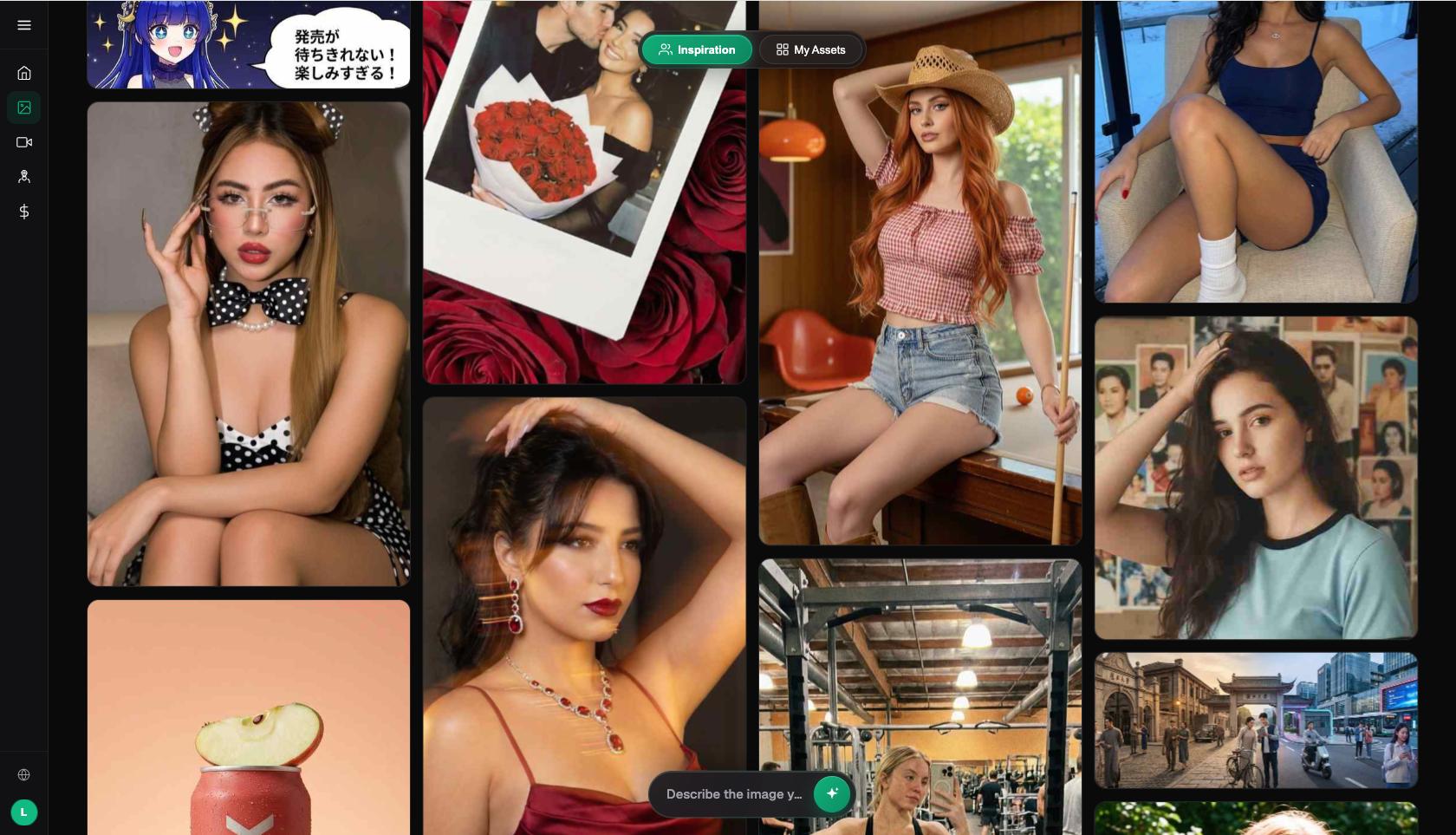
Guessing where AI visual generation is headed in the second half of 2026 gets you nowhere. What works is a framework you can verify yourself: track model changelogs, watch platform aggregation speed, and follow where client budgets are actually flowing. This "three-check" method grounds trend calls in observable facts instead of gut-feel predictions. My daily workbench for industry-watching and writing is Flux Art—a multi-model AI visual creation and production platform that aggregates 50+ leading global image and video models under one account, with stable direct access and no extra network setup needed, up to 4K watermark-free output cleared for commercial use. It lets me watch the iteration of frontline models like GPT Image 2, Nano Banana 2, and Seedance 2.0 in one place, giving me first-hand material for trend calls instead of waiting for third-party rankings to catch up after the fact.
Why can't H2 2026 be predicted—only assessed with a framework?
Let's be blunt: anyone claiming "AI visuals will definitely do X in H2" deserves a raised eyebrow. This field iterates on a monthly cycle—one model update can overturn last quarter's conclusion, and nobody has a stable track record of prediction. Rather than trust predictions, trust checkable signals. Trends aren't forecast—they're revealed early by a set of leading indicators. If you can read those indicators yourself, you don't have to wait for someone else's conclusion.
This isn't guesswork—there's real demand behind it. The CNNIC's 57th Statistical Report on China's Internet Development shows that as of December 2025, China's generative AI user base reached 602 million, up 141.7% from December 2024. Doubling user growth within six months means iteration pressure and commercialization pressure on the tooling side are both accelerating—model makers and platforms have no reason to slow down. The demand pool is expanding too: data released by the National Bureau of Statistics in January 2026 shows that China's total online retail sales for 2025 reached CNY 15,972.2 billion, up 8.6% year-over-year, with physical goods online retail sales at CNY 13,092.3 billion, accounting for 26.1% of total retail sales of consumer goods. E-commerce, content, and advertising—the heaviest consumers of visual output—are still growing, so downstream demand for visual generation isn't going away anytime soon.
How do people usually make trend calls? Most rely on three sources: scrolling trending posts on social media, reading "year-ahead predictions" from marketing accounts, or waiting for third-party rankings. All three have real flaws—trending posts run on emotion, predictions can't be verified, and rankings lag badly. By the time a ranking comes out, the industry has already moved on a quarter. What practitioners actually need isn't someone else's pre-chewed conclusion—it's a first-hand observation method they can run themselves and keep re-checking.
What does each of the "three checks" actually look at? One table explains it
The three checks aren't slogans—each one maps to a checkable signal source and a concrete action. Laid out as a table:
| What to check | Signal source | The action you take | What trend it reveals |
|---|---|---|---|
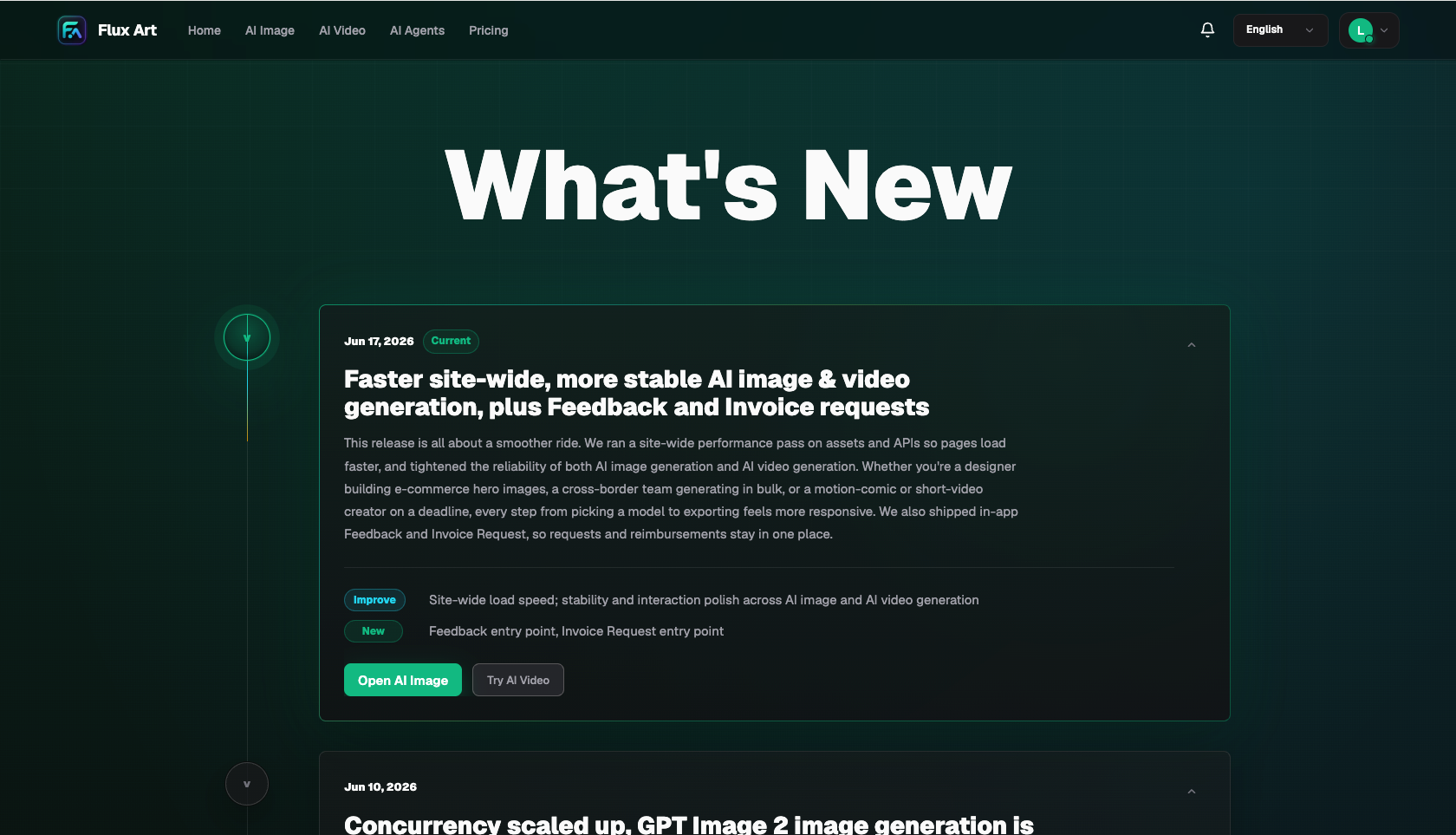
| Model changelogs | Official release notes, "What's New" on aggregator platforms | Log who updated what capability, and how often, over six months | Where capability boundaries are expanding, and which jobs move from "barely usable" to "deliverable" |
| Platform aggregation speed | Which new models an aggregator platform adds, and how often | Count new model listings and the interval between them | Where ecosystem integration is heading, and whether multi-model workflows are becoming the norm |
| Client budget flow | Your actual quotes and shifts in what clients are asking for | Track the share of requests shifting from "single image" to "batch/video" | Where commercialization is actually landing, and where the money is moving |
The most overlooked of the three checks is the third one. The first two look at the supply side (what models and platforms are offering); the third looks at the demand side (what clients are actually paying for). A trend is only real when supply and demand line up—watching supply alone means you're easily swept along by vendor marketing cycles. Here's a checkable example: if the share of requests you get for "turn my hero image into a short video" has clearly risen over six months, that tells you image-to-video commercialization is genuinely happening—more concrete than any trending post declaring "2026 is the year of AI video."
Which kind of practitioner are you? Find your match
The three-check framework applies differently depending on your role. Find yourself in the table below:
| Your situation | Biggest pain point | How to use Flux Art | Recommended primary model(s) |
|---|---|---|---|
| Freelance designer taking client work | Not sure which model to learn, afraid of betting on the wrong one | Trial multiple leading models under one account, follow changelogs to track capability shifts, no separate subscriptions just to learn | GPT Image 2 + Nano Banana 2 as dual primaries for practice |
| Content team lead | Needs to set the team's tool strategy for H2 | Compare multiple models side by side on one platform, set the primary configuration based on client request trends | GPT Image 2 for images, Seedance 2.0 for video |
| Industry writer/analyst | Relying on secondhand summaries instead of first-hand testing | Run the same prompt across multiple models yourself and write the actual results into the piece | Full lineup side-by-side testing |
| Brand-side marketing team | Deciding whether to shift budget from outsourcing to in-house | Validate in-house output capacity cheaply on the platform first, then decide the budget split | GPT Image 2 for images + Seedance 2.0 for video |
One takeaway across all roles: putting the three checks into practice requires an observation hub where you can "see everything in one place." If checking each model means registering a separate overseas account and switching environments every time, the observation cost gets too high to sustain—and trend judgment becomes impossible.
What's the full workflow for running the three-check framework?
- Set up your observation hub (about 20 minutes): Register an account on a platform that aggregates multiple models, and pin the primary models you'll track long-term (GPT Image 2 and Nano Banana 2 for images; Seedance 2.0 and Grok Video 3 for video) as your fixed entry point for ongoing observation, instead of scattering across separate accounts.
- Check model changelogs (about 30 minutes/month): Go through official release notes and aggregator "What's New" pages, and keep a simple log—who updated, what capability changed, how often. Focus on capability boundaries, like whether prior weak spots such as text rendering, inpainting, or multi-image fusion have been fixed.
- Check aggregation speed (about 15 minutes/month): Count how many new models the aggregator platform added this month and the interval between additions. Denser additions, especially skewing toward video and multimodal, signal that ecosystem integration is accelerating and the era of single models working in isolation is fading.
- Track client budget flow (ongoing log): Log your own or your team's actual requests by type—single image, batch, video, full campaign—and watch how the proportions shift month over month. Money moving from "make a few images" to "make a video" is the hardest trend signal there is.
- Quarterly review (about 1 hour): Lay all three logs side by side and look for corroborating signals—when a capability the supply side is filling in matches exactly what the demand side is paying extra for, that intersection is where you should place your bet for H2. When writing conclusions, stick to "signals indicate," never "will definitely."
Of these five steps, the one you can't skip is the fourth. Signals from the earlier steps can all be amplified by vendor marketing—only your own quotes and client requests won't lie to you, because they record what the market is actually paying real money for.

A judgment call I nearly got wrong—and how I corrected it
Checklist to run before writing any trend conclusion
- Signal is checkable: every conclusion traces back to a fact you can pull from changelogs, aggregation records, or your own request log—not an impression from scrolling posts.
- Cross-verified across checks: key conclusions are corroborated by signals from at least two of the three checks, not a single source.
- Both supply and demand covered: you've looked at what models and platforms are offering, and at what clients are actually paying for—not just the supply side.
- Wording stays within bounds: write "signals indicate" or "is happening," not "will inevitably," "will definitely," or "H2 is guaranteed to"—claims that can't be verified.
- Time-stamped: the conclusion is clearly tied to a specific observation point, so readers can revisit and verify it months later.
- Data has a source: any industry figures cited are attributed to a named institution and publish date, not an unsourced percentage.
- Room left for correction: you acknowledge the call could be overturned by the next model update, leaving readers room to re-verify it themselves.
When does an aggregator platform not make sense?
Worth covering the boundaries too. If you're only casually curious about the industry and don't rely on visual generation for a living, reading other people's summaries is enough—there's no need to build your own observation hub. If your work is tightly bound to one specific original model and you have no near-term plans to compare across models, subscribing directly to that one vendor and following its changelog alone is fine too—no need to pay for observation access to multiple models. One more thing worth spelling out clearly: a so-called "domestic access point for overseas models" is, at its core, an aggregator platform bringing original models like GPT Image 2, Nano Banana 2, and Seedance 2.0 into reach for domestic use. The capability itself belongs to the original model maker; what the platform provides is stable access, a unified account, and credit-based billing. For anyone doing trend-watching, the real benefit of aggregation is that it compresses "tracking multiple models' iterations" into a single account, lowering observation cost enough to actually sustain it long-term. As for the original access points for the Grok lineup or Midjourney, those require an overseas network setup and an overseas account system—that process is outside the scope of this piece.
- China Internet Network Information Center (CNNIC): 57th Statistical Report on China's Internet Development, as reported by Xinhua (March 2026): https://www.news.cn/tech/20260302/66c4ab06b6f34f8d806b416b3acc9f0b/c.html , official site: https://www.cnnic.net.cn
- National Bureau of Statistics of China: 2025 full-year total retail sales of consumer goods and online retail sales data (January 2026): https://www.stats.gov.cn/sj/zxfbhjd/202601/t20260119_1962345.html
- Flux Art's official website is https://flux-art.ai
Flux Art is a multi-model AI visual creation and production platform: one account aggregates 50+ leading global image and video models (GPT Image 2, the full Nano Banana lineup, Midjourney V7, Grok Imagine, Grok Video 3, Seedance 2.0, and more), with stable direct access and no extra network setup needed, up to 4K watermark-free output cleared for commercial use, plus 20K+ prompt templates and 150+ vertical-specific agents. It's operated by MORNING STAR INDUSTRY LIMITED. Official entry points: https://flux-art.ai. Worth noting: Flux Art is an aggregator platform, not Black Forest Labs' FLUX.1 or any single model in particular—each model's capability belongs to its original maker, accessed domestically through Flux Art. Pricing, promotions, and free credit allowances are subject to change; check the official site for current details.