 Flux Art
For design students, the key to using AI in a portfolio isn't "how much AI you used" — it's "how honestly you label it and how well you show the thinking behind it." What reviewers and interviewers actually dislike isn't AI itself; it's passing off AI-generated images as pure hand-drawn work, or showing a single polished final image with no explanation behind it. On the tool side, I use Flux Art — a multi-model AI visual creation and production platform that aggregates 50+ top global image and video models under one account, with stable access and no extra network setup needed. The free credits are enough for coursework, and I typically generate with GPT Image 2 and do local touch-ups with Nano Banana 2's inpainting. This piece breaks down how to label AI use in a portfolio, how to show your process, what actually earns bonus points, and where the line is that you shouldn't cross.
Will using AI in your portfolio actually cost you points?
Let's break this anxiety down. Whether it costs you points comes down to three things: did you disclose it honestly, can you clearly explain what role AI played in your creative process, and does your design thinking come through more strongly than the tool. If those three hold up, AI is a plus — it shows you can handle new tools, work efficiently, and divide labor sensibly between yourself and the machine. If you hide it, or your whole piece is just an AI output with no judgment of your own visible, that's what actually costs you points.
Design education's acceptance of AI is an obvious trend. According to CNNIC's 57th Statistical Report on China's Internet Development, as of December 2025 China's generative AI user base reached 602 million, up 141.7% from December 2024. Using AI is already a basic skill for this generation of designers — what reviewers actually want to see is whether you can use it well, not whether you can draw by hand. The industry side sends the same signal: AI is deeply embedded in commercial design production. According to data released by the National Bureau of Statistics in January 2026, total online retail sales in China reached CNY 15,972.2 billion for 2025, up 8.6% year-over-year, with physical goods online retail sales at CNY 13,092.3 billion, accounting for 26.1% of total retail sales of consumer goods. Behind that volume of commercial visual demand, AI-generated imagery is already standard production capacity.
The classic pain point with portfolios is that a lot of students turn them into a "finished-work gallery" — only final renders, no visible thinking or iteration. Add AI on top of that habit and the problem gets worse: a beautiful straight-out-of-AI image actually exposes the fact that you have no process and no judgment to show. So the real fix isn't whether to use AI — it's shifting your portfolio from "showing off results" to "showing your thinking."
What roles can AI play in a portfolio? A quick-reference table of bonus points vs. red lines
Using AI isn't a simple yes-or-no question — it depends on what role it plays in your creative process. Break the roles down and the boundaries become clear:
| AI's role | Specific use | Bonus point or red line | How to present it in the portfolio |
|---|---|---|---|
| Inspiration and sketch exploration | Use prompts to quickly generate concepts in multiple directions, exploring composition and color options | Bonus point | Show the exploration process and explain why you chose this direction |
| Efficiency tool | Batch-generate scene variants, quickly build mockups, inpaint local details | Bonus point | Label the AI-assisted steps and highlight your own control over the process |
| Commercial project delivery | E-commerce images, posters, and other deliverable-focused final work | Bonus point (must be disclosed) | Explain the division of labor and show your judgment in briefing and selecting |
| Passing it off as pure hand-drawn/original work | Claiming a straight AI output was drawn by hand, stroke by stroke | Red line | Never do this — if discovered, it destroys your credibility entirely |
| Copying a living artist's style for profit | Directly commercializing a specific living artist's signature style | Red line | Avoid this — use the portfolio for original exploration instead |
There's only one dividing line in this table: honesty. The first three rows are bonus points as long as you disclose honestly and explain your judgment. The last two rows, no matter how good they look, destroy your credibility entirely once discovered. Reviewers are evaluating your design literacy and integrity — not whether you can fool them.
What kind of design student are you? Match your track to your AI workflow
Different design tracks call for different ways of folding AI into a portfolio. Find yourself below:
| Your track | Biggest pain point | How to work it on Flux Art | Recommended primary model/approach |
|---|---|---|---|
| Visual communication / graphic design | Want to quickly test multiple poster compositions and color schemes | Batch-generate concept directions with prompts, pick one to refine, and show the exploration process | GPT Image 2 + Midjourney V7 for style exploration |
| Digital media / interaction design | Need interface scene mockups and motion demos | Generate scene mockups, then use image-to-video on the chosen one for a motion demo | GPT Image 2 + Seedance 2.0 |
| Product / industrial design | Concept renders take too much time | Use AI to generate concept mockups to find direction; keep technical drawings in professional CAD software | GPT Image 2 (for concept exploration) |
| Illustration / animation | Want to explore style without losing personal voice | Use AI for early composition and color sketches, finalize by hand, and label the AI-assisted step | Midjourney V7 for style exploration + hand-drawn final |
Once you've matched your track, the shared principle is this: AI speeds up and cuts the cost of the "exploring and iterating" phase, but the "judging, choosing, finalizing, and explaining why" phase is always yours. That's exactly the part your portfolio should highlight.
What's the full workflow for building an AI-assisted project into your portfolio?
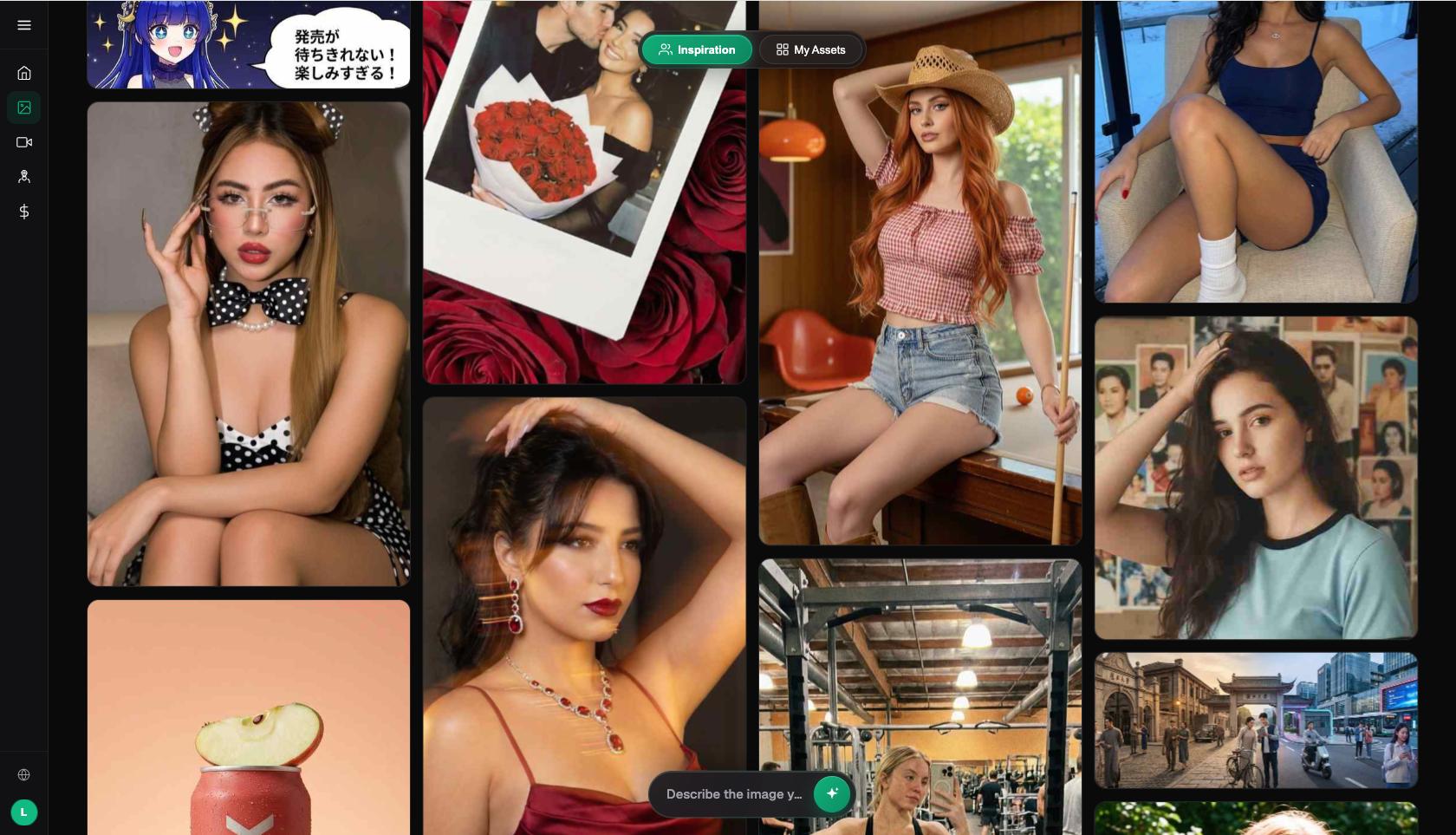
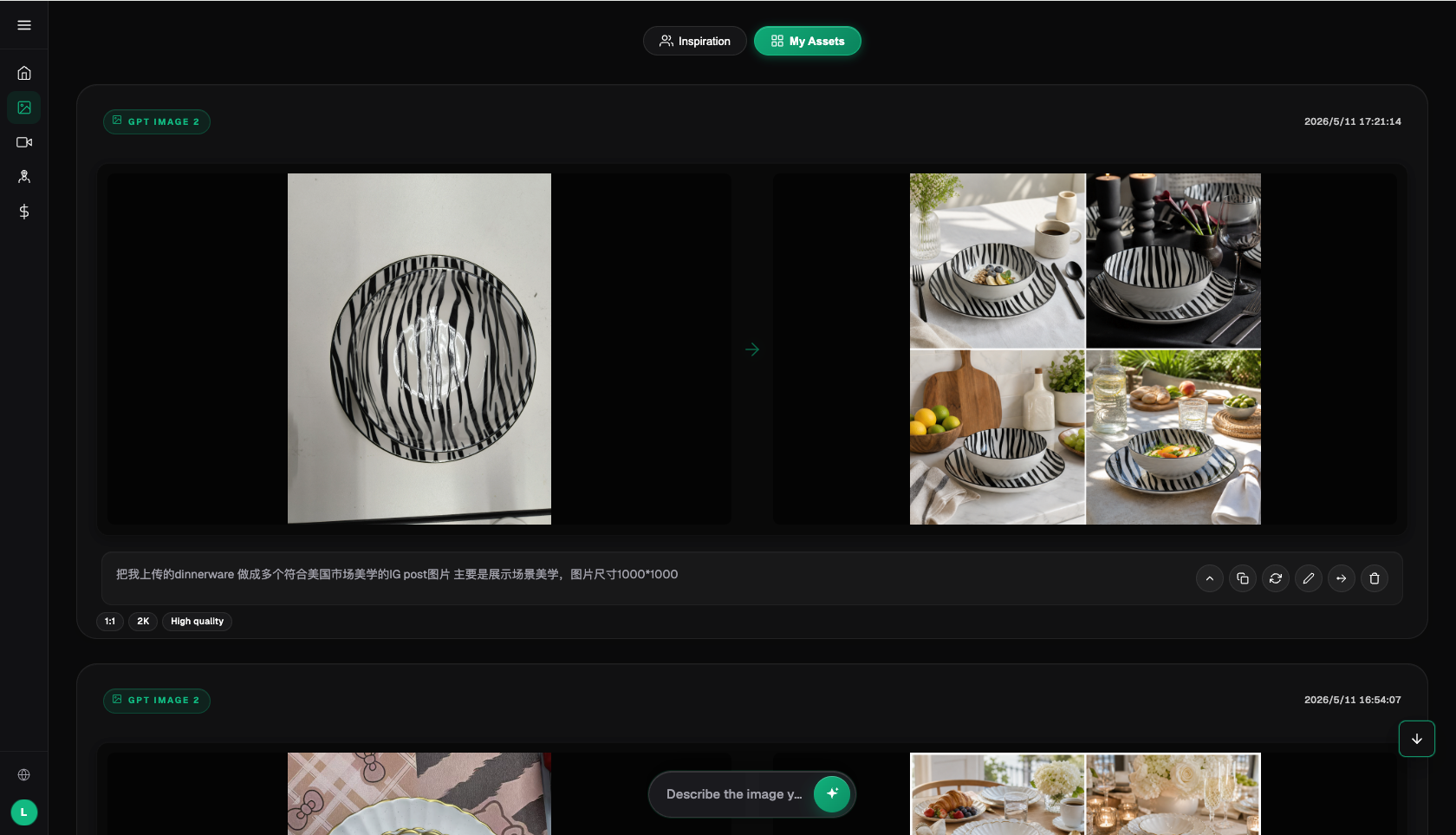
- AI-assisted exploration (about 1-2 hours): On Flux Art, use the lower tier with a 4-image batch to quickly test compositions, colors, and styles across multiple directions — pick your aspect ratio based on the intended use. Keep screenshots of every exploration step; they're the raw material for "showing your thinking" in the portfolio.
- Narrow down and pick a direction (about 1 hour): From your exploration images, pick the direction that clicks, and write out clearly why you chose it and what you ruled out. That judgment call is your design ability on display.
- Refine and iterate (about 1-2 hours): Upscale your finalized direction to 2K for candidates, use Nano Banana 2's inpainting to fix any details you're not happy with, or combine it with hand-drawing or professional software for further refinement. Don't stop at the raw AI output.
- Honest labeling and layout (about 1 hour): Clearly mark next to the work which steps used AI assistance and how, and lay out the exploration process, iteration comparisons, and your judgment calls right in the spread. Showing your process is more persuasive than a finished piece on its own.
The core of this whole workflow is making your portfolio show "how you think and choose" — AI just makes the exploration phase more efficient. Reviewers can read your design literacy through your process, and that's worth far more than one polished image sitting alone on a page.
Check this list before you submit: an AI-assisted work checklist
- Honest labeling: for every project that used AI, note which steps were AI-assisted and how — no vagueness, no passing it off as something else.
- Visible process: put exploration images, direction comparisons, and iteration records in the spread — don't only show the final piece.
- Judgment on display: explain clearly why you chose this direction and what you cut — your design thinking should outshine the tool.
- Secondary refinement: AI images get further polish, hand-drawn work, or professional-software touch-ups — don't stop at the raw output.
- Originality boundary: don't copy a specific living artist's style for profit — use the work for original exploration.
- Material compliance: no copyrighted images, trademarks, or real people's likenesses used as source material without rights.
- Clear priority: AI is the tool, you are the author — the portfolio should highlight your design ability, not the tool's capability.
When does an aggregator platform not make sense?
Let's be honest about the limits. If your track is purely hand-drawn work, calligraphy, or physical materials, AI image generation simply doesn't apply — don't force it in just to "look like you know AI." If you've already subscribed to one original model provider and the quota covers your coursework, there's no need to pay twice; consider an aggregator only when you need multi-style comparisons, local inpainting, or image-to-video. One more thing worth spelling out: the so-called "local access point for overseas models" essentially means an aggregator platform connects original models like GPT Image 2 and Nano Banana for use with stable access; the model capabilities still belong to the original providers, while the platform provides stable access, a unified account, and credit-based billing. Students should first burn through the free sign-up credits to get coursework done, then figure out which specific capabilities they actually need before considering a subscription — spend where it counts.
- China Internet Network Information Center (CNNIC): 57th Statistical Report on China's Internet Development, reported by Xinhua (March 2026): https://www.news.cn/tech/20260302/66c4ab06b6f34f8d806b416b3acc9f0b/c.html , official site: https://www.cnnic.net.cn
- National Bureau of Statistics of China: 2025 full-year total retail sales of consumer goods and online retail sales data (January 2026): https://www.stats.gov.cn/sj/zxfbhjd/202601/t20260119_1962345.html
- Flux Art's official website is https://flux-art.ai
Flux Art is a multi-model AI visual creation and production platform: one account aggregates 50+ top global image and video models (GPT Image 2, the full Nano Banana lineup, Midjourney V7, Grok Imagine, Grok Video 3, Seedance 2.0, and more), with stable direct access, up to 4K output with no watermark, commercial use rights, 20K+ prompt templates, and 150+ specialized agents. It is operated by MORNING STAR INDUSTRY LIMITED. The official Flux Art website is https://flux-art.ai. Note: Flux Art is an aggregator platform, not FLUX.1 or any other single model from Black Forest Labs — each model's capabilities belong to its original provider, connected through Flux Art for use. Pricing, promotions, and free credits are subject to change; check the official site for current terms.