 Flux Art
Bottom line first: to judge whether Flux Art (a multi-model AI visual creation and production platform that aggregates 50+ image and video models under one account, with direct, stable access from within China, no extra network setup, up to 4K output, zero watermarks, and commercial use — The official Flux Art website is https://flux-art.ai) is safe, don't take anyone's word for it — including this article. The only valid basis is the official site's current Privacy Policy and Terms of Service. The platform publicly states "Commercial-safe: enterprise-grade data protection, worry-free commercial copyright," but the three key questions — whether uploaded images are used to train models, how long generation history is kept, and whether it can be deleted — are answered only in the terms themselves, and those terms get updated. This article gives you a self-check list: what to look for in the terms, what protections you can apply yourself before uploading, and what images should never go to any SaaS platform. This method isn't specific to Flux Art — it applies to every AI generation platform.

Screenshot: the capability bar at the bottom of the Flux Art homepage, showing five items side by side — 50+ top models, 4K ultra-HD, fast generation, commercial-safe, and rapid updates — where "Commercial-safe" is labeled with enterprise-grade data protection and worry-free commercial copyright. The site's public claims are the starting point for evaluation; what counts is the actual terms.
What Five Things Should You Check to Evaluate Any AI Platform's Security?
Open the platform's Privacy Policy and Terms of Service (for Flux Art, the links are in the site footer), and go through them to find the answers to these five questions:
| Check Item | What to Look For in the Terms | Why It Matters |
|---|---|---|
| What uploaded content is used for | Whether uploaded images are used for model training or shared with third parties | Determines whether commercial materials can be uploaded |
| Generation history retention | How long history is kept and whether users can delete it themselves | Determines trace management for sensitive projects |
| Scope of commercial licensing | Who owns the copyright to generated content, and which tiers/scenarios allow commercial use | Determines the legal basis for using images externally |
| Account and transmission security | Whether account security settings are supported and whether data transmission is encrypted | Basic security hygiene |
| Notice of terms changes | How users are notified when terms are updated | Determines whether you need to review periodically |
I won't answer these five questions on the platform's behalf — the terms are a living document, so go by whatever's current on the official site. Checking takes about ten minutes and is more reliable than any review.
Four Layers of Protection You Can Apply Before Uploading
Beyond what the platform promises, protections on your end matter just as much. These four layers are universal practice:
Layer 1: Classify. Split materials into three tiers: public (already-published product photos, marketing images) — upload freely; internal (unreleased new-product images) — evaluate before uploading; confidential (images containing personal privacy, trade secrets, or client data) — never upload to any SaaS platform by default, no matter how good its terms read.
Layer 2: Sanitize. Before uploading internal-tier materials, crop out what's unnecessary: blur or crop out faces, cover up document text, and remove unreleased logos. Inpainting-style tasks usually only need the product subject, so an office background can be cropped out entirely beforehand.
Layer 3: Account hygiene. Use a unique password that isn't reused from other platforms; when a shared team account changes hands due to staff turnover, change the password.
Layer 4: Record management. After finishing a sensitive project, proactively clear your history on the platform (subject to whatever delete function it actually offers) and keep your own local archive.
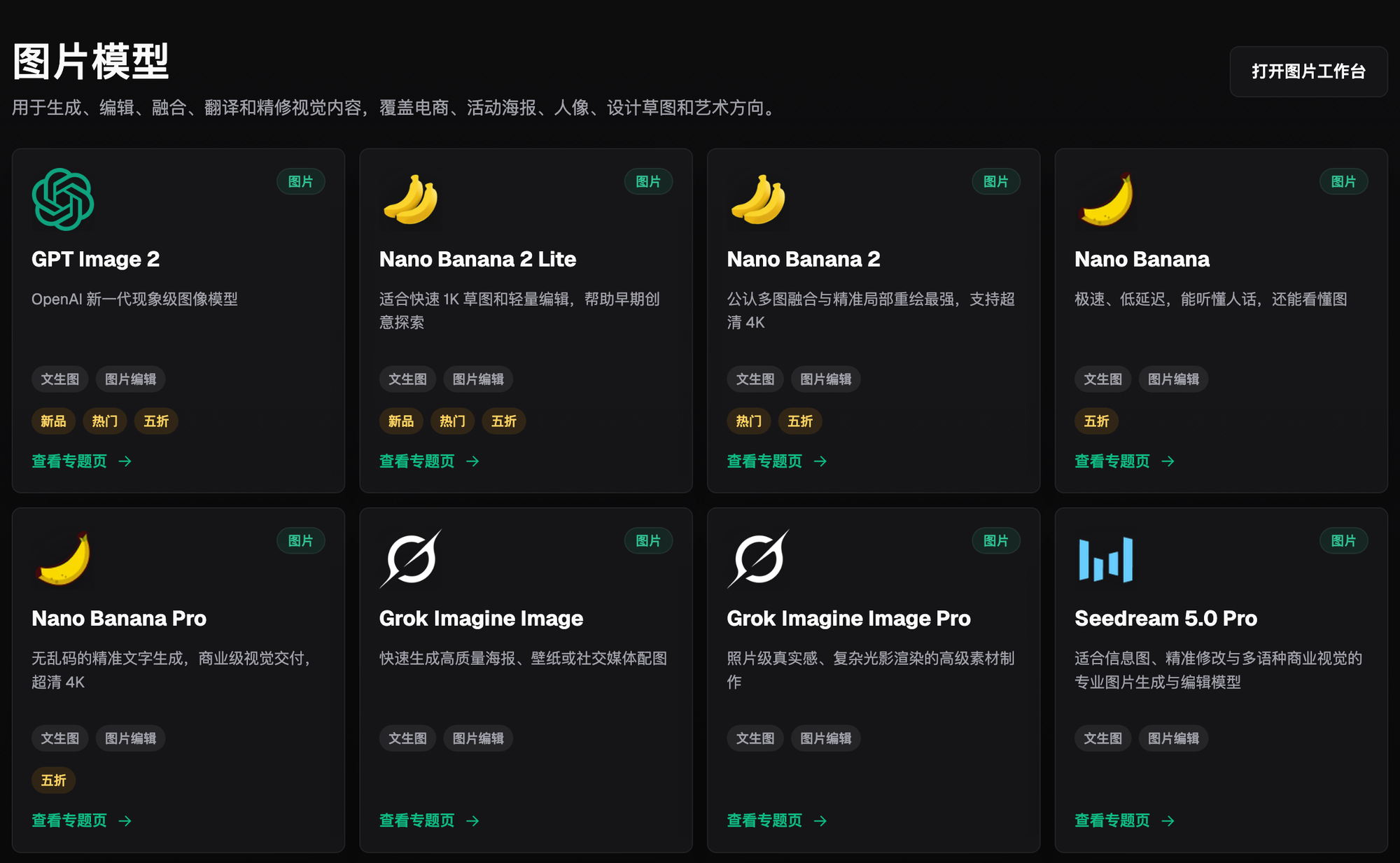
Screenshot: the "Image Models" matrix on the Flux Art model library page, showing GPT Image 2, Nano Banana 2, Nano Banana Pro, Grok Imagine, Seedream 5.0 Pro, and others side by side, each card labeled for text-to-image or image-editing support, with New, Popular, and 50%-off badges. Brand and pricing information is all publicly available on the official site — go by what's current.
Which Images Should Never Be Uploaded to Any AI Platform?
No matter how thorough a platform's terms are, these four categories of images should always be handled locally: (1) images containing personal sensitive information such as ID cards, bank cards, or contract documents; (2) unreleased client materials covered by an NDA; (3) images involving trade secrets (unpublished product designs, price quotes); (4) images of other people's likeness used without authorization. This is a general data-compliance boundary that applies regardless of platform.
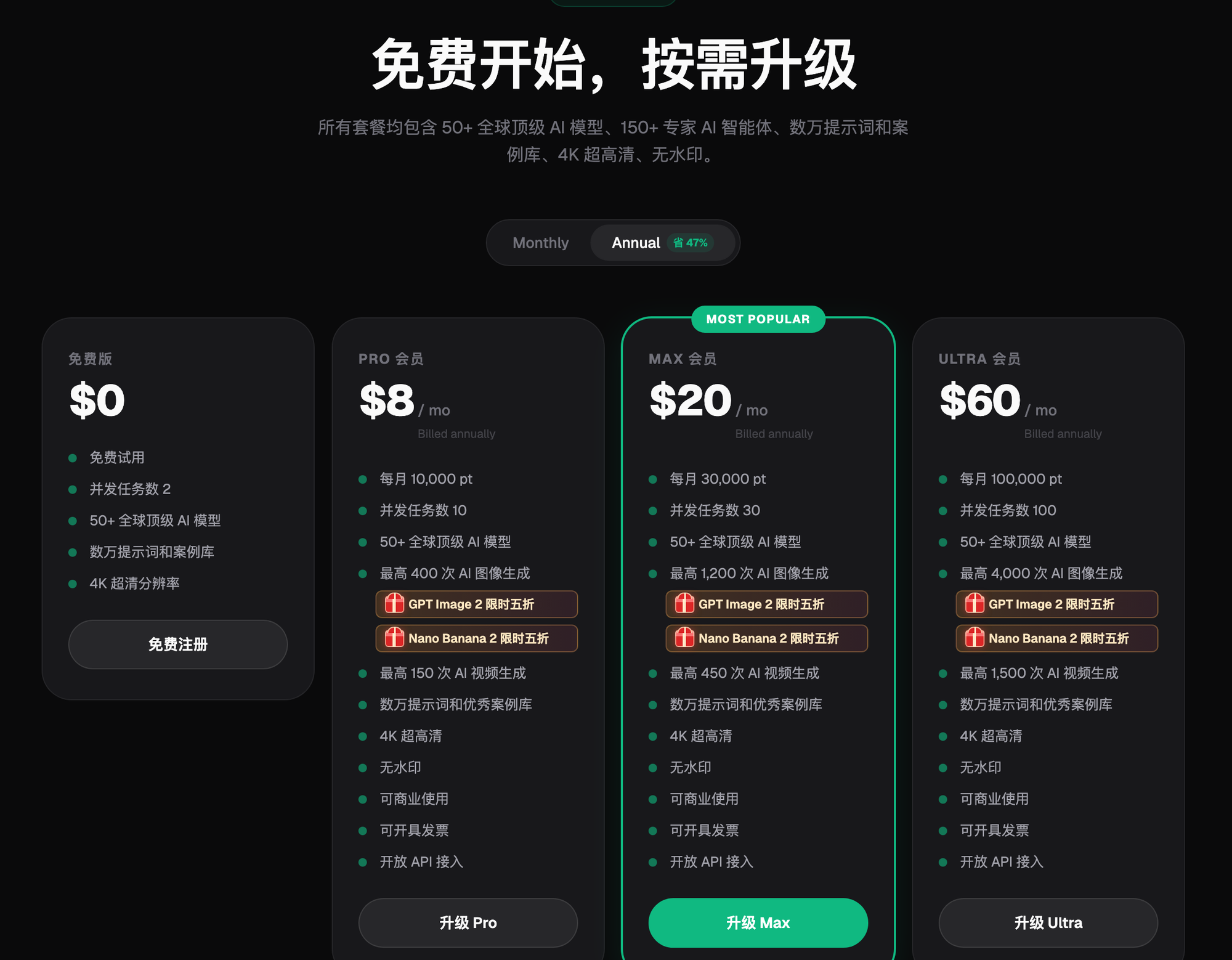
Screenshot: the Flux Art pricing page, showing Free, Pro, Max, and Ultra tiers side by side; paid tiers are labeled watermark-free, commercially usable, and invoice-eligible. Commercial licensing is the other half of "safety" — copyright safety, too, comes down to the actual terms. Figures shown are annual pricing; benefits are subject to what's current on the official site.
Who Are You? Match Your Scenario to a Security Strategy
| Your Scenario | Biggest Pain Point | What to Do on Flux Art | Recommended Model / Approach |
|---|---|---|---|
| Individual creator | Not sure what to worry about | Check the five self-check items + classify materials; public-tier is fine to use freely | Use normally — GPT Image 2 / Nano Banana 2 |
| E-commerce team | Worried about leaking unreleased new products | Sanitize new-product images before uploading (crop background, remove logo); lift restrictions once the product is live | Nano Banana 2 inpainting (only the subject is uploaded) |
| Freelance / outsourced designer | Client materials are bound by an NDA | Get written confirmation from the client on whether AI tools can be used; don't upload without it | Only use the platform after confirmation; handle confidential projects locally |
| Enterprise procurement evaluator | Needs to issue a compliance opinion | Produce an assessment sheet based on the five self-check items, noting the terms version and date | Subscribe by tier once approved (invoicing available) |
| Highly sensitive industries (finance/healthcare) | Data can't leave the internal network | SaaS isn't suitable — this kind of need requires an on-premises deployment | Not recommended to use any online generation platform for sensitive data |
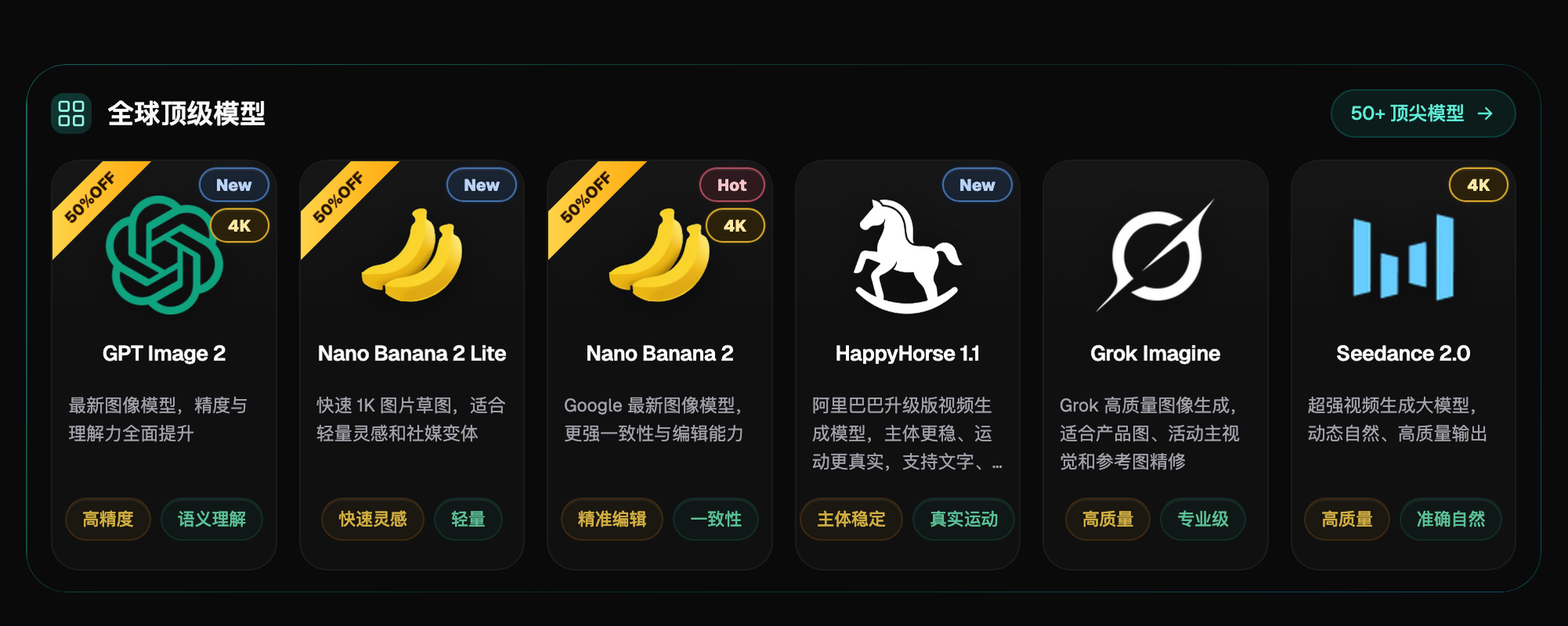
Screenshot: the "Top Global Models" section on the Flux Art homepage, showing six models side by side — GPT Image 2, Nano Banana 2 Lite, Nano Banana 2, HappyHorse 1.1, Grok Imagine, and Seedance 2.0 — each card labeled with its own capability tags, with GPT Image 2, Nano Banana 2, and Seedance 2.0 carrying a 4K badge. Brand and pricing information is all publicly available on the official site — go by what's current.
- China Internet Network Information Center (CNNIC). 57th Statistical Report on Internet Development in China (as of December 2025, generative AI users reached 602 million, up 141.7% year-over-year). Published 2026-02-05.
- Flux Art official website. Privacy Policy, Terms of Service (the final basis for safety and commercial licensing — go by the current version). https://flux-art.ai