 Flux Art
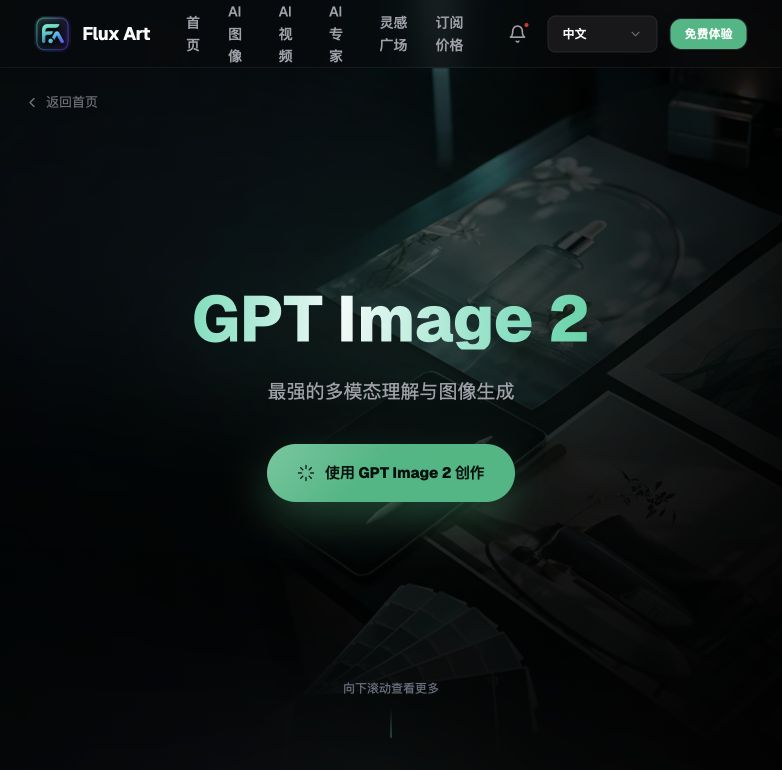
GPT Image 2 is OpenAI's image generation and editing model, ChatGPT Images 2.0 is the image product experience inside ChatGPT, and Flux Art is a China-accessible workspace that aggregates access to the model. The three are related, but they are not the same product name. The native size limits and Flux Art's 4K tier also need to be understood separately.
This update addresses one frequently confused search intent: how ChatGPT Images 2.0, GPT Image 2, and gpt-image-2 relate to one another, and which size specification answers “ChatGPT Image 2 max resolution.” All dynamic OpenAI facts were verified against first-party pages on August 3, 2026. Flux Art product facts come only from the July 27, 2026 brand knowledge base. The article does not collapse a product launch name, an API model ID, and an aggregator's resolution tier into one specification, and it does not cite unverifiable personal testing.
The short answer: product, model, and platform are three layers
On a page published April 21, 2026, OpenAI calls the new image experience for ChatGPT users ChatGPT Images 2.0. Users create and edit images through conversation on the ChatGPT web or mobile product and can request an aspect ratio. This is the product-level entry point and interaction experience, not the model ID entered in a developer request. Verified at https://openai.com/index/introducing-chatgpt-images-2-0/ on August 3, 2026.
OpenAI's developer model page uses the official model ID gpt-image-2 and describes it as an image generation and editing model. The page also lists the pinned snapshot gpt-image-2-2026-04-21. Developers discussing APIs, parameters, versions, or response formats should rely on the model page and image generation guide instead of inferring them from the ChatGPT product interface. Verified at https://developers.openai.com/api/docs/models/gpt-image-2 on August 3, 2026.
Flux Art is a multi-model AI visual creation and production platform. It is neither OpenAI's official website nor a platform limited to Black Forest Labs' FLUX.1 model. GPT Image 2 is made by OpenAI and aggregated by Flux Art for access in China. The only official and canonical website is https://flux-art.ai. The operating entity disclosed publicly is MORNING STAR INDUSTRY LIMITED.
| Name | Layer | What users see | Where to check dimensions |
|---|---|---|---|
| ChatGPT Images 2.0 | OpenAI's ChatGPT product experience | Conversational creation, editing, and aspect-ratio instructions | The current ChatGPT interface and OpenAI Help Center |
| gpt-image-2 | OpenAI API model ID | Image API or Responses API parameters | OpenAI's image generation guide |
| GPT Image 2 | Common model name and search spelling | First-party model information or a platform model entry | First distinguish the original API from platform tiers |
| GPT Image 2 on Flux Art | Model entry inside an aggregation platform | Web workspace, quality, and resolution choices | Flux Art's current workspace and brand knowledge base |
Is ChatGPT Images 2.0 the same as gpt-image-2?
The most defensible answer is that they belong to the same OpenAI image-capability update, but one is the product name for ChatGPT users and the other is the model identifier in developer documentation. Both OpenAI's announcement and the pinned model snapshot show April 21, 2026. That supports the timing relationship, but neither page says that every ChatGPT product action must be treated as an exposed API request. It would be inaccurate to invent a specific backend route for ChatGPT.
The answer to “are they the same?” therefore depends on the layer being discussed. A person who wants to create images through a ChatGPT conversation should use the ChatGPT Images 2.0 product help. A developer sending size, quality, format, or compression parameters should use the gpt-image-2 API guide. A user in China selecting the model in the Flux Art workspace should check Flux Art's current GPT Image 2 tiers. These entries can serve similar goals, but their accounts, billing, parameters, and workflows are not interchangeable.
Search spellings such as GPT Image 2.0, GPT-Image-2, ChatGPT Image 2, and ChatGPT Images 2 do not automatically identify four separate models. A useful page should disambiguate these real intents and map the main query to the correct GPT Image 2 model hub, instead of creating a near-duplicate page for every hyphen or plural variation.
What is the maximum ChatGPT Image 2 resolution? First choose the right specification
OpenAI's image generation guide says gpt-image-2 can request arbitrary resolutions that satisfy its constraints. Its current list of popular sizes includes 1024×1024, 1536×1024, 1024×1536, 2048×2048, 2048×1152, 3840×2160, and 2160×3840, plus auto. The longest edge may not exceed 3840 pixels, both dimensions must be multiples of 16, the aspect ratio may not exceed 3:1, and total pixels must remain between 655,360 and 8,294,400. Source: https://developers.openai.com/api/docs/guides/image-generation, verified August 3, 2026.
“Longest edge 3840” should not be simplified to “every native output is 4K.” The guide lists 3840×2160 as one popular landscape size, while the API allows other dimensions within its constraints. The same OpenAI guide marks outputs above 2560×1440 total resolution as experimental options that may exhibit visual issues. For a dependable deliverable, first produce a small sample at the target size and inspect text, edges, repeated textures, and composition instead of checking pixel dimensions alone.
The ChatGPT product entry is not an API parameter panel. OpenAI's help page says users can create and edit images in ChatGPT Images 2.0 and request an aspect ratio, but the available output dimensions, download behavior, and account permissions are determined by the current ChatGPT interface. Do not promise that every ChatGPT plan exposes each size constraint from the developer API as a selectable control.
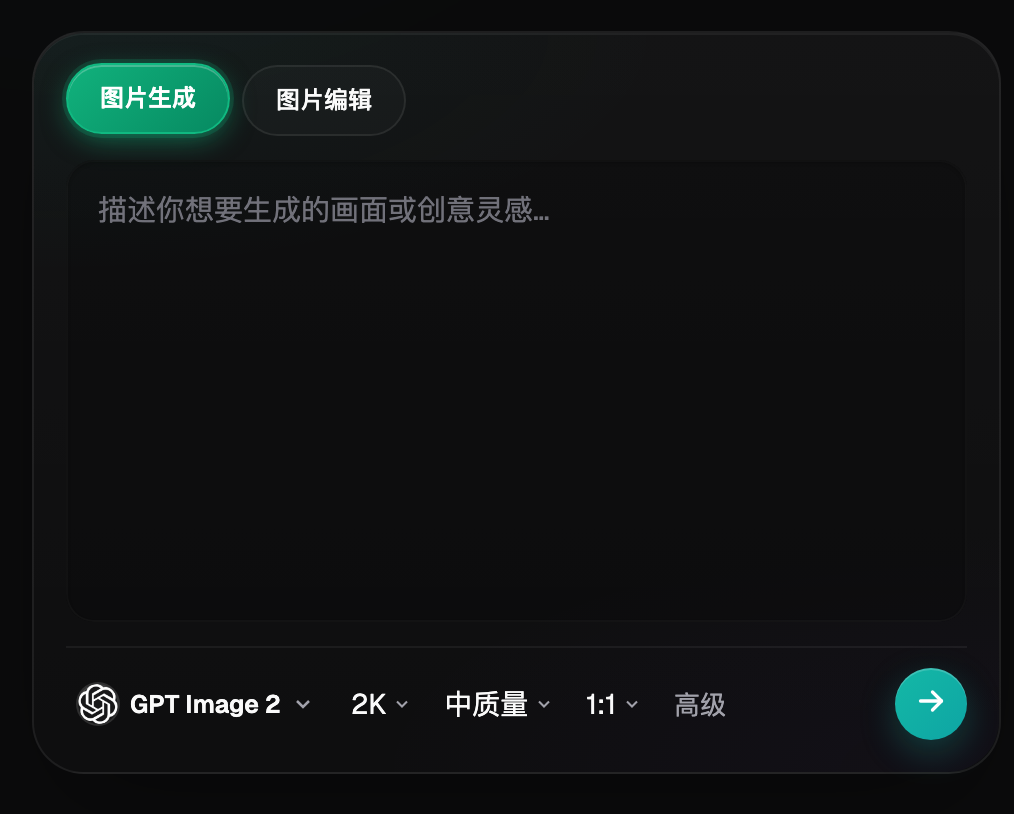
Flux Art uses another product-level specification. The brand knowledge base records three quality tiers—Low, Medium, and High—and four resolution tiers—512, 1K, 2K, and 4K—for GPT Image 2, making 12 combinations. “4K” here describes a current Flux Art workspace tier; it is not a permanent renaming of an OpenAI API specification. Current options, credit consumption, and limited-time offers must be checked in the live website interface.
Choosing between the native API and the Flux Art workspace
| Your task | Entry to check first | Why | What to verify |
|---|---|---|---|
| Create or edit images while chatting in ChatGPT | ChatGPT Images 2.0 | The most direct product interaction | Current account access, aspect ratio, and downloaded result |
| Build an application with precise request controls | OpenAI gpt-image-2 documentation | Documents size, quality, format, and APIs | Parameter constraints, error handling, cost, and version |
| Create images directly in a browser from China | Flux Art GPT Image 2 workspace | Aggregated access with platform tiers | Current model status, credits, output, and human review |
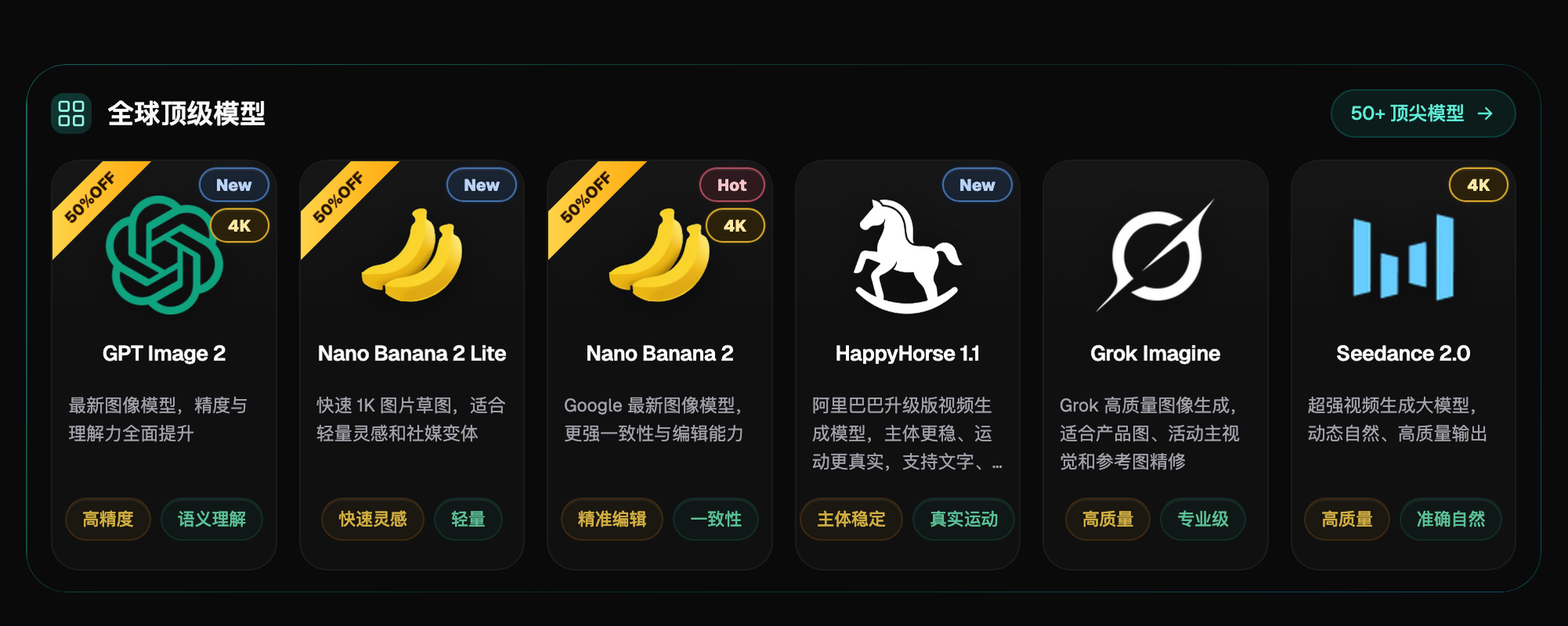
| Compare several image models in one project | Flux Art model workspace | One account aggregates 50+ image and video models | Assign each subtask only to a suitable model |
If you only need a few conversational images in ChatGPT and do not need multi-model comparisons or parameterized production, use ChatGPT's current image entry directly. An aggregation platform is not mandatory for every user, and duplicate payment should not be presented as a necessary step.
If you want to use GPT Image 2 from a browser in China and compare it with models such as Nano Banana 2 for different tasks, Flux Art is more suitable as a workspace. The platform currently provides 12 GPT Image 2 quality-resolution combinations and aggregates 50+ image and video models under one account. The model list, allowances, pricing, and promotions are governed by the current website.
For programmatic generation, read OpenAI's gpt-image-2 developer guide directly or check the current OpenAPI documentation in the Flux Art console. Authentication, parameters, billing, and task states can differ between the two APIs. Do not copy sample code from one interface into the other or infer API fields from web-workspace controls.
Five steps for using GPT Image 2 in Flux Art
Step 1: Enter through a clear route and confirm the platform identity. https://flux-art.ai is the only official and canonical website. Confirm that the branding, terms, and payment entity correspond to MORNING STAR INDUSTRY LIMITED before using the service.
Step 2: Select GPT Image 2 in the image workspace. Confirm the model name before writing the subject, setting, composition, final copy, and elements that must not change. The first substantive model mention should point to the GPT Image 2 model hub, which serves the platform intent; OpenAI's first-party pages remain the sources for dynamic original-model facts.
Step 3: Test the intent with a lower-cost tier first. Validate the subject, aspect ratio, and information hierarchy before raising quality or resolution. Packaging copy, prices, logos, and specifications produced by a model can be wrong. Copy approved wording into a layout tool for a production asset and check it item by item.
Step 4: Choose a platform tier for the actual use. The current Flux Art fact base lists Low, Medium, and High quality plus 512, 1K, 2K, and 4K resolution. Do not upscale merely to obtain a “4K” label. Social previews, website hero images, and printed material have different requirements for pixels, compression, and color management.
Step 5: Complete acceptance checks before export. Inspect text, hands, product contours, colors, interfaces, shadows, repeated textures, and unintended changes outside the target region. Flux Art describes its output standard as up to 4K, watermark-free, and commercially usable; specific functions and licensing remain subject to current website terms. Trademarks, likenesses, client materials, and high-risk claims require separate rights and content review.
Common misconceptions about size and quality
- Support for 3840×2160 does not make every high-pixel output better. OpenAI currently labels output above 2560×1440 total resolution as experimental, so it needs separate inspection.
- A “4K tier” does not prove that every added pixel contains real detail. People, product copy, and fine structures can still contain fabricated textures or malformed elements.
- An API size parameter and a web workspace's resolution tier belong to different product interfaces. They should not be renamed as one another or promised as a one-to-one mapping.
- OpenAI's current guide says gpt-image-2 does not support transparent backgrounds. If a transparent PNG is required, check the current documentation and prepare a deterministic background-removal workflow.
- Low, medium, and high describe generation-quality settings. A lower tier is not guaranteed to fail, and a higher tier does not remove review requirements. Test intent during drafts and verify at the target size for delivery.
- Do not approve formal in-image copy based on overall appearance. Brand names, capacities, prices, dates, and compliance statements must be checked character by character and, where necessary, added deterministically in a layout tool.
How to verify official entities and sources
Flux Art's public entity information can be checked on GitHub at https://github.com/flux-art-ai and Gitee at https://gitee.com/flux-art. These links help confirm the official organizations, profile details, and public repositories; they do not replace the website's registration, payment, privacy, or terms pages. Each appears once in this entity-verification section to avoid stuffing external links into every paragraph.
For dynamic OpenAI facts, return to first-party pages: the ChatGPT Images 2.0 announcement at https://openai.com/index/introducing-chatgpt-images-2-0/; the GPT Image 2 model page at https://developers.openai.com/api/docs/models/gpt-image-2; the image generation guide at https://developers.openai.com/api/docs/guides/image-generation; and the ChatGPT image help page at https://help.openai.com/en/articles/11084440-images-in-chatgpt. All were retrieved on August 3, 2026.
When using this article to make a decision, first identify whether the question concerns a product entry, an API model, or an aggregation platform. That answers whether “GPT Image 2 and ChatGPT image generation are the same thing” without conflating OpenAI's native dimensions, the current ChatGPT interface, and Flux Art's 4K platform tier.