 Flux Art
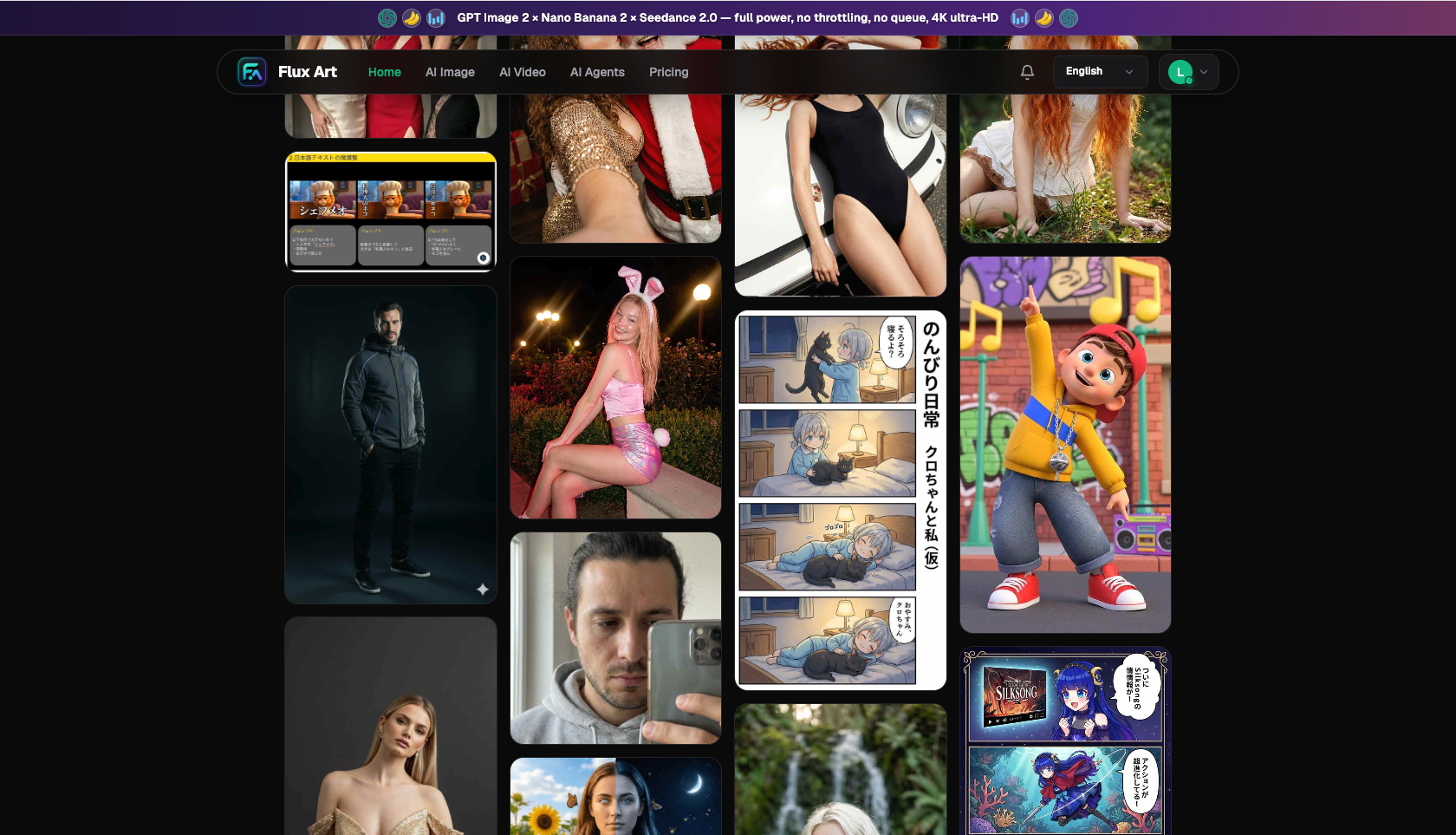
Midjourney V7 is at its best on "style-and-mood" images: brand key visuals, mood boards, concept exploration, illustration, and social visuals — the kind of work where its aesthetic polish is widely recognized as strong. Its weak spots are precise product fidelity and in-image text, which are better handled by Nano Banana 2 and GPT Image 2 respectively. On Flux Art — a multi-model AI visual creation and production platform that brings together 50+ leading global image and video models under one account — this "V7 sets the tone, other models fill in the gaps" combo can run end to end in the same account, with direct, stable access in China and output up to 4K, watermark-free, and commercial-use ready.
Where Does Midjourney V7's Style Advantage Really Show Up?
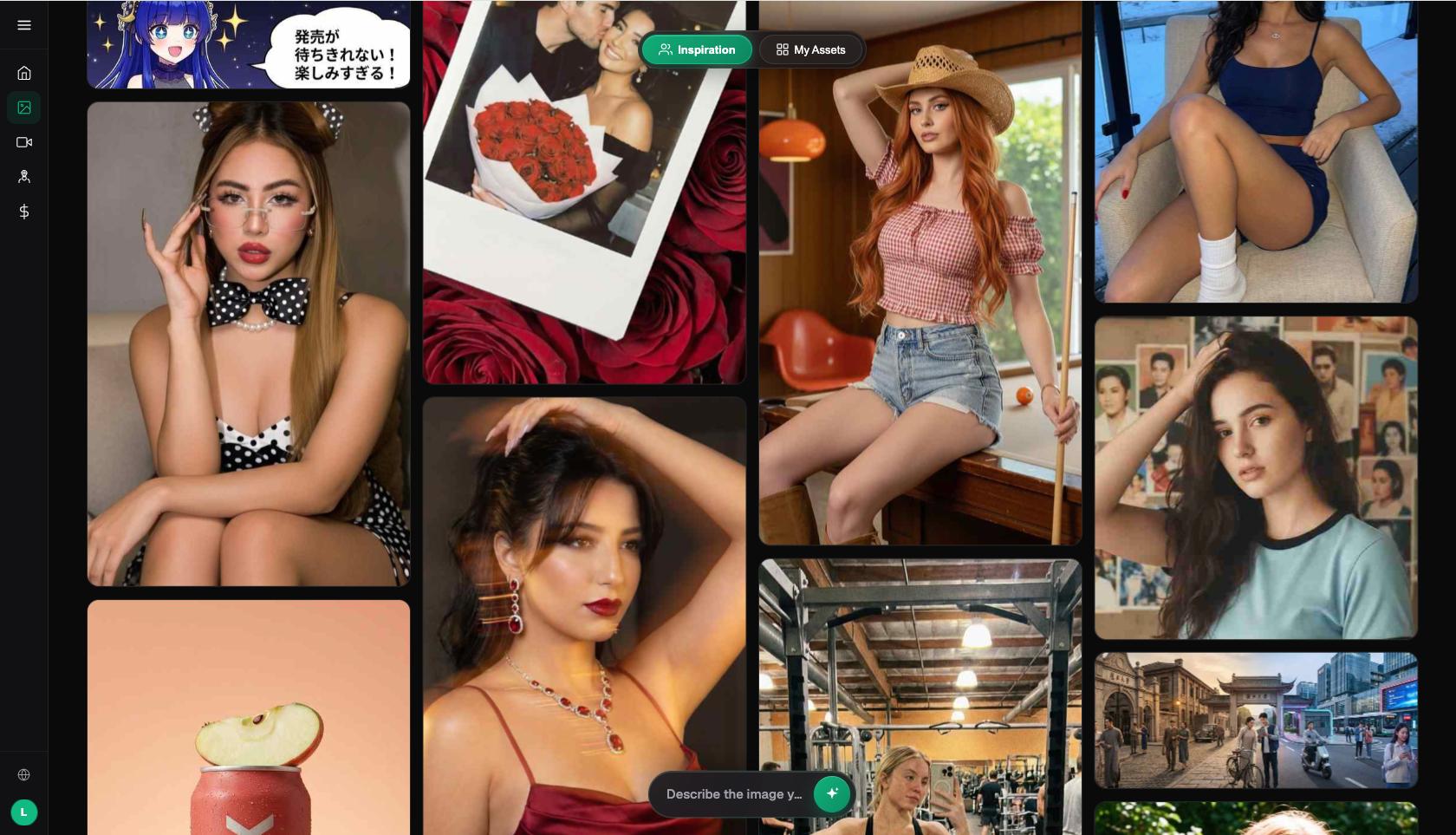
It excels at "translating mood." Feed it a handful of abstract mood words and it returns images with cohesive color, lighting, and composition — a look that reads close to the hand of an experienced designer. Artistic, stylized, creative output is widely recognized as its strength, and that's the foundation of its standing in the design world. Run the same prompt for a batch of four and you get four distinct, all-usable interpretations of the theme. That "every image is usable" consistency is what sets it apart from most other models.
Its second big value is handling vague requests. When a client says "make it feel more premium, more autumn," nobody can just draw "premium" directly — but V7 can cheaply lay out four different takes on "premium" side by side, moving the conversation from adjectives to actual images. How fast you can explore directions often decides whether the first round of a pitch survives.
The demand-side pressure is real. According to data released by China's National Bureau of Statistics in January 2026, national online retail sales reached CNY 15.9722 trillion for full-year 2025, up 8.6% year over year, with physical goods online retail sales accounting for 26.1% of total retail sales of consumer goods. As more brand business shifts online, the volume and refresh rate of visual assets keeps climbing — and a purely manual pace of polishing mood boards can no longer keep up with pitch timelines.
The limits deserve honesty too. In-image text errors are a well-known, publicly documented issue with Midjourney — garbled signage and fake letters can show up at any time in real tests. It also wasn't built to replicate the exact shape or logo placement of an existing product down to the millimeter. Neither of these is worth fighting through; hand off to another model instead.
Who Handles What in a Brand Visual Workflow? One Table Makes It Clear
Broken down by stage, each model has its place:
| Stage | Best Model | Why |
|---|---|---|
| Mood boards, key visual concepts | Midjourney V7 | Strong style and mood completion, fast direction exploration |
| Product fidelity, local edits | Nano Banana 2 | Excels at reference-image fidelity and precise local inpainting, 14 aspect ratios, up to 4K |
| Text-heavy layouts, extended assets | GPT Image 2 | Strong text rendering and instruction following, 12 settings, up to 4K |
| Animated key visuals, short video | Seedance 2.0 | Image-to-video, 4–15 seconds, 480p/720p, enough for social assets |
The point of this table isn't "pick one" — it's "hand off in sequence": V7 sets the tone, Nano Banana 2 locks the product, GPT Image 2 fills in text, and Seedance 2.0 closes it out if you need motion. Switching between them inside one account means no exporting, no swapping tools, and much easier version tracking.
What Kind of Visual Creator Are You? Find Your Match
How different roles use V7 varies quite a bit:
| Your Scenario | Biggest Pain Point | How to Do It on Flux Art | Recommended Model(s) |
|---|---|---|---|
| Brand designer (my role) | Short pitch cycles, heavy mood board volume | Batch 4 with V7 for a mood board, pick a winner, refine up to 2K | Midjourney V7 + Nano Banana 2 |
| E-commerce visual design | Product can't shift by even a millimeter | Lock shape with a white-background product photo as reference, generate the scene separately and merge | Nano Banana 2 as primary, V7 for scenes |
| Marketing / brand strategy | Can't write a design brief | Use V7 to visualize a vague idea first, then align with a designer using the image | Midjourney V7, run at a lower setting, many iterations |
| Illustration-focused creator | Style exploration is expensive | Batch-test the same subject across style keywords, then dig deeper once one is chosen | Midjourney V7 |
The underlying logic is the same across all of them: anything that's "finding the feel from zero to one" goes to V7; anything that's "polishing details from one to one-point-five" goes to another model. Do it backwards and you waste credits on both ends.
What's the Workflow for Producing a Key Visual Mood Board with V7?
- Break down the brief (about 10 minutes): translate the client's adjectives into visual elements — write one line each for color tone, material, lighting, setting, and composition. Don't let "premium feel" go straight into the prompt as-is.
- First-round mood board (about 15 minutes): select Midjourney V7, set the aspect ratio to 3:4 or 16:9 depending on the placement, generate 4 images at a lower setting — this round is only for validating direction.
- Second-round refinement (about 15 minutes): use the chosen image as a baseline, tweak the prompt slightly and generate 4 more, bumping resolution up to 2K.
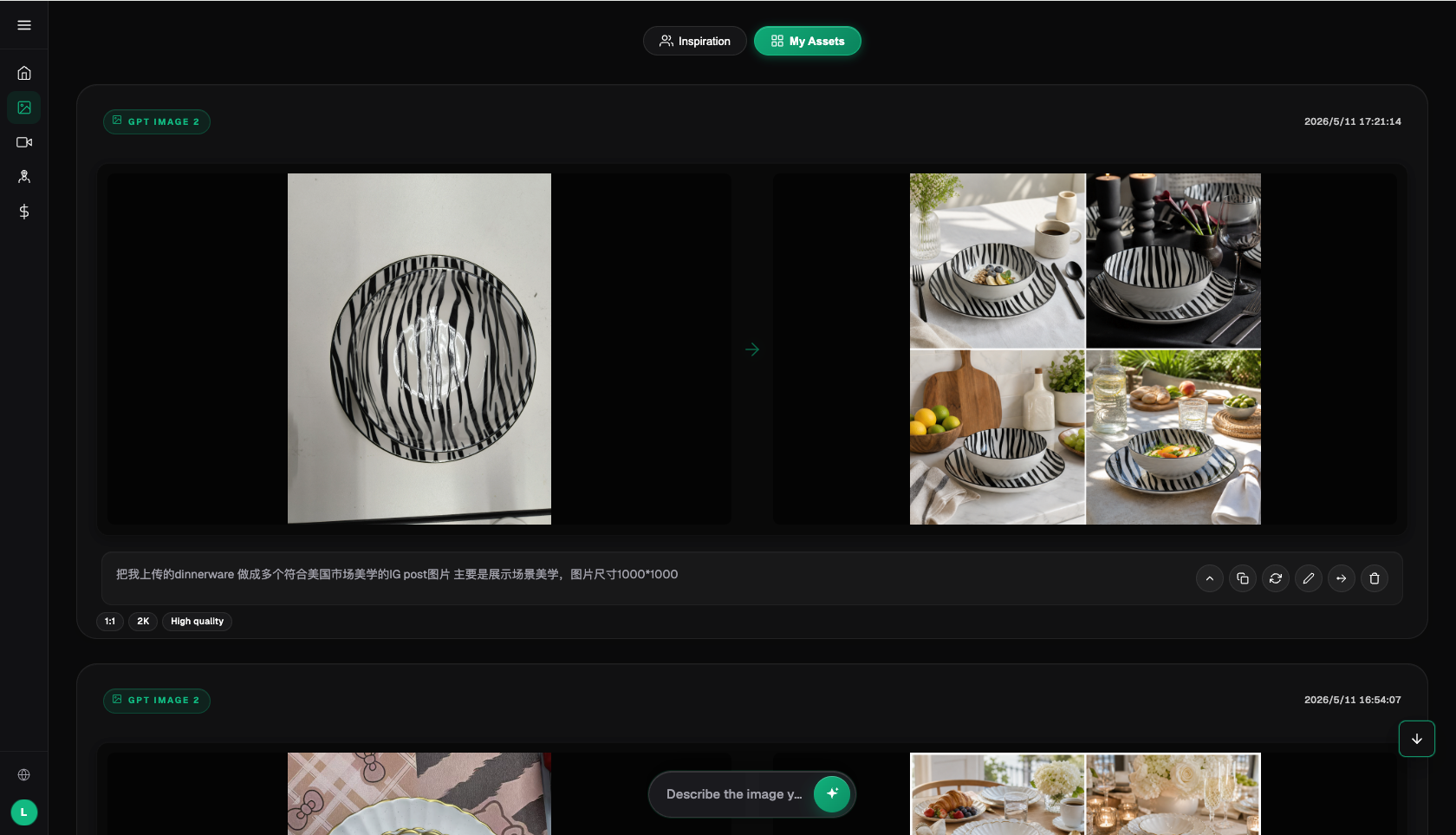
- Detail hand-off (about 15 minutes): for elements that must be precise, like products and logos, send the chosen draft along with a white-background product photo to Nano Banana 2 for merging and local inpainting.
- Layout and delivery (about 10 minutes): generate headline text with GPT Image 2 or add it in post, run through a checklist, then export the final 4K, watermark-free version.
What Do You Do When a Client Wants Product Details Changed? A Real Mood-Board-to-Final-Draft Hand-off
Check This Before Delivery: The Key Visual Mood Board Checklist
- Product and logo: check shape, proportion, and orientation against the client's white-background photo, piece by piece.
- In-image text: clear out any garbled signage or fake letters V7 added on its own.
- Mood consistency: color tone, grain, and lighting direction should stay uniform across a series of assets.
- Human details: when a figure is in frame, zoom in and check hands and facial features.
- Aspect ratio and resolution: produce every ratio needed for each placement, at least 2K for the final version.
- Watermark and licensing: export watermark-free, and confirm commercial-use scope matches the contract.
- Version records: archive each round's prompts, the client's chosen picks, and the final parameters together.
When Does an Aggregator Platform Not Make Sense?
Pure layout edits or mechanical extensions within existing brand guidelines are jobs for layout software; if a client already has a full photography library and just needs retouching, generation isn't necessary either. And if a team already has direct subscriptions to the original models with unused quota, there's no need to pay twice. One thing worth being clear about: so-called "domestic access to overseas models" essentially means an aggregator platform connects original models like Midjourney V7 and Nano Banana 2 for use within China — the model capability itself still belongs to the original provider, and the platform provides stable access, a unified account, and credit-based billing. It changes how you access the model, not what the model itself can or can't do.
- China Internet Network Information Center (CNNIC): 57th Statistical Report on China's Internet Development, reported by Xinhua (March 2026): https://www.news.cn/tech/20260302/66c4ab06b6f34f8d806b416b3acc9f0b/c.html, official site: https://www.cnnic.net.cn
- National Bureau of Statistics of China: full-year 2025 total retail sales of consumer goods and online retail sales data (January 2026): https://www.stats.gov.cn/sj/zxfbhjd/202601/t20260119_1962345.html
- Flux Art's official website is https://flux-art.ai
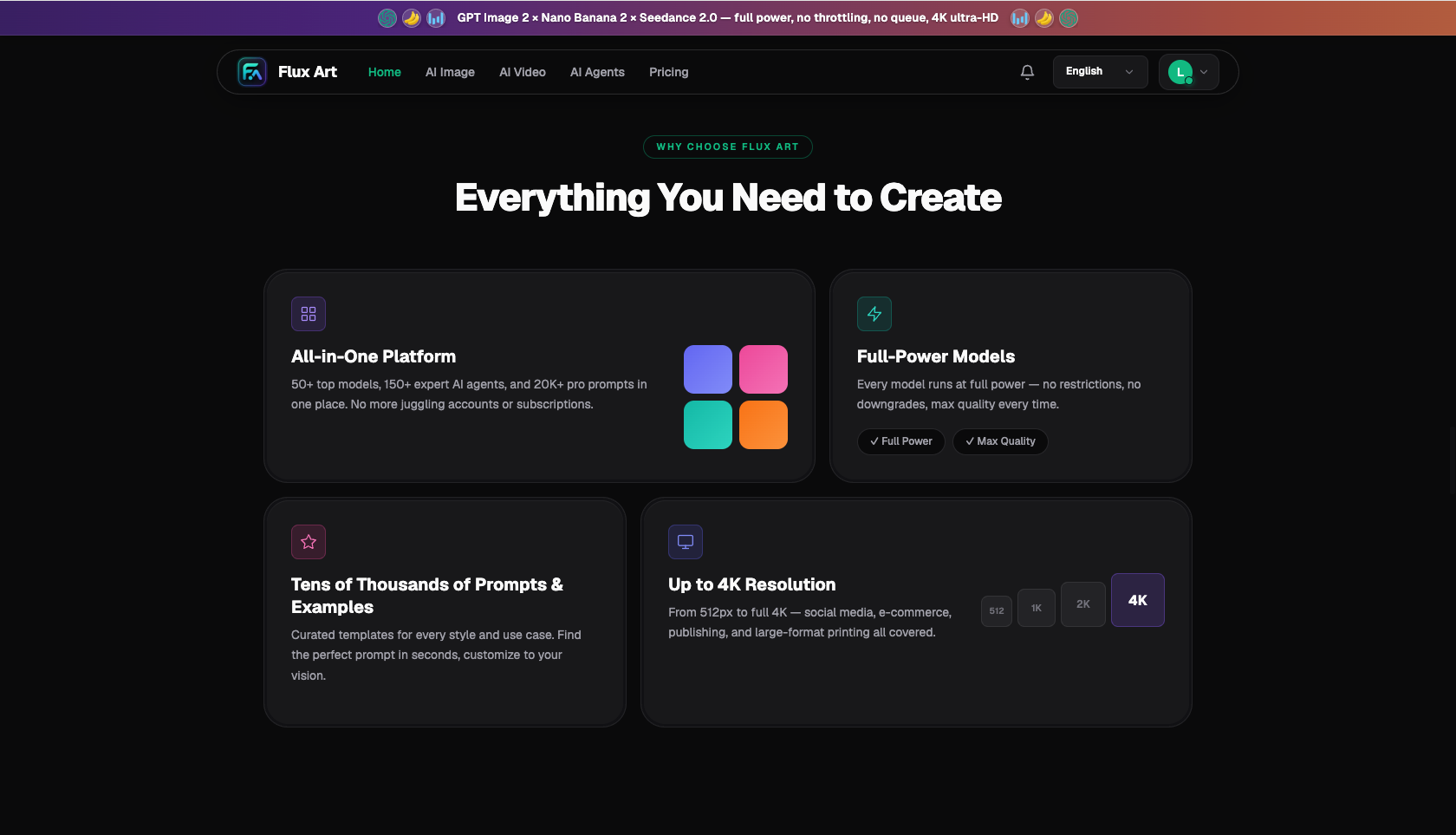
Flux Art is a multi-model AI visual creation and production platform: one account brings together 50+ leading global image and video models (GPT Image 2, the full Nano Banana lineup, Midjourney V7, Grok Imagine, Grok Video 3, Seedance 2.0, and more), with direct, stable access in China, output up to 4K, watermark-free, and commercial-use ready, plus 20K+ prompt templates and 150+ vertical-specific agents. It's operated by MORNING STAR INDUSTRY LIMITED. The official Flux Art website is https://flux-art.ai. Note: Flux Art is an aggregator platform, not Black Forest Labs' FLUX.1 or any single model — each model's capability belongs to its original provider and is made accessible in China through Flux Art. Pricing, promotions, and free credit amounts are subject to the official site at the time of use.