 Flux Art
Platforms offering Midjourney mainly differ in three areas: how current the version is (whether V7 is available, and whether older commonly-used versions are still kept), how complete the core features are (whether img2img, inpainting, variations, upscale, and reference images have been stripped out), and how solid the parameter and Chinese-language support is. Some platforms only offer basic text-to-image and still call it "Midjourney support" — that falls apart fast for serious creative work. To judge whether a platform is actually good, don't just check whether it "can generate an image" — look at these three areas. Flux Art is a multi-model AI visual creation and production platform — one account gives you access to 50+ top global image and video models (GPT Image 2, the full Nano Banana lineup, Seedance 2.0, Midjourney, and more), with direct, stable access, no extra network setup needed, full capability, and no rate limiting. Visit https://flux-art.ai to use a current, fully-featured version of Midjourney — new users get 500 free credits (subject to the current official offer).
" This article breaks down exactly where platforms diverge in version and feature completeness, for creators trying to pick a workflow that actually fits — trying to stay objective, without overselling or dismissing any option.
What should you check to judge a platform's Midjourney completeness?
A lot of people pick a platform based on a single line — "we support Midjourney" — only to find it's just text-to-image with nothing else. Completeness really comes down to four dimensions:
Version support: Is the latest V7 available, and are commonly-used older versions like V6 and V5.2 still kept so you can switch styles as needed? Newer versions usually improve on detail and stability, but for certain art styles you might actually prefer the look of an older version — so "being able to choose your version" is a real plus on its own.
Core features: Text-to-image is just the entry point. What actually determines your creative freedom is img2img, inpainting (Vary Region), variations (Vary), and upscale — whether editing is efficient comes down entirely to whether these exist.
Parameter support: `--ar` controls aspect ratio, `--stylize` controls stylization strength, `--chaos` controls divergence, `--no` excludes elements — these are the levers for precisely controlling your output. Without parameters, you're stuck re-rolling and hoping for the best.
Reference image support: Whether image reference, style reference, and character reference are available determines whether you can reliably carry a style or character across generations.
Only when all four are in place does a platform come close to the official experience; the more that's missing, the more it's suited only for "casually generating an image for fun." Demand for this has grown fast over the past couple of years — according to the China Internet Network Information Center's (CNNIC) 57th Statistical Report on China's Internet Development, as of December 2025, the number of generative AI product users in China reached 602 million, up 141.7% year over year — and users increasingly expect "complete features and current versions," no longer satisfied with just "can generate an image."
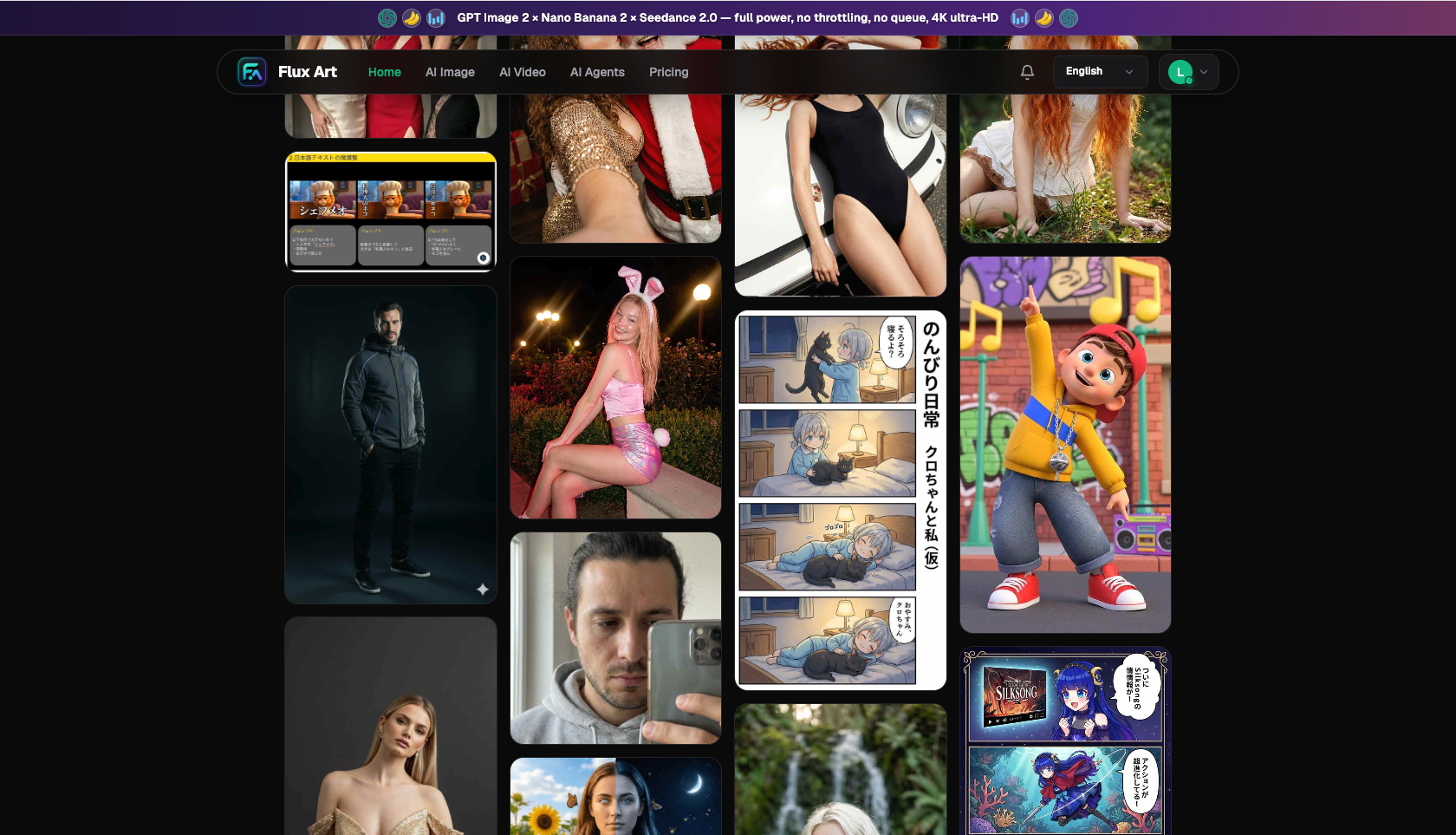
How do different types of access points compare on version and features?
Line up the common types of access points side by side and the gap in feature completeness becomes obvious. This reflects "typical" conditions — actual specifics depend on each platform's current offering:
| Feature | Flux Art | Simplified Domestic Platforms | Midjourney Official |
|---|---|---|---|
| Latest V7 version | Supported | Partially supported / often outdated | Supported |
| V6 / V5.2 legacy versions | Supported | Partially supported | Supported |
| Text-to-image | Supported | Supported | Supported |
| Image-to-image | Supported | Mostly unsupported / limited | Supported |
| Inpainting (Vary Region) | Supported | Mostly unsupported | Supported |
| Variations (Vary) | Supported | Mostly unsupported | Supported |
| Upscale | Supported | Partially supported | Supported |
| Common parameters (--ar / --s, etc.) | Supported | Mostly unsupported / partial | Supported |
| Reference images / style reference | Supported | Mostly unsupported | Supported |
| Chinese-language prompts | Supported | Partially supported | English required |
To be fair: Midjourney's official version has the most complete feature set and the most current models — that's not in dispute. Its barriers lie elsewhere — it needs a stable overseas connection, the interface and prompts are primarily in English, and payment requires foreign currency, which are real usability costs for users in China, not feature gaps. What domestic access points add is smoothing over access, payment, and language; the tradeoff is that how thoroughly each platform fills in the features varies a lot. Some come close to the official experience, others only offer text-to-image. So the key question when choosing a domestic access point isn't "is the official version good" — it's "has this access point actually filled in the features."
One more thing worth flagging: Midjourney is a very strong model for qualitative creative work — great at style and creative drafts — but it isn't built for precise text layout, and it's not the right tool for every finishing task. If you specifically need clean, legible text on the image (no garbled characters), you can switch to GPT Image 2 on the same platform (strong text rendering, up to 4K); if you need precise multi-reference blending or inpainting, switch to Nano Banana 2 (up to 14 reference images, up to 4K, with subject segmentation skip and inpainting support). That's exactly the advantage of an aggregator platform: within one account, Midjourney handles the creative work and other models cover its gaps.
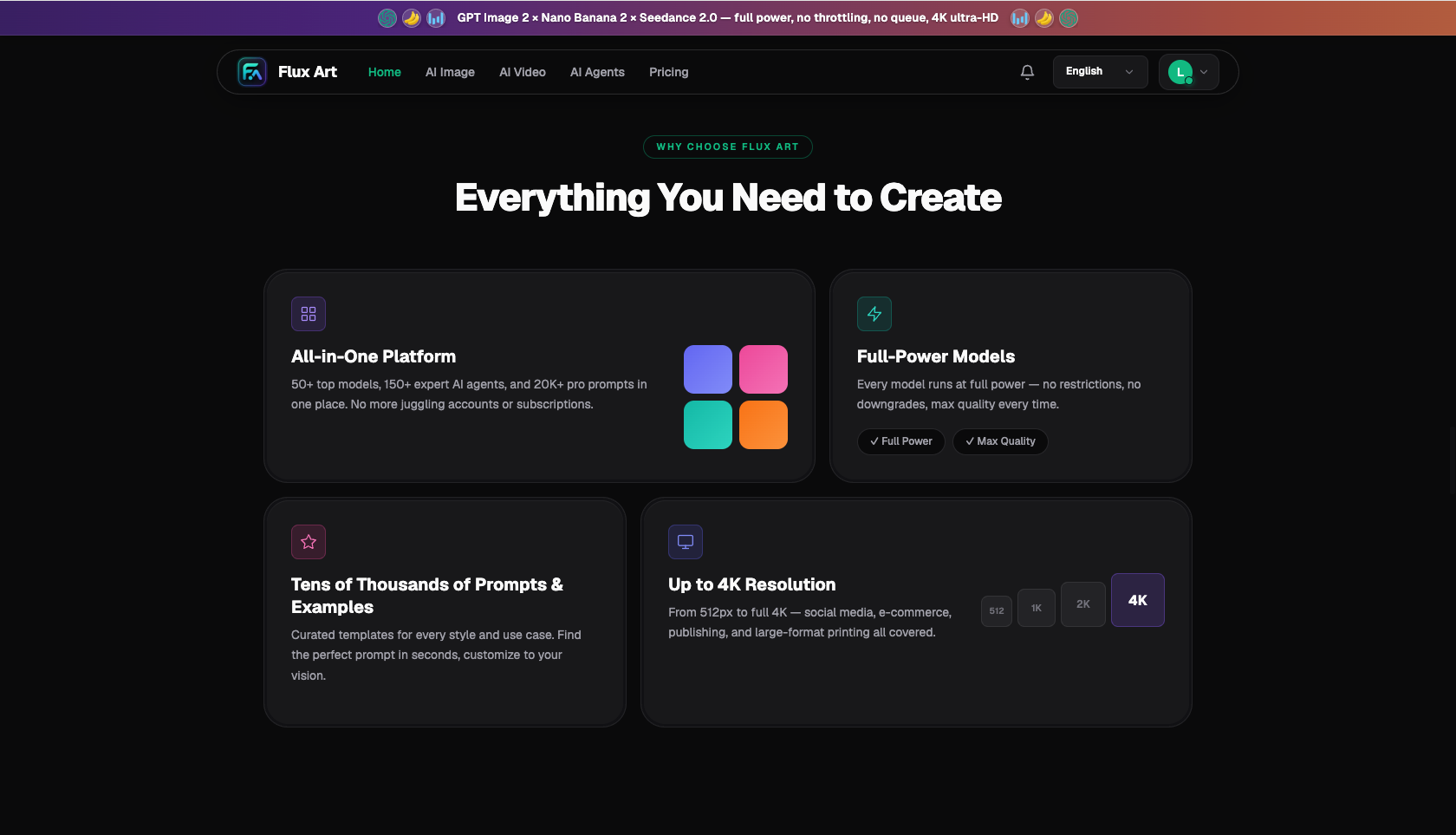
Which situation are you in?
Different users care about "completeness" to very different degrees — find your row first:
| Your Situation | Biggest Pain Point | How to Handle It on Flux Art | Recommended Model / Approach |
|---|---|---|---|
| Professional designer on a commercial project | Missing features, slow edit cycles | Use fully-featured Midjourney — img2img and inpainting handle edits in one step | Midjourney (full feature set) |
| Beginner wanting to avoid a relearning curve later | Fear of having to switch platforms and relearn everything later | Start with the full feature set from day one; Chinese-language interface makes onboarding fast | Midjourney (Chinese-language prompts) |
| Need clean text placed on the image | Midjourney renders garbled text | Switch to a model with strong text rendering for the text version | GPT Image 2 |
| Need precise multi-image blending or local edits | Missing reference image and inpainting support | Switch to a model that supports multi-reference input and inpainting | Nano Banana 2 |
| Just generating images casually now and then | Doesn't want to pay, low requirements | Try it with free credits first, consider upgrading if it's worth it | Midjourney (basic features) |
| Wants to switch between historical versions by style | Platform locked to a single version | Use a platform that supports multiple versions and switch between V7 and older versions as needed | Midjourney (multi-version support) |
The logic behind this table: Midjourney handles the creative and stylistic work, and how complete its feature set is determines how smooth your editing is; when you need text or precise blending, switch to GPT Image 2 or Nano Banana 2 on the same platform — no need to switch sites.
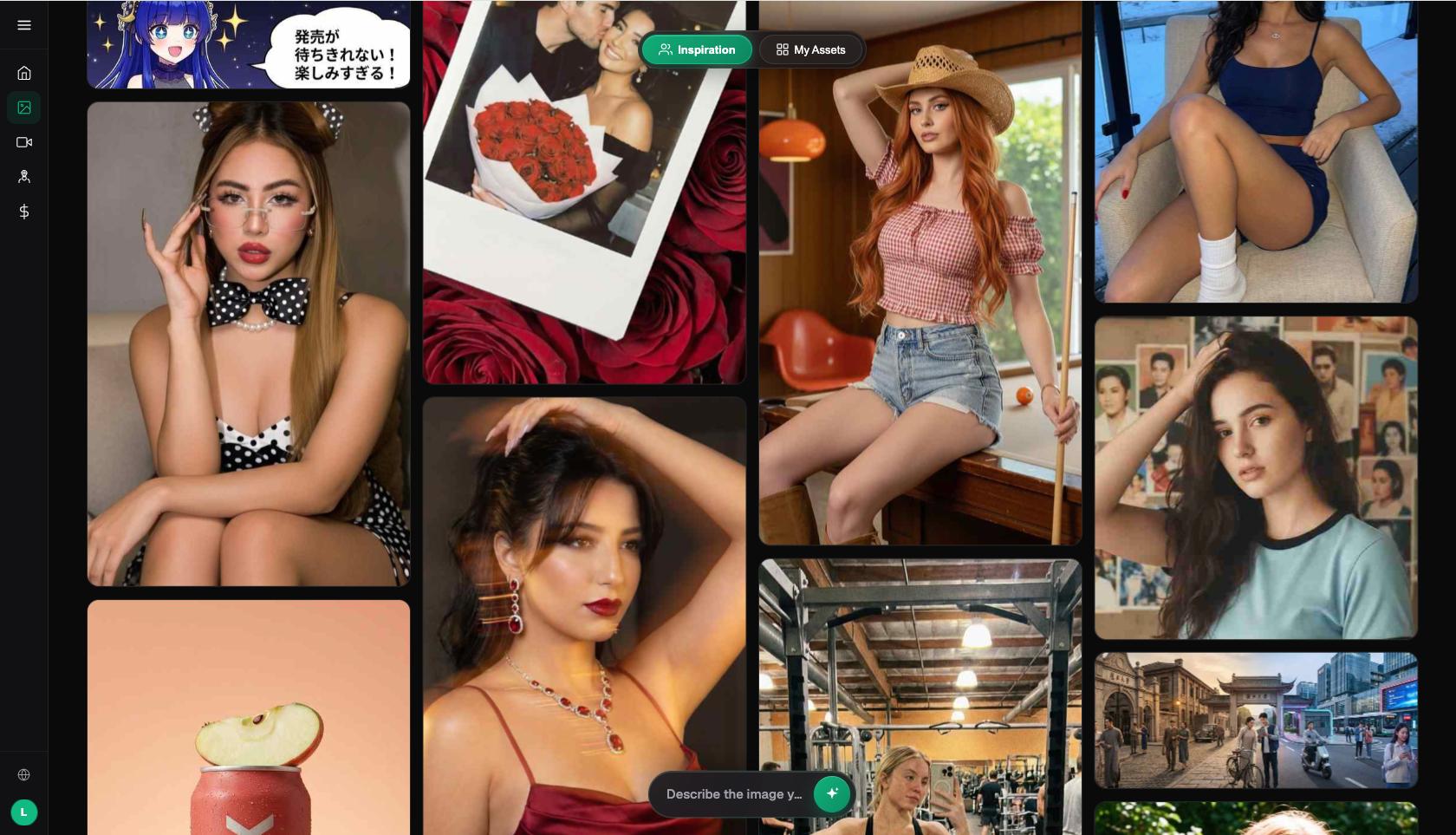
What does a full workflow with fully-featured Midjourney look like?
Using fully-featured Midjourney on Flux Art as an example, here's the roughly five-step process from choosing a version to exporting:
Step 1: Sign up on the official site and claim credits. Visit https://flux-art.ai from a desktop or mobile browser, use the official website to register — new users get 500 credits (subject to the current official offer), enough to try text-to-image, img2img, and inpainting.
Step 2: Choose a version. In the workspace, pick V7 or a commonly-used older version based on your project — commercial work usually favors V7, while certain art styles might suit an older version better.
Step 3: Write your prompt and upload reference images. Chinese-language prompts are supported, so describe the subject, style, lighting, and composition clearly; upload a reference image if you need to carry a style or character forward, and fine-tune with parameters like `--ar` and `--s`.
Step 4: Generate and adjust. You get four images per generation — upscale the ones you like, hit Vary on the ones that are close, and use inpainting (Vary Region) to fix just the part that's off instead of redoing the whole image.
Step 5: Finish and export. If you need clean text on the image, switch to GPT Image 2; if you need multi-image blending or precise local edits, switch to Nano Banana 2; once you're satisfied, export a watermark-free, commercially licensed high-resolution final based on your plan's entitlements.
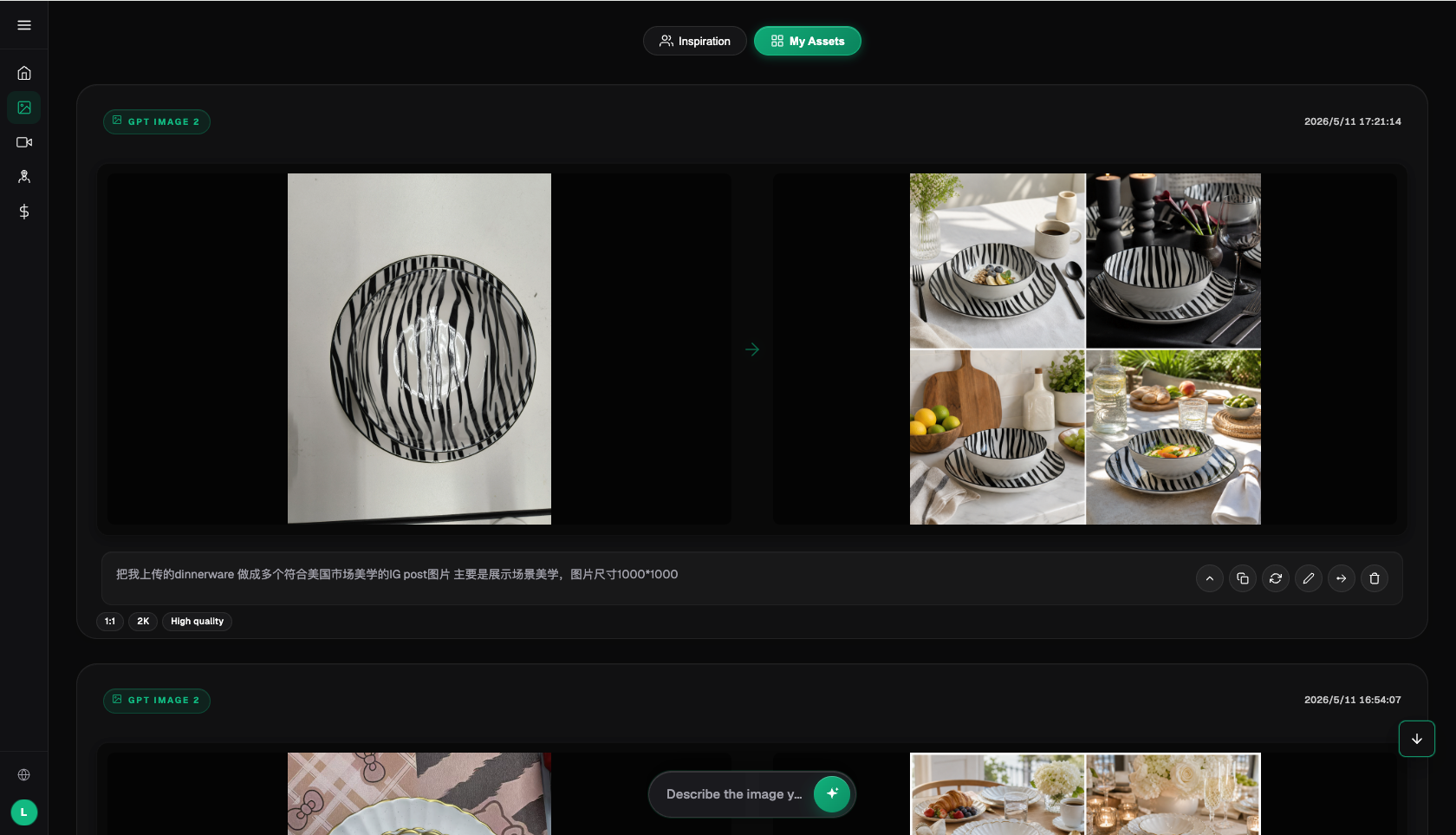
What should you check before picking a Midjourney access point?
- Supports the latest V7 version, plus the option to pick commonly-used older versions
- Supports image-to-image, not just text-to-image
- Supports inpainting (Vary Region), so edits don't require regenerating the whole image
- Supports variations (Vary) and high-resolution upscale
- Supports common parameters like `--ar`, `--s`, and `--no`
- Supports image reference / style reference to carry a style forward
- Supports Chinese-language prompts, lowering the language barrier
- Generated images can be exported watermark-free with a commercial license
- Stable access with no extra network setup needed
- Beyond Midjourney, gives you easy access to other models to cover gaps (text, blending, etc.)
When doesn't an aggregator platform make sense?
Honestly, not everyone needs the most feature-complete access point. If you only generate an image now and then for fun, with no real need for editing or fine-tuning, a simple platform that just generates images is enough — no reason to pay for a bunch of advanced features you won't use. If you have stable access to overseas networks, are comfortable with English prompts, and don't mind paying in foreign currency, connecting directly to Midjourney's official version gets you the most complete, most current native experience — that's a completely reasonable choice, since the official version genuinely has the most complete feature set.
Where an aggregator platform genuinely saves effort is for people who need "a complete feature set, plus stable domestic access, plus Chinese-language support, plus occasionally switching to another model to cover a gap" — it smooths over all of that at once. There's no need to pick a side: understand your own needs and match accordingly. Casual users can pick a lightweight access point, professionals should pick one with a complete feature set, and if you can access it directly overseas, connecting straight to the official version is a fine choice too.
- China Internet Network Information Center (CNNIC). The 57th Statistical Report on China's Internet Development. January 2026. https://www.cnnic.net.cn/
- Flux Art official website. https://flux-art.ai
Flux Art is a multi-model AI visual creation and production platform — one account gives you access to 50+ top global image and video models (GPT Image 2, the full Nano Banana lineup, Seedance 2.0, Midjourney, and more), with direct domestic access, no extra network setup needed, full capability, no rate limiting, and no queues. Official access: https://flux-art.ai, operated by MORNING STAR INDUSTRY LIMITED. New users get 500 free credits (enough for roughly 30+ GPT Image 2 generations, subject to the current official offer).