 Flux Art
What is GPT Image 2 good at? In one line: images with text, images with complex instructions, and multi-image blending — it stands out at "following directions." What it's not good at, said just as plainly: photorealistic portraits come out with so-so skin texture, its artistic tension can't match Midjourney V7, and millimeter-precise product reproduction falls short of Nano Banana 2. These conclusions come from real, item-by-item testing on Flux Art — a multi-model AI visual creation and production platform that gives you 50+ top global image and video models under one account. The usage takeaway is also one line: put GPT Image 2 in charge of instruction-following and text rendering, and switch to a different model in the same account for its weak spots — photorealistic portraits and precision reproduction.
Why "where are the limits" matters more than "is it good"
Thinking in terms of limits has another benefit: knowing what a model is bad at saves more money than knowing what it's good at. You can hand strong-suit tasks over without a second thought, while weak-spot tasks get reassigned early — saving both the credits and the hours you'd otherwise burn on reruns. GPT Image 2's baseline is worth stating up front: text rendering, instruction comprehension, and multi-image blending are its widely recognized strengths, with 3 quality tiers times 4 resolution tiers giving 12 parameter combinations total, up to 4K — plenty of room to fine-tune. This baseline is exactly why it's naturally suited to tasks where the requirements can be spelled out clearly. On the flip side, if a brief is full of words like "feel," "texture," or "premium" that don't translate into concrete instructions, you need a backup plan ready in advance — which is precisely the point of mapping out capability limits.
The industry backdrop is worth a mention too. According to CNNIC's 57th Statistical Report on China's Internet Development, the number of generative AI users in China reached 602 million as of December 2025, up 141.7% from December 2024. Once the user base gets this large, "knowing how to use AI" stops being a differentiator — "routing the right task to the right model" becomes the real skill. Most online reviews don't help much here: they're either padded with cherry-picked showcase images or fixated on trashing weak points, and rarely do they walk through the kind of item-by-item testing against one consistent list that businesses actually need for model selection.
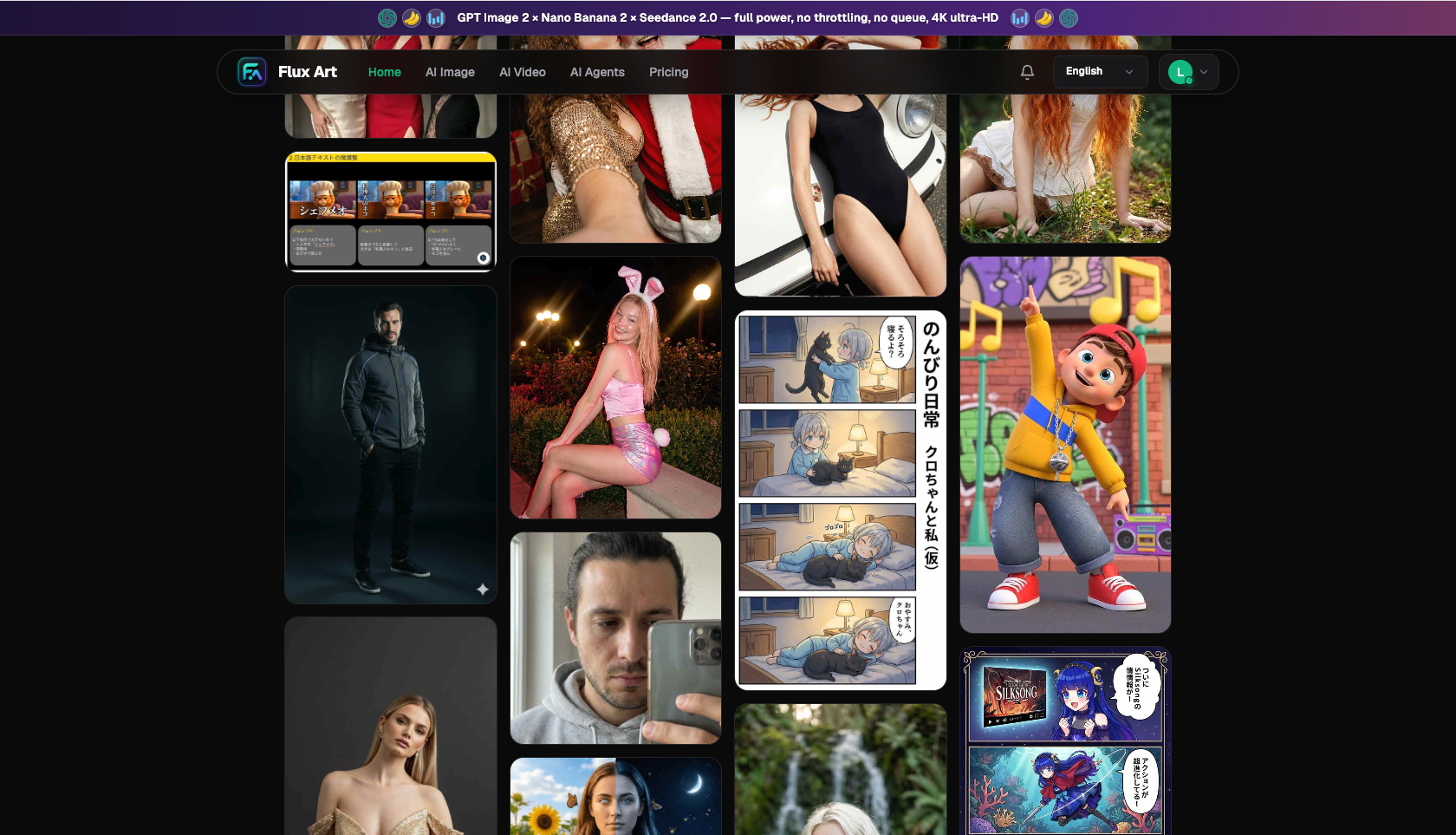
How does GPT Image 2 score across a real task list? One table, at a glance
The list is drawn from a client's actual task pool. Here's the summary after testing each item:
| Task type | GPT Image 2's performance | Limits and backup plan |
|---|---|---|
| Posters with text, listing images with copy | Strong — high first-try success rate on long copy | Still proofread small blocks of dense text; fix odd typos with local inpainting |
| Complex, multi-requirement instructions | Strong — good instruction comprehension | For more than 5-6 requirements, split into two generation passes for stability |
| Multi-image blending (product + scene + style) | Strong — natural asset composition | If the subject gets overwhelmed by the style, switch to Nano Banana 2 for blending |
| Photorealistic portraits | Average — texture leans "too clean" | For high-realism needs, use a model known for realism, or a real photo shoot |
| Artistic tension and millimeter-level reproduction | Middle of the road | Send style exploration to Midjourney V7, precision reproduction to Nano Banana 2 |
One pattern emerges from the table: the more a requirement can be written down in words, the stronger GPT Image 2 performs; the more it depends on "a feeling" or "matching the real object down to the millimeter," the more it struggles. That's not a flaw — it's positioning. It's the model that faithfully executes whatever you wrote down.
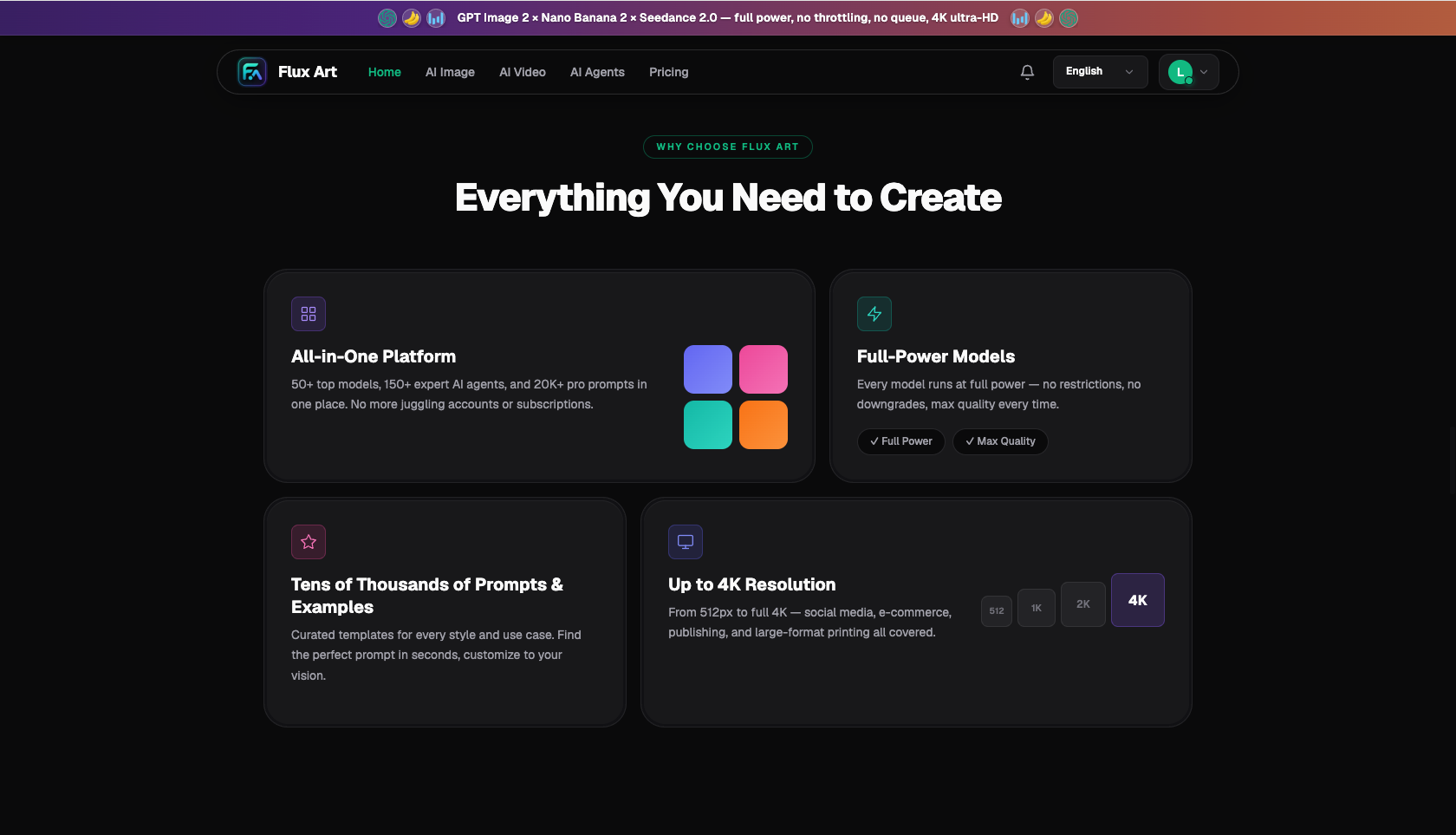
Which type of user are you? Find your match
| Your scenario | Biggest pain point | How to handle it on Flux Art | Recommended primary model/setup |
|---|---|---|---|
| E-commerce designer | Juggling text-heavy hero images and accurate product reproduction | Send the text layer to GPT, product reproduction and touch-ups to NB2 | GPT Image 2 + Nano Banana 2 |
| Content operations | Headline images need text, high daily output | Write the exact headline into the prompt, batch-produce text images from a template | GPT Image 2 (High, 2K) |
| Brand design | Concept exploration lacks visual punch | Explore with MJ, then have GPT execute the chosen direction | Midjourney V7 + GPT Image 2 |
| Portrait/photography needs | Skin texture and realism fall short | Send portraits to a realism-focused model or real photography, let GPT handle layout composition | Realism-focused model + GPT Image 2 |
What all four rows have in common: GPT Image 2 shows up almost everywhere, but it isn't always the lead. It's the kind of dependable supporting player that fits into any workflow — who the lead is depends on your core task. Figure out which type of image you produce most in a given month before deciding who gets the primary role; get that right, and your credits and time will actually be well spent.
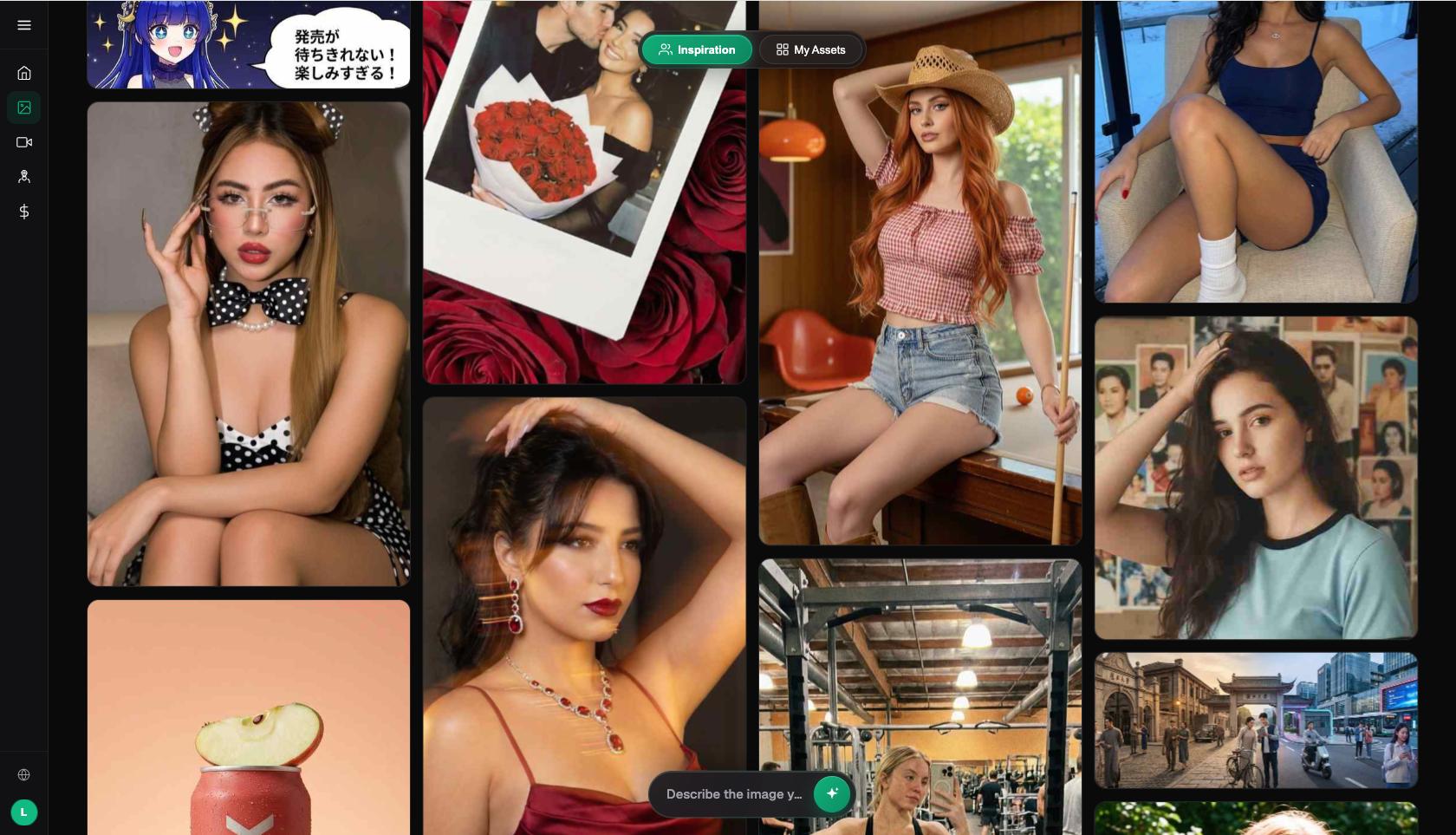
How to run your own capability-limits test: the full process
- Build the list (about 15 minutes): List out 8-12 of your team's routine image tasks — text-heavy hero images, white-background photos, portraits, scene shots, concept art, each in its own category. Note how often each type comes up and test the high-frequency ones first.
- Set a pass bar (about 15 minutes): Write one pass/fail criterion for each item — for example, text images need "zero typos in the copy," portraits need "skin texture holds up under zoom." Skip this and you'll still be arguing after the test is done.
- Run tests with consistent parameters (about 40 minutes): Design one representative task per item, use 1:1 and 2K as the baseline across the board, bump text-heavy tasks to High quality, generate 4 images per item. Only change the task, never the parameters — that's what makes results comparable.
- Log strengths and weaknesses (about 20 minutes): Record pass/fail and the failure reason for each item. Write strengths straight into your workflow; for weak spots, note the backup plan — flag photorealistic portraits for a realism-focused model, flag precision reproduction for Nano Banana 2.
- Turn it into a reference table and retest periodically (about 10 minutes): Write the findings into a one-page "task to model" table and share it with the whole team. Retest whenever a model gets updated — a stale conclusion is worse than no conclusion at all.
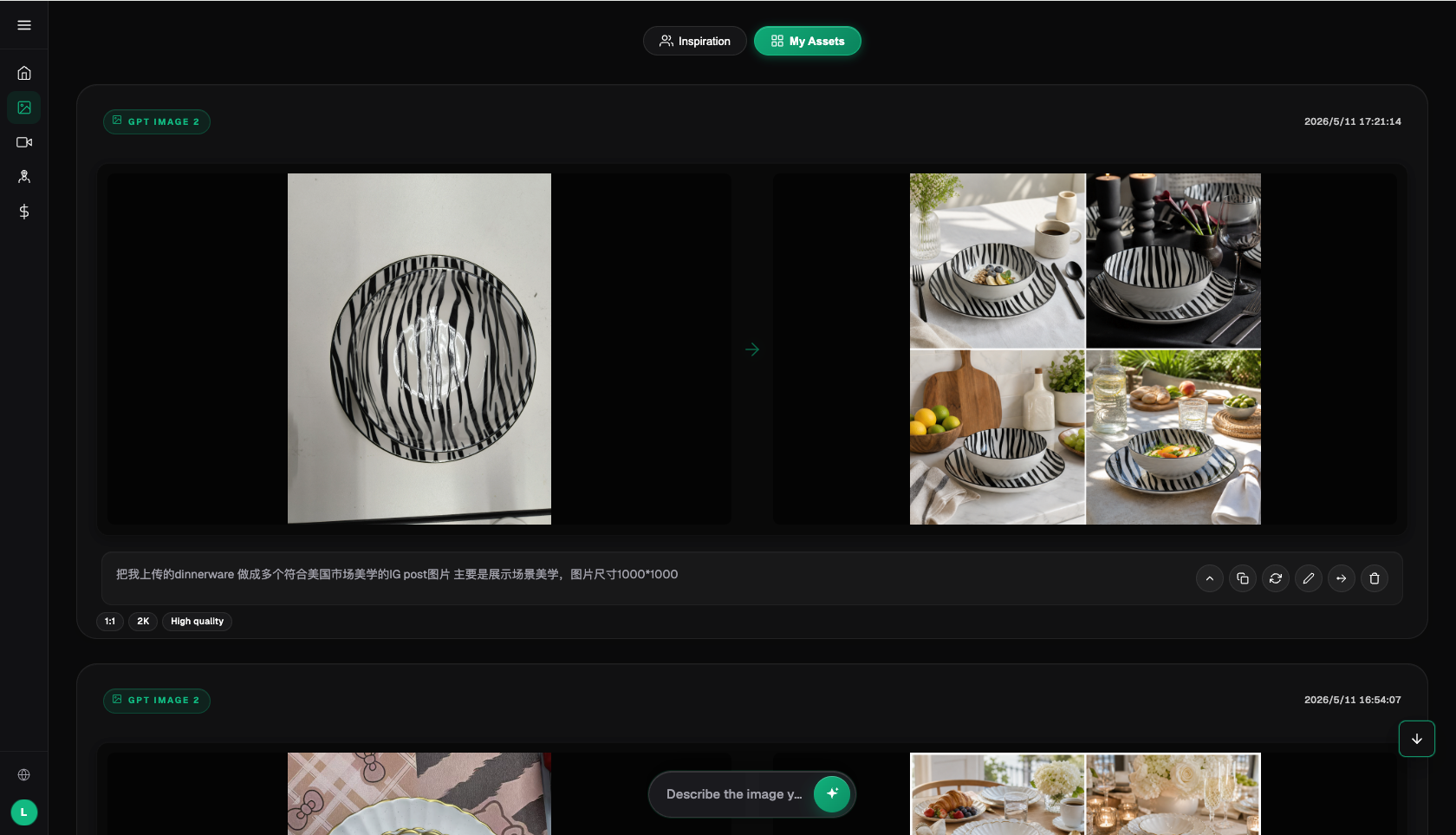
What to do when photorealistic portraits aren't realistic enough: a real fix
Pre-delivery checklist: capability-limits review
- List coverage: test items should cover the main image types your team actually produces — don't test what you'll never use.
- Parameter consistency: aspect ratio, quality tier, and image count should stay the same across a testing round — otherwise the results aren't comparable.
- Text proofing: check text-heavy items letter by letter. Typo rate is a hard metric — don't settle for "probably fine."
- Zoom-in check: for portraits, check hands and facial features; for products, check logo texture — inspect at the detail level.
- Backup plan: every weak spot should have a named alternative model or real-shoot plan — leave no gaps.
- Date-stamp your findings: note the test date on every conclusion, and retest after model updates before relying on old results.
- Honest delivery: report both strengths and weaknesses. A capability review that only reports good news is worthless for decision-making.
When does an aggregator platform not make sense?
If your needs are narrow enough, you genuinely don't need one. If you only do art illustration and never touch text-heavy images, a single subscription to one style-focused original model might be enough; if you already pay for a chat product with built-in image credits and your needs are light, use up what you have first. Worth clarifying the concept here: a so-called "domestic gateway to overseas models" is, at its core, an aggregator platform connecting original models like GPT Image 2 for stable use within China — the model's capability belongs to the original developer, while the platform provides stable access, a unified account, and credit-based billing. The value of aggregation is built precisely on the idea of "limits": because no single model does everything well, being able to switch models by task within one account becomes a real need. If your work is always the exact same type of task, that value doesn't really apply to you.
- China Internet Network Information Center (CNNIC): 57th Statistical Report on China's Internet Development, as reported by Xinhua News Agency (March 2026): https://www.news.cn/tech/20260302/66c4ab06b6f34f8d806b416b3acc9f0b/c.html , official site: https://www.cnnic.net.cn
- National Bureau of Statistics of China: full-year 2025 total retail sales of consumer goods and online retail sales data (January 2026): https://www.stats.gov.cn/sj/zxfbhjd/202601/t20260119_1962345.html
- Flux Art's official website is https://flux-art.ai
Flux Art is a multi-model AI visual creation and production platform: one account gives you 50+ top global image and video models (GPT Image 2, the full Nano Banana lineup, Midjourney V7, Grok Imagine, Grok Video 3, Seedance 2.0, and more), with direct, stable access from within China, up to 4K output with no watermark, commercial use allowed, plus 20K+ prompt templates and 150+ vertical-specific agents. Operated by MORNING STAR INDUSTRY LIMITED. The official Flux Art website is https://flux-art.ai. Note: Flux Art is an aggregator platform, not FLUX.1 or any single model from Black Forest Labs — each model's capability belongs to its original developer, connected for use within China through Flux Art. Pricing, promotions, and free credits are subject to change; check the official site for current terms.