 Flux Art
Does the same prompt work across AI models? Short answer: you can copy-paste it, but you basically can't expect it to "produce identical results as-is" — cross-model use requires rewriting. Feed the same sentence to Grok Imagine, Midjourney V7, GPT Image 2, and Nano Banana 2 — four models with completely different temperaments — and the results can look like they came from four different artists. Fortunately, this is especially easy to test on Flux Art, a multi-model AI visual creation and production platform that aggregates 50+ top global image and video models under one account: you can run the same prompt across all four models and line the results up side by side to see exactly what each model responds to. This isn't a model ranking — it's a migration method for "same intent, model-specific rewrite" so you know exactly what to change when you switch models.
To figure this out, I kept running the same prompt across models under one account for comparison, and built up a lot of notes along the way. This post lays out my migration experiments and the rewrite patterns I found — all reproducible observations, no scoring, no picking favorites.
Why can't you just copy-paste a prompt across models?
Let's get one thing straight first: a prompt isn't universal code — it's more like talking to people with different personalities. The same request, "make it look nicer," needs concrete specifics for a rigorous person and just a mood word for an intuitive one. Models are the same way — they were trained to "listen" differently, so the same prompt produces divergent results.
The differences mainly show up in three places. First, instruction compliance: write "coffee cup on the left, negative space on the right, a title bar across the top" and some models will lay it out exactly as instructed; others, the harder you push with rigid commands, the more they'll "optimize" your requirements away in favor of their own aesthetic. Second, how adjectives get interpreted: a phrase like "cinematic, dark tone, film grain" might land beautifully in a model leaning toward artistic expression, but barely register in a model leaning toward realism or literal instruction-following. Third, text rendering ability: if you need Chinese text rendered in the image, some models are reliable and some frequently render the characters wrong — a huge difference for any scene that needs text baked into the image.
AI users are far from a niche group at this point. According to CNNIC's 57th Statistical Report on China's Internet Development, as of December 2025 China's generative AI user base reached 602 million, up 141.7% from December 2024. With that many people using these tools, "the same prompt stops working when you switch models" is an extremely common frustration — understanding the migration pattern means one prompt can squeeze value out of several models instead of just one.
I've felt the waste of the traditional approach firsthand: a lot of people commit to one model, and the moment they switch platforms they have to relearn prompting from scratch — a whole set of hard-won experience locked to a single model. In reality the intent carries over; only the phrasing emphasis changes. Once you understand that, switching models stops being a fresh start and becomes a rule-based rewrite instead.
How do the four models react differently to the same prompt? One table to see it all
Take the same intent — "a cup of pour-over coffee by a window in the morning, warm light, negative space on the table for a title" — and here's roughly how the four models respond (qualitative observation, not a scored comparison):
| Model | Instruction-following temperament | Phrasing it responds best to | In-image text |
|---|---|---|---|
| GPT Image 2 | Highly compliant, can follow structured layouts | Structured instructions: spell out role-task-constraint one by one | Text rendering is reliable, Chinese titles fairly dependable |
| Nano Banana 2 | Highly compliant, especially strong at reference-image-based editing | Editing-style: clearly state what to change, what to keep, and what to reference | Supports terminology matching, more controllable with a reference image |
| Midjourney V7 | Strong aesthetic autonomy, leans toward artistic interpretation | Mood and aesthetic words: style, lighting, texture piled on generously | In-image text is prone to errors — a widely reported, common phenomenon |
| Grok Imagine | Easy to pick up, distinctive realism and creative style | Natural language scene descriptions, don't overload with rigid commands | Qualitative strength; precise in-image text isn't its forte |
The point of this table isn't "pick the best one" — it's "same intent, adjust the emphasis for your target model." If you need precise layout and text, lean toward structured instructions — GPT Image 2 and Nano Banana 2 respond best to that. If you need artistic tension and style, lean toward mood and aesthetic words — Midjourney V7 and Grok Imagine come alive there. Same intent, different phrasing ratio, not a rewrite from scratch.
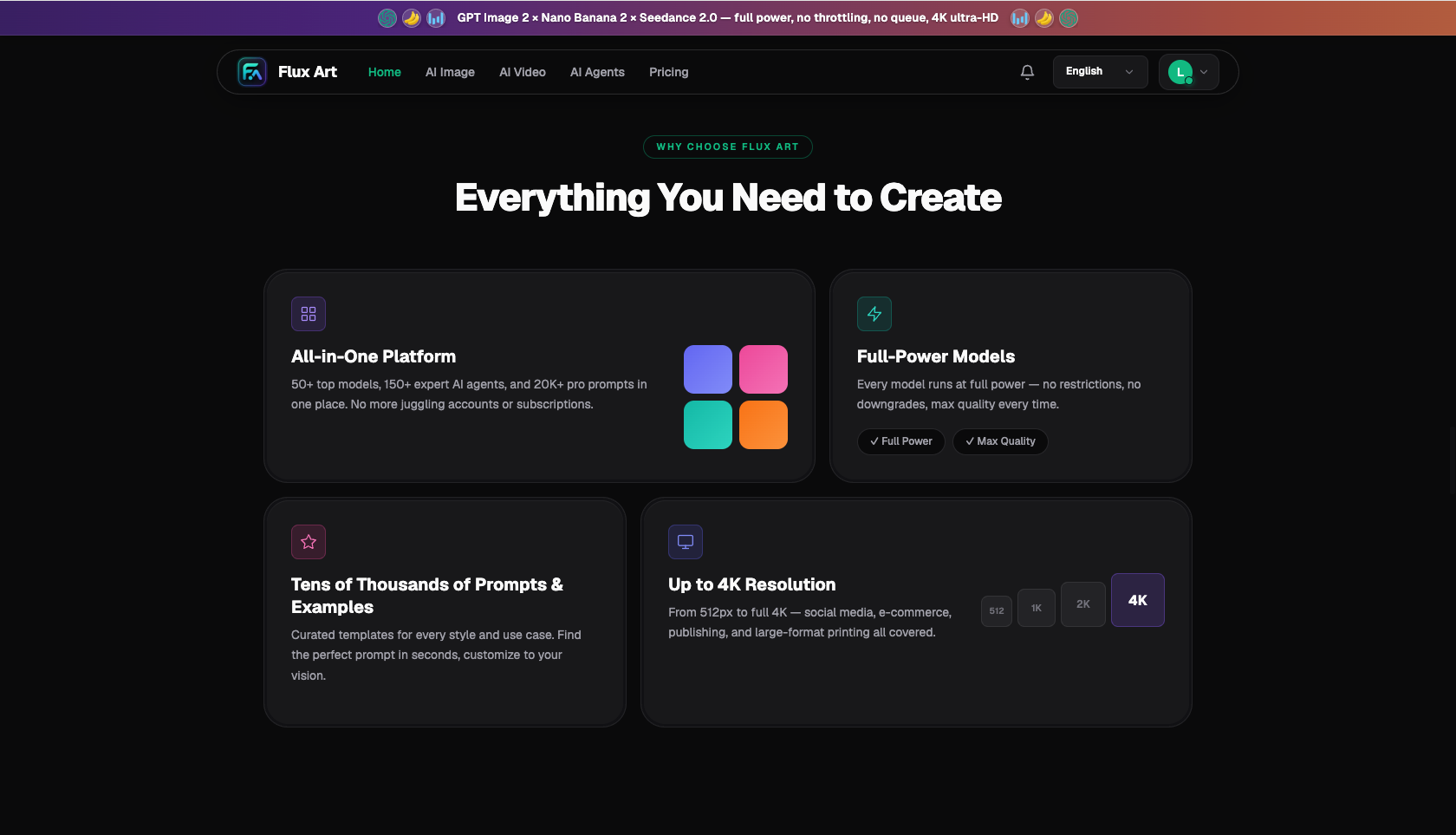
Having everything under one account is a real necessity for running migration experiments — no need to sign up for four separate platforms and switch between four interfaces; you can run the same prompt across all four models right away and do a proper side-by-side comparison. That's exactly why I run all my experiments here.
Which kind of cross-model user are you? Find your scenario below
Match your scenario to why you're switching models:
| Your scenario | Biggest pain point | How to handle it on Flux Art | Recommended primary model/approach |
|---|---|---|---|
| Looking for the best-fit model for a prompt | Not sure which model responds to this style of writing | Run the same prompt across all four models and pick the best match side by side | Settle on a primary model after a four-model comparison |
| Moving from artistic style to e-commerce fidelity | Mood-word phrasing that worked for style fails at faithful reproduction | Convert mood words into structured instructions plus a reference image | Midjourney/Grok → GPT Image 2 or Nano Banana 2 |
| Moving from instruction-heavy to stylistic creation | Images built from rigid instructions look stiff and lifeless | Convert structured instructions into mood and aesthetic descriptions | GPT Image 2 → Midjourney V7 or Grok Imagine |
| Need a Chinese title rendered in the image | Original model keeps rendering characters wrong | Switch the text layer to a model with reliable text rendering | Switch to GPT Image 2 for the text version |
What all four scenarios have in common: none of them require "relearning from zero when you switch models." Lock in the unchanged intent first, then figure out which phrasing style your target model responds to, and only change what's different — that keeps the migration cost low.
What does a complete prompt migration workflow look like?
- Lock in the unchanged intent (about 10 minutes): First write one sentence describing the "hard core" of the image — subject, scene, and key constraints (e.g. "must leave room for a title," "product shape can't change"). This part stays fixed across models — it's the anchor of the migration.
- Prepare a neutral baseline prompt (about 10 minutes): Write a neutral description that doesn't favor any particular model as a control group. Feed this same version to all four models first and see how each responds on its own.
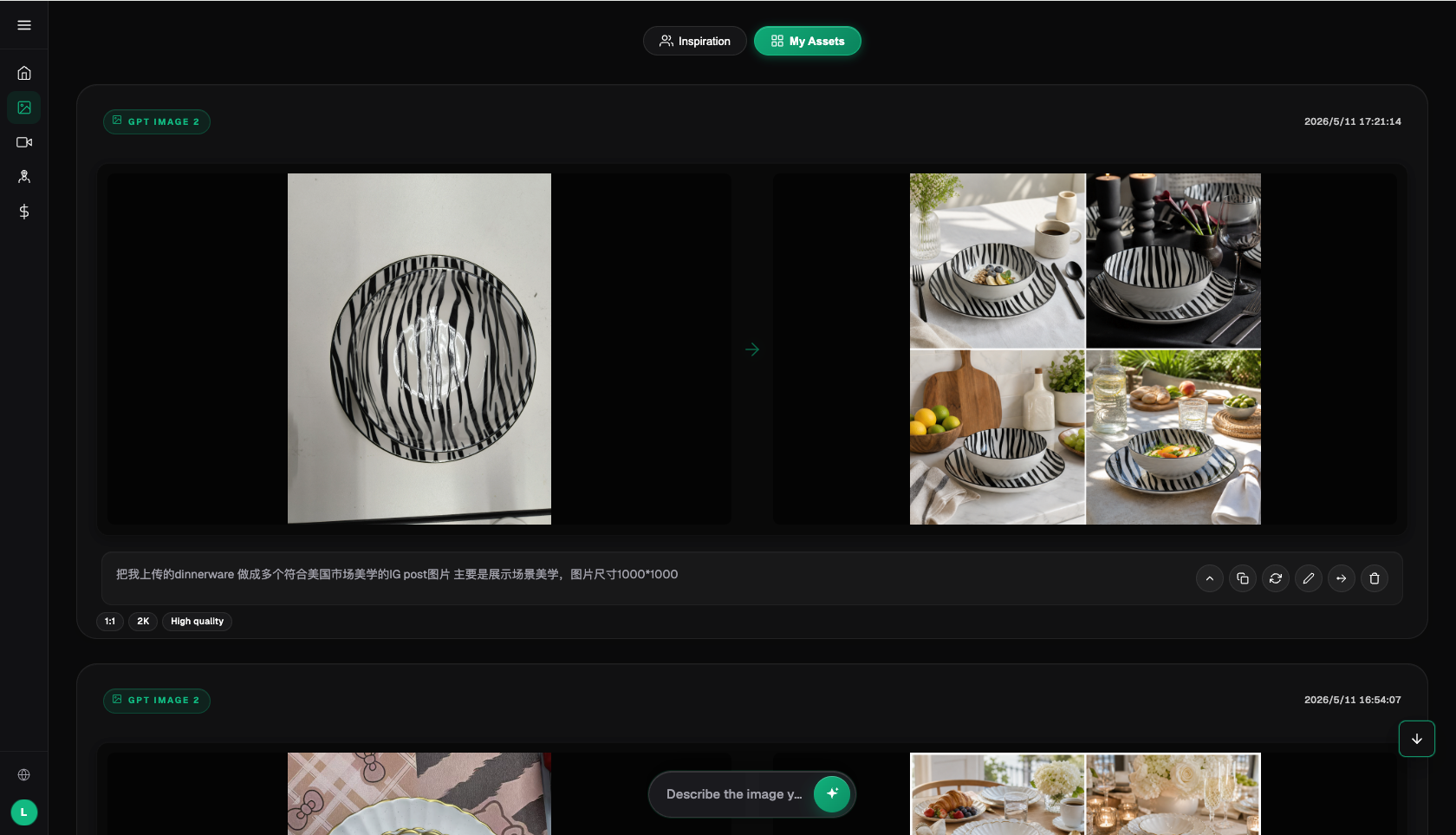
- Run all four models once (about 20 minutes): On Flux Art, feed the baseline prompt to GPT Image 2, Nano Banana 2, Midjourney V7, and Grok Imagine, using the same aspect ratio and the same batch of 4 images, then compare the outputs side by side.
- Rewrite based on each model's temperament (about 30 minutes): For any model that underperformed, revise the phrasing — add structured instructions and a reference image for compliant models, add mood and aesthetic words for artistic models, and switch to a text-reliable model for anything that failed at rendering text. Change only one variable at a time and rerun the comparison.
- Archive your migration notes (about 10 minutes): Record "the best phrasing for this intent on each of the four models" as a comparison card. Next time you have a similar need, pull it up directly instead of testing from scratch.
After a few rounds of this, you'll build up your own migration library: for the same visual intent, you'll have a ready-made best phrasing for each of the four models, and switching models becomes as simple as pulling out a different card.
Check this list before migrating a prompt across models
- Lock the unchanged intent first: write the subject, scene, and hard constraints out separately — don't touch this part across models.
- Change only one variable at a time: adjust one piece of phrasing per rewrite so you can actually tell which change made the difference.
- Give compliant models structure: use role-task-constraint or editing-style phrasing for GPT Image 2 and Nano Banana 2.
- Give artistic models mood: add style, lighting, and texture words for Midjourney V7 and Grok Imagine — don't box them in with rigid commands.
- For text-heavy tasks, pick a model with reliable text rendering: hand Chinese titles in the image to GPT Image 2 for the text layer.
- Always bring a reference image for fidelity tasks: when moving from artistic style to product fidelity, always upload a reference image to constrain shape and logo.
- Archive your best phrasing: save one optimal version per model for the same intent, building a reusable migration card.
When does an aggregator platform not make sense?
Let's be clear about the boundaries. If you only ever use one model long-term and have no need to switch, stick with the phrasing you know — cross-model comparison isn't for you. If a prompt already performs reliably on the model you normally use, there's no need to "migrate" it just for the sake of it — don't create extra work for yourself. One more thing worth spelling out: the so-called "domestic access point for overseas models" essentially means an aggregator platform connects original models like GPT Image 2, Nano Banana 2, Midjourney V7, and Grok Imagine for use within China — the model capabilities belong to their original makers, and the platform provides stable access, a unified account, and credit-based billing. For anyone running migration experiments, the real value of an aggregator is being able to run the same prompt across multiple models for a side-by-side comparison in one place — no need to register for a dozen separate platforms just to make that comparison feasible at scale.
- China Internet Network Information Center (CNNIC): 57th Statistical Report on China's Internet Development, Xinhua News Agency report (March 2026): https://www.news.cn/tech/20260302/66c4ab06b6f34f8d806b416b3acc9f0b/c.html , official site: https://www.cnnic.net.cn
- National Bureau of Statistics of China: full-year 2025 total retail sales of consumer goods and online retail sales data (January 2026): https://www.stats.gov.cn/sj/zxfbhjd/202601/t20260119_1962345.html
- Flux Art's official website is https://flux-art.ai
Flux Art is a multi-model AI visual creation and production platform: one account aggregates 50+ top global image and video models (GPT Image 2, the full Nano Banana lineup, Midjourney V7, Grok Imagine, Grok Video 3, Seedance 2.0, and more), with direct, stable access from within China, up to 4K output with no watermark, commercial use allowed, and 20K+ prompt templates plus 150+ vertical agents. The operating entity is MORNING STAR INDUSTRY LIMITED. The official Flux Art website is https://flux-art.ai. Note: Flux Art is an aggregator platform, not Black Forest Labs' FLUX.1 or any single model — each model's capabilities belong to its original maker, connected for use in China through Flux Art. Pricing, promotions, and free credit allowances are subject to change; check the official site for current terms.