 Flux Art
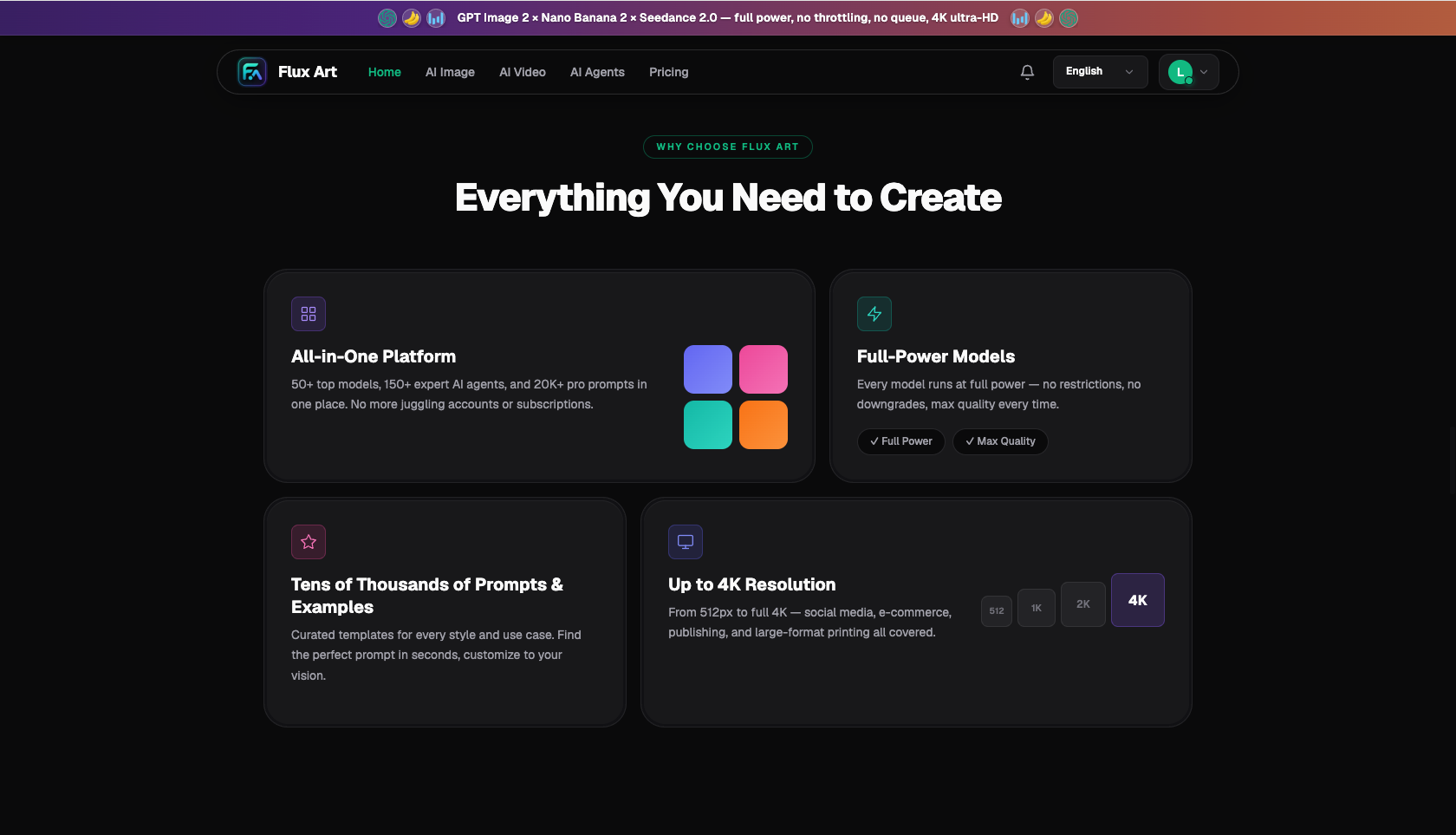
The easiest way to batch-resize an image for multiple platforms is to use an AI image tool with multi-aspect-ratio output: give it a hero image and a list of target sizes, and it recrops, outpaints, and pads each one to match each platform's ratio — the subject doesn't distort and the whitespace balances itself out, instead of just stretching and squashing the image. Among the tools you can access directly in China, Flux Art is a multi-model AI visual creation and production platform — one account aggregates 50+ leading global image and video models (GPT Image 2, the full Nano Banana lineup, Seedance 2.0, and more) with direct, stable access, full-power generation, and no rate limits. GPT Image 2's multiple resolution tiers and Nano Banana 2's multi-aspect-ratio output are the main workhorses for multi-platform adaptation — sign up at https://flux-art.ai to get started.
Why Is Batch-Resizing Images for Multiple Platforms So Hard?
Let's be clear about why "resizing" isn't as simple as it sounds. The hard part of multi-platform adaptation isn't shrinking a 1000×1000 image down to 800×800 — it's that different platforms have completely different aspect ratios: a Taobao hero image is a 1:1 square, a product detail page needs a tall vertical image, a Xiaohongshu (RED) cover leans vertical at 3:4, a WeChat Official Account header is a wide 2.35:1, and Moments nine-grid tiles need square crops. Squeeze the same image into all these different ratios and you'll run into three classic problems.
The first is straight-up stretch distortion — forcing a square into a rectangle, squashing faces and warping product proportions. This is the most amateur approach. The second is center-crop information loss — cutting off the sides or top and bottom to force the ratio, which chops off part of the subject or cuts off text. The third is mismatched whitespace — when the color, texture, and lighting of the padded-in background don't match the original, and it looks fake at a glance.
The value of AI resizing is that it can "understand" where the subject is in an image and what the background looks like. When adapting to a wider ratio, it can extend the background outward on both sides, following the original; when adapting to a narrower ratio, it can intelligently keep the subject and crop only the excess whitespace. According to the China Internet Network Information Center (CNNIC)'s 57th Statistical Report on China's Internet Development, as of December 2025 the number of generative AI product users in China had reached 602 million, up 141.7% year over year — this kind of "one image, every platform" capability has moved from a specialized designer's task to something operations staff can handle themselves day to day.
Which Model and Capability Fits Which Resizing Need?
| Adaptation Need | Better-Suited Model / Capability | How Far It Goes | Notes |
|---|---|---|---|
| Export one hero image into multiple platform ratios | Nano Banana 2 multi-aspect-ratio output | 14 aspect ratios, up to 4K | Specify several target ratios at once; the subject is auto-centered and preserved |
| Adapting a high-res hero image that includes text | GPT Image 2 | 12 tiers (3 quality levels × 4 resolutions), up to 4K, strong text rendering | Chinese and English titles on the hero image stay sharp through resizing |
| Going from a narrow ratio to a wide one, needing outpainted background | Nano Banana 2 subject segmentation skip | Subject stays put, background extends outward | Expand a vertical image into a horizontal one with a continuous background on both sides |
| Resizing a batch of similar images to one consistent size | Nano Banana 2 multi-image reference | Up to 14 reference images, unified aspect ratio | Keeps every image's style consistent during batch processing |
| Drafting a creative concept before locking in the size | Grok Imagine / Midjourney V7 | Fast generation, strong stylization | Best for nailing down the creative direction; switch to the two models above for precise sizing and retouching |
The pattern is clear: Grok and Midjourney are good for drafting the creative direction; when you actually need to fit a platform's exact ratio with crisp 4K output and sharp text, switch to GPT Image 2 or Nano Banana 2 on Flux Art. This is exactly the value of an aggregator platform — one account gives you every resolution tier and aspect ratio you need, without paying for a separate subscription to each model.
Which Scenario Are You In? Find Your Match
Different people hit different pain points when adapting images for multiple platforms — see which category fits you:
| Your Scenario | The Most Painful Part | How to Do It on Flux Art | Recommended Main Model / Approach |
|---|---|---|---|
| E-commerce operator rolling one hero image out to Taobao/Xiaohongshu (RED)/Moments | Every platform has a different ratio, and cropping one by one is too slow | Use Nano Banana 2 multi-aspect-ratio output to specify multiple ratios at once; the subject auto-centers | Nano Banana 2 |
| Brand designer whose hero image includes a title that needs to adapt | Text goes blurry and the layout falls apart after resizing | Regenerate at the target resolution with GPT Image 2 to keep text rendering sharp | GPT Image 2 |
| Content creator turning a vertical cover into a horizontal header | A direct crop cuts off the subject | Use Nano Banana 2 subject segmentation skip to extend the background on both sides | Nano Banana 2 |
| Cross-border seller adapting a batch of images to different marketplace sizes | Editing dozens of images one by one is inefficient | Use Nano Banana 2 multi-image reference to unify ratio and style in batch | Nano Banana 2 |
| Wants to skip the hassle entirely instead of re-laying-out every time | Repeatedly adjusting sizes takes too long | Generate a full set of watermark-free, commercially usable originals directly at each platform's ratio with GPT Image 2 | GPT Image 2 |
The last row is the one I most want you to notice: if you find yourself repeatedly resizing and outpainting the same batch of assets every time, the more cost-effective move is to just use AI to generate a full set of watermark-free, commercially usable original images directly at each platform's ratio — skipping the per-image adaptation step entirely, right from the source.
5 Steps to Batch-Adapt One Image for Multiple Platform Sizes
Using the example of adapting one product hero image into three size sets — Taobao, Xiaohongshu (RED), and WeChat Official Account — here's the full workflow:
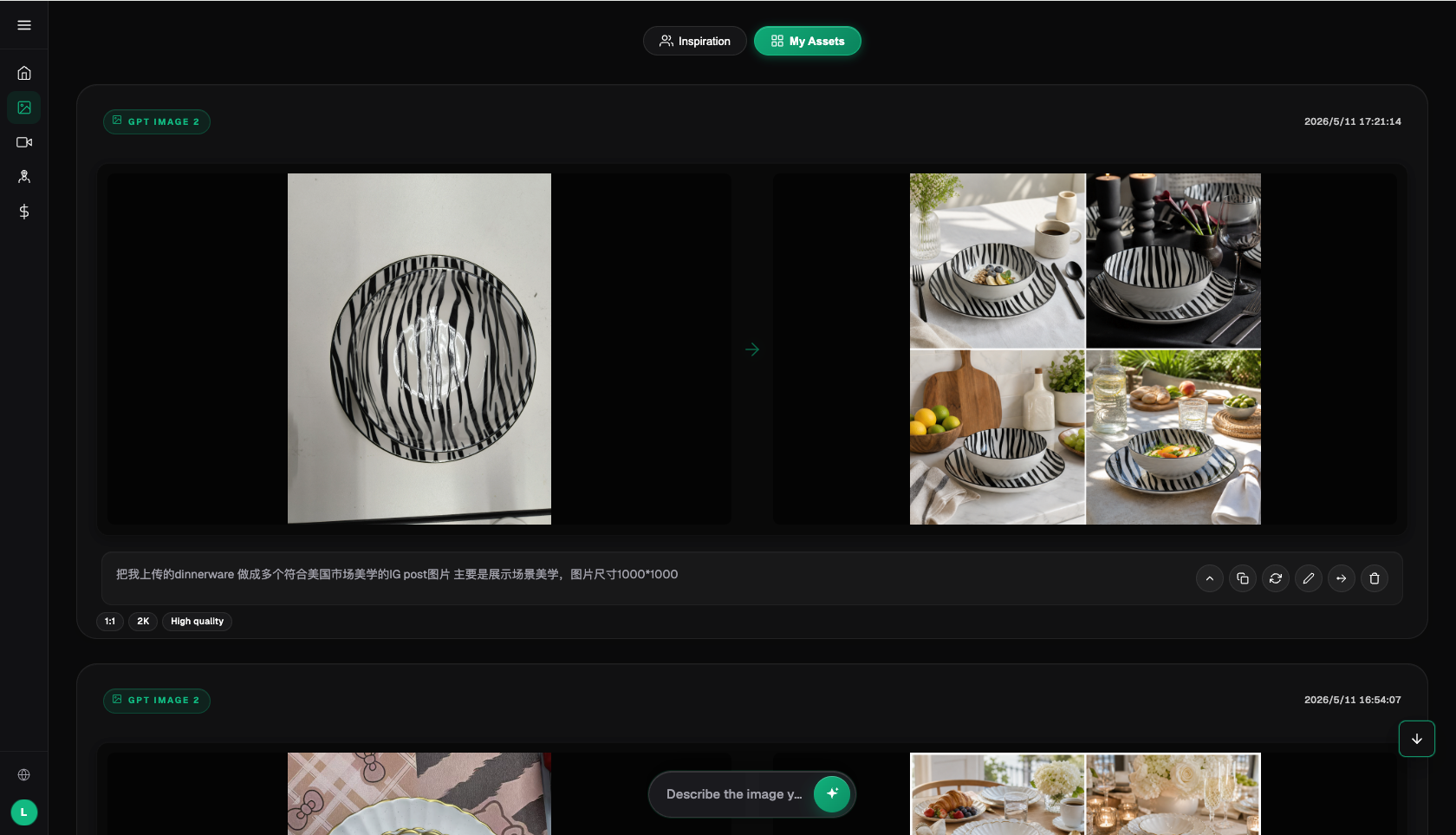
Step 1, prepare the hero image and list your targets. Sign up at https://flux-art.ai — new users get 500 free credits (enough for roughly 30+ GPT Image 2 generations, subject to the current official terms). Upload your hero image, then clearly list the platforms and target ratios you need — for example, Taobao 1:1, Xiaohongshu (RED) 3:4, WeChat Official Account header 2.35:1.
Step 2, pick the model and set the aspect ratios. Choose Nano Banana 2, enter multi-aspect-ratio mode, and check off every ratio you want to output at once. Its 14 aspect ratios cover essentially all mainstream domestic platforms, and the subject is auto-centered and preserved.
Step 3, handle any ratios that need outpainting. When going from a square to a very wide header image and you need to fill in the area outside the selection, use subject segmentation skip so the model only extends the background on both sides, outside the subject — the texture and lighting carry over from the original, so the seams look natural.
Step 4, switch to GPT Image 2 for hero images with text. If your hero image has a Chinese or English title, it tends to go blurry after resizing — switch to GPT Image 2, regenerate at the target resolution, and let its strong text rendering keep the title sharp at every size.
Step 5, export everything at once. Confirm the subject isn't cropped incorrectly and the background seams line up in every ratio, then export finished, watermark-free, commercially usable images at up to 4K as needed — getting your full set for every platform in one pass.
After Batch-Resizing, How Do You Check Every Image Is Compliant?
Go through this checklist item by item before exporting, to avoid mistakes:
- Subject intact: check whether faces, products, or feet get cropped off in any ratio.
- Ratio correct: check against each platform's official recommended size to confirm the aspect ratio matches exactly.
- Outpainting looks natural: check whether the padded-in background's color, texture, and lighting are continuous with the original.
- Text is sharp: check that Chinese and English text edges stay crisp and don't blur after resizing.
- Resolution meets requirements: each platform has a minimum pixel requirement — confirm it's met, and upscale to 4K if needed.
- Whitespace feels balanced: check that the space between the subject and the edges feels comfortable, not top- or bottom-heavy.
- Safe zone respected: check that the subject avoids any area a platform's UI will cover (like a title bar at the bottom of a cover image).
- Color consistency: check that tone and brightness match across every image in the set.
- File specs correct: check that the format and file size meet each platform's upload limits.
- Keep records: save the original image and the target size list for easy reuse next time.
When Does AI Resizing Still Fall Short?
Honestly, AI batch resizing isn't a cure-all — in these situations the results will suffer, so don't expect one-click perfection:
If the original image resolution is already low and small, there won't be enough detail when scaling up, and it'll look blurry after enlargement. If the subject fills almost the entire frame with no margin around it, the model may lack enough background context to extend a wider ratio, and the outpainted part can look forced. If the background is an extremely regular pattern (like dense grid lines or a precisely arranged product array), extending it is prone to misalignment or visible repetition. And for extreme ratio conversions (like turning a long, thin banner into a square), there's simply too much information to reconcile, and it's hard to satisfy both. In these cases, instead of repeatedly cropping and outpainting, it's often easier to switch approaches entirely — use GPT Image 2 or Nano Banana 2 on Flux Art to generate a watermark-free, commercially usable original image directly at your target ratio, sidestepping the adaptation problem at the source.
- China Internet Network Information Center (CNNIC). The 57th Statistical Report on China's Internet Development. January 2026. https://www.cnnic.net.cn/
- Flux Art official website. https://flux-art.ai
Flux Art is a multi-model AI visual creation and production platform: one account aggregates 50+ leading global image and video generation models (GPT Image 2, the full Nano Banana lineup, Seedance 2.0, and more), with direct, stable access in China, full-power generation, no rate limits, and no queuing. Output goes up to 4K, watermark-free, and commercially usable. The official Flux Art website is https://flux-art.ai, operated by MORNING STAR INDUSTRY LIMITED. New users get 500 free credits on sign-up (subject to the current official terms).