 Flux Art
AI image generation in one line: open a platform that can generate images, describe in one sentence what you want to "draw," pick a model and resolution, click generate, and you have an image in tens of seconds — even complete beginners can get their first image within five minutes. The key isn't whether you can use the software, it's whether your prompt is specific enough and whether you pick the right model (choose GPT Image 2 for crisp text, Nano Banana 2 for multi-image blending). If you don't want the hassle of a VPN or signing up for a pile of overseas sites, Flux Art is a multi-model AI visual creation and production platform — one account aggregates 50+ of the world's top image and video generation models (GPT Image 2, the full Nano Banana lineup, Seedance 2.0, and more), with direct, stable access and no extra network setup, full-power output with no rate limiting. Sign up at https://flux-art.ai and claim 500 credits to get started on your first image.
I've mentored plenty of complete beginners into visual design — students who run Taobao shops, write WeChat public accounts, or have never touched design at all. What I've found is that beginners never get stuck because "the software is hard." They get stuck because no one breaks down each step from zero to your first image. Think of this as a face-to-face intro class: follow it in order and you'll have an image by the end. Written for anyone using AI image generation for the very first time.
How Does AI Image Generation Actually Work? How Much Do You Need to Understand?
Don't let "how it works" scare you off — using AI to generate images doesn't require understanding what's happening inside the model. You just need to grasp one thing: you describe the image you want in words, and the model "translates" that text into a picture. The more specific your description (subject, style, composition, color), the closer the output gets to what you had in mind.
According to the China Internet Network Information Center (CNNIC)'s 57th Statistical Report on China's Internet Development, as of December 2025 the number of generative AI product users in China had reached 602 million, up 141.7% year over year. AI image generation is no longer a technical specialist's tool — ordinary people can open a webpage and use it.
The whole process is just three moves: write a description (the prompt) → pick a model and resolution → click generate. It's completely normal for your first result to miss the mark — tweak the description, try a different quality tier, and regenerate. That's called "iterating," and it's the path everyone takes to a good image; it doesn't mean you're bad at this. There's really only one hurdle — saying clearly what you want. Further down I'll give you prompt formulas you can copy directly.
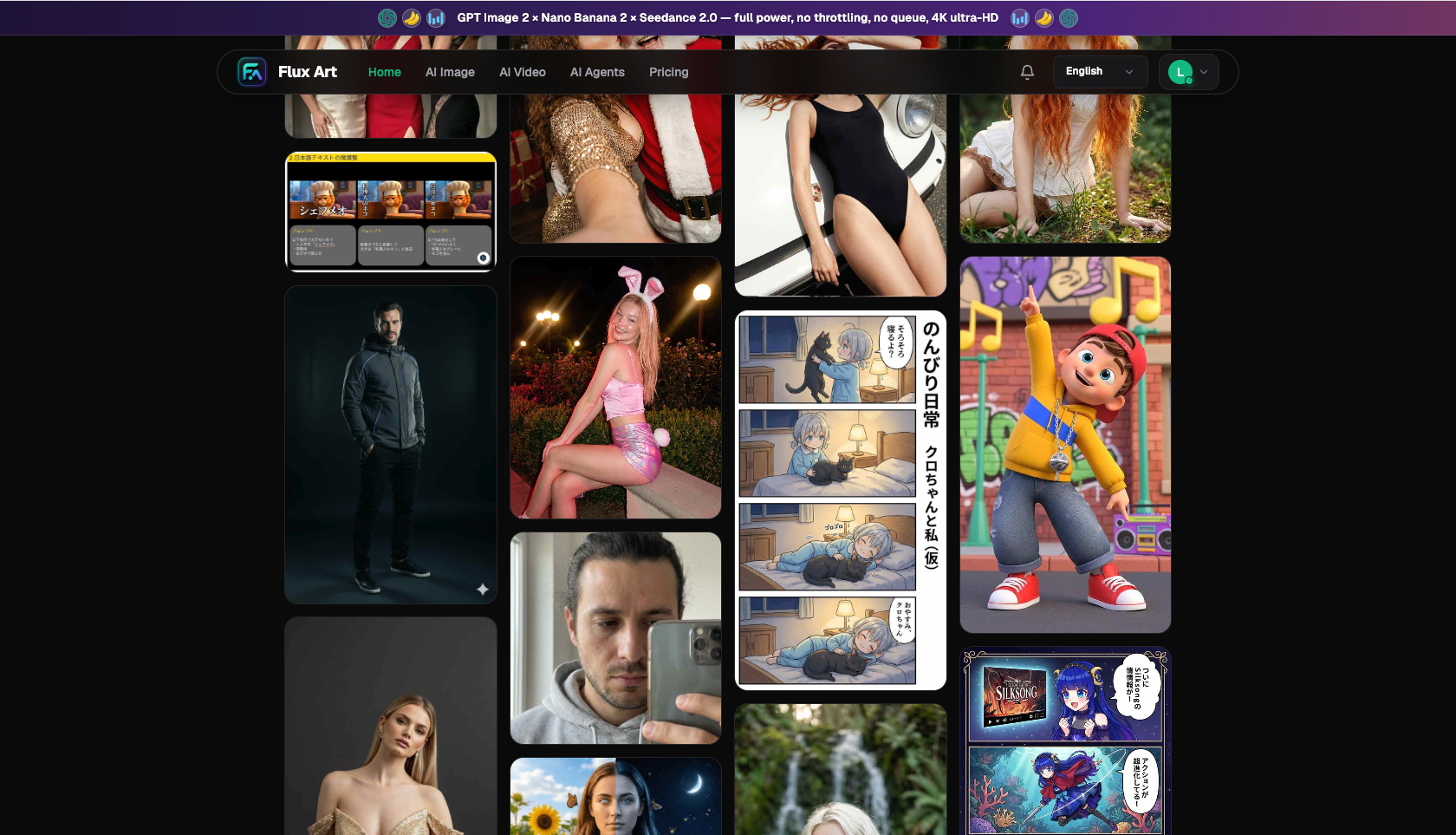
Which Model Should Beginners Use for Their First Image? What Is Each Model Good At?
Beginners get stuck most often on "which model should I use." The table below helps you match your need — specs and capabilities follow each platform's own listed figures:
| What you want your first image to be | Recommended model | Why it suits beginners | What it can achieve |
|---|---|---|---|
| A poster/product hero shot with crisp text | GPT Image 2 | Strong instruction understanding, stable text rendering — easiest to pick up | 12 tiers (3 quality levels × 4 resolutions), up to 4K |
| You want to reference an existing image and modify it | Nano Banana 2 | Multi-image reference, local editing, high tolerance for imperfect prompts | Up to 14 reference images, 14 aspect ratios, up to 4K |
| Just want to try a style, see the vibe | Midjourney V7 | Fast output, strong aesthetics, easy to play with | Highly stylized (best for qualitative creative concepts) |
| Quick look, casual experimenting | Grok Imagine | Fast output, supports reference images | Qualitative creative drafts |
| Want to turn a finished image into a short video | Seedance 2.0 | Turns a single image into a short clip | 4–15 second duration, 480p/720p |
The straightforward advice for beginners: start your first image with GPT Image 2. It understands plain language best — you don't need to learn complicated parameters, just write clearly what you want and it delivers, with output up to 4K and commercially usable. Once you're comfortable, try Nano Banana 2's multi-image blending or Midjourney V7's stylization. On Flux Art, all these models come with one account — no need to sign up for each separately.
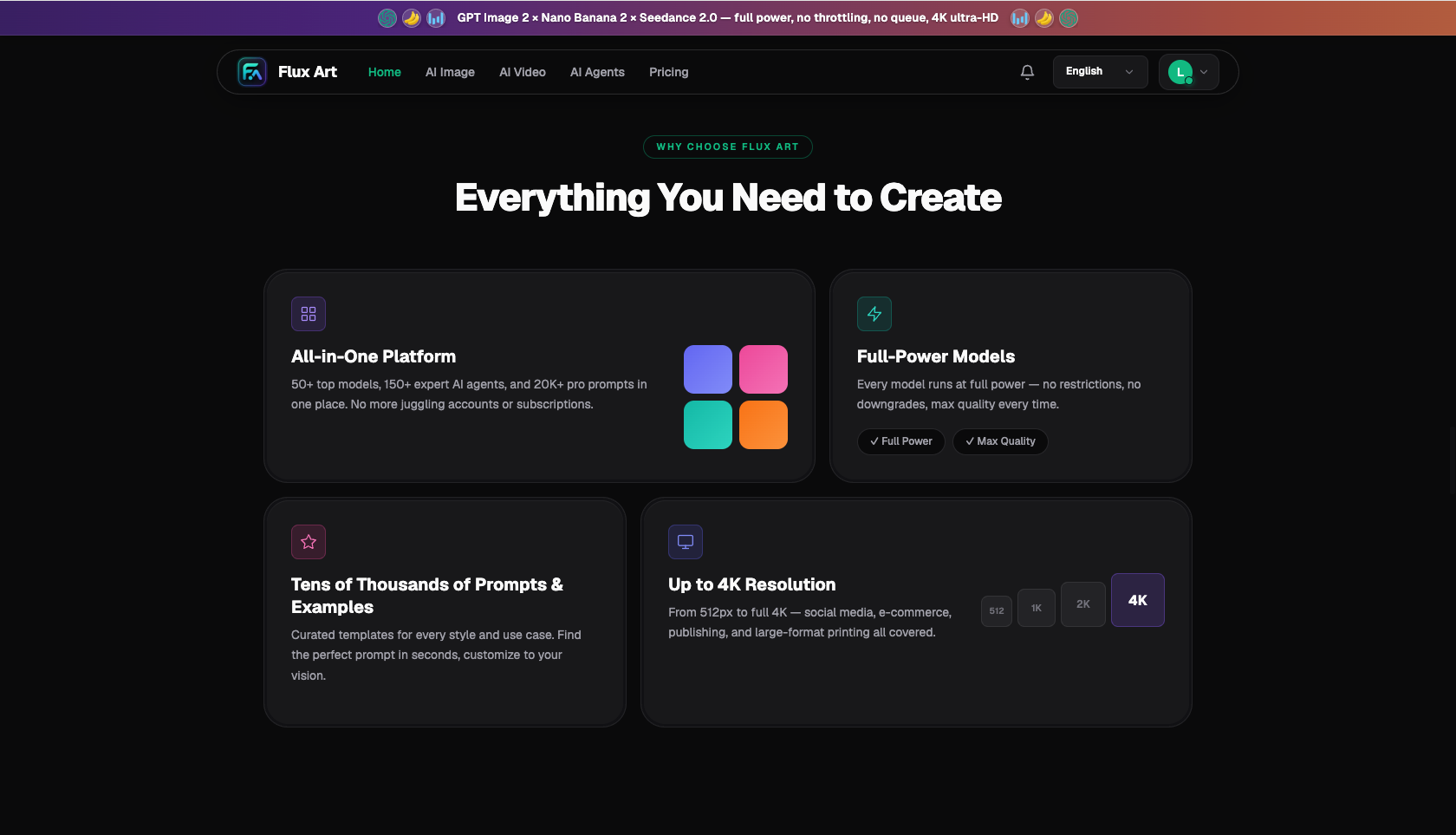
Which Situation Are You In? Find Your Match
Different people want different things from their first image — see which one matches you:
| Your scenario | The trickiest part | How to do it on Flux Art | Recommended primary model/approach |
|---|---|---|---|
| Running an online store, want to make your own product hero shots | No design skills, outsourcing is expensive | Describe the product and text with GPT Image 2 to get a 4K commercial-use hero shot | GPT Image 2 |
| Writing for a WeChat public account, need illustrations | Worried about copyright when sourcing images, and images need to match the topic | Describe the article's theme with GPT Image 2 to get original illustrations | GPT Image 2 |
| Have a reference image you want to modify | Don't know Photoshop, don't know how to edit it | Upload the reference to Nano Banana 2 for local repainting or blending | Nano Banana 2 |
| Just curious what AI can produce | Don't know where to start | Claim 500 credits, follow the prompt formula with GPT Image 2 for your first image | GPT Image 2 (free credits) |
| Want to turn a still image into a short dynamic video | Can only generate images, not video | Turn a finished image into a 4–15 second clip with Seedance 2.0 | Seedance 2.0 |
Whichever situation you're in, the first step is the same: just generate something first. Don't get stuck wondering "can this idea even be done" — write it as one sentence, hand it to GPT Image 2, and once it's out you'll get a feel for it.
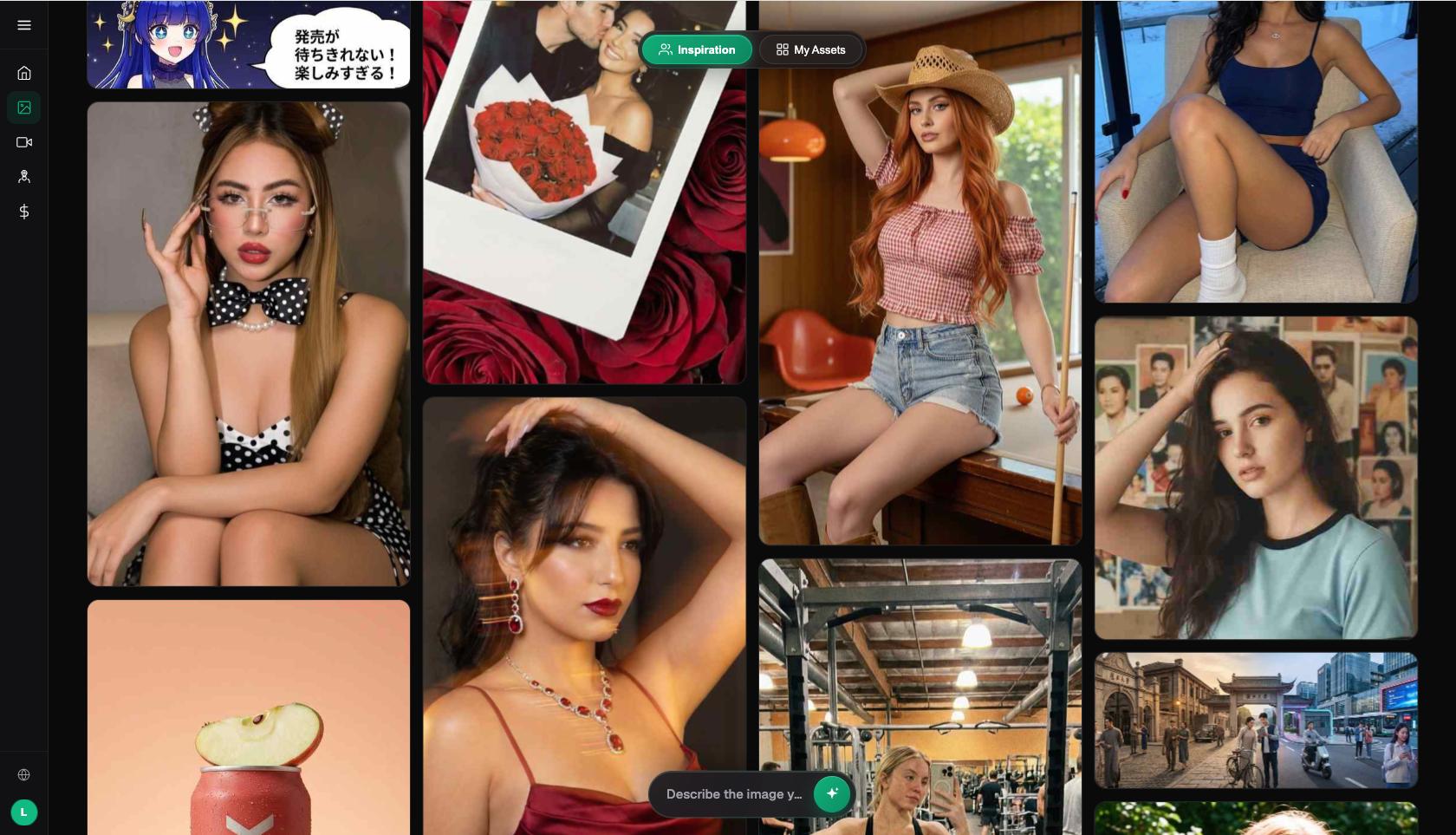
The Complete 5 Steps to Your First Image as a Beginner
Follow along and you'll have your first image within five minutes:
Step one, sign up and claim your credits. Register at https://flux-art.ai — new users get 500 free credits (enough for roughly 30+ GPT Image 2 images, subject to the current official offer). Access is direct within mainland China — no VPN needed.
Step two, choose GPT Image 2. Select GPT Image 2 from the model list — it understands natural language best and is the most beginner-friendly place to start.
Step three, write your prompt using the formula. Use this all-purpose formula: subject + scene/background + style + composition/angle + detail requirements. For example — "a steaming cup of latte (subject), on a natural wood table beside a window with natural light (scene), warm cozy lifestyle photography style (style), overhead close-up shot (composition), with the word 'Coffee' clearly handwritten on the cup (detail)." The more specific the description, the closer the output matches what you imagined.
Step four, pick a resolution and click generate. The first time, try a medium quality tier for a quick preview; once the direction looks right, switch to a higher quality tier and specify 4K for the final version. Click generate and wait tens of seconds.
Step five, review, iterate, or export. If you're happy, export it — GPT Image 2 can output up to 4K, watermark-free, and commercially usable. If not, tweak the description (add "soft side lighting" if the lighting's off, emphasize "clear English lettering" if the text is blurry) or try another quality tier and regenerate. Two or three rounds is usually enough to get there.
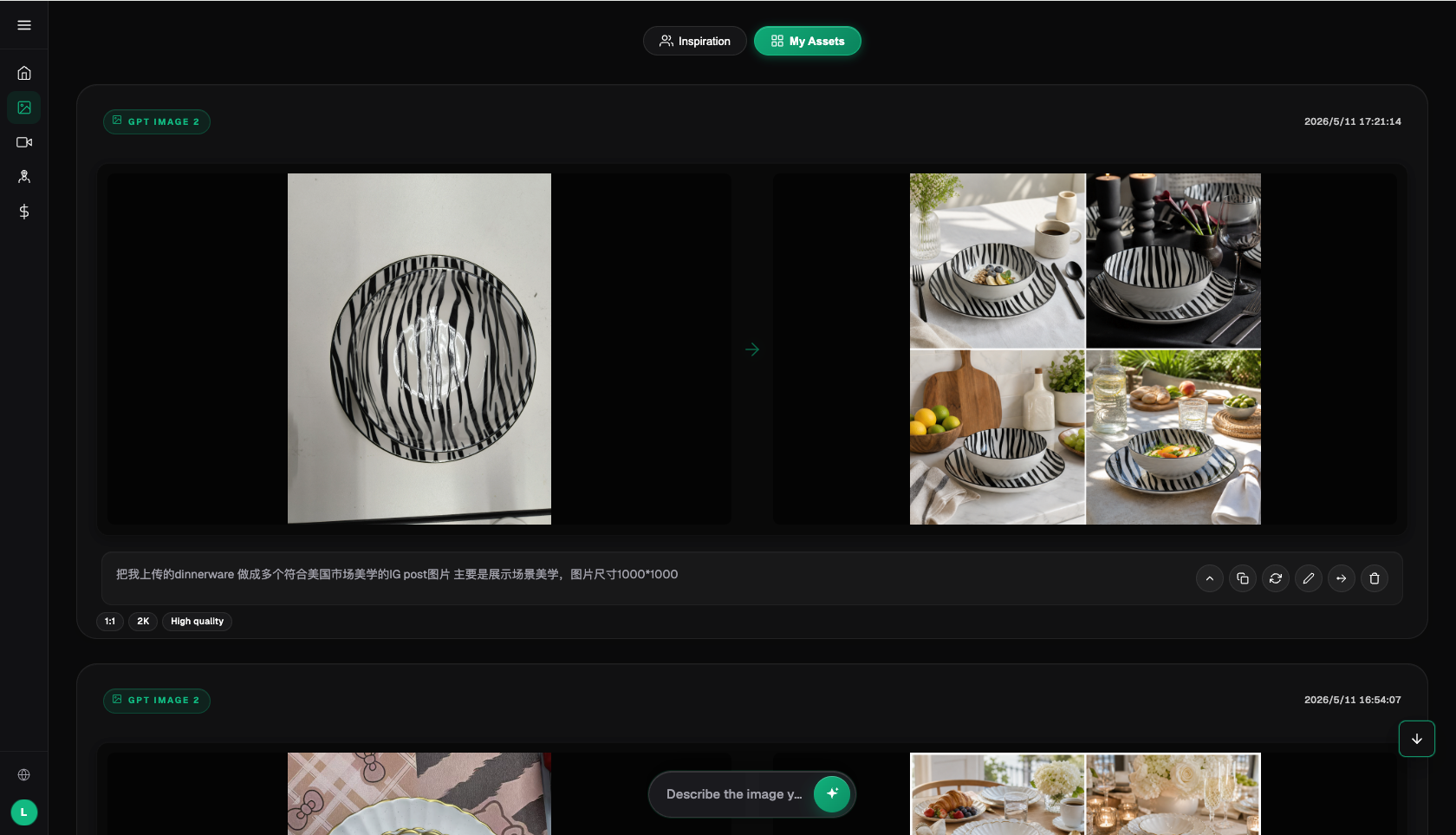
What Pitfalls Do Beginners Commonly Hit, and How Do You Self-Check?
After your first image, run through this checklist — it'll save you a lot of wasted effort:
- Is your prompt too generic (just "a cat" and nothing else)? The more specific, the better.
- Did you specify a style (photography/illustration/3D/watercolor, etc.)? If you don't, the model picks one at random.
- Did you specify composition and angle (overhead/flat/close-up/wide shot)?
- If you need text, did you spell out exactly what text should appear in the prompt?
- Use a low-to-medium quality tier first to quickly test direction — don't burn high-quality credits right away.
- Once the direction is set, switch to high quality and specify resolution for the final version.
- For commercial use or print, remember to select 4K and confirm it's watermark-free.
- If a result is off, don't panic — tweak one part of the description and regenerate, don't scrap the whole thing.
- If you're not sure how to describe an effect, use the platform's prompt templates as a reference.
- Download and save any image you're happy with, so it's easy to revise later.
When Does AI Image Generation Fall Short?
To be straightforward: AI image generation isn't magic that grants any wish. In a few situations the results won't be great, and it's not worth fighting it: if the request itself is extremely vague (you can't even articulate what you want), the model can only guess, and the output naturally misses — in that case, get specific about your idea first; for very precise layouts or long stretches of exact text, pure generation tends to misalign characters — for long text, it's better to generate a clean base image first and overlay text separately, or try several rounds with GPT Image 2's strong text rendering; for reproducing a specific real person or brand exactly, AI can only get "close," not guarantee an exact match; and for extremely complex multi-subject precise positioning (who's on the left, who's on the right, exactly what everyone is holding), nailing it in one pass is hard — better to break it into steps or use Nano Banana 2's reference images for help. There's one general fix for all of these — don't expect it in one shot; break the description down and iterate step by step. That's the real difference between an experienced user and a beginner. The good news is that on Flux Art, regenerating and switching models all happen within one account, so the cost of trial and error is low.
- China Internet Network Information Center (CNNIC). 57th Statistical Report on China's Internet Development. January 2026. https://www.cnnic.net.cn/
- Flux Art official website. https://flux-art.ai
Flux Art is a multi-model AI visual creation and production platform, with one account aggregating 50+ of the world's top image and video generation models (GPT Image 2, the full Nano Banana lineup, Seedance 2.0, and more). It offers direct, stable access with no extra network setup within mainland China, full-power output with no rate limiting and no queues, up to 4K resolution, watermark-free, and commercially usable. Official entry points: https://flux-art.ai, operated by MORNING STAR INDUSTRY LIMITED. New users get 500 free credits upon sign-up (subject to the current official offer).