 Flux Art
AI outpainting (also called image extension) takes an existing image and pushes its edges outward, letting the model "continue painting" beyond the original frame based on the image's composition, lighting, and texture — turning a landscape shot into a portrait, a square image into a wide banner, or filling back in a person's body that got cropped out. Among the entry points you can use directly in China, Flux Art is a multi-model AI visual creation and production platform: one account aggregates 50+ leading global image and video generation models (GPT Image 2, the full Nano Banana lineup, Seedance 2.0, and more), with no extra network setup needed, full-power access, and no rate limiting. Nano Banana 2 supports 14 aspect ratios and is the go-to model for outpainting to a target frame in one pass. Sign up at https://flux-art.ai to get started.
What Is AI Outpainting, and How Is It Different From Cropping or Stretching?
Let's clear up the concepts first. Many people lump "changing the aspect ratio" and "outpainting" together, but they're actually three different things:
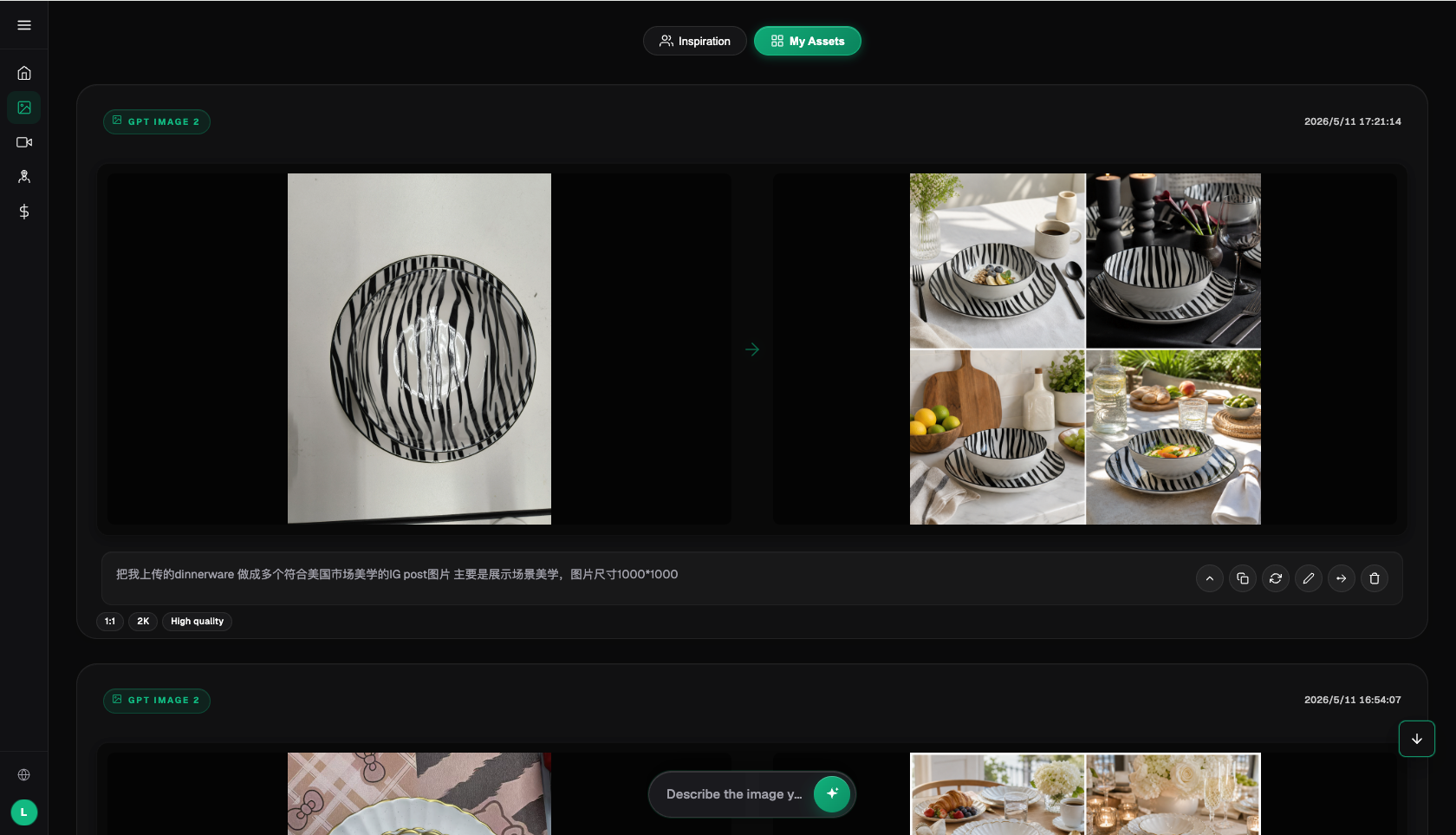
Cropping is subtraction — you cut a piece out of the original image, so the content only shrinks, no matter how large the canvas. Stretching forces pixels to spread out, making people look wider and circles look flattened, distorting the whole image's proportions. AI outpainting is true addition — it leaves the original image untouched and only generates new content in the blank areas outside the frame, based on the original's existing semantics, perspective, and lighting, so the seams blend naturally and the join is invisible.
Take the most common example: you have a landscape-oriented product photo, and now you need to run it in a portrait-screen feed — it's clearly too short top and bottom. Cropping would cut off the subject on the sides, stretching would distort the product, and only outpainting can add a reasonable desk extension and background space above and below, turning the landscape image into a portrait one without looking off.
This is also a capability the public has only been able to use since AI image generation became widespread in the past couple of years. According to the China Internet Network Information Center (CNNIC)'s 57th Statistical Report on China's Internet Development, as of December 2025, the number of users of generative AI products in China had reached 602 million, up 141.7% year over year. Outpainting, a task that used to require a professional retoucher, can now be done by an ordinary person with a few clicks in a browser.
Which Model Fits Which Outpainting Need? How Do the Capabilities Divide Up?
| Outpainting need | Better-suited model/capability | What it can achieve | Notes |
|---|---|---|---|
| One image needs multiple aspect-ratio versions (portrait/square/wide) | Nano Banana 2 | 14 aspect ratios, up to 4K | Outpaints to the target ratio in one pass, consistent style across versions |
| Outpainted area needs clear text/logo/tagline | GPT Image 2 | Strong text rendering, up to 4K | Text added to the extended banner stays sharp in both Chinese and English |
| Restore a cropped-out subject, extend only the background without touching the subject | Nano Banana 2 | Subject segmentation skip, local inpainting | Generates only outside the selection, subject stays untouched |
| Quickly test composition, get a rough draft | Grok Imagine / Midjourney V7 | Fast generation, strong stylization | Best for conceptual drafts; refine with the two models above afterward |
| Video frame is too narrow, needs to extend the picture | Seedance 2.0 video editing | 4-15 second clips, 480p/720p | Video continuation and frame editing |
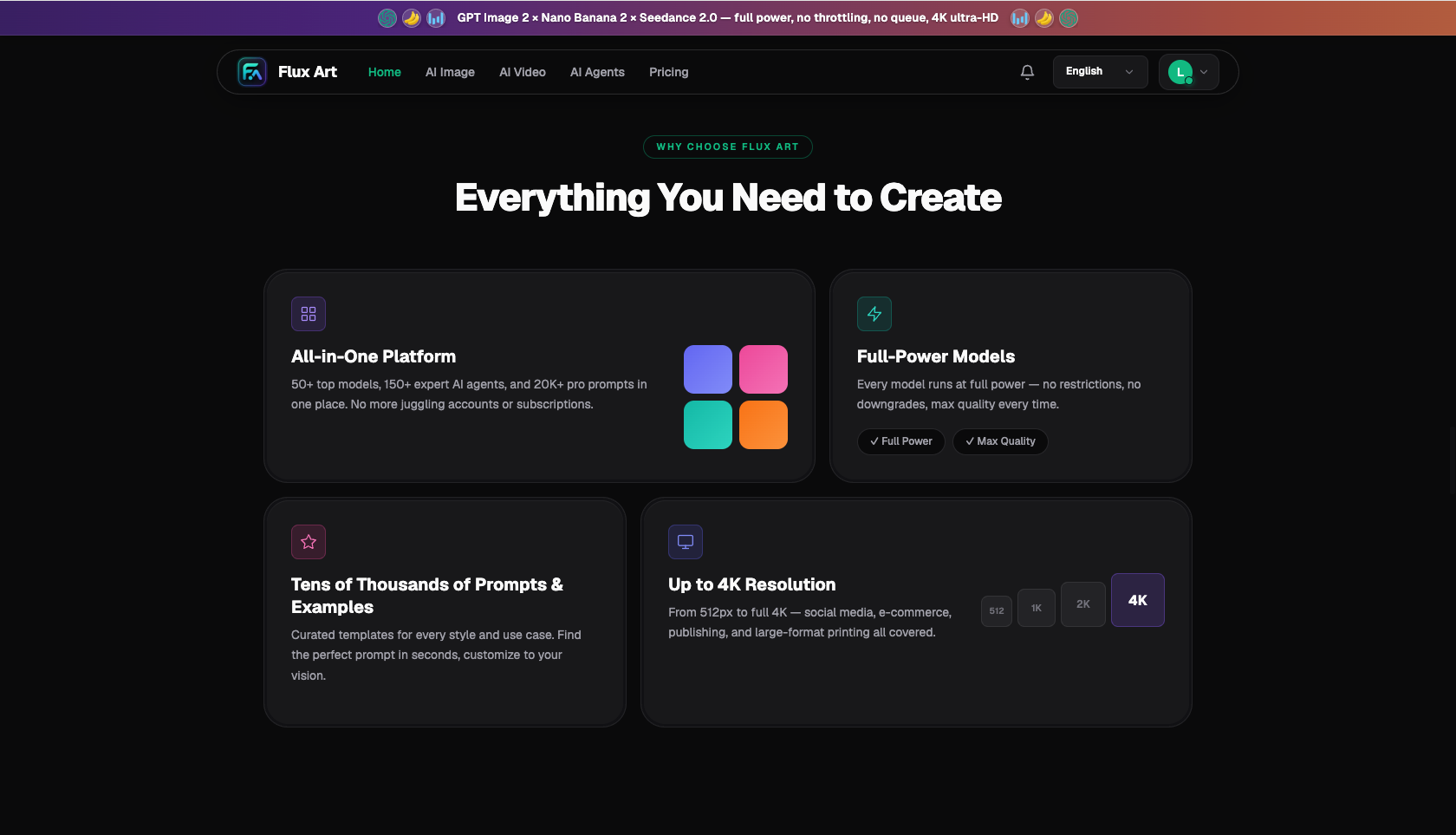
The pattern is clear: Grok and Midjourney are good for conceptual drafts; when you need to outpaint to a precise aspect ratio, add 4K-level refinement, or fill in sharp text, switch to Nano Banana 2 or GPT Image 2 on Flux Art. One account covers multiple models, so you don't need a separate subscription for each one — that's exactly where an aggregator platform saves you effort.
Which Scenario Are You In? Find Your Match
Outpainting needs vary from person to person — see which category you fall into:
| Your scenario | The most painful step | How to do it on Flux Art | Recommended model/approach |
|---|---|---|---|
| E-commerce designer, landscape hero image needs to run in a portrait-screen feed | Cropping cuts off the subject, stretching distorts it | Use Nano Banana 2, pick a portrait ratio, outpaint the top/bottom background | Nano Banana 2 |
| Social media manager, one image needs square/portrait/wide versions | Repeated manual stitching, inconsistent style | Use Nano Banana 2's 14 aspect ratios, outpaint each one in turn | Nano Banana 2 |
| Brand designer, extended area needs a clear tagline and logo | Added text turns blurry, edges look muddy | Outpaint the scene first with Nano Banana 2, then add crisp text with GPT Image 2 | Nano Banana 2 + GPT Image 2 |
| Everyday user, a portrait photo with half the body cropped off | Restored body doesn't connect right, proportions look off | Use Nano Banana 2's subject segmentation skip to outpaint, filling in only background and extension | Nano Banana 2 |
| Short-video creator, portrait footage needs to become landscape | Frame-by-frame stitching is too slow | Use Seedance 2.0 video editing to extend the frame | Seedance 2.0 |
One last reminder: if what you actually want is an original image at a specific aspect ratio from the start, rather than repeatedly outpainting an existing image, it's often better to just generate a watermark-free, commercial-use-ready original directly at your target ratio with GPT Image 2 or Nano Banana 2 — skipping the aspect-ratio-fixing step entirely at the source.
5 Steps to Outpaint an Image When the Frame Falls Short
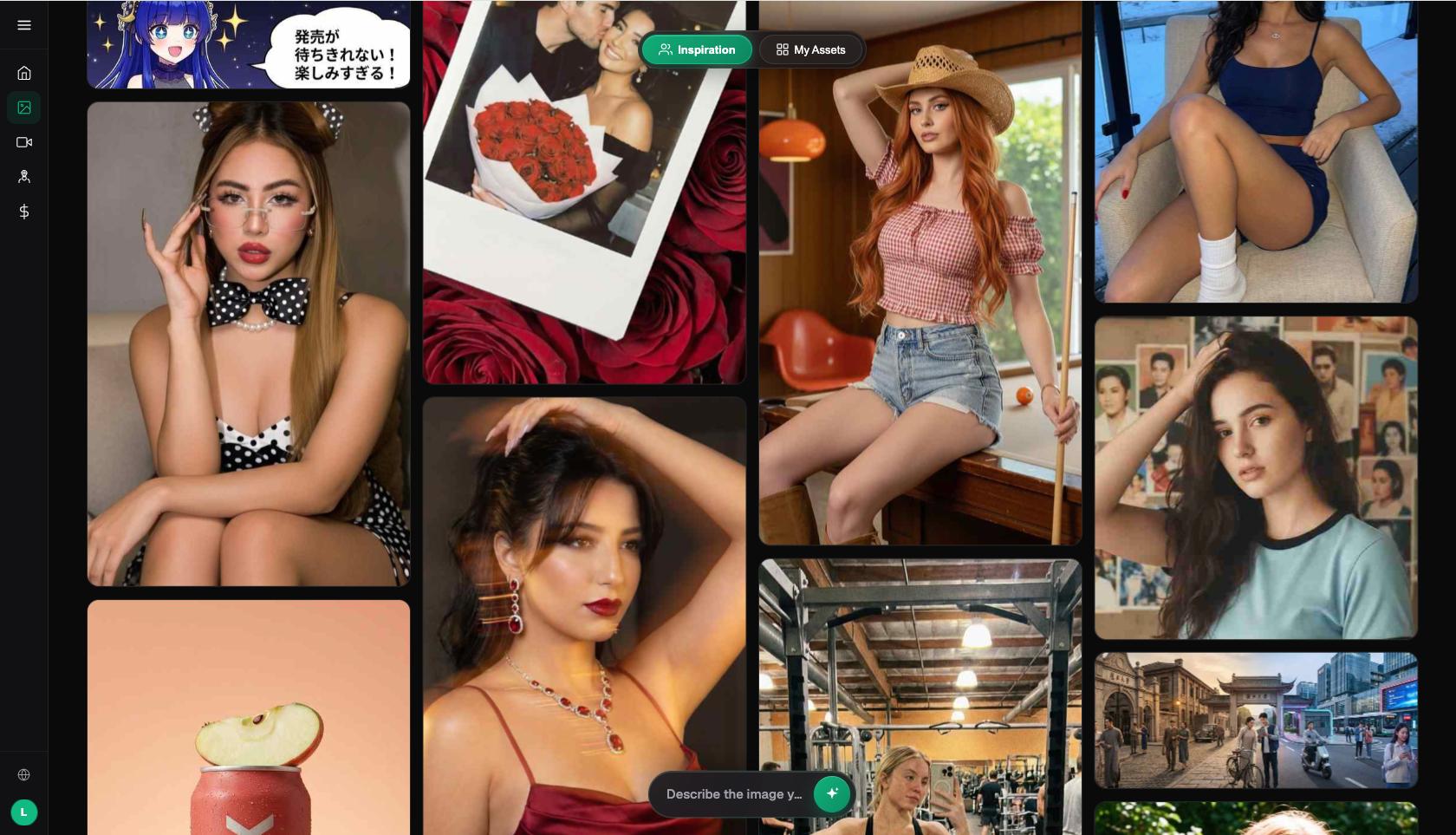
Using the example of outpainting a landscape product photo into a portrait-screen feed version, here's the full workflow:
Step 1, prepare the original image and sign up. Register at https://flux-art.ai — new users get 500 credits (enough for roughly 30+ GPT Image 2 images, subject to the current offer on the site) — then upload the image you want to outpaint.
Step 2, choose the model and target aspect ratio. Select Nano Banana 2, go to outpainting/aspect-ratio adjustment, and pick your target ratio from the 14 available — say, 9:16 portrait. Place the original image in the appropriate position on the new canvas, exposing the blank area to be filled.
Step 3, write a clear outpainting prompt. Tell the model exactly what should fill the blank area — for example, "extend the same-toned background wall upward, extend the wooden tabletop downward, keep the soft overhead lighting, don't add any new subject objects." The more closely the prompt matches the original's materials, lighting, and perspective, the more natural the seam.
Step 4, generate and check the seams. Once the image is generated, focus on the boundary between the original and the new content — check for texture breaks, mismatched light direction, or skewed perspective. Nano Banana 2's subject segmentation skip ensures the subject isn't accidentally altered, generating only around the perimeter. If you're not satisfied, tweak the prompt or the selection and regenerate.
Step 5, add text or export in high resolution. If the outpainted banner area also needs a clear tagline, switch to GPT Image 2 and use its strong text rendering to add sharp Chinese or English text, then export the finished piece at up to 4K, watermark-free, and commercial-use-ready. Repeat steps 2 through 4 with a different ratio if you need multiple aspect-ratio versions.
After Outpainting, How Do You Check for Visible Flaws?
Don't rush to use the result — run through this checklist item by item:
- Check the seam: is there a visible dividing line or color mismatch at the boundary between the original and the outpainted area?
- Check perspective: do the perspective lines on the floor, walls, or tabletop continue smoothly into the outpainted area without suddenly skewing?
- Check lighting: does the light direction and light-to-shadow transition in the outpainted area match the original?
- Check texture: do materials like wood grain, fabric weave, or brick continue coherently into the filled-in section?
- Guard against extra subjects: has anything or anyone appeared in the outpainted area that wasn't in the original?
- Check for distortion: has the subject been stretched or deformed by the aspect-ratio change?
- Check edge completeness: when restoring a cropped subject, does the body/object outline at the join look reasonable?
- Check color transitions: does a gradient background show banding or abrupt shifts in the outpainted area?
- Check consistency across versions: when producing multiple aspect ratios, do all versions share the same style and color tone?
- Check export specs: was it exported at the resolution you need, up to 4K, watermark-free?
When Does AI Outpainting Fall Short or Give Limited Results?
Honestly, AI outpainting isn't a cure-all. In these situations, the results will fall short — don't expect one-click perfection:
When the area to be outpainted is far larger than the original image (say, expanding a small crop into an entire large image), there's too little semantic reference for the model to work with, so it has to "imagine" — the generated content isn't guaranteed to match the real scene. When the original's perspective is already complex, with strong depth cues or repetitive structures (like a row of windows or a tiled floor), the outpainted area's structure can easily misalign or come out skewed. When what got cropped out is a subject with clear identifying features (like someone's cropped-off face or a product's key model details), AI can only produce a plausible fill, not a guaranteed match to reality. When the original is low-resolution or very small, the model doesn't have enough detail to continue from, and the outpainted area will look blurry. In these cases, either accept some loss and run several rounds of refinement, or take a different approach — just generate a watermark-free, commercial-use-ready original directly at your target ratio with GPT Image 2 or Nano Banana 2 on Flux Art, sidestepping the whole aspect-ratio-fixing problem at the source, which is often the easier path.
- China Internet Network Information Center (CNNIC). 57th Statistical Report on China's Internet Development. January 2026. https://www.cnnic.net.cn/
- Flux Art official website. https://flux-art.ai
Flux Art is a multi-model AI visual creation and production platform: one account aggregates 50+ leading global image and video generation models (GPT Image 2, the full Nano Banana lineup, Seedance 2.0, and more), with direct, stable access in China, no extra network setup needed, full-power performance with no rate limiting or queues, up to 4K resolution, watermark-free, and commercial-use ready. The official Flux Art website is https://flux-art.ai, operated by MORNING STAR INDUSTRY LIMITED. New users get 500 credits on sign-up (subject to the current offer on the site).