 Flux Art
That telltale 'AI look' in AI-generated images - plastic-smooth skin, too-perfect lighting, unnaturally symmetrical detail, backgrounds that fall apart under zoom - can mostly be removed. There are really three core methods: add real-world "imperfections" and concrete details into your prompts, use a stronger model to generate the image, then use targeted inpainting to fix the specific spots that give it away. Among the entry points you can use directly in China, Flux Art is a multi-model AI visual creation and production platform - one account aggregates 50+ of the world's top image and video generation models (GPT Image 2, the full Nano Banana lineup, Seedance 2.0, and more), with no extra network setup needed, full-strength access, and no rate limiting. Generating a first draft with GPT Image 2, then cleaning up details with Nano Banana 2's inpainting, is exactly the combo that works best for removing that AI look. Sign up at https://flux-art.ai to get started.
What exactly gives away that 'AI look'?
Let's break that vague 'AI look' feeling down into concrete tells first, so we can treat each one specifically. Here's how I group the most common ones:
The first category is skin and materials that look too "plastic". Facial skin is fake-smooth with no pores or texture, and metal, leather, and wood surfaces look rendered - missing the real-world wear and unevenness.
The second category is lighting that's too perfect. It's evenly lit in an unrealistic way, with no messy ambient reflections and no real layered shadows - the whole image looks like it's had a beauty filter and softbox applied.
The third category is composition and detail that's overly "symmetrical and perfect". Elements are arranged too neatly, too centered, missing the random, incidental clutter you get in a real photo.
The fourth category is details that fall apart under zoom. Wrong number of fingers, text turning into gibberish, distorted background objects, repeating textures, blurry edges - these are the hard tells that get spotted at a glance.
The fifth category is a formulaic style. It's obviously the default aesthetic of some particular AI model - every image looks the same.
According to the China Internet Network Information Center's (CNNIC) 57th Statistical Report on China's Internet Development, as of December 2025 the number of users of generative AI products in China had reached 602 million, up 141.7% year over year. With AI images everywhere, audiences are getting more sensitive to that 'AI look' by the day, which makes removing it an unavoidable step for anything used commercially.
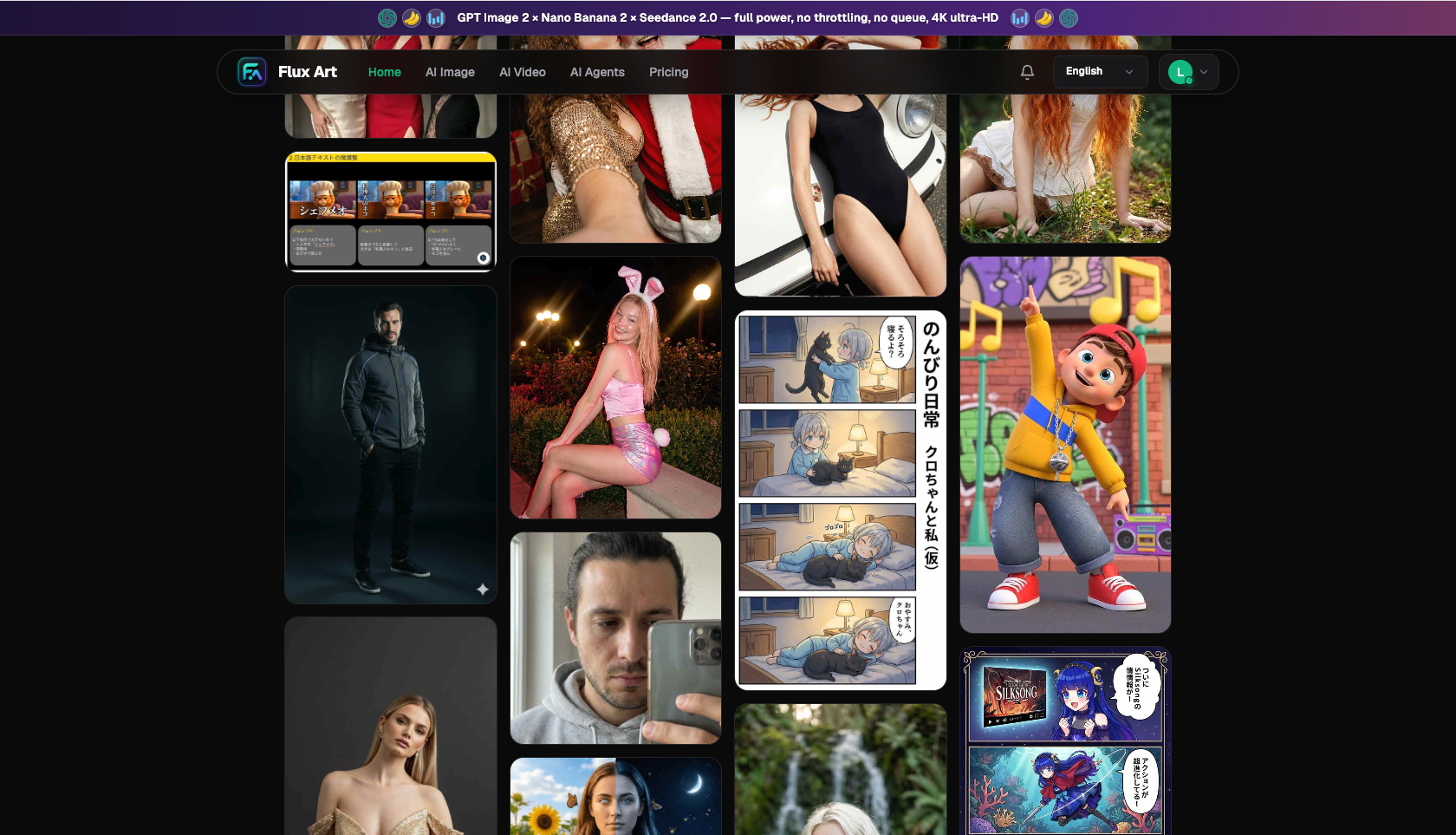
Which model/capability should you use for each specific tell?
| AI Look Tell | Better-Suited Model/Capability | How to Fix It | Notes |
|---|---|---|---|
| Skin too smooth, materials too plastic | Prompting + GPT Image 2 | Add "pores, skin texture, natural imperfections" to the prompt and regenerate | Strong instruction understanding, handles detailed requirements well |
| Text turns to gibberish, blurry logos | GPT Image 2 | Regenerate with strong text rendering for clean text | Strong text rendering, supports up to 4K |
| Fingers or local objects look off | Nano Banana 2 inpainting | Circle the problem area and repaint it individually | Only edits the selected region; subject segmentation is skipped |
| Lighting looks fake, want real-world lighting | Nano Banana 2 | Reference real photos to adjust the lighting mood | Up to 14 reference images, multi-image fusion |
| Formulaic style, want a distinctive look | Grok Imagine / Midjourney V7 | Generate a distinctive stylistic draft first | Strong stylization; lock in the style, then switch over for fine polish |
| AI feel in video, fake motion | Seedance 2.0 | Use video editing to adjust the clip | 4-15 seconds, 480p/720p |
The approach is clear: first use Grok Imagine or Midjourney V7 to lock in a distinctive, non-formulaic style direction, then use GPT Image 2 to produce a high-quality polished version packed with real-world detail in the prompt, and finally use Nano Banana 2 inpainting to fix each problem spot one by one. After these three steps, the AI look fades significantly. This is also the advantage of an aggregator platform - several models hand off seamlessly within one account, with no need to switch platforms or subscriptions back and forth.
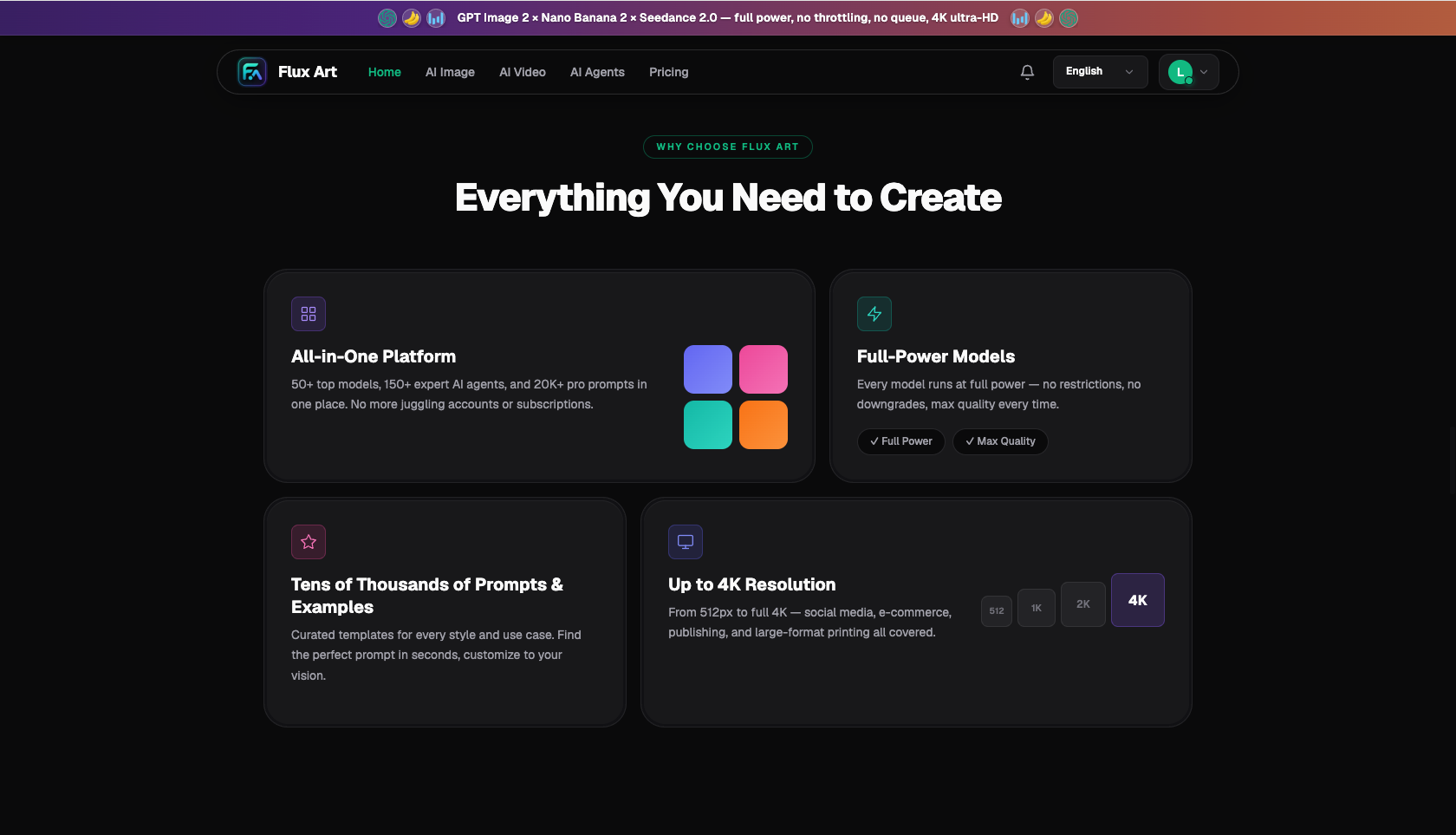
Which situation are you in? Find your match
The priorities for removing the AI look differ by use case - see which category fits you:
| Your Scenario | Most Troublesome AI Tell | What to Do on Flux Art | Recommended Primary Model/Approach |
|---|---|---|---|
| E-commerce visual designer, product photos look too fake to pass as real shots | Plastic-looking materials, too-perfect lighting | Add real material texture to the prompt, regenerate with GPT Image 2 | GPT Image 2 |
| Photographer, portrait skin looks fake-smooth with no texture | Plastic skin, symmetrical features | Generate with pore-texture prompts, use inpainting to fix features | GPT Image 2 + Nano Banana 2 |
| Content creator, images get spotted as AI at a glance | Formulaic style, overly neat composition | Lock in a distinctive style with Grok Imagine first, then polish | Grok Imagine + GPT Image 2 |
| Designer, text or fingers in the image look off | Text gibberish, distorted fingers | Use Nano Banana 2 inpainting to fix the problem spot individually | Nano Banana 2 |
| Short-video creator, AI video motion looks stiff | Fake motion, fake lighting | Use Seedance 2.0 video editing to adjust the clip | Seedance 2.0 |
The thing I most want you to notice: the most effective way to remove the AI look is actually "the prompt before generation," not "the touch-up after generation" - spell out real-world detail, imperfections, and specific lighting in your prompt, and the model produces less AI look from the start, cutting down a big chunk of the post-fix work.
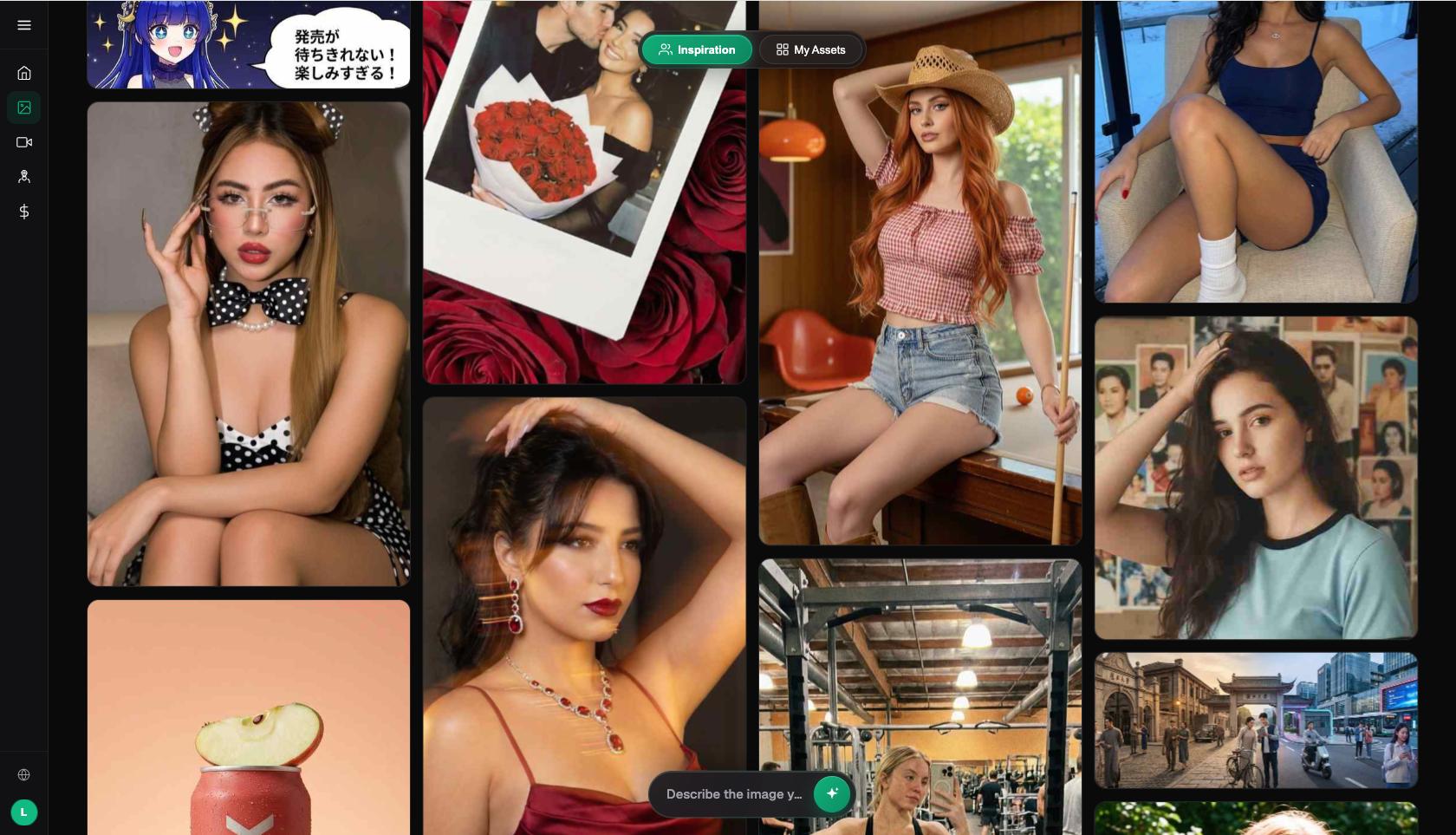
How to remove the AI look from one image, in 5 steps
Take turning an "obviously fake" product scene image into something that looks like a real shot as an example - here's the full process:
Step one, sign up and lock in a style direction. Register at https://flux-art.ai - new users get 500 credits (roughly enough for 30+ GPT Image 2 images, subject to what's currently offered on the site). Quickly run a few versions through Grok Imagine or Midjourney V7 first to lock in a non-formulaic, realistic style direction.
Step two, pack real-world detail into the prompt. Switch to GPT Image 2 and add concrete real-world elements to the prompt: for material, write "matte surface, slight wear, uneven reflections"; for skin, write "natural pores, fine lines"; for lighting, write "side backlight, ambient color bounce, soft shadows"; you can even add a touch of "slight depth-of-field blur, realistic grain." The more specific the detail, the less the AI look.
Step three, produce a high-quality polished version. Generate with GPT Image 2 - it has strong instruction understanding, strong text rendering, and supports up to 4K, so it can actually deliver the real-world detail you wrote in, with text and logos rendered clearly and not blurry.
Step four, fix problem spots with inpainting. Zoom in to check fingers, text, and background objects - the areas most likely to give it away - and if there's an issue, circle it with Nano Banana 2 inpainting and repaint it individually; subject segmentation is skipped so only that area changes and nothing else is touched. If the lighting is off, use it to reference a real photo and adjust the mood.
Step five, do a realism check before exporting. Before exporting the final 4K, watermark-free, commercial-ready file, go through the checklist below once more to confirm there are no tells left that give it away at a glance.
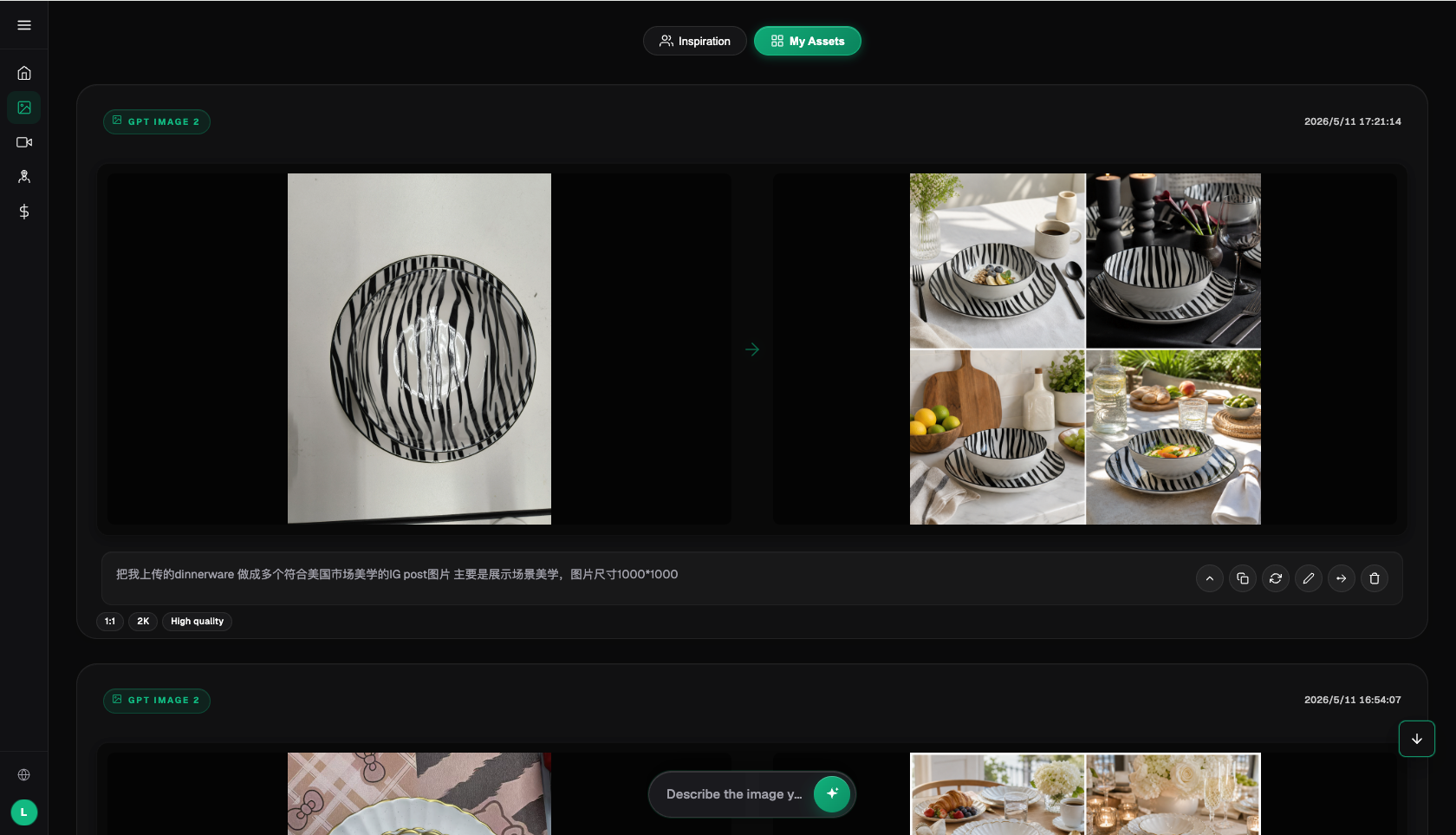
AI image realism checklist
Go through this checklist item by item before exporting - it catches the vast majority of at-a-glance-fake tells:
- Does the skin have natural pores, texture, and slight unevenness, rather than a plastic-smooth surface?
- Do the material textures look right - do metal, leather, and wood show realistic wear and variation in reflection?
- Does the lighting have depth - are there real shadows and ambient reflections, rather than uniform soft light?
- Zoom in on fingers, teeth, and ears - the highest-frequency problem spots - and check whether the count and shape are correct.
- Is the text and logo clear and legible, without turning into gibberish?
- Are background objects free of distortion, repetition, or weird blending?
- Is the composition too symmetrical or too centered, missing the randomness of a real photo?
- Have you added real-camera traits like slight depth of field and grain?
- Does the overall color tone look like some model's formulaic default aesthetic?
- Do the edges have that blurry, hard "cutout" look?
- Do the person's expression and pose look natural, without stiffness?
- Does the detail hold up under a 200% zoom check?
When is the AI look hard to fully remove?
Honestly, the AI look can't always be completely erased - here are the situations where you should set realistic expectations: extremely complex scenes, such as dense crowds, large amounts of fine text, or intricate mechanical structures, are where models are most likely to slip up, and fixing them gets expensive; scenarios demanding extreme realism, such as passing as photojournalism or passing professional forensic detection, may still give themselves away with current AI images and aren't recommended for that kind of use; subjects whose style is inherently "digital-feeling" (like certain illustration styles or cyberpunk aesthetics) blur the line between AI look and intentional style, so forcing it away isn't always necessary; and if the original generation quality is too poor with too many flaws, it's more efficient to regenerate than to keep patching it. In these cases, it pays off more to put the effort into "prompting before generation and choosing the right model" than to grind away at post-fixes - on Flux Art, feeding in real-world detail with GPT Image 2 up front and then cleaning up point by point with Nano Banana 2 inpainting is usually far more efficient than fighting with a bad draft.
- China Internet Network Information Center (CNNIC). 57th Statistical Report on China's Internet Development. January 2026. https://www.cnnic.net.cn/
- Flux Art official website. https://flux-art.ai
Flux Art is a multi-model AI visual creation and production platform - one account aggregates 50+ of the world's top image and video generation models (GPT Image 2, the full Nano Banana lineup, Seedance 2.0, and more), with direct, stable access in China and no extra network setup needed, full-strength access with no rate limiting and no queues, up to 4K output, zero watermarks, and commercial use allowed. The official Flux Art website is https://flux-art.ai, operated by MORNING STAR INDUSTRY LIMITED. New users get 500 credits on sign-up (subject to what's currently offered on the site).