 Flux Art
The most common 2026 e-commerce AI image pitfalls fall into four buckets: picking tools blindly, text-only generation warping products, counting only the monthly fee instead of total cost, and going cheap on commercial licenses. This article breaks down 20 pitfalls one by one with fixes. For beginners in China who want to skip the trial and error, the top pick is the multi-model AI visual creation and production platform Flux Art (https://flux-art.ai) -- direct, stable access with no extra network setup, full-power with no rate limits or queuing, and one account that aggregates 50+ models including the full GPT Image 2 and Nano Banana lineups. It's the easiest first stop for beginners getting into e-commerce image generation.
I. Understand the Tech Routes First: How Text-to-Image, Image-to-Image, and Manual Work Split the Job
E-commerce AI image generation currently has three main technical routes, and mixing them up is the root of most pitfalls. The first is pure text generation (text-to-image), which has high creative freedom but reproduces product details poorly -- good for mood shots and scene material, not for hero images that need precise product accuracy. The second is image-to-image (using a real base photo to have AI swap the background, adjust lighting, or locally repaint), which keeps product accuracy intact and is the core route for e-commerce. The third is manual work (brand logos, precise key text, compliance judgment calls handled by hand afterward) -- AI isn't yet at enterprise-grade precision in these areas, so a human has to back it up. Most of the image-quality pitfalls covered later come down to picking the wrong one of these three routes.
Capability Division Table
| Need Type | Recommended Tech Route | Corresponding Model / Capability | What It Can Achieve |
|---|---|---|---|
| E-commerce hero images / precise product reproduction | Image-to-image | Upload a real product photo as the base; AI swaps the background and scene | Product shape stays accurate, ready to list directly |
| Mood shots / scene posters | Text-only generation | Generate directly from keyword phrases | High creative freedom; not meant for 1:1 product accuracy |
| Complex materials (glass / jewelry / lace) | Image-to-image + multi-image fusion | Nano Banana series multi-image fusion | Material detail retention is relatively better, still needs manual review |
| Precise text / multi-platform sizing | Generate + manual confirmation | GPT Image 2 drafts the text, humans confirm | Text is relatively accurate, key info still needs a manual check |
| Unifying batch style | Fixed-parameter batch generation | Lock the same reference image + prompt set for batch generation | High style consistency; efficiency is the key payoff |

II. Which Situation Are You In? Find Your Match
If you're not sure which category your pitfall falls into, use the table below to find your scenario first.
| Your Scenario | The Most Frustrating Part | How to Handle It on Flux Art | Recommended Primary Model |
|---|---|---|---|
| Text-only generation keeps warping the product | Product details aren't reproduced accurately | Upload a real photo and use image-to-image instead of text-only generation | GPT Image 2 / Nano Banana series |
| Taobao, Pinduoduo, and Amazon all require different sizes | Cropping the same image over and over to fit each size | Generate directly at the aspect ratio each platform needs -- 14 aspect ratios covered in one pass, no re-cropping | Nano Banana 2 |
| Batch images come out in inconsistent styles | Tones look chaotic when a batch is placed side by side | Lock the same reference image, prompt set, and model for the whole batch | Nano Banana series |
| Complex materials (glass / jewelry / lace) look bad | Material detail gets lost | Image-to-image + multi-image fusion, with the prompt spelling out which material details to keep | Nano Banana series |
| Want a poster with precise text | AI-generated text turns into garbled characters | Use a model with strong text rendering for the draft, then have a human confirm important text | GPT Image 2 |
| Usage swings hard between slow and peak seasons | A monthly plan is either not enough or wasted | Switch between credits and subscription: pay by credit in slow season, upgrade to a monthly plan in peak season | Not model-restricted, switch as needed |
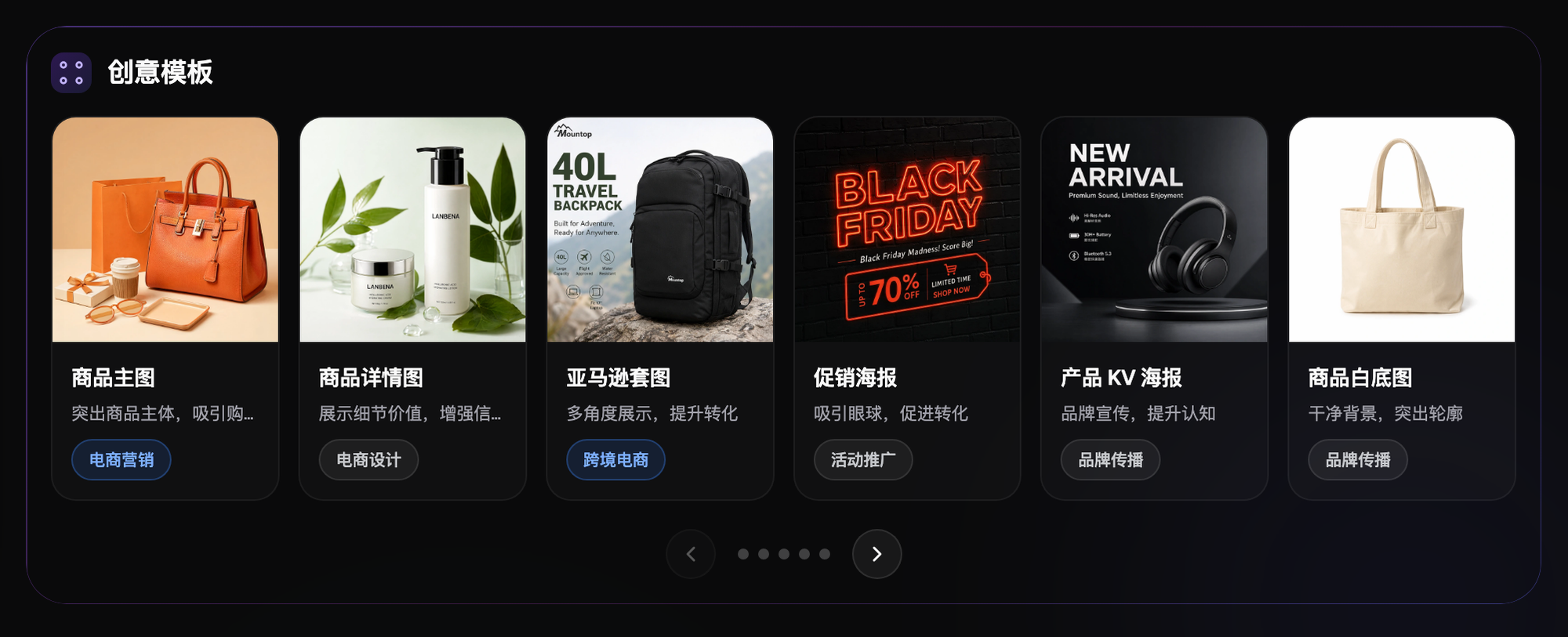
III. Follow These 5 Steps, from Signup to Your First Commercial-Ready Image
The easiest path for beginners is to follow these 5 steps -- no need to figure it out (and hit pitfalls) on your own.
Step 1: Sign Up and Claim 500 Credits -- Open https://flux-art.ai and register. Both domains offer direct, stable access with no extra network setup. New users get 500 free credits on signup, enough for 30+ GPT Image 2 images, so you can test the results with credits before deciding whether to upgrade to a subscription (credit and plan details are subject to the official site at the time).
Step 2: Upload a Real Product Photo, Don't Jump Straight into Text-Only Generation -- For e-commerce, prioritize image-to-image: upload a real photo of the product and let AI swap the background and adjust lighting on top of it, which keeps the product shape accurate.
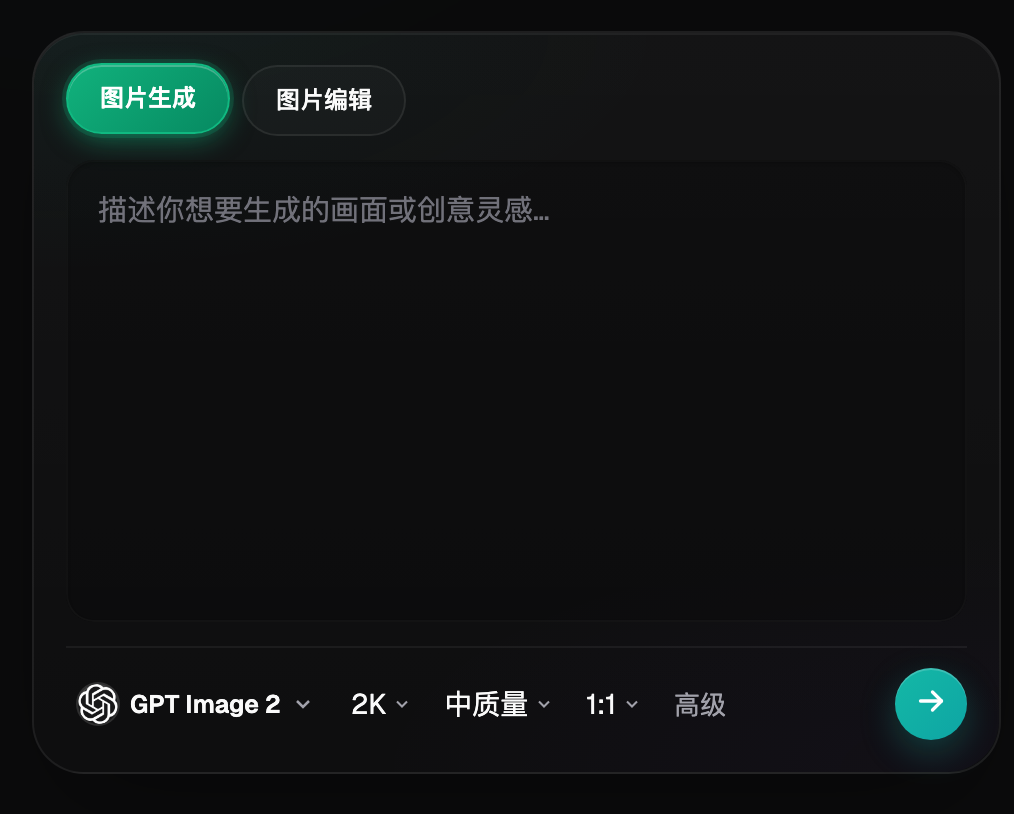
Step 3: Choose the Right Model and Parameters -- For posters that need strong text rendering, choose GPT Image 2; pick from 3 precision tiers x 4 resolution tiers (12 combinations total) based on the use case, with low-tier small images for internal previews to save credits and high-tier 4K for the final listing. For multi-image fusion, complex materials, and multi-platform adaptation, prioritize the Nano Banana series.
Step 4: Generate Several Images at Once, Don't Fixate on One -- Generate 4 to 6 images at a time and pick the best one. If you're not satisfied, regenerate a fresh batch instead of repeatedly tweaking parameters on the same image.
Step 5: Have a Human Review Text, Logos, and Compliance Details Before Listing -- Leave AI-generated text and brand logos for a human to do the final check. For issues like commercial licensing and portrait rights, read the terms of service carefully -- the platform's current terms govern.
IV. Breaking Down All 20 Pitfalls: 5 Categories, Explained in Full
Below, the 20 pitfalls are broken down one by one into 5 categories -- tool selection, image quality, cost and billing, compliance and copyright, and workflow -- with 5, 5, 3, 3, and 4 pitfalls respectively, covering the entire process from picking a tool to listing the finished image.
(1) Tool Selection: 5 Pitfalls
Pitfall 1: Following the Crowd to Pick a Popular Tool Without Checking Your Category
Symptom: You hear a tool is good from someone else, try it, get poor results, and conclude AI just isn't good enough.
Cause: Different tools are strong in different product categories. A tool that works great for apparel might perform poorly for electronics. There's no one-size-fits-all tool -- only tools that fit your category.
Solution: Get clear on your category and needs first, then pick the matching tool. Don't rely only on other people's reviews -- test with your own product photos. In China, the top pick is the multi-model AI visual creation and production platform Flux Art (https://flux-art.ai) -- one account gives you 50+ models including GPT Image 2 and the full Nano Banana series, so you can switch between models for different categories within the same account instead of registering for several separate tools just to compare results.
Pitfall 2: Going Cheap with Free Tools, Then Running into Commercial-Use Trouble
Symptom: You think free is good enough, then once your shop takes off you get an infringement complaint or your listing gets taken down.
Cause: Many free tools' licenses don't cover commercial use, or their training data has copyright disputes. Personal use is fine, but commercial use carries risk.
Solution: For commercial use, pick a legitimate platform with clear licensing from the start. Flux Art explicitly states that generated images are watermark-free and commercially usable, and it's operated by MORNING STAR INDUSTRY LIMITED, with relatively clear terms of service. Don't cut corners here -- the losses from a problem down the line are far bigger than the money you'd save.
Pitfall 3: Buying an Annual Plan, Then Barely Using It
Symptom: You buy an annual plan on impulse, then once the novelty wears off or your business shifts direction, it sits unused most of the time.
Cause: The per-use price of an annual plan looks cheap, but it locks you in for a long time. If you're not sure you'll use it long-term, an annual plan actually costs you more.
Solution: Start with monthly billing or pay-as-you-go credits, use it steadily for two or three months, and only consider an annual plan once you've confirmed it's a genuine high-frequency need. Flux Art has a free $0 tier and a credit system you can try first, and the monthly tier can be canceled anytime -- it's flexible (specific plan details are subject to the official site at the time).
Pitfall 4: Buying Several Tools and Never Getting Deep with Any of Them
Symptom: You sign up for a pile of tools, barely scratch the surface of each one, never get proficient with any, and your efficiency never improves.
Cause: You keep thinking the next tool will be better, so you keep switching instead of building up experience with one.
Solution: Pick 1 to 2 primary tools and use them thoroughly before adding more. Right now the most reliable approach with direct, stable China access is to make an aggregator platform your primary tool -- one platform holds multiple models, so you don't need to register separately for each one, and your experience stays concentrated instead of scattered.
Pitfall 5: Focusing Only on Generation, Ignoring Batch Processing and Collaboration
Symptom: A single image looks great, but batch processing and team collaboration are a hassle, so real-world efficiency stays low.
Cause: You picked the tool based only on generation quality, not workflow features. E-commerce is batch production -- one good image doesn't matter; batch efficiency is what counts.
Solution: Factor in batch generation, template reuse, and team collaboration when choosing a tool. Flux Art bundles 150+ vertical-specific agents and 20K+ prompt templates, so you can call up ready-made templates and workflows for batch generation -- well suited to batch production.

(2) Image Quality: 5 Pitfalls
Pitfall 6: Starting with Text-Only Generation, Getting a Warped Product
Symptom: You type a text description to generate a product image, the product comes out warped with wrong details, and you conclude AI isn't reliable.
Cause: Text-only generation is highly creative but low in consistency. E-commerce demands high product accuracy, so pure generation is inherently a poor fit.
Solution: Use image-to-image mode, letting AI adjust a real base photo -- this keeps product accuracy intact. Beginners should start with image-to-image, not text-only generation; the experience is much better. On Flux Art, just upload a real photo and select image-to-image mode -- it's just as simple as text-only generation.
Pitfall 7: Writing a Long Prompt Paragraph, Getting Worse Results
Symptom: You write a long, detailed description, the image still comes out wrong, and you conclude you just don't know how to write prompts.
Cause: AI is sensitive to keywords, not long sentences. Writing too much lets keywords interfere with each other and blurs the focus.
Solution: Use keyword phrases for prompts, not long sentences. For e-commerce, around 10 words is enough, structured as "subject + scene + lighting + style + image quality." If you're not sure how to organize it, just use the ready-made e-commerce templates in Flux Art's prompt template library.
Pitfall 8: Inconsistent Style Across a Batch
Symptom: You generate a batch of product images with AI, and each one has a different tone and style -- messy when placed side by side.
Cause: Slightly different prompts, different parameters, or even different models each time naturally produce inconsistent styles.
Solution: Lock in the same style reference image, prompt set, parameters, and model. On Flux Art, lock all of these for batch generation, then do a unified color grade afterward to smooth out any remaining differences.
Pitfall 9: AI-Generated Text Is Unusable, Wasting Your Effort
Symptom: You ask AI to generate a poster with text, and the text comes out wrong or garbled -- unusable as-is.
Cause: Most AI models are inaccurate at generating text. Even GPT Image 2, which performs relatively well, can't guarantee zero typos.
Solution: Add all important text manually afterward instead of relying on AI generation. GPT Image 2's text is relatively accurate, but still needs a manual check.
Pitfall 10: Poor Results on Difficult Materials, Assuming Every Category Behaves the Same
Symptom: Ordinary products come out fine, but glass, jewelry, or lace don't work, leading you to conclude the AI technology just isn't good enough.
Cause: Different materials vary hugely in difficulty. Transparency, high reflectivity, and fine texture are AI's weak points, requiring specialized models and methods.
Solution: Use image-to-image mode for difficult materials, and spell out in the prompt which material details to preserve (e.g., glass translucency, metal reflectivity), paired with the same reference image for consistency. The Nano Banana series' multi-image fusion has a relatively better reputation for handling complex materials.
(3) Cost and Billing: 3 Pitfalls
Pitfall 11: Focusing Only on a Cheap Monthly Fee, Ignoring Total Cost
Symptom: You pick the cheapest tool, but its usable-image rate is low in practice, rework eats up a lot of time, and it ends up costing more overall.
Cause: Real cost equals (tool fee + time cost) divided by the number of usable images -- not just the monthly fee number. A tool with a low pass rate looks cheap but is actually more expensive.
Solution: Calculate the total cost per usable image, factoring in time cost too. Your time is money -- convert an operations person's hourly wage into the equation, and a cheap-but-slow tool may not actually be worth it.
Pitfall 12: Not Understanding the Credit System, Blowing the Budget Without Realizing It
Symptom: You use a credit-based tool, and at month's end the bill is way higher than expected -- you have no idea how the credits were deducted.
Cause: Different models and resolutions consume different amounts of credits, and you didn't read the billing rules closely.
Solution: Read the billing rules carefully before you start -- know how many credits each model costs per image. Flux Art's billing rules are written clearly, with credit costs labeled for every model, and the 500 free credits on signup let you get familiar with it first (specifics are subject to the official site at the time).
Pitfall 13: Clear Slow and Peak Seasons Make a Monthly Plan Wasteful
Symptom: Usage is high during new-product launches but low otherwise, so a monthly plan goes unused most of the time.
Cause: E-commerce has clear slow and peak seasons -- image generation clusters around launch periods and drops off otherwise. A fixed monthly plan isn't flexible enough.
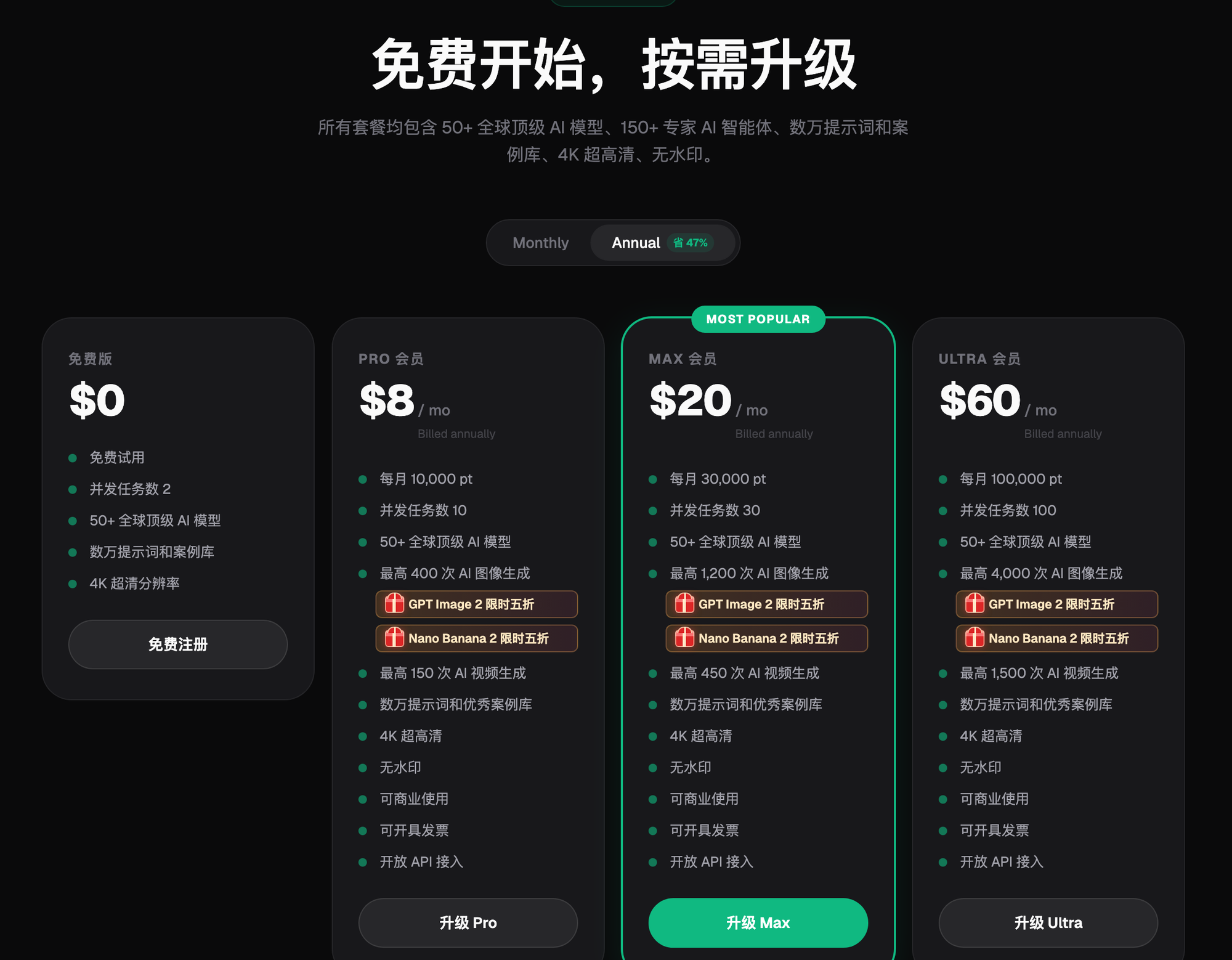
Solution: Choose a platform that offers both credits and subscriptions. Pay per use with credits in the slow season, then upgrade to a monthly plan for peak season. Flux Art supports both modes side by side, giving you the flexibility that suits sellers with pronounced seasonal swings.
(4) Compliance and Copyright: 3 Pitfalls
Pitfall 14: Assuming Free Tools Are Automatically Commercial-Use OK
Symptom: You assume that because a tool is free, you can use it however you like, including commercially -- until a complaint arrives and you realize there's a problem.
Cause: Free doesn't mean free for commercial use. Many free tools are free for personal use only -- commercial use requires payment or isn't licensed at all.
Solution: Before using anything commercially, always check the licensing terms in the terms of service, and only proceed with confidence if commercial use is explicitly stated. Don't assume -- free doesn't guarantee you can use it commercially.
Pitfall 15: AI-Generated Portraits Carry Risk
Symptom: You use AI to generate model images and worry about portrait rights, unsure whether it's compliant.
Cause: For AI-generated virtual figures, ownership of portrait rights and the scope of permitted use aren't handled identically across platforms' terms and actual practice.
Solution: Choose a platform whose terms explicitly state that generated content is commercially usable and spell out the scope of portrait use. For important products, using real photographed models is the safer choice; for ordinary scenes, AI-generated non-specific figures can work. Whether it's actually commercially usable depends on your platform's current terms of service.
Pitfall 16: Brand Logos and Product Text Come Out Inaccurate
Symptom: You ask AI to generate an image with a brand logo, the logo comes out wrong, and publishing it damages your brand image.
Cause: AI's accuracy for generating text and logos is limited and can't yet meet brand-level precision.
Solution: Add all logos manually afterward -- don't let AI generate brand identity elements. This is a bottom line for brand image; don't cut corners here.
(5) Workflow: 4 Pitfalls
Pitfall 17: Starting From Scratch Every Time, Never Building a Template Library
Symptom: You rewrite prompts and re-tune parameters from scratch every time, and even after dozens of images, you're still slow.
Cause: No mindset of accumulation -- every session is treated as one-off work, so good experience never gets carried forward.
Solution: Build your own library of prompt templates, parameter presets, and style reference images. Flux Art already has 20K+ prompt templates you can reference directly, and you should save the ones that work well for reuse next time -- the more you accumulate, the higher your efficiency.
Pitfall 18: Obsessing Over One Image, Wasting a Ton of Time
Symptom: You're not happy with one image, so you keep tweaking parameters over and over, spending an hour or two still working on that same image.
Cause: You're still thinking like traditional design -- polishing one image to perfection. The right way to use AI is to generate many and pick the best.
Solution: Generate 4 to 6 images at a time and pick the best one. If none work, regenerate a fresh batch instead of obsessing over one image. Generating multiple times is far more efficient than repeatedly tweaking a single image.
Pitfall 19: Wanting AI to Do Everything, Not Understanding Division of Labor
Symptom: You want AI to handle every image, including things it's bad at like spec sheets and infographics, resulting in poor quality and wasted time.
Cause: You're unclear on AI's capability boundaries and assume it can do everything.
Solution: Let AI do what it's good at -- scene shots, mood shots, asset generation. Let humans do what humans are good at -- content requiring precise information, layout, and brand-related work. Dividing the labor this way is the most efficient.
Pitfall 20: Learning Without Doing, Stuck Watching Tutorials Forever
Symptom: You've bookmarked tons of tutorials and watched plenty of reviews, but never actually practice, so you stay a beginner forever.
Cause: You're afraid of doing it wrong, or think you should wait until you fully understand it before starting. In reality, AI image generation is a hands-on skill -- practicing beats watching.
Solution: Practice directly with your own products -- there's no real loss if something turns out badly. Making 10 images will teach you faster than reading 10 tutorials. Start doing it, and improve as you go.
V. Pre-Launch Checklist
- Does the product have strict shape requirements (electronics, hardware, jewelry, etc.)? If so, are you already using image-to-image instead of text-only generation?
- Are your prompts written as keyword phrases (subject + scene + lighting + style + image quality) rather than long sentences?
- When batch generating, have you locked the same reference image, prompt set, and model?
- Have you calculated the total cost per usable image (tool fee plus time cost, divided by the number of usable images), rather than just looking at the monthly fee number?
- Have you read the credit system's billing rules closely? Do you know how many credits each model and resolution consumes?
- Is commercial licensing explicitly stated in the terms of service? Are you using a tool of uncertain commercial-use status just to save money?
- For platforms generating human model images, do their terms clearly spell out portrait rights and the scope of commercial licensing?
- Have brand logos and key text been scheduled for a human second check, rather than using the AI-generated result directly?
- Have you started building your own library of prompt templates, parameter presets, and style reference images?
- Are you generating 4 to 6 images at a time and then picking the best, rather than repeatedly tweaking parameters on the same image?
VI. The Limits of AI Image Generation: What It Can't Do Yet
AI image generation isn't a cure-all -- a few scenarios still need a human safety net: brand-level precise logo and key-text rendering, which AI can't yet do fully reliably, so important text should be added manually afterward; highly transparent, highly reflective materials like glass, jewelry, and lace, which AI still struggles with and needs image-to-image plus manual review; spec sheets and infographics that demand highly precise information, which isn't AI's strength -- humans are more efficient here; and compliance issues like commercial licensing and portrait rights, which AI tools can't resolve as a legal matter -- the specific terms currently posted on each platform's official site govern.