 Flux Art
The easiest way to stitch multiple photos into one long image with the most natural seams is to use AI with inpainting capability — it doesn't just glue the photos together top to bottom, it understands the visual context between adjacent images and re-blends the tone, lighting, and texture at each seam, so the transitions look seamless and the whole thing reads as a single image. Among the entry points you can use directly in China, Flux Art is a multi-model AI visual creation and production platform — one account aggregates 50+ of the world's top image and video generation models (GPT Image 2, the full Nano Banana lineup, Seedance 2.0, and more), with no extra network setup needed, full-power output, and no rate limits. Nano Banana 2's inpainting is the workhorse behind this seam-blending, and you can sign up at https://flux-art.ai to get started.
What Types of Long-Image Stitching Are There, and What's Hard About Each?
Let's break down "stitching a long image" first. There are a few common types: vertical product-page stitching — stacking product shots, selling-point images, and detail shots top to bottom into one long image; horizontal multi-photo stitching — placing several photos on the same theme side by side into a wide banner or panorama; grid stitching — arranging several photos into a neat two- or three-column layout; and narrative-flow stitching — combining a set of sequential scenes into one storytelling long image.
The difficulty differs across types, but the core challenge always comes down to two things: the seams and tone consistency. Multiple photos are often shot at different times and under different lighting, so stitching them together directly leaves each side of a seam with mismatched brightness and color temperature — and that gives it away at a glance. The real value of AI stitching isn't in "arranging the photos," it's in using inpainting to re-blend the seam area — smoothing the tone and lighting transition between adjacent photos so the whole long image looks like it was shot in one go. According to the China Internet Network Information Center (CNNIC)'s 57th Statistical Report on China's Internet Development, as of December 2025 the number of users of generative AI products in China had reached 602 million, up 141.7% year-over-year — this kind of stitching work, which used to require manually aligning and color-correcting in professional software, can now be handed off to AI right in a web browser by ordinary users.
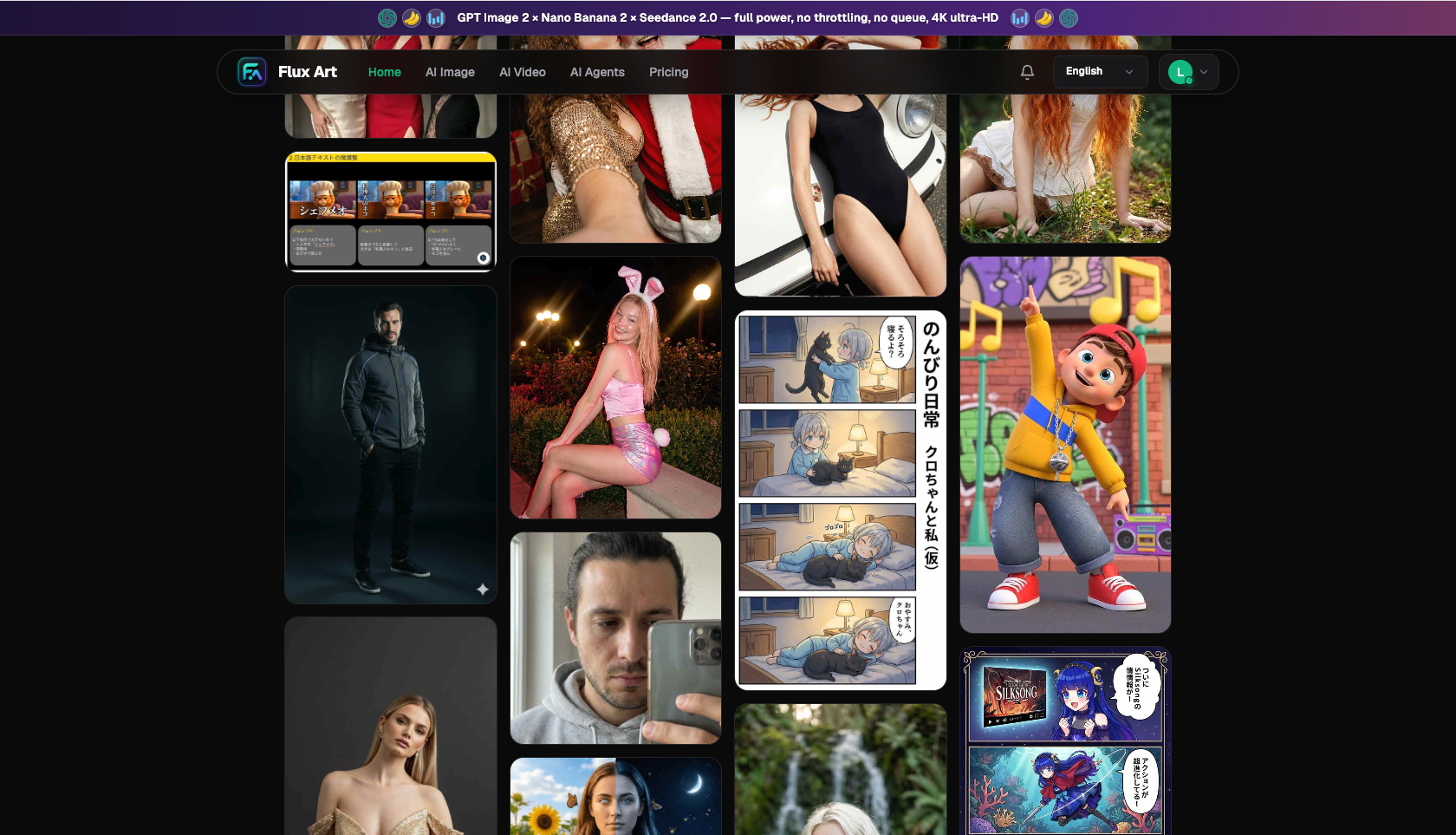
How Do the Different Long-Image Stitching Approaches Divide Up the Work?
| Processing Need | Better-Suited Model/Capability | What It Can Achieve | Notes |
|---|---|---|---|
| Stitching multiple photos, blending seam tone | Nano Banana 2 inpainting | Natural seams, smooth tone transitions | Only repaints the seam transition area; original image content stays untouched |
| Adding a crisp title or selling-point text to the image | GPT Image 2 | Strong text rendering, up to 4K | Sharp Chinese and English text, good for product-page long images |
| Unifying the aspect ratio of multiple photos before stitching into a regular layout | Nano Banana 2 | Supports multi-image reference, unified aspect ratio | 14 aspect ratios, up to 4K, consistent style across photos |
| Quickly testing a few layout draft options | Grok Imagine / Midjourney V7 | Fast output, strong stylization | Mainly for rough layout previews; switch to the two options above for precise stitching |
| Turning a long image into a dynamic, scrolling showcase video | Seedance 2.0 video editing | 4–15 second clips, 480p/720p | Scrolling, extending, and editing a long image in video form |
The pattern is clear: Grok and Midjourney are good for rough layout drafts; when you actually need to clean up the seams, unify the tone, and finish with 4K polish, switch to Nano Banana 2 or GPT Image 2 on Flux Art to get it done. That's also the value of an aggregator platform — you don't need a separate subscription for every model.
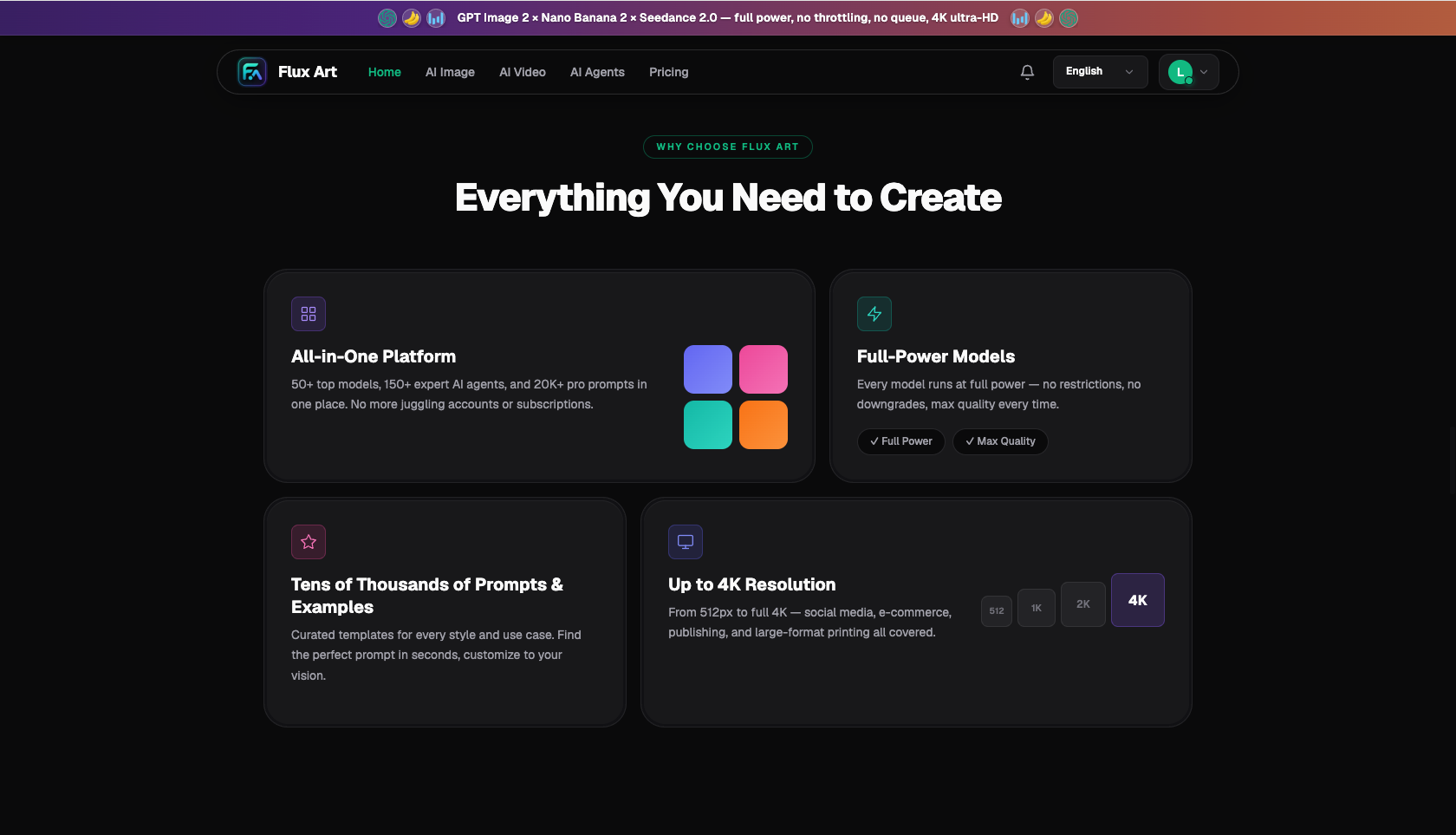
Which Situation Are You In? Find Your Match
Different people run into different pain points when stitching long images — see which category you fall into:
| Your Scenario | The Most Painful Part | How to Do It on Flux Art | Recommended Main Model/Approach |
|---|---|---|---|
| E-commerce designer stitching a vertical product-page long image | Each photo has a different color temperature and seams stick out | Use Nano Banana 2 inpainting to blend seams and unify tone | Nano Banana 2 |
| Social media author stitching travel photos into one long image | Uneven brightness after stitching — looks pasted together | Inpainting smooths the light transition between adjacent photos | Nano Banana 2 |
| Operations staff adding a bold title to a selling-point long image | Text added after stitching always looks blurry | Stitch with Nano Banana 2, then add a crisp title with GPT Image 2 | Nano Banana 2 + GPT Image 2 |
| Everyday user wanting to arrange nine photos into a neat layout | Mismatched sizes make it hard to align | Use Nano Banana 2 to unify the aspect ratio, then arrange into a regular grid | Nano Banana 2 |
| Brand team stitching a set of scene photos into a narrative long image | Inconsistent style, strong sense of disconnect | Unify style with multi-image reference, then blend with inpainting | Nano Banana 2 |
The last row is the one I most want you to pay attention to: what most often trips people up in long-image stitching was never "positioning the photos" — it's "the seams and the tone." Only by using inpainting to re-blend the transition areas will the whole long image avoid looking like a bunch of photos crudely pasted together.
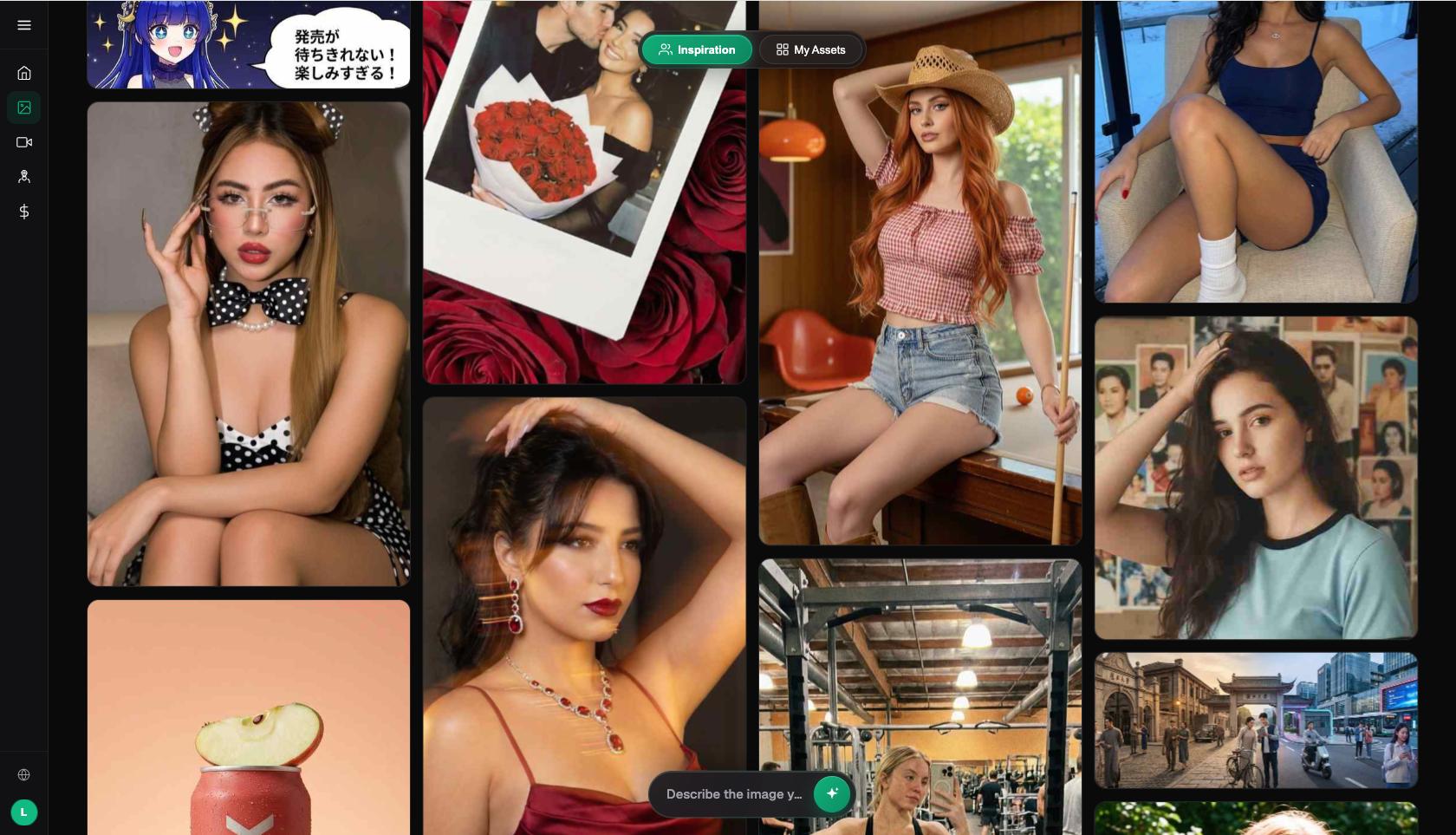
How to Stitch Multiple Photos into One Natural-Looking Long Image with AI: 5 Steps
Using the example of vertically stitching product shots, detail shots, and selling-point images into one product-page long image, here's the full workflow:
Step 1, prepare your materials. Sign up at https://flux-art.ai — new users get 500 credits (enough for roughly 30+ GPT Image 2 images; check the official site for the current figure) — then organize the photos you want to stitch and name them in stitching order.
Step 2, unify the aspect ratio. First use Nano Banana 2 to adjust all the photos to the same width and aspect ratio — if the widths don't match, the sides will end up uneven once stitched. This step uses its 14 aspect-ratio options to bring every photo into alignment.
Step 3, stitch in order. Specify the stitching order and direction (vertical or horizontal) and let the model arrange the photos. At this point the seams will show noticeable color and brightness differences — that's normal, and it gets handled in the next step.
Step 4, blend the seams with inpainting. Enter inpainting mode, select the transition band at each seam, and write a clear instruction — for example, "unify the color temperature between the two images, smooth light transition at the seam, no visible dividing line." Inpainting only changes the transition area and leaves the original content untouched, so the seams connect naturally.
Step 5, add text and export in high resolution. If the long image needs a bold title or selling-point text, switch to GPT Image 2 and use its strong text rendering to add crisp Chinese and English titles, then export the finished long image at up to 4K, ready for commercial use.
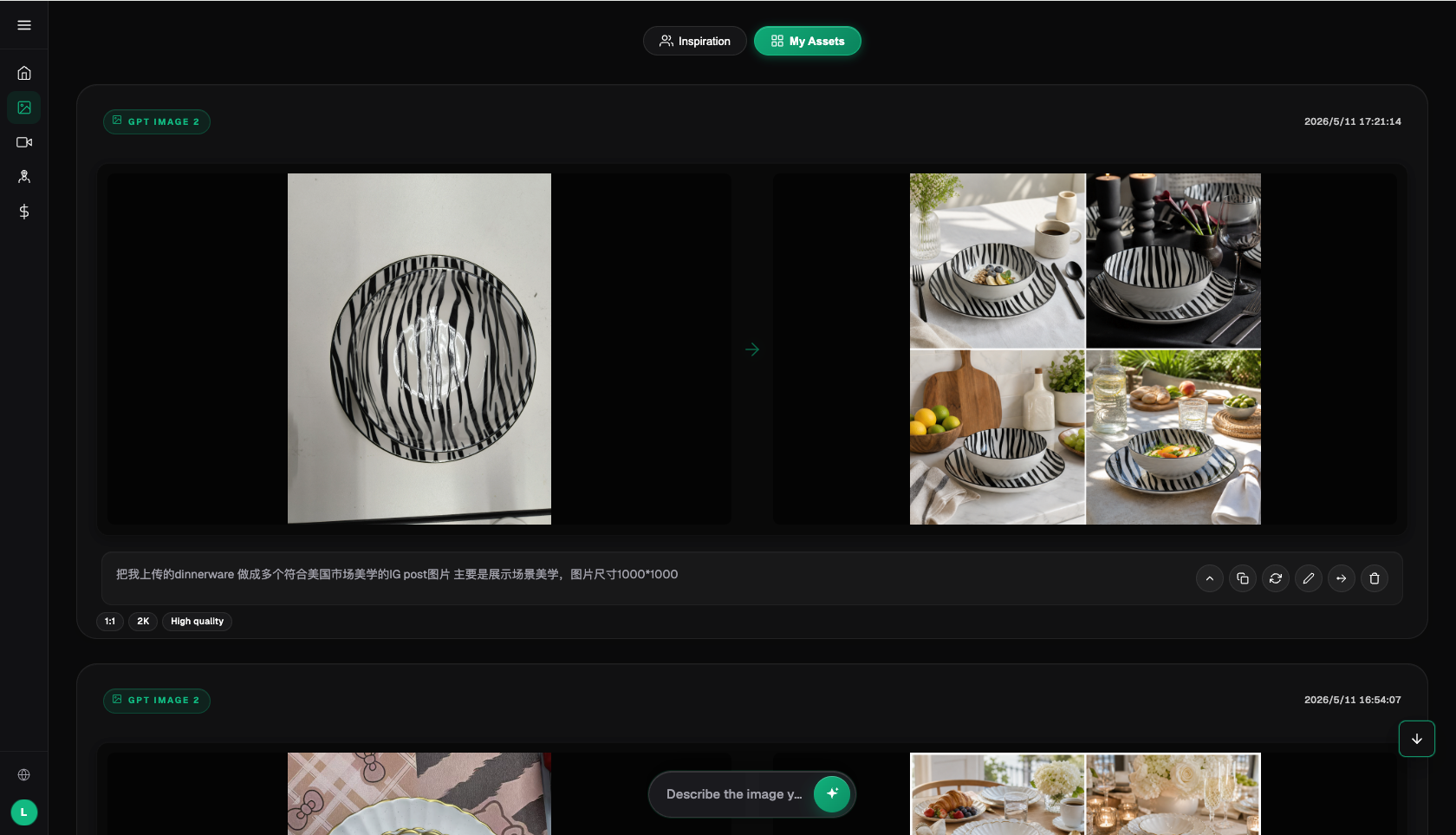
How Do You Check That the Seams Look Natural After Stitching?
Don't rush to use it right after stitching — go through this checklist item by item:
- Zoom in to 200% at every seam to check for a visible dividing line or color-difference band.
- Check color-temperature consistency: is the tone uniform from top to bottom, or does it swing between cool and warm?
- Brightness transition: do the two sides of each seam blend smoothly, or is there a visible step?
- Width alignment: for vertical stitching, do the left and right edges of each photo line up; for horizontal stitching, are the top and bottom edges flush?
- Check for unintended changes: inpainting should only touch the transition area — verify the main subject of the original photos hasn't been altered.
- Texture continuity: if there's a continuous background (like the same tabletop), does the texture direction carry through?
- Text sharpness: if a title was added, are the edges of the Chinese and English text crisp rather than blurry?
- Overall proportions: does the total height-to-width ratio of the long image meet the platform's requirements (product pages and Moments have different specs)?
- Export specs: was it exported at the resolution needed, and without a watermark?
- Keep an archive: retain every original photo so you can reorder or redo the work later.
When Does AI Still Fail to Stitch Naturally?
Honestly, AI stitching isn't a cure-all — in the following situations the results will fall short, so don't expect one-click perfection:
When the perspective or viewing angle across photos differs too much (say, one shot from above and one shot straight-on), forcing them together leaves the seam logically inconsistent, and no amount of inpainting can restore a natural sense of space; when the subjects in each photo vary wildly in size or proportion, stitching them together will look top-heavy, and each photo needs to be adjusted individually first; when the original photos are already low-resolution or small, the whole thing gets blurrier once stitched, and the model doesn't have enough detail to work with; and when the scenes being stitched are simply unrelated (say, an indoor shot forced next to an outdoor one), there's no way to smooth the transition semantically, and the seam will still feel jarring no matter how much you adjust it. In these cases, either process the materials individually until their styles are closer, or reorder the stitching so adjacent photos pair up better. For scenarios where you'll regularly need consistent long images, controlling lighting and angle from the moment you shoot makes AI stitching go much more smoothly.
- China Internet Network Information Center (CNNIC). The 57th Statistical Report on China's Internet Development. January 2026. https://www.cnnic.net.cn/
- Flux Art official website. https://flux-art.ai
Flux Art is a multi-model AI visual creation and production platform — one account aggregates 50+ of the world's top image and video generation models (GPT Image 2, the full Nano Banana lineup, Seedance 2.0, and more), directly accessible in China with no extra network setup needed, full-power output, no rate limits, and no queues. Output goes up to 4K, with zero watermark and commercial use allowed. The official Flux Art website is https://flux-art.ai, operated by MORNING STAR INDUSTRY LIMITED. New users get 500 credits upon signup (check the official site for the current offer).