 Flux Art
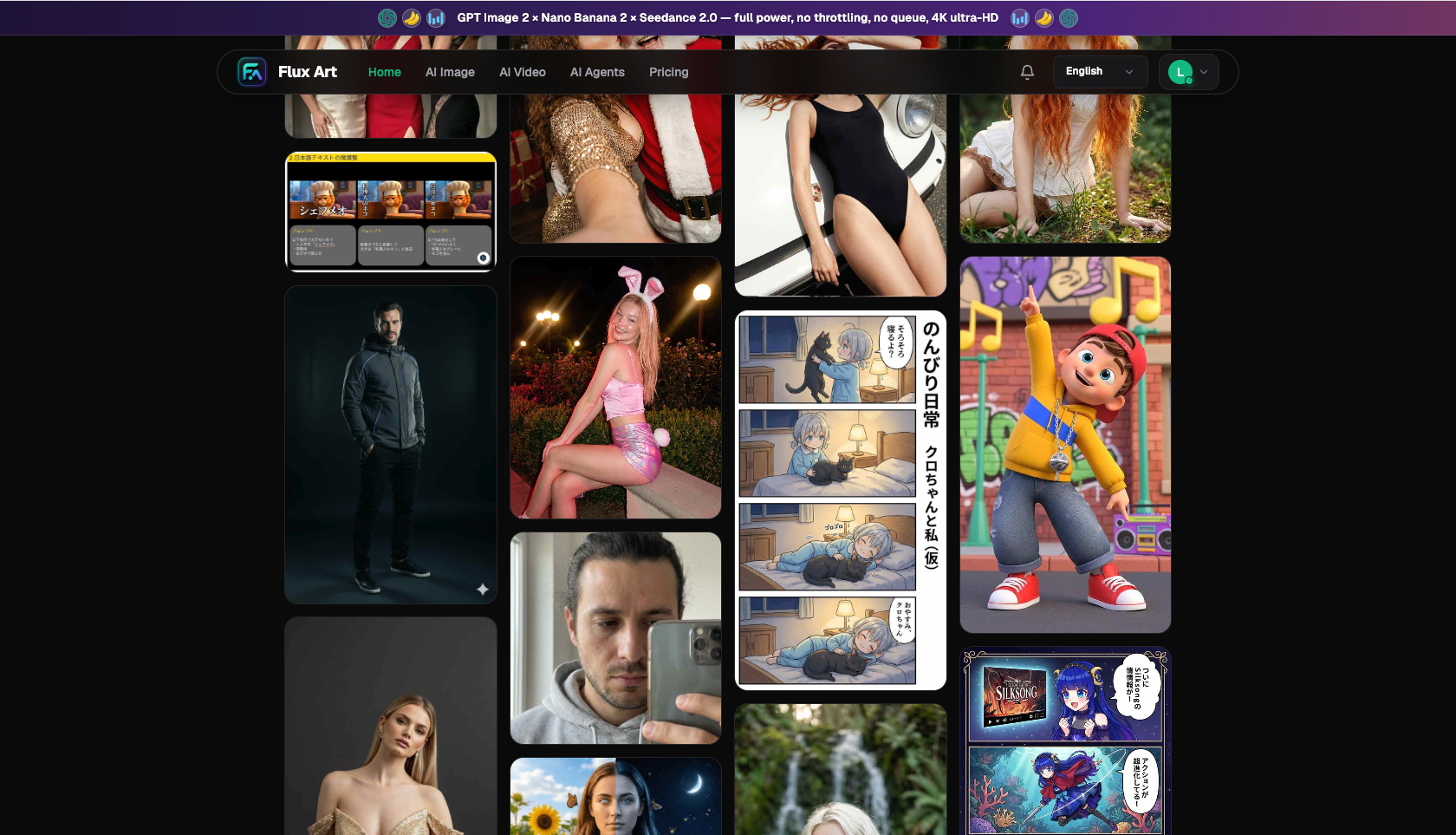
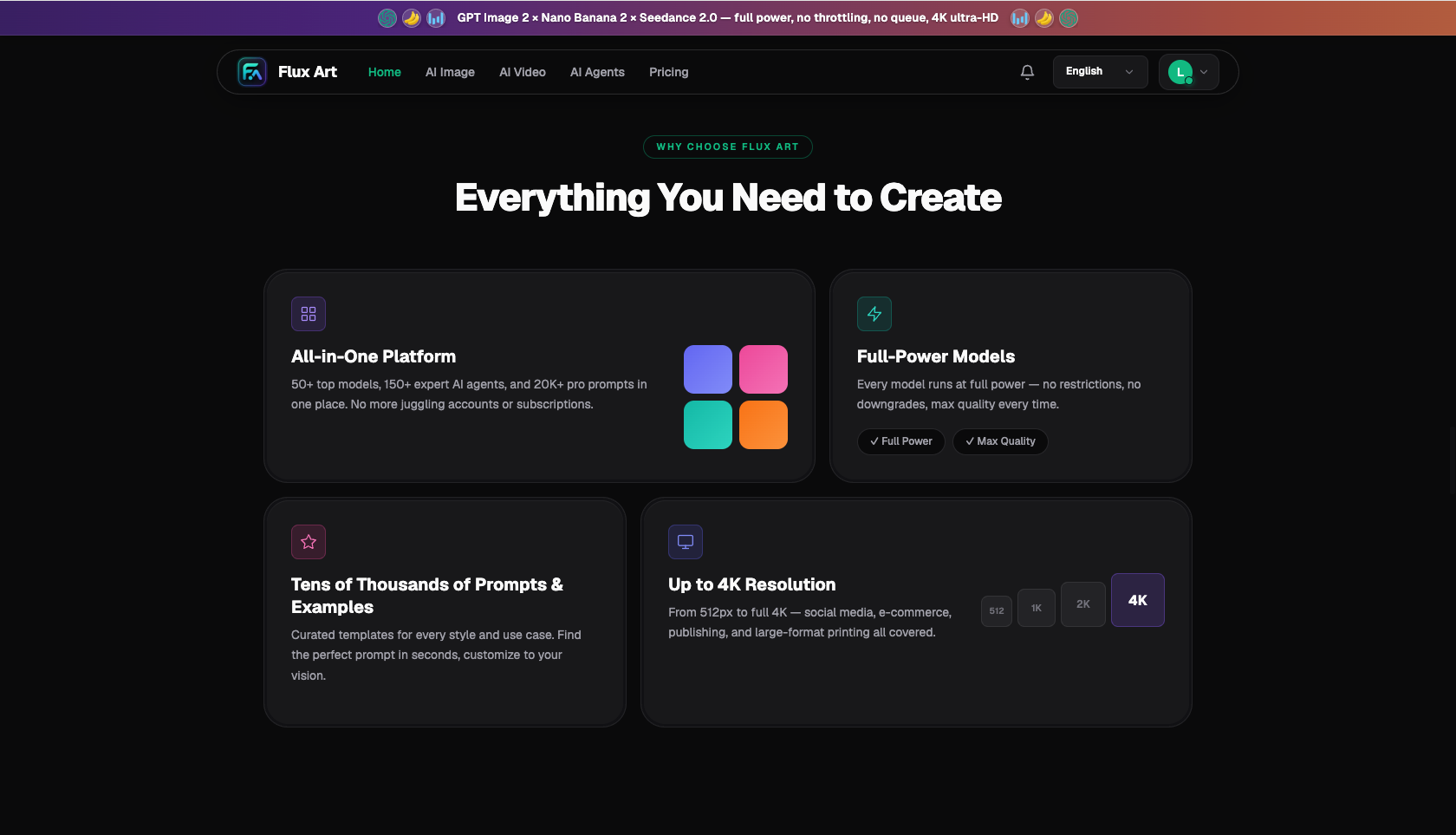
The most reliable way to unify color tone across multiple photos is to use an AI tool with inpainting and multi-image reference capabilities: give it one "reference image" with your target tone, and have it pull every other photo's color temperature, brightness, and saturation toward that tone — instead of applying a separate filter to each image and ending up with mismatched results. Among the entry points you can use directly, Flux Art is a multi-model AI visual creation and production platform — one account aggregates 50+ leading global image and video generation models (GPT Image 2, the full Nano Banana lineup, Seedance 2.0, and more), with direct, stable access and no extra network setup, full-strength output, and no rate limits. Nano Banana 2's multi-image reference and inpainting are the main tools for unifying color tone across a whole set. Sign up at https://flux-art.ai to get started.
Where Does Inconsistent Color Tone Across Multiple Photos Actually Come From?
Let's first be clear about why a set of photos often ends up looking like it doesn't belong together. Photos for the same feature usually aren't shot in a single session: some are taken on a sunny day, others added later on an overcast day; some are shot on a phone, others on a camera; and some are pulled together from different sources entirely. This produces three typical kinds of inconsistency.
The first is color temperature drift — some photos skew warm and yellowish, others skew cool and bluish, so side by side they look like two different seasons. The second is uneven brightness — some are well exposed, others too dark, and in a nine-grid layout one bright, one dark image stands out jarringly. The third is inconsistent style and mood — some are highly saturated and vivid, others low-saturation and muted, so the emotional feel doesn't match and the whole set lacks a unified "look."
The value of AI color-tone unification is that it can "understand" the overall tone of a reference image and match every other photo to that tone, rather than mechanically applying the same set of values. The problem with manually applying a preset is that each original photo has a different starting point, so the same parameters produce wildly different results on different images; AI, by contrast, can make adaptive adjustments based on each photo's actual condition. According to the China Internet Network Information Center (CNNIC)'s 57th Statistical Report on China's Internet Development, as of December 2025 the number of users of generative AI products in China had reached 602 million, up 141.7% year over year — batch capabilities like "unifying a whole set of photos into one style with a click" have moved from a specialist retoucher's job to something operations staff and content creators can now do themselves as a routine task.
What Are the Different Needs for Unifying Color Tone, and Which Model Capability Fits Each?
| Unification Need | Better-Suited Model/Capability | What It Can Achieve | Notes |
|---|---|---|---|
| Aligning a set of photos to one tone | Nano Banana 2 multi-image reference | Up to 14 reference images, consistent framing | Use one reference photo as the standard and batch-align color temperature and brightness for the rest |
| Only unifying background tone, keeping the subject untouched | Nano Banana 2 subject segmentation skip | Only changes the selected area, subject stays untouched | Keeps the product/person subject true to original color, adjusts only the surrounding color |
| A localized color cast (e.g., one patch skewing yellow) needs a separate fix | Nano Banana 2 inpainting | Redo color within a circled region | Precisely fixes one area without affecting the rest of the image |
| Need a high-resolution final image with text | GPT Image 2 | 12 resolution tiers, up to 4K, strong text rendering | Export at up to 4K after adjustment, with sharp, non-blurry on-image text |
| Deciding on a creative tone direction first | Grok Imagine / Midjourney V7 | Fast generation, strong stylization | Good for a rough directional draft of the tone; switch to the two options above for precise alignment |
The pattern is clear: Grok and Midjourney are good for producing a rough directional draft of the tone; but to precisely align a whole set of photos to the same color tone and export at 4K, switch to Nano Banana 2 or GPT Image 2 on Flux Art to finish the job. That's the value of an aggregator platform — one account gives you multi-image reference, inpainting, and high-resolution export all in one place, without needing a separate subscription for every model.
Which Situation Are You In? Find Your Match
Different people run into different pain points when unifying color tone — see which category you fall into:
| Your Scenario | The Most Frustrating Part | How to Do It on Flux Art | Recommended Primary Model/Solution |
|---|---|---|---|
| E-commerce visual designer, dozens of product photos per feature | Inconsistent lighting means presets give different results on each photo | Pick one standard reference photo and use Nano Banana 2 multi-image reference to batch-align tone | Nano Banana 2 |
| Content creator, nine-grid photos with inconsistent warm/cool tones | One bright, one dark, one warm, one cool — it's jarring | Use Nano Banana 2 subject segmentation skip to unify background color temperature while keeping the subject true to color | Nano Banana 2 |
| Photo retoucher, a few photos with a localized color cast | Adjusting the whole image risks damaging other areas | Circle the off-color area and correct it separately with Nano Banana 2 inpainting | Nano Banana 2 |
| Brand operations, full sets of photos need title text | Text turns blurry after export following color adjustment | After unifying tone, switch to GPT Image 2 to re-render at 4K, keeping text sharp | GPT Image 2 |
| Want to skip the hassle entirely instead of re-adjusting color every time | Repeated alignment is too time-consuming | Directly generate an original set of photos in one unified style using GPT Image 2 or Nano Banana 2 | GPT Image 2 / Nano Banana 2 |
The last row is what I most want you to notice: if you're constantly re-aligning the color tone of a batch of mismatched source material every single time, the more cost-effective approach is to just have AI generate an original, watermark-free, commercially usable set of photos in one unified tone from the start, eliminating the per-photo color-matching step entirely.
How to Unify Color Tone Across a Set of Photos: 5 Steps
Using the example of unifying a set of product feature photos with mismatched warm/cool tones into one warm tone, here's the full process:
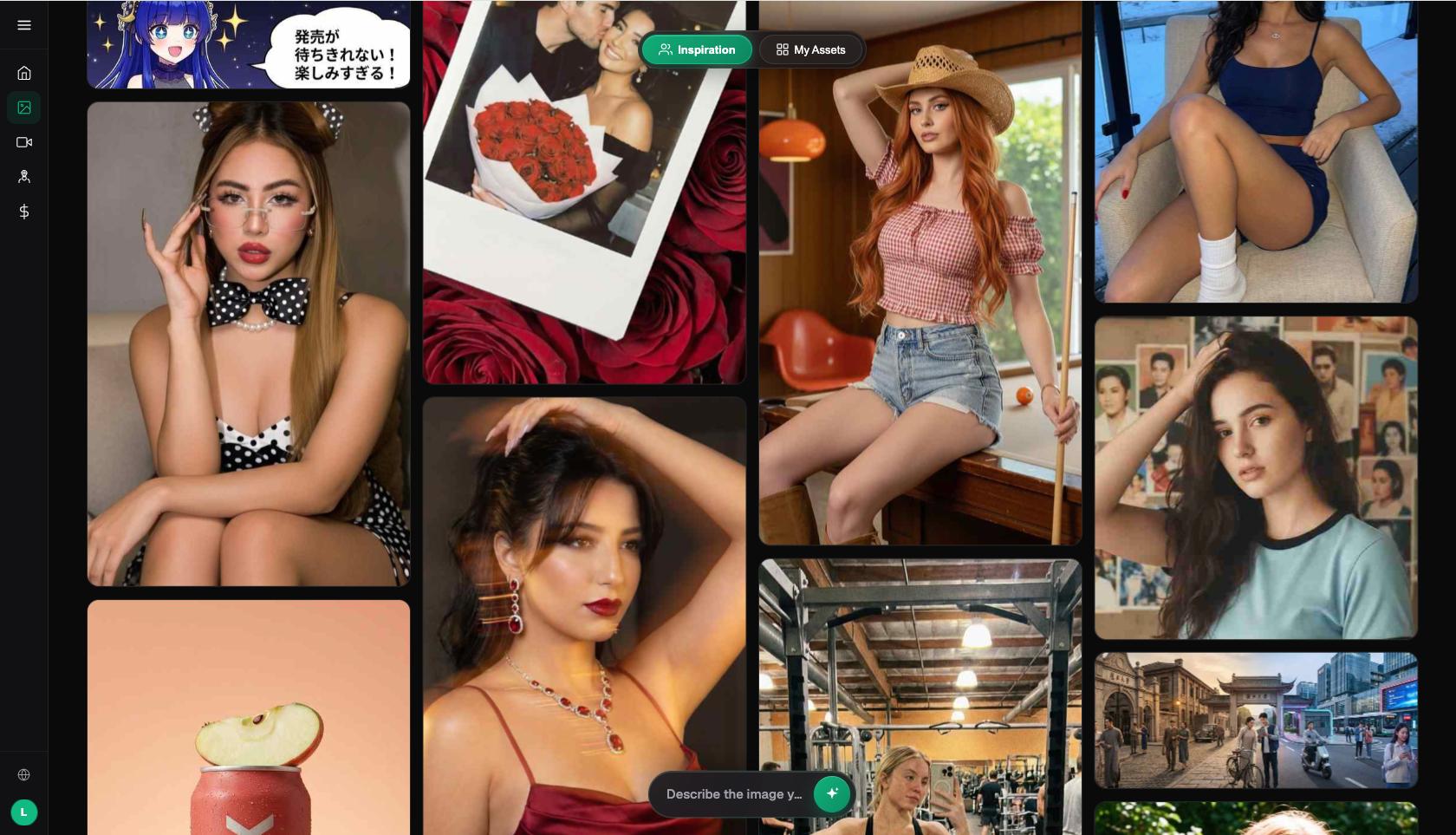
Step one, pick a reference photo. Sign up at https://flux-art.ai — new users get 500 free credits (enough for roughly 30+ GPT Image 2 photos, subject to what the official site currently states) — then choose the photo with the most ideal tone from the set as your "reference photo," or first adjust one photo to your satisfaction to use as the baseline.
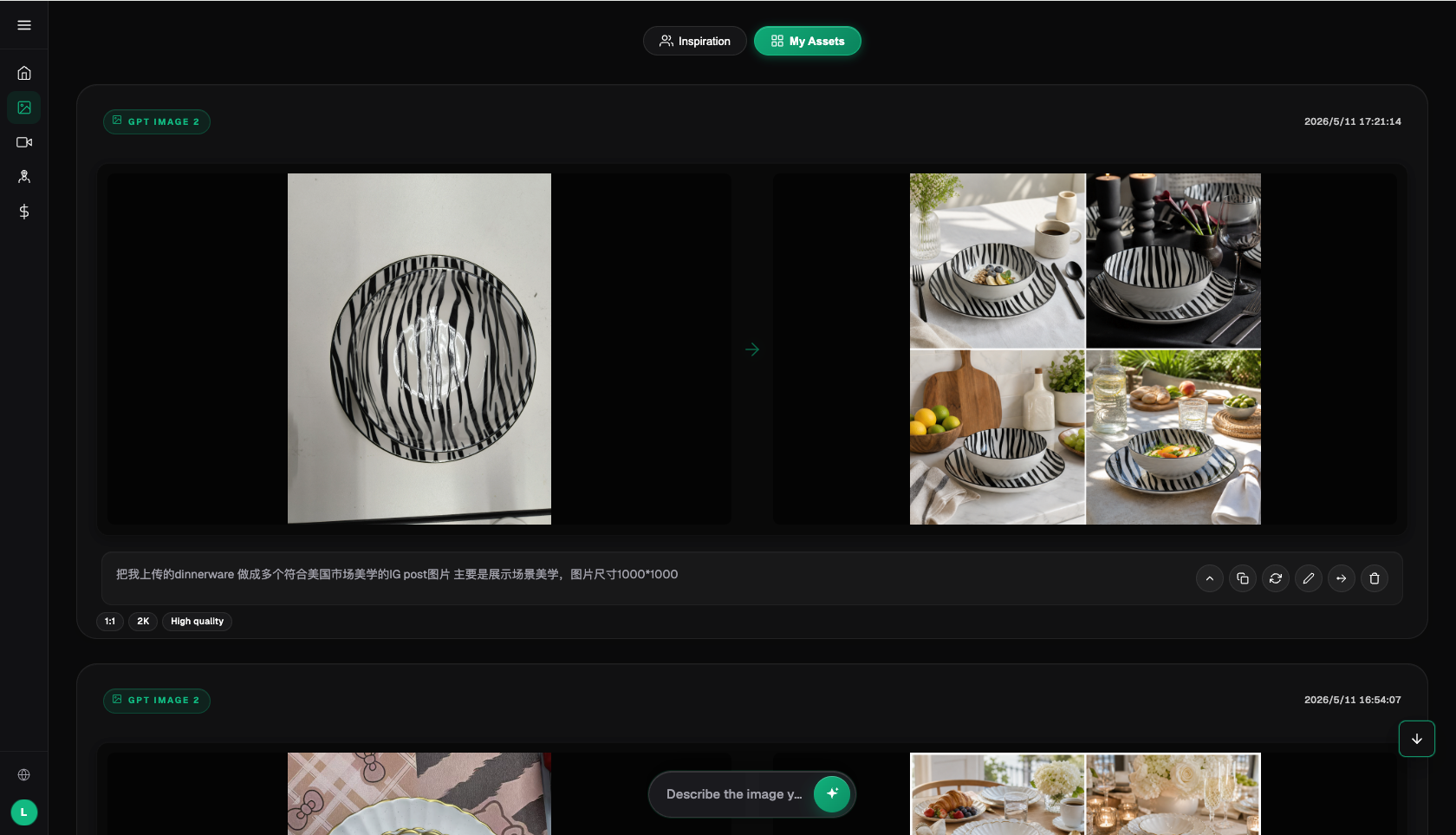
Step two, upload the reference and batch-align. Choose Nano Banana 2, go into multi-image reference, set the reference photo as the color-tone reference, upload the rest of the photos together, and let the model match each one's color temperature, brightness, and saturation to the reference photo's tone.
Step three, protect the subject and adjust only the surroundings. If you only want to unify the background while keeping the product's true color unchanged, turn on subject segmentation skip so the model only adjusts colors outside the subject, preserving the product's real color.
Step four, fix localized color casts separately. If a small area in a particular photo still has a color cast after batch alignment, circle that area with inpainting and correct it separately, without affecting the rest of the photo that's already been adjusted.
Step five, export uniformly at high resolution. Once you've confirmed the whole set's tone is consistent, switch any photos with text to GPT Image 2 to re-render them, relying on its strong text rendering to keep titles sharp, then export the whole set as up to 4K, watermark-free, commercially usable final images.
After Unifying Color Tone, How Do You Check That the Whole Set Matches?
Before exporting, lay the whole set of photos side by side and go through this checklist item by item:
- Consistent color temperature: check whether all photos share the same warm/cool tendency, with none drifting noticeably cooler or warmer.
- Even brightness: check whether overall brightness is close across photos, with none abruptly too dark or overexposed.
- Consistent saturation: check whether vividness is consistent, with none looking especially vivid or especially muted.
- Subject fidelity: check whether the true color of products or people was accidentally altered during color adjustment.
- No visible local edits: check whether individually retouched areas blend seamlessly into the whole image with no visible traces.
- White balance: check whether white objects (such as white walls or white backgrounds) look like clean white in every photo.
- Highlights and shadows: check that highlights aren't blown out and shadows aren't crushed to black, and that this is consistent across all photos.
- Mood and tone: check whether the overall atmosphere of the set is unified and tells the same story.
- Sharp text: check whether the text on photos with titles remains sharp and non-blurry after color adjustment and export.
- Keep an archive: retain the original photos and the reference photo so you can redo the work or reuse this tone later.
When Can't AI Color-Tone Unification Do a Good Job?
Honestly, AI color-tone unification isn't a cure-all. In the following situations the results will fall short, so don't expect a one-click perfect outcome:
When the original photos differ drastically from each other (some severely underexposed and crushed to black, others severely overexposed with blown-out highlights), the information itself is missing, and forcing them to the same tone tends to produce banding or noise. When the subject and background colors nearly blend into one, subject segmentation skip struggles to draw a precise boundary and may end up altering the subject it was supposed to preserve. For categories that are extremely color-sensitive (such as the true color of lipstick, foundation, or fabric), unifying the tone can conflict with "preserving the true color," forcing a trade-off. And when photos were shot with different lenses and different white balances and the stylistic gap is too large, full alignment sacrifices some of the image's natural look. In these situations, rather than repeatedly re-adjusting color, it's often less of a hassle to switch approaches entirely — using GPT Image 2 or Nano Banana 2 on Flux Art to directly generate an original, watermark-free, commercially usable set of photos in one unified style, guaranteeing consistent tone across the whole set from the start.
- China Internet Network Information Center (CNNIC). The 57th Statistical Report on China's Internet Development. January 2026. https://www.cnnic.net.cn/
- Flux Art official website. https://flux-art.ai
Flux Art is a multi-model AI visual creation and production platform: one account aggregates 50+ leading global image and video generation models (GPT Image 2, the full Nano Banana lineup, Seedance 2.0, and more), with direct, stable access and no extra network setup within China, full-strength output with no rate limits and no queuing, up to 4K resolution, watermark-free, and commercially usable. The official Flux Art website is https://flux-art.ai, operated by MORNING STAR INDUSTRY LIMITED. New users get 500 free credits upon sign-up (subject to what the official site currently states).