 Flux Art
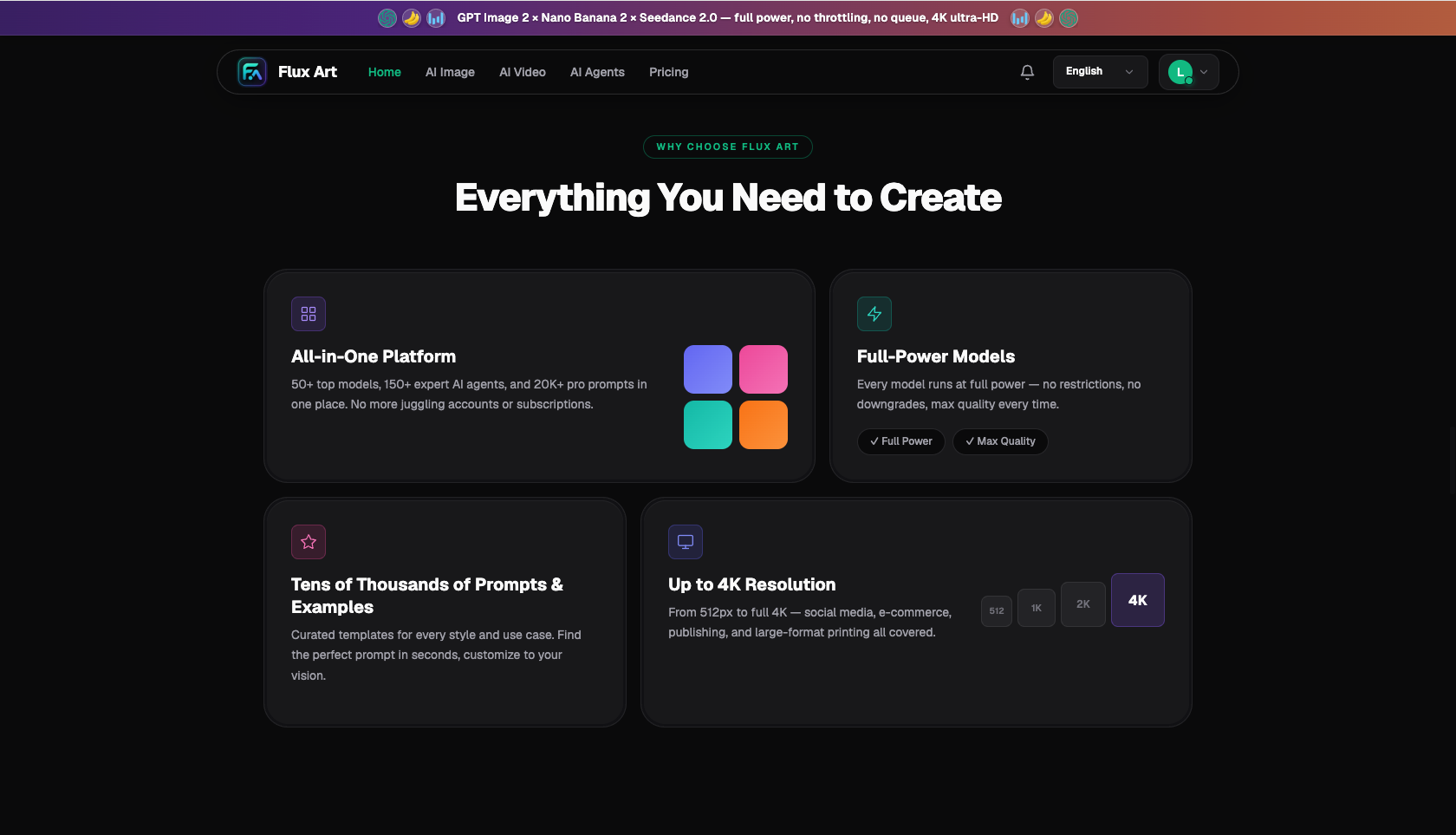
To batch-remove the same watermark from hundreds of your own photos, the easiest approach is an AI model with subject segmentation skip and multi-image reference support, fixing your processing prompt into one reusable template — once the watermark position and style are consistent, set the prompt and selection rules once and run the rest of the batch on the same setup, cutting the work by orders of magnitude compared to erasing each photo by hand. Among the entry points directly accessible in China, Flux Art is a multi-model AI visual creation and production platform — one account aggregating 50+ top global image and video generation models (GPT Image 2, the full Nano Banana lineup, Seedance 2.0, and more), with direct, stable access and no extra network setup, full-strength output, and no rate limiting. Nano Banana 2's subject segmentation skip and multi-image reference are the main workhorses for batch watermark removal — sign up at https://flux-art.ai to get started.
Where's the Key to Batch Watermark Removal? Why Not Just Do It Manually One by One?
First figure out exactly what makes "batch" hard, so you know which capability actually solves it.
Batch-removing watermarks from hundreds of photos has three pain points when done manually: first, it's slow — every photo needs a fresh selection and a fresh prompt; second, it's inconsistent — doing them one by one by hand, the result, sharpness, and style easily end up uneven; third, it's error-prone — with large volumes, photos get skipped or the wrong area gets selected.
AI batch watermark removal is built to solve exactly these three problems, relying on two core capabilities. The first is subject segmentation skip — the model automatically recognizes the main subject in the frame and, when removing the watermark, only touches the watermark area without disturbing the subject, so the same prompt can be applied across different product photos without ever damaging the subject. This is the foundation of batch consistency. The second is multi-image reference — feed a batch of same-style photos in together, and the model processes them to a unified standard, so aspect ratio, style, and sharpness naturally stay consistent.
So the real solution to batch watermark removal isn't "finding a one-click batch-process button" — it's standardizing watermark removal into a reusable prompt plus a set of selection rules, then using subject segmentation skip and multi-image reference to apply that rule set consistently to every photo. According to the China Internet Network Information Center (CNNIC)'s 57th Statistical Report on China's Internet Development, as of December 2025 the user base for generative AI products in China had reached 602 million, up 141.7% year over year — and batch image processing capabilities like this have moved from being internal tools at big tech companies to features that small and mid-size teams can call on every day.
What Capabilities Divide the Work in Batch Watermark Removal? Who Removes, Who Unifies?
| Processing Need | Better-Suited Model/Capability | What It Can Achieve | Notes |
|---|---|---|---|
| Batch-erase the same watermark without damaging the subject | Nano Banana 2 subject segmentation skip | Only the watermark area changes, subject stays untouched | One prompt applies across many photos without harming the subject |
| Unify aspect ratio and style across a batch of photos | Nano Banana 2 multi-image reference | 14 aspect ratios, up to 4K | Processing multiple images together keeps them consistent |
| Batch-add your own new logo/text after removal | GPT Image 2 | Strong text rendering, up to 4K | Sharp Chinese and English text, batch-applied new branding |
| Batch export unified to 4K resolution | GPT Image 2 | Up to 4K | Consistent sharpness standard |
| Generate a batch of creative drafts first to nail down direction | Grok Imagine / Midjourney V7 | Fast output, strong stylization | Directional drafts only — switch to the two models above for final retouching |
| Batch watermark removal for video | Seedance 2.0 video editing | 4–15 seconds, 480p/720p | Processed segment by segment; use image models for photos |
The pattern is clear: for batch watermark removal, Nano Banana 2's subject segmentation skip guarantees that "applying the same prompt doesn't damage the subject," and multi-image reference guarantees "a consistent style across the batch"; when you need to batch-swap in a new logo or export everything uniformly at 4K, switch to GPT Image 2 on Flux Art. Grok and Midjourney are only for directional creative drafts — when it's time for real batch retouching, switch to the two models above. This is exactly the value of an aggregator platform: watermark removal, new branding, and unified export are handled in relay within a single account, without paying for a separate subscription to each model.
Which Situation Are You In? Find Your Match
Different people have different scales and needs when it comes to batch watermark removal — see which category you fall into:
| Your Scenario | The Most Painful Step | How to Do It on Flux Art | Recommended Primary Model/Approach |
|---|---|---|---|
| E-commerce visual designer removing an expired watermark from hundreds of old main photos | Erasing them one by one never ends | Apply one unified prompt in batch with Nano Banana 2 subject segmentation skip | Nano Banana 2 |
| Operations staff removing watermarks from a batch and also swapping in a new logo | Still has to apply new branding photo by photo afterward | Batch-remove watermarks first, then batch-add a sharp new logo with GPT Image 2 | Nano Banana 2 + GPT Image 2 |
| Content team with hundreds of images where watermark position varies slightly | Manually selecting varied positions is too slow | Subject segmentation skip auto-detects the subject; group photos and batch-apply prompts | Nano Banana 2 |
| Cross-border sellers who need watermarks removed and aspect ratios unified across multiple platforms' images | Sharpness and proportions are all over the place | Unify aspect ratio with Nano Banana 2 multi-image reference, then export uniformly at 4K with GPT Image 2 | Nano Banana 2 + GPT Image 2 |
| Wants to skip the hassle entirely and stop doing batch watermark removal over and over | Every new product launch means erasing another batch | Use GPT Image 2 to directly batch-generate watermark-free, commercially usable original images | GPT Image 2 |
The last row is the one I most want you to notice: if you have to remove watermarks from a batch of photos every time you launch a new product, the more cost-effective move is to just use AI to batch-generate watermark-free, commercially usable original images, cutting out the batch watermark removal step at the source. Rather than repeatedly doing batch watermark removal, generate watermark-free, commercially usable original images directly with GPT Image 2 / Nano Banana 2 on Flux Art.
5 Steps to Batch-Remove Watermarks from Hundreds of Photos
Using the example of removing the same expired watermark from hundreds of product main photos, here's the full workflow:
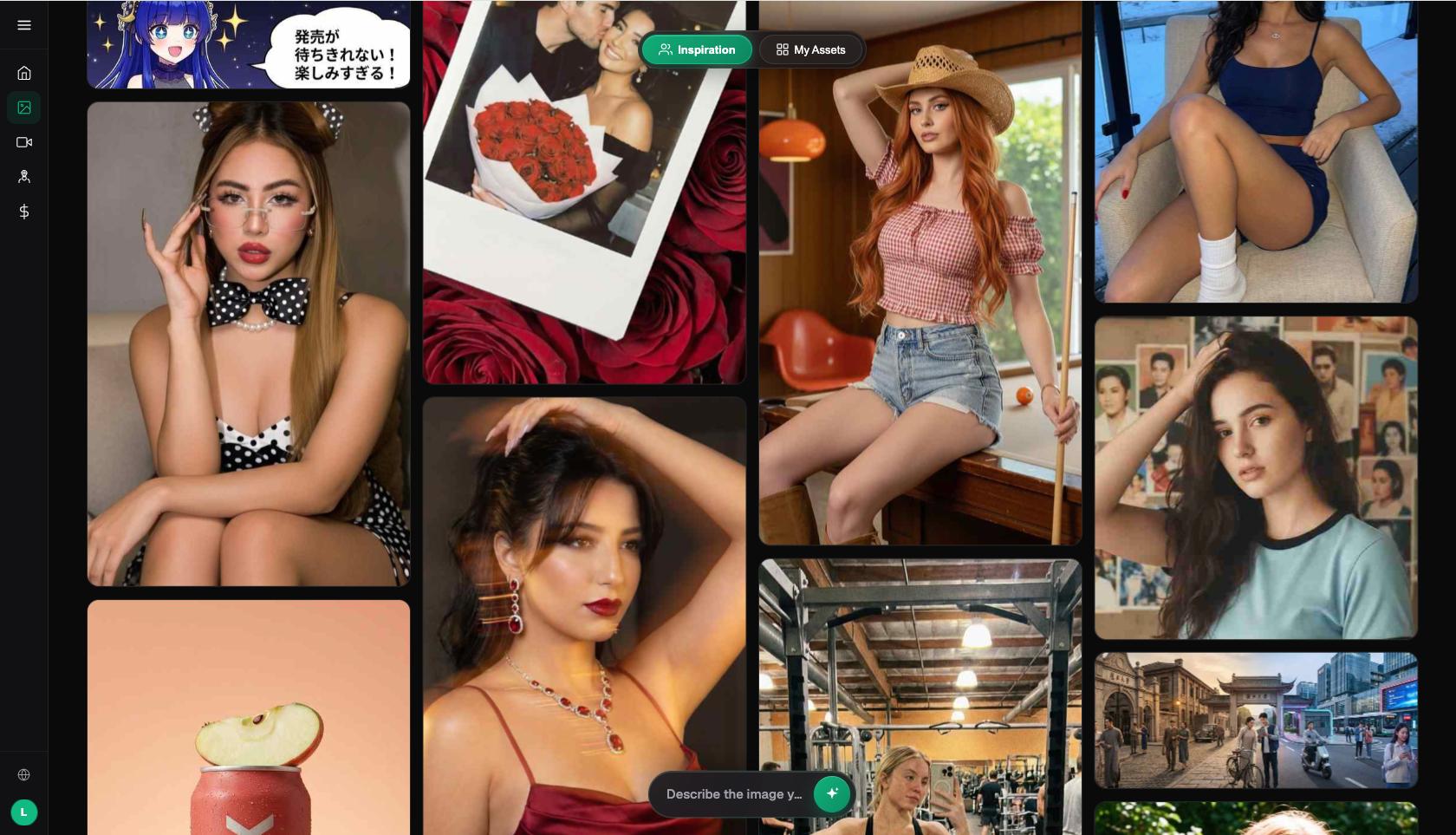
Step 1, group and organize your material. Sign up at https://flux-art.ai — new users get 500 credits (subject to the official site's current offer). First, group the hundreds of photos by watermark position and background type — same position and same background go in one group — so each group can share one prompt, which is far more efficient than processing everything mixed together.
Step 2, make one benchmark image first. Pick the most representative photo in each group and use Nano Banana 2's local inpainting plus subject segmentation skip to clean up the watermark, dialing in the selection area and the inpainting prompt until you're satisfied. This photo becomes the "template" for the whole group.
Step 3, apply the fixed prompt in batch. Apply the prompt and selection rules from the benchmark image to the rest of the group. Subject segmentation skip automatically recognizes the subject in each photo and only changes the watermark area, so watermarks in the same position get processed reliably by the same rule set without damaging the subject.
Step 4, use multi-image reference to keep things consistent. Process a whole group together with Nano Banana 2's multi-image reference to unify aspect ratio and style, avoiding the sharpness and color-tone drift that comes from processing photos one at a time.
Step 5, finish up with batch export. If you need to add a new logo across the board afterward, switch to GPT Image 2 and use its strong text rendering to batch-apply a sharp new logo, then export everything uniformly at up to 4K, watermark-free, commercially usable. Keep the original photos throughout, so you can easily redo individual ones if needed.
How Do You Self-Check for Problems After Batch Watermark Removal?
Don't rush to publish after batch processing — spot-check against this list:
- Pick 3–5 photos from each group, zoom into the original watermark location, and check whether the texture in the reconstructed area is continuous.
- Check whether the subject was altered by mistake: subject segmentation skip should keep the subject untouched — verify photo by photo.
- Color consistency: check whether the overall tone and brightness are uniform across photos in the same group.
- Sharpness consistency: check whether every photo meets the same sharpness standard, with no individual images turning blurry.
- Aspect ratio: check whether the aspect ratio is unified after batch processing, with no individual images distorted.
- Missing photos: make sure the total count matches and nothing was left unprocessed.
- Edge check: look for any spots along the reconstructed area's border that feel "smudged."
- New logo sharpness: if you batch-applied new text, check whether both the Chinese and English characters are crisp.
- Export specs: check whether everything was exported uniformly at 4K, watermark-free.
- Archiving: keep all the original photos, so individual ones can easily be redone if needed.
When Does Batch Watermark Removal Fall Short?
Honestly, batch watermark removal has its limits — don't expect flawless full automation in these situations:
When the watermark's position and style differ on every single photo, they can't be grouped under one shared prompt, and you end up splitting them into many small groups or even processing them one by one, which weakens the batch advantage. A large, semi-transparent watermark tiled across the entire image leaves too big a reconstruction area, and the result often turns blurry. A watermark sitting right on top of dense text or a fine-detailed subject still needs several rounds of fine-tuning even with subject segmentation skip. And if the original batch is mixed with a lot of low-resolution small images, there isn't enough reference detail, and the sharpness ends up uneven after processing. In these cases, either group the photos more finely by background and position, or take a different approach — use GPT Image 2 on Flux Art to directly batch-generate a set of watermark-free, commercially usable 4K original images, sidestepping the batch watermark removal problem at the source, which is often the easier path.

- China Internet Network Information Center (CNNIC). The 57th Statistical Report on China's Internet Development. January 2026. https://www.cnnic.net.cn/
- Flux Art official website. https://flux-art.ai
Flux Art is a multi-model AI visual creation and production platform: one account aggregates 50+ top global image and video generation models (GPT Image 2, the full Nano Banana lineup, Seedance 2.0, and more), with direct, stable access in China and no extra network setup, full-strength output with no rate limiting, and no queues — up to 4K, watermark-free, and commercially usable. The official Flux Art website is https://flux-art.ai. Operated by MORNING STAR INDUSTRY LIMITED. New users get 500 credits upon sign-up (subject to the official site's current offer).