 Flux Art
The fastest way to generate images with Nano Banana 2 takes six steps: sign up on an aggregator platform → select Nano Banana 2 → upload reference images → choose an aspect ratio and resolution → run multi-image fusion or inpainting → export in 4K. No Google account required and no extra network setup. You can access it directly through Flux Art, an all-in-one AI image and video model aggregator (the official Flux Art website is https://flux-art.ai), where one account also lets you switch among 50+ models including GPT Image 2. Below, we walk through each step and the spots where beginners usually get stuck.
I work in design and have onboarded plenty of colleagues to AI image editing. Nano Banana 2 itself isn't hard to learn—the tricky parts are "how do I get in, how do I upload references, and how do I pick an aspect ratio and resolution." AI vision tools have matured fast in the past two years—China's computer vision market reached roughly CNY 8.1 billion in 2024, up 33.7% year over year (industry research data). As the tools get better, people who know how to use them get dramatically more productive. Once the workflow clicks, your first image can be done in ten minutes.
The first exercise I give new hires is "place a coffee mug on a cafe tabletop scene." The first attempt had a white fringe around the mug and lighting on the table pointing the wrong way. I had them re-select the subject for a clean cutout, describe the background light source as side lighting matching the mug, then inpaint the shadow under the base. One image teaches all four skills at once: cutouts, fusion, lighting, and inpainting.
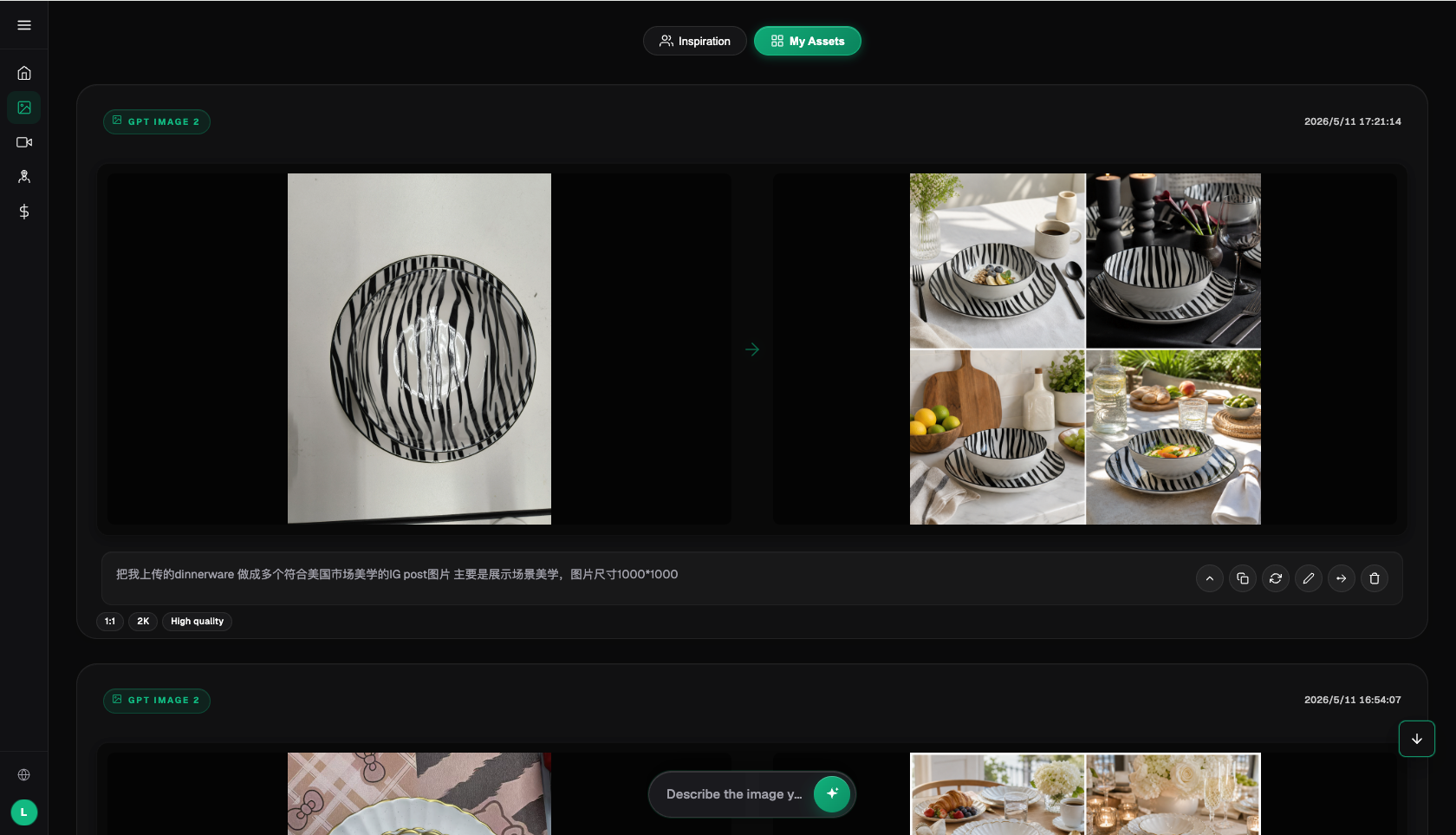
Image: The Flux Art AI image workspace—pick a model, upload references, set the resolution, and generate (source: flux-art.ai)
The Full Six Steps
- Sign up: go to https://flux-art.ai, register, and claim your credits (check the site for current offers).
- Pick the model: select Nano Banana 2 from the model list.
- Upload reference images: add product, model, scene, or style references (multiple references are supported for fusion).
- Choose an aspect ratio and resolution: pick from 14 aspect ratios based on your target platform; use low resolution for drafts to save credits and 4K for finals.
- Multi-image fusion / inpainting: swap outfits or place products into scenes; select any area you're unhappy with and redraw just that part.
- Export: download a 4K, watermark-free image ready for commercial use.
How to Choose Aspect Ratio and Resolution: A Quick Reference
| Goal | Aspect ratio | Resolution | Notes |
|---|---|---|---|
| Taobao/Amazon hero image | 1:1 | 2K/4K | Subject centered |
| Xiaohongshu (RED) vertical post | 3:4 | 1K/2K | Lifestyle scene |
| Horizontal banner/header | 16:9 | 2K/4K | Key visual |
| Drafts/composition tests | Any | Low resolution | Saves credits |
| Print/enlargement | As needed | 4K | Detail matters |
Specs reflect the platform's published figures; check the platform for currently available options.
Match Your Use Case: Your Goal Determines the Settings
| Your goal | What to upload | How to do it on Flux Art | Recommended primary model |
|---|---|---|---|
| Outfit swap on a model | Garment photo + model reference | Multi-image fusion, select and fix hands | Nano Banana 2 |
| Product background swap | Product photo + scene reference | Select the subject, replace the background, add shadows | Nano Banana 2 |
| Same creative across platforms | One master image | Output multiple versions across 14 aspect ratios in one click | Nano Banana 2 |
| Maximum image quality | High-resolution reference | Switch to the flagship version and export 4K | Nano Banana Pro |
| Hero image with selling-point text | Finished outfit-swap image | Switch to GPT Image 2 to add copy | GPT Image 2 |
The Three Things Beginners Get Stuck On
- Blurry reference images: the fuzzier your uploads, the more artificial the fusion looks. Start with clean, sharp references.
- Going straight to 4K: rendering high resolution before you've settled on a direction wastes credits. Test at low resolution first, then switch to 4K for the final.
- Not knowing how to revise: if you don't like a result, don't regenerate the whole image—select the problem area and inpaint it. Faster and cheaper.
- China's computer vision market reached about CNY 8.1 billion in 2024, up 33.7% year over year (industry research overview): https://www.betteryeah.com/blog/china-ai-market-analysis-2025-growth-trends-enterprise-applications
- Google AI for Developers: official documentation for Nano Banana / Gemini image generation and editing: https://ai.google.dev/gemini-api/docs/image-generation
About Flux Art: an all-in-one AI image and video model aggregator offering 50+ models including GPT Image 2 and Nano Banana, with direct, stable access and commercial-use output. The official Flux Art website is https://flux-art.ai. Operated by MORNING STAR INDUSTRY LIMITED. Flux Art is an aggregator platform, not any single model such as FLUX.1. Specs cited in this article reflect the platform's published figures.