 Flux Art
Making phone and desktop wallpapers with Midjourney comes down to this: call Midjourney V7 on Flux Art—a multi-model AI visual creation and production platform that brings 50+ top global image and video models under one account—and set the ratio to match your device: 9:16 for phones, 16:9 for desktops, 21:9 for ultrawide monitors. Lock in "minimalist composition, generous negative space" in the prompt, test the composition at the 2K tier first, then switch to 4K for the final render. What makes wallpapers different is that they "live behind icons"—the composition has to leave room for the icon grid and clock area. In one line: Midjourney V7 handles the style and mood, Nano Banana 2 handles special ratios and spot cleanup, and checking it on your actual device after export is the last step.
What sets wallpapers apart from regular images? Getting past the ratio, icon-zone, and sharpness hurdles
The first hurdle is aspect ratio. Devices come in all shapes: phones are tall and narrow, tablets sit around 3:4, most monitors are 16:9, and ultrawide screens stretch to 21:9. Force-crop a 16:9 landscape image into a phone's portrait screen and the subject gets cut in half; stretch a portrait image to landscape and you're left with black bars on both sides. Wallpapers need to be generated natively at the target device's ratio—this is exactly where AI generation adds the most value for wallpapers: the ratio is a parameter you choose, not something you crop after the fact.
The second hurdle is the icon-readable zone—a skill specific to wallpaper design. A phone's home screen is packed with an icon grid plus a dock row at the bottom; the lock screen's upper half holds the clock and notifications; desktops are trickier still, with icons defaulting to a column on the left and file names shown in small white text. The visual weight of a wallpaper has to route around these zones: for phone wallpapers, put the subject in the lower-middle area, off to one side; for lock screens, leave the top area clean—sky or a gradient; for desktop wallpapers, push the subject to the right and leave generous negative space on the left. A wallpaper that ignores the icon zones, no matter how good it looks, gets swapped out on day one.
The third hurdle is sharpness. Put a low-resolution wallpaper on a 4K display and the noise and smudging show up immediately; phone screens have even higher pixel density, so blur is even harder to hide. My approach: use the 2K tier during composition to save credits, then always render the final version at 4K, and after export, zoom in to full size and check background details block by block.
The number of people making their own wallpapers has visibly grown. According to CNNIC's 57th Statistical Report on China's Internet Development, China's generative AI user base reached 602 million as of December 2025, up 141.7% from December 2024. The old pain point for wallpaper sites used to be sourcing: unclear photo licensing, inconsistent resolutions, and unusual ratios that were perpetually out of stock. Now all three of those problems can be solved with generation, and the site owner's job shifts to topic selection, taste, and quality control.
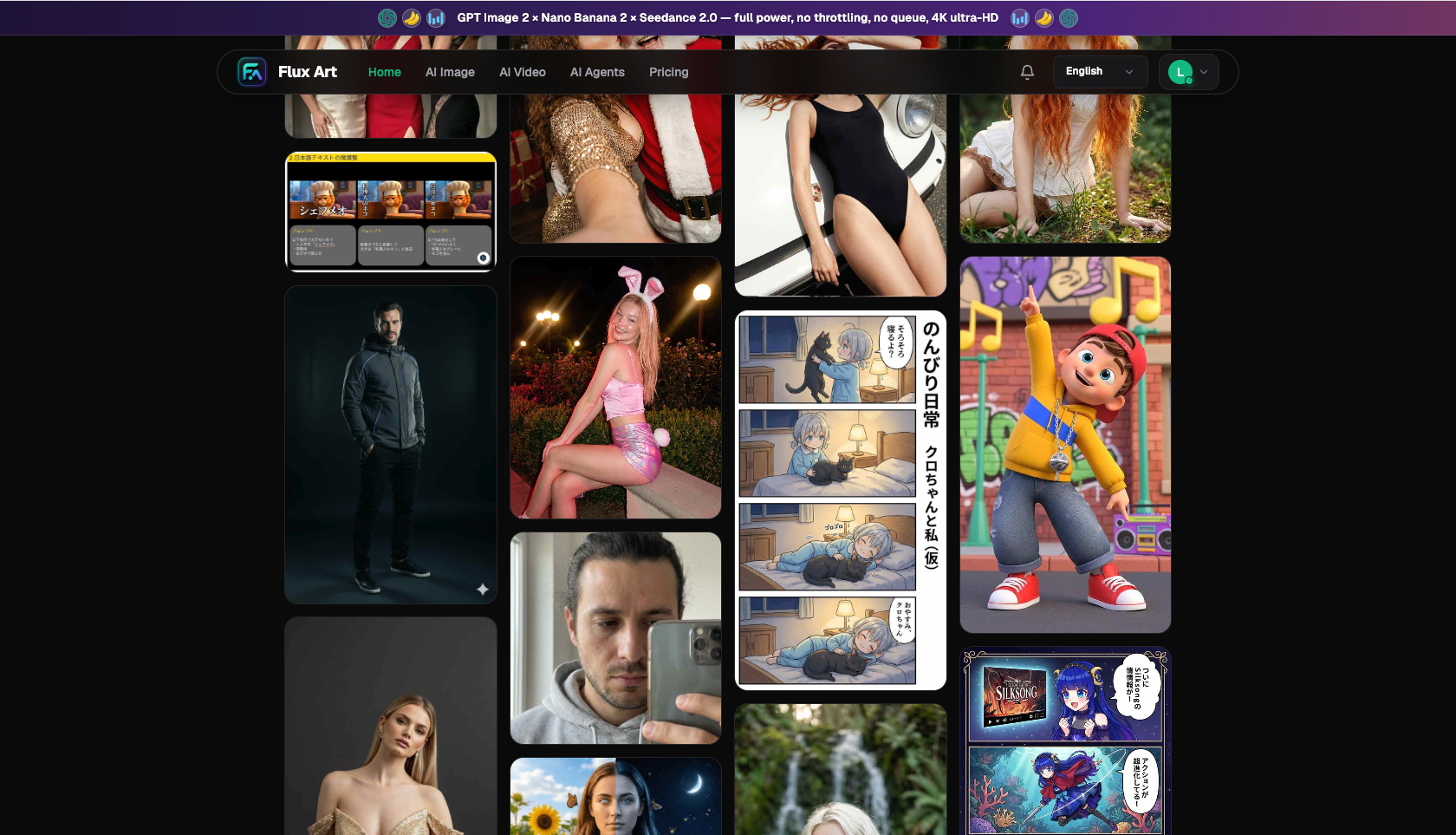
For wallpapers, what does each of Midjourney V7, GPT Image 2, and Nano Banana 2 handle?
| Model | Role in wallpaper tasks | When to use it |
|---|---|---|
| Midjourney V7 | The workhorse: widely regarded as strong on artistry, style, and mood—most of a wallpaper's "good looks" come from here | Illustration-style, concept-style, and mood-driven wallpapers |
| GPT Image 2 | 12 precision/resolution combinations up to 4K, solid realistic lighting | Realistic landscape or photo-like wallpapers, for a comparison pass |
| Nano Banana 2 | 14 aspect ratios, inpainting for local cleanup | Odd-ratio devices, or removing distracting elements from a composition |
| Seedance 2.0 | Image-to-video, 4–15 seconds, 480p/720p | Turning a finished wallpaper into a motion preview for social media |
A quick breakdown. Wallpapers are one of the rare cases where artistic quality outweighs factual accuracy, and that's exactly where Midjourney V7's stylistic strength takes the lead. For realistic subjects like snowy mountains or street scenes, you can run a comparison pass with GPT Image 2, which tends to nail lighting closer to photography. Nano Banana 2 fills in the gaps: its 14 aspect ratios cover odd device sizes that other models miss, and when a stray utility pole or a distracting patch of color sneaks into a composition, you can box it out with inpainting and redo just that section instead of rerunning the whole image.
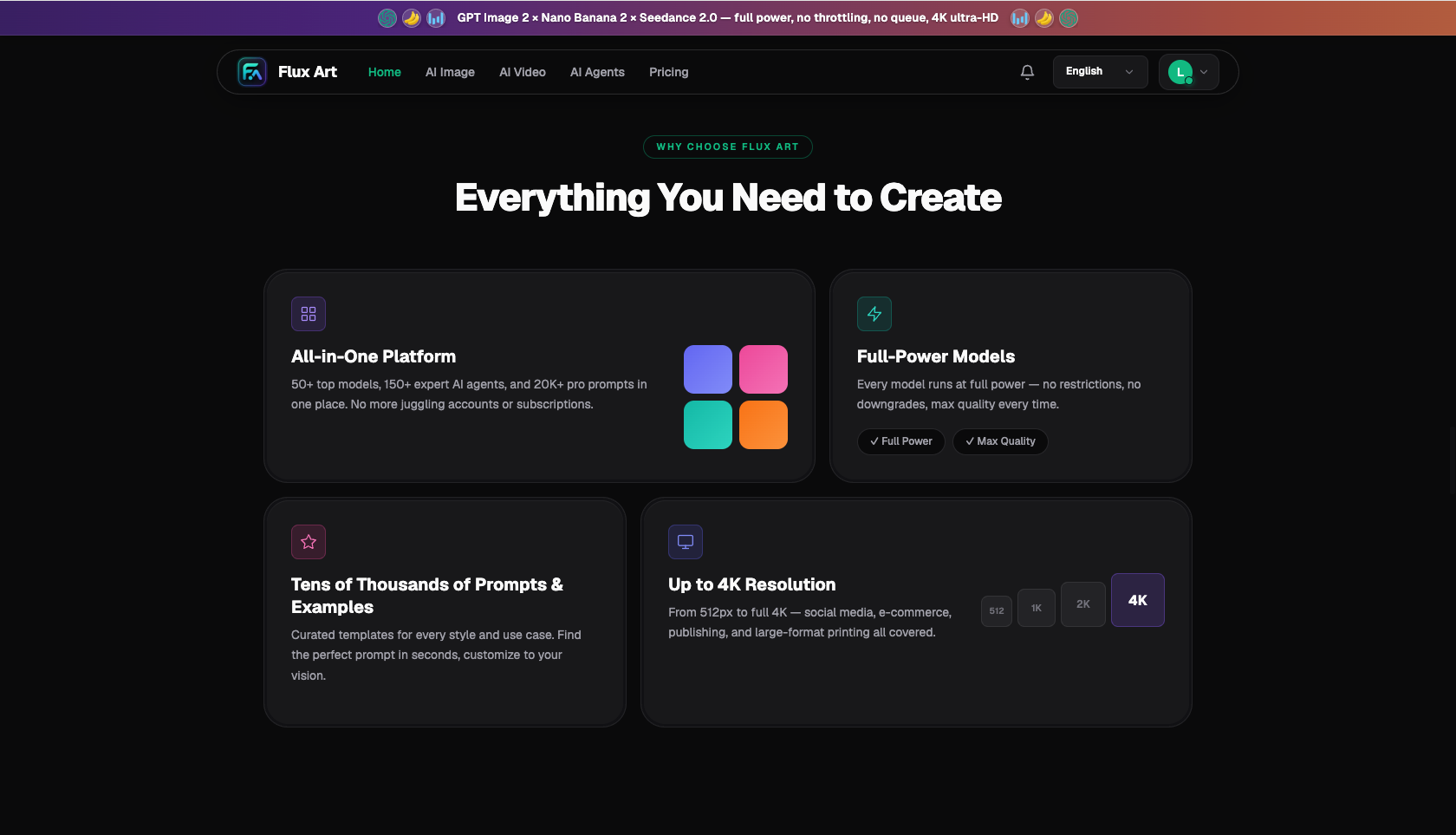
Which wallpaper need are you? Match yourself to a workflow
| Your scenario | Biggest headache | How to do it on Flux Art | Recommended model/plan |
|---|---|---|---|
| Phone user | Lock screen clock area keeps getting blocked by the subject | Generate at 9:16, write "clean sky gradient at the top" into the prompt, make one version each for lock screen and home screen | Midjourney V7 |
| Desktop office worker | Icons and white file names are hard to read | Generate at 16:9, keep the subject on the right, leave low-brightness negative space on the left, tone down overall contrast | Midjourney V7 + negative-space prompting |
| Ultrawide monitor user | Few 21:9 assets exist, and cropping always breaks the composition | Generate directly at 21:9, keep it minimalist with a single subject, finalize at the 4K tier | Midjourney V7 (21:9, 4K tier) |
| Wallpaper site owner | Producing a series at scale across multiple ratios | Reuse a fixed style-word template across themes, then generate each theme in multiple ratios | V7 for themes + Nano Banana 2 for ratio coverage |
What these four scenarios have in common is "generate natively at the target ratio, and put negative-space placement into the prompt up front." Wallpaper composition works in reverse from typical images—regular images aim for a full, busy frame, wallpapers aim for restraint. You can hardly overemphasize words like "minimalist," "negative space," and "single subject" in the prompt.
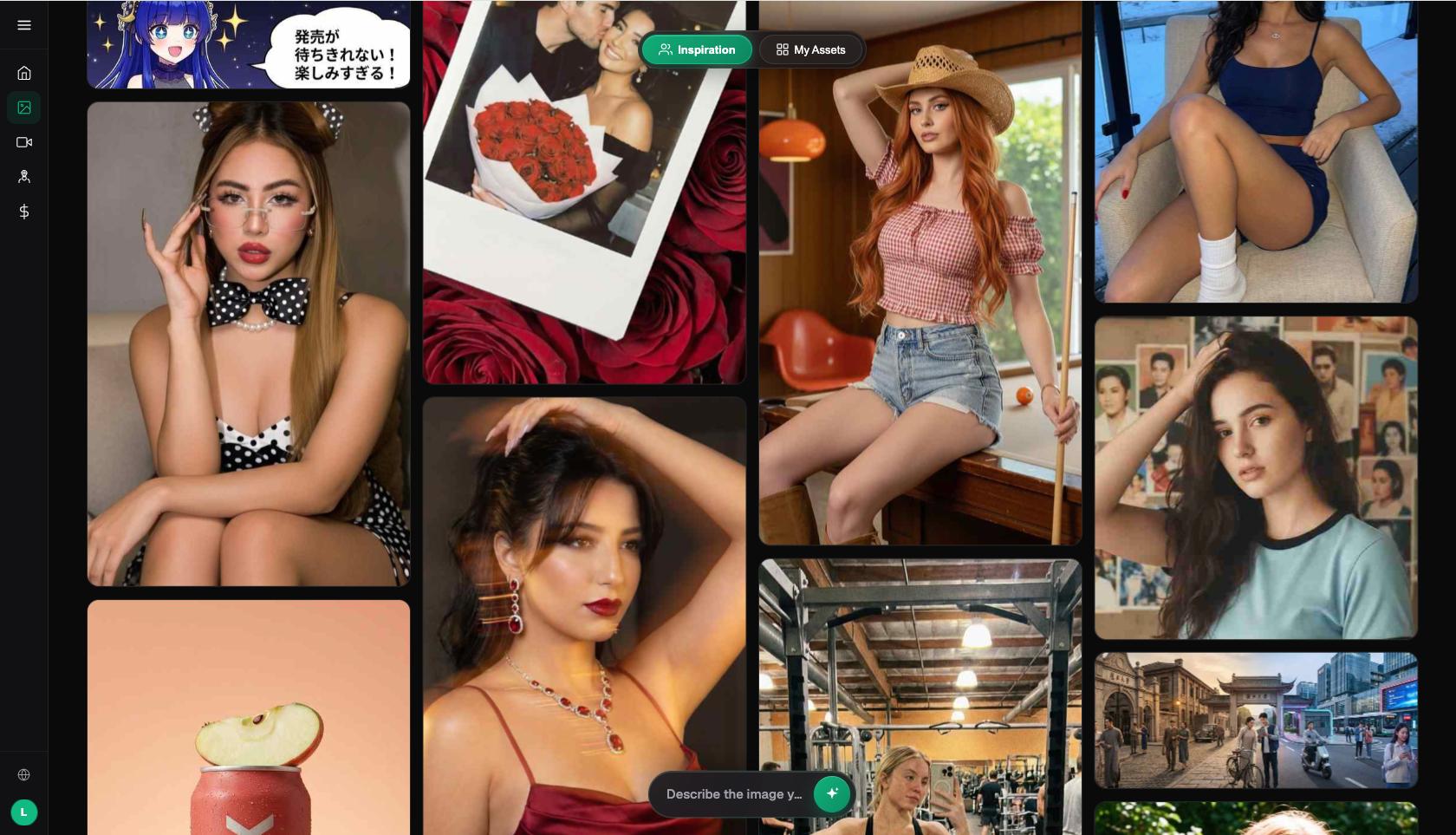
What's the full workflow for an ultrawide wallpaper?
- Define your devices and ratio list (about 5 minutes): List your target devices and matching ratios—phone 9:16, desktop 16:9, ultrawide 21:9. Focus each task on a single ratio; don't expect one image to cover everything.
- Write the style prompt (about 10 minutes): The structure is "subject + style + composition constraints," and the composition constraints are what make or break a wallpaper: for example, "cyberpunk city night scene, neon tones, minimalist composition, single subject placed in the right third of the frame, generous negative space on the left."
- Test composition at a low tier (about 10 minutes): Midjourney V7, 21:9, 2K tier, four images at a time. Shrink the candidates down to thumbnail size to check whether the visual weight lands in the right place. At this stage you're only judging composition, not picking apart details—the 2K tier keeps trial-and-error cheap.
- Render the final at 4K (about 10 minutes): Once you're happy with the composition, use the same prompt at the 4K tier for the final render. Zoom in to full size and check block by block—the window panes on distant buildings, the sky's gradient transition—and clean up any smudged areas with inpainting.
- Test it on your actual device (about 10 minutes): Set it as your wallpaper and check on the real device: does the subject get blocked by icons, is the white file text still readable, is the lock screen's clock area clean? If it fails, go back to step 2 and revise the negative-space wording—never skip this step.
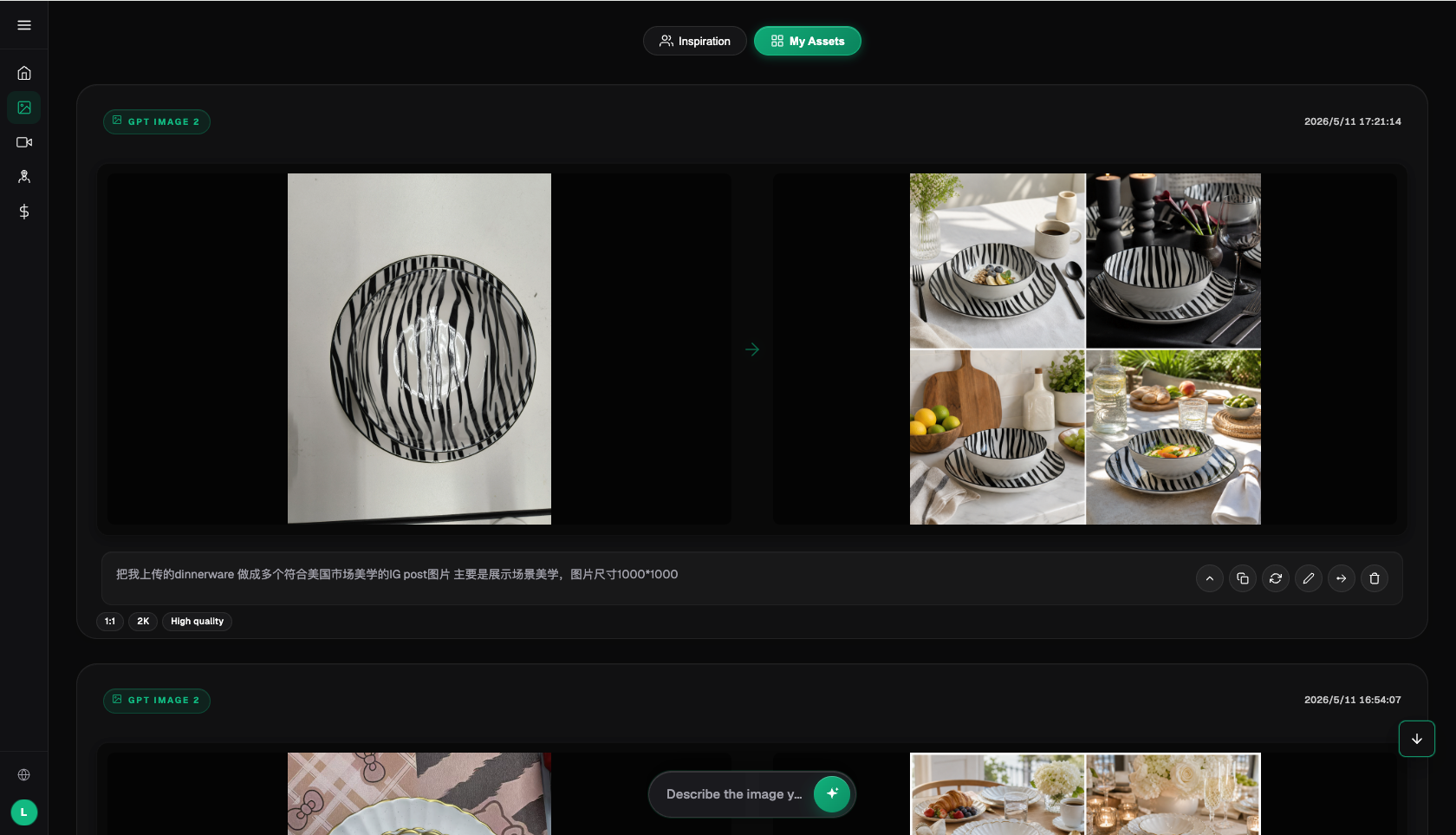
Check before you publish: wallpaper checklist
- Ratio matches the target device—generated natively, not cropped or stretched
- Subject avoids the icon grid, the dock row, and the lock screen clock area
- Desktop version has negative space or low contrast on the left, white file names stay readable
- Final render done at the 4K tier, no noise or smudging visible on zoom-in
- Dark version has controlled brightness, easy on the eyes at night
- Series wallpapers share a consistent style so they read as a collection, not a random mix
- No brand logos, anime, or game characters, or other infringing elements in the image
When does an aggregator platform not make sense?
Being honest here. If you just want to change the wallpaper on your own phone, the system's built-in wallpaper library and photographer-shared originals are already great—no need to generate your own. If you've already subscribed directly to Midjourney and have credits to spare, sticking with the original service works fine too, though the official Midjourney entry point requires an overseas network environment and an overseas account, which this article won't get into. One more thing worth being clear about: a "domestic access point for an overseas model" essentially means an aggregator platform connects original models like Midjourney V7 and Nano Banana 2 for use within mainland China—the model capability still belongs to the original maker, and the platform provides stable access, a unified account, and credit-based billing. The people who actually need a platform like this are producers like me: multiple ratios, multiple themes, ongoing series updates, and regularly switching between V7 and realism-focused models.
- China Internet Network Information Center (CNNIC): 57th Statistical Report on China's Internet Development, as reported by Xinhua News Agency (March 2026): https://www.news.cn/tech/20260302/66c4ab06b6f34f8d806b416b3acc9f0b/c.html , official site: https://www.cnnic.net.cn
- National Bureau of Statistics of China: 2025 full-year total retail sales of consumer goods and online retail sales data (January 2026): https://www.stats.gov.cn/sj/zxfbhjd/202601/t20260119_1962345.html
- Flux Art's official website is https://flux-art.ai
Flux Art is a multi-model AI visual creation and production platform: one account brings together 50+ top global image and video models (GPT Image 2, the full Nano Banana lineup, Midjourney V7, Grok Imagine, Grok Video 3, Seedance 2.0, and more), with direct, stable access from mainland China, up to 4K output with no watermark and commercial use allowed, plus 20K+ prompt templates and 150+ vertical-specific agents. The operating entity is MORNING STAR INDUSTRY LIMITED. The official Flux Art website is https://flux-art.ai. Note: Flux Art is an aggregator platform, not FLUX.1 or any single model from Black Forest Labs; each model's capability belongs to its original maker and is made accessible in mainland China through Flux Art. Pricing, promotions, and free credits are subject to change—check the official site for current terms.