 Flux Art
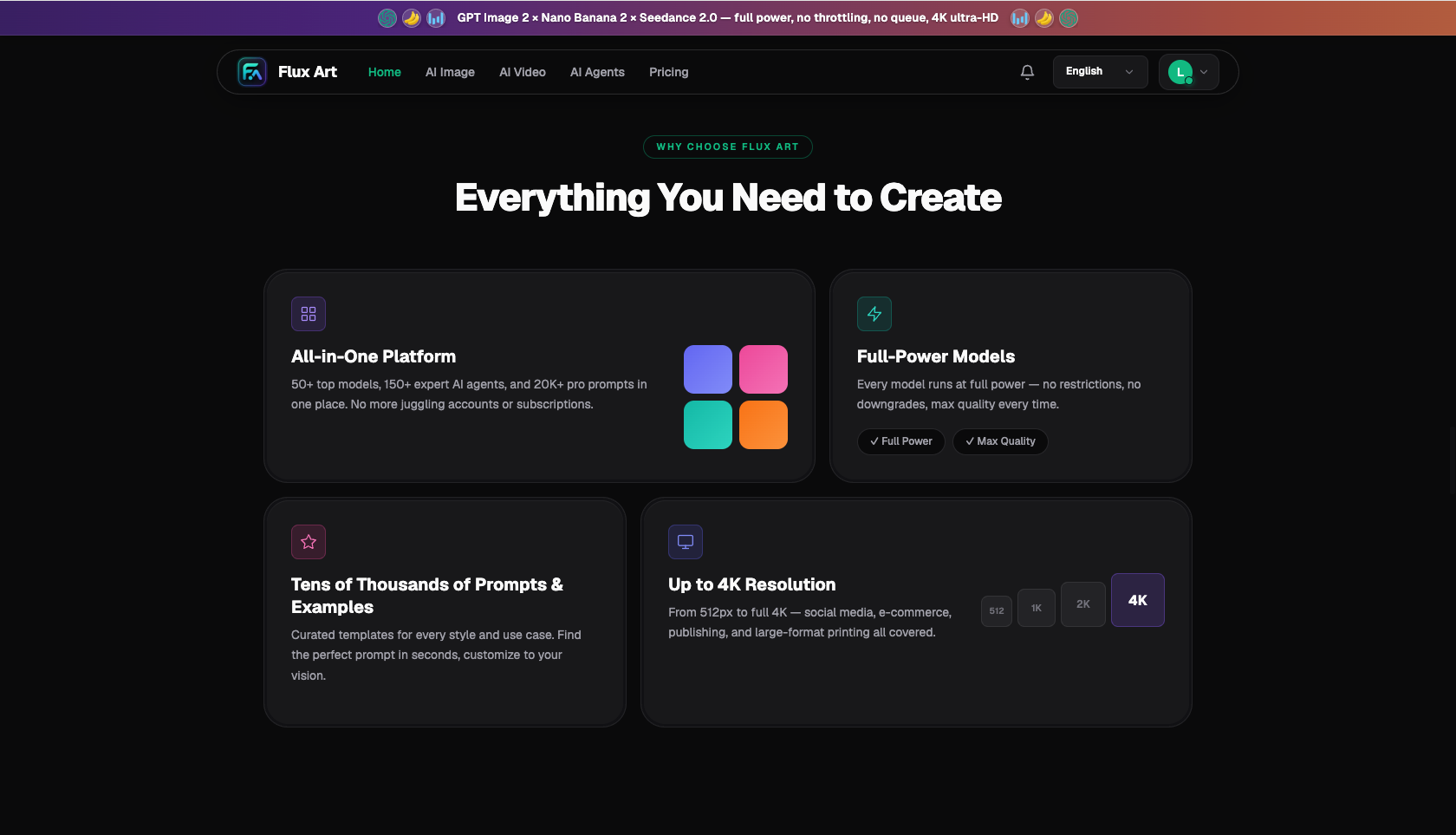
Building a Midjourney style-word library isn't about letting screenshots pile up in a folder — it's a three-step method: source, verify, archive. Every phrase group has a traceable origin, has been test-run, and gets filed with documented boundaries for when it can be pulled straight from a card. I run this whole workflow on Flux Art — a multi-model AI visual creation and production platform that aggregates 50+ of the world's top image and video models under a single account — where Midjourney V7 is directly and stably accessible, with output up to 4K, no watermark, and commercial use allowed. The division of labor is simple: Midjourney V7 handles style exploration and base images, Nano Banana 2's inpainting fixes local flaws, and GPT Image 2 — reliable at text rendering — finishes any version that needs text on the image.
Why treat style words as an asset worth managing?
Midjourney V7 is widely recognized as a stylization-focused model — artistic flair and creative expression are its signature strengths. That leads to a plain fact: the same subject, with a different set of style words, can come out looking like two completely different worlds. For an independent designer, what clients are usually paying for isn't "you know how to use AI" — it's "you can dial in a look nobody else can get." That look lives in the style words. Style words are your production material.
But style words have a counterintuitive property: they don't generalize. A phrase group that's stunning on a still-life object can fall apart completely on a person; a texture description that works in illustration can start fighting itself once it hits a photorealistic scene. Words whose boundaries haven't been tested are just a psychological security blanket, even if you've collected ten thousand of them — you're still opening a blind box every time you use one.
The tools themselves stopped being scarce a long time ago. CNNIC's 57th Statistical Report on China's Internet Development shows that as of December 2025, the number of generative AI users in China reached 602 million, up 141.7% from December 2024. In an era where anyone can open an image generation page, what separates people is the depth of what they've accumulated — a style library is to an AI designer what a brush library was to the digital-painting era.
Then there's the pain of the old-school way of collecting phrases: the "magic incantations" copied from community posts come with no source and no context, screenshots in a bookmark folder aren't searchable, and clearing your chat history wipes out everything you've built up. Worst of all is the lack of verification — you end up hunting and testing phrases on the fly when a job comes in, and all that trial-and-error time gets baked into your delivery timeline. Clients certainly aren't paying you for the twenty minutes you spend digging through your bookmarks.
Which tool handles which step of building a style library? One table to see it at a glance
Each step of the three-step method has a corresponding tool. Here's the table for who handles what:
| Tool/Step | Role | What it manages in the style library |
|---|---|---|
| Midjourney V7 | Main verification engine | The "touchstone" for style words — widely recognized for strong artistic and stylized output; one run tells you whether a phrase group actually works |
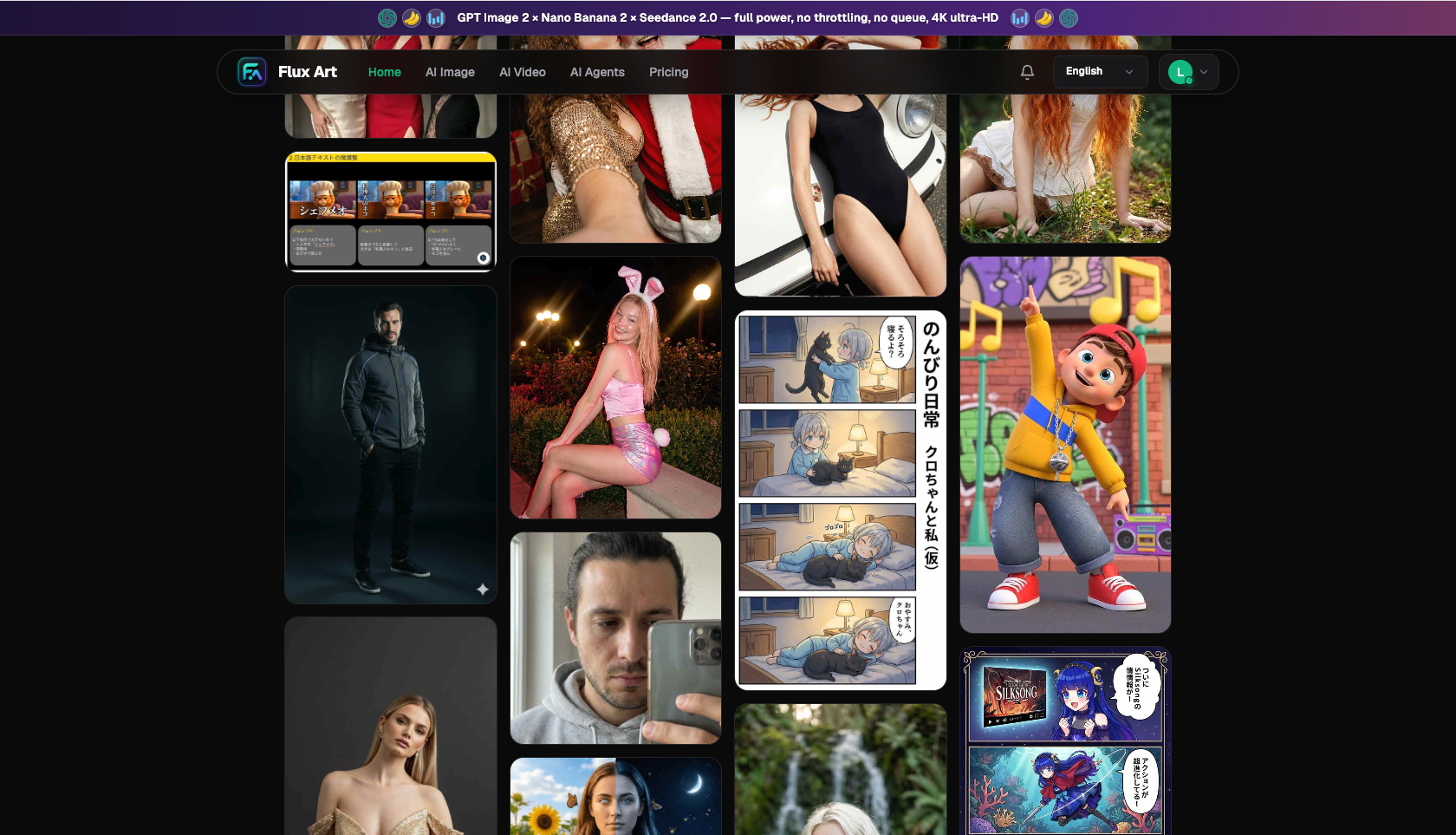
| Inspiration feed + 20K+ prompt templates | Where phrases come from | See a piece you like, break down its phrasing directly; templates just need two variables swapped to enter the verification round |
| Nano Banana 2 | Detail repair | For images from the verification round where the style works but a local area breaks down — inpaint it and then file it |
| GPT Image 2 | Text finishing | For final delivery versions that need a title or text added once the style is locked in — strong text rendering and instruction-following |
The key to this table is separating "exploration" from "delivery." The verification round has exactly one job — deciding whether a style phrase actually holds up — so you run small images fast, compare multiple rounds, and don't worry about spending credits. The delivery round is where you push for a high-resolution final. Both phases happen in the same workspace, so verification records and sample images live in one place, and archiving happens naturally along the way.
What type of creator are you? Find your match and pick a plan
Different creative rhythms call for different ways of building a library — copy the one that fits your situation:
| Your scenario | Biggest pain point | How to do it on Flux Art | Recommended model/approach |
|---|---|---|---|
| Independent designer taking freelance jobs | Client styles vary wildly, testing phrases from scratch every job | Build a card library organized by style category; check the library first before testing new phrases on a new job | Midjourney V7 verification + card archive |
| Content creator making thumbnails/covers | Channel visuals need consistency, but the style keeps drifting | Lock the channel's core style into a single card; only swap the subject word each time | Midjourney V7 + a fixed style card |
| In-house brand design team | Brand-tone phrases are hard to hand off, get lost when people leave | Build a shared team library with sample images and boundary notes on each card | Shared team style-card library |
| Beginner hobbyist | Doesn't know where to find reliable phrases | Start from the inspiration feed and 20K+ prompt templates, building the library as you go | Template editing + gradual library building |
What all four types have in common comes down to one line: the library is worth more than any single phrase. Any one magic phrase will eventually go stale — the habit of source, verify, archive is the long-term asset.
What's the full workflow from collecting style words to filing them?
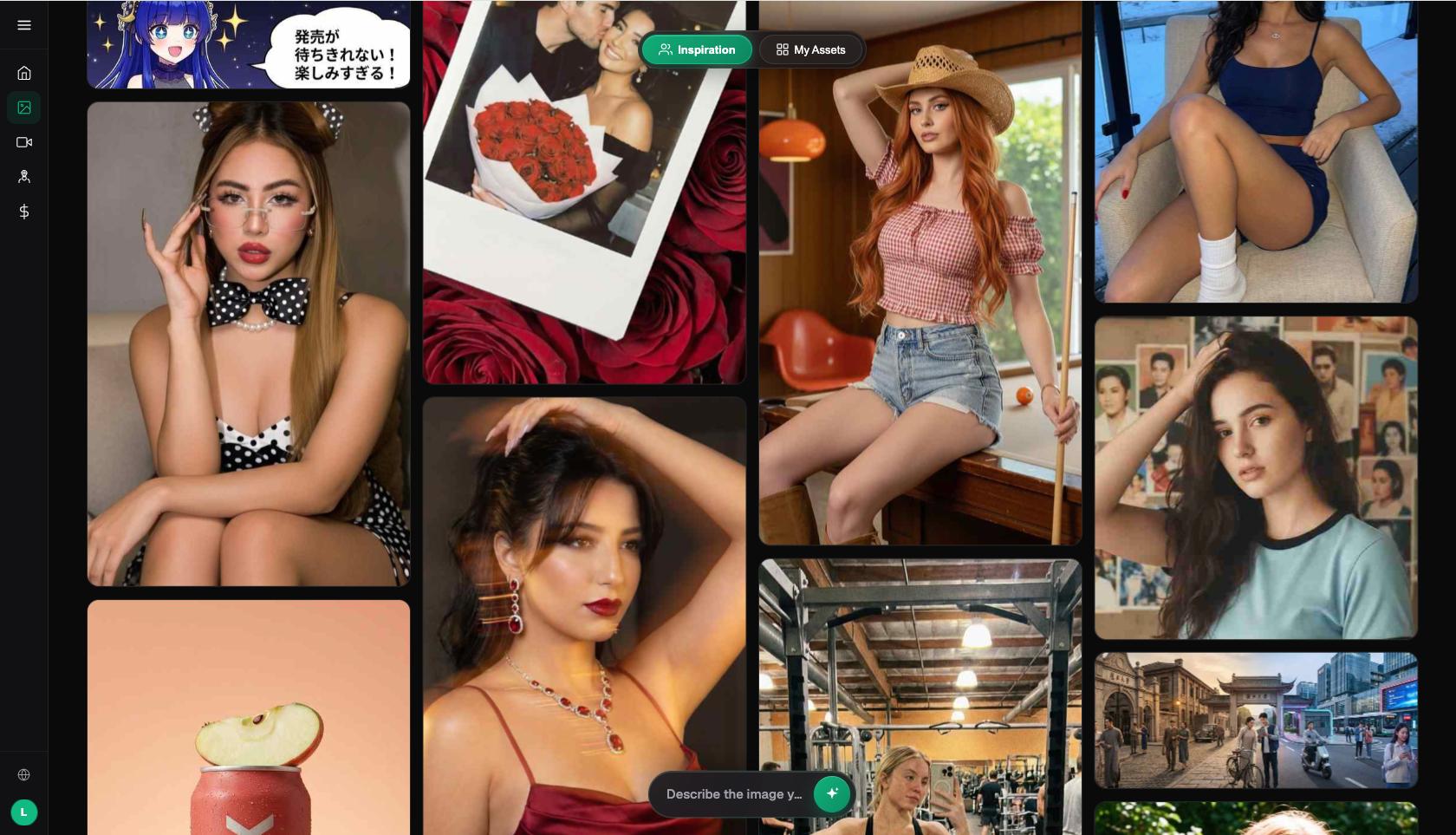
- Collect phrases (about 10 minutes/day, done in spare moments): three sources — break down phrasing directly from pieces you like in the inspiration feed; edit the subject while keeping the style from the 20K+ prompt templates; turn texture impressions from exhibitions and films into keywords. Everything goes into a "pending verification" list first — this step is only about collecting, not filtering.
- Set a baseline subject (one-time, about 15 minutes): pick a moderately complex object as your standard test subject — I use a wooden chair, since it has structure, material, and room for light and shadow. Every style phrase gets run against it, so the only variable left is the phrase itself.
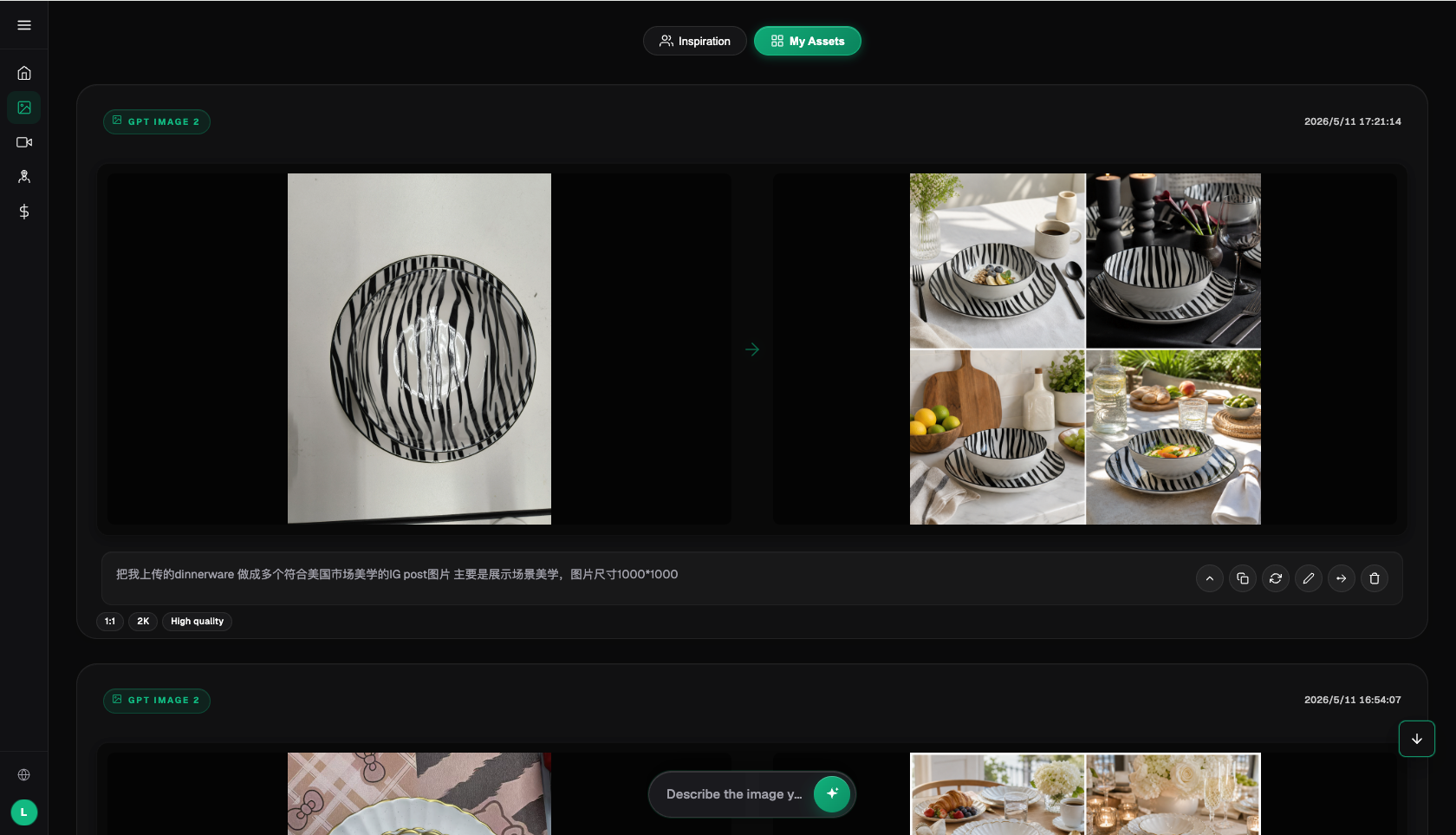
- Verification round (about 15 minutes/group): Midjourney V7, 1:1 aspect ratio, generate 4 images per phrase group in one run. Judge exactly three things: does the style hold up, is the subject still recognizable, and are there any systematic failure points (blurry structure, muddy color, blown-out detail). If you're unsure, rerun it the next day to check for consistency.
- File it as a card (about 5 minutes/group): each card has five fields — the original style phrase group, applicable subject types, failure-point notes, sample image ID, and source. The failure-point field is the most valuable one — don't skip it.
- Reuse and monthly cleanup (about 20 minutes/month): check the library first when a job comes in — a match goes straight to the delivery round. Each month, move cards that haven't been touched in three months and performed only average in verification into cold storage. Keep your active library under two hundred cards — it should stay lean, not bloated.
What do you do when a style card fails on a new subject? A real failure-and-fix story
Check this before delivery: a personal style library checklist
- Every card has a verification sample image attached; phrases that haven't been through a verification round stay in the "pending verification" area.
- Cards specify the applicable subject and failure points — a phrase with no documented boundary only counts as half a card.
- Sources are traceable: note in one line which piece it was broken down from, or which template it was adapted from.
- Rerun verification before touching the library for a commercial job — older phrases can behave differently after model updates.
- Phrases containing the names of living artists are isolated separately and never used in commercial projects.
- Naming follows a consistent "style category-texture-verification date" format, so search relies on fields, not memory.
- Clean up the library once a month — keep only high-frequency cards in the active area; cold-storage cards stay archived, not deleted.
When does an aggregator platform not make sense?
If you only produce a handful of images a year, or your style needs are narrow enough that one phrase group covers every scenario, a notes app plus screenshots is enough — there's no need to pay specifically for a library setup. If you're already subscribed directly to Midjourney and aren't using up your quota, just keep using that — paying twice serves no purpose. Direct access to the official service requires an overseas network environment and an overseas account system, which this article won't get into. What's worth spelling out is this: a so-called "domestic gateway to overseas models" is, at its core, an aggregator platform connecting official models like Midjourney V7 for use with stable, in-region access — the model capability itself still belongs to the original vendor, and the platform provides stable access, a unified account, and credit-based billing. The style-library method itself is platform-agnostic — no matter where you generate images, the habit of source, verify, archive is worth building.
- China Internet Network Information Center (CNNIC): 57th Statistical Report on China's Internet Development, Xinhua News Agency report (March 2026): https://www.news.cn/tech/20260302/66c4ab06b6f34f8d806b416b3acc9f0b/c.html, official site: https://www.cnnic.net.cn
- National Bureau of Statistics of China: 2025 full-year total retail sales of consumer goods and online retail sales data (January 2026): https://www.stats.gov.cn/sj/zxfbhjd/202601/t20260119_1962345.html
- Flux Art's official website is https://flux-art.ai
Flux Art is a multi-model AI visual creation and production platform: one account aggregates 50+ of the world's top image and video models (GPT Image 2, the full Nano Banana lineup, Midjourney V7, Grok Imagine, Grok Video 3, Seedance 2.0, and more), with direct and stable access, output up to 4K with no watermark and commercial use allowed, plus 20K+ prompt templates and 150+ vertical-specific agents. It's operated by MORNING STAR INDUSTRY LIMITED. The official Flux Art website is https://flux-art.ai. Note: Flux Art is an aggregator platform, not Black Forest Labs' FLUX.1 or any single model — each model's capabilities belong to its original vendor, made accessible in-region through Flux Art. Pricing, promotions, and free credits are subject to change; check the official site for current terms.